As a brand owner like Ron, you appreciate the final product: a perfectly formed, stylish felt hat. You know it's a premium item with a high perceived value. But to truly understand and sell that value, you need to look behind the curtain. You're probably wondering what goes into transforming a fluffy mass of animal fiber into a structured, durable, and elegant accessory. Is it just pressed into a mold? The reality is a fascinating, multi-stage process that blends ancient craft with modern technology—a process that is far more complex and hands-on than most people imagine.
Making a felt hat is a magical process of transforming loose animal fibers (typically wool or fur) into a dense, non-woven fabric through the application of heat, moisture, and pressure. The core steps involve creating a large, delicate cone of matted fibers, shrinking and hardening this cone through a process called "felting" or "planking," shaping it over a wooden block, and then finishing it through a series of sanding, stiffening, and trimming operations.
I'm the owner of Shanghai Fumao Clothing, and while we produce a wide range of accessories, felt hat making holds a special place in our factory. It's a discipline where craftsmanship is not just a buzzword; it's a fundamental requirement. Understanding this labor-intensive journey is the key to appreciating why a high-quality felt hat is an investment piece. Let's walk through the steps, from a cloud of fiber to a finished work of art.
How Is the Raw Felt Body Created?
Before you can have a hat, you need the unique material of felt. You know it's not a woven cloth, but how is it actually formed? You might picture someone just pressing fibers together, but the initial stage is far more precise and delicate.
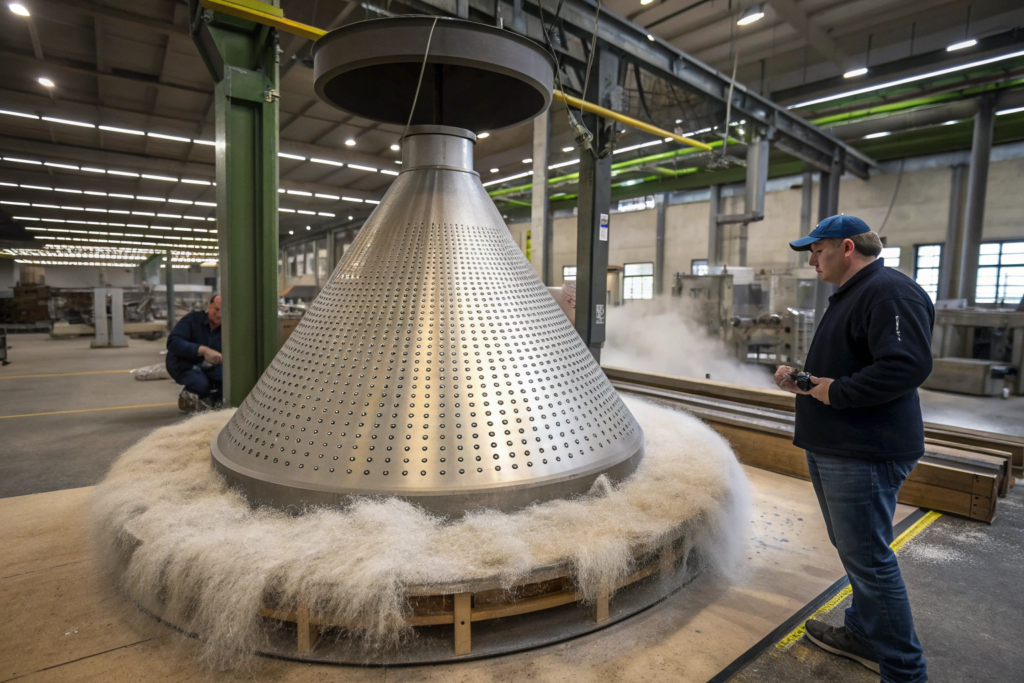
The process begins by creating a "hat body," a large, fragile, cone-shaped structure of matted fibers. This is done by blowing a carefully measured amount of loose fur or wool fibers onto a spinning, perforated, cone-shaped mold while applying suction from within. This initial form is delicate, oversized, and the foundational canvas for the entire hat.
This first step is critical and highly controlled. The amount of fiber used determines the final weight and quality of the hat. The distribution of the fibers on the cone must be perfectly even to ensure a consistent thickness. At this stage, the hat body is huge—often two to three times the size of the final hat—and so fragile that it can barely support its own weight. It is not yet "felt," but simply a delicate web of interlocked fibers, held together by the microscopic barbs on each strand.
What is the difference between wool felt and fur felt?
Wool felt is made from the fleece of sheep. It's more common, more affordable, and widely used for many good-quality hats. The fibers are shorter and thicker. Fur felt, the premium choice, is typically made from the underfur of rabbits or beavers. These fibers are incredibly fine, lightweight, and have more numerous, microscopic barbs that lock together to create a denser, smoother, and more water-resistant felt. This is why fur felt hats, like those from legendary brands such as Stetson, are considered the gold standard.
Why is the initial shape a cone?
The cone is a universal starting shape because it's a simple, efficient form from which almost any hat style—from a fedora to a bowler—can be blocked and shaped later in the process. It's a blank slate. The wide brim and the crown are all contained within this initial cone; they just haven't been shaped yet.
How Does the Hat Body Become Strong, Dense Felt?
You have this big, floppy cone of matted fibers. It's not strong or dense enough to be a hat. How does it transform into the tough, durable felt material you're familiar with? This is where the true magic of felting happens, a process that relies on basic principles of physics and chemistry.
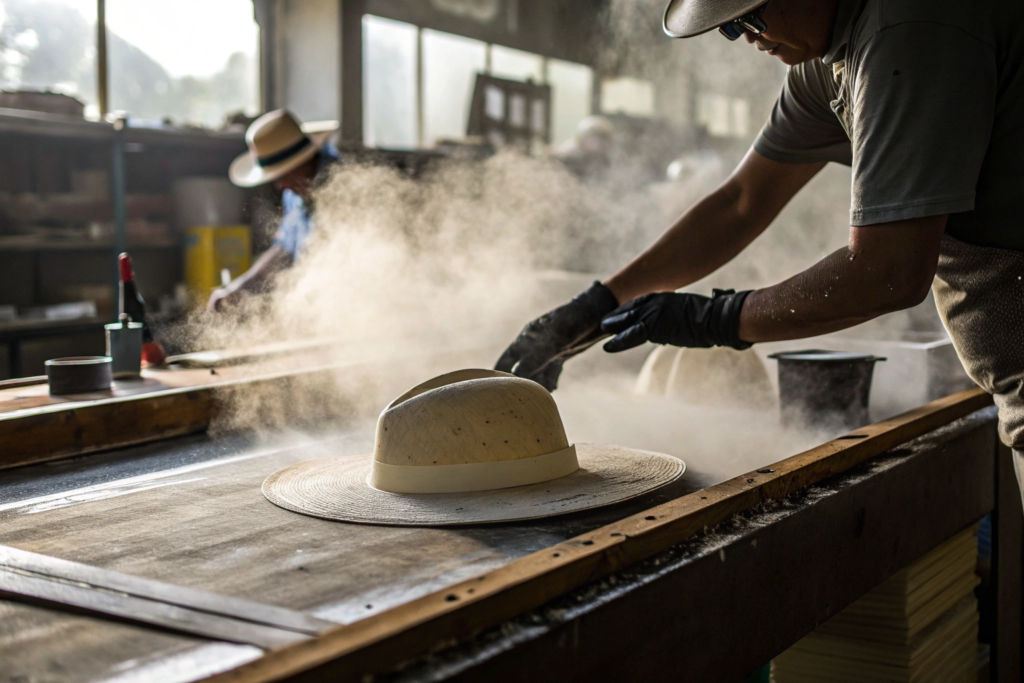
The fragile hat body is subjected to a process called "planking" or "hardening," where it is repeatedly soaked in hot water, rolled, and pressed. This combination of heat, moisture, and agitation causes the microscopic barbs on the fibers to open up, interlock permanently, and shrink, transforming the oversized, delicate cone into a smaller, denser, and incredibly durable piece of felt.
This is the most labor-intensive part of the process. Historically, this was done entirely by hand. Today, at factories like Shanghai Fumao Clothing, we use a combination of skilled handwork and specialized rolling machines, but the principle is the same. The hat body is passed through rollers that apply consistent pressure while it's being sprayed with hot water. This process can take several hours, and the hat body will shrink by as much as 50%. The result is no longer a web of fibers; it's a single, unified piece of fabric.
Why are heat and moisture so important?
Heat and moisture (specifically hot, slightly acidic water) cause the outer layer of the animal fiber, the cuticle, to swell and the tiny, scale-like barbs to stand up. The pressure and agitation then force these barbs to lock into each other. As the felt cools and dries, the barbs retract, locking the fibers together permanently. It's a one-way process; you cannot un-felt a piece of felt.
Is this also when the hat is dyed?
Yes, this is the perfect stage for dyeing. The hat bodies are often dyed in large, hot vats after the initial hardening process. Because the felt is still in a simple cone shape, the dye can penetrate evenly, ensuring a deep, consistent color throughout the material, which is a hallmark of a quality hat.
How Is the Felt Given Its Final Shape?
Now you have a dense, durable, dyed cone of felt. It's a quality material, but it still doesn't look like a hat. How is the iconic shape of a fedora's crown or a wide-brimmed sun hat created? This is where the artistry of "blocking" comes in.
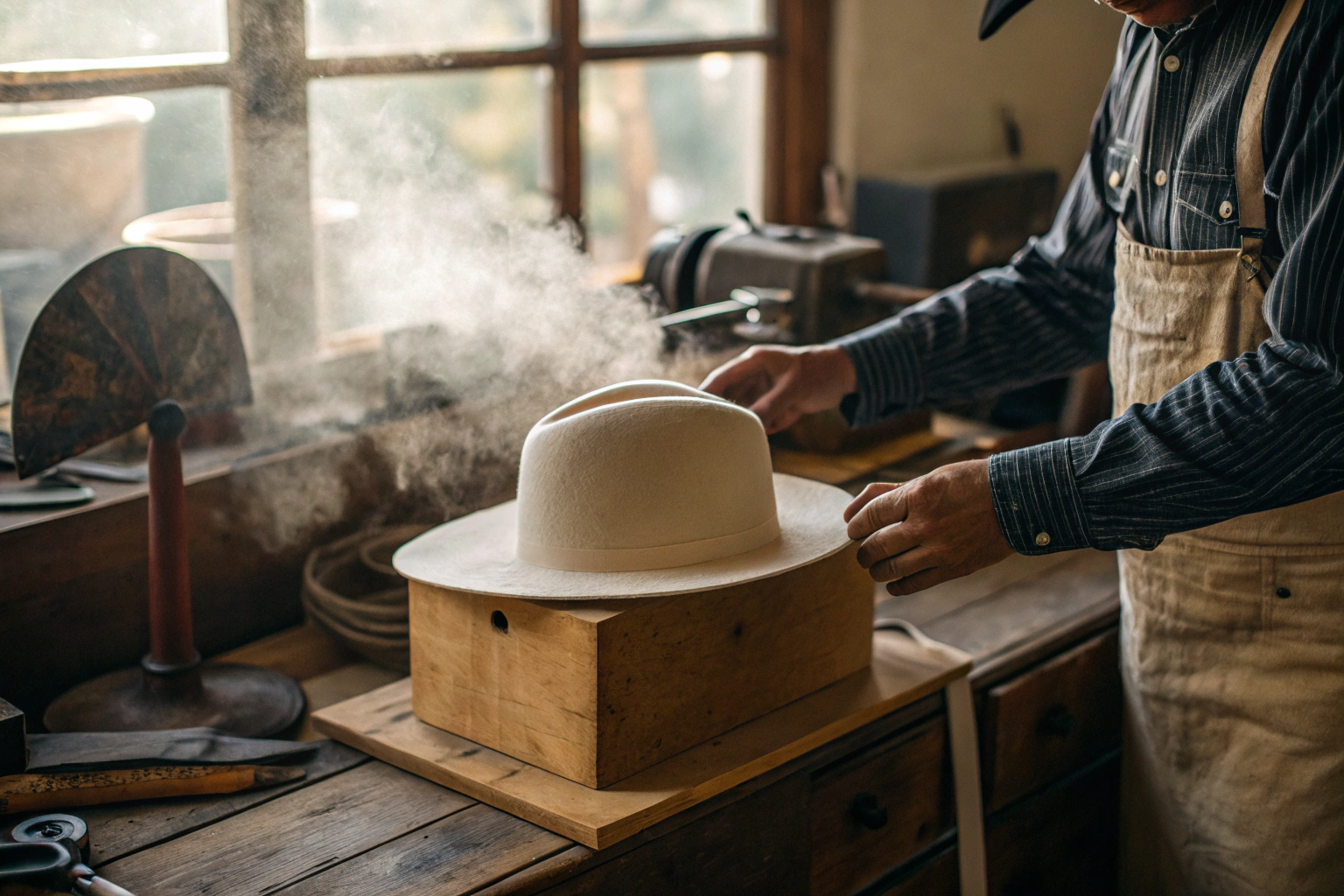
"Blocking" is the process of stretching, steaming, and pressing the damp felt cone over a wooden form, called a "hat block," that has the exact shape of the desired hat style. Once the felt is pulled into place and secured, it is dried, causing it to memorize the shape of the block permanently.
This is a step that requires immense skill and strength. The hatter uses steam to make the felt pliable and then manually pulls and stretches the cone down over the block. The crown shape is tied off with a string, and the brim is flattened out. The blocked hat is then placed in an oven to dry completely. When it's removed from the block, it has the fundamental shape of the final hat. This process is so foundational to the craft that the artisans themselves are often called "blockers," a term recognized by craft guilds like the British Hat Guild.
Is every hat style a different block?
Yes. Every single hat style and every single head size requires its own unique, hand-carved wooden block. A factory's collection of hat blocks is one of its most valuable assets, representing a library of all the styles it can produce. This is why creating a completely new, custom hat shape is a significant undertaking, as it requires a new set of blocks to be designed and carved.
How is the brim shaped?
After the crown is blocked, the brim is often flattened and shaped using a flange. This is a heated, curved metal ring or press that gives the brim its final curl or "snap." The hatter will also use an iron and steam to get the shape just right, ensuring the brim is perfectly flat or has the desired upward or downward curve.
What Are the Final Finishing Steps?
The hat now has its basic shape, but it's still rough around the edges. It lacks the smooth finish, the sharp details, and the decorative elements that make it a finished product. What are the final steps that transform a shaped piece of felt into a retail-ready hat?
The finishing stage is a series of detailed operations that includes sanding the surface for smoothness, trimming the brim to the correct width, stiffening the felt to the desired hardness, and then sewing in the sweatband and attaching the decorative ribbon or trim. These final steps, known as "flanging" and "finishing," are what give the hat its polished, refined look.
This is where the final details come to life.
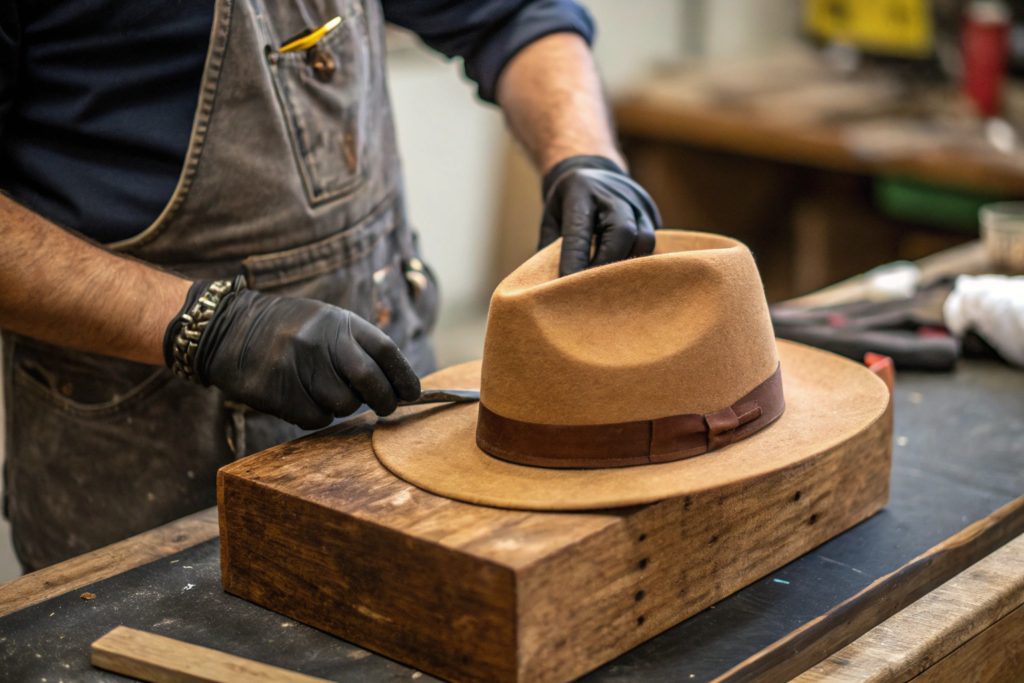
- Pouncing: The surface of the hat is sanded with very fine sandpaper to remove any loose fibers, creating a perfectly smooth, almost velvety finish.
- Brim Trimming: The brim is cut to its precise, final width using a specialized blade. The edge can be left raw, or it can be bound with a ribbon for a more formal look.
- Stiffening: A stiffening agent is applied to give the hat its final "hand" or feel. A fedora might be left relatively soft and pliable, while a bowler hat would be made very stiff.
- Trimming: This is the final decoration. A skilled sewer, often called a "trimmer," hand-stitches the leather or fabric sweatband inside the hat and expertly attaches the exterior ribbon, bow, or other embellishments.
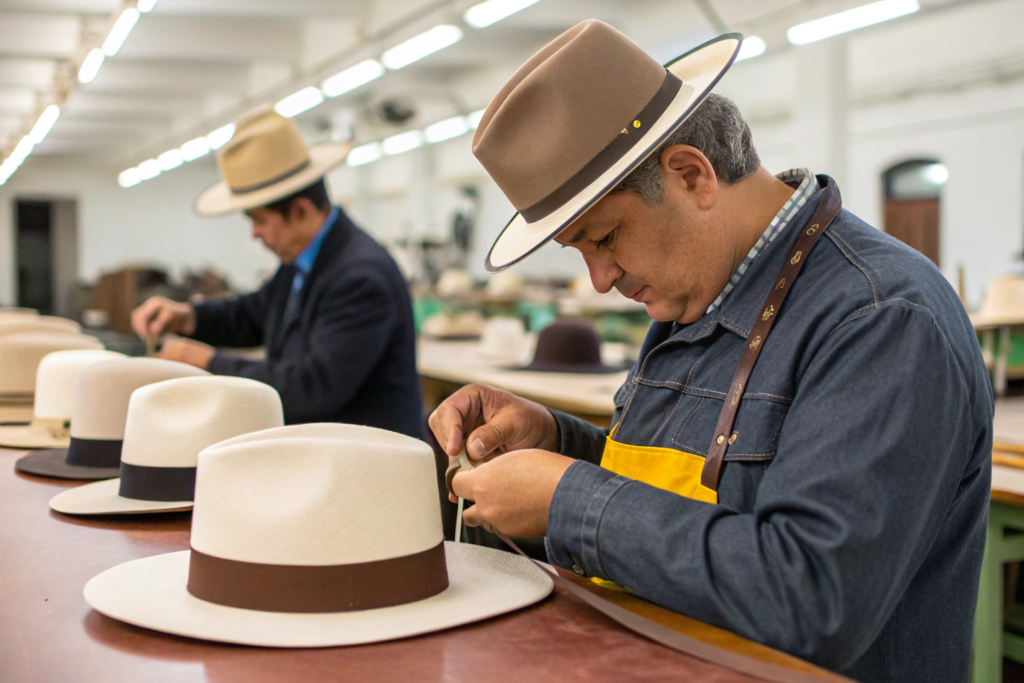
What is the purpose of the sweatband?
The sweatband serves several purposes. It provides a comfortable, smooth surface for the hat to sit on the wearer's head, it protects the felt from hair oils and sweat, and it provides a place to display the brand's logo and the hat's size. A high-quality leather sweatband is a key indicator of a well-made hat.
Why is the ribbon on the outside?
The exterior ribbon, or "hat band," was originally used to cover the seam where the crown and brim were joined on older hat styles. Today, it is primarily a decorative element that adds a touch of color, texture, and personality. The way the bow is tied is often a signature of the hat maker.
Conclusion
The journey from a handful of fluffy fiber to a finished felt hat is a testament to true craftsmanship. It's a process that cannot be fully automated, relying at every critical stage on the skilled hands and keen eyes of experienced artisans. Understanding this complex dance of forming, felting, blocking, and finishing allows you to appreciate a felt hat not as a simple accessory, but as a durable, handcrafted object. This is the story of quality you can share with your customers, justifying the premium nature of the product and building a brand reputation based on authentic craftsmanship.
At Shanghai Fumao Clothing, we honor this tradition. We combine time-honored techniques with modern quality control to produce felt hats of exceptional quality and style. If you are looking to develop a line of felt hats and need a partner who deeply understands every step of this intricate process, please reach out to our Business Director, Elaine, at elaine@fumaoclothing.com.