The classic felt fedora, with its distinctive pinched crown and brim, is a timeless symbol of style. But have you ever wondered how a pile of loose wool fibers is transformed into a durable, shapable, and elegant hat? The journey from raw material to finished accessory is a fascinating blend of traditional craftsmanship and modern manufacturing precision.
The process of making a felt fedora involves several key stages: forming the hat body through felting (using water, heat, and pressure to mat wool fibers), hardening the felt, blocking and shaping it over a wooden form, drying, trimming the brim, adding interior and exterior finishes like ribbons and linings, and finally, rigorous quality control. As a professional manufacturer of accessories like our own range of hats, we at Shanghai Fumao Clothing appreciate this process for its perfect marriage of art and technical skill.
While methods vary between high-end handmade and efficient factory production, the core principles remain the same. Let's peel back the layers and walk through the meticulous steps that create this iconic headwear.
How is the Basic Felt Hat Body Formed?
The creation of the foundational felt body, or "hood," is where the magic of felting begins. This stage determines the hat's density, weight, and potential for quality.
The basic felt hat body is formed through a process called felting, where animal fibers (typically wool or fur blends like rabbit) are matted together using a combination of moisture, heat, agitation, and pressure. This can be done via traditional manual methods or modern industrial machinery to produce a conical shape ready for shaping. The quality of the raw materials and the control during felting are critical for a superior final product that holds its shape.
What Raw Materials are Used in Quality Felt?
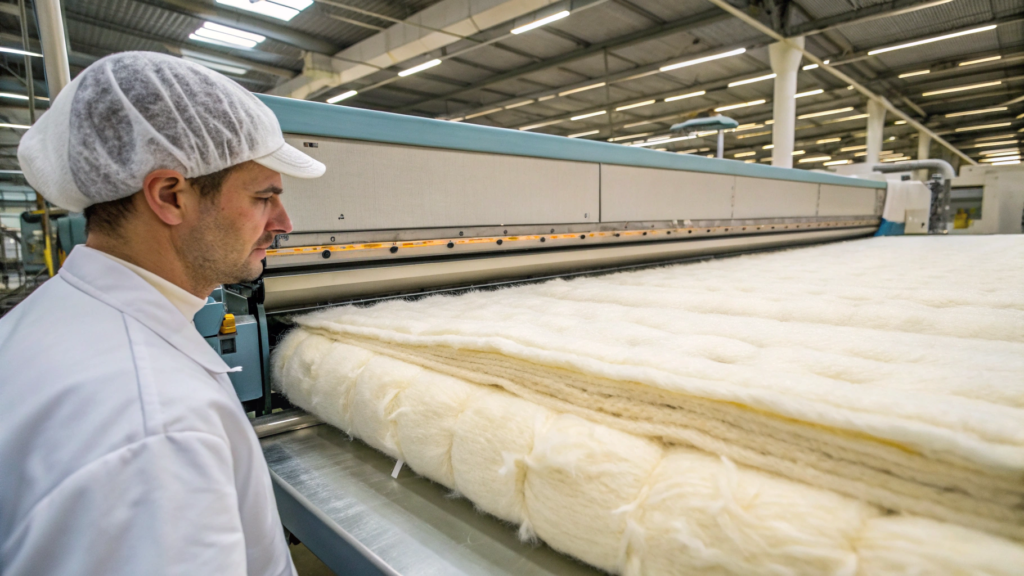
The journey starts with selecting the right fibers. For fedoras, the most common materials are wool felt, fur felt (often from rabbit or beaver), and blends. Fur felt is considered superior for its finer, softer fibers which felt into a denser, smoother, and more water-resistant material. The percentage of beaver or rabbit fur directly impacts the hat's quality, price, and ability to hold a sharp crease. At our facility, we source consistent, high-grade blends to meet different market segments, ensuring the raw material forms an excellent foundation. These fibers are cleaned, carded (aligned), and often blended to achieve the desired texture and performance. Understanding material sourcing is as crucial for hats as it is for our other products like scarves and gloves.
What are the Key Steps in the Felting Process?
The felting process binds the fibers irrevocably. In industrial settings, the carded fibers are formed into a large, hollow cone using automated machines. This cone is then subjected to a process called "fulling" or "hardening." It is treated with hot water and steam, then mechanically agitated and compressed. This causes the microscopic scales on the wool fibers to interlock, shrinking and tightening the material. The cone is repeatedly shrunk, stretched, and shaped over progressively smaller metal cones until it reaches the desired density and size. This creates a sturdy, seamless hat body that is the blank canvas for all subsequent styling. The precision in this stage is akin to the careful construction we apply when developing a structured baseball cap.
How is the Fedora Shaped and Blocked?
With the hardened felt cone in hand, the artisanal transformation into a recognizable fedora begins. This is where the hat gets its personality.
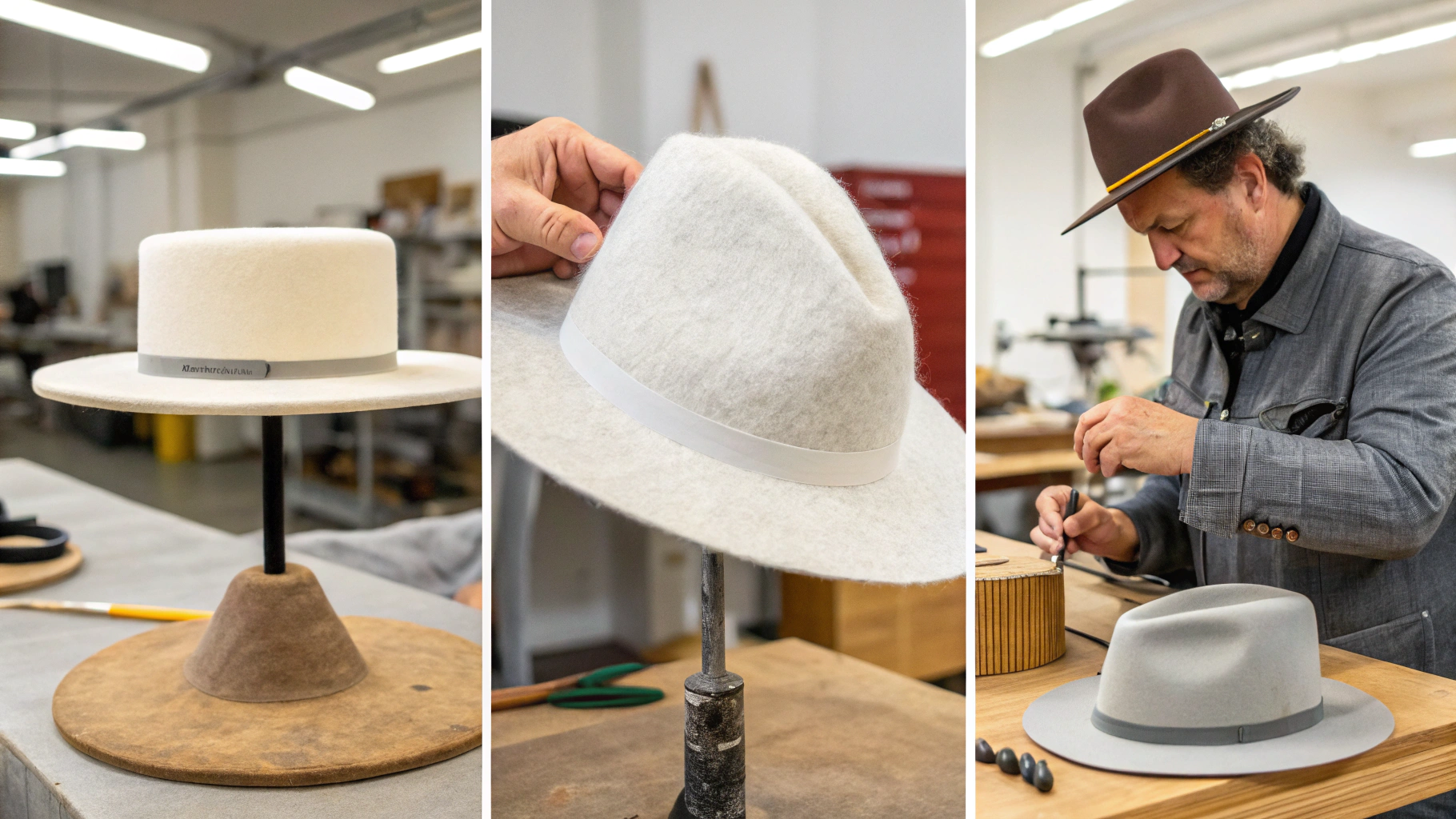
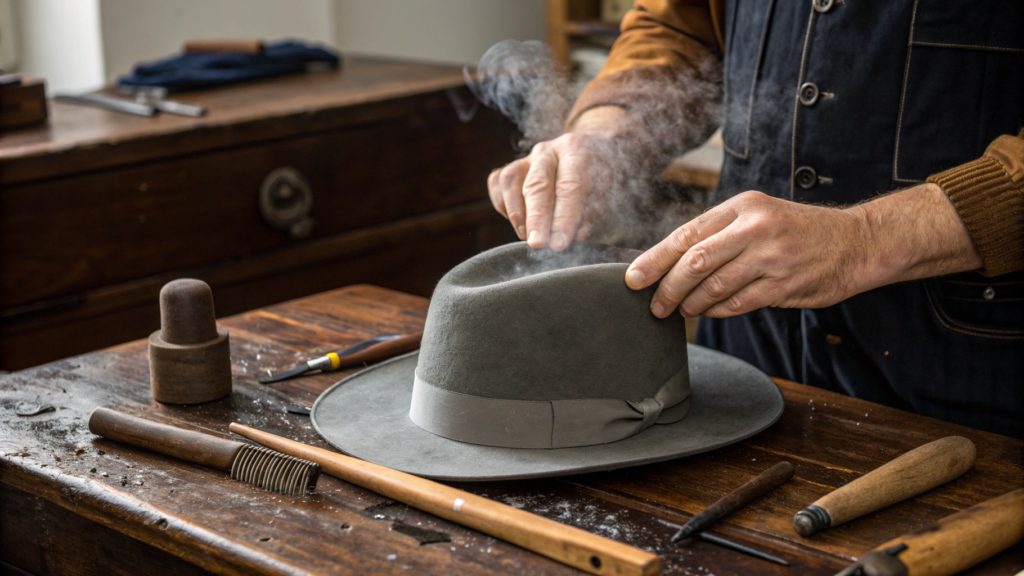
The fedora is shaped and blocked by pulling the dampened felt cone over a wooden form called a hat block, which defines the crown's size and profile. The craftsman then uses hands, tools, and steam to meticulously create the signature pinches, dents, and brim shape, followed by a controlled drying period to set the form permanently.
What is the Role of the Hat Block and Steam?
The hat block is the heart of shaping. Made from wood or aluminum, it is a precise mold of the hat's crown. The felt cone is thoroughly softened with steam, making the fibers pliable. It is then stretched tightly and evenly over the block. Steam is the catalyst; it relaxes the fibers, allowing them to be repositioned and set into a new memory. Using their hands and perhaps a blocking rake, the craftsman ensures the felt conforms perfectly to every curve of the block, eliminating wrinkles or unevenness. The iconic center crease and side pinches of the fedora are also hand-formed at this stage using fingers and sometimes a creaser tool. This hands-on expertise is what gives each fedora its character, similar to how our designers add unique details to a hair band or belt.
How is the Brim Shaped and Finished?
Once the crown is blocked and set, attention turns to the brim. While still on the block, the excess material forming the brim is flattened. The hat is then transferred to a brim flange—a metal press with the desired brim shape (wide, narrow, upturned, etc.). The brim is steamed, placed between the flanges, and pressed to achieve a crisp, uniform edge. After pressing, the brim is trimmed to its exact final width using a sharp blade and a guide. The raw edge is then finished, often with a welted edge where a thin cord is sewn over the edge for durability and a polished look, or a raw edge that is simply sanded smooth for a different style. This meticulous finishing is a hallmark of quality, just as precise stitching is on a leather wallet.
What Finishing Touches Complete the Fedora?
The shaped felt hat is now functional, but the finishing touches elevate it from a prototype to a refined, market-ready accessory. This phase combines decoration with practical comfort.
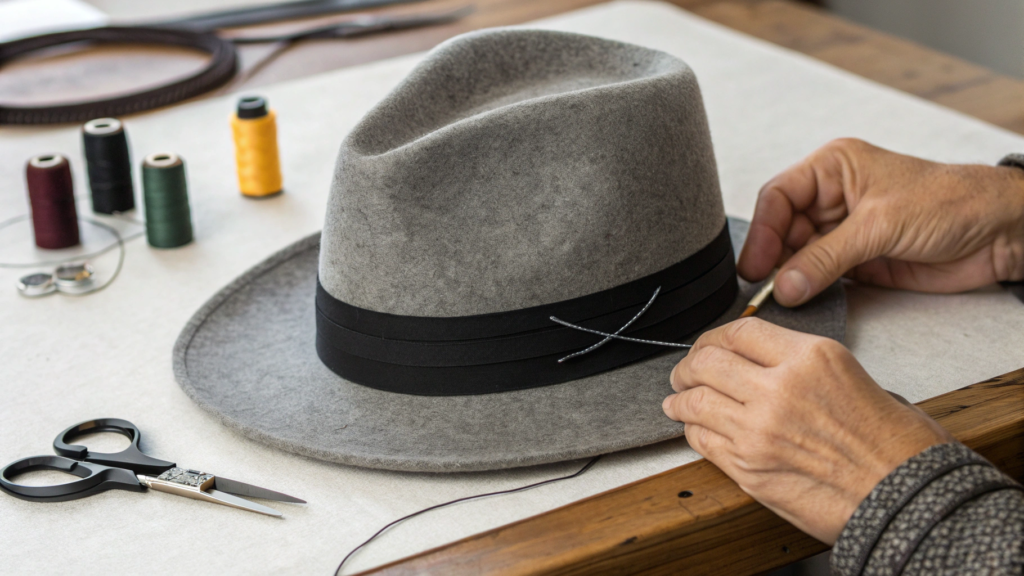
Finishing touches complete the fedora by adding both functional and aesthetic elements: a sweatband inside for comfort, a lining for luxury, an exterior hatband for style, and final shaping and polishing. Each element is carefully hand-sewn or attached to ensure durability and a flawless appearance.
How are the Lining and Sweatband Attached?
The interior must be as considered as the exterior. First, a leather sweatband is fitted and hand-sewn inside the crown. This band absorbs moisture, provides a comfortable grip on the head, and helps maintain the hat's size. Next, a decorative lining, often of satin or silk with the brand's logo, is carefully glued or tacked into the crown's top. This lining hides the felt seams and adds a touch of luxury. The process requires a keen eye for alignment and neatness—wrinkled or poorly fitted linings are a mark of inferior craftsmanship. At Shanghai Fumao Clothing, our quality control team inspects every interior as rigorously as the exterior, a standard we apply across all products, from knit hats to handbags.
What is the Process for Adding the Hatband and Final Pouncing?
The exterior hatband (or ribbon) is a fedora's signature. A strip of grosgrain or similar ribbon is measured, cut, and meticulously hand-stitched at the back seam. It is then pinned and sewn by hand around the base of the crown, covering the joint between crown and brim. This step demands precision to ensure the band is straight and the stitches are invisible. Finally, the entire hat undergoes pouncing: a sanding process with fine-grit sandpaper to raise the nap of the felt, giving it an incredibly soft, smooth hand-feel. Any final steaming and brushing remove dust and set the shape perfectly. For insights into traditional and modern accessory manufacturing techniques, organizations like the Craft & Hobby Association often provide valuable context.
How is Quality Ensured Before Shipping?
Before a fedora is deemed ready for a customer, it must pass a series of checks that guarantee it meets both aesthetic and functional standards. This last line of defense protects the brand's reputation.
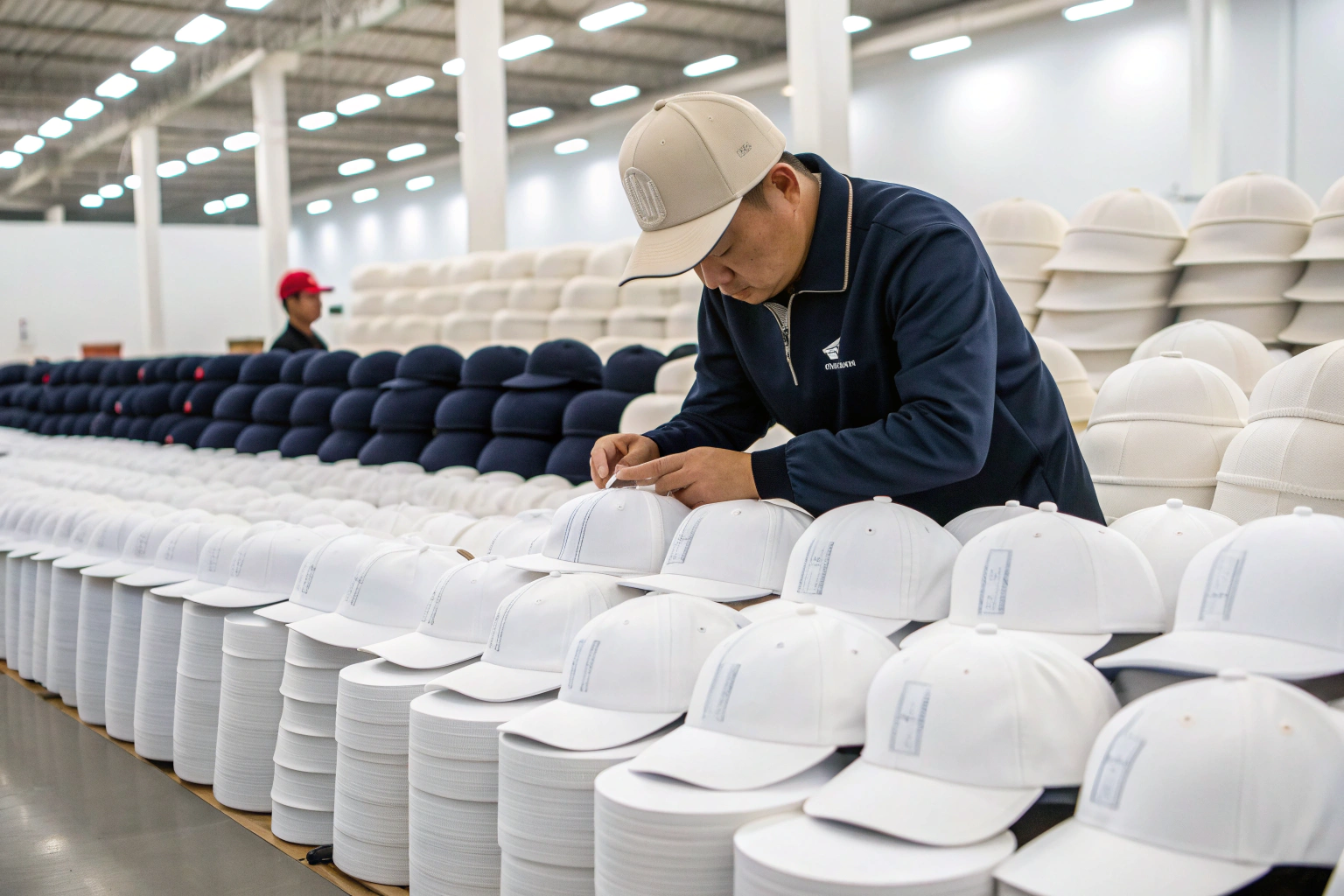
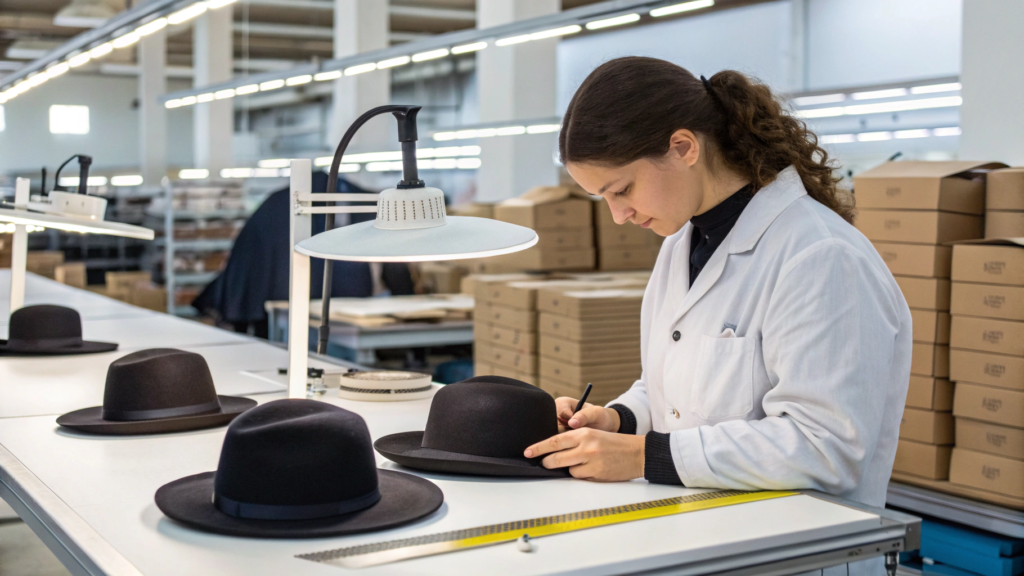
Quality is ensured before shipping through a multi-point inspection that checks symmetry, dimensions, material integrity, color consistency, stitching quality, and overall finish. Each hat is handled, measured, and examined under good lighting to identify any flaws, ensuring only perfect products are packed. This rigorous process is non-negotiable for a professional manufacturer.
What Specific Details are Checked During Final QC?
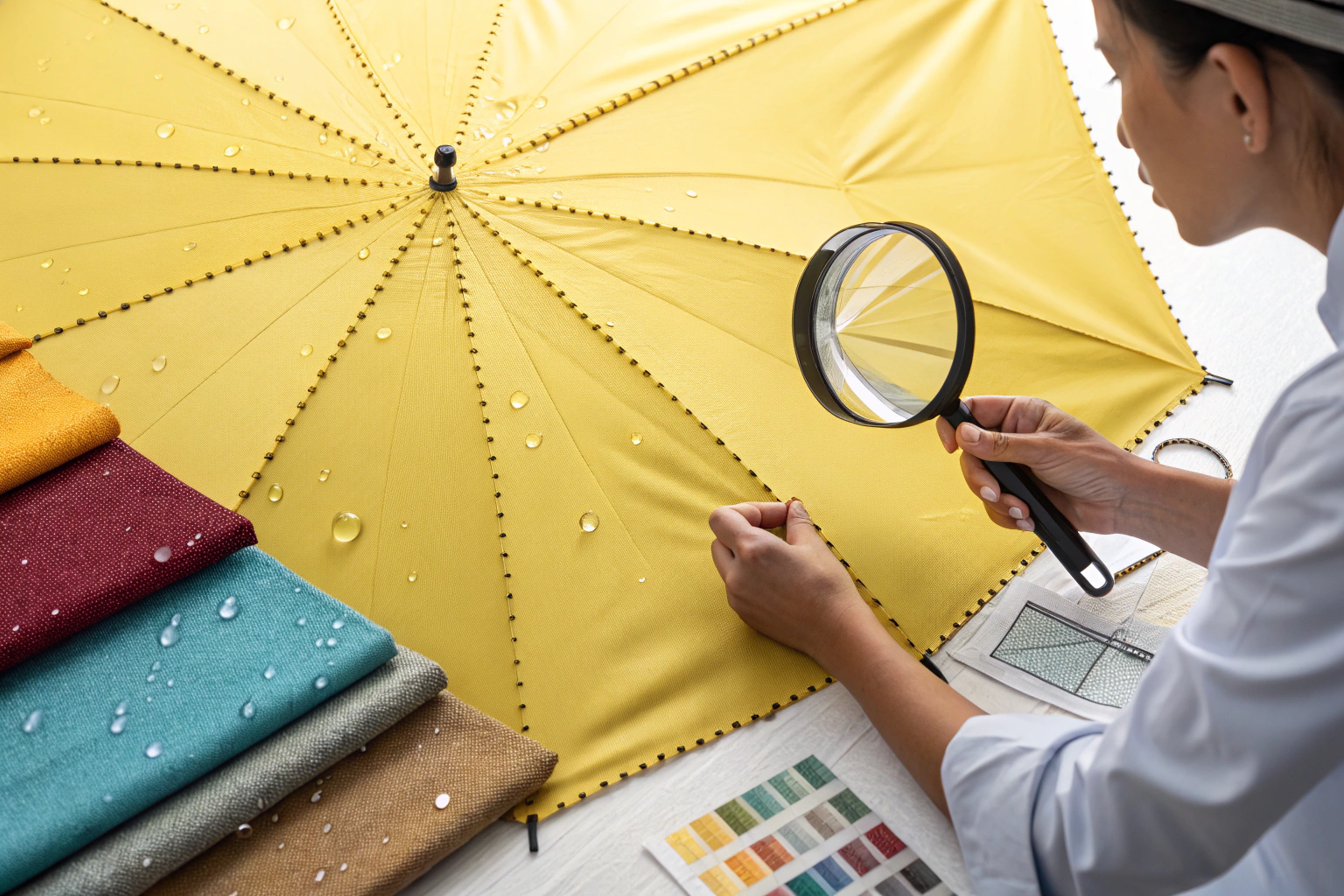
The final inspection is exhaustive. Inspectors use calipers and measuring tapes to verify the brim width and crown height are consistent and to spec. They check the creasing and pinches for symmetry. Every stitch on the sweatband, liner, and hatband is examined for consistency and security. The felt is checked for color fastness, uniformity, and any thin spots or blemishes. The hat is placed on a hat stand to view its profile from all angles. It's also gently handled to ensure all elements are securely attached. This level of detail mirrors the quality control processes we have for our entire range, ensuring that every hair clip or woven belt that leaves our facility is flawless.
How are Fedoras Prepared for Safe Packing and Shipping?
Proper packing is crucial to preserve the hat's shape during transit. A well-made fedora is resilient, but it needs support. Typically, hat boxes with internal supports or flexible hat forms are used. The crown may be lightly stuffed with tissue paper to maintain its structure, and the brim is often secured flat. The box must be sturdy to withstand the rigors of international logistics. For large orders to clients in the US or Europe, we coordinate with reliable freight forwarders to ensure smooth customs clearance and timely delivery, managing the entire process from our factory in Zhejiang to your doorstep. Understanding the full supply chain, from production to last-mile delivery, is part of the comprehensive service a professional partner provides.
Conclusion
The process of making a felt fedora is a remarkable journey from loose fibers to a sculpted, stylish accessory. It requires specialized knowledge, skilled hands, and an unwavering commitment to quality at each stage—from material selection and felting to the art of blocking and the precision of finishing. This intricate process is a testament to the craftsmanship behind timeless fashion.
Understanding this journey allows you to appreciate the value in a well-made hat and to better evaluate the manufacturers who produce them. If you are looking for a manufacturing partner with the expertise, quality systems, and dedication to produce exceptional felt fedoras or any other fashion accessory, we are here to help.
For a reliable partnership in manufacturing your own line of premium fedoras or other accessories, feel free to contact our Business Director Elaine to discuss your project requirements. Her email is: elaine@fumaoclothing.com.