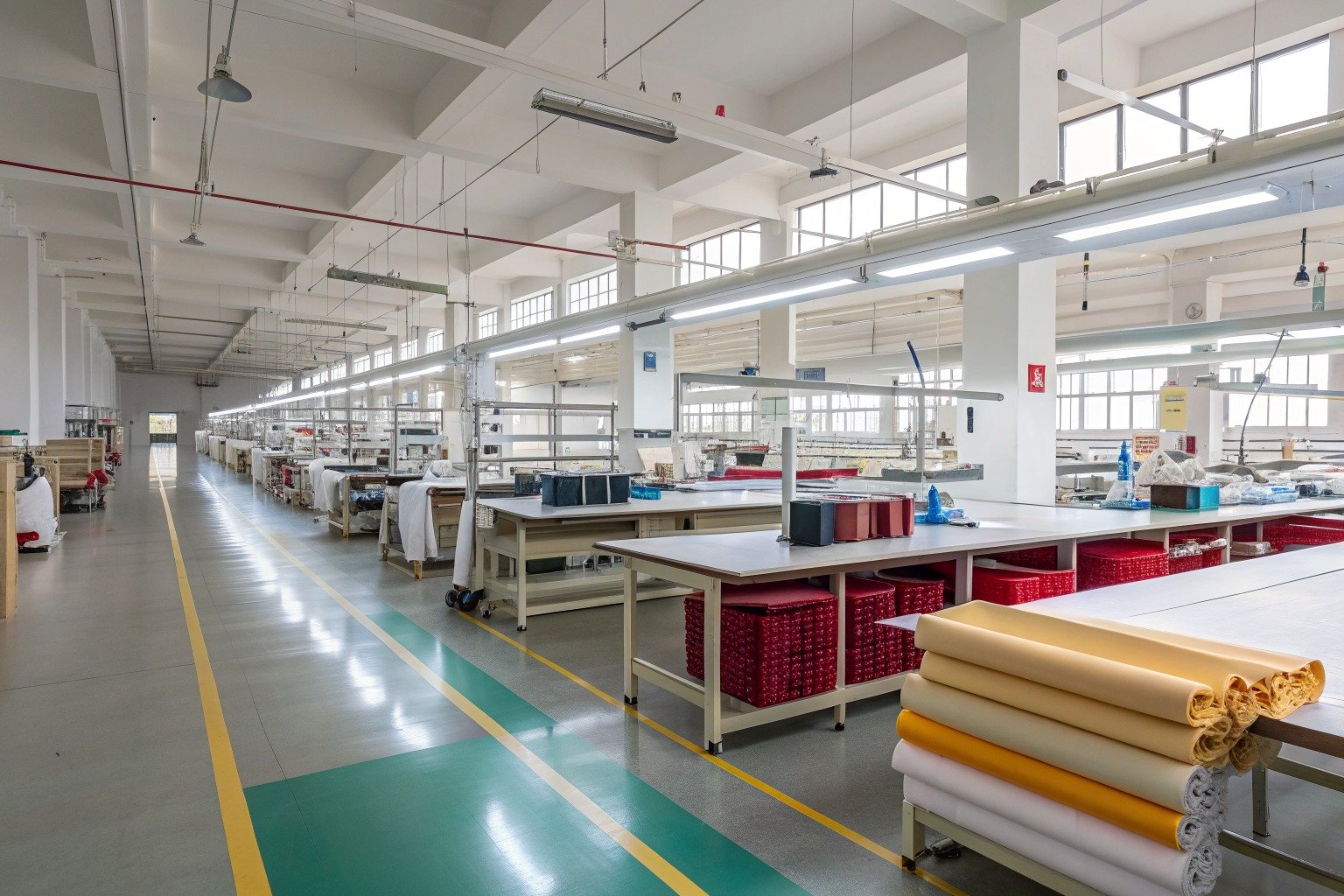
Imagine ordering a batch of 500 leather belts, only to find the logos are smudged, peeling, or inconsistently placed. In the world of fashion accessories, where details define quality, traditional printing and engraving methods often fall short. This frustration is why forward-thinking brands and manufacturers are turning to laser technology. But how does this high-tech process actually work on materials like leather, metal, and wood?
Laser engraving is a precise, digital fabrication process that uses a focused beam of light to permanently etch designs, logos, or patterns onto the surface of a fashion accessory. It works by vaporizing microscopic layers of material to create high-contrast, durable marks without physical contact or the use of inks. At Shanghai Fumao Clothing, we’ve integrated laser engraving into our production for items like personalized belts, metal hair clips, wooden pendants, and acrylic hair accessories, ensuring impeccable detail and consistency that manual methods cannot match.
This technology bridges the gap between mass production and customization. It allows for intricate designs, serial numbers for authenticity, and personalized text without slowing down the production line. The result is a premium finish that elevates the perceived value of the accessory. Let’s delve into the step-by-step journey of how a digital file becomes a permanently engraved design on your product.
How Does Laser Engraving Technology Work?
The core principle is controlled destruction. Unlike a printer that adds ink, a laser engraver removes material. The process is computer-controlled, making it incredibly accurate and repeatable, which is essential for large orders where every piece must be identical.
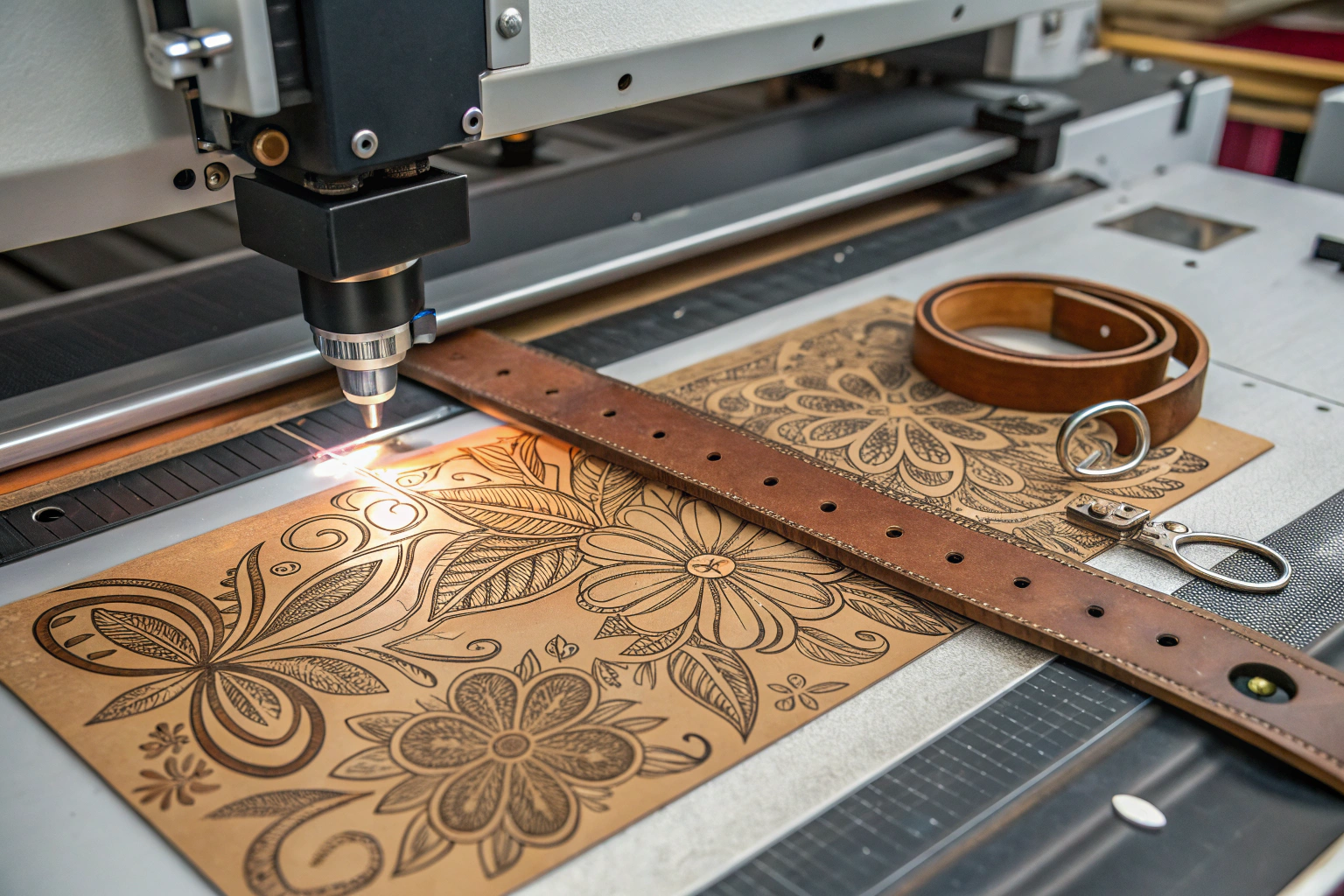
Laser engraving works by focusing a high-power laser beam onto a tiny point on the material’s surface. The intense heat of the beam causes the material to vaporize or change color at the point of contact, leaving a permanent mark. The laser head moves across the surface according to a digital design file, tracing the pattern with pinpoint accuracy. The type of laser (CO2 or Fiber) and its settings (power, speed, frequency) are carefully tuned based on the material being engraved.
There are two main types of lasers used in accessory manufacturing:
- CO2 Lasers: Ideal for organic materials like leather, wood, fabric, paper, and most plastics (like acrylic for hair accessories). They work by exciting a gas mixture.
- Fiber Lasers: Best suited for metals and engineered plastics. They are perfect for deep engraving on stainless steel belt buckles, zinc alloy charms, or creating subtle marks on anodized aluminum. The choice of laser is the first critical decision in the process, as using the wrong type can result in poor marking or damage to the material.
What Are the Key Advantages Over Traditional Methods?
Laser engraving outshines techniques like screen printing, hot stamping, or manual etching in several key areas:
- Permanent & Durable: The mark is part of the material, so it won’t peel, fade, or wash off. This is crucial for accessories that undergo wear and tear.
- High Precision: It can reproduce extremely fine details, complex logos, and small text that would be impossible with other methods.
- Versatile: One machine can handle a vast array of materials—from genuine leather for wallets to felt for hats—simply by changing the digital settings.
- Efficient & Consistent: Once the machine is set up, it can run unattended, producing thousands of identical, perfect marks. This reduces waste and labor cost, a principle we prioritize in our operations at Shanghai Fumao Clothing.
What Materials Are Suitable for Laser Engraving in Accessories?
Most common accessory materials are excellent candidates:
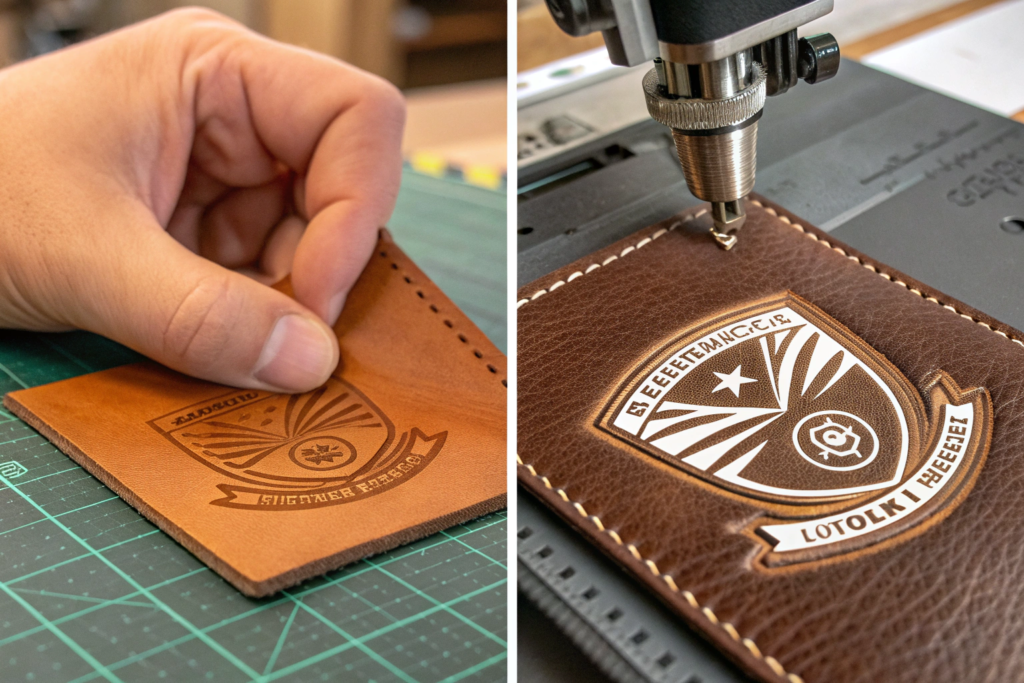
- Leather & Suede: Creates a beautiful, darkened contrast engraving. Perfect for belts, bag tags, and watch bands.
- Wood & Bamboo: Ideal for wooden buttons, pendants, and hair sticks. The laser can create both light burns and deep carvings.
- Metals: Stainless steel, aluminum, brass, and anodized metals can be marked with high contrast. Some require a special paste for optimal results.
- Acrylic & Plastics: Offers a clean, polished engraving, great for acrylic hair clips and keychains.
- Fabric & Denim: Can be used for precise patterning or branding on cotton hats or denim jackets (though settings must be very precise to avoid cutting). Materials that melt easily (like some cheap plastics) or contain PVC (which releases toxic chlorine gas) are not suitable.
What Are the Steps in the Laser Engraving Process?
The journey from concept to engraved product is a streamlined digital workflow. Each step is crucial to ensure the final output meets exact specifications, especially when dealing with delicate or expensive accessory components.
The laser engraving process involves five key steps: 1) Design and File Preparation, 2) Material Selection and Preparation, 3) Machine Setup and Parameter Calibration, 4) The Engraving Run, and 5) Post-Processing and Quality Control. Skipping or rushing any step can lead to flawed products and wasted materials.
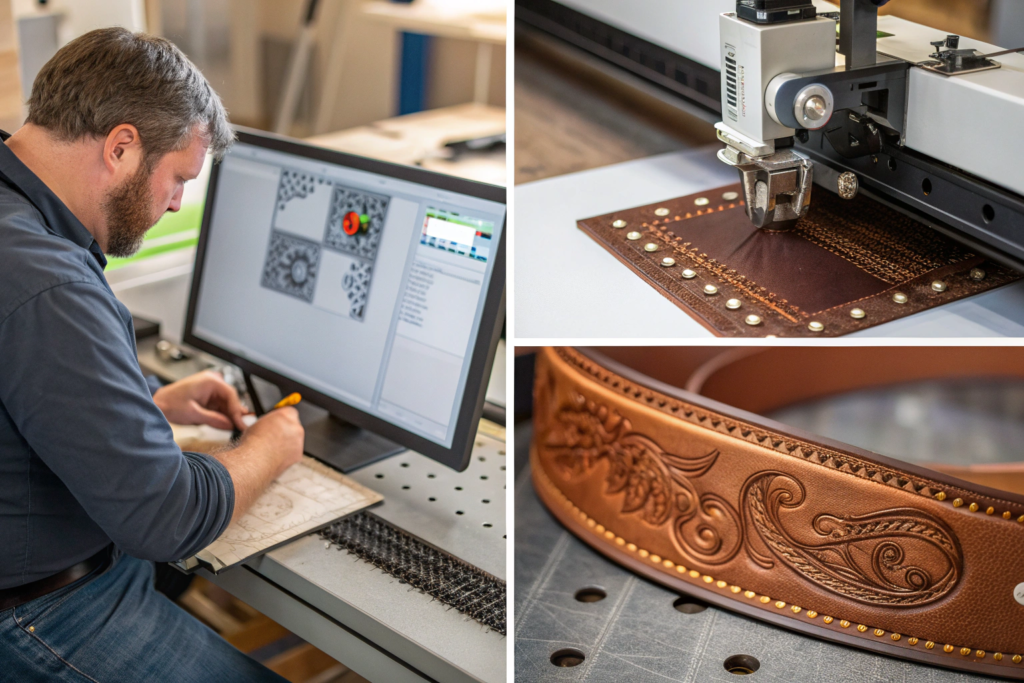
Step 1: Design & File Preparation. This is the foundation. The artwork must be provided in a vector format (like .AI, .EPS, or .SVG). Raster images (like .JPG) can be used but may lack sharpness. The designer prepares the file, ensuring all lines are closed and the scale is correct for the product. This is when personalization data (like sequential numbers or names) is programmed into the file.
Step 2: Material Preparation. The accessory component (e.g., a blank leather strap, a metal buckle) must be clean, flat, and consistently positioned. For mass production, specialized jigs or fixtures are often created to hold the pieces in the exact same spot for every engraving, guaranteeing perfect alignment.
Step 3: Machine Calibration. This is the technical heart. The operator loads the file into the laser software and selects the material type from a database or manually inputs parameters: laser power, engraving speed, pulse frequency (PPI), and resolution (DPI). A test run on a sample piece of the same material is mandatory to check depth, contrast, and overall effect. Resources like Epilog Laser’s Material Settings provide guidelines, but fine-tuning is always needed.
Why is the Test Run and Parameter Setting Critical?
Laser settings are not one-size-fits-all. The same logo will require different power and speed to cleanly mark vegetable-tanned leather versus chrome-tanned leather. A test run verifies:
- Contrast: Is the mark dark and clear against the background?
- Depth: Is it too shallow (may wear off) or too deep (weakens the material)?
- Detail Integrity: Are fine lines crisp, or are they burned away?
- Material Reaction: Does the material scorch, melt, or discolor unpleasantly around the edges? Only after a perfect test result does full production begin. This meticulous approach to quality control is embedded in our service at AceAccessory to protect our clients’ brand reputation.
What Happens During the Engraving and Post-Processing Phase?
Step 4: The Engraving Run. The operator loads the batch of materials, starts the machine, and the laser does the rest. An exhaust system removes smoke and particles. For a large order of metal keychains, this process is fully automated and highly efficient.
Step 5: Post-Processing & QC. After engraving, some materials require cleaning to remove residue (like soot from wood or metal). Each piece is inspected for completeness, alignment, and clarity against the approved sample. Defective pieces are rejected. For some metals, a final clear coat might be applied to protect the engraving. This end-to-end control ensures that every personalized accessory shipped meets the highest standard.
What Are the Applications in Fashion Accessory Production?
Laser engraving is not just for putting a logo on a buckle. Its applications are vast, enabling both functional branding and decorative artistry that can define a product line. It solves multiple pain points for brands, from anti-counterfeiting to rapid prototyping.
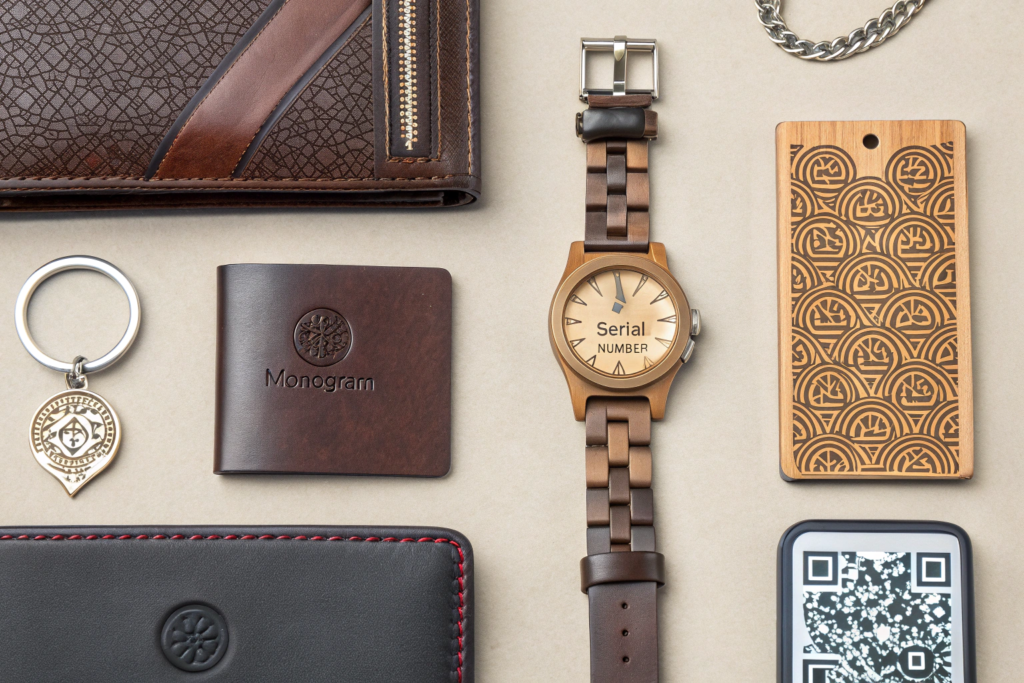
Key applications include permanent branding and logos, intricate decorative patterning, personalized text (names, dates), serial numbering for authenticity, and creating unique textured effects on materials. This versatility makes it indispensable for producing everything from high-end boutique items to scalable private-label collections for large retailers.
- Branding & Logos: The most common use. It provides a clean, premium, and indelible brand mark on belt buckles, leather tags inside bags, metal buttons on jeans, and acrylic display tags.
- Decorative Design: Lasers can etch elaborate patterns directly onto accessories. Think of geometric designs on wooden bangles, floral vines on metal hair vines, or tribal patterns on leather cuffs. This opens unlimited creative possibilities.
- Personalization: This is a huge market driver. Engraving initials, names, or special dates on pendants, bracelets, money clips, and compact mirrors adds significant value and allows for direct-to-consumer customization models.
- Functional Marking: Engraving care instructions on a wooden hair brush, size markings on a metal ring, or batch codes for inventory tracking.
How Does It Enable Mass Customization?
"Mass customization" – producing made-to-order items at scale – is a major trend. Laser engraving is its engine. The digital workflow means changing from one customer’s name to the next is as simple as changing a text field in the software. There are no physical dies to swap, no screens to clean. This allows manufacturers like us to offer low minimum order quantities (MOQs) for personalized items, which is highly attractive to small e-commerce store owners and gift brands. The production line remains fast and efficient, even when every item is unique.
What Role Does It Play in Luxury and Anti-Counterfeiting?
For luxury accessory brands, authenticity is everything. Laser engraving can create microscopic serial numbers, secure QR codes, or intricate hidden patterns that are extremely difficult to replicate. This provides a tangible, verifiable mark of authenticity for items like high-end watches, designer belts, and fine jewelry. The precision and permanence of the laser mark make it a trusted technology for brand protection, an important consideration we advise our clients on at Shanghai Fumao Clothing.
What Are the Limitations and Considerations for Brands?
While powerful, laser engraving is not a magic wand. Understanding its limitations and the required upfront work is crucial for brands to set realistic expectations and ensure a successful project. The biggest mistakes happen when brands assume any design on any material will work perfectly.
Key limitations include material restrictions (PVC, certain treated metals), color limitations (it often creates monochrome marks), initial setup cost and time, and the necessity for expert operation to achieve optimal results. Furthermore, the design must be technically suitable for the process—extremely tiny details may not render well on certain textures.
Material Limitations: As noted, materials that emit toxic fumes (like PVC, vinyl, or certain foams) are unsafe to laser. Some coated or painted metals may engrave poorly, only removing the top coat. Highly reflective materials (like polished gold or silver) can reflect the beam and damage the machine.
Design Considerations: Not all graphic designs translate well. Very thin lines might burn away. Solid filled areas can require multiple passes and may cause overheating on delicate materials like thin leather or silk. A knowledgeable manufacturer will consult on design optimization for engraving.
Cost Structure: The cost is not in the "ink" but in the machine time and expertise. While the per-unit cost for a long run is low, there is an upfront cost for project setup, file preparation, and creating custom fixtures. For small runs, this setup cost can represent a significant portion of the total.
How to Prepare Artwork for the Best Results?
To ensure a smooth process, brands should:
- Provide Vector Files: Always supply the design in .AI or .EPS format with all text converted to outlines/paths.
- Specify Exact Dimensions: Clearly state the required final engraved size in millimeters or inches.
- Consider Material Color: Understand that engraving typically creates a contrast mark (dark on light, or light on dark). If you need a specific color, other processes like color filling (manually adding paint to engraved grooves) may be needed, which adds a step and cost.
- Request a Physical Proof: Never approve based on a digital image. Always approve a physical sample on the exact production material. This is a non-negotiable step in our client onboarding process at AceAccessory.
What Questions Should You Ask Your Manufacturer?
When sourcing laser-engraved accessories, ask your supplier:
- "Do you have experience engraving on [my specific material]?"
- "Can you provide a detailed breakdown of setup costs vs. per-unit costs?"
- "What is your process for sample approval and quality control during production?"
- "What are the lead times for setup and production?"
- "Can you help optimize my design for the best engraving result?" A transparent manufacturer will welcome these questions and guide you through the process, ensuring your vision is executed flawlessly.
Conclusion
Laser engraving has revolutionized the finishing and personalization of fashion accessories. It is a process that merges digital design with physical craftsmanship, delivering unmatched precision, durability, and versatility. From adding a subtle brand mark to creating a fully customized heirloom piece, it empowers brands to enhance value, ensure quality, and meet the growing demand for personalization.
For brands, the key to success lies in understanding both the possibilities and the practicalities of the process. Partnering with an experienced manufacturer who masters the technology—from file preparation to machine calibration and post-processing—is essential to transform a good idea into a perfectly executed product.
If you are looking to incorporate laser engraving into your next line of belts, jewelry, hair accessories, or leather goods, we have the technology and expertise to guide you. Contact our Business Director, Elaine, at elaine@fumaoclothing.com to discuss how Shanghai Fumao Clothing (AceAccessory) can bring precision and permanence to your designs.