

Have you ever waited by the phone for a shipping confirmation, only to receive an email saying the goods failed inspection and the shipment is delayed? I have been on the other side of that call. Not as the buyer, but as the factory owner who had to make it. It was one of the worst days of my professional life. A critical winter hat order for a German supermarket had a stitching defect. The entire batch was rejected by our own quality control team two days before the ship date. I had to call the buyer and tell him his shelves would be empty. He was furious. He threatened to cancel the contract. The problem was not just the defective stitching. It was the broken promise of a deadline.
AceAccessory is a professional manufacturer and exporter of accessories. The best way to handle a factory that misses a quality deadline is to first secure a transparent root cause analysis, then negotiate a partial air freight split to cover the immediate stock gap, and finally implement a binding corrective action plan with weekly progress reports to prevent recurrence.
Emotions run high when a deadline blows up. The buyer feels betrayed. The factory feels defensive. But the goal is not to win a fight. The goal is to get the goods and fix the system. As a factory owner in Zhejiang who has managed many crises, I want to give you a clear, practical playbook. This is the method that saves the business relationship and your season.
How Should You React in the First Hour After a Missed Deadline?
The first hour is critical. Your brain will scream at you to send an angry email. Do not send it. An angry email triggers a fear response. The factory shifts from problem-solving mode to self-preservation mode. They hide the truth. They make excuses.
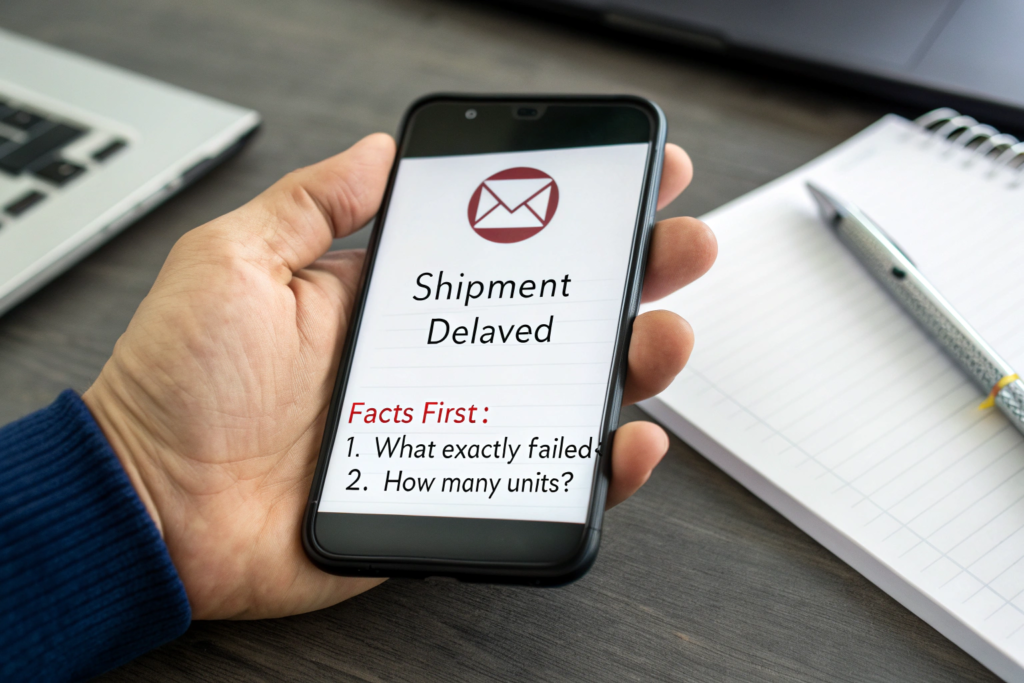
Instead, pick up the phone. Call the factory owner or the project manager. Your goal in this call is not to assign blame. It is to gather the three critical facts. Fact one: What exactly failed? Was it a color mismatch, a dimension error, or a safety test failure? Fact two: How many units are affected? Is it the whole order or just a portion? Fact three: Where are the goods right now? Are they still in pieces waiting to be re-sewn, or are they finished and just need re-inspection? Ask for photographic evidence immediately. We send our clients a video of the failed testing process. We show them the defect under the light box. This transparency is painful but essential. It proves we are not lying to cover a production delay with a fake quality excuse.
Why Is a Root Cause Analysis More Important Than an Apology?
An apology feels good for a moment. But it does not stop the next failure. A root cause analysis is a forensic investigation.
We use a "5 Whys" technique. Why did the stitching fail? The thread tension was low. Why was the tension low? The maintenance schedule was missed. Why was it missed? The technician was out sick and there was no backup. The solution is not just to fix the thread. It is to cross-train a backup technician. You must demand this analysis in writing. It shows the factory understands the systemic failure. A factory that blames a single worker is covering up a management failure. A factory that identifies a process gap is ready to improve. This is the sign of a professional operation. It is the basis of a corrective action report.
How Do You Assess the True Stock Gap?
You need to know the exact new ship date. Do not accept "soon" or "next week." Demand a date. Then calculate the inventory gap.
If the original shipment was due on December 1st and the new date is December 21st, you have a 20-day gap. Check your current stock. How many weeks of inventory do you have? If you have 2 weeks of stock, you have a crisis. If you have 6 weeks, you have a problem, but not a panic. This calculation defines your next move. It is a rational, numbers-based approach. It puts you back in control. This is the discipline of supply chain risk management.
How Can You Negotiate an Air Freight Split to Save the Season?
Once you know the gap, you must bridge it. Sea freight takes 30 days. Air freight takes 5 days. The difference is the time you save. The cost difference is massive. This is where the negotiation happens.
The factory caused the delay. They should pay the cost of the delay. But demanding they pay 100% of the air freight can backfire. The cost might wipe out their entire profit margin. A factory operating at a loss cuts corners on the next order. They use a cheaper thread. You win the battle and lose the war. A better solution is the 50/50 air freight split. You both share the pain of the delay. You show you are a partner, not just a customer. We have used this model many times. We pay half of the express freight. The buyer pays the other half. The goods arrive in time for the peak selling window. The buyer makes their revenue. We preserve our margin. The relationship survives. It is a pragmatic commercial solution.

What Is a Reasonable Split for Air Freight Costs?
The split depends on the severity of the error. If the defect was a clear factory negligence, like using an unapproved material, we pay 100% of the air freight. We own the mistake.
If the defect was a subtle interpretation issue on the quality standard, we propose 50/50. If the buyer changed the specification late in the process, the buyer pays the air freight. The split is a negotiation based on liability. It requires honest self-assessment from both sides. A good factory relationship has this fairness built in. It is part of the vendor partnership agreement.
Can You Split the Shipment to Minimize Cost?
Yes. You do not need to air freight the entire order. You just need enough to fill the shelves until the sea shipment arrives.
We air freight 20% of the order. This is the "emergency buffer stock." The remaining 80% goes by sea. The air freight cost on 20% is much more manageable. It covers the stock gap perfectly. This split-shipment strategy requires additional packaging labor. We absorb that labor cost. It is a value-added recovery service. It demonstrates that the factory is actively trying to minimize the damage. It is a smart logistics solution for retail stockouts.
What Should a Corrective Action Plan Include?
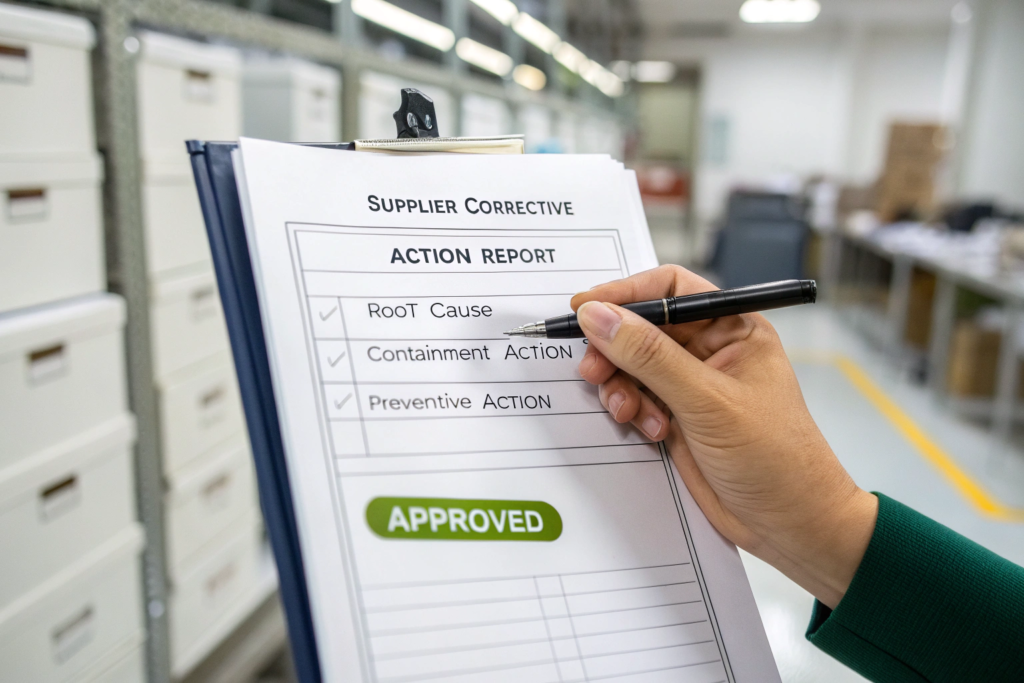
The missed deadline is a symptom. The corrective action plan is the cure. This is a formal document. It has four sections.
Section one is containment. What are you doing with the defective goods right now? We quarantine them. We mark them with a red "Hold" sticker. They do not leave the factory. Section two is the root cause. We already discussed this. It must be a process failure, not a person. Section three is the corrective action. This is the specific change. "We have implemented a daily thread tension calibration log. The quality inspector signs it every morning." Section four is the preventive action. This is the long-term fix. "We have cross-trained two backup mechanics. We have a list of approved alternative materials." We sign this document. We stamp it. We send it to you within 48 hours of the initial failure. You review it. You approve it. This document becomes the new operating procedure. It is a binding promise.
How Do You Verify That the Corrective Action Is Working?
A document is just paper. Verification is physical. Ask for "live evidence" of the fix.
We do a video call from the factory floor. We show the new calibration log. We show the backup mechanic. We run a small pilot batch of 50 units under the new system. We test them. We send you the test results. This is the "re-validation" step. It proves the process is back in control. You authorize the bulk production restart only after this pilot passes. This is the standard PPAP (Production Part Approval Process) logic used in the automotive industry, applied to accessories.
What Is the Consequence for Repeated Failures?
A single failure, handled well, can increase trust. A repeated failure destroys it. The corrective action plan must state the consequence.
"Repeat occurrence of this defect within six months will result in a mandatory independent third-party audit at the factory’s expense." Or, "The factory accepts a 5% penalty clause on the next order." This is not a threat. It is a business agreement. It aligns incentives. It demonstrates that the factory is confident in its fix. A factory that refuses to include a penalty clause is not sure of its own process. Our contracts include these clauses willingly. It shows our long-term commitment to quality assurance.
How Does This Experience Strengthen a Long-Term Partnership?
Paradoxically, a crisis handled correctly builds the strongest relationship. A supplier who has never failed is a supplier who has never been tested. You do not know their true character. A supplier who failed, took ownership, paid the air freight, and fixed the root cause is a supplier you can trust for life.
We have clients who experienced a delay with us years ago. They are still with us today. They trust us more than the factory that always shipped perfectly but was always vague in communication. The reason is intimacy. We walked through the fire together. We know how the other thinks under pressure. The crisis created a shorthand. Now, when a potential issue arises, the buyer calls me directly. He says, "I see a risk here." I listen. I do not get defensive. We fix it before it becomes a failure. This proactive dynamic only exists because of the earlier crisis. It is the ultimate competitive advantage of a true partnership.

Why Is Transparency During a Crisis So Rare?
Fear of losing the customer. Most factories lie. They say the container was delayed by customs. They blame the shipping line. They never admit a quality failure.
We learned that honesty is remembered. A buyer might be angry for a week. But they will respect the truth forever. Hiding a quality failure is the unforgivable sin. It means the buyer will discover the defect themselves, in their own warehouse, after paying the duty. That is a total betrayal. Early, brutal honesty is the foundation of crisis management. It signals integrity. It turns a transactional vendor into a strategic supply partner.
How Do You Build a Joint Risk Buffer for the Future?
After the crisis, we sit down with the buyer. We plan the next season differently. We build a "safety stock" buffer into the production schedule.
We agree to keep 10% extra raw material on hand. We agree that if the order is placed by June, we guarantee the ship date by adding a hidden week of buffer time. We do not charge for this buffer. It is our joint insurance policy. It absorbs the minor disruptions before they become major delays. This strategic planning transforms the relationship from reactive firefighting to proactive supply chain management. It is the mature outcome of a handled conflict. It delivers a competitive edge in inventory optimization.
Conclusion
Handling a factory that misses a quality deadline is a test of leadership. The best approach replaces panic with a forensic analysis. You gather the exact defect data. You calculate the real inventory gap. You negotiate a fair air freight split to save the immediate sales season. You demand and approve a written corrective action plan that fixes the process, not just the product. You verify the fix with a video call. You agree on consequences for recurrence.
A professional factory does not hide from this process. We face it. In our Zhejiang factory, we have a crisis protocol. We call the buyer before they hear it from the shipping agent. We present the root cause. We offer the split. We fix the system. This protocol has turned our biggest failures into our strongest testimonials.
If you are currently dealing with a supplier crisis, or if you want to start a relationship with a factory that knows how to handle pressure honestly, I invite you to reach out to our Business Director, Elaine. She has managed many critical recoveries. She can explain our quality control failsafe system. Send her an email at elaine@fumaoclothing.com. Let’s build a supply chain that can survive a storm and come out stronger on the other side.




