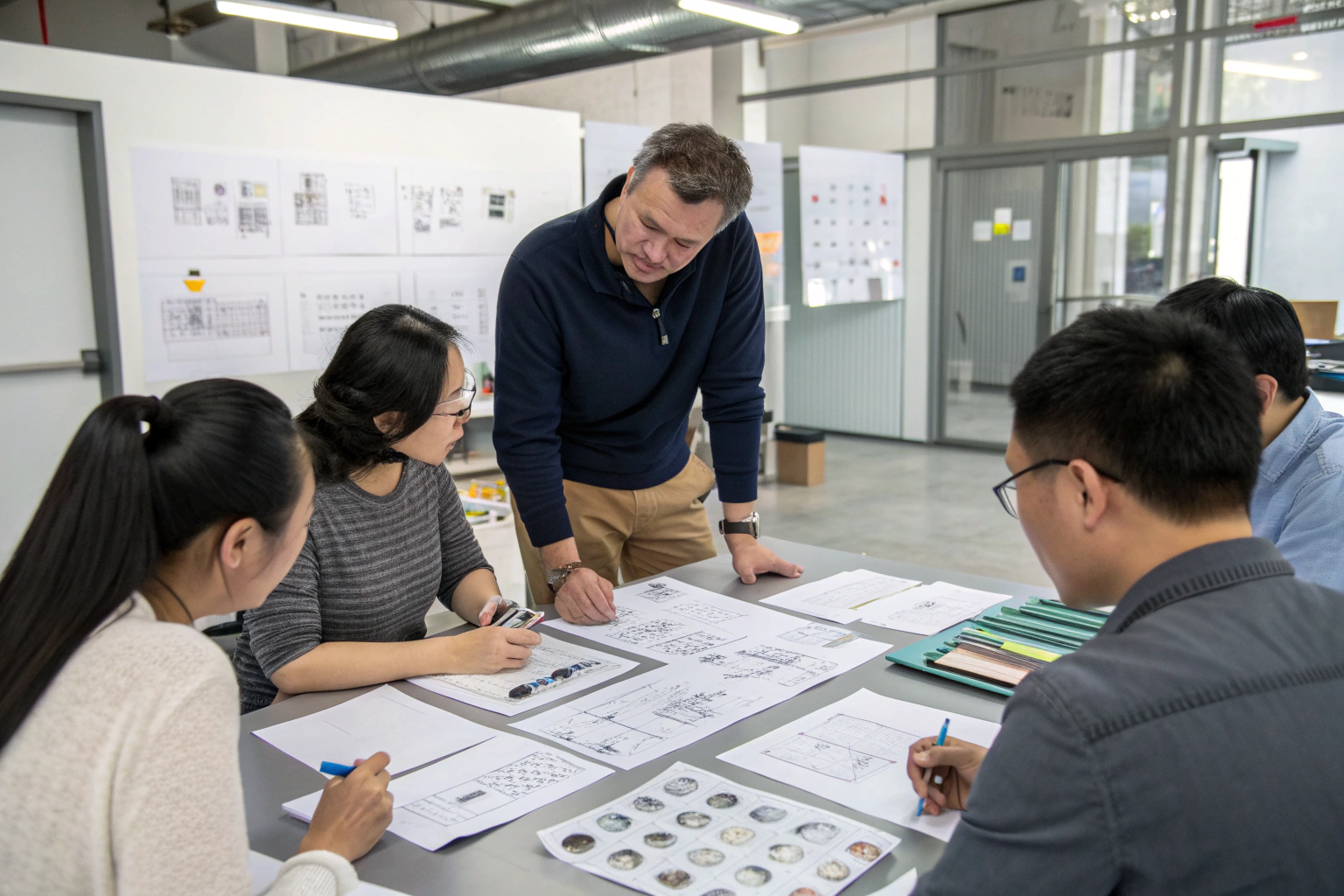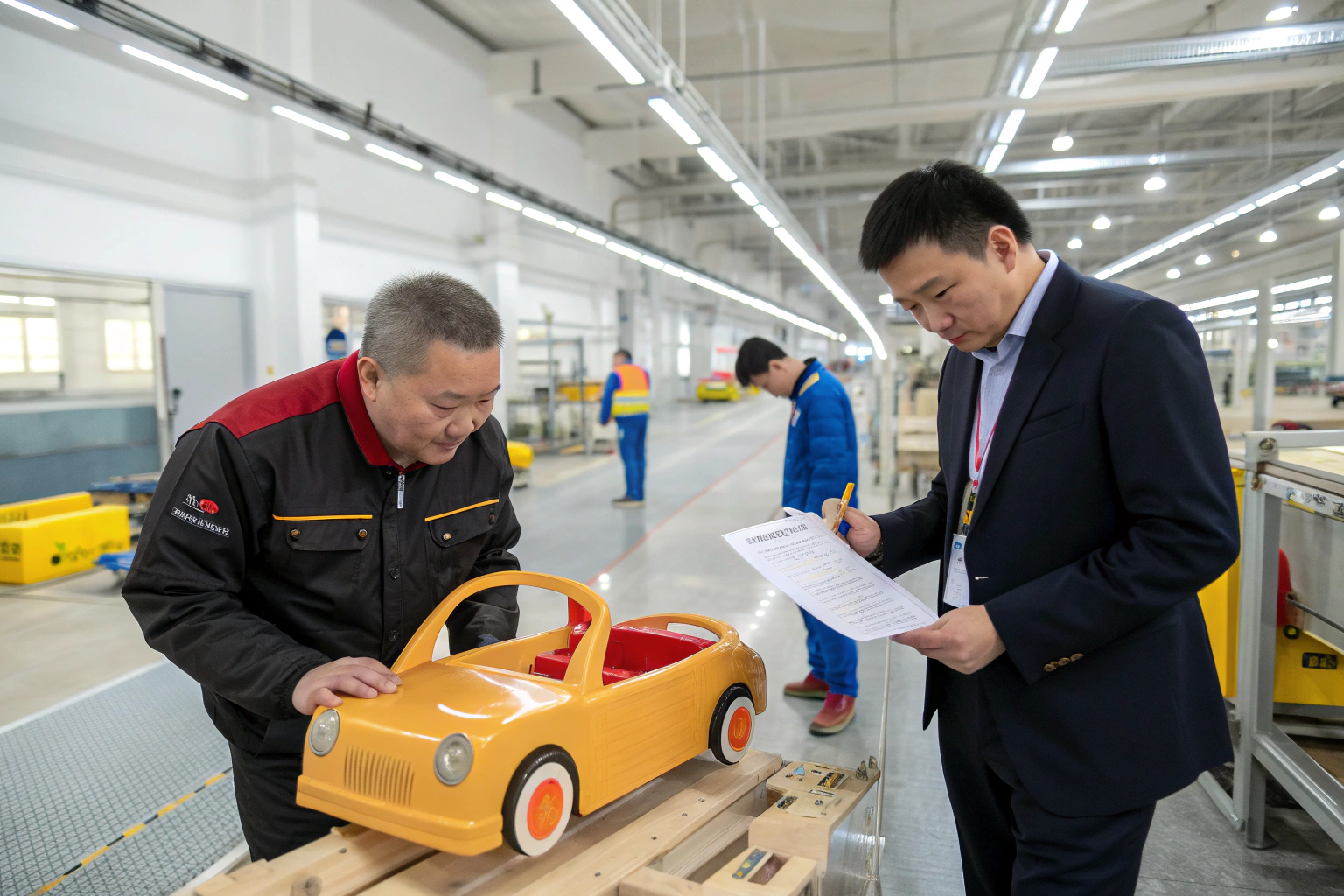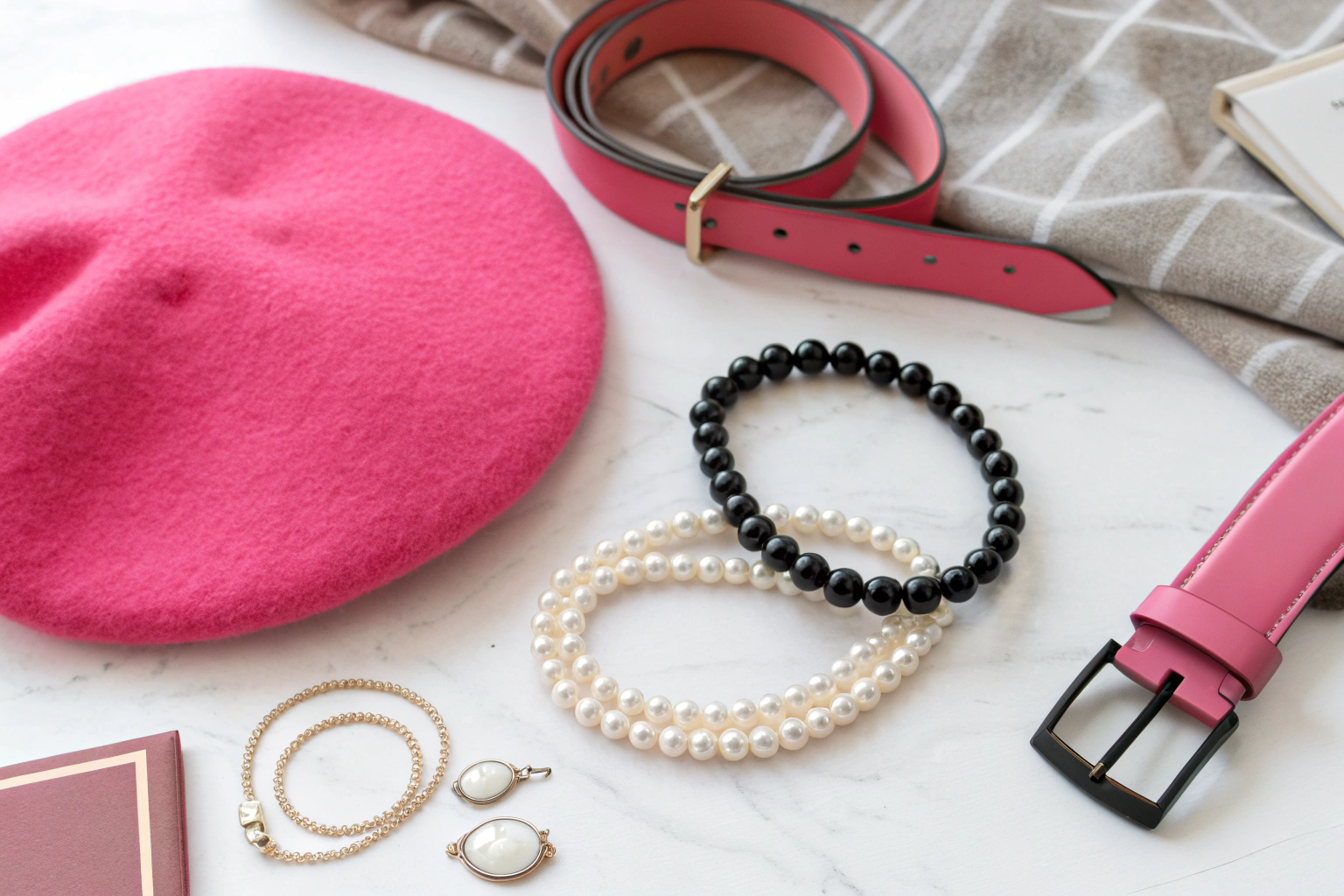
Every season, we see hundreds of accessory samples cross our design tables. The ones that consistently generate excitement from buyers aren't always the newest shapes, but often the ones with captivating embroidery. But "embroidery" is a broad term. As a manufacturer, I see brands making a common mistake: choosing an embroidery style based on a fleeting trend image without considering its cost, production feasibility, or alignment with their brand identity. This leads to budget overruns, delayed timelines, and products that don't resonate. The right embroidery isn't just decoration; it's a strategic tool for brand storytelling, value addition, and standing out in a crowded market.
Currently, popular embroidery styles for accessories are defined by a blend of bold dimensionality, subtle sophistication, and innovative techniques. They move beyond flat logos into the realm of texture and art. The key styles dominating orders from our US and European clients can be grouped into three categories: tactile and textured 3D looks, refined and minimalist modern touches, and mixed-media statement designs that combine techniques.
Understanding these styles—and their implications for production—will help you source accessories that are not only on-trend but also manufacturable, cost-effective, and true to your vision.
Why Are 3D and Textured Embroidery Styles in High Demand?
In a digital shopping world, texture sells. 3D embroidery creates a tactile experience that flat prints or standard stitching can't match. It adds perceived value and luxury, making an accessory feel special and handcrafted. This style is particularly effective for making logos and motifs stand out, transforming them into a focal point you can literally feel.
This demand is driven by the desire for unique, "Instagrammable" details and a return to artisanal craftsmanship. It's a style that says "look at me" and "touch me."
What Makes Chenille Embroidery a Perennial Favorite for Caps and Beanies?
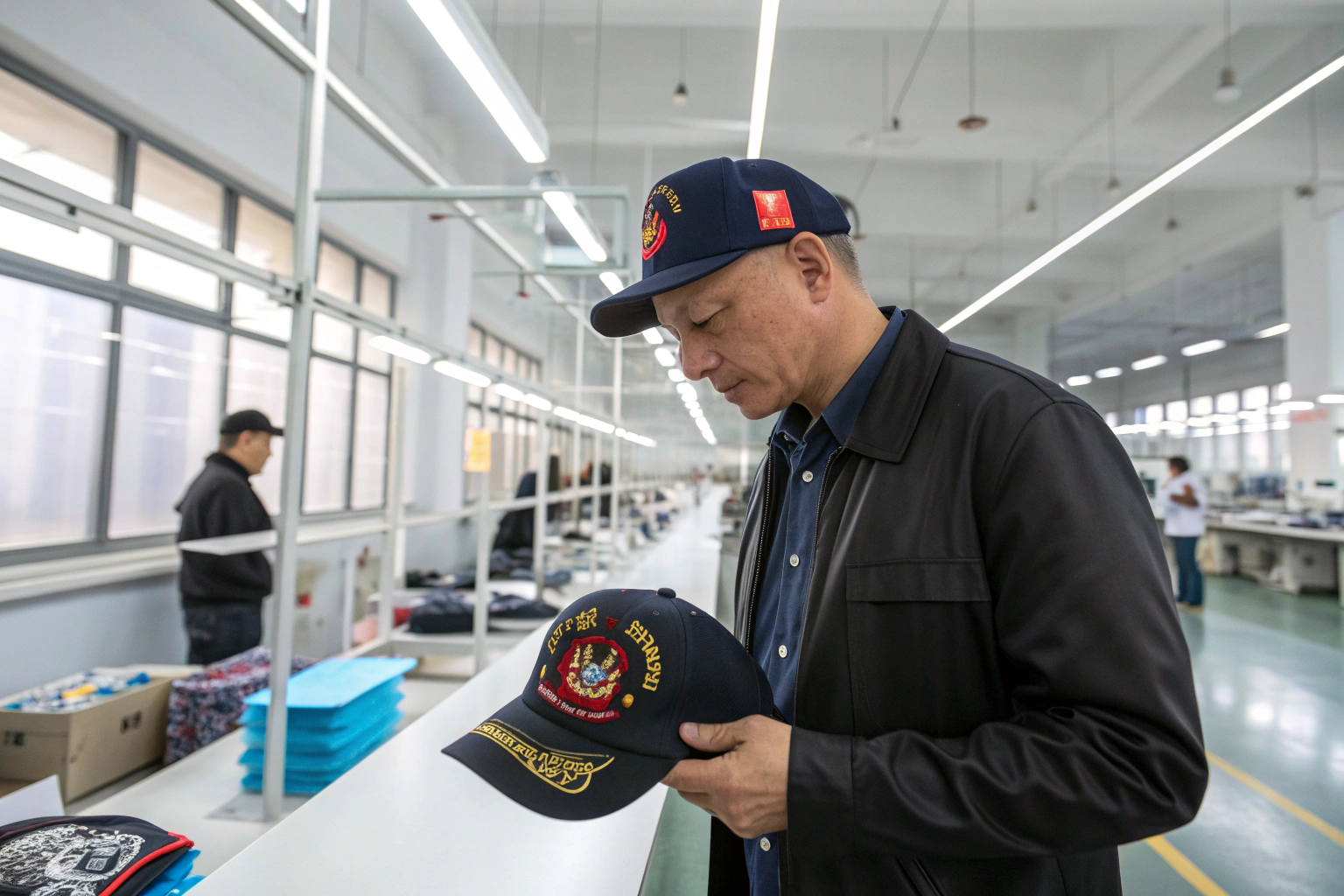
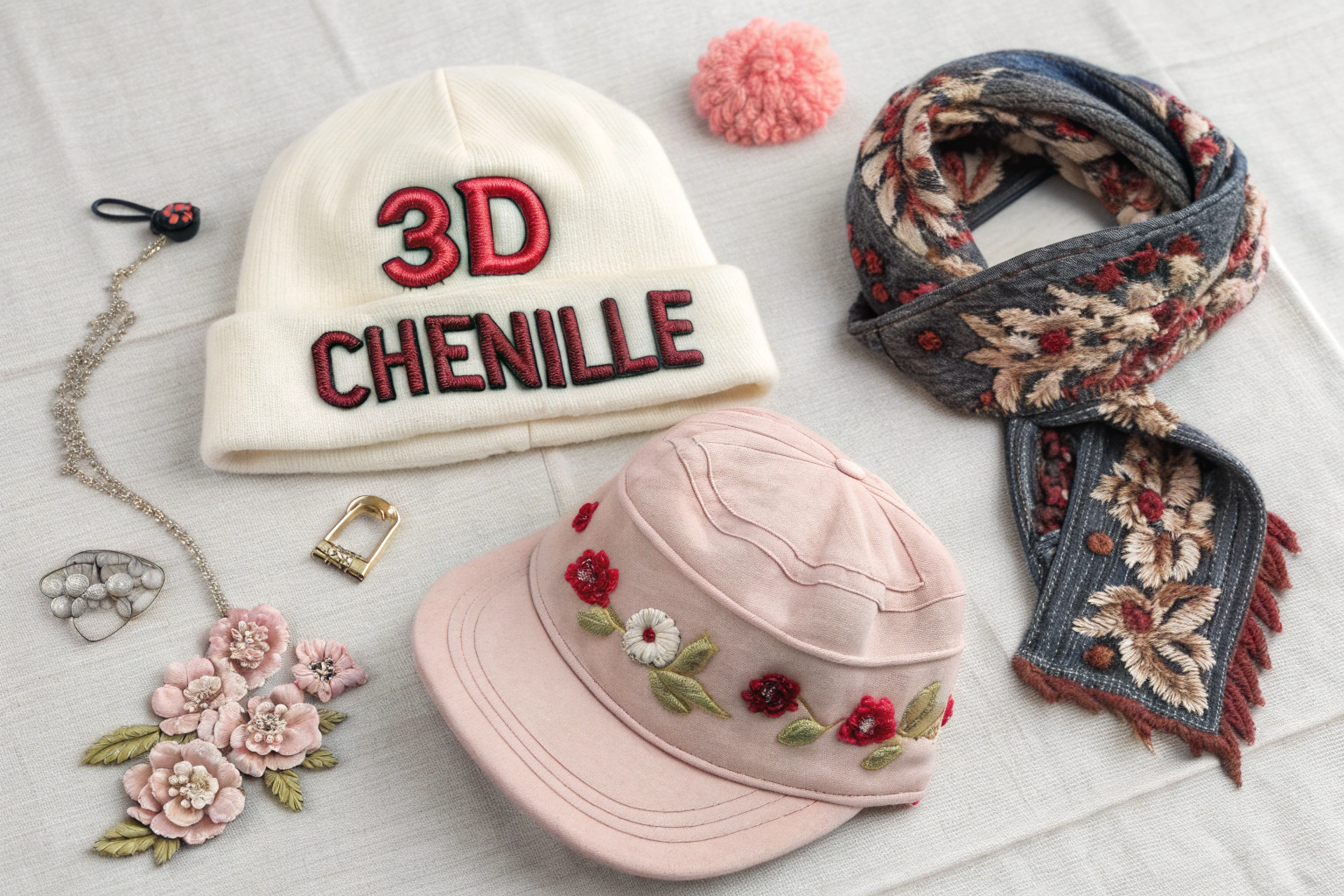
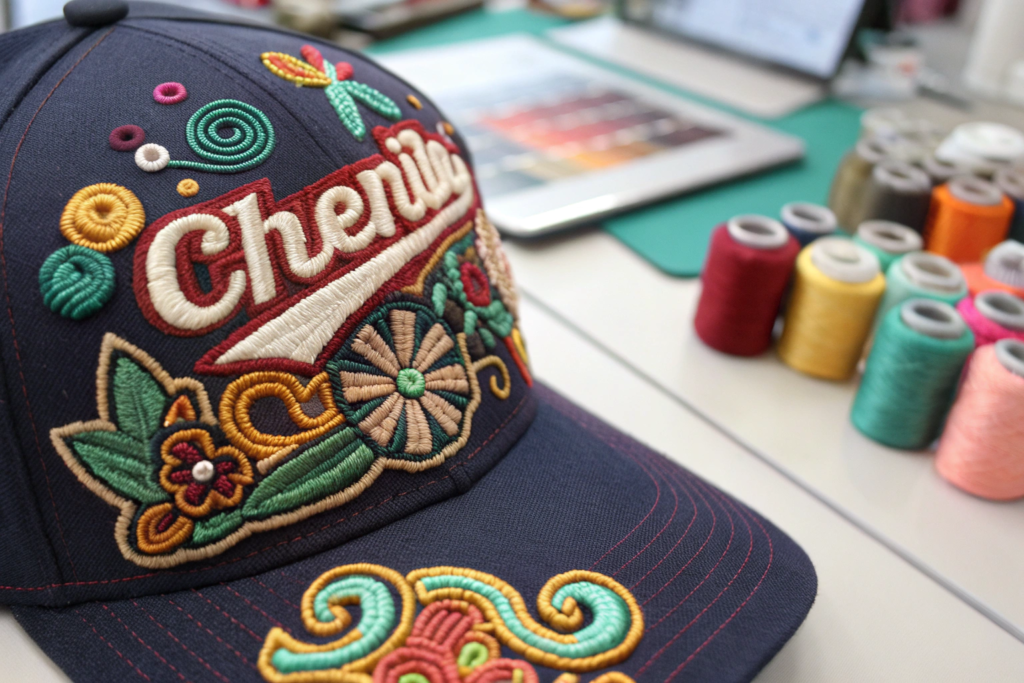
Chenille embroidery is the king of 3D texture. It uses a thick, soft yarn that creates a raised, velvety loop pile. It’s incredibly popular for baseball caps, knit hats, and backpacks because it's both visually bold and durable. The style evokes a vintage, athletic feel but is constantly refreshed with modern fonts and color palettes. For brands, it's a way to make a logo or mascot pop with a classic, high-quality feel. From a production standpoint, chenille requires specialized machines and skilled operators to control the pile height and prevent fraying, making it crucial to work with a factory that has specific expertise in this technique.
How is Puff Embroidery Creating Dimension on Various Surfaces?
Puff embroidery (or 3D foam embroidery) creates a raised, padded effect by stitching over a foam base that is later melted away. It results in a smooth, dimensional shape perfect for rounded logos, simple geometric shapes, and cartoon characters on accessories. We see it extensively on bucket hats, canvas bags, and the fronts of beanies. It offers a more modern, graphic look compared to chenille. The key for sourcing is precision: the foam underlay must be cut perfectly, and the stitch density must be high enough to fully cover and contain it. This requires excellent digitizing skills and machine calibration, part of a strong factory quality control process.
What Defines the "Modern Minimalist" Trend in Embroidery?
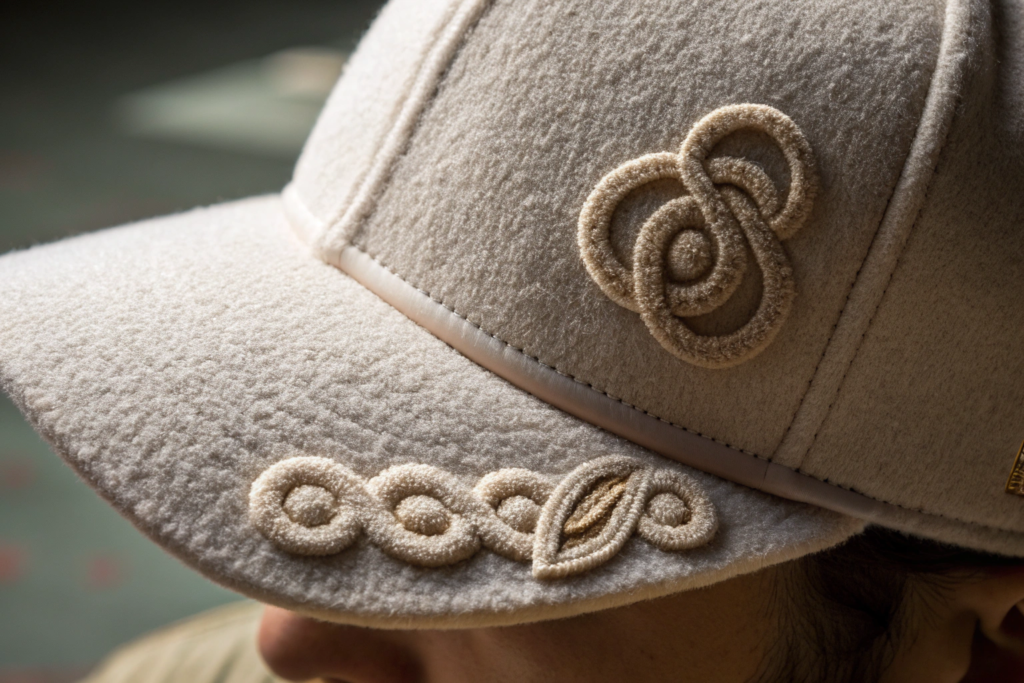
Not every brand wants bold and bulky. For contemporary, fashion-forward, or "quiet luxury" labels, subtlety is key. Modern minimalist embroidery is about fine details, tonal colors, and integration that feels intrinsic to the accessory itself. It's embroidery that whispers rather than shouts, appealing to a customer who values craftsmanship and sophistication over obvious branding.
This style relies on precision, fine threads, and clever placement to create a sense of discovery and refined quality.
Why is Chain Stitch Embroidery Gaining Popularity for Delicate Details?
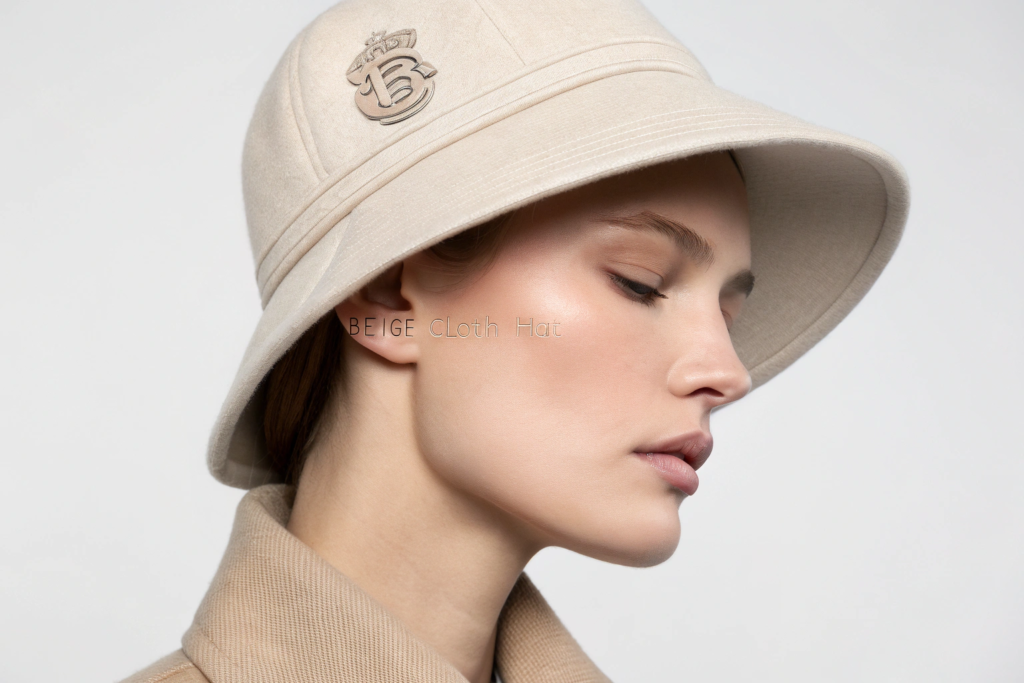
Chain stitch embroidery, one of the oldest forms, is having a major revival. It creates a beautiful, rope-like line that is perfect for delicate line drawings, fine script fonts, and artistic floral motifs. We apply it to the bands of straw hats, the corners of linen scarves, and on hair scrunchies. It has a handcrafted, artisan feel that resonates with the sustainable and craft-aware consumer. Sourcing this style requires a factory with specialist embroidery machines (like Irish or Cornely machines) or highly skilled hand-embroidery artisans. It's a slower process than machine satin stitch, but the unique aesthetic justifies the cost for premium brands.
How Does Tonal and Shadow Embroidery Create Sophisticated Branding?
Tonal embroidery uses thread colors that match, or are one shade off from, the base fabric color (e.g., cream on beige, charcoal on black). Shadow embroidery uses a lighter thread on a darker background to create a subtle, ghosted effect. Both techniques create a sophisticated, integrated look for brand logos or small motifs on belt backs, cap underbrims, or glove cuffs. It’s branding for the discerning customer—noticeable upon closer inspection but never garish. This style demands perfect thread tension and pristine digitizing to ensure the design is crisp and clean, a hallmark of a factory's attention to production detail.
How Are Mixed-Media and Novelty Techniques Pushing Boundaries?
The most exciting and conversation-starting accessories often break the rules by combining embroidery with other elements. This "more is more" approach is perfect for statement pieces, limited editions, and brands targeting a youthful, expressive audience. It turns an accessory into a wearable piece of mixed-media art.
This trend is about experimentation and personalization, often borrowing techniques from other crafts like jewelry-making or graphic design.
What is Driving the Trend of Embroidered Patches on Accessories?
Embroidered patches aren't just for scouts anymore. They are a huge trend for customization and storytelling. We see them applied to backpacks, denim jackets, and prominently featured on baseball caps and bucket hats. The trend includes:
- Appliqué Patches: Where fabric shapes are cut out and outlined with satin stitch.
- Complex Multi-Technique Patches: Combining chenille, puff, and metallic threads.
- Iron-On & Velcro-Back Patches: Allowing for consumer customization.
For brands, patches offer flexibility—they can be produced in bulk and applied to different accessory styles as needed. Sourcing requires a factory, like Shanghai Fumao Clothing, with a dedicated patch department capable of handling intricate, multi-layered designs.
Are Metallic Threads and Bead Integration Still Relevant?
Yes, but they've evolved. Chunky, glitzy metallics of the past have given way to finer, more refined metallic threads (like rayon or polyester blends) that catch the light subtly. Bead integration (sequins, glass beads, pearls) is now used sparingly for accent points within an embroidered floral design on a evening clutch or a holiday hair accessory. The key is restraint and quality. These materials require careful handling and often a combination of machine and hand-finishing, impacting the production timeline and cost. They are perfect for elevating a special collection but may not be suitable for high-volume, everyday basics.
What Should You Consider When Sourcing Embroidered Accessories?
Choosing a style is just the first step. To ensure your vision becomes a flawless reality, you must partner with a manufacturer that can expertly navigate the technical and logistical aspects of embroidery production. This is where many beautiful concepts stumble.
Your sourcing checklist must include technical feasibility, cost drivers, and quality assurance specific to embroidery.
How Does Design Digitization Impact the Final Product?
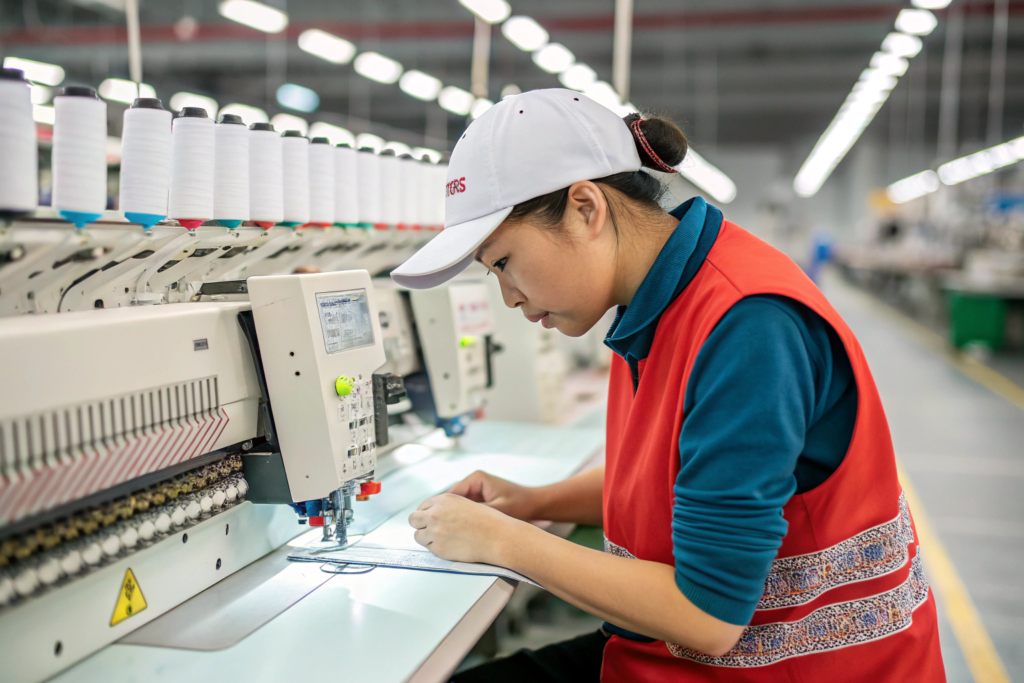
The bridge between your artwork and the stitched product is digitization. This is the process of translating a graphic into a language (stitch file) the embroidery machine understands. Poor digitizing leads to gaps in coverage, puckering fabric, or a design that looks nothing like the original. Always ask a potential supplier to provide a sew-out sample on the actual fabric before approving production. A factory with in-house digitizers, like ours, allows for rapid iteration and problem-solving, ensuring the design is optimized for your specific accessory base material, whether it's stretch knit for a hat or woven twill for a bag.
What are the Key Cost and Timeline Factors for Embroidery?
Understanding these helps manage expectations:
- Stitch Count: More stitches = longer machine time = higher cost. A detailed floral design will cost more than a simple block letter.
- Number of Color Changes: Each thread color change adds time.
- Thread Type: Standard polyester is cost-effective; specialty threads (metallic, glow-in-the-dark) cost more.
- Placement & Size: Large, centrally placed designs on structured items (caps) are standard. Small, precise placement on curved or difficult areas (like a glove finger) requires skilled manual hooping and increases cost.
A transparent factory will explain these factors upfront, helping you make design choices that align with your budget and schedule, a core part of our project management service.
Conclusion
The world of accessory embroidery is rich and diverse, offering styles from boldly tactile to whisper-quiet, from classically refined to wildly innovative. The "popular" style for your brand depends entirely on your target customer, price point, and brand story.
The critical takeaway is that successful execution is a technical partnership. The most beautiful design can be ruined by poor digitizing, the wrong thread, or a factory without the specific machine or skill set required. Your choice of manufacturer is as important as your choice of design.
If you are looking to source accessories with embroidery that truly stands out—whether it's 3D chenille, delicate chain stitch, or a custom mixed-media patch—you need a partner with deep technical expertise and creative problem-solving skills. Shanghai Fumao Clothing offers exactly that, from design consultation and expert digitizing to flawless production. Contact our Business Director, Elaine, at elaine@fumaoclothing.com to discuss how we can bring your embroidered accessory vision to life with precision and style.