
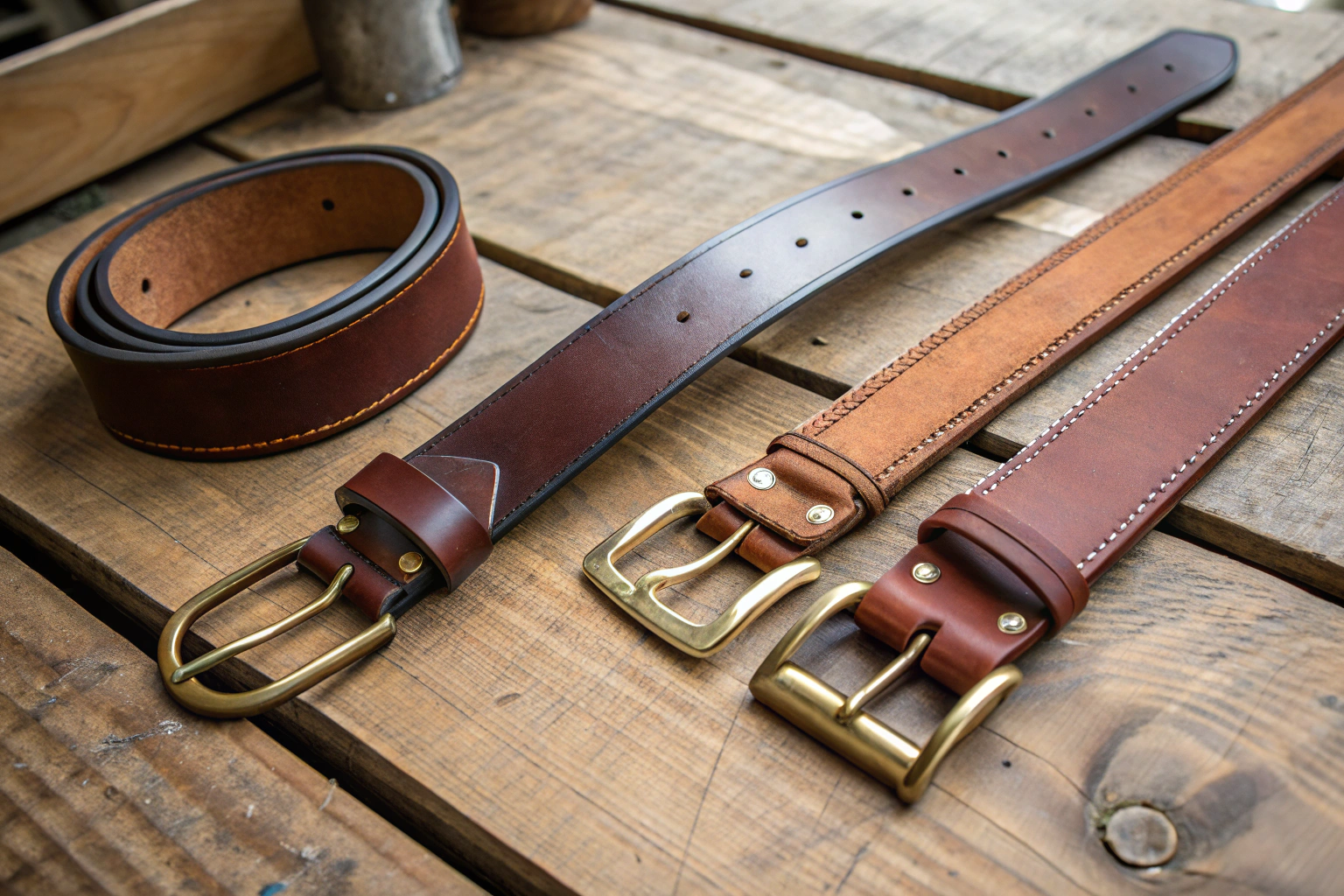
Have you ever bought a beautiful leather belt, only to watch it crack and peel after three months of wear? I have seen this disappointment destroy a brand’s reputation. A customer saves up for a premium belt. They wear it with pride. Then the surface splits. The color rubs off. They post a photo online. The problem is not leather itself. It is cheap, corrected-grain leather masquerading as quality. The industry is full of misleading labels. "Genuine leather" sounds authentic. It is actually the lowest grade. If you are sourcing belts for your brand, you need to know the specific tanning method and the cut of the hide. Otherwise, you will pay for durability you do not get.
AceAccessory is a professional manufacturer and exporter of accessories. The top three belt leather types for durability and style in 2026 are full-grain vegetable-tanned leather, bridle leather, and premium Italian top-grain pull-up leather. These three materials combine unbeatable tensile strength with a patina that improves with age, making them the definitive choice for high-end belts.
Style fades. A printed buckle looks dated in a season. But a great leather belt becomes more beautiful with every wear. The scratches blend into the grain. The color deepens where you touch it. This is the patina. It is the fingerprint of the owner. As a factory owner in Zhejiang who sources hides from Italy and South America, I help brands build belts that last a decade. Let me walk you through the three leather types that define 2026. This knowledge will make you a smarter buyer and a better storyteller for your customers.
Why Is Full-Grain Vegetable-Tanned Leather the Durability Champion?
Full-grain leather is the complete top layer of the hide. Nothing has been sanded off. The original grain, where the fibers are tightest and strongest, remains intact. It is like a solid oak floor versus a laminate. Vegetable tanning is the method. It uses natural tree barks, like mimosa and quebracho, to cure the leather. This process takes months. It is slow. It is expensive. But it creates a leather that breathes and ages gracefully.
In 2026, the trend is away from plastic-coated leather. Customers want authenticity. They want to smell the leather. Full-grain veg-tan delivers this. It starts a pale, flesh color. It darkens to a rich honey-gold with exposure to sunlight and skin oils. Every belt becomes a unique record of the wearer’s life. This is the ultimate luxury story. It is also incredibly tough. The tensile strength comes from the interlocking collagen fibers that have never been cut by sanding. A 3.5mm thick strip of full-grain veg-tan will outlast the buckle. We use it for our heaviest workwear belts. It is the standard for heirloom quality.
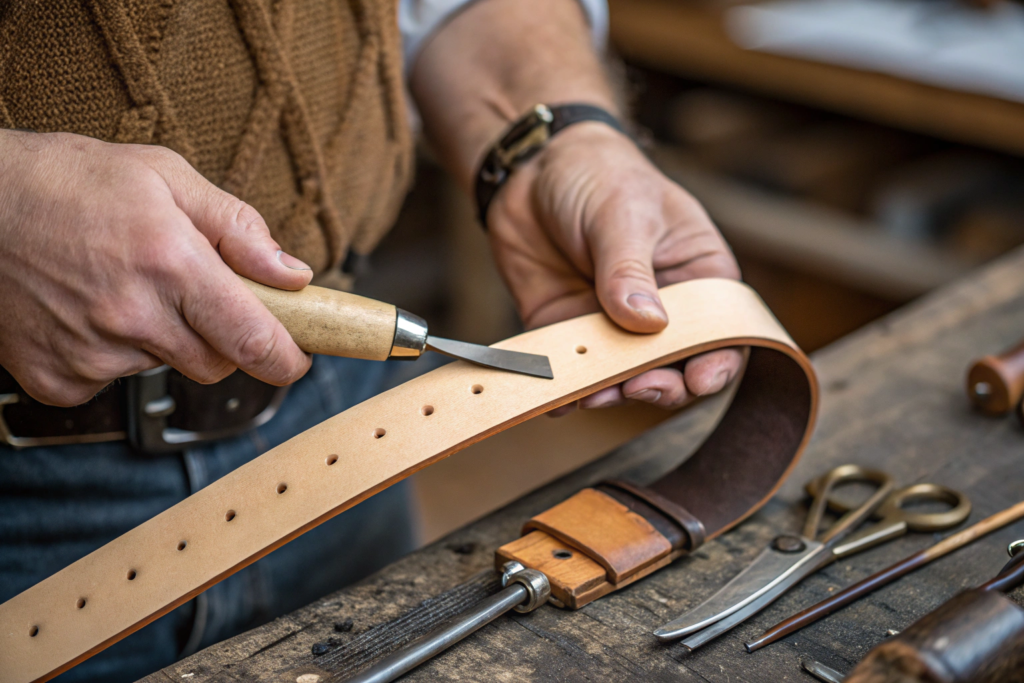
How Does Vegetable Tanning Create a Living Finish?
The bark tannins bind to the collagen. They stabilize the protein. But they do not seal it in plastic. The leather can still absorb oils and UV light.
This is the patina process. A new belt is stiff. It needs breaking in, like a pair of good boots. The customer bends it. The oils from their hand soften it. The sun warms the color. After a year, the belt is molded to their waist. It is a living finish because it changes. It scratches easily, but a quick rub with a thumb blends the scratch away. This is a feature, not a flaw. We educate our retail clients to sell this story. A mass-produced fashion belt looks dead. A veg-tan belt is alive. It appeals to the artisan craftsmanship movement that continues to grow.
What Is the Difference Between Full-Grain and Top-Grain?
Top-grain is sanded. It is the second layer. The very top, where the strongest grain sits, is buffed off. This removes scars and insect bites. It makes the leather uniform.
But it removes the soul. The sanded surface is weaker. To make it smooth, the tannery often applies a plastic polyurethane coating. This looks perfect in the box. But it cannot breathe. It cracks at the flex points. It peels like cheap paint. Full-grain is scarred and imperfect. Those scars are proof of authenticity. We select the hides with the best grain character for our belt straps. We avoid heavy scarring for fashion belts, but we keep the grain intact. This is the key distinction every buyer must understand. It is the truth about genuine leather grades.
Why Does Bridle Leather Define Classic Professional Style?
Bridle leather is a subset of full-grain. It is named after the leather used for horse bridles. It is designed to withstand sweat, friction, and extreme tension without cracking. It is the most "put-together" looking belt leather on the market.
The defining feature of bridle leather is the stuffing process. Hot waxes, tallows, and greases are drummed into the hide. This fills the fiber structure completely. The result is a leather that is solid, not spongy. It cuts with a crisp edge. You can burnish it to a glassy shine. The surface has a natural, waxy "bloom." This is a slight white haze that appears when the waxes rise to the surface. A quick buff with a soft cloth turns it into a deep, satin gloss. In 2026, the "quiet luxury" trend favors this leather. It has no loud logos. It has no flashy grain. It speaks through its impeccable finish and its long-term structure. It never sags at the belt holes. It never stretches out of shape.
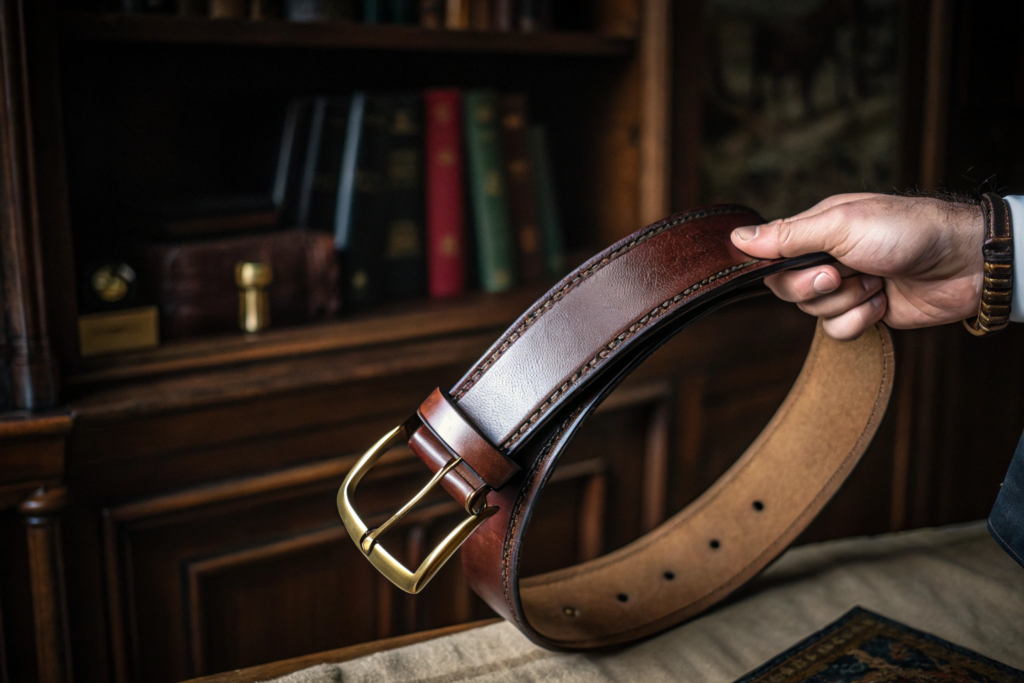
What Is the "Bloom" on Bridle Leather?
The bloom is the hallmark of high wax content. In cold weather, the oils solidify slightly on the surface. It looks like a fine dusting of powder.
This is a sign of quality. A dry, poorly stuffed leather does not bloom. It just cracks. We instruct our clients not to wipe the bloom with chemicals. We include a small buffing cloth in the packaging. The customer can rub the belt vigorously. The heat of friction melts the waxes. They sink back into the leather. It is a ritual of care. It connects the owner to the product. This interactive element is missing from coated fashion leathers. It is a sensory experience that builds a deep brand loyalty.
Why Doesn’t Bridle Leather Stretch Out at the Buckle Hole?
Stretch is the failure of most cheap belts. The leather around the hole elongates. The hole becomes an oval. The belt looks sloppy.
Bridle leather is fully saturated with wax. There is no empty space for the fibers to compact and stretch. When we punch the buckle hole, the hole stays a perfect circle for years. The tension of the pin is distributed through the solid wax matrix. We also reinforce the buckle hole area with a nylon webbing core on the thinner dress belts. But on a 4mm thick bridle belt, no reinforcement is needed. The leather itself is the structure. It is the professional standard for uniformed services and corporate dress codes. It signals discipline. It is the default choice for menswear staples.
What Makes Italian Pull-Up Leather the Trendiest Choice for 2026?
Pull-up leather is the artist of the group. It is a top-grain leather that is heavily oiled but not waxed. The tanning oils migrate inside the fibers. When you bend it or scratch it, the oils move away from the pressure point. This creates a dramatic lightening effect.
This leather is addictive to touch. It is soft, supple, and "live." In 2026, the casual luxury market is driving this demand. A stiff, formal belt does not pair well with tailored joggers and premium sneakers. A pull-up leather belt does. It has the richness of full-grain but the comfort of a broken-in glove. The style is effortless. The colors trend toward warm cognacs, tobacco browns, and deep olive greens. The pull-up effect gives the belt a dimensional look. It is not a flat, painted color. It is a deep, vibrating tone with light and dark spots naturally forming in the flex zones. This leather tells the story of "sprezzatura," the Italian art of studied carelessness.
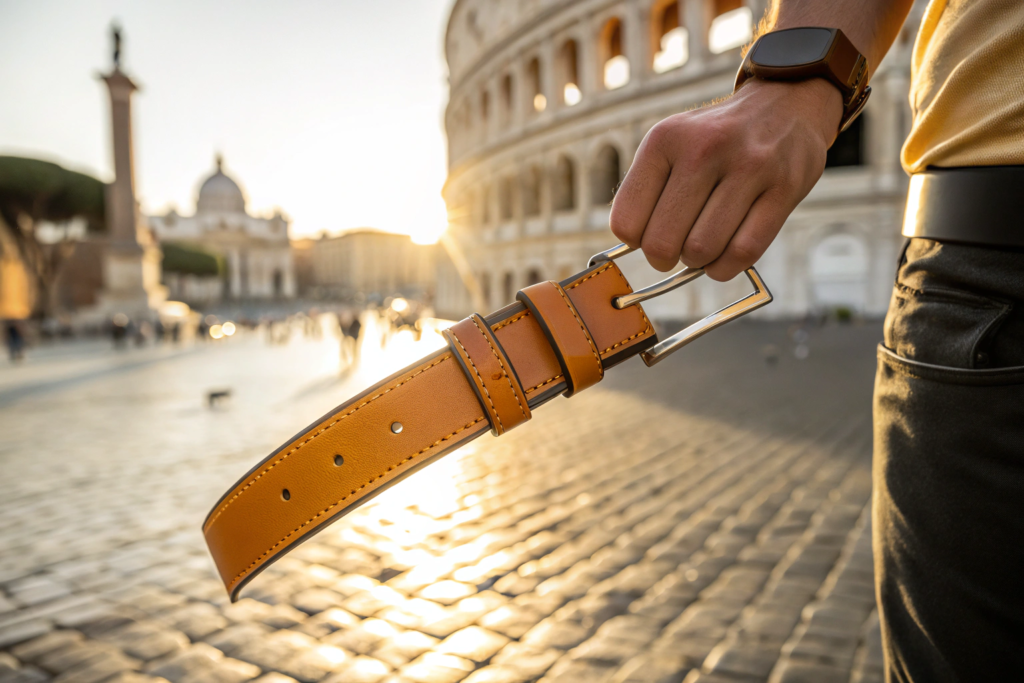
How Does the Oiling Process Create the Pull-Up Effect?
The tannery uses a combination of fish oils and synthetic esters. These oils have a high refractive index. They reflect light differently than the leather fibers.
When the leather is flat, the oils are evenly distributed. The color looks deep and saturated. When you fold the leather, you squeeze the oils out of that specific micro-area. The fibers become dry and airy. Light scatters. The color jumps to a lighter shade. When you release the fold, the oils migrate back. The color returns to deep. This is the signature of a quality pull-up. It is a functional indicator of the oil content. A high oil content means the leather will never dry out. It will last as long as veg-tan, but with zero maintenance required. It is the low-maintenance luxury option. It suits the modern, fast-moving lifestyle celebrated by Italian fashion houses.
Why Is Pull-Up Leather Ideal for Casual and Smart-Casual Belts?
It bridges the gap. It has the quality of a dress belt but the relaxed look of a casual belt. The pull-up effect fades and returns with movement.
It pairs well with a brushed steel or matte black buckle. It looks perfect with denim. It also works with chinos and a linen blazer. The versatility is unmatched. The leather is also extremely resistant to scratches. If you scratch a painted belt, the scratch is white and permanent. If you scratch a pull-up belt, you just rub it with your thumb. The oils flow back and the scratch disappears. This self-healing property is a huge selling point for men who do not want to baby their accessories. It is a practical, robust choice that looks luxurious. It appeals to the modern consumer who values function as much as form.
How Does Leather Thickness Affect Both Durability and Style?
Thickness is measured in millimeters or ounces. A heavy work belt is 4 to 5 millimeters thick. A sleek dress belt is 2.5 to 3 millimeters thick. The thickness dictates the belt’s personality.
A thick belt screams durability. It holds heavy tools. It supports a holster. It makes a statement of strength. But a thick belt cannot fit through the loops of a fine Italian suit. A thin belt whispers elegance. It is almost invisible. It simply holds the trouser waist. The challenge for 2026 is finding the sweet spot. We are seeing a trend for "mid-weight" belts at 3.5 millimeters. This thickness fits most trouser loops. It has enough heft to feel substantial. It holds its shape without being rigid. This thickness works well in bridle and pull-up leathers. It is the universal weight for a one-belt wardrobe.
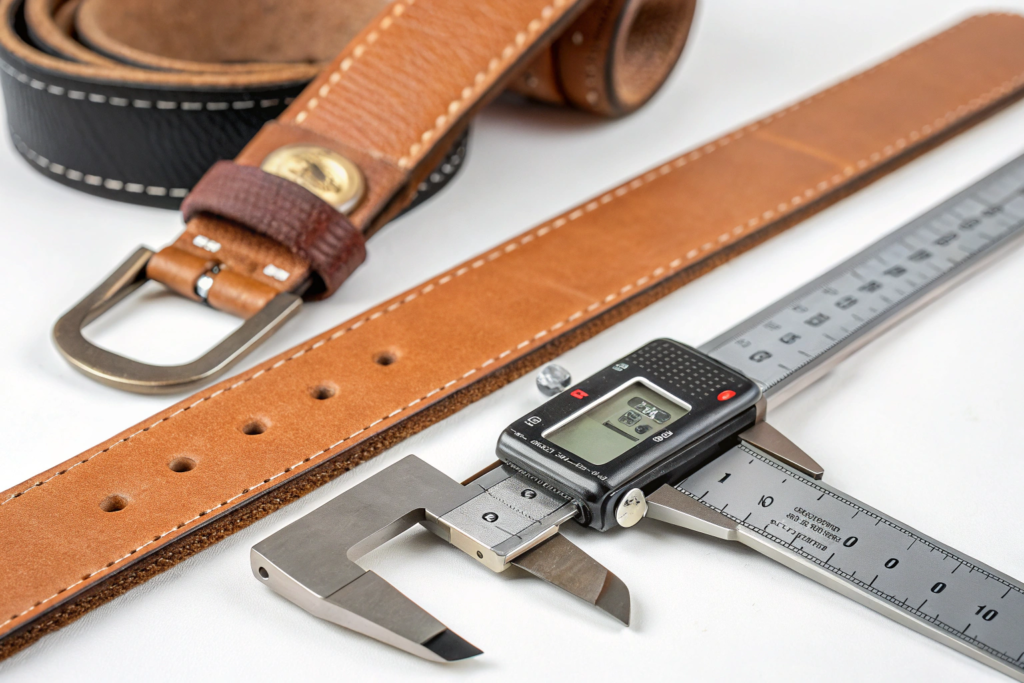
What Is the Best Thickness for a Long-Lasting Daily Belt?
3.5 millimeters to 4 millimeters. This is the Goldilocks zone. Thinner than 3 millimeters, the belt stretches at the hole. Thicker than 4.5 millimeters, the belt is uncomfortable to sit in.
We reinforce the buckle fold area with a skived edge. Skiving is shaving the leather down at the fold point. It reduces the bulk without sacrificing the strap strength. This engineering detail is what separates a factory-made belt from a crafted belt. It makes the belt comfortable from day one. We always ask our clients about the primary use of the belt. A carpenter needs 4.5 millimeters. A banker needs 3 millimeters. We guide them to the right thickness. This is the bespoke approach of our design team. It ensures the belt not only looks good but lives up to its functional requirements.
Can a Thin Leather Belt Still Be Durable?
Yes, if the leather is a quality full-grain and the fiber structure is tight. A thin leather cut from a poor-quality belly section will tear. A thin cut from the shoulder or back will be strong.
We also add a reinforcing layer, called a "split," to the inside of thin dress belts. This is a thin layer of bonded leather that adds tensile strength without adding stiffness. The edges are then painted and sealed. The result is a belt that is 2.8 millimeters thick, fits a suit loop, but will not snap under pressure. The art is in the construction. It is not just the material. It is the engineering. This is what our experienced project managers communicate during the sampling process. We ensure the final product matches the physical demands of the wearer.
Conclusion
The top three belt leather types for 2026 represent a full spectrum of masculinity. Full-grain vegetable-tanned leather is the rugged, natural individualist. It ages with honesty and builds a unique patina. Bridle leather is the disciplined, polished professional. Its waxy bloom and rigid structure speak of tradition and attention to detail. Italian pull-up leather is the effortless, creative spirit. Its soft oils and color-shifting effect bring a casual luxury that fits the modern lifestyle.
The thickness must match the intent. Durability is not just about the hide. It is about the cut, the stuffing, and the engineering of the holes. A great belt elevates the entire silhouette. A cheap belt drags the whole outfit down. In our Zhejiang workshop, we work with these three premium leathers daily. Our sourcing team selects the best hides from certified tanneries. Our craftsmen cut the straps with the run of the grain.
If you are ready to develop a belt collection that lasts a lifetime and builds a loyal following, I invite you to speak to our Business Director, Elaine. She can send you a leather swatch kit with all three types discussed here. She can walk you through the thickness options, the buckle finishes, and the minimum order quantities. Send her an email at elaine@fumaoclothing.com. Let’s create a belt that your customers will pass down to their sons.




