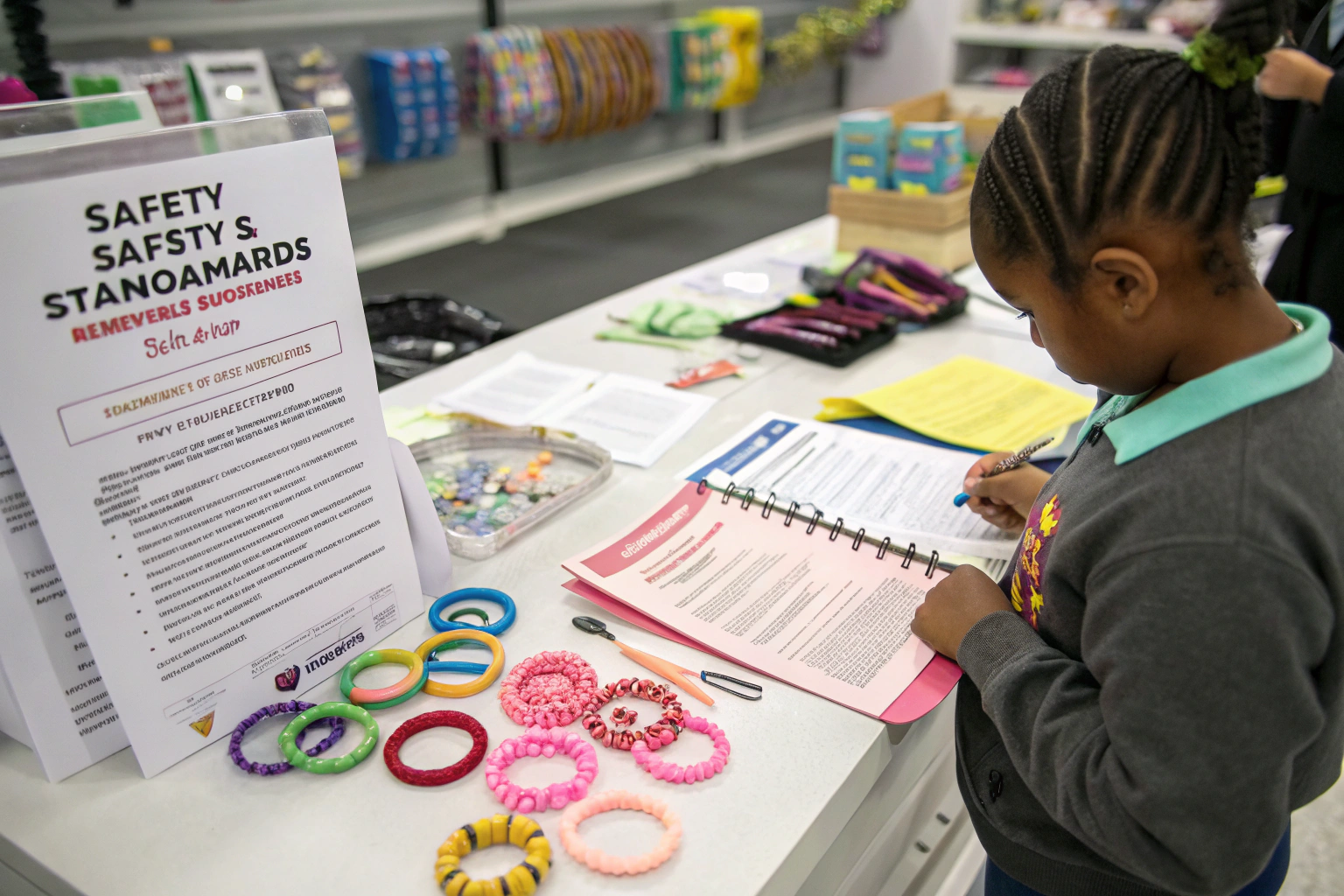
I have been in the fashion accessory manufacturing business for over twenty years, and I have learned that children's products are different from adult products. The stakes are higher. A hair clip that is fine for an adult can be a safety hazard for a child. For a buyer like Ron, who supplies to retailers and online stores, understanding the safety standards for children's hair clips and accessories is not optional. It is essential. Failure to comply can lead to product recalls, fines, damaged reputation, and most importantly, injury to a child. Safety must be the foundation of your product development process.
The safety standards for children's hair clips and accessories are governed by strict regulations that vary by market. In the US, the key standards are CPSIA (Consumer Product Safety Improvement Act), which covers lead content, phthalates, and small parts. In Europe, the key standards are REACH and EN71, which regulate chemical safety and mechanical hazards. Common requirements include lead limits of 100 ppm, phthalate restrictions, small parts testing, sharp edge checks, and tracking labels. Compliance requires third-party testing by accredited labs and documentation like Children's Product Certificates (CPC).
At Shanghai Fumao Clothing, we have been producing children's hair accessories for years. We have built our reputation on safety. We test every batch of materials, conduct rigorous in-process inspections, and maintain full documentation. We understand that when you sell a product for a child, you are putting your trust in us. I want to share what we have learned so you can ensure your products meet the highest safety standards.
What Are The Key Safety Regulations For Children's Accessories?
Children's accessories are regulated by different standards depending on the market. The two most important markets are the United States and the European Union. Each has its own set of regulations that you must understand and comply with.
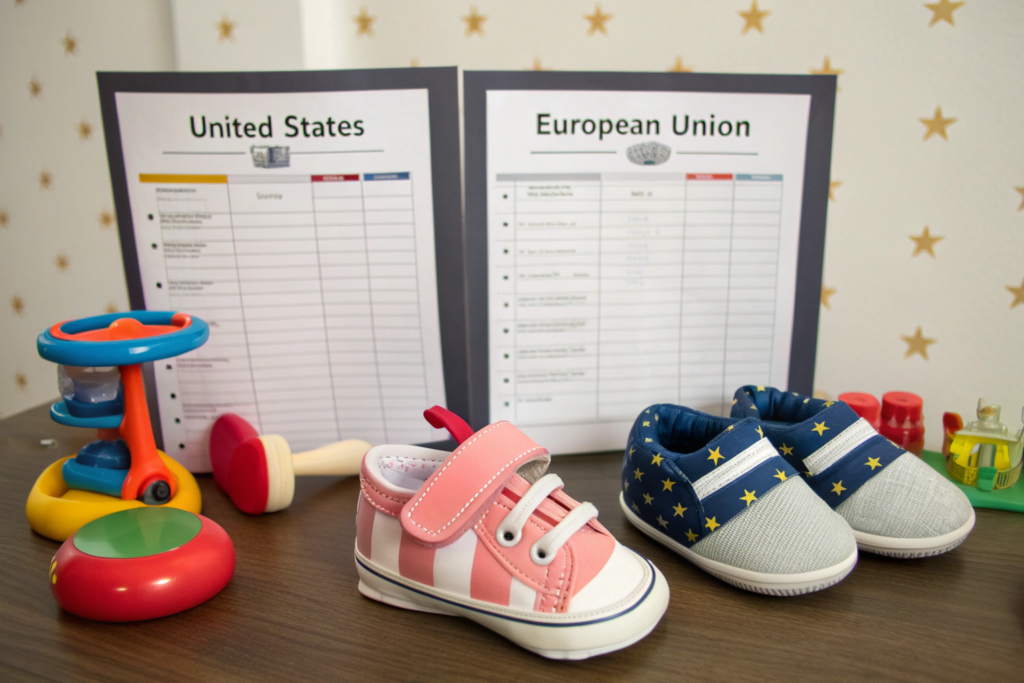
In the United States, the primary regulation is the Consumer Product Safety Improvement Act (CPSIA). CPSIA applies to all products intended for children 12 and under. It sets strict limits for lead content, phthalates, and requires third-party testing and certification. Key requirements include lead content not exceeding 100 parts per million (ppm) in accessible substrate materials; phthalates not exceeding 0.1% for eight specified phthalates; tracking labels with manufacturer information and production dates; and small parts regulations for children under three.
In the European Union, the primary regulations are REACH (Registration, Evaluation, Authorization, and Restriction of Chemicals) and the EN71 toy safety standard. REACH restricts the use of substances of very high concern (SVHC), including lead, cadmium, and certain phthalates. EN71 is a series of standards covering mechanical and physical properties (EN71-1), flammability (EN71-2), and migration of certain elements (EN71-3). For children's accessories, if the product is considered a toy (which many hair clips are), EN71 applies.
For more information on US regulations, the Consumer Product Safety Commission (CPSC) website provides comprehensive guidance. For European regulations, the European Chemicals Agency (ECHA) and the European Commission's Toy Safety pages are essential resources.
What is CPSIA and what does it require for hair clips?
CPSIA, the Consumer Product Safety Improvement Act, is the most important safety law for children's products sold in the United States. It was enacted in 2008 in response to high-profile product safety scandals involving lead in children's toys. For hair clips, CPSIA compliance means that every component has been tested and certified to meet safety limits. The key requirements are:
Lead Content: The lead content in accessible substrate materials cannot exceed 100 ppm. This applies to metal clips, plastic components, fabric, and any coatings. The test must be conducted by a CPSC-accepted third-party laboratory.
Phthalates: Children's products cannot contain more than 0.1% of eight specified phthalates (DEHP, DBP, BBP, DINP, DIBP, DnOP, DnHP, DCHP) in plastic components. Phthalates are used to soften plastic but are linked to health concerns.
Small Parts: Any product intended for children under three that contains a small part that can fit into a small parts cylinder is banned. For hair clips, this means any embellishment that can detach and fit into the cylinder is a choking hazard. For children over three, small parts are allowed but must be labeled with a warning.
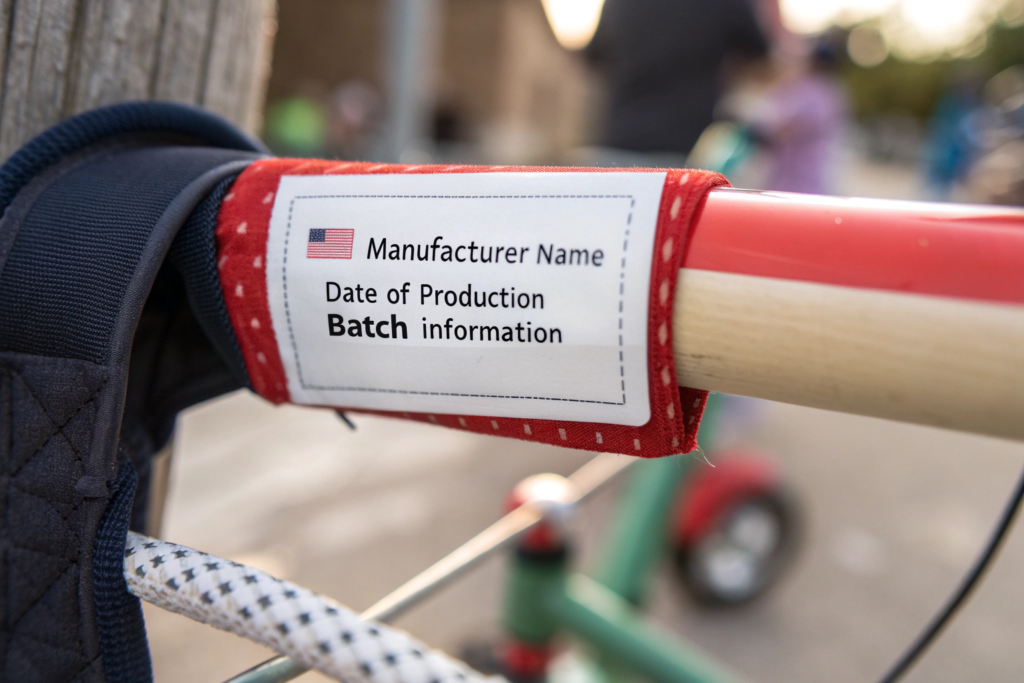
Tracking Labels: Every children's product must have a tracking label with the manufacturer name, date of production, batch information, and any other identifying information. This enables efficient recalls if a safety issue is discovered.
Testing and Certification: Children's products must be tested by a CPSC-accepted laboratory. The manufacturer must issue a Children's Product Certificate (CPC) certifying that the product meets all applicable safety rules. The CPC must be available for review by customs and retailers.
For hair clips, CPSIA compliance is non-negotiable. At Shanghai Fumao Clothing, we test every batch of children's hair clips to CPSIA standards and provide CPC documentation.
What is EN71 and how does it apply to children's accessories?
EN71 is the European standard for toy safety. Many children's hair accessories are classified as toys, especially if they are designed for young children or have playful elements like characters, bright colors, or interactive features. EN71 is a series of standards, with three parts most relevant to hair clips:
EN71-1: Mechanical and Physical Properties covers small parts, sharp edges, and secure attachment of components. For hair clips, this means testing that embellishments do not detach and become choking hazards. It also covers the security of closures and any moving parts.
EN71-2: Flammability covers the burning behavior of materials. Fabric components, like fabric-covered clips or bows, must meet flammability requirements.
EN71-3: Migration of Certain Elements covers the migration of heavy metals like lead, cadmium, mercury, and other toxic elements. The test simulates a child mouthing the product and measures how much of these elements leach out.
EN71 testing must be conducted by a notified body, an organization designated by EU member states to conduct conformity assessments. The test reports must be retained as part of the technical documentation. Unlike the US, where a certificate is required, in the EU the manufacturer must issue a Declaration of Conformity and affix the CE mark to the product or packaging.
At Shanghai Fumao Clothing, we test our children's hair accessories to EN71 standards for clients exporting to Europe. We work with recognized notified bodies and provide full documentation.
What Are The Material Safety Requirements?
The materials used in children's hair clips must be safe and non-toxic. Children put things in their mouths, and they have sensitive skin. The materials you choose directly affect the safety of the product.
Lead Content: As mentioned, lead is strictly limited. Lead can be present in metal components (like the clip base), plastic components (as a stabilizer), and in coatings or paints. High-quality suppliers will provide test reports showing lead content below 100 ppm.
Phthalates: Phthalates are used to soften plastic. For children's products, they are strictly regulated. Clips made from PVC (polyvinyl chloride) are particularly likely to contain phthalates. Safer alternatives include ABS, polycarbonate, and acetate.
Heavy Metals: Other heavy metals like cadmium, mercury, and arsenic are also regulated. EN71-3 sets limits for the migration of these metals. The test simulates a child mouthing the product, so it is a more realistic measure of risk than total content.
Nickel Release: Nickel is a common allergen. Many children are sensitive to nickel. For metal components that contact the skin, like metal clips or metal embellishments, ensure that they are nickel-free or have a coating that prevents nickel release.
Small Parts: Any embellishment that can detach and fit into a small parts cylinder is a choking hazard. This includes pearls, rhinestones, small bows, and decorative elements. For children under three, these are prohibited. For older children, they must be securely attached.
For more information on material safety, the American Chemistry Council provides resources on safe materials, and the European Chemicals Agency maintains the SVHC candidate list.
What materials are safe for children's hair clips?
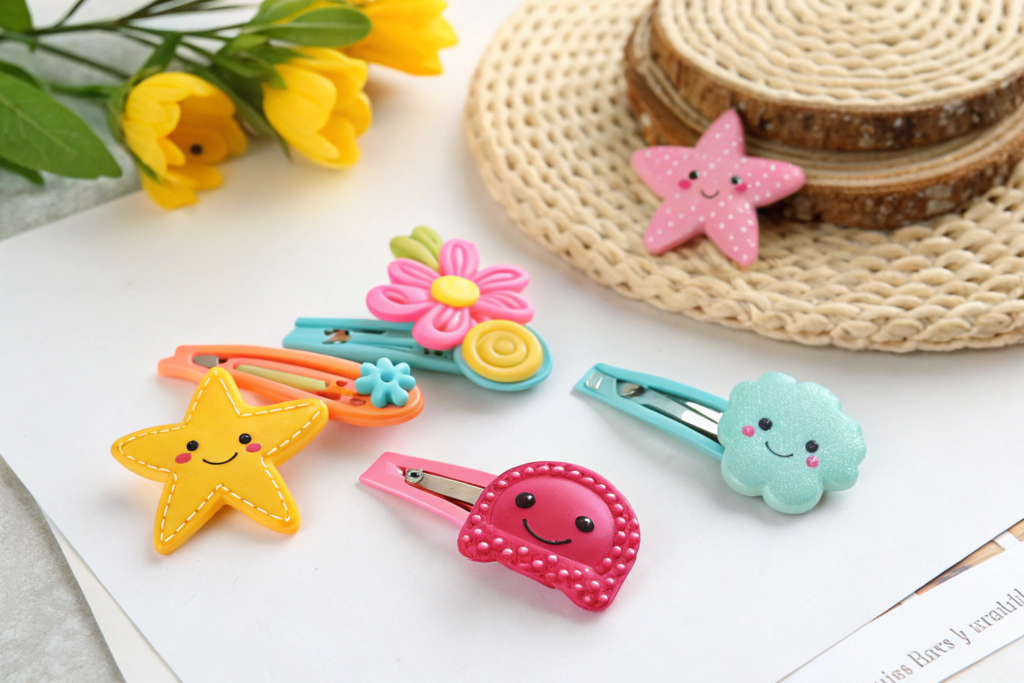
Safe materials for children's hair clips are those that are non-toxic, durable, and free from sharp edges and small parts. The safest choices include:
ABS Plastic: ABS (acrylonitrile butadiene styrene) is a common plastic that is strong, durable, and free from phthalates. It is widely used for hair clip bases. It can be molded into complex shapes and is available in many colors.
Acetate: Acetate is a premium material made from wood pulp. It is naturally phthalate-free and has a warm, smooth feel. It is often used for tortoiseshell and patterned clips. Acetate is more expensive than ABS but is considered more eco-friendly.
Stainless Steel: Stainless steel is a safe, durable metal. It is nickel-free and corrosion-resistant. It is often used for metal clips and for springs. Stainless steel clips are less likely to cause allergic reactions than nickel-plated clips.
Fabric: For fabric-covered clips, choose natural fibers like cotton or organic cotton. Ensure that the dyes are non-toxic and colorfast. Avoid fabrics with loose threads or embellishments that can detach.
Food-Grade Silicone: Silicone is a safe, flexible material that is often used for children's hair ties and soft clips. It is free from phthalates and BPA.
At Shanghai Fumao Clothing, we source materials from certified suppliers and test every batch for safety. We avoid PVC and other materials known to contain harmful chemicals.
How do I verify that materials are non-toxic?
Verifying that materials are non-toxic requires a combination of supplier documentation and independent testing. Start by asking your supplier for material safety data sheets (MSDS) and test reports. The test reports should be from an accredited laboratory and should show compliance with CPSIA or EN71 standards. The reports should cover lead, phthalates, and heavy metals. For fabric, ask for Oeko-Tex Standard 100 certification. This certifies that the fabric is free from harmful substances. For metal components, ask for nickel release testing. For plastic components, ask for confirmation that they are phthalate-free. Do not rely on verbal assurances. A reputable supplier will have these documents readily available. If you are placing a large order, consider conducting your own independent testing. Have a third-party lab test a sample from the production batch. This gives you an extra layer of assurance. At Shanghai Fumao Clothing, we provide full test reports for all materials used in children's products. We encourage our clients to review these reports and to conduct their own testing if they wish.
What Are The Mechanical Safety Requirements?
Mechanical safety is about the physical design of the product. A hair clip can be chemically safe but still cause injury if it has sharp edges, pinch points, or small parts that detach. Mechanical safety standards address these hazards.
Sharp Edges: Any edge that can cut the scalp or skin is unacceptable. This includes the edges of the clip, the hinge area, and any metal components. The factory should ensure that all edges are smooth and rounded. A simple test is to run a finger along all edges. You can also use a pantyhose test: run a pair of pantyhose along the edges; if it snags, there is a sharp edge.
Small Parts: For children under three, any part that can detach and fit into a small parts cylinder is banned. The small parts cylinder is 2.25 inches long and 1.25 inches in diameter, approximating the size of a child's throat. Test embellishments by applying force to see if they detach. If they do, test if they fit into the cylinder. If they do, the product is non-compliant.
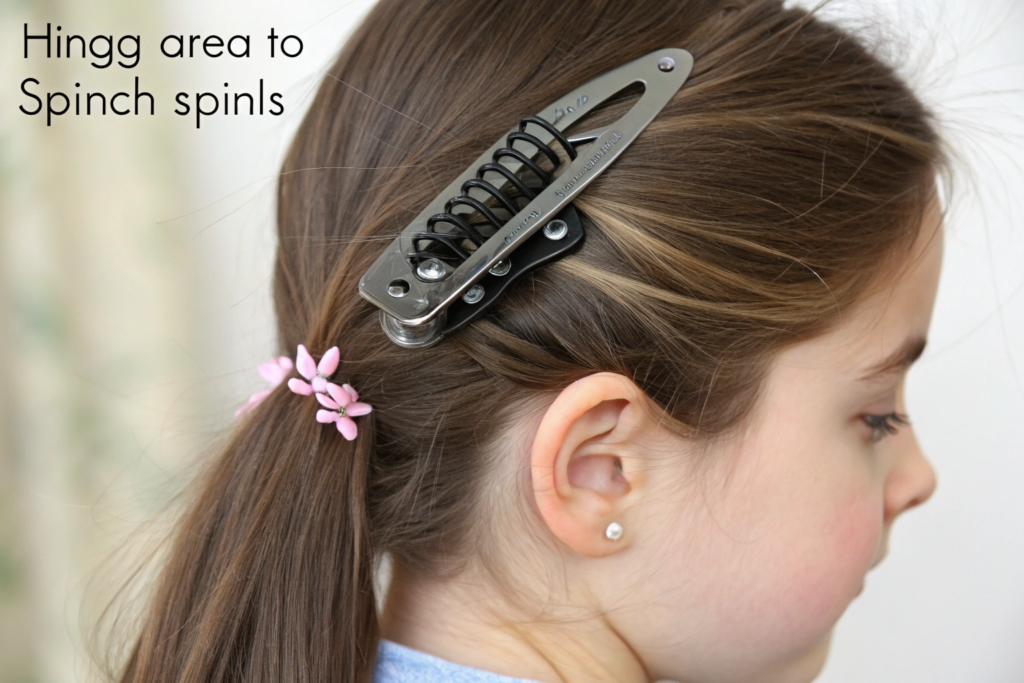
Pinch Points: The hinge area can pinch the scalp or fingers. Good design minimizes pinch points. The hinge should be covered or designed so that it does not pinch when the clip is opened and closed.
Spring Tension: The spring should be strong enough to hold hair but not so strong that it is difficult to open. For young children, the spring should be easy to open.
Secure Attachment: Any embellishment, whether glued or sewn, must be securely attached. Test by applying a pull force. A secure attachment should withstand at least 5 to 10 pounds of force. For more information on mechanical testing, the ASTM International provides standards for small parts testing (ASTM F963) and sharp edge testing.
How do I test for sharp edges and small parts?
Testing for sharp edges and small parts is essential for ensuring mechanical safety. For sharp edges, start with a visual inspection. Look for any visible burrs, rough spots, or uneven edges. Use a magnifying glass to examine the edges around the spring mechanism and hinge. Next, perform a tactile inspection. Run your finger along all edges. Your finger will detect sharpness that may not be visible. Pay special attention to the tips of the clip, the hinge area, and the spring cover. Next, perform the pantyhose test. Run a pair of pantyhose or a thin fabric along the edges. If the fabric snags, there is a sharp edge. For small parts, you need a small parts cylinder, which is available from testing supply companies. For any embellishment, apply a pull force of 5 to 10 pounds. If it detaches, place it into the small parts cylinder. If it fits entirely into the cylinder, it is a small part and a choking hazard. For children under three, this is prohibited. For older children, it requires a warning label. At Shanghai Fumao Clothing, we have small parts cylinders in our quality control lab and test every batch of children's clips.
What are the requirements for detachable embellishments?
Detachable embellishments are a major safety concern for children's hair clips. Pearls, rhinestones, bows, and other decorations must be securely attached so they do not become choking hazards. The key requirements are:
Secure Attachment: Embellishments should be attached using high-quality adhesive, stitching, or mechanical fastening. Glue should be applied carefully to avoid "glue bleed" (excess glue visible around the embellishment). For stitched embellishments, the stitching should be strong and secure.
Pull Test: Perform a pull test on a sample of embellishments. Apply a force of 5 to 10 pounds. The embellishment should not detach. For children under three, the requirement is even stricter; the embellishment should not detach under any reasonable force.
Small Parts Testing: If an embellishment detaches, test whether it fits into the small parts cylinder. If it does, it is a choking hazard. For children under three, such embellishments are prohibited. For older children, the product must have a warning label: "WARNING: Contains small parts. Not for children under 3 years."
Design for Safety: The safest approach is to avoid detachable embellishments altogether for products intended for young children. Use molded details, printing, or permanently attached components instead. At Shanghai Fumao Clothing, we work with clients to design children's products that are safe and beautiful, using secure attachments and avoiding small parts where possible.
What Documentation Is Required For Compliance?
Documentation is the evidence that your products meet safety standards. Retailers and customs authorities will ask for this documentation. Without it, your products may be held at the border or rejected by retailers.
Children's Product Certificate (CPC): For products sold in the US, the manufacturer must issue a CPC. The CPC is a written document that certifies that the product complies with all applicable safety rules. It must include: product description, list of applicable safety rules, manufacturer information, date and place of production, date and place of testing, and the contact information of the testing lab. The CPC must be based on testing by a CPSC-accepted laboratory.
Test Reports: The test reports from the accredited lab are the supporting evidence. They should show that the product passed all required tests. The test reports should be specific to the product and batch.
Tracking Labels: Every children's product must have a tracking label. The label must include the manufacturer name, date of production, batch information, and any other identifying information. The label should be permanently attached to the product or packaging.
Declaration of Conformity: For products sold in the EU, the manufacturer must issue a Declaration of Conformity. This document states that the product complies with all applicable EU directives and standards. It must include the product description, the standards applied, the manufacturer's information, and the date. The CE mark must be affixed to the product or packaging.
Technical Documentation: The technical documentation includes all test reports, design documents, and risk assessments. It must be maintained for 10 years after the product is placed on the market.
For more information on documentation, the CPSC provides guidance on CPCs, and the European Commission provides guidance on CE marking and declarations.
What is a Children's Product Certificate (CPC) and how do I get one?
A Children's Product Certificate (CPC) is a mandatory document for children's products sold in the United States. It is not a certification from a third party; it is a document that the manufacturer (or importer) issues, based on third-party testing, certifying that the product complies with all applicable safety rules. The CPC must be based on test results from a CPSC-accepted laboratory. You cannot issue a CPC without testing. To get a CPC, you must:
- Identify all applicable safety rules. For hair clips, these include lead content, phthalates, small parts, and tracking labels.
- Have the product tested by a CPSC-accepted laboratory. The lab will provide a test report.
- Based on the test report, issue the CPC. The CPC must include specific information: product description, list of safety rules, manufacturer information, date and place of production, date and place of testing, and the contact information of the testing lab.
- Maintain the CPC and test reports. You must be able to provide them to retailers and customs upon request.
At Shanghai Fumao Clothing, we work with CPSC-accepted labs and provide our clients with the test reports and CPC documentation they need.
What tracking labels are required for children's accessories?
Tracking labels are a requirement of CPSIA. The purpose of a tracking label is to enable efficient recalls. If a safety issue is discovered, the tracking label allows consumers and regulators to identify the product's origin and production date. The tracking label must include:
Manufacturer Name: The name of the manufacturer or private labeler.
Date of Production: The date the product was manufactured. This can be a specific date or a date code.
Batch Information: A code that identifies the batch or production run.
Other Information: Additional identifying information as needed.
The tracking label must be permanently attached to the product or its packaging. It should be easily readable. For hair clips, a common approach is to include the tracking information on a small hang tag or on the packaging. The label must be in English. For children's hair clips, tracking labels are not optional. They are a legal requirement. At Shanghai Fumao Clothing, we help our clients design and apply tracking labels that meet CPSIA requirements.
How Do I Ensure Compliance Throughout Production?
Compliance is not a one-time event. It must be built into every stage of production, from material sourcing to final shipment. A systematic approach ensures that every batch meets safety standards.
Material Sourcing: Start with safe materials. Work with suppliers who can provide test reports. Test incoming materials to verify compliance. Reject any materials that do not meet specifications.
Design for Safety: Design products with safety in mind. Avoid small parts for young children. Ensure edges are smooth. Design embellishments to be securely attached.
Pre-Production Testing: Before mass production, have a pre-production sample tested by an accredited lab. This confirms that the design and materials meet safety standards.
In-Process Inspection: During production, inspect for safety issues. Check for sharp edges. Test embellishments. Monitor spring tension.
Final Inspection: Before shipment, have a final inspection conducted. Use AQL sampling. Test a sample of finished products for safety and quality.
Documentation: Maintain all test reports, CPCs, and tracking label records. Ensure that every batch is traceable.
At Shanghai Fumao Clothing, we have a comprehensive quality management system that integrates safety compliance at every stage. We test incoming materials, inspect during production, and conduct final AQL inspections. We provide our clients with full documentation for every order.
How do I select a lab for children's product testing?
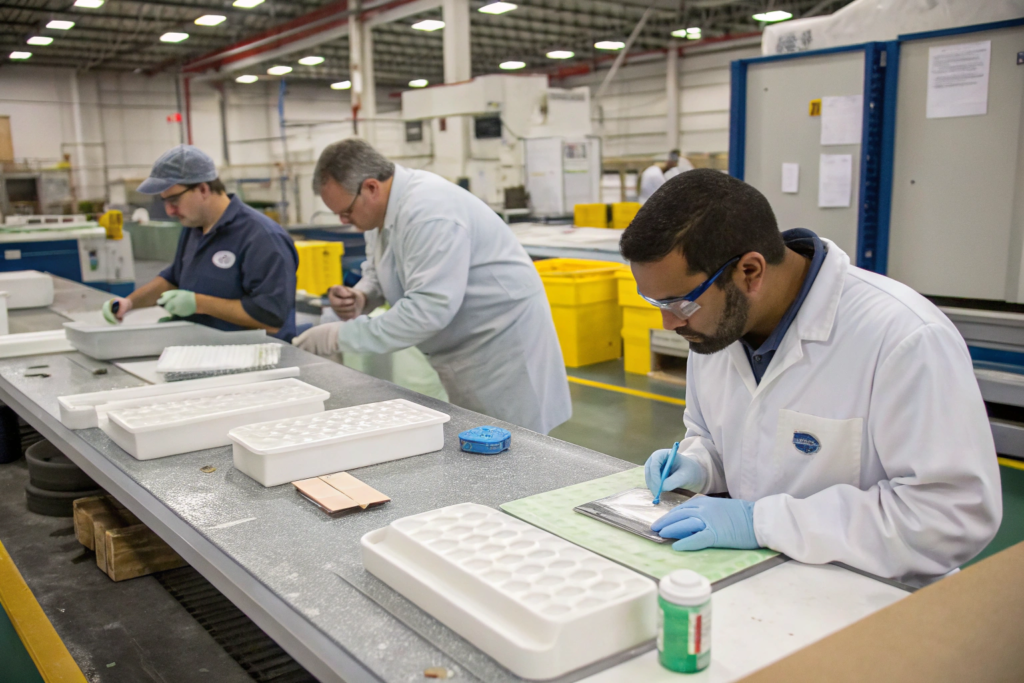
Selecting the right lab is essential for credible testing. For US products, the lab must be CPSC-accepted. The CPSC website has a searchable database of accepted labs. For European products, the lab should be a notified body recognized by the EU. When selecting a lab, consider the following:
Accreditation: Ensure the lab is accredited for the specific tests you need. For children's hair clips, you need labs accredited for lead, phthalates, small parts, and other relevant tests.
Experience: Choose a lab with experience testing children's accessories. They will understand the specific requirements and can advise you on any issues.
Turnaround Time: Ask about the lab's turnaround time. Testing can take 1 to 3 weeks. Plan your production schedule accordingly.
Cost: Get quotes from multiple labs. Costs vary based on the number of tests and the complexity of the product.
Location: Some buyers prefer labs in the country of manufacture to simplify logistics. Others prefer labs in their home country for easier communication.
At Shanghai Fumao Clothing, we work with multiple CPSC-accepted labs and notified bodies. We can help you select a lab and manage the testing process.
What are the consequences of non-compliance?
The consequences of non-compliance are severe. They include:
Product Recalls: If a product is found to be unsafe, you may be required to recall it. Recalls are costly, damaging to your brand, and can lead to legal liability.
Fines: The CPSC can impose significant fines for violations. In recent years, fines have reached millions of dollars.
Import Bans: Non-compliant products can be detained at the border and denied entry. This can disrupt your supply chain and cause financial loss.
Retailer Rejection: Major retailers require proof of compliance. Without it, they will not accept your products. They may also drop you as a supplier.
Reputational Damage: Safety failures damage your brand's reputation. Customers lose trust, and it can take years to rebuild.
Legal Liability: If a child is injured by your product, you may face lawsuits and liability claims.
At Shanghai Fumao Clothing, we take compliance seriously. We know that your reputation and your business depend on it. We are committed to delivering products that meet the highest safety standards.
Conclusion
The safety standards for children's hair clips and accessories are comprehensive and strict. In the US, CPSIA governs lead content, phthalates, small parts, and tracking labels. In Europe, REACH and EN71 regulate chemical safety and mechanical hazards. Material safety requires non-toxic materials like ABS, acetate, and stainless steel. Mechanical safety requires smooth edges, secure attachments, and small parts testing. Compliance requires third-party testing, a Children's Product Certificate (CPC), and tracking labels. Non-compliance carries severe consequences: recalls, fines, import bans, and reputational damage.
At Shanghai Fumao Clothing, we have built our reputation on safety. We test every batch of materials. We inspect during production. We conduct final AQL inspections. We provide full documentation, including test reports and CPCs. We understand that when you sell a product for a child, you are putting your trust in us. We take that responsibility seriously.
If you are sourcing children's hair clips and accessories and want a manufacturing partner who prioritizes safety, let's talk. Please contact our Business Director, Elaine, directly at elaine@fumaoclothing.com to discuss your project and how we can help you bring safe, compliant products to market.