Proper labeling is crucial for handmade beaded bracelets, serving both legal compliance and marketing functions. Many artisans and small businesses underestimate labeling importance, potentially facing legal issues while missing valuable branding opportunities.
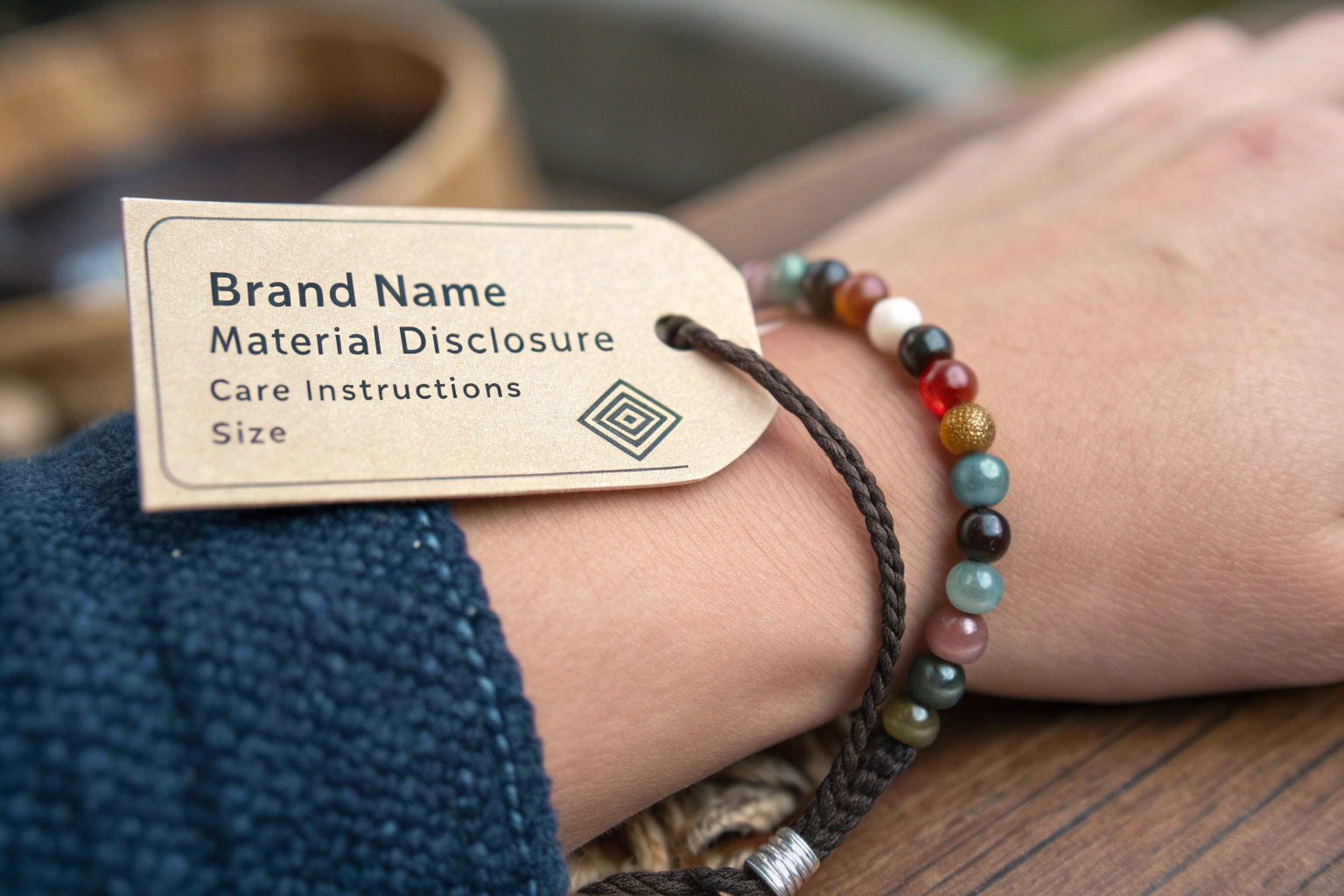
Label requirements for handmade beaded bracelets include legal compliance information, material disclosure, care instructions, and brand elements. Legal requirements vary by country but typically involve business identification, material content listing, and safety warnings where applicable. Beyond legal mandates, effective labels provide care instructions, size information, and brand storytelling that enhances perceived value and customer experience.
Understanding labeling requirements protects your business while building customer trust. Let's examine the specific elements that create compliant, effective labels for handmade beaded bracelets.
What Legal Information Must Appear on Labels?
Legal requirements form the foundation of bracelet labeling, with specific mandates varying by country but sharing common elements across jurisdictions.
The core legal requirements include business identification, country of origin, and material content disclosure. Business identification means including your business name and address, enabling regulatory agencies to contact you if issues arise. Country of origin marking (e.g., "Made in USA" or "Handcrafted in Canada") is mandatory in most markets. Material content must be accurately disclosed, particularly for regulated materials like nickel, lead, or potential allergens. For children's bracelets, additional safety warnings and compliance markings may be required depending on local regulations.

What Are the Specific FTC Requirements in the United States?
In the United States, the Federal Trade Commission (FTC) mandates specific labeling requirements. The Textile Fiber Products Identification Act requires listing all fibers present in percentages exceeding 5% of total weight. The Care Labeling Rule requires providing permanent care instructions. The Country of Origin marking must be clear and conspicuous. Additionally, the Fair Packaging and Labeling Act requires the business name and location to appear on the label. For bracelets containing metal components, California's Proposition 65 may require warnings if certain chemicals are present above safe harbor levels.
How Do EU Labeling Requirements Differ?
European Union labeling requirements include several distinctive elements beyond US mandates. The CE marking may be required if bracelets are considered toys. REACH regulations restrict certain chemical substances and require specific disclosures. The table below compares key US and EU requirements:
| Requirement | United States | European Union |
|---|---|---|
| Business Information | Required | Required |
| Country of Origin | Required | Required |
| Material Content | Fiber percentage disclosure | Full material disclosure |
| Safety Warnings | Proposition 65 (CA specific) | CE marking for toys |
| Chemical Restrictions | Limited | REACH regulations |
| Care Instructions | Required | Recommended |
What Material Disclosures Are Necessary?
Accurate material disclosure builds customer trust while ensuring regulatory compliance, particularly important for customers with allergies or material preferences.
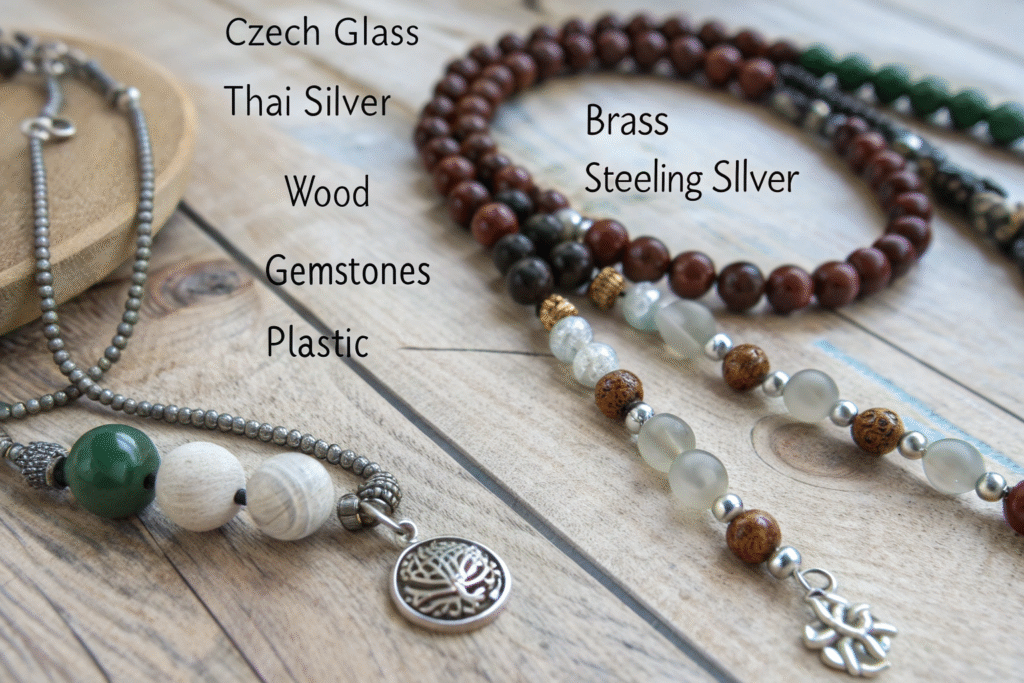
Material disclosures should include all primary components: beads, stringing materials, closures, and any decorative elements. Bead materials might include glass, wood, gemstones, plastic, or metal, specifying types when relevant (e.g., "Czech glass beads" or "Thai silver beads"). Stringing material should be identified (e.g., "elastic cord," "stainless steel chain," or "silk thread"). Closure types and materials require disclosure, particularly if containing potential allergens like nickel. For mixed material bracelets, listing materials in descending order by weight provides the clearest information.
How Should You Label Potential Allergens?
Potential allergens require careful labeling to protect sensitive customers. Nickel is the most common jewelry allergen and must be disclosed if present in any components. Some customers may have latex allergies, requiring identification of elastic containing natural latex. Fragrance allergens should be disclosed if scented beads or materials are used. When uncertainty exists about material composition, conservative labeling ("May contain nickel" or "Latex-free elastic") protects both customers and your business from liability issues. Specific allergen warnings should be prominent and easily noticeable on your labels.
What Detail Level Is Appropriate for Material Descriptions?
Material descriptions should balance accuracy with customer understanding. While "sterling silver" is specific and meaningful, overly technical terms may confuse customers. The most effective descriptions use common terminology while including relevant specifics: "Genuine turquoise nuggets" rather than just "stone beads," or "Italian leather cord" rather than simply "leather." For gemstone beads, specifying whether they're natural, treated, or simulated manages customer expectations. When using specialty materials with specific properties (like "memory wire" or "French wire"), brief explanations help customers understand the benefits.
What Care Instructions Should Be Included?
Proper care instructions extend bracelet lifespan while reducing customer complaints, making them valuable additions to your labeling.
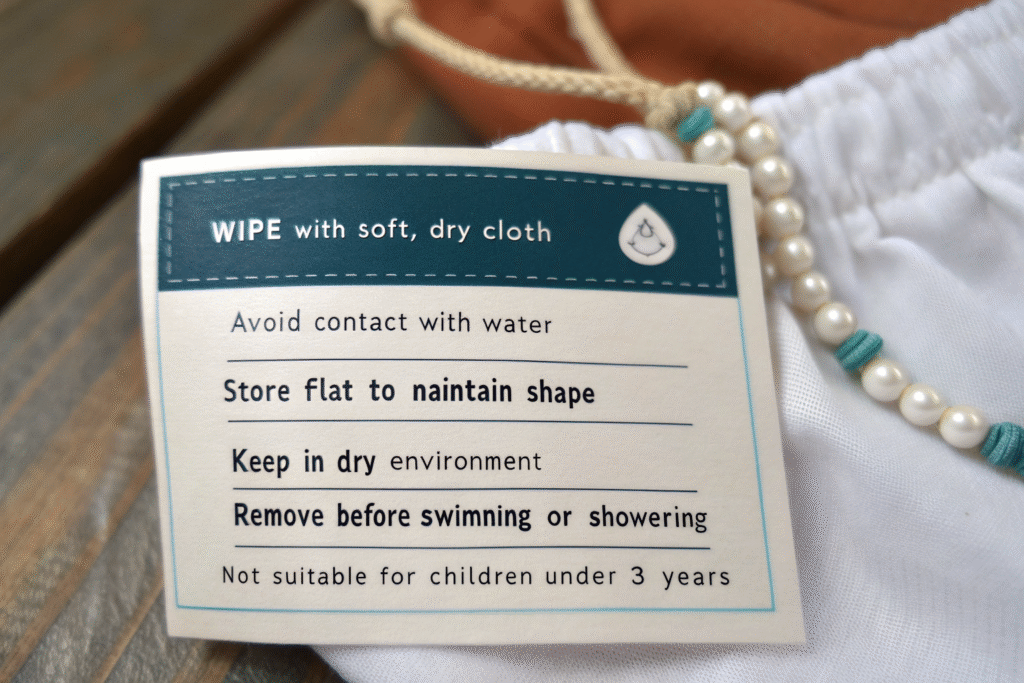
Care instructions should address cleaning methods, storage recommendations, and usage limitations specific to the bracelet's materials. Cleaning instructions might specify "Wipe with soft, dry cloth" for delicate materials or "Avoid contact with water" for certain natural beads. Storage advice could include "Store flat to maintain shape" or "Keep in dry environment." Usage limitations might note "Remove before swimming or showering" or "Not suitable for children under 3 years." The most helpful care instructions anticipate common customer behaviors that could damage the bracelet.
How Can You Create Universal Care Symbols?
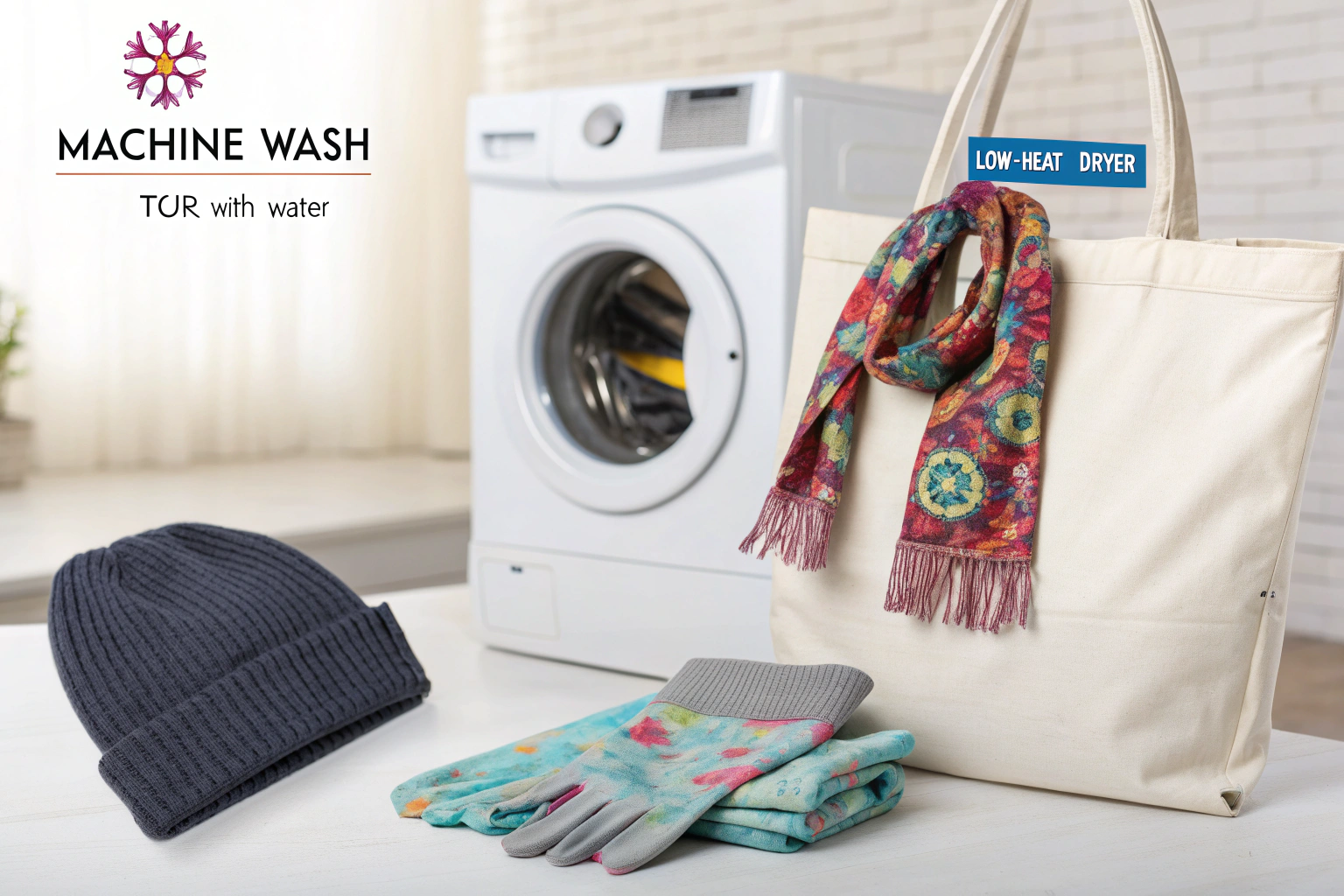
Universal care symbols provide clear instructions across language barriers. A crossed-out water droplet indicates water avoidance, while a hand in water suggests hand-washing only. A sun symbol with crossed lines means avoid direct sunlight, important for fade-prone materials. A crossed-out magnet indicates keeping away from magnetic fields, relevant for certain metal components. You can develop your own symbol system or adapt standard textile care symbols to bracelet materials. Combining symbols with brief text explanations ensures understanding across customer knowledge levels.
What Are Material-Specific Care Considerations?
Different bead materials require specific care approaches that should be reflected in your instructions. Porous materials like wood, pearl, or turquoise need protection from chemicals, perspiration, and cosmetics. Soft materials like amber or coral require protection from scratches and hard impacts. Elastic cord bracelets need guidance about stretching limitations and moisture exposure. The table below outlines common material considerations:
| Material Type | Primary Care Concerns | Recommended Instructions |
|---|---|---|
| Natural Pearls | Acids, cosmetics, dryness | Wipe after wearing, store with damp cloth |
| Wood Beads | Moisture, cracking | Avoid water, occasional oil treatment |
| Elastic Cord | Dry rot, overstretching | Rotate wearing, keep dry |
| Silver Components | Tarnishing | Anti-tarnish storage, polishing cloth |
| Glass Beads | Impact damage | Store separately, avoid hard surfaces |
How Can Labels Enhance Brand Identity?
Beyond compliance, labels serve as powerful branding tools that communicate your story and quality standards to customers.
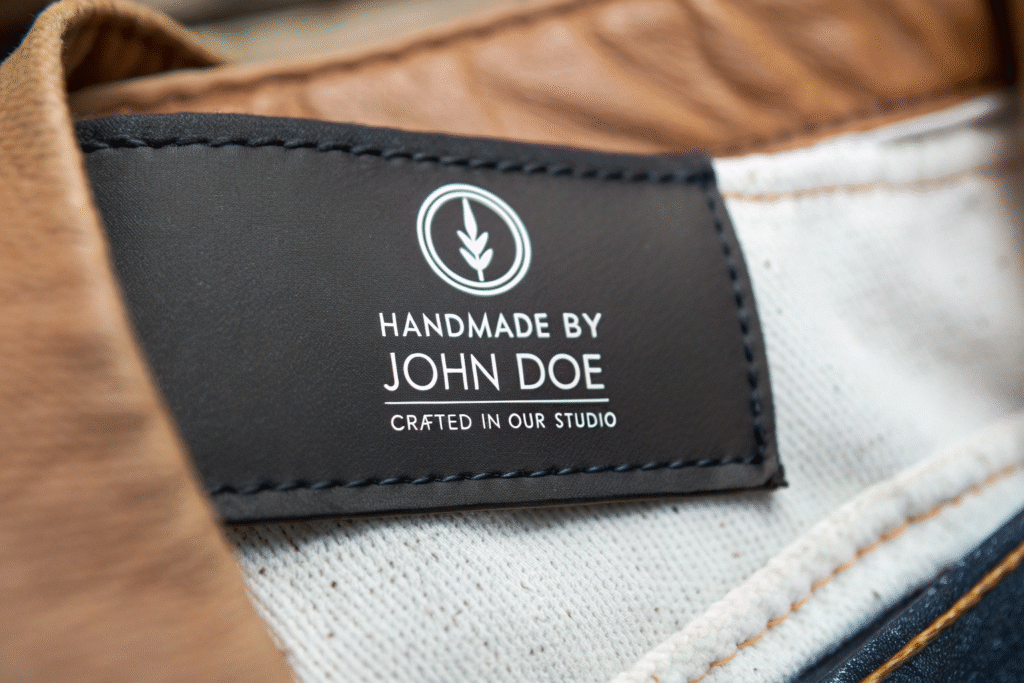
Effective brand labeling includes your logo, brand name, and potentially your story or craftsmanship philosophy. Consistent color schemes, typography, and design elements across all labels strengthen brand recognition. Including your website or social media handles encourages further engagement. For handmade products, consider adding artisan identification ("Handmade by [Name]" or "Crafted in our [Location] studio") to emphasize the personal touch. These elements transform mandatory labels into marketing assets that justify premium pricing through enhanced perceived value.
What Brand Story Elements Resonate with Customers?
Effective brand storytelling on labels might include your inspiration for the collection, information about material sourcing, or details about your craftsmanship techniques. Ethical sourcing stories ("Beads sourced from women's cooperatives in Kenya") resonate with socially conscious consumers. Material stories ("Recycled glass beads from Ghana") appeal to environmentally aware customers. Technique stories ("Hand-knotted between each bead") justify higher price points by explaining the work involved. Even brief stories create emotional connections that transform simple bracelets into meaningful purchases.
How Can Label Design Reflect Brand Positioning?
Label design should align with your brand positioning across multiple elements. Luxury brands might use embossed tags with premium materials, while eco-friendly brands could use recycled paper with simple designs. Color choices should reflect your brand personality—earthy tones for natural brands, bright colors for playful collections. Typography choices communicate style—elegant scripts for sophisticated brands, clean sans-serif for modern aesthetics. Physical label attachment method (hanging tags, sewn-in labels, or printed stickers) also contributes to overall brand perception and should be chosen deliberately.
Conclusion
Comprehensive labeling for handmade beaded bracelets serves multiple crucial functions: ensuring legal compliance, providing essential product information, offering care guidance, and strengthening brand identity. Beyond meeting regulatory requirements, well-designed labels enhance customer experience, reduce post-purchase issues, and justify premium pricing through professional presentation. The most successful labels balance mandatory information with brand storytelling, creating connections that encourage repeat business and customer loyalty.
If you need assistance developing compliant, attractive labels for your handmade beaded bracelet collection, our manufacturing expertise includes complete labeling solutions that meet international requirements. We help artisans and businesses develop labeling systems that protect both legal interests and brand identity. Contact our Business Director Elaine today at elaine@fumaoclothing.com to discuss how we can help you create effective labels for your handmade bracelet business.