I first encountered cork fabric at a trade fair in Germany about eight years ago. A Portuguese supplier had a booth full of bags and wallets that looked like leather but felt completely different. They were lightweight, soft, and had a unique textured pattern that I'd never seen before. I picked up a wallet and asked the obvious question. "What is this made from?"
The answer surprised me. Cork. Not the synthetic imitation, but actual cork, the same material used in wine bottles, processed into a flexible, durable fabric. I was skeptical at first. Would it hold up? Could it be sewn like regular fabric? Would customers accept it as a fashion material?
Fast forward to today, and cork fabric has become a significant material in our accessory production at Shanghai Fumao Clothing. We've made belts, bags, hats, and even hair accessories from it. Our clients, from European boutiques to American supermarkets, have shown growing interest. But cork isn't right for every product or every customer. Like any material, it has strengths and weaknesses that matter for your business.
Let me share what we've learned about sourcing cork fabric for accessories. The pros, the cons, and the practical considerations that will help you decide if cork makes sense for your product line.
What Makes Cork Fabric Unique for Accessories?
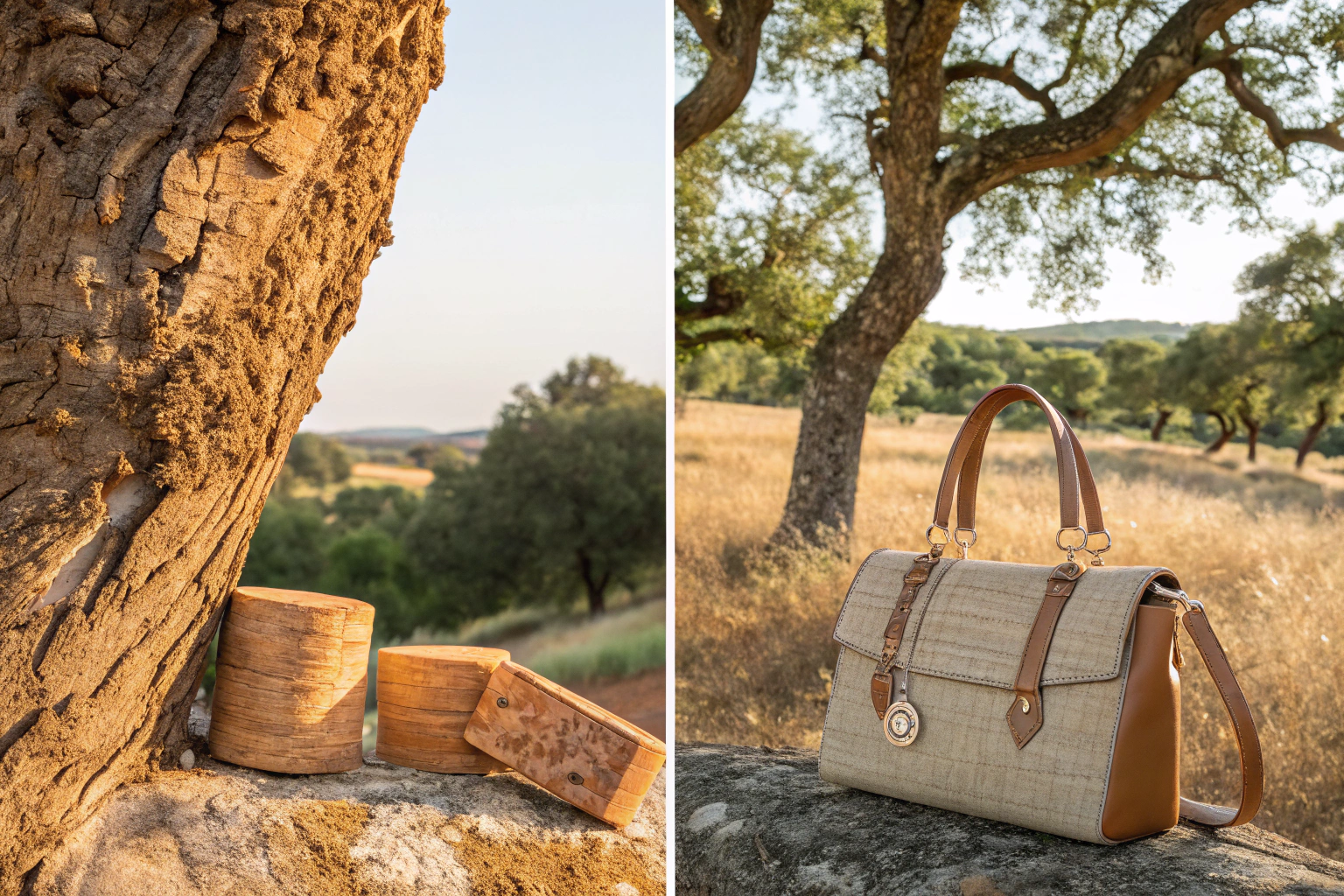
Cork isn't like other materials we work with. It doesn't come from a chemical plant or a textile mill. It comes from trees. Specifically, from the cork oak, Quercus suber, which grows primarily in Portugal, Spain, and other Mediterranean regions. The bark is harvested by hand every nine years, a process that doesn't harm the tree and actually extends its life.
The unique properties of cork come from its cellular structure. Under a microscope, cork looks like a honeycomb of tiny air-filled cells. This structure gives cork its famous compressibility and resilience. When you press it, it springs back. It's also naturally water-resistant, antimicrobial, and surprisingly durable.
For accessory manufacturing, cork offers something that synthetic materials can't replicate. Each piece has a unique grain pattern. No two items are exactly alike. This natural variation appeals to consumers looking for authentic, distinctive products. And unlike leather, cork production doesn't involve animal products, which matters to a growing segment of ethical consumers. This uniqueness connects to our broader discussion of sustainable materials, because cork's natural origin is central to its appeal.
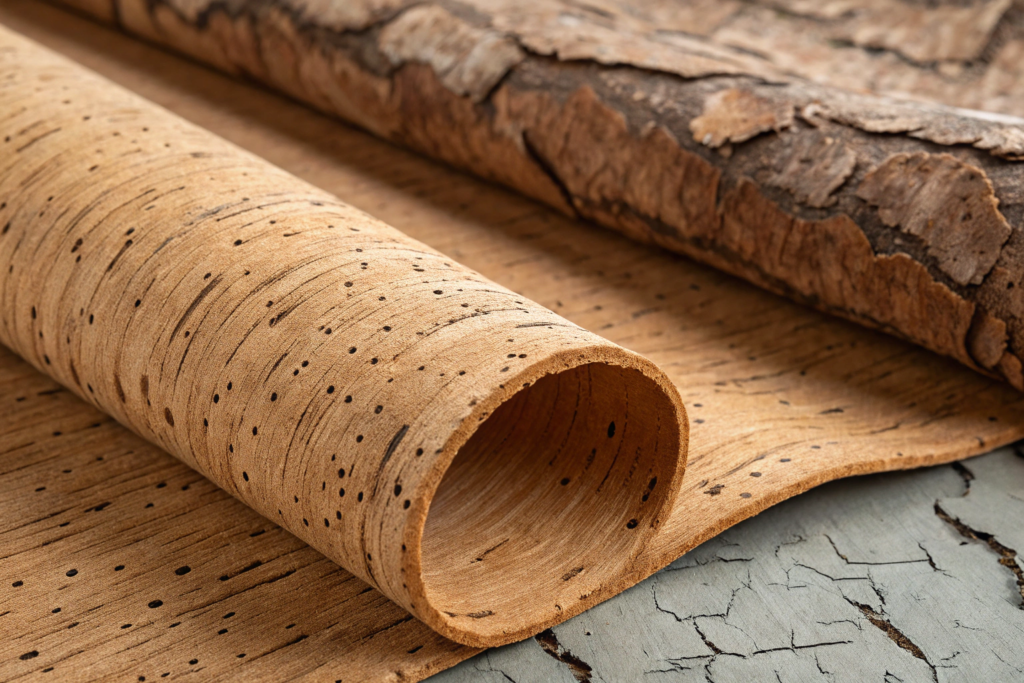
How is tree bark turned into fabric?
The transformation from tree bark to flexible fabric is fascinating. It starts in the cork forests, where skilled harvesters strip the outer bark from mature trees. This is done by hand using specialized axes, a tradition passed down through generations. The trees aren't cut down. They continue growing and will be harvested again in about nine years.
The raw cork boards are stacked and left to season for about six months. Then they're boiled to clean them, make them more flexible, and remove any water-soluble compounds. After boiling, the cork is left to rest again.
For fabric production, the cork is then sliced into thin sheets, much like veneer. These sheets are bonded to a backing material, usually polyester, cotton, or a blend, using non-toxic adhesives. The backing provides stability and allows the material to be sewn like conventional fabric. The result is a flexible, durable material that retains cork's natural properties while being workable for manufacturing. Organizations like APCOR (Portuguese Cork Association) provide detailed information about the production process.
What does cork fabric feel and look like?
Describing the feel of cork fabric is tricky because it's unlike most materials people know. It's softer than you might expect, with a slight give when you press it. The surface is textured but smooth, not rough like natural bark. It warms to the touch quickly, unlike synthetic materials that stay cool.
Visually, cork has a distinctive pattern of tiny holes and variations in tone. These are lenticels, the breathing pores from the original bark. No two pieces are identical, which gives each product a unique character. The color ranges from light honey to deep amber, depending on the specific harvest and processing. It can also be dyed, though the natural color range remains most popular.
Cork fabric has a matte finish that doesn't reflect light like leather or vinyl. This gives it a subtle, understated appearance that works well for casual and natural aesthetics. It's not flashy, but it has a quiet beauty that many consumers appreciate. For design inspiration, Pinterest's Cork Fashion board shows the range of products being made from this material.
What Are The Environmental Benefits of Cork Fabric?
When clients ask about cork, environmental impact is usually their first concern. And rightly so. Consumers are increasingly demanding sustainable products, and cork delivers on that front in ways that few materials can match.
The cork oak forests of the Mediterranean are biodiversity hotspots. They support unique ecosystems, including endangered species like the Iberian lynx. Harvesting cork actually helps preserve these forests. When cork has economic value, landowners maintain the forests instead of converting them to other uses. It's a classic example of conservation through sustainable use.
Cork production is also carbon-negative. The trees absorb CO2 as they grow, and that carbon remains stored in the cork products throughout their useful life. Unlike synthetic materials that release carbon during production, cork actively removes it from the atmosphere.

Is cork fabric truly sustainable?
The short answer is yes, with some qualifications. Cork is one of the most sustainable materials available for accessories. The harvesting process doesn't harm the trees, which continue living and absorbing carbon for 200 years or more. Each tree can be harvested dozens of times over its lifetime.
The production process has relatively low environmental impact compared to synthetic materials or even leather. It requires less water, fewer chemicals, and less energy. The boiling step uses water, but this can be treated and recycled. Many producers now use renewable energy for their facilities.
However, sustainability also depends on where the cork comes from and how it's processed. Certified sources ensure that forests are managed responsibly and workers are treated fairly. The backing material matters too. Cork bonded to recycled polyester is more sustainable than cork bonded to virgin synthetic materials. For certification standards, the Forest Stewardship Council offers guidance on sustainable forest management.
How does cork compare to leather and synthetics?
Comparing cork to leather is instructive. Leather production has significant environmental impacts. It requires large amounts of water, uses potentially harmful chemicals for tanning, and contributes to deforestation for cattle ranching. Cork avoids all of these issues. It's also animal-free, which matters to vegan consumers.
Compared to synthetic materials like PVC or polyurethane, cork wins on several fronts. Synthetics are petroleum-based, meaning they come from non-renewable resources and have significant carbon footprints. They don't biodegrade and can release microplastics during use and washing. Cork is renewable, biodegradable, and doesn't create microplastic pollution.
The one area where synthetics sometimes have an advantage is consistency and cost. Synthetic materials can be produced uniformly at lower prices. Cork's natural variation is a feature for some markets but a drawback for others. And sustainable production has costs that cheap synthetics don't bear. For lifecycle comparisons, the European Confederation of Cork provides research on cork's environmental performance.
What Are The Performance Limitations of Cork?
I believe in being honest with clients about material limitations. Cork has many wonderful properties, but it's not perfect for every application. Understanding its limitations helps you make smart decisions about where and how to use it.
The most significant limitation is that cork is a natural material with inherent variability. You can't demand the exact same grain pattern across thousands of units. Some clients love this uniqueness. Others, particularly those selling to mass markets that expect uniformity, find it challenging.
Cork also has limits in terms of color range. It can be dyed, but the natural honey and amber tones remain most popular and most successful. Very bright or unnatural colors often look, well, unnatural. The material's aesthetic leans toward earth tones and subtle variations.
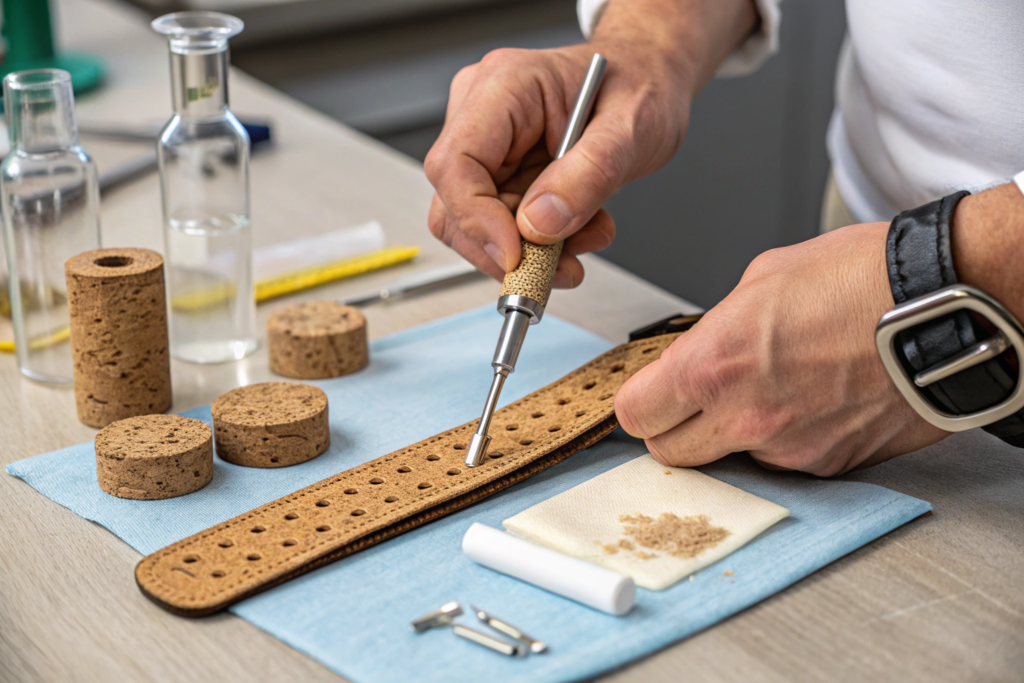
How durable is cork fabric for everyday use?
This is the question I get most often. Will cork hold up to daily wear? Based on our experience, the answer is yes for most applications, with proper care.
Cork is naturally resistant to wear and abrasion. The honeycomb cell structure compresses under pressure but springs back, which means it doesn't show scuffs and scratches as readily as leather or synthetics. A cork bag or wallet can look good for years with normal use.
However, cork isn't indestructible. Sharp objects can puncture it. Prolonged exposure to direct sunlight can cause fading over time. And while it's water-resistant, it's not waterproof. Submersion in water can damage it. For accessories like belts and bags that face normal wear, these aren't significant issues. For products that face extreme conditions, like outdoor gear, other materials might be more appropriate.
The durability also depends on the quality of the cork and the backing material. Higher-grade cork with a strong fabric backing performs better than thin cork with weak backing. At Shanghai Fumao Clothing, we source from suppliers who provide detailed specifications and test results. For general durability standards, organizations like SATRA provide testing services for accessory materials.
Can cork get wet or stained?
Cork has natural water resistance thanks to suberin, a waxy substance in the cell walls. This means water beads up on the surface rather than soaking in immediately. A few rain drops or a spilled drink can be wiped away without damage.
But cork is not waterproof. Prolonged exposure to water, or immersion, will eventually penetrate the material. This can cause staining, warping, or deterioration. We advise clients to treat cork accessories like quality leather. Avoid wearing them in heavy rain. Don't submerge them. If they get wet, blot dry and let them air dry naturally away from heat sources.
Stain resistance is good but not perfect. Cork's non-porous surface resists many stains, but colored liquids like red wine or ink can leave marks if not cleaned promptly. For protection, some cork products are treated with sealants that enhance stain resistance. For maintenance tips, resources like Real Simple's fabric care guides offer practical advice that applies to cork as well.
What Products Work Best With Cork Fabric?
Over the years, we've experimented with cork across our entire product range. Some categories have been home runs. Others taught us lessons about where cork works best.
The products that perform best with cork are those that highlight its natural beauty while respecting its properties. Structured items like handbags and totes showcase cork's texture and durability. Belts work beautifully because cork has the right combination of flexibility and strength. Small leather goods like wallets and card holders are popular because cork wears well and feels pleasant to handle.
Categories where we've been more cautious include items that face constant friction or extreme conditions. Hair accessories, for example, need to withstand pulling and pressure points. Some cork formulations work, but others can crack. Umbrellas, another of our categories, aren't suitable because of waterproofing requirements.
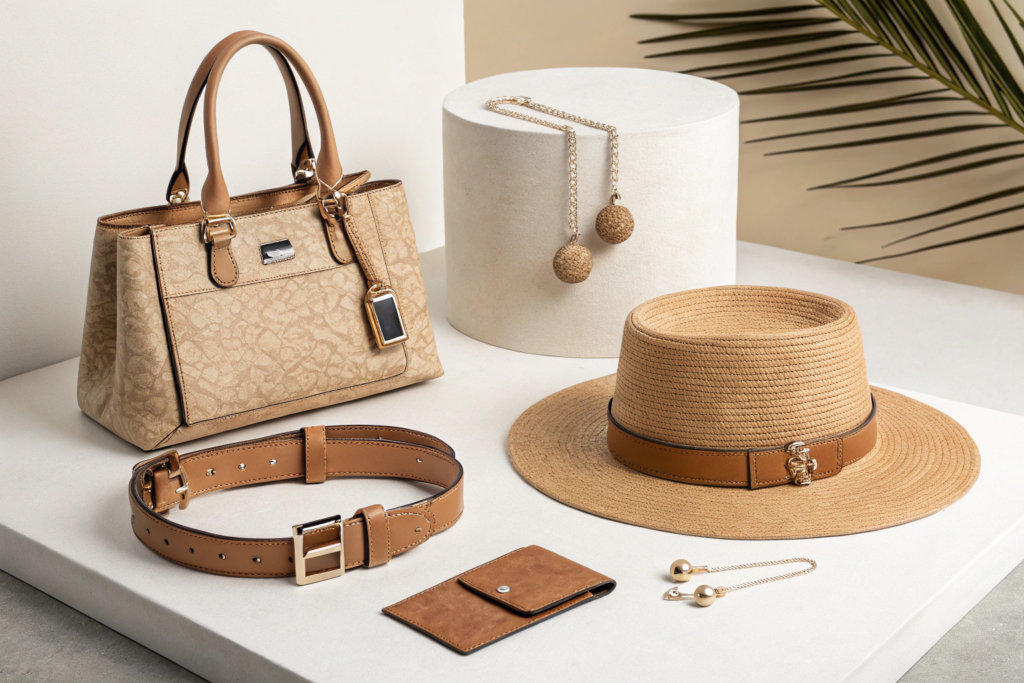
Is cork suitable for bags and belts?
Yes, absolutely. Bags and belts are two of the strongest categories for cork. The material's natural flexibility and strength make it ideal for these applications.
For bags, cork offers several advantages. It's lightweight, which matters for larger totes that customers carry all day. It's durable enough for everyday use, with good resistance to scuffs and scratches. And it has a distinctive look that stands out from leather or canvas. We've produced everything from small clutches to large shopping bags, and the feedback has been consistently positive.
For belts, cork works particularly well because it combines flexibility with structure. It bends comfortably around the waist but holds its shape. The surface accepts hardware well, and edges can be finished cleanly. Cork belts appeal to customers looking for alternatives to leather, whether for ethical, environmental, or aesthetic reasons.
The key to success in both categories is quality construction. Good backing material, reinforced stress points, and careful finishing make the difference between a product that lasts and one that disappoints. For construction techniques, industry publications like Apparel Resources regularly cover innovations in accessory manufacturing.
What about jewelry and smaller accessories?
Cork jewelry has become surprisingly popular. Earrings, in particular, work well because cork is lightweight, so large statement pieces don't pull on earlobes. The natural texture adds visual interest, and cork can be combined with other materials like wood, metal, or resin for striking effects.
Small accessories like keychains, phone cases, and glasses cases are also strong categories. They showcase cork's unique look at accessible price points, making them good entry-level products for customers new to cork. Many of our clients use small cork accessories as add-on items or gift-with-purchase promotions.
Watch straps represent a growing niche. Cork's comfort and breathability make it pleasant against the skin, and its natural variation means each strap is unique. The main consideration is ensuring the cork is thin enough and flexible enough for this application, which requires specific material specifications.
For hair accessories, we've had mixed results. Simple barrettes and clips work well when the cork is properly backed. But intricate shapes or very small items can be challenging because cork has less structural integrity than plastic or metal at very small scales. Testing is essential before committing to large orders. For jewelry-making techniques, resources like Jewelry Making Daily offer tutorials that can be adapted for cork.
How Do You Source Quality Cork Fabric?
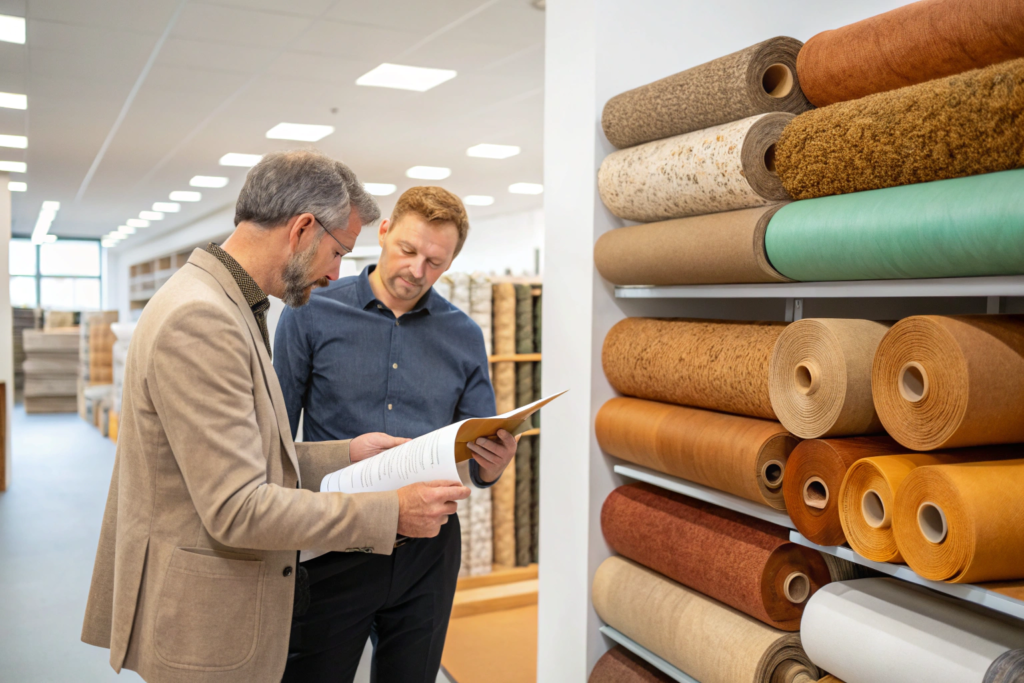
Sourcing cork isn't like sourcing conventional fabrics. The supply chain is different, the quality indicators are different, and the relationships matter more. We've learned through trial and error what to look for and what to avoid. The first decision is geographic. While cork oak grows in several Mediterranean countries, Portugal dominates the industry. Portuguese cork is generally considered the highest quality, with the longest tradition and most developed processing infrastructure. Spanish cork is also excellent. Chinese-produced cork exists but rarely matches the quality of Mediterranean sources.
The second decision is about the supplier's credentials. Look for suppliers who can document their sourcing, who work with certified forests, and who have quality control processes in place. Ask about their backing materials and adhesives. These components significantly affect the final product's performance.
What certifications should you look for?
Certifications provide assurance that you're getting quality material from responsible sources. For cork, several certifications matter.
FSC certification ensures the cork comes from forests managed to environmental and social standards. This is the gold standard for sustainable forestry. If a supplier offers FSC-certified cork, it means they can trace their material back to responsibly managed forests.
PEFC is another forest certification system, similar to FSC. Both are credible. The important thing is that the supplier has some form of third-party certification, not just their own claims.
For the finished fabric, Oeko-Tex certification is valuable. It ensures the material has been tested for harmful substances and is safe for consumer use. This matters for accessories that will be in contact with skin.
Some suppliers also offer vegan certifications, which confirm that no animal products were used in production. While cork itself is vegan, the adhesives and backing materials could potentially include animal-derived components. Certification provides clarity. Oeko-Tex and FSC both offer searchable databases of certified products and suppliers.
How can you assess cork quality before ordering?
Before committing to large orders, you need to evaluate the material itself. We've developed a checklist of quality indicators over the years.
First, look at the surface. High-quality cork has a consistent thickness with minimal defects. The natural variations in pattern should be attractive, not jarring. If the cork has been dyed, the color should be even and saturated.
Second, feel the flexibility. Bend the material in different directions. Good cork fabric should flex without cracking or showing stress lines. The backing should move with the cork, not separate from it.
Third, check the backing. Is it well-bonded throughout? Are there areas where the cork is separating? What material is the backing? Recycled polyester is preferable to virgin synthetics.
Fourth, ask for test data. Responsible suppliers can provide information about tensile strength, abrasion resistance, colorfastness, and other performance metrics. If they can't or won't, that's a red flag.
Finally, order samples before committing. Test them in your own production. Make samples of your actual products. Wear them, use them, abuse them. There's no substitute for firsthand experience. For material testing standards, ASTM International provides relevant protocols that responsible suppliers should be able to meet.
Conclusion
Cork fabric represents something rare in the accessory world. It's a material that's genuinely sustainable, genuinely beautiful, and genuinely different. It comes from trees that purify our air and support unique ecosystems. It's processed with relatively low environmental impact. It creates products that consumers value for their uniqueness and their story.
But cork isn't for everyone or every product. Its natural variation challenges brands that demand uniformity. Its price point sits above commodity synthetics. Its performance characteristics, while excellent for many applications, have limits. And its supply chain requires attention to certification and quality that cheaper materials don't demand. For the right products and the right markets, cork is a winner. We've seen it succeed in bags, belts, jewelry, and small leather goods. We've seen customers respond to its natural beauty and sustainability story. We've seen brands build collections around cork that differentiate them in crowded markets.
At Shanghai Fumao Clothing, we've made cork a core part of our sustainable materials offering. We've built relationships with trusted Portuguese suppliers who provide certified, high-quality material. We've trained our production teams in the specific techniques that cork requires. And we've helped clients around the world develop successful cork product lines.
If you're considering cork for your next collection, I'd love to help you navigate the pros and cons. Please reach out to our Business Director, Elaine, at elaine@fumaoclothing.com. Let's explore whether cork is right for your products and your customers.