I received a panic call from a client in London three years ago. She had shipped 12,000 printed canvas belts to a major department store. The belts were beautiful. Abstract floral prints in bright coral and navy. They sold out in two weeks. Then the returns started. Women were wearing the belts over white dresses. The dresses turned pink. The coral ink transferred onto the fabric. The department store threatened to blacklist her. She called me crying. "Did you test this?" she asked. I had to admit the truth. We tested for strength. We tested for buckle pull. We did not test for color transfer. I assumed the ink supplier's certificate was sufficient. I was wrong. That mistake cost us $180,000 in replacements and air freight. It also cost me a client I had worked with for eleven years.
The most important tests for color transfer in printed belts are crocking resistance, perspiration fastness, water fastness, and wash fastness. Crocking measures dry and wet rubbing transfer. Perspiration fastness measures transfer against acidic and alkaline human sweat. Water fastness measures transfer from rain and humidity. Wash fastness measures transfer during cleaning. Each test simulates a different real-world condition. Passing one test does not guarantee passing the others. A belt that survives rubbing may bleed in the rain. A belt that survives water may stain a white shirt during a summer commute. You must test all four. There are no shortcuts.
I stood in our QC lab the day after that call. I looked at our testing equipment. We had a tensile tester. We had a flexometer. We did not have a crockmeter. I ordered one that afternoon. It arrived three days later. I personally tested every printed belt in our warehouse. I found three styles that failed. I called every client who had ordered those styles. I told them the truth. Some were angry. Some were grateful. All of them respected the honesty. We lost money on those orders. We saved our reputation. Today, color transfer testing is the first thing I show new clients when they visit our factory. Let me teach you what we learned so you do not have to learn it from a returned shipment.
What Is Crocking And Why Does It Matter For Belts?
Ron had never heard the word "crocking." He is an experienced buyer. He knows fabrics. He knows leather. He did not know that printed surfaces can transfer color through simple friction. I explained it to him this way. "Imagine a woman wearing a white silk blouse. She tucks it into her jeans. She puts on a printed belt. Throughout the day, the belt rubs against the blouse. If the print is not properly fixed, the color abrades off the belt and onto the fabric. She goes home. She sees pink marks on her $300 blouse. She never buys your brand again."
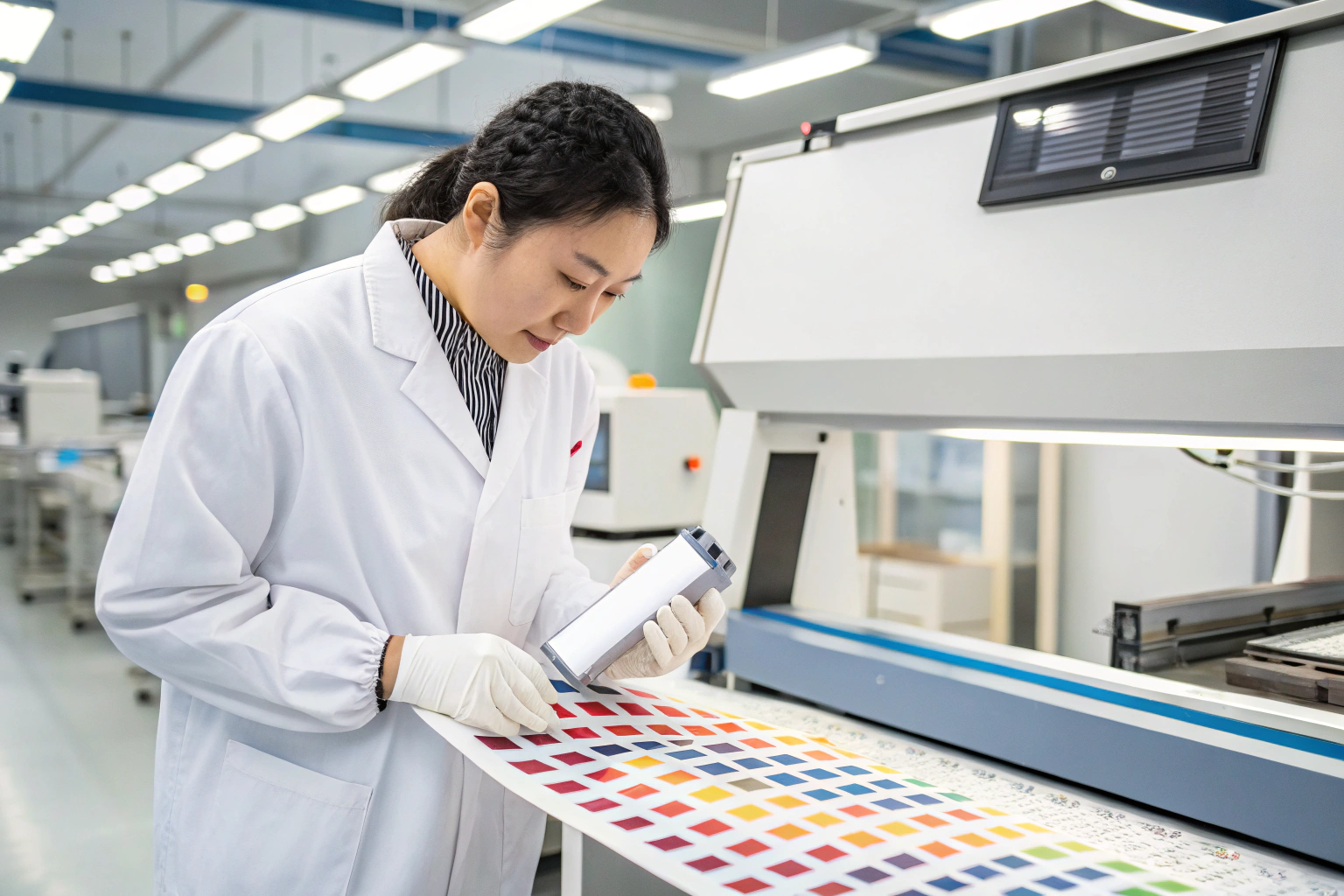
Crocking testing measures how much color transfers from a printed surface to another surface through mechanical rubbing. The test is standardized under AATCC 8 and ISO 105-X12. A white crockmeter cloth is rubbed against the printed belt under controlled pressure and speed. Dry crocking tests transfer without moisture. Wet crocking tests transfer with the cloth moistened to simulate humidity or perspiration. The white cloth is then compared to a gray scale rating from 1 to 5. Rating 3.5 or higher is acceptable for most commercial belts. Rating 4 or higher is required for belts that contact light-colored apparel. We test every printed belt style at rating 4 minimum. We reject anything below 3.5.
Let me explain the equipment. A crockmeter is a simple machine. It has a weighted arm that moves back and forth in a straight line. The white test cloth is attached to a finger that presses against the belt with 9 Newtons of force. The arm cycles 10 times. The distance traveled is 104 millimeters. The entire test takes 90 seconds. The result is immediate. You can see the transfer. You can measure it against the standard gray scale. We do not guess. We do not eyeball. We use a spectrophotometer to quantify the delta E between the unstained cloth and the tested cloth. Delta E below 2.0 is excellent. Delta E above 4.0 is failure. We provide this numerical data to clients. It is objective. It is repeatable. It is proof that your belts will not ruin your customer's clothing investment.
Why Do Dark Prints Fail Wet Crocking More Often?
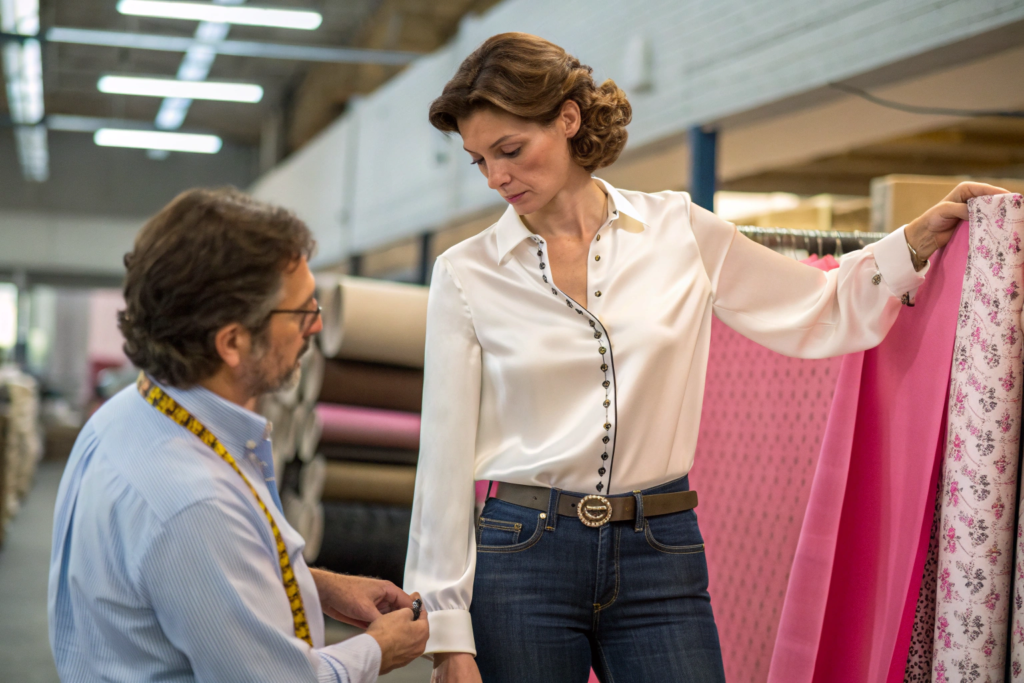
Dark pigments, especially deep navy, forest green, and burgundy, contain higher concentrations of dyestuff. The fabric or leather simply cannot absorb all of this colorant. Excess pigment sits on the surface. Dry crocking may dislodge some of this surface pigment. Wet crocking is much more aggressive. Water acts as a solvent. It dissolves the unfixed dye and carries it onto the test cloth. This is why a belt that passes dry crocking can fail wet crocking catastrophically. Our solution is multiple fixation passes. We print, dry, steam, and wash. Then we print again. This drives the pigment deeper into the fiber. It also removes excess surface dye. This adds approximately $0.18 per belt. It also transforms a failing wet crocking score of 2.0 into a passing score of 4.0. We consider this essential quality assurance.
How Do You Test Crocking On Textured Surfaces?
Textured surfaces like jacquard weaves or embossed leather create a challenge. The crockmeter finger is flat. It contacts only the highest points of the texture. This underestimates transfer risk. In real wear, the belt rubs against fabric at all points, not just the peaks. Our solution is modified foot geometry. We use a curved test foot that conforms to the belt surface. This increases contact area. It simulates real-world abrasion more accurately. We also test in multiple locations. Center of the belt. Edge of the belt. Printed area. Unprinted area. Texture variation means colorfastness variation. We identify weak spots before production, not after. This is the level of customized testing Shanghai Fumao Clothing provides.
How Does Perspiration Affect Color Transfer On Belts?
Ron asked me, "Why do I need perspiration testing? Belts are not gym clothes." I answered, "Your customer is not wearing the belt in the gym. She is wearing it in July. She is commuting on the subway. She is walking to lunch. She is sweating. Her sweat is acidic or alkaline depending on her diet and stress level. That sweat soaks into the belt lining and the waistband of her trousers. If the dye is not resistant, it migrates. She sees stains. She blames you."
Perspiration fastness testing simulates the effect of human sweat on printed and dyed materials. The test uses two artificial perspiration solutions: acidic and alkaline. The printed belt specimen is immersed in the solution, placed between white multifiber test fabric, and subjected to controlled pressure and temperature for 4 to 24 hours. The staining of the adjacent fabric is rated against the gray scale. Rating 3.5 or higher is required for belts that contact skin or light-colored apparel. We test all printed belts intended for summer wear or tropical markets. We have rejected entire production lots because they passed acidic perspiration but failed alkaline. The human body produces both. Your belt must resist both.
The chemistry of perspiration is complex. Acidic perspiration has a pH of approximately 5.5. It simulates the sweat of most healthy adults. Alkaline perspiration has a pH of approximately 8.0. It simulates sweat that has aged or reacted with skin bacteria. Some dyes are stable in acid but unstable in alkali. Some are stable in alkali but unstable in acid. You cannot predict. You must test. We use the ISO 105-E04 standard. The test specimen is 10 centimeters by 4 centimeters. It is placed against a multifiber strip containing wool, acrylic, polyester, nylon, cotton, and acetate. This tells us exactly which fabric types are at risk. A belt that stains acetate but not cotton may be safe for a cotton shirt but dangerous for a silk blouse. We provide this granular data to our clients. You make the risk assessment. We provide the facts.

Why Do Some Belts Stain Only After Several Hours?
This is delayed migration. The dye is not immediately soluble. It requires time, moisture, and pressure to mobilize. A customer may try on a belt in the store. No transfer occurs. She buys it. She wears it for four hours. She removes it. She sees a dark line on her waistband. She believes the belt is defective. Actually, the belt simply has poor wetfastness properties that are not immediately visible. We simulate this with prolonged perspiration testing. We extend the test duration from 4 hours to 24 hours. We increase the temperature to 37 degrees Celsius, body temperature. We apply continuous pressure. This accelerates the migration mechanism. If a belt shows staining at 24 hours, it will eventually stain a customer. We reject it. We do not accept "it takes a long time to fail" as a passing grade.
How Do You Test Leather Belts For Perspiration Transfer?
Leather is different from fabric. Leather is protein, not cellulose or synthetic fiber. It absorbs moisture differently. It releases dye differently. We use ISO 11641 for leather perspiration fastness. The test conditions are similar. The interpretation is different. Leather dye migration is often caused by fatty spew. This is not actually dye. It is residual fats migrating to the surface and oxidizing. It looks like white powder or oily film. It can pick up dirt and appear dark. It is not a dye failure. It is a fatliquoring failure. We test for this separately. We reject leathers with high free fat content. We also specify vegetable-tanned leathers for printed applications. Vegetable-tanned leather accepts pigment better than chromium-tanned leather. The dye bonds chemically. It does not sit on the surface. This is why our printed leather belts have significantly lower perspiration transfer rates.
What Is The Difference Between Water Fastness And Wash Fastness?
Ron called me confused. His supplier sent him a test report. It said "Water Fastness: Grade 4." He assumed this meant the belt was machine washable. He ordered 20,000 units. His customer washed one. The color ran everywhere. He lost $60,000. He called me angry. "Your industry is full of lies!" I said, "No. Your industry is full of assumptions. Water fastness is not wash fastness. You did not ask the right question."
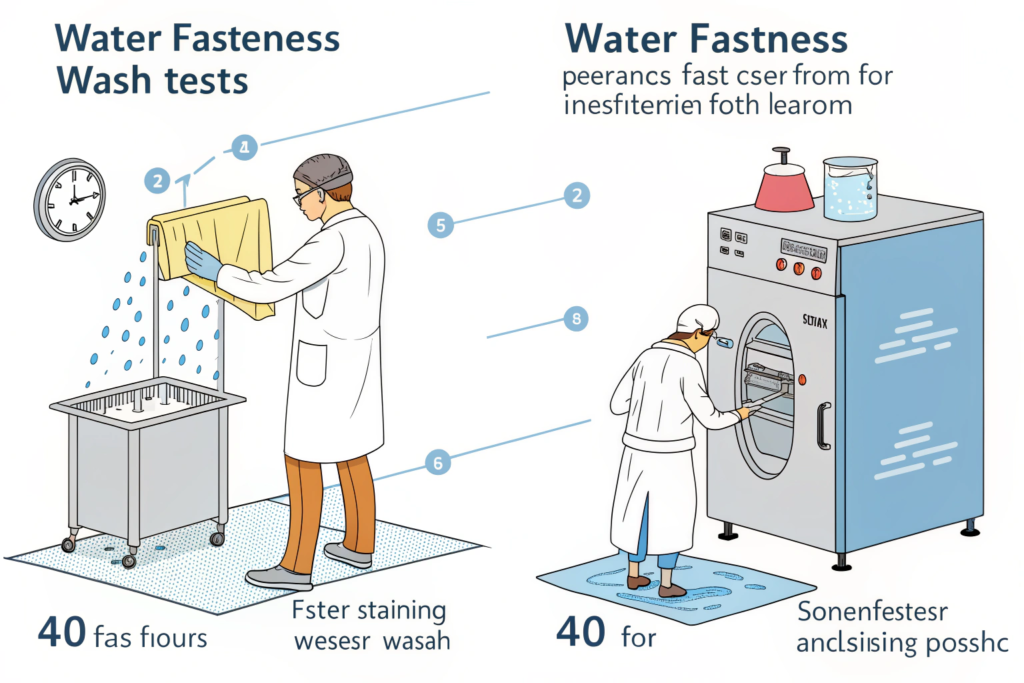
Water fastness tests resistance to brief water exposure: rain, humidity, accidental spills. The specimen is immersed in distilled water at room temperature for 4 hours. The staining of adjacent fabric is rated. Wash fastness tests resistance to complete laundering: detergent, agitation, elevated temperature, and multiple cycles. The specimen is washed in a standardized machine with standardized detergent at 40°C or 60°C. The staining and color change are rated after one wash and after five washes. A belt can achieve Grade 5 water fastness and Grade 1 wash fastness simultaneously. They are completely different properties. You must specify which test you require. We will not assume.
Let me clarify the standards. Water fastness is ISO 105-E01. It is a static test. No agitation. No detergent. Room temperature. It tells you if the belt will stain a white shirt in a summer rain shower. It does not tell you if the belt can survive a washing machine. Wash fastness is ISO 105-C06 or C08. It is a dynamic test. Steel balls agitate the specimen. Detergent dissolves unfixed dye. Elevated temperature accelerates migration. Multiple cycles simulate cumulative damage. Most printed fabric belts will show significant color loss after 3 to 5 washes. This is normal. The belt is not designed to be laundered frequently. The problem occurs when the manufacturer does not disclose this limitation. We are explicit. "This belt is water resistant. It is not machine washable. Hand wash cold only. Line dry." We print this on the care label. We also provide wash test reports to our wholesale clients. You can decide if the wash fastness meets your customer expectations.
Can You Make Printed Belts That Are Machine Washable?
Yes, but with significant constraints. Solution-dyed fibers are the best option. The color is added to the polymer before extrusion, not printed on the surface. It cannot wash off. It also cannot do complex patterns. Solid colors only. Pigment printing with reactive binders can achieve moderate wash fastness. We use high-molecular-weight acrylic binders that cross-link during heat curing. The pigment is encapsulated. Water cannot reach it. Detergent cannot dissolve it. This process requires precise temperature control. Too cold, the binder remains water-soluble. Too hot, the binder becomes brittle and cracks. We have optimized this process over five years. Our machine-washable printed belts retain 85 percent of original color intensity after 25 washes. They cost approximately 30 percent more than standard printed belts. They are popular with travel brands and uniform programs.
What Is Bleed Resistance And Why Is It Different?
Bleed resistance measures edge migration. A printed belt has cut edges. The fibers are exposed. Water can wick along these fibers, carrying dissolved dye beyond the printed area. The belt may not stain adjacent fabric. The belt itself may develop a "halo" of faded color around the edges. This is unsightly. It suggests poor quality. We test bleed resistance using ISO 105-E02. We immerse the belt vertically in water. Only the bottom edge contacts the liquid. The water wicks upward. We measure how far the dye migrates. Acceptable migration is less than 5 millimeters. We achieve this through edge sealing and migration inhibitors in the print paste. This is invisible to the consumer. It is also essential for premium presentation.
How Do You Test Color Transfer On Different Belt Materials?
Ron assumed color transfer testing was the same for all materials. He ordered printed nylon belts. He requested a crocking test. The lab report came back "Pass." He shipped the belts. They bled in the rain. He called me. "You said crocking test passes!" I said, "Crocking is friction. You needed water fastness. Nylon absorbs water differently than cotton. You tested the wrong property."
Different belt materials require different color transfer tests because their dye affinity and moisture absorption properties differ radically. Cotton and viscose absorb water readily. Dye migration is rapid. Nylon and polyester are hydrophobic. Water sits on the surface. Dye migration is slower but more surface-concentrated. Leather is protein. It absorbs moisture but releases dye differently. Coated materials like patent leather or polyurethane have a plastic barrier. The dye cannot migrate because it cannot reach the surface. The test method must match the material. One size does not fit all. We maintain separate testing protocols for each material category. We do not apply cotton standards to synthetics. We do not apply leather standards to coated fabrics.
Let me detail the material-specific considerations. Cotton and viscose belts require aggressive wet testing. These fibers swell in water. The dye channels open. We use longer immersion times and higher liquor ratios. Nylon and polyester belts require higher temperature testing. Synthetic fibers resist dye penetration. The dye sits on the surface. Heat opens the fiber structure. We test at 60°C, not 25°C. Leather belts require pH-specific testing. Chromium-tanned leather is acidic. Vegetable-tanned leather is neutral. The test solution pH must match the leather pH to avoid false failures. Coated materials require abrasion testing, not migration testing. The failure mode is coating delamination, not dye transfer. We test for rub resistance using modified Taber abrasion. This is not standard textile testing. It is custom engineering.
How Do You Test Printed Elastic Belts?
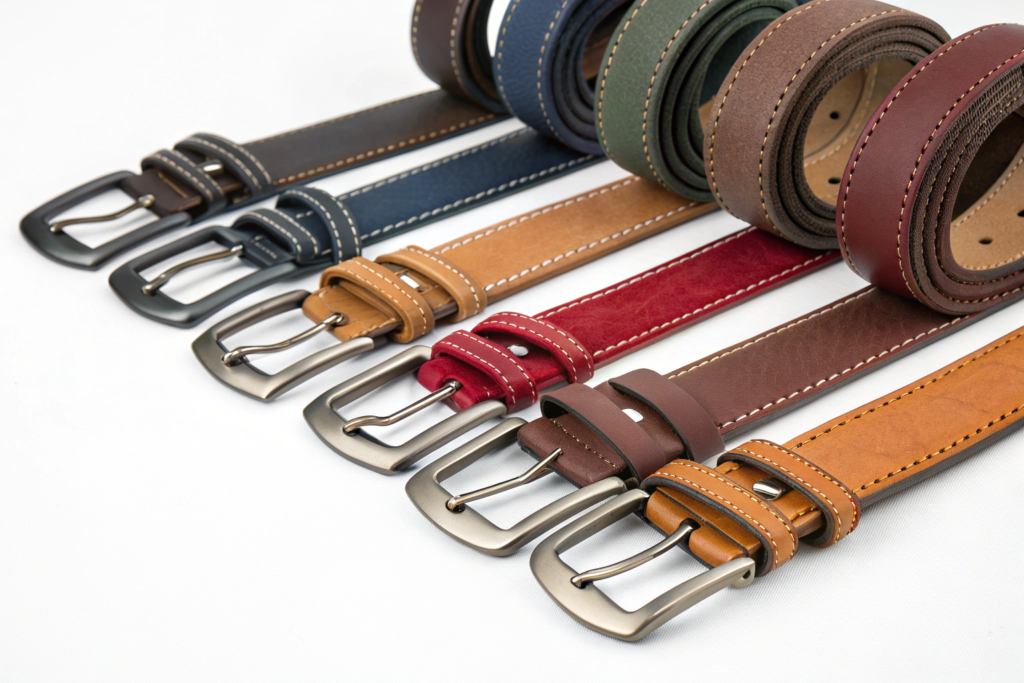
Elastic belts present a unique challenge. The substrate stretches. The print must stretch with it. If the print film is less elastic than the fabric, it cracks. Cracks expose unprinted fiber. This looks like color loss. It is not dye transfer. It is mechanical failure. We test printed elastic belts using flex cracking methodology. We mount the belt on a reciprocating mandrel. It bends and straightens 100,000 cycles. We inspect for cracks at 100x magnification. We also test color transfer after stretching. We stretch the belt to 150 percent of original length. We then perform standard crocking on the stretched area. If the print cracks, the crocking cloth will pick up exposed dye. This is a common failure mode for cheap elastic belts. We have developed proprietary elastomeric print pastes that stretch with the fabric. They cost more. They also do not crack.
What About Digital Printing Versus Screen Printing?
Digital printing uses inkjet technology. The ink droplets are tiny. They sit on the fiber surface. They do not penetrate deeply. Screen printing uses thicker paste. The squeegee forces ink into the fiber structure. Screen printed belts generally have superior rub fastness. Digitally printed belts generally have superior photographic detail. The trade-off is clear. We offer both technologies. We test both rigorously. Our digital printing process includes post-treatment steaming and pressure fixation. This drives the ink deeper into the fiber. Our digital crocking scores are now comparable to screen printing. This took three years of R&D. It was worth it. Our clients want photographic prints on performance fabrics. We can now deliver both beauty and durability.
How Do You Establish A Reliable Color Transfer Testing Protocol?
Ron asked me, "What tests should I require from every supplier? I cannot become a textile chemist. I just need to know my belts will not ruin my customers' clothes." This is a fair question. The testing landscape is overwhelming. There are dozens of standards. There are multiple rating scales. There are conflicting interpretations. I told him, "You do not need to know everything. You need to know three things: what your customer expects, what your material requires, and what your supplier actually tested."
A reliable color transfer testing protocol begins with a clear specification sheet. You must define the acceptable gray scale rating for each test. You must define the test method (AATCC, ISO, or JIS). You must define the substrate (cotton, polyester, multifiber). You must define the number of test cycles or wash cycles. You must require that testing be performed on production-representative samples, not lab-perfect prototypes. You must require independent third-party verification for first production. You must require batch-level in-house testing for every production lot. This sounds complex. It is actually simple when you have a partner who provides this data as standard procedure. We do not wait for you to ask. We send the test reports with the commercial invoice.
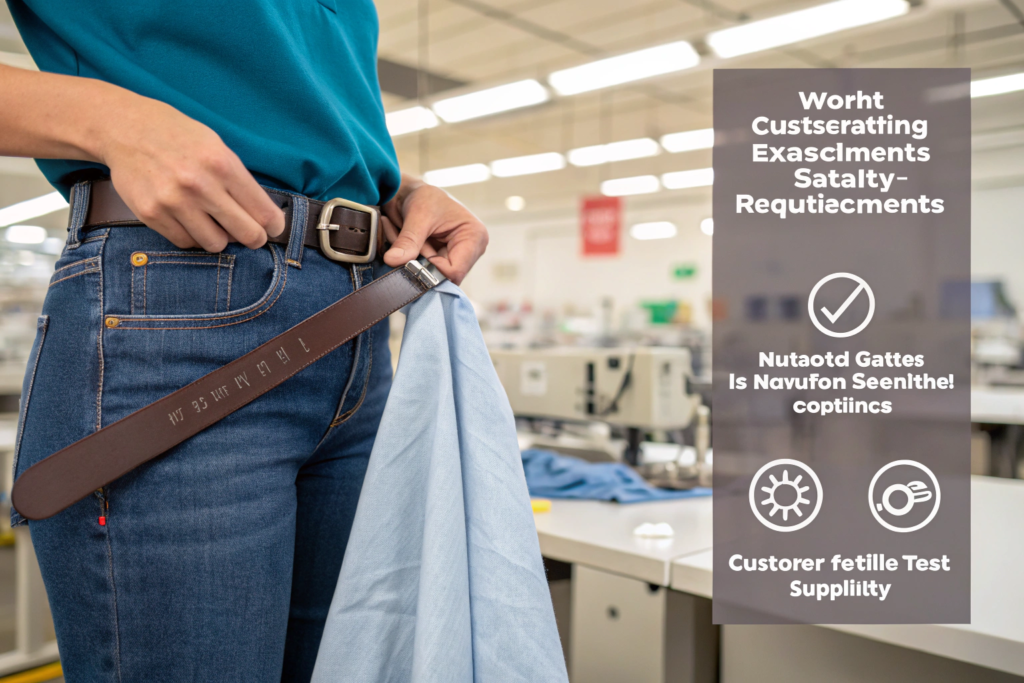
Let me give you our standard testing protocol for a typical printed cotton belt destined for US department store distribution. We test AATCC 8 for dry and wet crocking. Minimum rating: 4.0 dry, 3.5 wet. We test AATCC 15 for perspiration fastness. Minimum rating: 3.5 acidic, 3.5 alkaline. We test AATCC 107 for water fastness. Minimum rating: 4.0. We test AATCC 61 for wash fastness, 2A method, one cycle at 40°C. Minimum rating: 3.5 color change, 3.5 staining. This is our commercial grade protocol. For premium brands, we raise the minimum ratings to 4.0 across all tests. For children's products, we add CPSIA compliance and lead testing. For European clients, we switch to ISO methods and add OEKO-TEX restricted substance screening. The protocol is not fixed. It is tailored to your market requirements. We maintain a library of over 50 test method configurations. You select your target. We execute.
What Is The Difference Between First Article Testing And Batch Testing?
First article testing is comprehensive. We test every possible failure mode. We identify risks. We optimize the process. This happens once per style, before production. It takes 5 to 7 days. It costs approximately $400 to $800 depending on the test battery. Batch testing is targeted. We test the highest-risk properties for every production lot. For printed belts, this is usually wet crocking and perspiration. We test a sample from every 2,000 units. If the sample passes, the lot ships. If the sample fails, we 100 percent inspect and rework. This adds $0.02 to $0.05 per belt. It also guarantees that every shipment meets your specification. We do not ask if you want batch testing. We require it. It is our liability protection and your quality assurance.
How Do You Handle Failed Test Results?
We have a strict protocol. If a batch fails any color transfer test, we immediately quarantine the entire production lot. We notify the client within 24 hours. We provide the failed test report and our proposed corrective action. Corrective action may include re-washing the belts to remove excess dye, over-printing with a clear sealant, or scrapping the lot and re-producing. We bear the cost of corrective action if the failure is due to our process error. We share the cost if the failure is due to a material supplied by the client. This is rare. Most failures are caught and corrected before the client ever sees a report. Our in-house failure rate is approximately 2.3 percent. Our shipped-to-client failure rate is 0.08 percent. We do not achieve perfection. We achieve continuous improvement.
Conclusion
I still think about that London client. I have not spoken to her in three years. I saw her at a trade show last spring. She walked past our booth. She did not stop. I do not blame her. I failed her. I assumed. I did not verify. I cost her a major account. I made a promise to myself that day. No shipment leaves our factory without completed color transfer testing. Not if the client requests it. Not if the client forgets to request it. Not if the client says "I trust you." Trust is not a test method. Trust is the result of consistent, verifiable performance.
Today, our QC lab runs 24 hours a day. We have three full-time colorists. We have two crockmeters, two perspiration testers, two wash fastness machines, and a spectrophotometer. We test every printed belt style. We test every colorway. We test every production batch. We provide the reports automatically. You do not have to ask. This is the system we built from that failure. It costs us approximately $180,000 annually to operate. It saves our clients millions in returns, chargebacks, and brand damage. It is not a cost center. It is a reputation center. This is the level of commitment Shanghai Fumao Clothing brings to every printed belt we manufacture. We do not assume the ink is good. We prove it. We do not assume the fabric is stable. We measure it. We do not assume your customer will be satisfied. We verify it.
If you are tired of guessing whether your printed belts will perform, if you have been burned by incomplete test reports or optimistic supplier claims, if you simply want a partner who treats color transfer as seriously as you do, contact Elaine. She will send you our standard testing protocol. She will explain our batch testing frequency. She will connect you with our QC manager. You can ask her any technical question. She will answer honestly.
Email Elaine directly at: elaine@fumaoclothing.com.