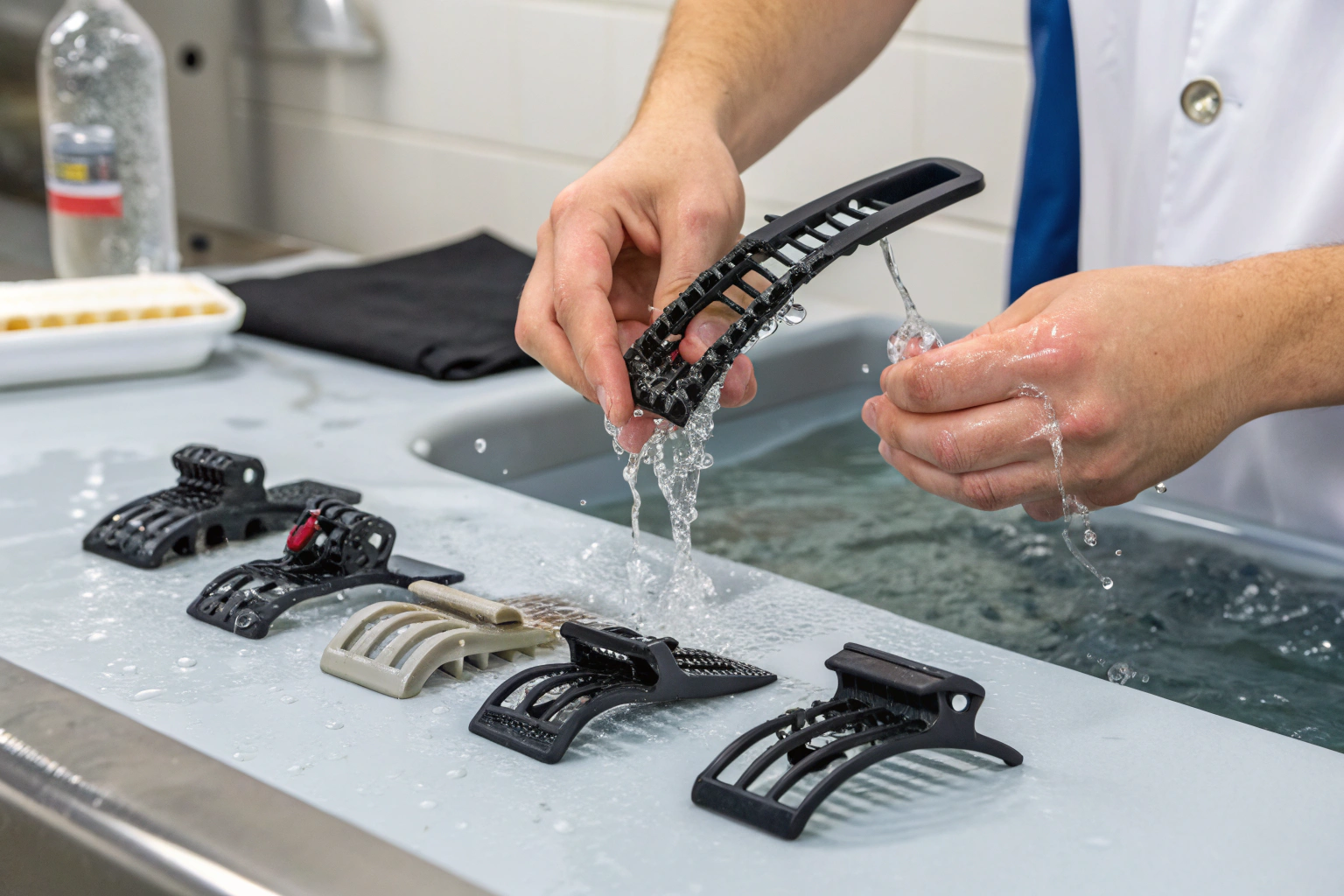
The email arrived with a video attachment. A customer had bent one of our client's hair clips completely backward. The clip sprung back to its original shape without breaking. The customer filmed herself doing it again and again, laughing with amazement. That video got millions of views. Sales of that clip tripled within a week.
The most important factors in sourcing unbreakable hair clips are material selection, hinge design, spring tension calibration, and finish durability. Unbreakable clips require advanced engineering plastics or spring steel with precise heat treatment, reinforced hinge points that distribute stress, and springs calibrated to hold hair without causing fatigue failure. Quality control testing must verify these properties before shipment.
At Shanghai Fumao Clothing, we have produced millions of hair clips over the years. We learned through trial and error what makes some clips last for years while others break within weeks. The difference is not magic. It is engineering, material science, and quality control. Let me share what we have learned about creating clips that truly earn the "unbreakable" claim.
What Materials Actually Produce Unbreakable Hair Clips?
Material choice determines everything about a hair clip. The right material can flex thousands of times without fatigue. The wrong material cracks on the tenth use. Understanding material options helps you specify correctly. Base material is the foundation of durability.
Why does acetate fail as an unbreakable material?
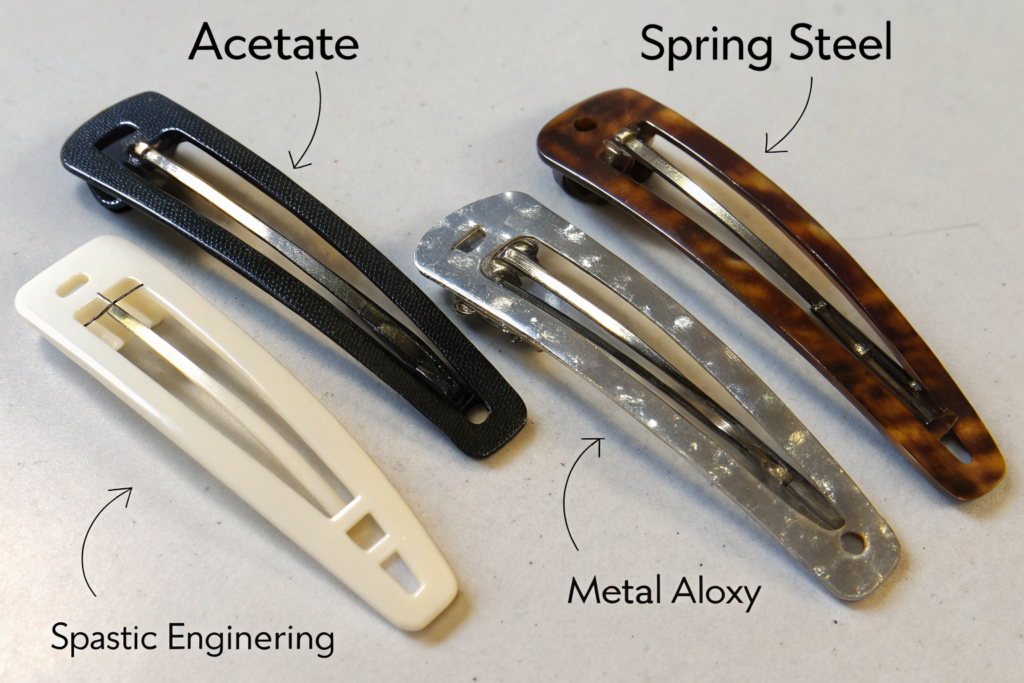
Acetate creates beautiful hair clips. It takes color brilliantly. It polishes to a high shine. It feels substantial in hand. But it breaks.
Acetate is a cellulose-based plastic. It has excellent appearance properties but limited flexibility. When bent repeatedly, it develops stress cracks. Those cracks grow until the clip snaps. Acetate works for decorative clips worn occasionally. It fails for daily-use clips that must flex with every use. We still produce acetate clips for fashion applications where beauty matters more than durability. But we never claim they are unbreakable. Material properties database shows acetate's mechanical limits clearly. Shanghai Fumao Clothing advises clients on appropriate applications for each material type.
What engineering plastics deliver genuine durability?
Polycarbonate leads the engineering plastics category for hair clips. It combines excellent flexibility with high impact resistance. A polycarbonate clip can bend significantly without permanent deformation. It resists cracking even after thousands of flex cycles.
Nylon offers another excellent option. Different nylon formulations provide different properties. Glass-filled nylon increases stiffness. Unfilled nylon maximizes flexibility. Both resist fatigue well. Acrylonitrile butadiene styrene (ABS) provides good impact resistance at lower cost. The key is selecting the right formulation for each clip design. A thin delicate clip needs different properties than a chunky statement piece. We work with material suppliers to match polymer to application. Polymer selection guides help identify optimal materials.
How Does Hinge Design Affect Clip Longevity?
The hinge experiences the most stress in any hair clip. Opening and closing concentrates force at this point. Hinge design determines whether clips survive that stress or fail prematurely. Engineering the hinge correctly is half the battle.

What makes living hinges work in plastic clips?
Living hinges use the material's own flexibility rather than mechanical pivots. A thin section of plastic bends repeatedly. This works brilliantly when designed correctly.
The key is material selection and geometry. The hinge area must be thin enough to flex easily but thick enough to resist tearing. The transition from hinge to body must be gradual, avoiding stress concentration points. The plastic must resist fatigue cracking over millions of cycles. Polypropylene excels at living hinges. Other materials may crack. We test living hinge designs through thousands of flex cycles before approving production. Any sign of whitening or cracking triggers redesign. Living hinge design guidelines provide engineering formulas we follow.
When do mechanical hinges outperform living hinges?
Mechanical hinges use separate components. A pin through interlocking barrel sections. A spring providing tension. These designs allow material choices optimized for different functions.
The body can be rigid decorative material while the spring provides tension. Replacement becomes possible if components wear. Tension can be adjusted independently of body design. The trade-off is complexity and cost. More components mean more assembly steps and more potential failure points. Quality mechanical hinges require precision manufacturing. Loose tolerances cause wobble. Tight tolerances cause binding. We match hinge type to product requirements. High-volume fashion items use living hinges. Premium lifetime products use mechanical designs. Mechanical design principles guide our engineering. Shanghai Fumao Clothing offers both hinge types.
What Role Does Spring Tension Play In Clip Performance?
Spring tension determines whether a clip stays in hair or falls out. Too little tension and clips slip. Too much tension and they become uncomfortable or damage hair. Getting tension right requires understanding both mechanics and human hair. Balance is everything.

How do you measure and specify correct tension?
Tension measurement uses force gauges calibrated in grams. We measure the force required to open the clip to specific angles. We measure the force the clip applies when closed on standardized test materials.
Specifications vary by clip size and application. Small baby clips need very light tension. Large jaw clips need more grip. Hair type matters too. Thick curly hair needs stronger hold than fine straight hair. We work with clients to define tension ranges based on their target customers. Production samples get tested against these specifications. Clips outside the range get rejected regardless of appearance. Spring design standards provide reference values for different applications.
What causes clips to lose tension over time?
Tension loss happens through metal fatigue in springs or creep in plastics. Metal springs gradually weaken with repeated flexing. Quality springs resist this through proper heat treatment and design.
Plastic creep occurs when materials deform under constant stress. A clip stored in closed position may take a set, losing grip when opened. Different materials resist creep differently. Engineering plastics with glass fiber reinforcement perform better than unfilled materials. We test tension retention by holding samples in closed position at elevated temperatures, accelerating any creep effects. Clips that maintain tension after accelerated testing will perform well for customers. Fatigue testing methods provide protocols we follow.
What Quality Control Prevents Manufacturing Defects?
Even the most exquisitely crafted designs, those born from meticulous blueprints and inspired vision, can crumble into mediocrity if manufacturing quality falters. A single overlooked flaw in a factory’s process—a misaligned component, a subpar material, a rushed assembly step—can transform a masterpiece into a disappointment, leaving consumers with products that feel cheap, untrustworthy, and lacking in the promise of excellence.
Quality control acts as the vigilant guardian, a relentless sentinel that patrols every stage of production, snatching potential disasters from the jaws of shipment. It is the unseen hand that ensures each part meets the highest standards, each weld is flawless, each finish gleams with precision, before a product ever leaves the factory gates. Multiple inspection points—scrutinizing raw materials upon arrival, monitoring assembly lines with eagle-eyed inspectors, testing finished goods under rigorous conditions—weave a safety net of checks and balances, drastically reducing the risk of defective items reaching eager hands. In the grand theater of production, prevention stands as the hero, far more powerful than detection.
What visual inspections catch surface defects?
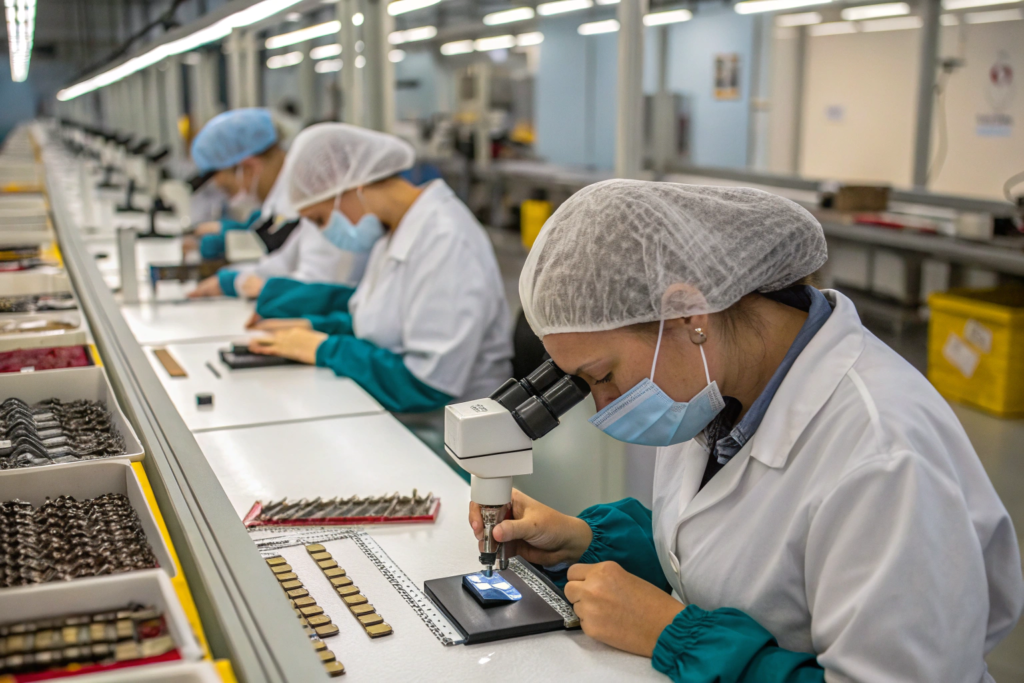
Every clip gets visual inspection before packaging. Trained eyes check for surface imperfections, color variations, and molding flaws.
Magnification helps inspectors see small defects. Proper lighting reveals problems invisible under normal conditions. Inspectors check both appearance and function. They open and close each clip briefly, feeling for smooth operation. Clips with rough edges or inconsistent tension get rejected. This 100% inspection catches problems that sampling might miss. Visual inspection standards guide our criteria.
How do you sample production for destructive testing?
Destructive testing sacrifices samples to verify properties. We cannot test every clip to destruction because they would not survive to ship. Statistical sampling provides confidence.
ISO 2859 sampling plans determine how many samples we test from each batch. The sample size depends on batch size and quality history. New designs get more testing. Stable production gets less. Tested samples go through complete durability protocols. If any sample fails, the entire batch gets quarantined for investigation. We identify root causes before releasing any products. Acceptance sampling standards guide these decisions.
How Do You Match Clip Design To Hair Types?
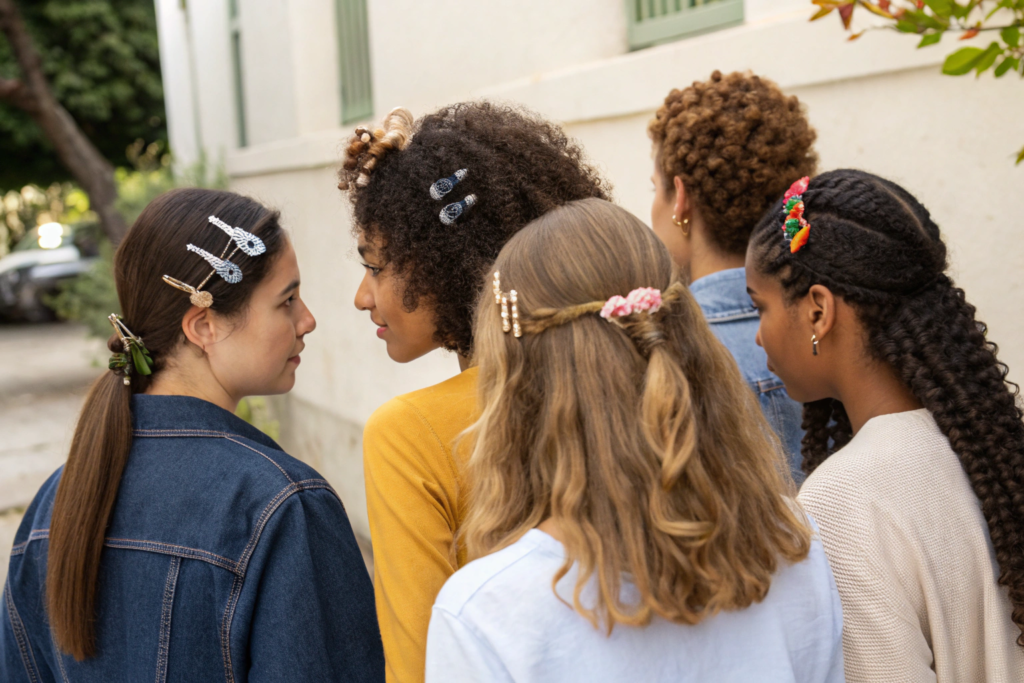
One clip does not fit all hair. Different hair types—whether sleek and straight, curly and coily, thick and voluminous, or fine and delicate—each demand their own unique designs. A clip that glides effortlessly through smooth, well-groomed locks may feel like a tug-of-war on unruly curls, while a lightweight, flexible option might lose its grip entirely on heavy, textured hair. Understanding this nuanced relationship between hair type and clip design is the cornerstone of crafting products that truly resonate.
It transforms generic offerings into tailored solutions, ensuring that every customer finds a clip that feels like a perfect extension of their personal style. This deep comprehension not only guides you in selecting the right materials, sizes, and mechanisms but also acts as a shield against the disappointment that comes from mismatched expectations.
What clip features work best for thick or curly hair?
Thick hair needs strong grip and deep teeth. Jaw clips with long teeth penetrate thick hair fully. Strong springs hold securely without slipping.
Wider openings accommodate larger hair bundles. Smooth edges prevent snagging on curls. Rounded teeth reduce stress on individual strands. For very thick hair, longer clips distribute grip across more hair, reducing pressure at any point. We design specific models for thick hair markets and test them with appropriate hair samples. Hair type classification systems help us understand customer needs.
What considerations apply to fine or thin hair?
Fine hair needs gentle grip. Too much tension damages delicate strands. Too little tension fails to hold.
Lighter clips work better for fine hair. Less weight means less pulling. Lined interiors with silicone or rubber grip hair without harsh pressure. Shorter teeth work well since less hair needs engaging. Some designs use multiple small clips rather than one large clip, distributing hold across more points. Customers with fine hair often struggle to find clips that work. Meeting this need builds strong brand loyalty.
Conclusion
Unbreakable hair clips require attention to every detail. Material selection determines fundamental durability. Hinge design distributes stress appropriately. Spring tension balances hold and comfort. Testing verifies performance before customers ever see products. Quality control catches any manufacturing variations.
At Shanghai Fumao Clothing, we have built our hair clip production around these principles. We select materials based on engineering requirements, not just cost. We design hinges for millions of cycles. We calibrate tension to specific hair types. We test relentlessly and inspect thoroughly. The result is clips that customers genuinely cannot break through normal use.
If you are sourcing hair clips and want products that build brand loyalty through durability, I invite you to reach out. Let us discuss your target market, your design preferences, and your quality requirements. We can show you what real engineering in hair accessories looks like. For new projects and inquiries, please contact our Business Director, Elaine, directly at elaine@fumaoclothing.com. We look forward to helping you create clips that customers love and keep coming back to buy again.