As a buyer, you're facing a major dilemma. Your customers, like Ron, are becoming more eco-conscious. They're asking tough questions about where products come from and what they're made of. The fashion industry is one of the world's biggest polluters, and the guilt associated with contributing to this problem is a growing pain point for both consumers and brands.You want to offer sustainable options, but the world of "eco-friendly" is a minefield of greenwashing and confusing claims. What does "environmentally friendly" really mean?
The most environmentally friendly fashion accessories are those created within a circular economy model, prioritizing materials that are recycled, upcycled, or rapidly renewable and biodegradable. This includes accessories made from innovative plant-based leathers like Piñatex®, upcycled materials that give waste a new life, and items crafted from certified organic textiles like cotton and hemp. True sustainability isn't about a single material but a holistic approach to a product's entire lifecycle.
At Shanghai Fumao Clothing, we've seen this shift firsthand. The conversation has moved beyond just "vegan" to a much deeper discussion about the entire environmental footprint of a product. A plastic-based "vegan" leather belt might be cruelty-free, but if it's made from PVC, it can be an environmental nightmare. As a manufacturer, our role is to help our clients navigate this complex landscape and source accessories that are genuinely better for the planet. Let's break down what to look for.
What Are the Best Plant-Based and Innovative Materials?
For decades, "vegan leather" was just a polite term for plastic—usually PVC or PU.While these materials are animal-free, their production is fossil-fuel intensive, and they do not biodegrade, contributing to microplastic pollution. As consumers become more educated, they are demanding alternatives that are not only cruelty-free but also genuinely plant-based and less harmful to the environment.
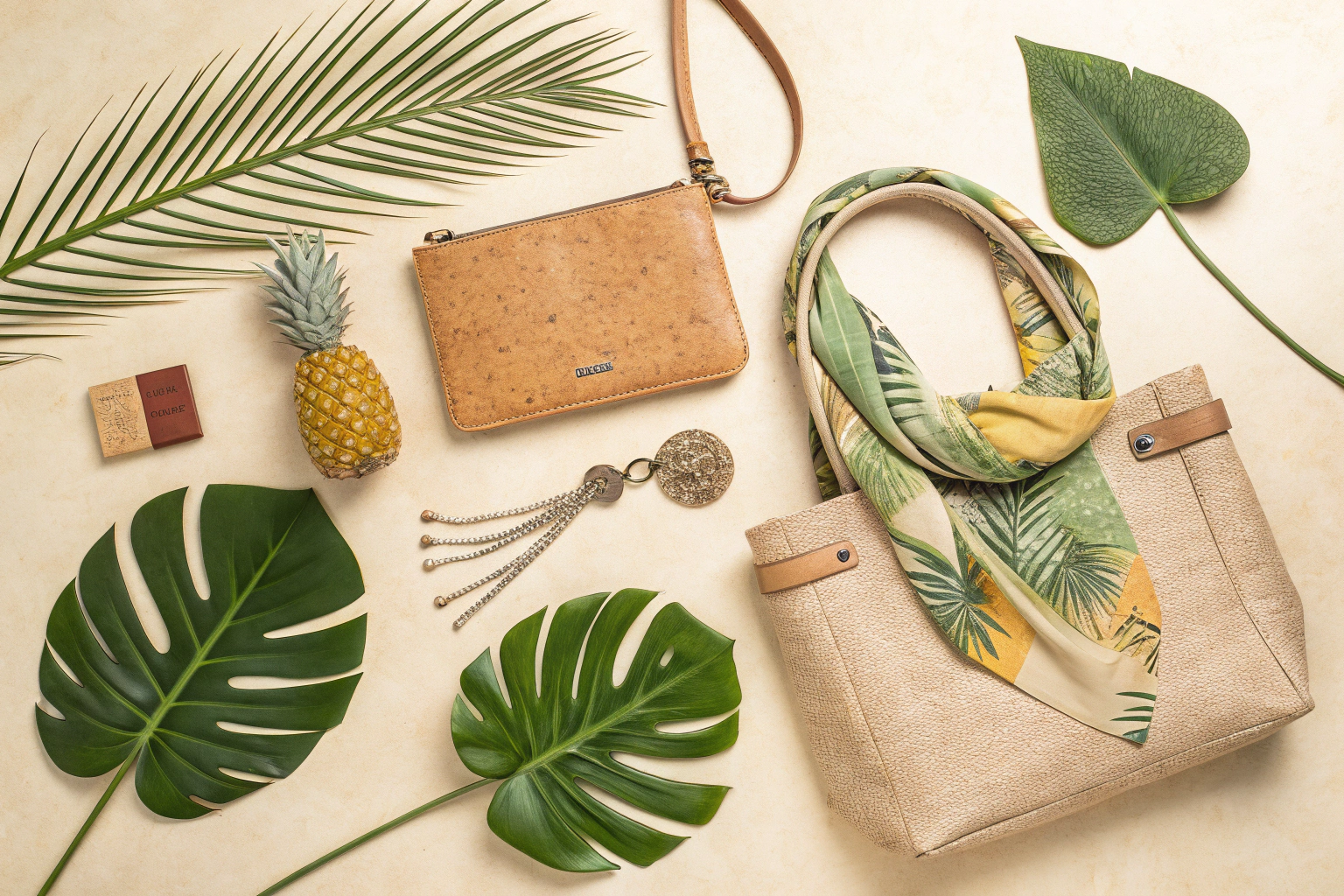
The most exciting frontier in sustainable accessories is the rise of next-generation, plant-based leathers made from agricultural byproducts. Materials like Piñatex® (from pineapple leaves), Desserto® (from cactus), and Mylo™ (from mushrooms) offer a truly innovative and lower-impact alternative to both animal and plastic-based leathers.
We are actively working with suppliers of these new materials. They represent a significant step forward. For example, Piñatex® uses pineapple leaves that are a waste product from the existing pineapple harvest, creating a new revenue stream for farmers and preventing agricultural waste. Mylo™, derived from the root structure of mushrooms, can be grown in a lab to the exact shape and size needed, drastically reducing waste compared to cutting patterns from a cowhide. These materials are no longer just science experiments; they are being used by major brands and are becoming commercially viable.
What is Piñatex® (Pineapple Leather)?
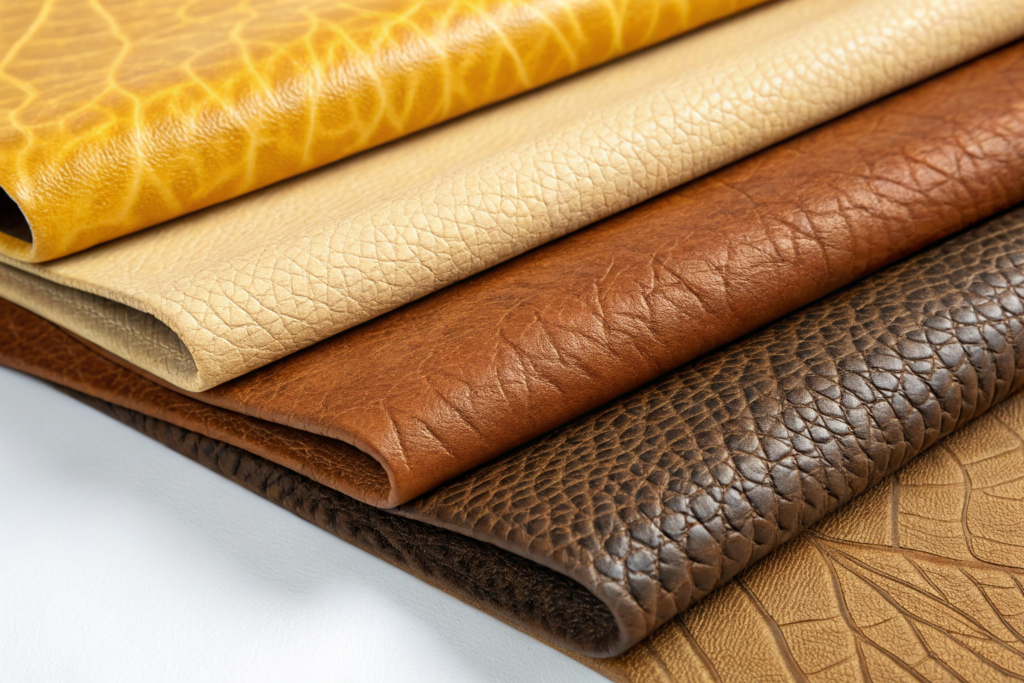
Developed by Dr. Carmen Hijosa, Piñatex® is a non-woven textile crafted from the cellulose fibers of pineapple leaves, a byproduct of the bustling pineapple industry that often goes untapped. The process not only provides a lifeline of additional income for farming communities, where the scent of ripe pineapples mingles with the earthy aroma of freshly harvested leaves, but also cleverly avoids the accumulation of agricultural waste that would otherwise clutter fields and contribute to environmental strain.
The resulting material boasts a remarkable durability, standing up to daily wear and tear with the resilience of a well-loved companion, while its breathable nature allows air to circulate freely, keeping whatever it touches cool and comfortable even in the warmest climes.
What is Desserto® (Cactus Leather)?
Desserto® is a soft, durable, and partially biodegradable material made from the nopal (prickly-pear) cactus. The cacti are grown on an organic farm in Mexico, where the sun blazes brightly and the air hums with the buzz of bees, requiring very little water—just enough to quench their thirst in the arid landscape—and absorbing CO2 like silent sponges, turning the harsh environment into a carbon sink.
Only the mature leaves are harvested, their spines carefully removed by skilled hands, so the plant remains alive and vibrant, its roots deep in the soil, ready to be re-harvested every 6-8 months, a cycle of renewal that mirrors the rhythm of the Mexican sun. It has been used by major fashion houses for high-end bags and accessories, each piece a testament to nature's ingenuity—soft as a whisper against the skin, yet tough enough to withstand the rigors of daily life, carrying with it the earthy scent of the cactus fields and the promise of sustainability woven into every stitch.
How Do Upcycled and Recycled Accessories Reduce Waste?
The fashion industry is notorious for waste. Millions of tons of textiles, plastic bottles, and other materials end up in landfills every year. This linear "take-make-dispose" model is a primary driver of the industry's massive environmental footprint. As a buyer, sourcing products made from virgin materials, even natural ones, contributes to this resource depletion.
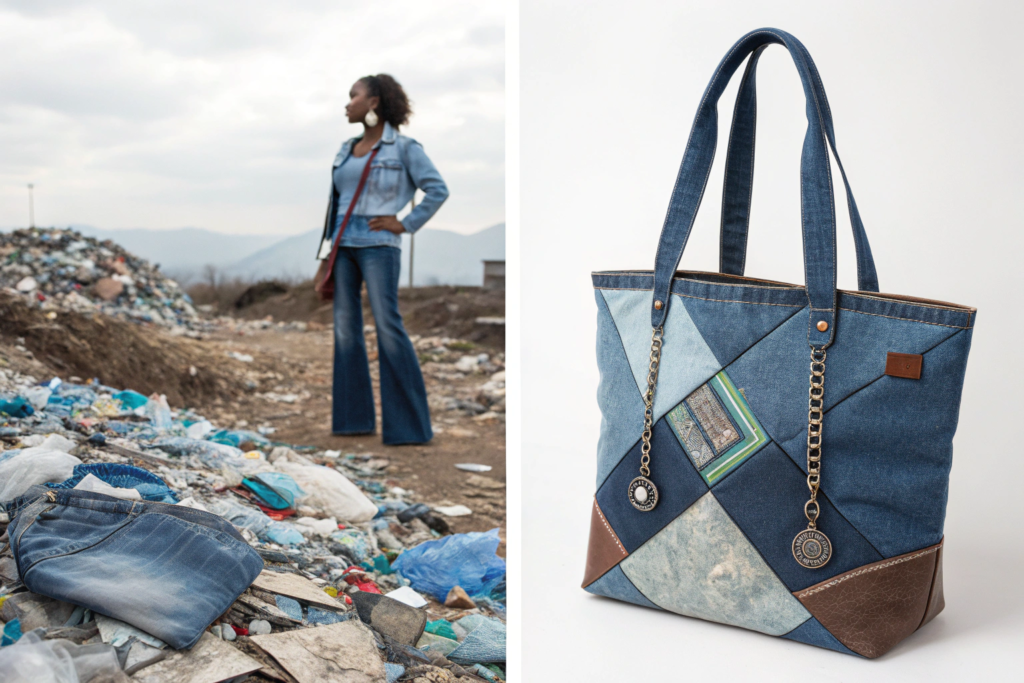
Upcycled and recycled accessories directly combat the waste crisis by transforming discarded materials into new, valuable products. Recycling breaks down waste like plastic bottles to create new raw materials (like rPET fabric), while upcycling creatively repurposes items like old sails or tires into unique accessories without breaking them down. Both approaches are central to a circular fashion economy.
This is a very practical and impactful area of sustainable sourcing. For example, we can source high-quality recycled polyester (rPET) made from post-consumer plastic bottles to create durable and water-resistant bags and hats. Upcycling offers even more creative possibilities. We've worked with brands that use reclaimed seatbelts to create incredibly tough belts or old advertising banners to make one-of-a-kind tote bags. These products not only divert waste from landfills but also come with a powerful story that resonates with consumers.
What is the Difference Between Upcycling and Recycling?
Recycling involves breaking down waste materials into their raw components to create a new material. A classic example is melting down plastic bottles to spin polyester yarn. Upcycling, on the other hand, creatively reuses a discarded object in its current state, often giving it a higher value. Think of turning a used fire hose into a durable wallet or old jeans into a handbag. Upcycling generally uses less energy as it doesn't require breaking down the material.
What are Common Recycled and Upcycled Materials?
- Recycled Polyester (rPET): Made from plastic bottles, this is widely used for bags, hats, and even scarves.
- Recycled Cotton/Wool: Made from pre- or post-consumer textile waste, reducing water and land use compared to virgin fibers.
- Upcycled Textiles: Using deadstock fabric, old denim, or even vintage silk scarves to create new, unique pieces.
- Recycled Metals: Used in jewelry, this avoids the massive environmental and ethical issues associated with mining new gold and silver.
What Makes a "Traditional" Accessory Eco-Friendly?
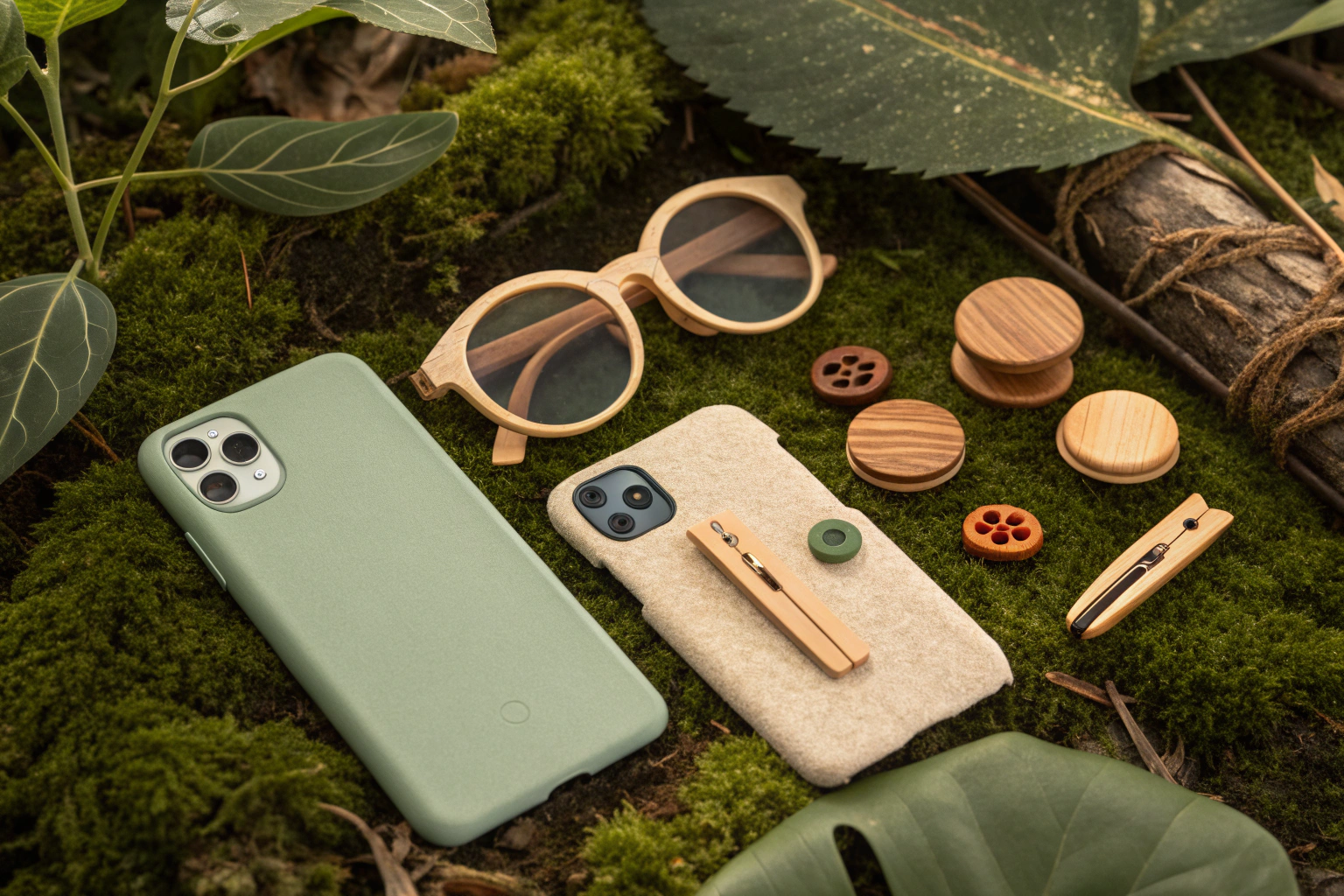
Not every eco-friendly accessory has to be made from a space-age material. Traditional accessories like cotton scarves, wooden jewelry, or canvas tote bags can also be highly sustainable, but only if they are produced responsibly. A conventionally grown cotton tote bag, for example, can have a massive water and pesticide footprint. A traditional accessory becomes eco-friendly when it is made from certified organic or regenerative natural materials and produced using non-toxic processes. This means choosing GOTS-certified organic cotton, sustainably harvested wood, or natural fibers like hemp and linen, and ensuring they are colored with low-impact, non-toxic dyes.
This is where certifications become crucial for a buyer like Ron. When we source organic cotton for a client, we ensure our supplier provides a valid Global Organic Textile Standard (GOTS) certificate. This doesn't just guarantee the cotton was grown without synthetic pesticides; it also covers social and environmental standards throughout the production process. Similarly, for wood accessories, we look for Forest Stewardship Council (FSC) certification. These standards provide the verification needed to confidently market a product as sustainable.

Why Choose Organic and Natural Fibers?
Conventional cotton is a notoriously thirsty crop that relies heavily on pesticides. Organic cotton, by contrast, is grown without these harmful chemicals and uses significantly less water. [25] Other natural fibers like hemp and linen are even more sustainable, as they are fast-growing, require very little water, and naturally enrich the soil. [30] Accessories made from these materials are biodegradable and gentle on the planet. [25]
What About Dyes and Finishes?
The dyeing process is one of the most polluting stages in fashion, responsible for about 20% of global wastewater. [21] A truly eco-friendly accessory must use sustainable dyeing methods. This can include natural dyes derived from plants and minerals or certified low-impact synthetic dyes that are free from heavy metals and other toxic chemicals. [16]
How Does "Buying Less, But Better" Apply to Accessories?
The fast fashion model is built on creating a constant desire for newness, leading to overconsumption and massive amounts of waste. Accessories are often treated as cheap, disposable impulse buys. A customer might buy a trendy, low-quality necklace for a single event, only for it to break or tarnish and be thrown away. This cycle is the very opposite of sustainability.
The most fundamental principle of sustainable fashion is to "buy less, but better." For accessories, this means investing in timeless, high-quality, and durable pieces that are designed to be worn for years, not just a season. A single, well-made accessory that you love and wear for a decade is infinitely more sustainable than a dozen cheap, trendy items that end up in a landfill.
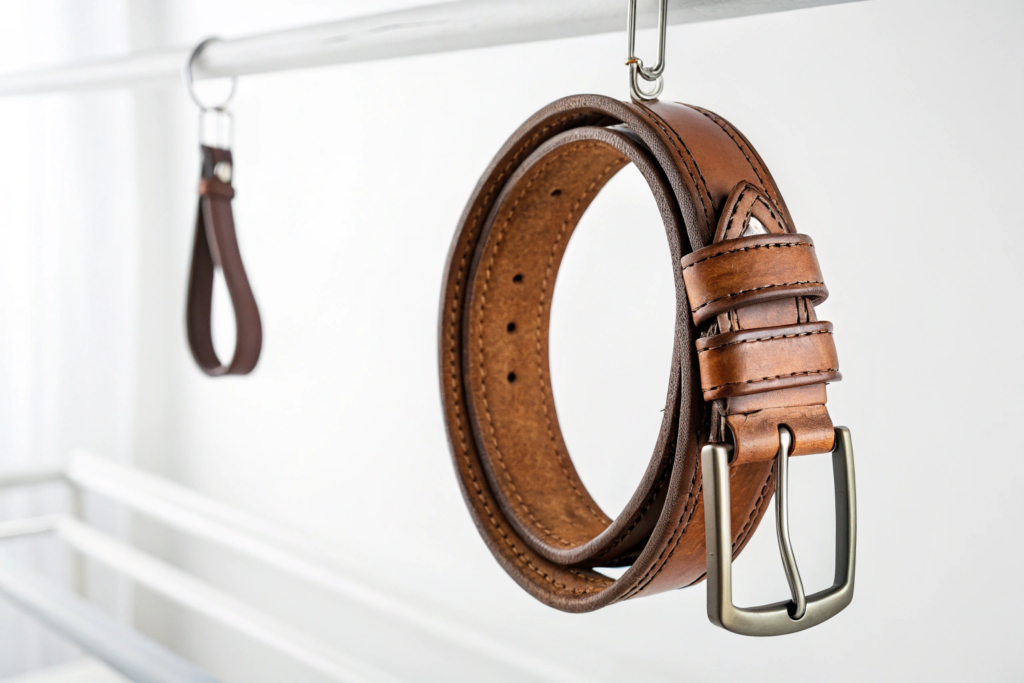
This is a philosophy we champion at Shanghai Fumao Clothing. We encourage our clients to create a "core collection" of timeless pieces made from the best possible materials. A classic belt made from full-grain leather, a beautiful scarf made from pure silk, or a simple bag made from durable organic canvas. These items might have a higher initial cost, but their longevity provides far greater value to both the customer and the planet. This approach directly counters the wasteful model of fast fashion and builds a brand reputation based on quality and trust, not just fleeting trends.
What is a "Cost-Per-Wear" Mindset?
Instead of fixating on the stark number scrawled on a ticket—the cold, hard price tag that seems to judge every purchase—a sustainable mindset gently redirects focus to a more meaningful metric: the 'cost-per-wear.' Imagine, for instance, a humble $10 belt, its leather stiff and unyielding, perhaps bought on a whim from a discount store. You wear it twice for a casual weekend brunch, once to tie up a loose pair of jeans during a rainy commute, and then—snap!—the buckle gives way, or the stitching frays at the edges, rendering it useless.
In those five wears, you’ve spent $2 per wear, a small sum individually but one that adds up when multiplied by the dozens of such items lining your closet, each with a short, sad lifespan. Now, contrast that with a $100 belt, crafted from supple, buttery-smooth full-grain leather, its brass buckle gleaming with a warm, golden hue.
Why is Timeless Design Inherently Sustainable?
Trendy items have a built-in expiration date, their allure fading like the last embers of a fleeting fire, leaving behind only the hollow echo of what was once in vogue. Timeless designs, by their very nature, are meant to last—enduring testaments to craftsmanship and understated elegance that transcend the whims of passing seasons.
Sourcing classic styles—the simple hoop earring, with its smooth, cool metal glinting softly against the skin, a staple that has adorned ears from Parisian cafés to New York sidewalks for decades; the elegant silk scarf, its vibrant or muted patterns whispering stories of distant lands, draped casually around a neck or tied artfully in a hair bun, adding a touch of sophistication to any outfit; the versatile leather tote, its supple grain worn gently with use, sturdy enough to carry a day's essentials yet refined enough for a gala—these are pieces that won't look dated in a year, a decade, or even a lifetime. They resist the urge to be discarded and replaced, standing resolute against the tide of fast fashion's constant churn.
Conclusion
Sourcing environmentally friendly fashion accessories is no longer a niche concern; it's a business imperative. The most sustainable choices are found at the intersection of material innovation, circular design, and a commitment to quality. By prioritizing accessories made from next-generation plant-based materials, embracing recycled and upcycled waste streams, insisting on certified organic natural fibers, and championing the philosophy of "buy less, but better," you can offer products that are not only stylish but also genuinely kind to our planet.
This is a journey we are on with our clients every day. As a manufacturing partner, we see it as our responsibility to provide the expertise and access to these materials, helping you build a more sustainable and successful brand.
If you're ready to explore the world of truly eco-friendly accessories and create a collection that your customers can be proud to wear, let's connect. Contact our Business Director, Elaine, at elaine@fumaoclothing.com to start building a greener future for fashion.