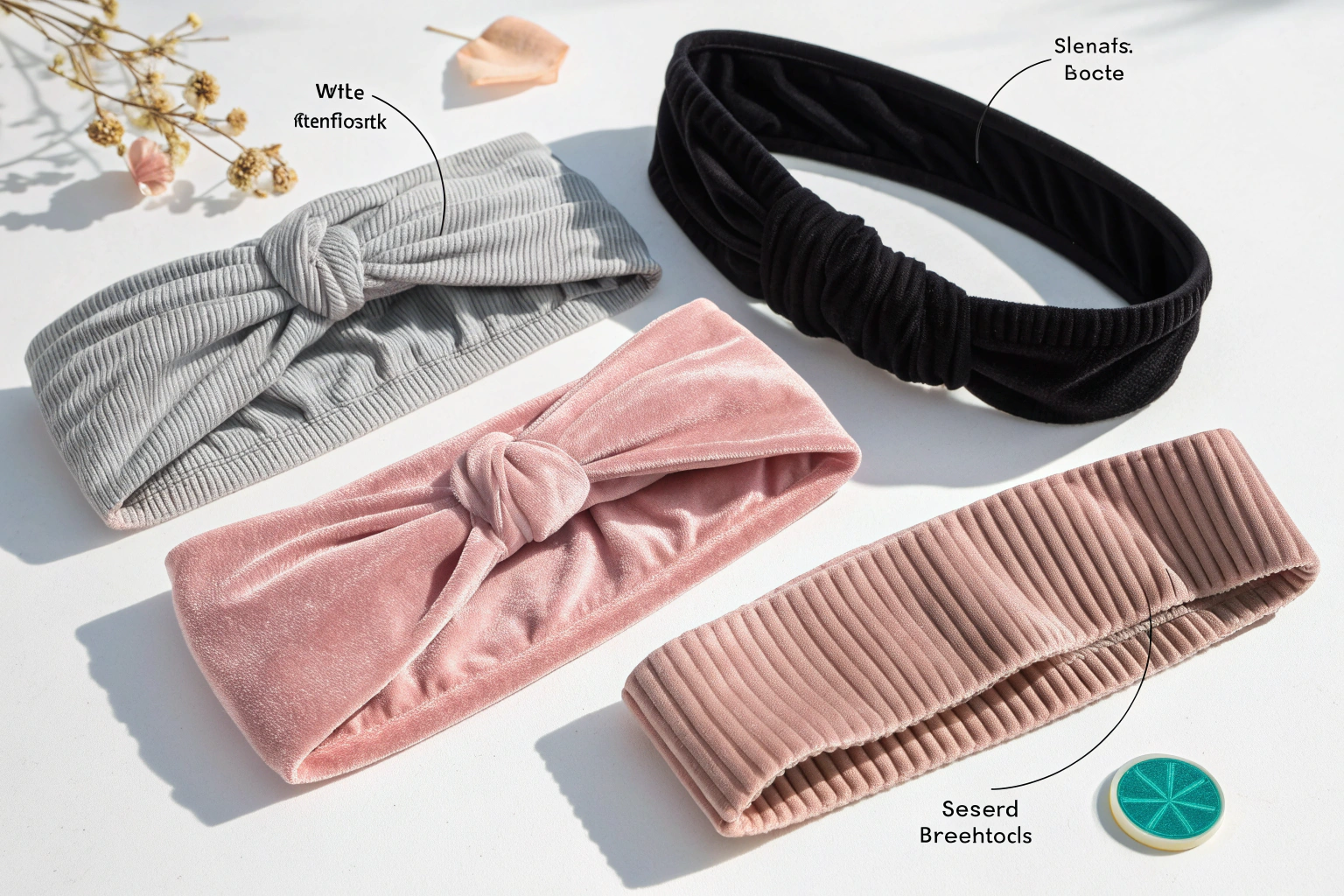
I remember a conversation with a frustrated buyer from a major online retailer. She had ordered a beautiful collection of headbands, all labeled "one-size-fits-most." But within weeks of her customers receiving them, the complaints started flooding in. "Too tight, gives me a headache." "Too loose, slides right off." "Stretched out after one wear." The concept was good, but the execution was a failure. The problem wasn't the design; it was the material. She had chosen a cheap elastic that had poor recovery and a narrow comfort range.
The most effective stretch materials for one-size-fits-most headbands are those that offer a balance of comfortable, consistent stretch, excellent recovery (returning to their original shape), and durability. The top choices are high-quality elastic bands encased in soft fabric, ribbed knit fabrics with natural stretch (like cotton-lycra blends), jersey knit fabrics, and velvet with a stretch backing. The key is to use materials that can comfortably accommodate a wide range of head sizes without losing their shape or causing discomfort. At Shanghai Fumao Clothing, we have extensive experience selecting and combining these materials to create headbands that truly fit "most" and stay comfortable all day.
That buyer's story is a cautionary tale. "One-size-fits-most" is a promise. If your headband only fits a narrow range of heads, or if it loses its shape after a few wears, you are breaking that promise. Your customers will not forgive you. Creating a truly effective one-size-fits-most headband is a materials science challenge. It requires understanding stretch, recovery, and the physiology of the human head. Let me walk you through the four most effective material strategies and explain how to use them to create headbands that everyone will love.
Why Are Fabric-Encased Elastic Bands a Top Choice?
For many headband styles, especially those with a decorative front element (like a bow, a knot, or an embellishment), the most effective and reliable stretch solution is a separate, engineered elastic band. This allows you to choose an elastic specifically for its performance properties, independent of the decorative fabric. It is the most controllable and predictable way to achieve a "one-size-fits-most" fit.
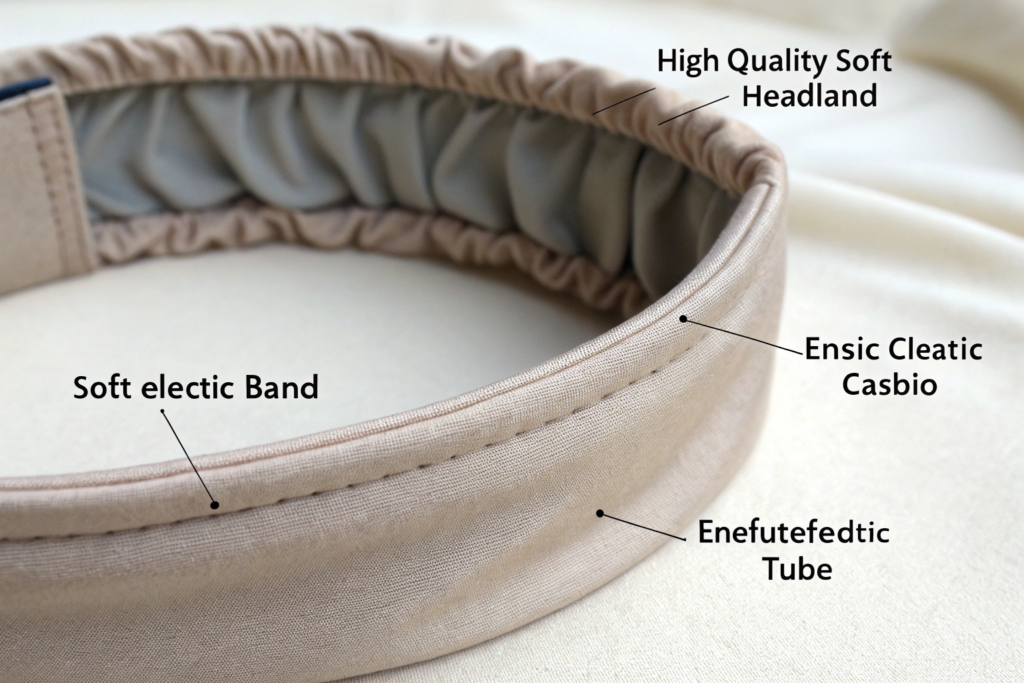
A fabric-encased elastic band consists of a strip of high-quality elastic, typically non-roll elastic or braided elastic, sewn into a tube of soft fabric (often the same as the headband's outer fabric). The elastic provides the precise, consistent stretch and recovery. The fabric casing provides comfort against the skin and a finished, professional look. The width of the elastic is critical. A wider elastic (e.g., 1/2 inch to 3/4 inch) distributes pressure more evenly, reducing the risk of headaches. The quality of the elastic determines its lifespan; a cheap elastic will lose its "memory" and become baggy after a few wears.
Let's talk about the specific types of elastic. Non-roll elastic is a fantastic choice for headbands. It is designed with a specific weave that prevents it from twisting or rolling inside the casing, which can cause discomfort and an uneven fit. It is strong and has excellent recovery. Braided elastic is softer and has a more "gather" effect, which can be useful for certain styles, but it can lose its recovery faster than non-roll elastic. The width of the elastic is a key comfort factor. A thin, 1/4-inch elastic will create a high-pressure point and is much more likely to cause headaches. A 1/2-inch or 3/4-inch elastic spreads the force over a larger area, making it comfortable for a wider range of head sizes. The casing fabric also matters. It should be soft, smooth, and breathable, like cotton, bamboo, or a soft microfiber. The combination of the right elastic and a comfortable casing is the secret to a headband that stays put without causing pain. This is a core principle of textile engineering for comfort. At Shanghai Fumao Clothing, we source our elastics from specialized manufacturers and test them for consistent stretch and recovery over hundreds of cycles.
How do I choose the right length for the elastic band?
This is the key equation. The elastic band must be shorter than the circumference of the average head it needs to fit. The difference in length is what creates the stretching force. We typically calculate the target head size range (e.g., 20 inches to 23 inches) and then choose an elastic length that will provide a comfortable, secure fit across that entire range without over-stretching. This involves some math and testing. We can help you determine the optimal length for your specific headband design.
Can I use elastic without a fabric casing?
You can, but it is generally less comfortable and less professional-looking. A bare elastic band can pinch hair, irritate the skin, and look unfinished. Encasing it in a soft fabric solves all these problems and creates a much more premium feel. It also allows you to match the casing to the headband's outer fabric for a seamless look.
How Do Ribbed Knit Fabrics Provide Built-In Stretch?
For a seamless, integrated look, many headband styles are made entirely from a stretchy knit fabric, with no separate elastic band. This is a very popular approach for cozy, casual, and sporty headbands. The stretch comes from the fabric itself, specifically from the way it is knitted. The most common and effective knit structure for this purpose is the rib knit. It offers a perfect balance of stretch, recovery, and comfort.
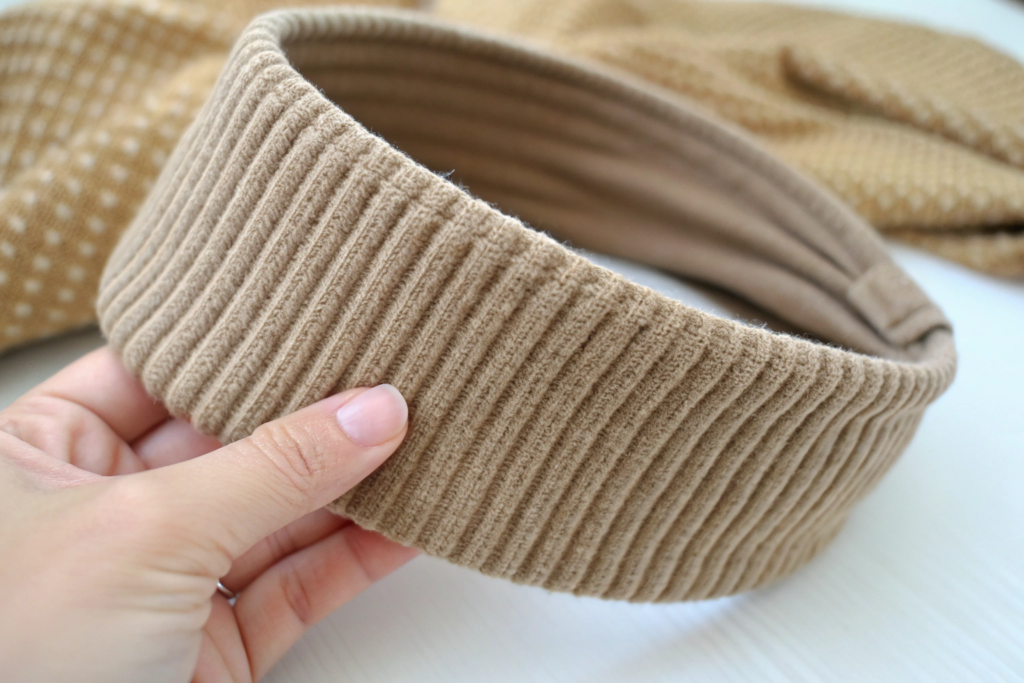
Ribbed knit fabrics are created by alternating knit and purl stitches in vertical columns. This structure creates natural elasticity. The fabric can stretch significantly widthwise and then snap back into place. For headbands, a rib knit made from a blend of fibers like cotton and spandex (elastane) or polyester and spandex is ideal. The cotton or polyester provides softness and breathability, while the spandex provides the "memory" that ensures the headband returns to its original shape after being stretched. A tighter, finer rib (more ribs per inch) generally offers better recovery than a looser, chunkier rib.
The magic of a ribbed knit is in its construction. The knit stitches pull the fabric in one direction, and the purl stitches pull it in the other, creating a structure that is naturally "springy." The addition of spandex (often just 2-5% of the fiber content) supercharges this springiness, giving the fabric excellent recovery. A well-constructed ribbed knit headband will stretch to fit a wide range of head sizes and then return to its original, smaller shape when not in use, so it never becomes baggy. The weight and density of the rib knit also matter. A lightweight, fine-gauge rib is great for a delicate, everyday headband. A thicker, chunkier rib creates a cozier, more substantial feel for colder weather. This is a perfect example of knit fabric technology in action. At Shanghai Fumao Clothing, we work with mills to develop custom rib knit fabrics with the perfect blend of fibers and the ideal weight for our clients' designs.
Will a 100% cotton rib knit have enough stretch and recovery?
A 100% cotton rib knit will have some natural stretch, but its recovery is limited. It will stretch out over time and may become loose. For a one-size-fits-most headband that needs to maintain its shape, a small amount of spandex (elastane) is essential. The spandex provides the "memory" that cotton lacks. Look for blends like 95% cotton / 5% spandex for the best of both worlds: softness and great recovery.
How do I care for a ribbed knit headband?
Ribbed knit headbands are generally easy to care for. Most can be machine washed on a gentle cycle in cold water and laid flat to dry. High heat from a dryer can damage the spandex fibers over time, reducing their elasticity. We always recommend air drying to prolong the life of the stretch. Providing clear care instructions is important for customer satisfaction.
What About Jersey Knit and Velvet for Soft, Stretchy Headbands?
Beyond the structured rib knit, other knit fabrics offer their own unique combination of stretch and softness. Jersey knit is the classic t-shirt fabric, known for its incredible softness and fluid drape. Velvet, especially when knitted with a stretch backing, offers a luxurious, plush feel that is perfect for dressier occasions. Both can be excellent choices for one-size-fits-most headbands, each with its own distinct character.
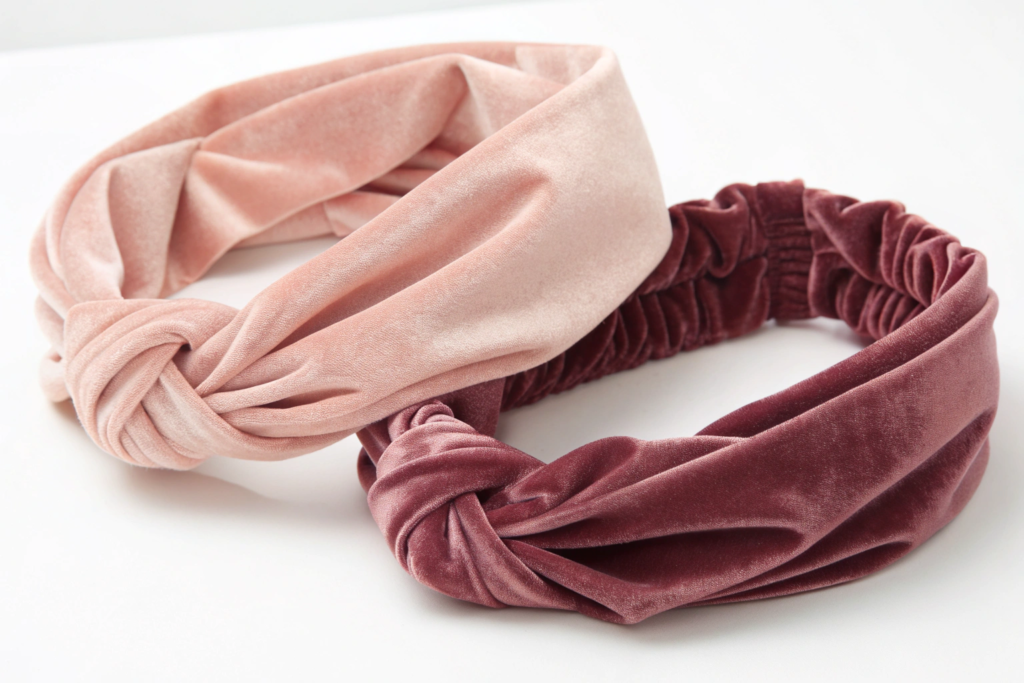
Jersey knit is a single-knit fabric with a smooth surface on one side and a textured back. It has excellent crosswise stretch and is incredibly soft and comfortable against the skin. It drapes beautifully, making it ideal for wider, turban-style headbands or knotted styles. For headbands, a cotton-spandex or modal-spandex jersey provides the best combination of softness, stretch, and recovery. Velvet for headbands is often a stretch velvet, made by knitting a velvet pile onto a stretchy base fabric (usually a nylon-spandex blend). This creates a fabric that is both luxuriously soft and has the necessary stretch to fit a range of head sizes. It is the perfect choice for holiday or evening wear.
The key to using jersey or velvet for a one-size-fits-most headband is understanding their stretch properties. Both are typically 2-way stretch fabrics, meaning they stretch significantly in one direction (usually widthwise) but have minimal lengthwise stretch. The headband must be cut so that the direction of stretch goes around the head. This is crucial. If you cut it the wrong way, it will have no give. The recovery of these fabrics is also dependent on the spandex content. A jersey with 5% spandex will have much better recovery than a 100% cotton jersey. For velvet, the stretch base provides the recovery. The weight of the velvet also matters; a heavier velvet will be more luxurious but may have slightly less stretch. This is all about fabric grain and directional stretch. At Shanghai Fumao Clothing, we carefully plan the cutting layout for every headband to ensure the stretch is oriented correctly for a perfect, comfortable fit.
Is velvet stretch headband suitable for all seasons?
Stretch velvet has a plush, warm feel, making it a natural choice for fall and winter, especially around the holidays. However, lighter-weight stretch velvets can be comfortable in cooler spring and summer evenings as well. It is generally perceived as a cooler-weather fabric due to its texture and warmth.
Can I combine jersey or velvet with an elastic band for extra security?
Absolutely. For wider headbands or styles where you want a very secure fit, you can certainly combine a stretchy fabric like jersey with a fabric-encased elastic band at the back. This gives you the beautiful drape of the fabric in the front and the precise, engineered stretch of the elastic in the back. This hybrid approach is very common and effective.
How Do You Test for Consistent Stretch and Recovery?
You have chosen your material. You have designed your headband. But how do you know it will still fit perfectly after 10, 50, or 100 wears? The only way to be sure is to test it. Rigorous, standardized testing for stretch and recovery is not an optional extra for a premium brand; it is the only way to ensure your "one-size-fits-most" promise is true. It protects your customers and your reputation.
We test headbands for stretch and recovery using a combination of mechanical testing and wear simulation. We measure the force required to stretch the headband to a given circumference, ensuring it is not too tight or too loose across the intended size range. We then perform cycle testing, stretching and releasing the headband hundreds or even thousands of times to simulate months of wear. We measure how much the headband "grows" or loses its tension after these cycles. A high-quality headband should have minimal loss of tension and return to its original shape. We also conduct wear tests with a panel of individuals with different head sizes to get real-world feedback on comfort and fit.
Let's look at the specific metrics we use. For a headband, we define a target head size range, say 20 to 23 inches in circumference. We test the headband at its minimum stretched size (20 inches) and maximum (23 inches). We measure the force (in grams or Newtons) required to reach these sizes. This force must be comfortable—not so high that it causes a headache, and not so low that the headband slips. Then we perform a fatigue test. We put the headband through a machine that stretches it to a set point and releases it, over and over again, for 500 or 1,000 cycles. We then re-measure the force at the target sizes. A good headband might lose 5-10% of its tension. A poor headband might lose 20% or more, becoming loose and ineffective. This data is objective proof of quality. It is the difference between a guess and a guarantee. This is a core part of quality assurance in apparel manufacturing. At Shanghai Fumao Clothing, our in-house lab performs these tests on every new headband design, and we can provide our clients with detailed test reports.

What is an acceptable tension range for a comfortable headband?
There is no single universal number, as it depends on the headband's width and design. A wider headband distributes force over a larger area, so it can have a slightly higher total tension and still feel comfortable. The goal is to achieve a "secure but not tight" feel. We work with our clients to define a target tension range based on their specific design and customer feedback. The testing provides the objective data to hit that target consistently.
How many cycle tests should a headband pass?
For a standard, everyday headband, passing 500 cycles with minimal tension loss is a good benchmark. For a premium product designed for long-term use, we aim for 1,000 cycles or more. This simulates months or even years of regular wear. The number of cycles is a decision we make with our clients based on their quality standards and price point.
Conclusion
Creating a truly effective one-size-fits-most headband is a science. It requires a deep understanding of materials, from the precise engineering of a fabric-encased elastic band to the natural stretch of a ribbed knit and the soft, fluid give of jersey and velvet. But most of all, it requires rigorous testing to ensure that the promise of "one-size-fits-most" is not just a marketing slogan, but a demonstrable truth.
At Shanghai Fumao Clothing, we have spent years mastering this science. We know the difference between an elastic that will last and one that will fail. We understand the nuances of knit fabric blends. And we have the testing protocols to prove that our headbands will stay comfortable and keep their shape, wear after wear. We help our clients deliver on their promise to their customers.
Are you ready to create headbands that truly fit everyone? Let's engineer the perfect stretch for your next collection. Contact our Business Director, Elaine, at elaine@fumaoclothing.com to start the conversation.