As a professional buyer like Ron, you know that an umbrella is one of the few accessories that has a real, functional job to do. It's a piece of personal equipment. When it fails—turning inside out in the wind or rusting after one season—the customer doesn't just feel disappointed; they feel let down. For a brand, selling a flimsy, unreliable umbrella is a fast way to lose trust. This is why, when developing an umbrella program, the conversation must start with durability. So, what materials separate a premium, long-lasting umbrella from one that's destined for the landfill?
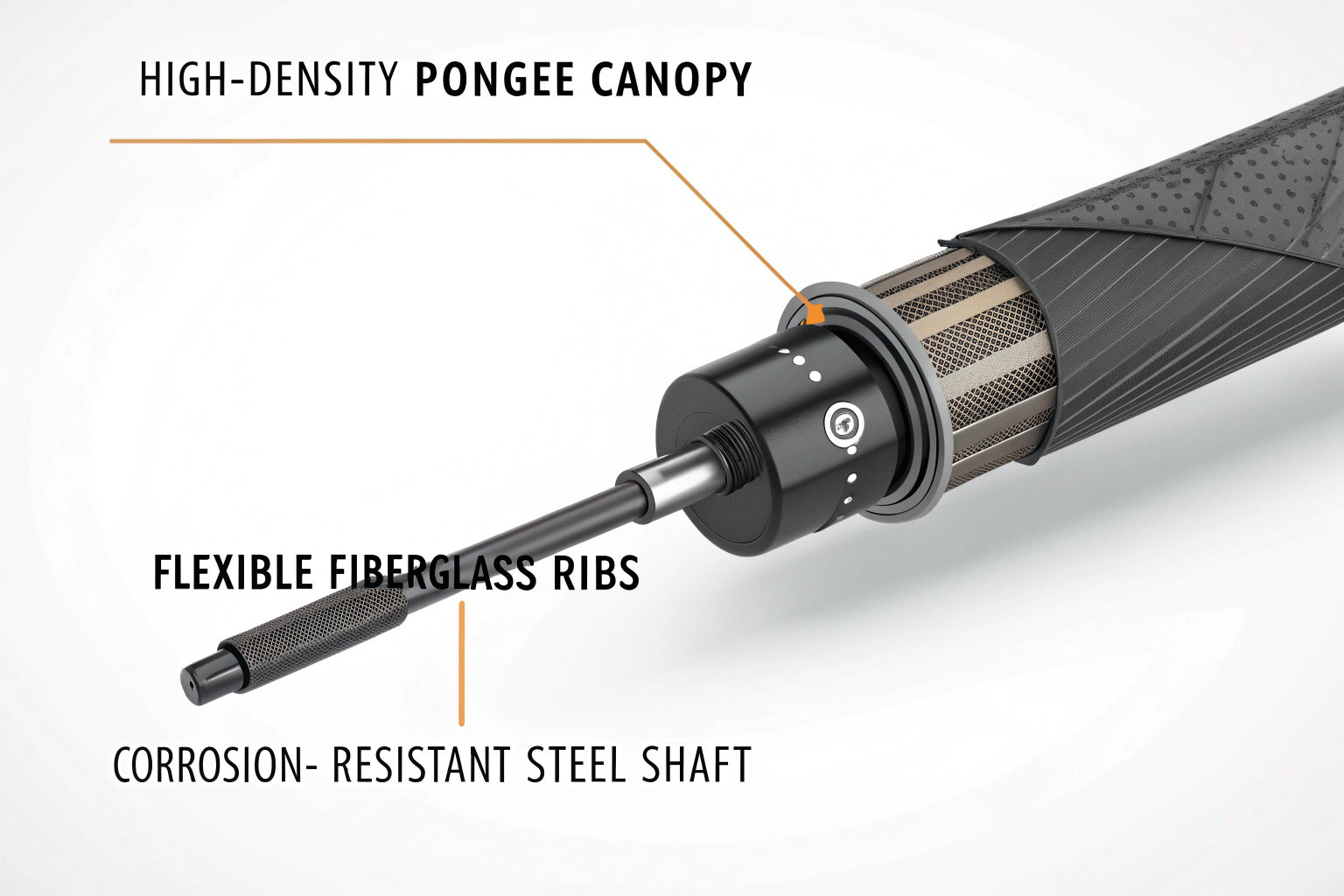
The most durable umbrellas are not defined by a single material, but by a superior combination of materials across three critical components: a canopy made from high-density Pongee fabric with a hydrophobic coating, a frame constructed from flexible and strong fiberglass, and a shaft and hardware made from corrosion-resistant stainless steel or treated black steel. It is the synergy of these three elements that creates a truly durable, reliable, and wind-resistant product.
From my manufacturing perspective, an umbrella is a piece of engineering. The choices we make for the canopy, the ribs, and the shaft all have a direct impact on the product's performance and lifespan. At Shanghai Fumao Clothing, we've spent years testing and sourcing the optimal materials for each component to build umbrellas that our clients can sell with absolute confidence. Let's dissect the anatomy of a durable umbrella.
Why Is Pongee the Superior Choice for the Canopy?
The canopy is the umbrella's first line of defense. It needs to be waterproof, quick-drying, and strong enough to withstand being stretched and folded repeatedly.
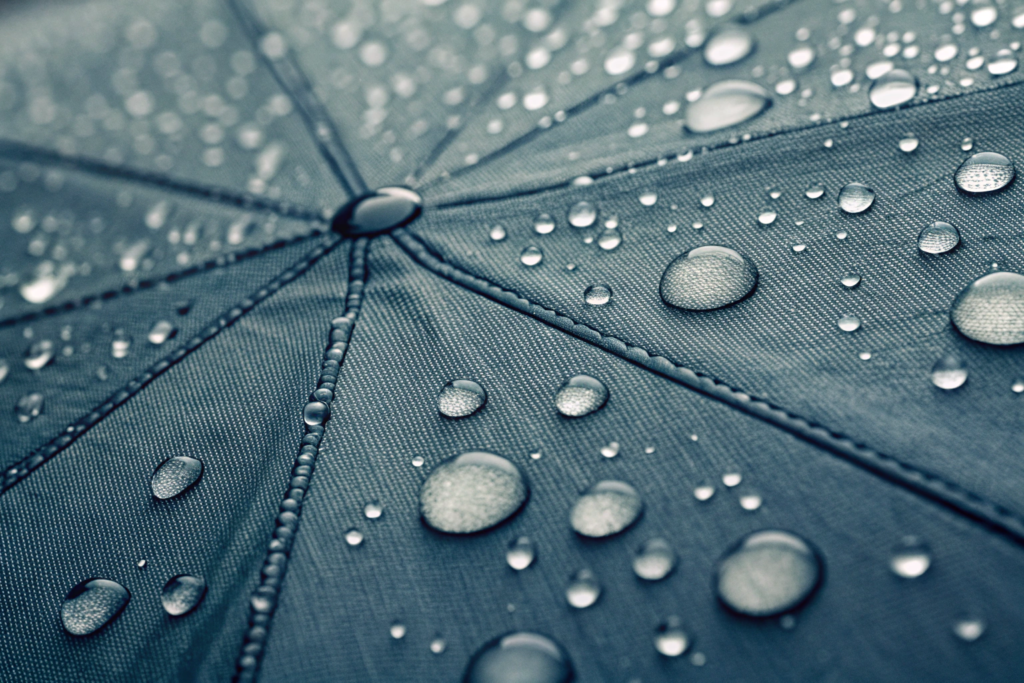
Pongee is the superior canopy material because it is a high-density, woven polyester fabric that is inherently water-repellent, lightweight, and resistant to stretching and tearing. Unlike cheaper nylon, it doesn't get heavy and sag when wet, and it dries very quickly, which helps prevent mildew.
When clients ask for a "good" canopy, we immediately recommend a high-density pongee, typically in the 190T to 210T range (the "T" refers to thread count). A higher thread count means a tighter weave, which makes the fabric stronger and more naturally water-resistant. We then treat the fabric with a hydrophobic coating (like Teflon) that causes water to bead up and roll right off. This combination of a dense weave and a quality coating is the secret to a dry, durable, and high-performance canopy, which is the most visible part of the umbrella before a customer even considers the frame construction.
What is "Pongee"?
Pongee is a type of polyester fabric with a characteristic 'dull' or matte finish, unlike the slight sheen of nylon. It was originally made from silk but is now almost exclusively polyester, crafted through advanced textile processes that mimic the luxurious texture and durability of its silk predecessor while offering enhanced performance properties. Its tight weave, which creates a dense, interlocked structure, not only contributes to its distinctive matte appearance but also provides exceptional resistance to abrasion, making it highly durable against everyday wear and tear.
What about a "double canopy"?
A double canopy, often seen on golf umbrellas, is a key feature for wind resistance. It has vents that allow wind to pass through the canopy rather than catching it like a sail. This dramatically reduces the stress on the frame and prevents the umbrella from turning inside out.
Why Is a Fiberglass Frame the Modern Standard for Wind Resistance?
The frame—the system of ribs and stretchers—is the skeleton of the umbrella. This is where the battle against the wind is won or lost.
A fiberglass frame is the modern standard for wind resistance because fiberglass is both incredibly strong and remarkably flexible. Unlike a traditional, rigid metal frame that will bend and break under high stress, fiberglass ribs are designed to flex and bend with the wind, allowing them to absorb gusts and then return to their original shape without damage.
This is the single biggest innovation in umbrella durability in the last 20 years. A cheap umbrella will use all-metal ribs, which are rigid and prone to breaking. A high-quality, "windproof" umbrella will use fiberglass for at least the outer, most flexible part of the ribs. At our factory, our premium frames are constructed with a combination of a strong steel core and highly flexible fiberglass rib-ends. This hybrid construction provides the perfect balance of rigidity and flexibility. This robust frame is the engine of the umbrella, which is supported by the central shaft.
How many ribs should an umbrella have?
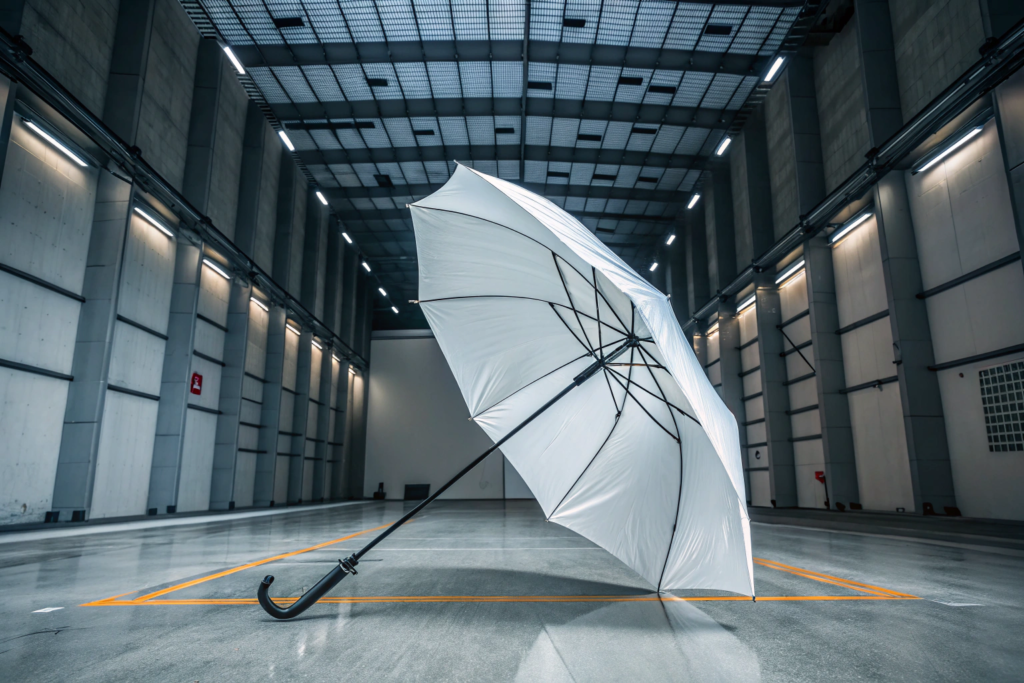
A standard compact umbrella will have 8 ribs, typically crafted from lightweight yet durable materials like fiberglass or aluminum, designed to provide a balanced structure for everyday use. However, we are seeing a strong trend towards models with 9, 10, or even 12 ribs, driven by consumer demand for enhanced performance and reliability in various weather conditions. While more ribs don't automatically mean more strength—factors such as rib thickness, material quality, and joint design play critical roles—a well-engineered 10-rib frame can offer a more stable, rounded canopy that distributes rainwater evenly, reducing the risk of pooling and ensuring a drier experience.
What is a "windproof" umbrella?
The term 'windproof' generally refers to an umbrella with a frame (usually fiberglass) that is designed to flex and invert in a strong gust of wind without breaking. The fiberglass ribs, often reinforced with flexible yet durable materials, bend gently under pressure, allowing the umbrella canopy to temporarily fold inward or invert slightly when faced with powerful winds—such as those encountered during a sudden summer storm or coastal breeze—yet retain their structural integrity. This design prevents the frame from snapping, the ribs from cracking, or the joints from dislodging, which are common issues with non-windproof umbrellas in harsh weather.
Why Does the Shaft Material Matter for Long-Term Durability?
The shaft is the backbone of the umbrella. It needs to be strong enough to support the frame and, critically, it needs to resist corrosion over time.
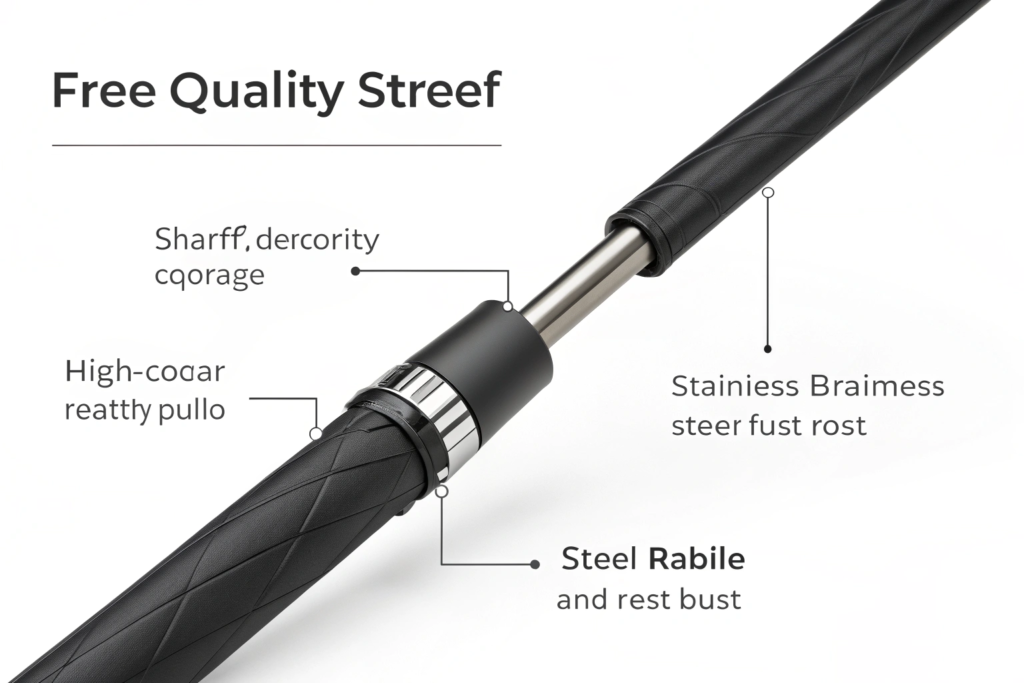
The shaft material is crucial for long-term durability because it is constantly exposed to water and is the core structural component. A shaft made from stainless steel, aluminum, or black-coated steel will resist rust and corrosion, ensuring the umbrella's opening and closing mechanism remains smooth and reliable for years.
A cheap umbrella will often use cheap, untreated steel for the shaft. After one or two seasons of use, this shaft will begin to rust. The rust can stain the canopy fabric and, more importantly, can cause the telescoping mechanism of a compact umbrella to seize up, rendering it useless. This is why we insist on using higher-grade, corrosion-resistant materials for the shaft and other metal hardware.
- Stainless Steel: Excellent strength and natural corrosion resistance. A premium choice.
- Anodized Aluminum: Very lightweight and corrosion-resistant. Great for lightweight travel umbrellas.
- Black-Coated Steel: A strong steel shaft that has been treated with a protective black coating to prevent rust. This offers a great balance of strength, corrosion resistance, and cost.
This focus on long-lasting components is what separates a disposable product from a durable one and is a key part of the overall quality construction.
What about the handle?
While less critical for durability, the handle is crucial for perceived value. A handle made from real wood or a high-quality, rubber-coated ABS plastic feels far more premium and comfortable to hold than a cheap, hollow plastic handle.
What is an "auto open/close" mechanism?
This is a feature where a single button on the handle can both open and close the umbrella canopy automatically. It requires a more complex internal spring mechanism in the shaft. A durable mechanism will use high-quality springs and components to ensure it can withstand thousands of cycles without failing.
How Do All the Components Come Together?
A durable umbrella is a system where every part is designed to work together. The best materials in the world are useless if they are poorly assembled.
The components are brought together through quality construction techniques, such as reinforced stitching at the canopy tips, a secure, wobble-free handle attachment, and smooth, reliable opening and closing mechanisms. The overall durability is a direct result of both the quality of the parts and the quality of the labor used to assemble them.
This is where the expertise of the factory is paramount. During our QC process, we don't just check for cosmetic defects. We perform functional tests:
- Cycle Testing: We open and close the umbrella hundreds of times to test the mechanism.
- Stress Testing: We check the security of the stitching that attaches the canopy to the ribs.
- Handle Security: We ensure the handle is firmly attached and does not twist or wobble.
At Shanghai Fumao Clothing, we believe that true durability comes from a holistic approach—sourcing the best materials and using the best construction methods to create a product that is greater than the sum of its parts.

What is the most common point of failure on an umbrella?
The most common failure point is a rib breaking or bending at a joint, usually in a strong gust of wind. This is precisely the problem that a flexible fiberglass frame is designed to solve. The second most common is a faulty opening/closing mechanism due to rust or poor-quality springs.
What should you look for in a sample?
When you receive a sample, open and close it 20-30 times. Does it feel smooth and solid? Hold the handle and shake the open umbrella. Does the shaft feel wobbly or secure? Flex the ribs. Do they feel brittle or resilient? These simple physical tests will tell you a lot about the quality of the construction.
Conclusion
Creating a durable, long-lasting umbrella is a deliberate process of engineering, not a happy accident. It requires a commitment to using superior materials for every critical component. By building your collection around the proven combination of a high-density Pongee canopy, a flexible and resilient fiberglass frame, and a strong, corrosion-resistant steel shaft, you can offer your customers a product that will not fail them when they need it most. This focus on quality and durability is the best way to build customer trust and create a successful, profitable umbrella program for your brand.
At Shanghai Fumao Clothing, we are specialists in engineering high-performance umbrellas. We have the material expertise and the rigorous quality control systems to be your trusted partner in this category.
If you are ready to develop a line of umbrellas that your customers will love and rely on for years to come, let's talk. Please contact our Business Director, Elaine, at her email: elaine@fumaoclothing.com, to get started.