Your client, Ron, is developing a new line of rugged work belts and high-compression waist cinchers. He's worried about returns and complaints due to hardware failure. He's seen cheaper belts with buckles that bend or break and waist trainers with hooks that pop open under pressure. This is a major pain point, as a failed closure not only ruins the product but also erodes customer trust and can even be a safety issue.
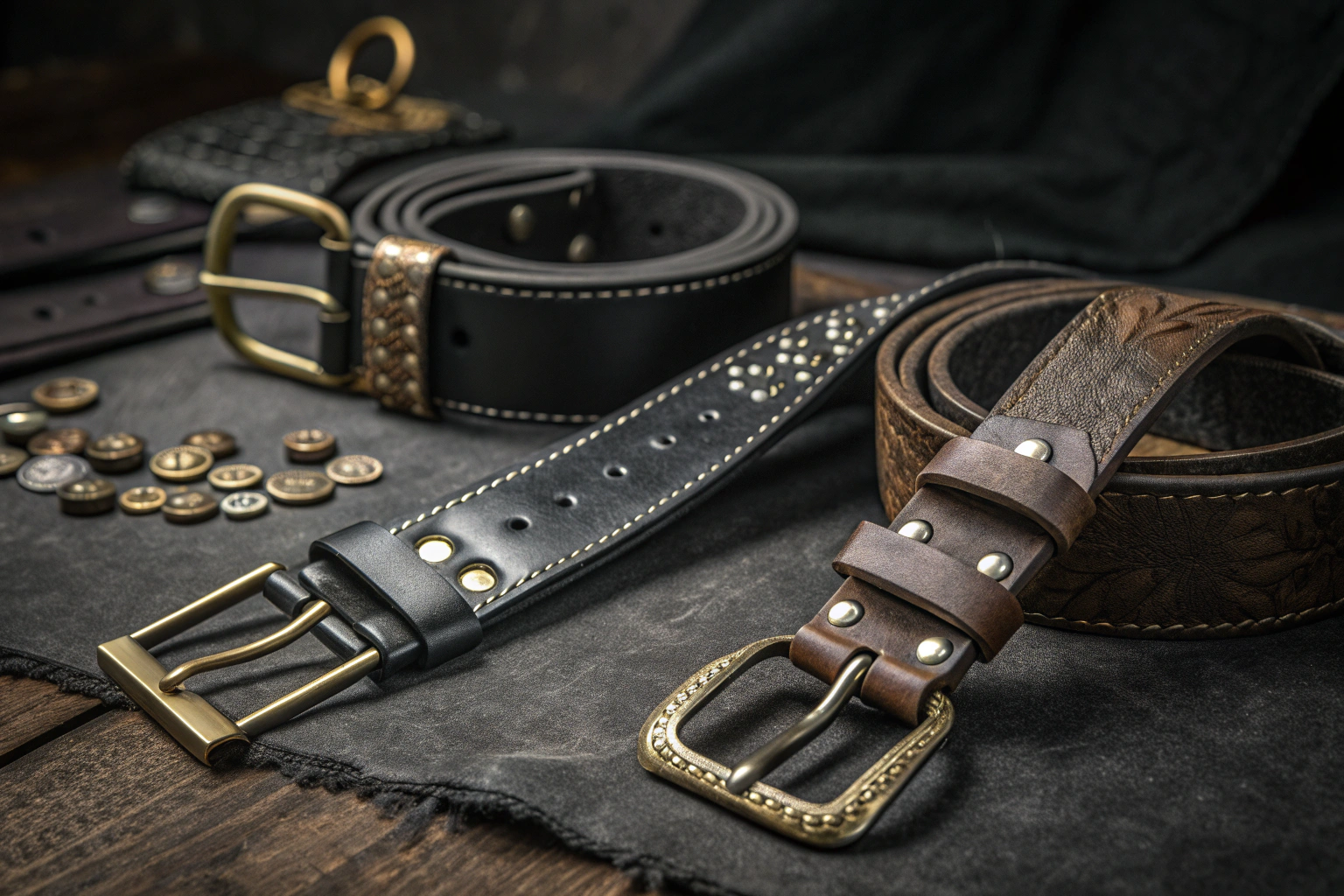
For heavy belts, the most durable closures are forged or solid-cast buckles made from stainless steel, solid brass, or titanium, particularly in roller or garrison styles. For high-tension waist cinchers, a steel busk is the gold standard, offering unmatched strength and a secure, rigid front. These choices prioritize material strength and mechanical simplicity, ensuring they can withstand significant and repeated stress without failing.
I've spent years sourcing and manufacturing hardware for our clients at Shanghai Fumao Clothing. I've seen firsthand what happens when a brand tries to cut corners on a buckle. A beautiful leather belt is rendered useless by a cheap, plated zinc alloy buckle that snaps. That's why we guide our clients to invest in closures that match the quality of their product. It's not just a component; it's the most critical point of failure. Let's break down the best options so you can make an informed choice.
Which Buckle Materials Offer Maximum Durability?
You're looking at material spec sheets, and the options are overwhelming. Zinc alloy, steel, brass, titanium—they all claim to be "strong." But for a heavy-duty work belt that needs to support tools or a waist cincher under constant tension, "strong" isn't enough. You're afraid of choosing a material that looks good initially but quickly tarnishes, corrodes from sweat, or worse, deforms under load. This indecision can delay production and lead to a product that doesn't live up to its promise.
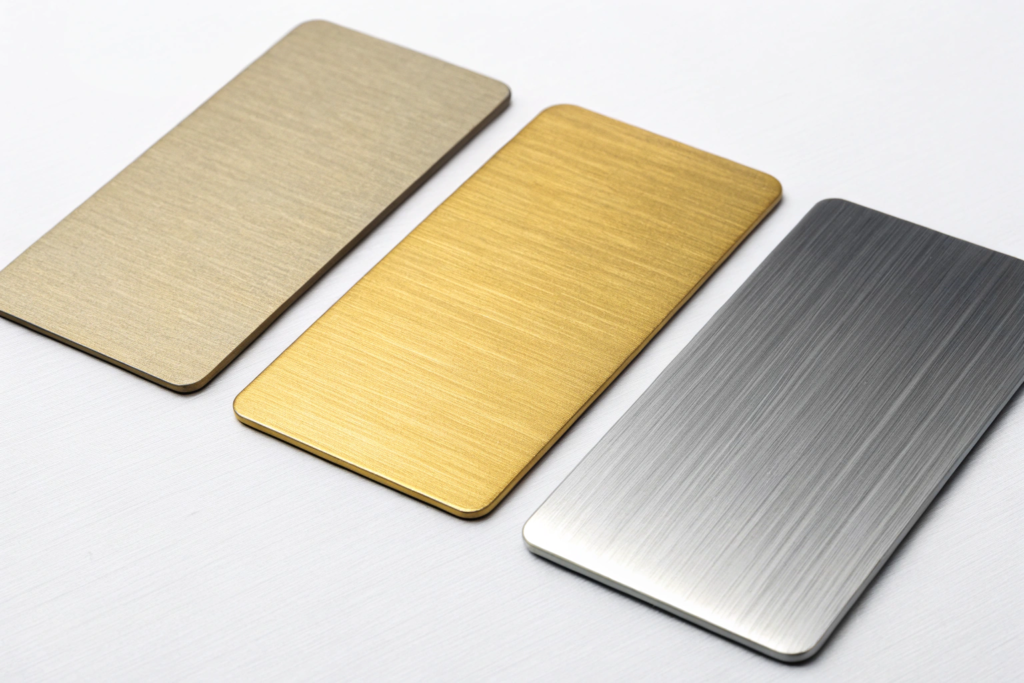
Solid, non-plated metals are the key to maximum durability. Stainless steel offers the best all-around performance in strength and corrosion resistance. Solid brass provides excellent durability with a classic aesthetic that develops a unique patina. Titanium delivers superior strength at a much lighter weight, making it a premium choice for high-performance gear. These materials ensure the buckle's integrity from its core to its surface.
We always have this conversation with clients who are serious about quality. While a plated zinc alloy buckle is cost-effective and allows for intricate designs, it's not the right choice for a heavy-duty application. The plating can chip or wear away, exposing the weaker metal underneath to corrosion. For a product defined by its toughness, the buckle must be tough all the way through. This is why understanding the fundamental properties of these metals is so important.
Why is Stainless Steel a Top Choice?
Stainless steel is a powerhouse material for buckles. Its high tensile strength means it can handle heavy loads without bending or breaking, making it perfect for tool belts and tactical gear. The chromium content in the alloy forms a passive, self-repairing layer that provides excellent resistance to rust and corrosion, even when exposed to moisture and sweat. Furthermore, most stainless steel alloys are hypoallergenic, which is a crucial consideration for any item worn against the skin. While it can be heavier than other options, its sheer durability and reliability make it a go-to for any product where failure is not an option. For more technical specifications, industry resources like the American Iron and Steel Institute (AISI) provide extensive data on different grades.
Is Solid Brass a Good Alternative?
Solid brass, an alloy of copper and zinc, is another fantastic choice for durable buckles. While not quite as strong as stainless steel, it is highly resistant to corrosion and will not rust. What many people love about brass is the way it ages. Over time, it develops a natural patina, a rich tarnish that gives the buckle a unique, vintage character. This makes it a favorite for high-end leather goods and heritage-style belts. Unlike plated buckles, a solid brass buckle can be polished back to its original shine. Its substantial weight provides a premium feel that customers often associate with quality and longevity. You can learn more about brass properties from organizations like the Copper Development Association.
What Are the Most Secure Buckle Designs for Heavy Belts?
You've chosen a strong material, but the design of the buckle itself is just as important. A standard pin buckle might create too much friction on a thick leather belt, making it difficult to adjust and causing premature wear on the holes. A weak prong could bend over time, or a thin frame could warp under the weight of tools. You're looking for a design that is not only strong but also functional and easy to use day in and day out.
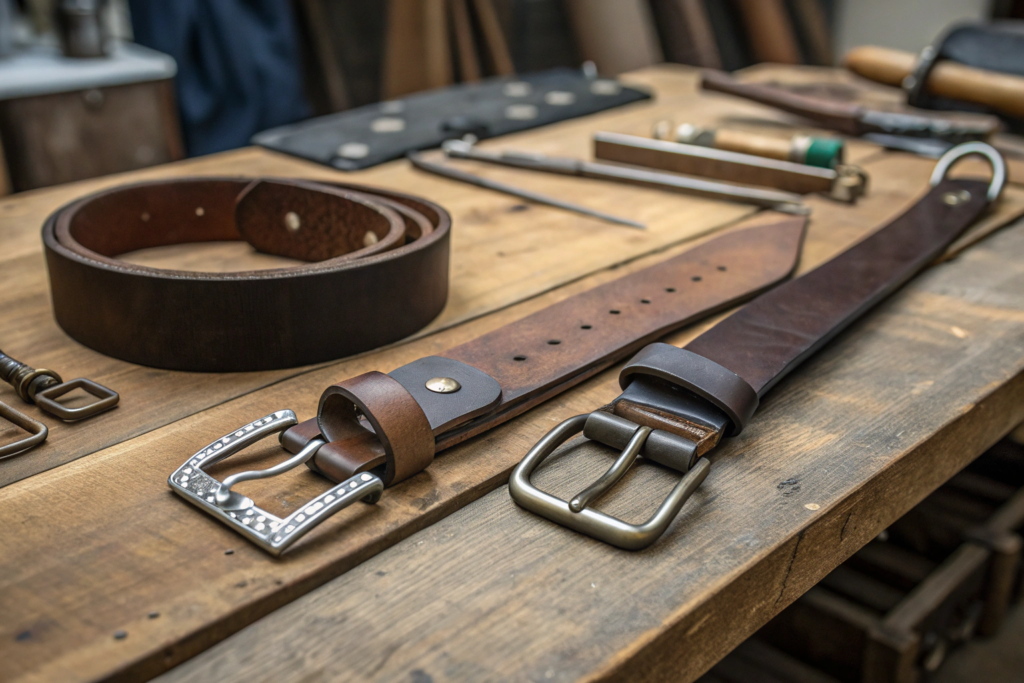
For heavy belts, roller buckles and garrison (or double-prong) buckles are the most secure and durable designs. Roller buckles reduce friction and wear on the belt strap, making adjustments smoother. Garrison buckles distribute stress across two points, providing a more secure hold and reducing the strain on a single belt hole. These designs are mechanically superior for managing the high tension and weight associated with heavy-duty use.
This is a practical detail we work on with our clients. For a thick, 8-9 ounce leather work belt, a simple frame-style buckle can be a struggle to use. The addition of a small roller mechanism completely changes the user experience. It allows the thick leather to glide through the buckle, preventing the edges from getting chewed up over time. For wider belts, like those used in law enforcement, a double-prong garrison buckle is often the standard. The two prongs provide redundancy and a more stable hold, which is critical when the belt is carrying essential gear. These aren't just aesthetic choices; they are engineering decisions that directly impact the product's lifespan and functionality.
How Does a Roller Buckle Enhance Durability?
A roller buckle incorporates a small, rotating cylinder on the frame where the belt strap passes through. This simple addition significantly reduces friction as you tighten the belt. For thick, heavy leather or webbing, this is a game-changer. It prevents the surface of the belt from being scraped and worn down every time it's adjusted. This not only preserves the appearance of the belt but also extends its life by reducing stress on the material. The smooth action makes the belt easier to cinch tightly and release. You can find these on everything from casual belts to high-end work belts.
Why Use a Double-Prong Garrison Buckle?
A garrison buckle, easily identified by its two prongs, is a classic choice for wide, heavy-duty belts. The design offers a more secure fastening by distributing the load across two holes in the belt strap instead of one. This reduces the strain on any single point, making it less likely for a hole to stretch or tear over time. This style is commonly seen on military and police duty belts for this very reason. The wider frame of the buckle is also inherently stronger and more resistant to bending. When paired with a sturdy keeper loop, it creates an exceptionally reliable closure system for the most demanding applications.
What Are the Strongest Closures for Waist Cinchers?
Waist cinchers and corsets operate under extreme tension. A standard hook-and-eye closure, like you'd find on a bra, simply won't hold up. They can bend, pop open, or even tear away from the fabric, completely ruining the garment and potentially causing embarrassment for the wearer. Zippers are also a point of failure unless they are specifically heavy-duty, military-grade zippers flanked by steel boning. The fear is that the closure will be the weakest link in an otherwise well-constructed garment.
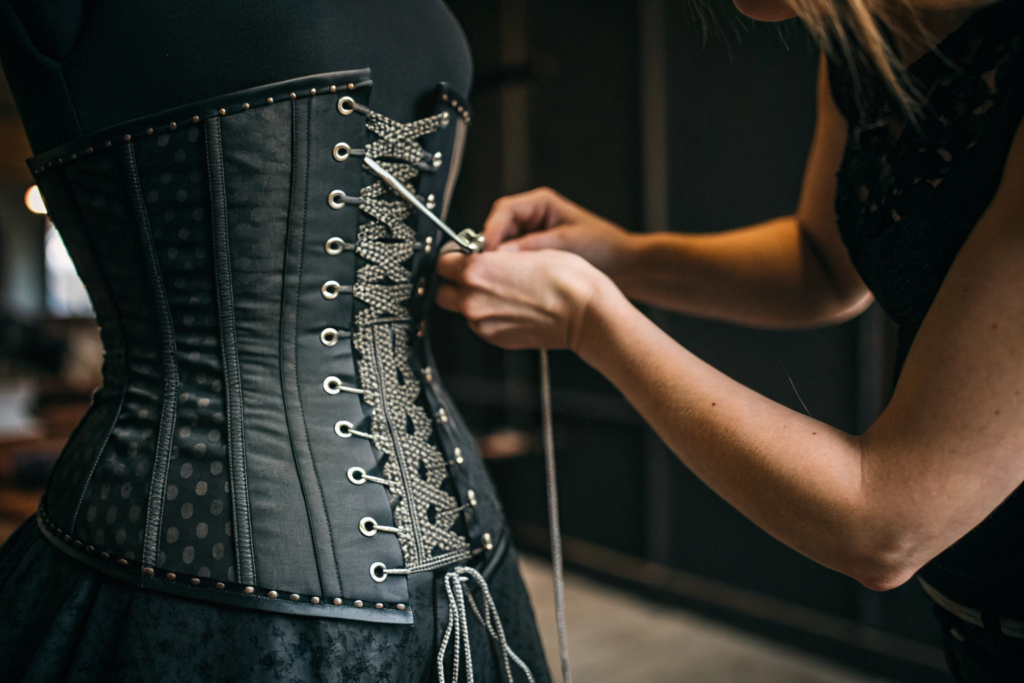
The strongest and most reliable closure for a traditional corset or high-compression waist cincher is a steel busk. A busk consists of two long, rigid steel stays: one with metal loops and the other with corresponding pins. This design provides a solid, rigid front that can withstand the immense tension of cinching without buckling or breaking. For less rigid waist trainers, multiple rows of high-quality, heavy-gauge hook-and-eye closures are a viable alternative, but they do not offer the same level of strength as a busk.
When we manufacture corsetry for clients, the busk is a non-negotiable component for any serious waist-training garment. It's the "gold standard" for a reason. It not only provides a secure closure but also contributes to the shaping power of the corset by creating a firm, flat front. While some fashion corsets might use decorative closures like swing hooks or heavy-duty zippers, for pure function and durability under high tension, nothing beats a steel busk.
What Exactly is a Steel Busk?
A busk is the front closure mechanism found in traditional corsets. It is made of two flat steel stays that run vertically down the center front of the garment. One stay has a series of metal loops, and the other has corresponding metal pins or "knobs" that slot into the loops to fasten the corset. This design is incredibly strong because the tension is distributed along the entire length of the rigid steel. It allows the wearer to easily put on and take off the corset without having to completely unlace the back every time. For any garment intended for significant waist training, a quality steel busk is essential for both function and safety.
Are Hook-and-Eye Closures Ever a Good Option?
For lighter compression waist cinchers, often made of latex or spandex, hook-and-eye closures can be effective. However, not all hook-and-eye tapes are created equal. For this application, it's crucial to use heavy-gauge metal hooks and eyes that are securely stitched onto a reinforced placket. Typically, these cinchers will feature two or three rows of eyes, allowing for some adjustability as the wearer's waist slims down. While they are easier to produce and more flexible than a steel busk, they are considered a light-duty option. For any garment promising a reduction of more than a couple of inches, the strain will likely be too much for a hook-and-eye closure to handle reliably over time.
How Do You Verify the Quality of a Closure?
You've received samples from a supplier. The buckles look good, and the corset busks feel solid. But how do you know if they will truly last? How can you be sure they won't rust after a few months of wear, or that the prong on a buckle won't snap under a sudden load? Simply looking at a component isn't enough. You're worried that you'll approve a sample, go into mass production, and only discover the quality issues after your customers start complaining.
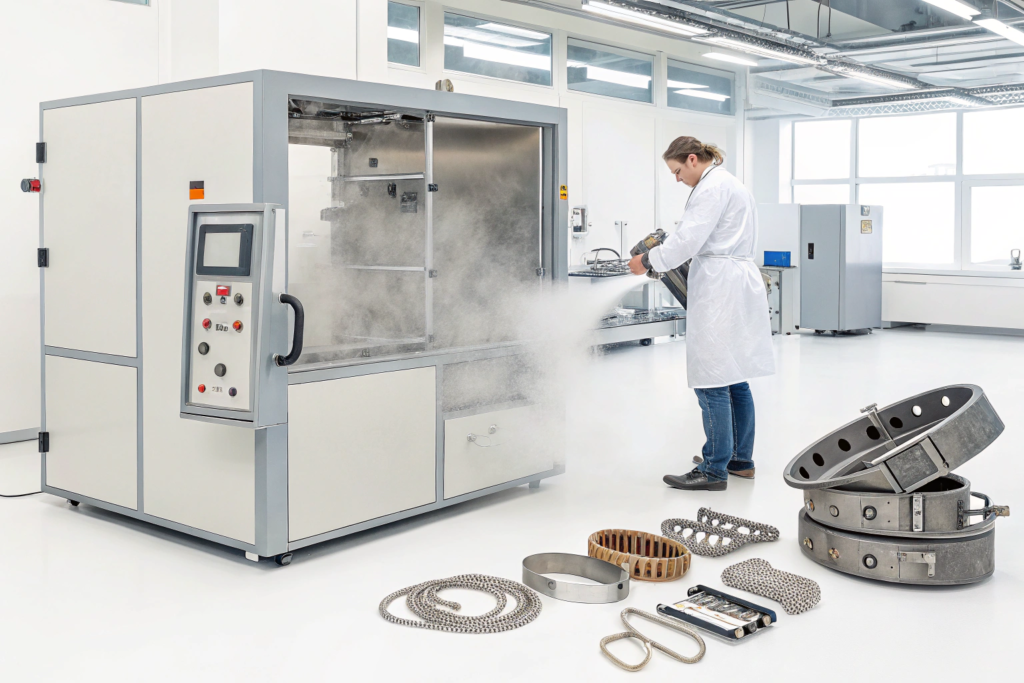
To verify the quality of a closure, you need to go beyond visual inspection and implement objective testing methods. This includes requesting material certification, conducting salt spray tests for corrosion resistance, and performing load-bearing or tensile strength tests to ensure the hardware can withstand real-world forces. These tests provide measurable data to confirm that the components meet your durability standards before you commit to a full production run.
This is a critical step in our process at Shanghai Fumao Clothing. We don't just take our suppliers' word for it. We independently verify. For example, when we use zinc alloy for a fashion buckle, we subject it to a salt spray test to ensure the anti-rust plating meets our client's standards. For heavy-duty buckles, we request material composition reports to confirm we are getting solid stainless steel or brass, not a cheaper, plated substitute. We can also arrange for third-party lab testing to measure the exact force at which a buckle or closure will fail. This data-driven approach to quality assurance gives our clients, like Ron, peace of mind and protects their brand's reputation.
What is a Salt Spray Test?
A salt spray test is an accelerated corrosion test used to check the resistance of materials and surface coatings. The hardware is placed inside a closed chamber and exposed to a continuous, fine mist of a salt water solution. The test simulates long-term exposure to corrosive environments in a compressed timeframe. By evaluating how many hours a buckle can withstand the salt spray before showing signs of rust or degradation, we can reliably predict its real-world lifespan. This is a standard procedure in many industries, including automotive and aerospace, to validate the quality of protective coatings.
How Do You Test for Mechanical Strength?
Testing for mechanical strength involves applying force to the closure until it fails. For a belt buckle, this can be done using a tensile testing machine, which pulls on the buckle with a measured amount of force to find its breaking point. This tells you exactly how much load it can bear. For a corset busk, testing might involve simulating the tension of a fully cinched corset to ensure the pins and loops don't deform. For rivet-based fasteners, a pull test ensures the rivets will hold without tearing through the belt material. These destructive tests are typically performed on a small sample from a production batch to validate the strength of the entire lot.
Conclusion
Choosing the right closure for a heavy belt or waist cincher is a decision that directly impacts your product's quality, durability, and customer satisfaction. For heavy-duty belts, the combination of a strong material like solid stainless steel or brass with a functional design like a roller or garrison buckle is the recipe for success. For high-compression waist cinchers, the rigid strength of a steel busk is unmatched. Investing in these high-quality components is not a cost; it's an insurance policy against product failure and a commitment to building a brand that customers trust.
By understanding the properties of different materials, the mechanical advantages of specific designs, and the importance of objective quality testing, you can confidently develop products that perform as good as they look. At Shanghai Fumao Clothing, this is the expertise we bring to every project. We help our clients navigate these technical decisions to build accessories that last.
If you're ready to create a line of belts or waist cinchers with closures you can count on, let's connect. Reach out to our Business Director, Elaine, at elaine@fumaoclothing.com to discuss your project.