I was reviewing a quote request last week from a client who runs a chain of beachside souvenir shops in Florida. She wanted to order 5,000 summer hats. She had a specific retail price point in mind: $19.99. She wanted the hats to look great, feel comfortable, and hold up to sun and sand. But when I looked at her initial fabric request—a heavy, structured cotton canvas—I knew we had a problem. By the time we factored in the fabric cost, the manufacturing, and the shipping, that hat would need to retail for $34.99 to make a healthy margin. She would be priced out of her market. I suggested we look at Paper Braid. She was skeptical. "Isn't that cheap-looking?" she asked. I sent her a sample. She called me back the next day. "This is perfect," she said. "It looks like expensive straw, but it's lightweight and the price is right."
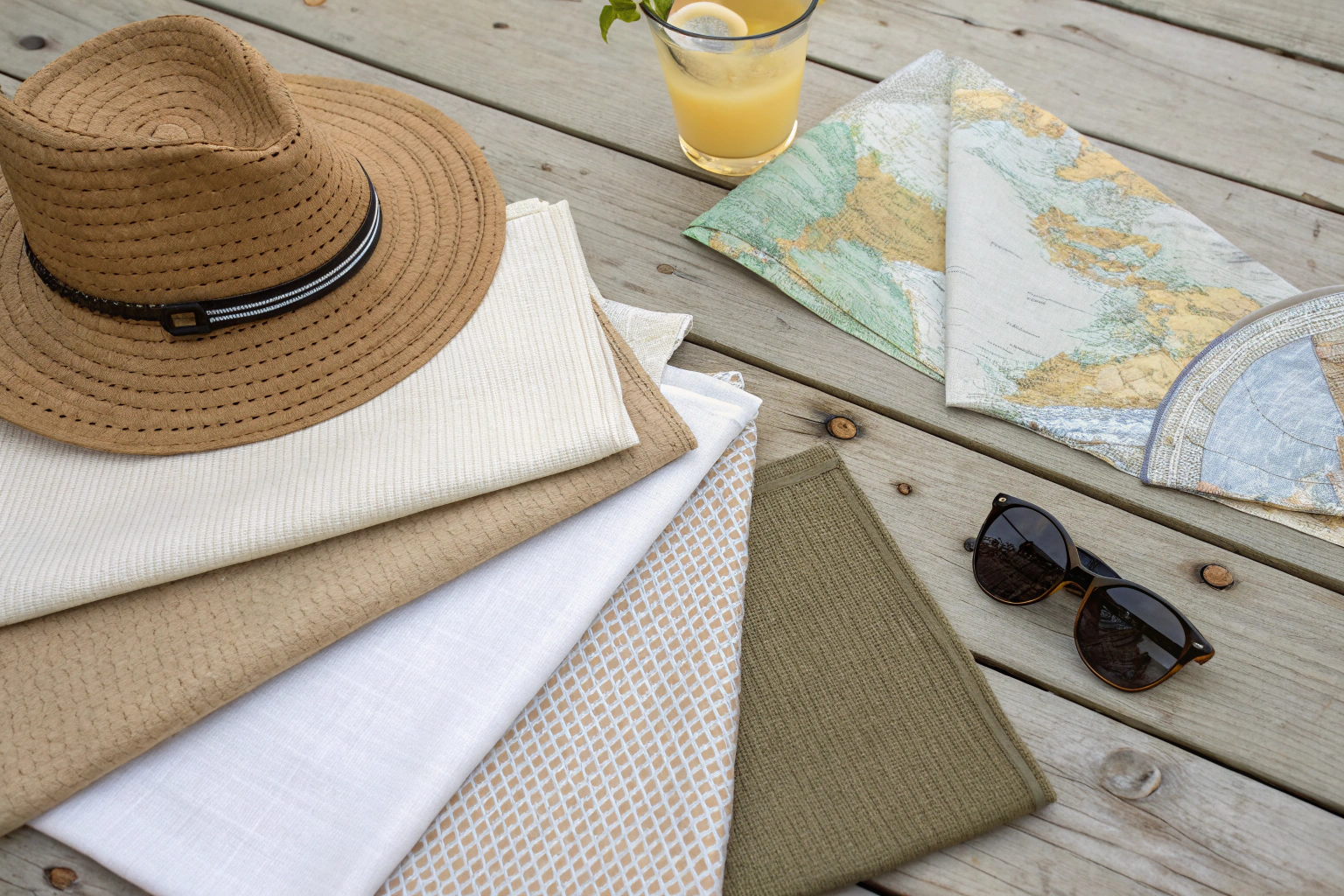
The most cost-effective fabrics for Chinese summer hats are those that balance low material cost, lightweight shipping weight, and efficient manufacturability. Paper Braid and Toyo straw are the undisputed champions for achieving a premium, natural look at a fraction of the cost of genuine Panama straw. For sporty and active styles, Polyester Mesh offers breathability and durability at an incredibly low price per yard. Cotton Twill and Poly-Cotton blends provide a classic, structured look for baseball caps and bucket hats at a moderate cost. The key is matching the fabric to the specific hat silhouette and the brand's target retail price.
At Shanghai Fumao, we produce hundreds of thousands of summer hats each year. We know the exact cost and performance profile of every material in our library. I want to share the insider's guide to choosing a summer hat fabric that looks premium but protects your profit margin.
Why Is Paper Braid The Go-To Material For Affordable Straw Hats?
Walk into any Target or H&M in the summer, and you will see racks of stylish straw hats. Fedoras, wide-brim sun hats, cute little bowlers. The vast majority of them are not made of straw. They are made of Paper Braid. And for good reason. It is the unsung hero of the affordable summer hat industry.
Paper Braid is the most cost-effective material for summer hats because it perfectly mimics the look of natural straw at a significantly lower cost and with far greater manufacturing consistency. Made from rolled and twisted paper fibers, it is lightweight, takes dye beautifully, and is available in a wide range of weave patterns. Unlike natural straw, which is brittle and has natural variations in color and thickness, paper braid is uniform. This uniformity reduces waste on the cutting table and allows for faster, more efficient sewing. The result is a hat that looks like a $45 Panama hat but can retail profitably for $19.99.
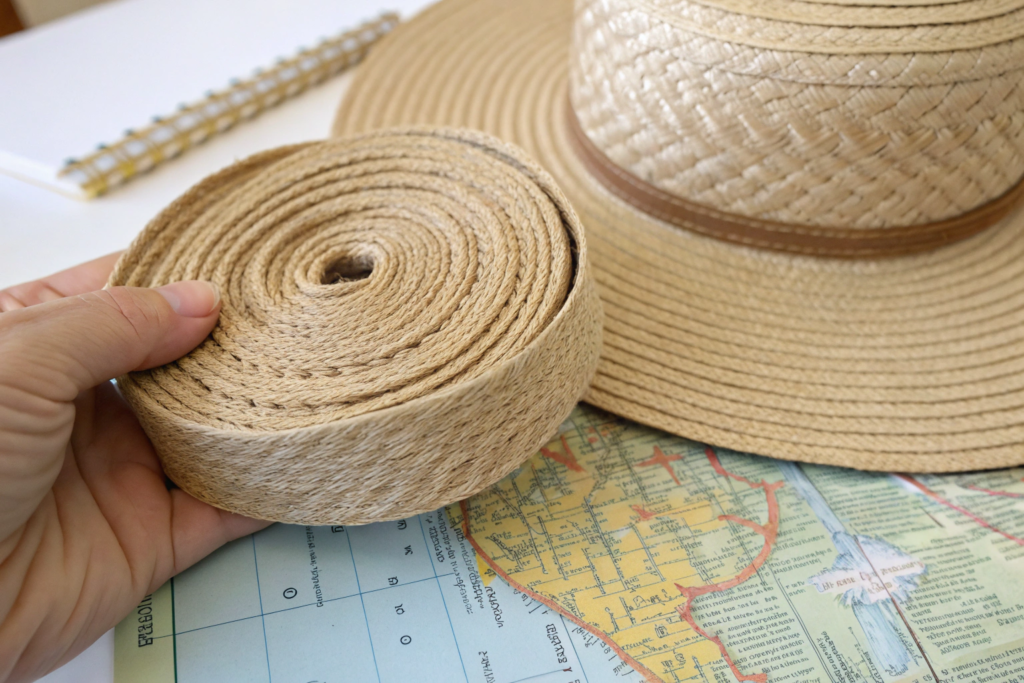
How Does The Cost Of Paper Braid Compare To Genuine Straw?
Let us look at the raw numbers. These are approximate, but they illustrate the point.
| Material | Approx. Cost Per Hat Body | Consistency | Dyeability |
|---|---|---|---|
| Genuine Panama Straw (Toquilla) | $15 - $50+ | Low (Natural Variation) | Difficult (Bleaching only) |
| Raffia Straw | $8 - $15 | Medium | Limited (Natural tones) |
| Toyo Straw (Rice Paper) | $3 - $6 | High | Good |
| Paper Braid | $1.50 - $3.00 | Very High | Excellent |
The cost advantage of Paper Braid is undeniable. A hat body made from genuine Panama straw can cost more than the entire retail price of a paper braid hat.
But cost is only one factor. The manufacturing efficiency is equally important. Genuine straw is fragile. It breaks. It requires careful handling. The reject rate during blocking and sewing can be 10-15%. That waste is built into the cost.
Paper braid is tough and flexible. It runs through our industrial sewing machines with minimal breakage. The reject rate is under 2%. This reliability keeps the production line moving and the final cost low.
What Are The Limitations Of Paper Braid?
For complete transparency, I always tell my clients about the limitations. Paper braid is not a miracle material.
- Water Resistance: It is paper. It does not like getting soaked. A light drizzle is fine, but a downpour will cause it to lose its shape. We do not market paper braid hats as "beach swim hats." They are "sun hats."
- Long-Term Durability: A paper braid hat will last for a season or two with good care. It will not become a 20-year heirloom like a fine Panama hat. But at the price point, consumers expect this. It is a seasonal fashion item.
For most of our clients, these limitations are perfectly acceptable given the style and price. The key is to position the hat correctly. It is a fashionable, affordable sun hat. Within that category, Paper Braid is unbeatable.
When Is Polyester Mesh The Smartest Choice For Active Hats?
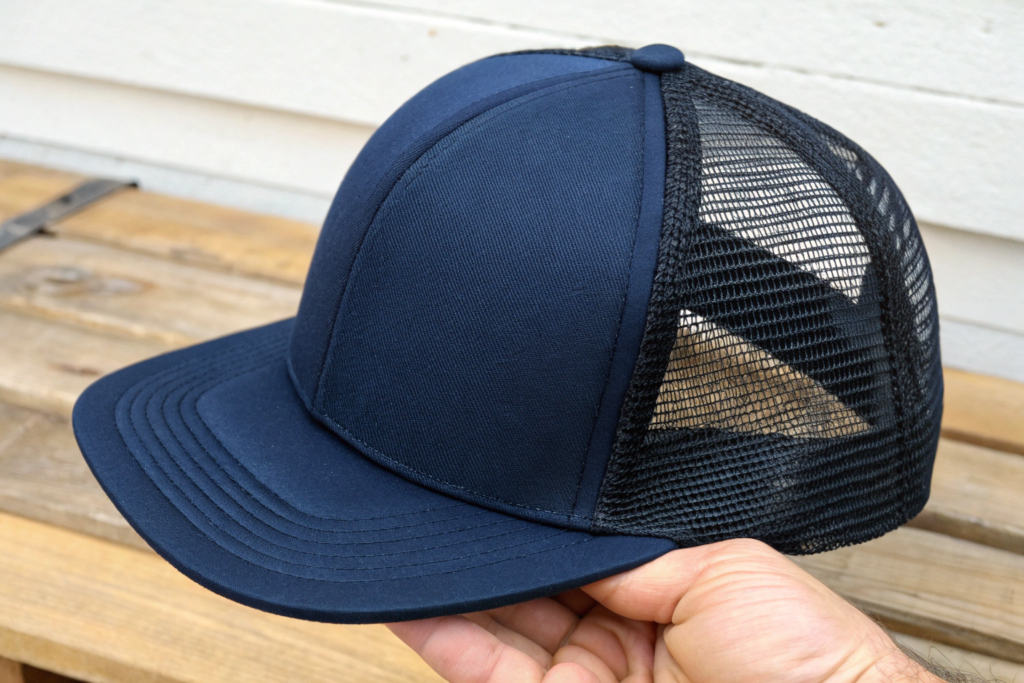
For a completely different segment of the summer hat market—the active, outdoor, sporty segment—the cost-effective champion is Polyester Mesh. Think trucker caps, running visors, and beach hats designed for actual water use.
Polyester Mesh is the most cost-effective choice for active summer hats due to its extreme breathability, lightweight nature, and near-indestructible durability. The open weave allows for maximum airflow, keeping the head cool during physical activity. It is made from synthetic fibers, so it is water-resistant, quick-drying, and will not rot or mildew. From a cost perspective, polyester mesh is one of the least expensive textiles available. It is also very lightweight, which significantly reduces shipping costs for bulk orders.
How Does Mesh Construction Impact Durability And Cost?
Polyester mesh is not a single fabric. It comes in various weights and hole sizes.
- Standard Trucker Mesh: This is the classic. It has a soft hand feel and medium-sized holes. It is incredibly inexpensive.
- Athletic Mesh: This has a more open structure for maximum ventilation. It is often used in running hats.
- Power Mesh: A finer, stronger mesh used for structure.
The cost per yard of standard polyester mesh is often $0.50 to $1.00. Compare this to a decent cotton twill, which is $2.50 to $4.00 per yard. The material cost savings are substantial.
Furthermore, mesh does not fray. This is a huge manufacturing advantage. The cut edges of the mesh panels do not require hemming or binding. They can be left raw or simply sewn. This eliminates an entire production step (edge finishing) and saves on labor costs.
The durability of polyester mesh also reduces returns. A customer can throw a mesh trucker cap in the washing machine. It dries quickly. It does not shrink or fade. This long-term performance leads to higher customer satisfaction and fewer returns, which protects the brand's bottom line.
Can Mesh Be Used For More Fashion-Forward Styles?
Yes. The perception of mesh as purely a "trucker" material is changing. We are seeing innovative uses of mesh in fashion hats.
We are producing full-mesh bucket hats for music festivals and beachwear. They are incredibly lightweight and packable. We use a finer-gauge mesh that has a more sophisticated, textured look.
We are also using decorative mesh overlays. A layer of colored mesh over a solid cotton crown creates a subtle, textured, two-tone effect.
We are even seeing mesh used in wide-brim sun hats for the "active beach" customer. These hats provide sun protection but with maximum ventilation, so the wearer does not overheat. This is a growing niche. The key is to use high-quality, soft mesh and to design the hat with clean lines. This elevates the material beyond its utilitarian origins.
What Role Do Cotton Blends Play In The Mid-Tier Market?
Between the ultra-affordable paper braid and the sporty polyester mesh lies the vast mid-tier market. This is the territory of the classic baseball cap, the structured bucket hat, and the tailored visor. For these styles, Cotton and Cotton-Blend fabrics are the standard.
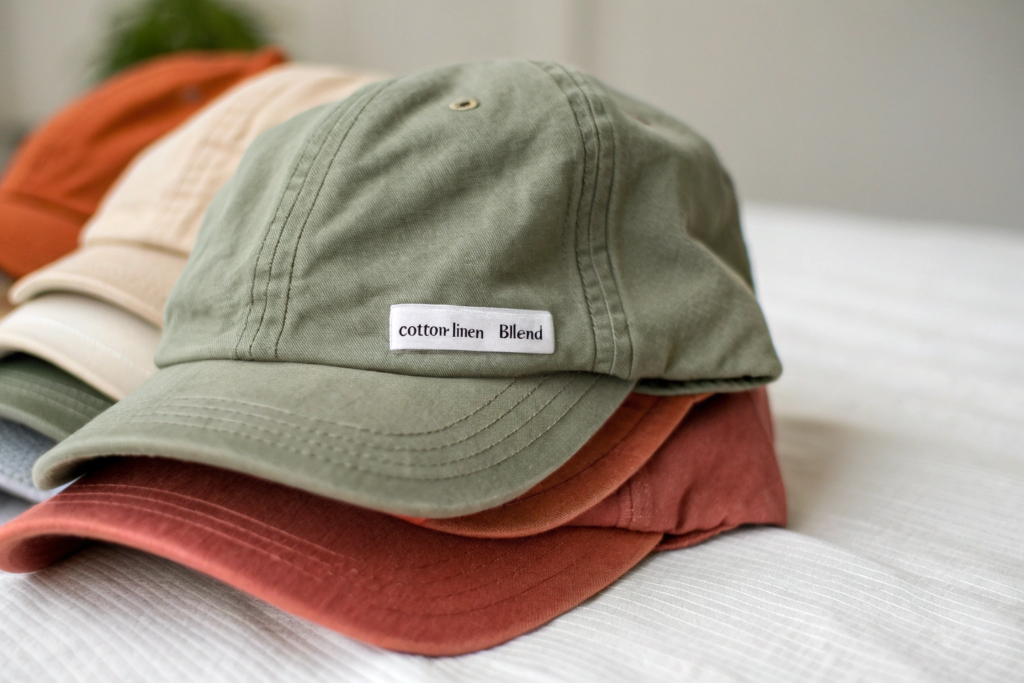
Cotton blends, particularly Cotton-Polyester and Cotton-Linen, are the most cost-effective fabrics for mid-tier summer hats because they offer a significant upgrade in perceived quality and comfort over 100% polyester at a manageable cost increase. Cotton provides a natural, breathable hand feel that consumers associate with quality. Blending it with polyester reduces the cost, minimizes shrinkage, and improves shape retention. A well-chosen cotton blend allows a brand to offer a "Premium Cotton" hat at a $24.99 to $34.99 retail price point.
How To Balance Cost And Feel With Poly-Cotton Blends?
100% Cotton has issues for hats. It shrinks. It wrinkles. It fades in the sun. It is also more expensive.
A 65% Polyester / 35% Cotton blend is the industry workhorse for a reason. It offers a sweet spot:
- Cost: The polyester brings the fabric cost down.
- Feel: The cotton provides a softer, more natural touch than 100% polyester.
- Performance: The polyester provides shape retention and wrinkle resistance.
This blend is widely available, easy to sew, and takes dye well. It is the standard fabric for most mid-tier promotional caps and fashion baseball caps.
For a more premium feel at a slightly higher cost, we use a Brushed Cotton Twill. This is usually a 100% cotton or a high-cotton blend fabric that has been mechanically brushed to raise the surface fibers. It creates an incredibly soft, sueded hand feel. It feels like a much more expensive hat. The cost increase is about $1.00 per hat, but it allows the brand to step up to a $35-$40 retail tier.
Is Linen A Viable Cost-Effective Option?
Linen is the quintessential summer fabric. It is breathable, lightweight, and has a beautiful, textured slub. But is it cost-effective?
Pure linen is expensive and wrinkles terribly. It is not practical for most hat styles. However, Cotton-Linen blends are an excellent option for a premium summer look.
A blend like 70% Cotton / 30% Linen captures the visual texture and breathability of linen at a fraction of the cost. The cotton provides structure and reduces the severe wrinkling of pure linen.
We use these blends for Bucket Hats and Newsboy Caps. The fabric gives the hat a rustic, artisanal, European summer vibe. It photographs beautifully. It appeals to a customer looking for natural fibers and a unique texture. The cost is higher than a poly-cotton blend, but it positions the hat in a premium niche where higher margins are achievable.
Conclusion
Selecting the right fabric for a summer hat is a strategic business decision. It is a balance of aesthetics, performance, and cost. The smartest brands do not just pick a fabric they like. They pick a fabric that aligns with their target retail price, their brand identity, and their customer's expectations.
Paper Braid offers an unbeatable combination of style and value for the affordable sun hat market. Polyester Mesh is the durable, breathable workhorse for active and sporty styles. And Cotton Blends provide a path to premium feel and natural texture in the competitive mid-tier.
At Shanghai Fumao, we guide our clients through this decision matrix every day. We have the material library, the cost data, and the production experience to help you make the right choice. We can provide swatches, cost comparisons, and finished samples so you can see and feel the difference.
If you are planning your summer hat collection and want to maximize both style and margin, we invite you to connect with us. Let us help you find the perfect, cost-effective fabric for your vision. For a consultation on summer hat materials and to receive a fabric swatch pack, please contact our Business Director Elaine directly at elaine@fumaoclothing.com. Let us make your summer collection a success.