For over two decades, I have watched the printed scarf evolve. It is not just a piece of fabric; it is a canvas for art, a signal of identity, and a surprisingly resilient product in our Zhejiang factory. My clients across America and Europe, from fast-fashion buyers to luxury department stores, always ask the same question: "What is new?" They need to stay ahead. The scarf market moves fast, but the fundamentals of quality and design remain constant.
The latest trendy styles of printed scarves in 2026 are defined by bold digital and abstract prints, a resurgence of nature-inspired botanicals with a surrealist twist, the enduring appeal of animal prints reimagined in new colorways, and a strong focus on personalized, monogrammed styles. We are seeing a move away from safe, minimal patterns toward expressive, story-driven designs.
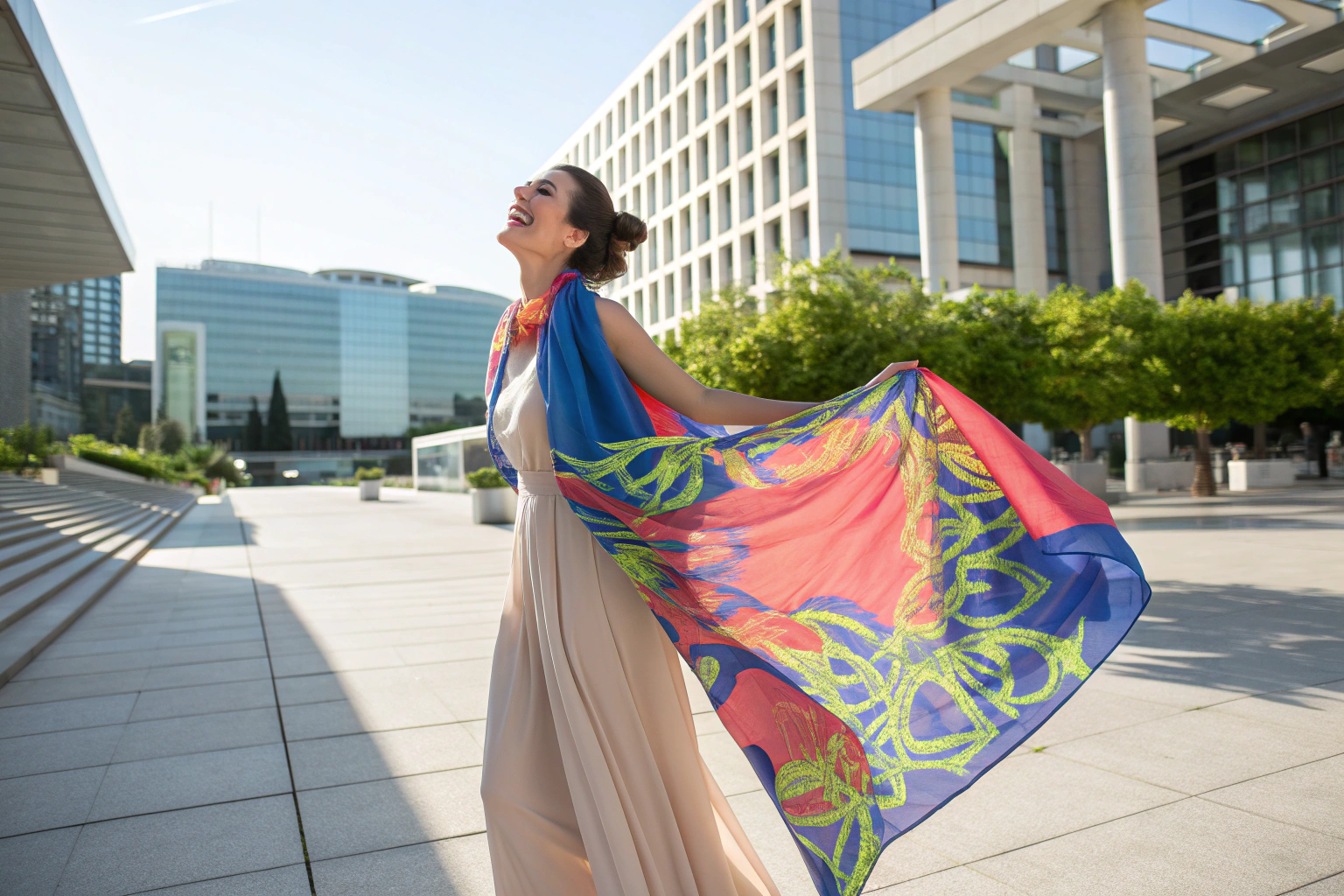
This year, the scarf is a statement piece again. It is worn as a top, tied to a bag, wrapped as a headband, or layered for texture. The consumer, like our persona Ron's customers, wants versatility and impact. They want a scarf that can do double duty and start conversations. At our factory, we have responded by investing in new digital printing technology that allows for sharper details, more vibrant colors, and faster turnaround times for our clients' custom designs. Let me walk you through the specific trends that are dominating our order books and the runways right now.
What are bold digital and abstract print scarves?
Digital printing has completely changed what is possible with scarves. The limitations of traditional screen printing are gone. Now, we can produce designs with photographic detail, infinite color blends, and complex gradients. This has freed designers to think like artists. The result is a wave of scarves that look like they belong in a gallery.
Why are abstract prints taking over fashion scarves?
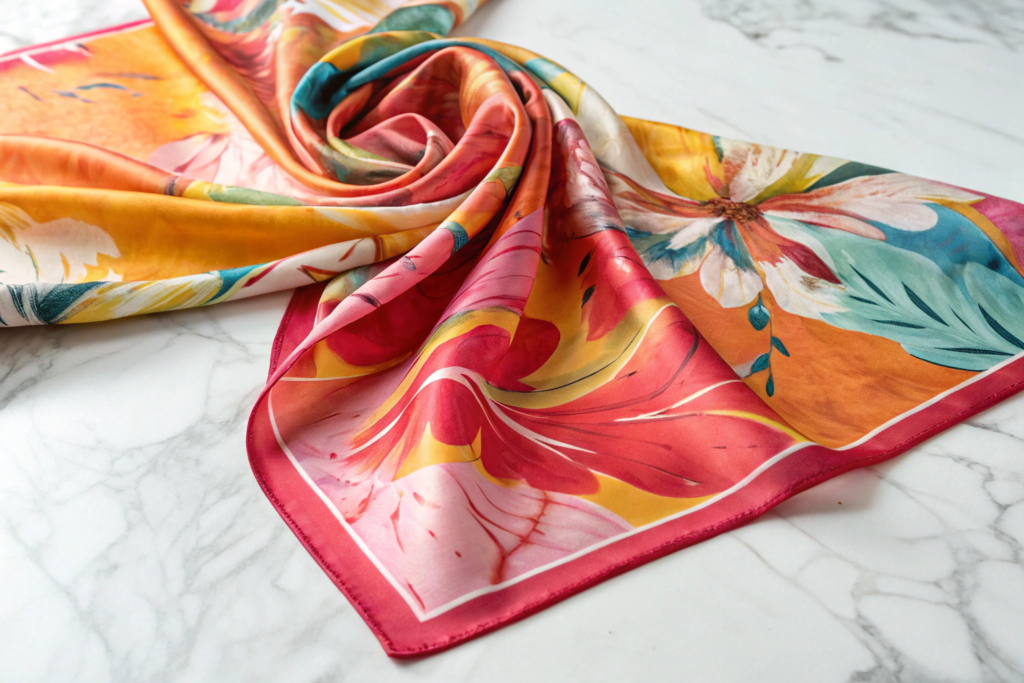
Abstract prints offer something that realistic prints do not: they leave room for interpretation. A woman wearing an abstract scarf can project her own meaning onto it. It becomes personal. In 2026, we are seeing a move toward "expressive" and "emotive" designs that use color and form to create a mood, not just a picture . Think of bold, sweeping brushstrokes, watercolor bleeds, and geometric shapes that seem to move. This style connects to a broader cultural desire for individuality. No two people will see the same thing in an abstract pattern. For a buyer like Ron, this means a single design can appeal to a wide range of tastes because it is not tied to a specific, literal subject. The craftsmanship is in the color combinations and the balance of the composition. These scarves often become the centerpiece of an outfit, worn with simple, solid-colored clothing to let the art speak .
How has digital printing changed scarf manufacturing?
The impact on manufacturing has been huge. In the past, creating a new scarf design meant making expensive screens, one for each color. This made small orders prohibitively expensive and limited the number of colors we could use. Digital printing changed all that. Now, we can print directly onto the fabric, just like a paper printer. This is a game-changer for our clients . It allows for "mass customization" and "on-demand production" . A brand can order a small batch of a complex, multi-colored design to test the market without a huge financial risk. If it sells well, we can reorder quickly. This agility is exactly what the fast-paced fashion market demands. It also reduces waste because we print only what is needed. At Shanghai Fumao Clothing, we have invested heavily in this technology to give our clients maximum flexibility and creativity. For more on the technical side, resources like the Digital Printing Council offer deep insights into the process.
How are nature-inspired and surrealist prints evolving?
Nature has always been a source of inspiration for scarf designers. But in 2026, we are not just seeing pretty flowers. We are seeing nature reimagined. It is a blend of the real and the imagined, the classic and the avant-garde. This reflects a consumer interest in both the comfort of the natural world and the excitement of fantasy.
What is the "surrealist botanicals" trend in scarves?
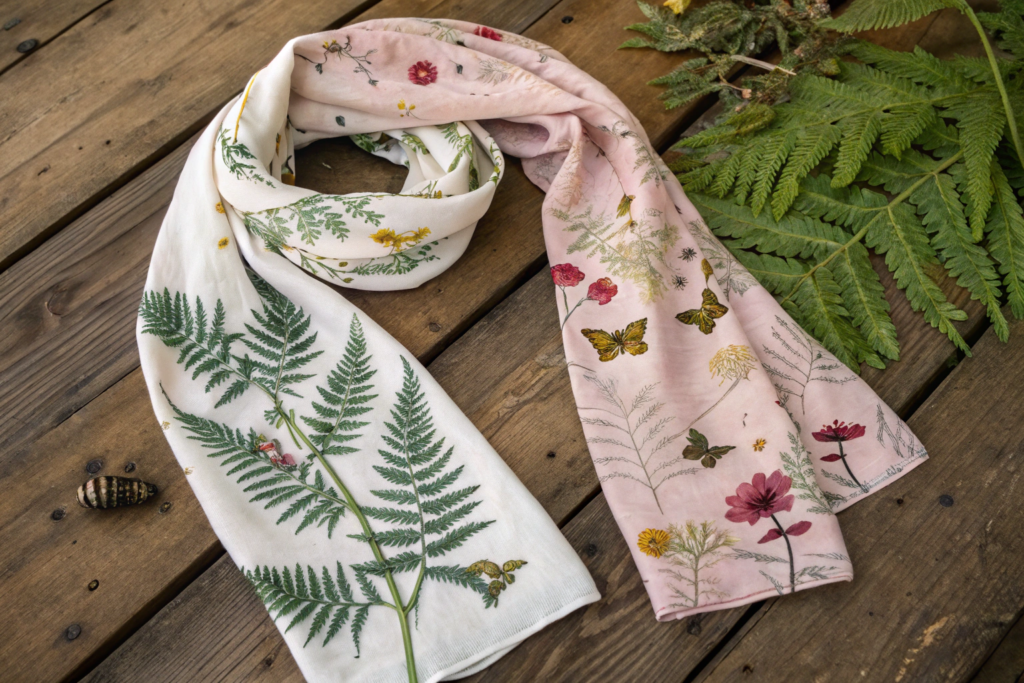
This is one of my favorite trends right now. Imagine a scarf printed with a classic, detailed illustration of a rose. Now imagine that rose has a tiny eye peeking out from its petals, or its stem curls into an impossible, geometric shape. That is surrealist botanicals. It takes the familiar and adds a twist of the unexpected. Trend reports are calling this "dopamine dressing" meeting "art history" . It is playful, intelligent, and deeply Instagrammable. It allows the wearer to show off their personality and their sense of humor. This trend also ties into the "new surrealism" we are seeing across fashion and home decor, where everyday objects are depicted in strange, dreamlike ways . For our design team, it is a challenge to balance the recognizable beauty of the natural form with the creative disruption of the surrealist element. The result is always eye-catching.
Why are oversized florals replacing dainty patterns?
Scale is everything in 2026. Small, repeating floral patterns are being pushed aside by prints where a single, enormous flower dominates the entire scarf. This is part of the broader trend toward "bold statements" and "maximalism" we discussed earlier . An oversized floral is not shy. It commands attention. When draped over a shoulder or tied around a bag, the scale of the print creates a dramatic visual impact that a small pattern cannot achieve. It feels modern and fresh, even when depicting a classic subject like a peony or a lily. We are seeing this particularly in square scarves, where the large-scale print can be appreciated from every angle. This shift also allows for incredible detail in the rendering of the flower, from the delicate veins in the petals to the subtle color gradations. It turns a simple accessory into a piece of textile art.
What is new in animal prints for 2026 scarves?
Animal prints are fashion staples. They never truly go away. But they do evolve. In 2026, the evolution is all about color and attitude. We are moving away from trying to look realistic and toward using the animal print as a graphic element that can be reinvented endlessly. This keeps the print exciting for consumers who already own the classic versions.
How are classic leopard and zebra prints being updated?
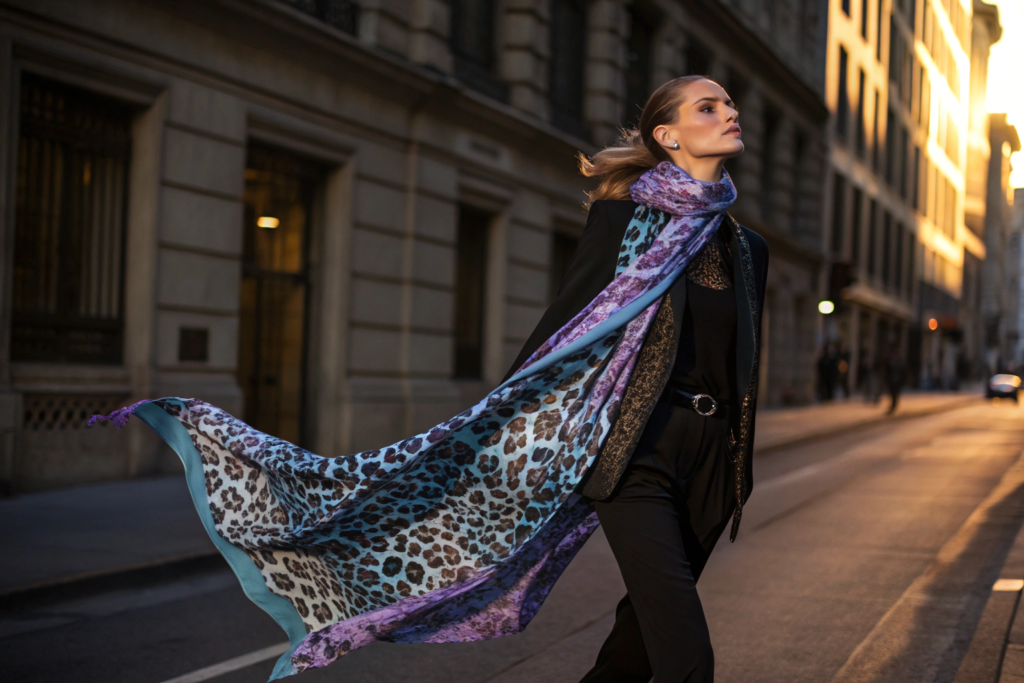
The biggest change is the color palette. Forget the standard browns, blacks, and tans. The new animal prints are "colorized." Leopard spots are appearing in vibrant shades of fuchsia and orange on a deep purple background. Zebra stripes are rendered in electric blue and silver . This is a direct response to the "dopamine dressing" trend, where people wear clothes that make them feel happy and energized . By using unexpected colors, the familiar animal print feels completely new and modern. It also makes the scarf easier to integrate into a contemporary wardrobe. A neon leopard print scarf can be the pop of color that brings a neutral outfit to life. We are producing these for clients who want to offer their customers a fresh take on a proven bestseller.
Why are snake prints becoming a dominant trend?
Snake prints are having a major moment. While leopard and zebra are spots and stripes, snake is about texture and scale. The intricate patterns of python, cobra, and rattlesnake skins offer a different kind of visual interest. They are more subtle and sophisticated from a distance, but reveal incredible detail up close. In 2026, we are seeing snake prints used not just in their natural metallic or earthy tones, but also in what trend forecasters call "lustrous and opulent" finishes . Think of a python print rendered in glossy emerald green or deep sapphire blue. This aligns with the trend toward "reptilian-inspired textures" that feel both primal and luxurious . The pattern can be large and graphic, or small and detailed, making it versatile for different scarf sizes and styles. It is a print that appeals to a consumer looking for something edgy but elegant.
What is driving the demand for personalized and monogrammed scarves?
In a world of mass production, the desire for something unique is stronger than ever. This is driving a huge demand for personalized accessories. A scarf with a monogram or a custom detail feels special. It feels like it belongs to you and no one else. This is a powerful emotional hook for consumers, and it is a great opportunity for brands.
How does personalization increase a scarf's value?
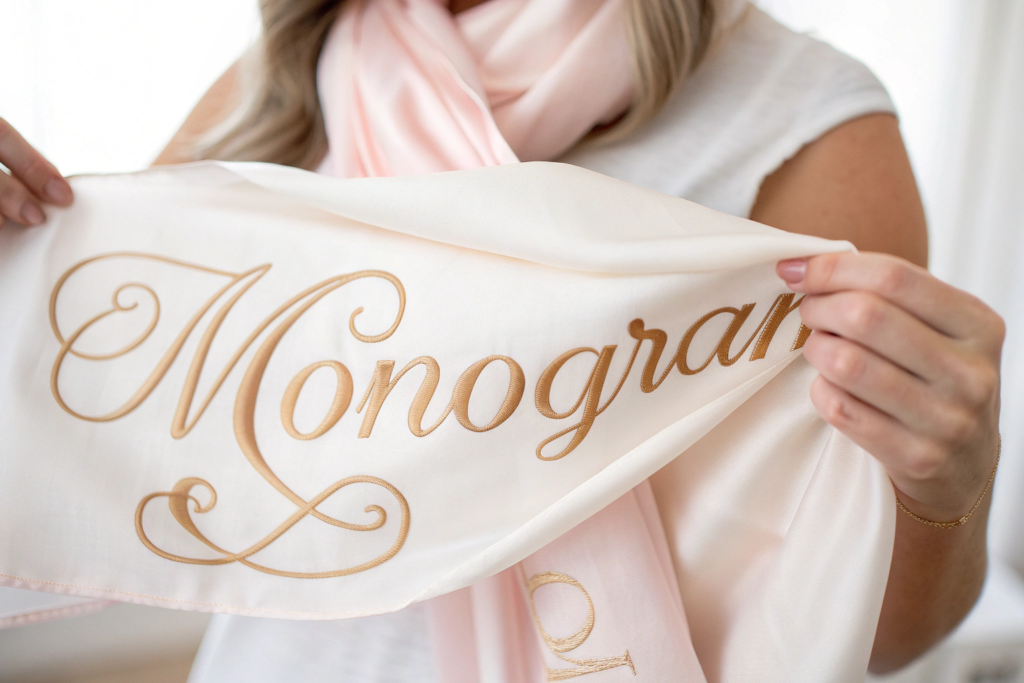
Personalization transforms a commodity into a keepsake. A scarf from a rack is just a scarf. A scarf with your initials embroidered in the corner is your scarf. This perceived value allows brands to command higher price points . Customers are willing to pay a premium for an item that feels bespoke. It also creates an emotional connection to the brand. When someone invests in a personalized item, they are more likely to become a loyal, repeat customer. For gifting, it is unbeatable. A monogrammed scarf shows thought and effort. It is a gift that cannot be bought off a shelf by anyone else. We work with many of our clients to offer this service, integrating embroidery or custom woven labels into their production runs. It requires careful planning but the payoff in customer satisfaction is immense.
What customization options are most popular right now?
The most popular option remains the classic monogram. Usually, it is one, two, or three initials embroidered in a elegant script or a modern block font . The placement is key. Most often, it is in a corner of the scarf, so it is visible when the scarf is worn or when it is lying flat. Beyond embroidery, we are also seeing demand for custom woven edge labels with a name or a special date. Another trend is "custom colorways." A brand might offer a core design but allow customers to choose the background color from a selection of options. This gives a sense of control and personalization without the complexity of a full custom print. For a truly premium option, we offer hand-rolled edges with a contrasting thread color chosen by the customer. These small details make a huge difference. If you are considering adding personalization to your line, resources like the Embroiderers' Guild of America can offer inspiration on different stitch techniques and styles.
How do sustainability and fabric choices impact printed scarf trends?
The conversation around materials has changed forever. A beautiful print is no longer enough. Consumers, especially in Europe and North America, want to know what the scarf is made of and where it came from. This is not a passing trend; it is a fundamental shift in the market. As a manufacturer, we have adapted to meet this demand.
Why are eco-friendly fabrics like TENCEL and recycled polyester trending?
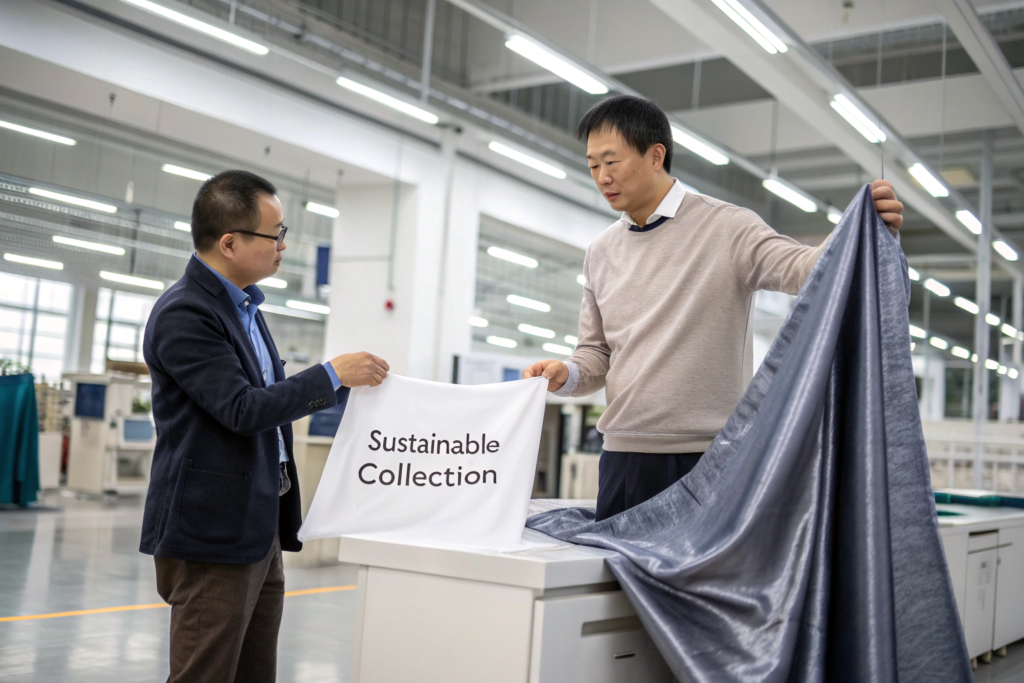
The demand for sustainability is driving fabric innovation. TENCEL™ Lyocell, made from sustainably sourced wood pulp, is becoming a favorite for scarves. It has a beautiful, silky drape, is breathable, and is produced in a closed-loop process that recycles water and solvents . It offers the luxury feel of silk with a much smaller environmental footprint. Recycled polyester (rPET), made from plastic bottles, is also popular for more casual, durable scarves . It gives waste a second life. For a buyer like Ron, offering scarves in these materials is a powerful selling point. It tells his customers that his brand cares. We have extensive experience sourcing and working with these sustainable fabrics, ensuring that the print quality on eco-friendly materials is just as sharp and vibrant as on traditional ones. For certifications and standards, the Global Recycled Standard is an essential reference.
How does fabric choice affect the print quality and drape?
This is where technical expertise matters. A print looks different on different fabrics. On a high-quality silk twill, the colors are incredibly vibrant and the details are razor-sharp. The fabric's natural sheen makes the colors glow. On a matte fabric like cotton or TENCEL, the same print will have a softer, more muted, and watercolor-like appearance. The drape is also crucial. A stiff fabric will not flow nicely around the neck. A flimsy fabric will not hold its shape. For a printed scarf to be successful, the fabric must be chosen with both the design and the end use in mind. A bold, graphic print might be perfect on a crisp, structured silk. A soft, abstract floral might be better suited to a flowing, fluid modal. Our quality control team tests every new fabric and print combination to ensure the final product meets our standards for both beauty and performance.
Conclusion
The printed scarf in 2026 is a canvas for creativity, a statement of individuality, and a reflection of broader cultural shifts. We have seen how bold digital and abstract prints are pushing the boundaries of design, while surrealist botanicals and colorized animal prints are breathing new life into classic themes. The rise of personalization offers a path to deeper customer connection, and sustainable fabrics are no longer optional but expected.
For a professional buyer, navigating these trends is about more than just picking pretty patterns. It is about understanding the technology behind the print, the story behind the material, and the desires of the end consumer. This is where a partnership with an experienced manufacturer is invaluable. At our factory in Zhejiang, we combine modern digital printing capabilities with deep knowledge of fabric and construction. Our team of experienced project managers is here to guide you from the first sketch to the final shipment. We are ready to help you create the next collection of scarves that will fly off your shelves.
To start designing your 2026 scarf collection, please contact our Business Director, Elaine, at elaine@fumaoclothing.com. Let's make something beautiful together.