Over my decades in this industry, I have seen how people live change how we manufacture. And nothing has changed lifestyles faster than the return to global travel. My clients across America and Europe, from major luggage brands to online travel retailers, are all asking for the same thing: products that do more. The modern traveler does not want a bag for this and a pouch for that. They want one item that solves three problems.
The latest trends in multi-functional travel accessories are defined by anti-theft design features integrated into stylish forms, RFID-blocking technology as a standard component, convertible and modular bag systems, and the use of ultra-lightweight, packable materials that save valuable suitcase space. The core idea is simple: do more with less.
I have watched this shift happen in our Zhejiang factory. Orders for single-purpose items are down. Orders for clever, convertible designs are up. The traveler of 2026 is smart, value-conscious, and tired of lugging around too much stuff. They want accessories that work as hard as they do. For a buyer like Ron, who supplies a diverse range of customers, understanding these trends is essential for stocking products that actually sell. At Shanghai Fumao Clothing, our design team is constantly developing new samples that anticipate these needs. Let me walk you through the specific trends dominating the travel accessory market right now.
How is anti-theft design being integrated into stylish travel accessories?
Security is the number one concern for travelers. But for years, "anti-theft" meant ugly. It meant bulky, tactical-looking bags that screamed "tourist." That has changed completely. Today, the best anti-theft features are invisible. They are built into designs that look like any other fashionable accessory.
What are the most effective anti-theft features for bags and pouches?
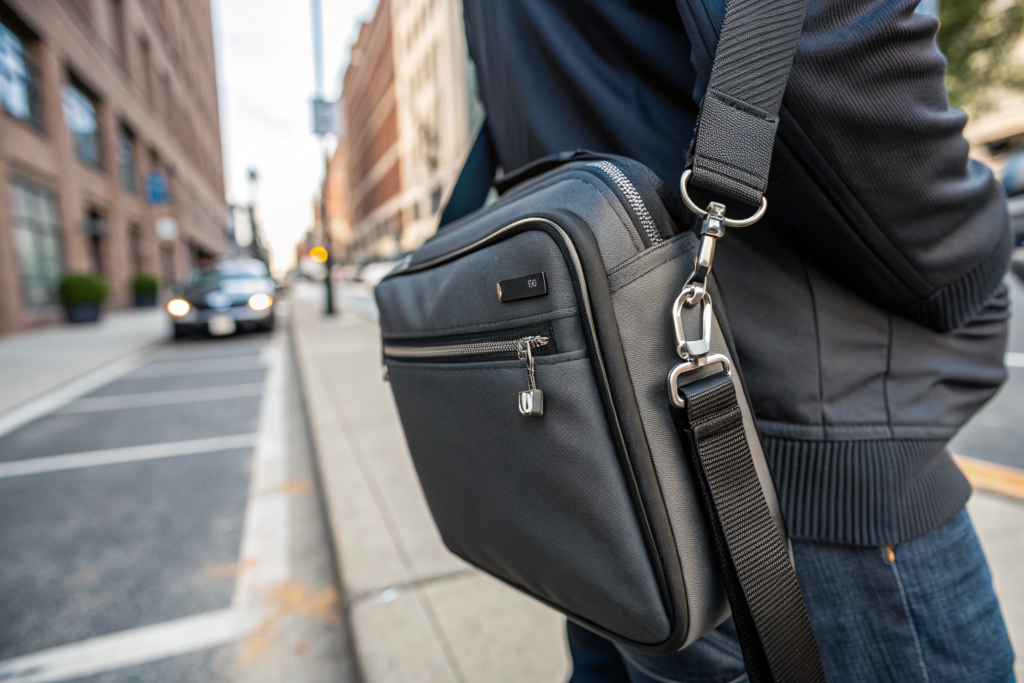
The most effective features are the ones you do not notice at first glance. Cut-resistant straps are a prime example. They look like normal nylon or leather straps, but they are reinforced with hidden steel cables or high-strength materials that cannot be sliced through with a knife . This prevents the classic "grab and run" theft where a thief cuts the strap and takes the bag. Lockable zippers are another standard feature. Small zipper pulls can be hooked together or secured with a tiny lock, making it much harder for a pickpocket to quickly open your bag in a crowd . Slash-proof fabric is also becoming more common, with materials like Dyneema or Kevlar woven into the exterior . The key is that these features add real protection without making the bag look like a bank vault.
How are hidden pockets and compartments evolving?
Hidden compartments are getting smarter. It is not just about having a secret pocket anymore. It is about where that pocket is placed. The most popular designs now feature RFID-blocking pockets located on the back panel of the bag, against the wearer's body . This is the hardest place for a thief to access. Some bags have hidden pockets inside the strap or under a magnetic flap. We are also seeing more "secret" compartments designed to hold a phone or passport right at the small of the back, where the wearer can feel any attempt to access it. The goal is to distribute valuables in multiple places so a thief cannot clean out everything with one quick move. This thoughtful design is a huge selling point for travelers who want peace of mind.
Why is RFID-blocking technology now a standard expectation?
A decade ago, almost no one knew what RFID was. Now, it is a standard question from travelers. The fear of digital pickpocketing, where someone scans your passport or credit card through your bag, is real. And the market has responded by making protection ubiquitous.
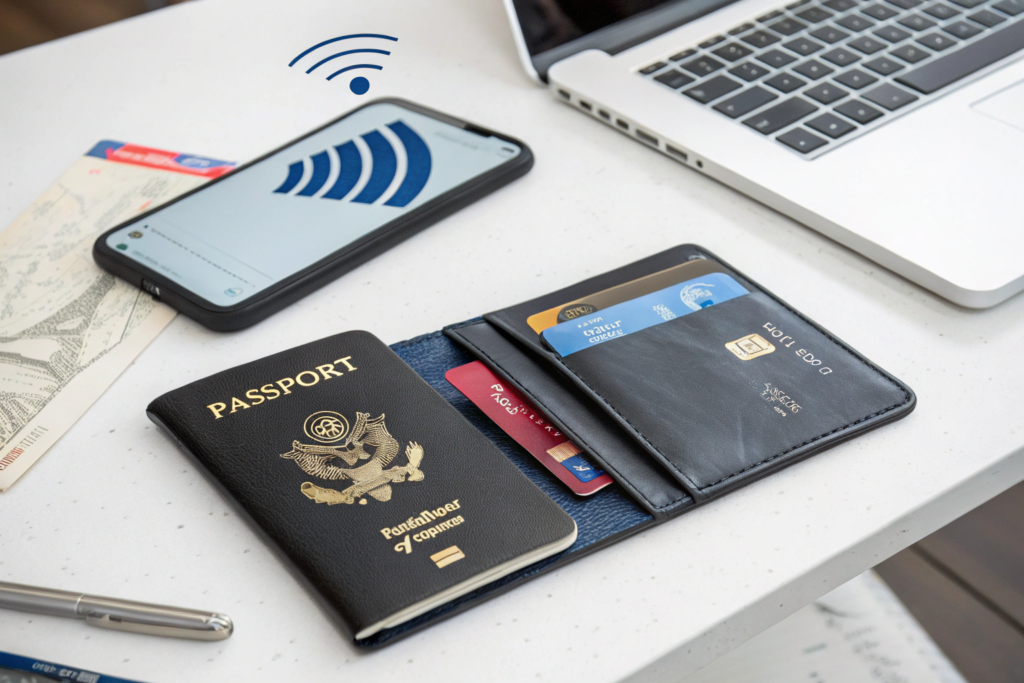
What is RFID and why do travelers need protection from it?
RFID stands for Radio-Frequency Identification. Many modern passports, credit cards, and even some IDs have a tiny chip and antenna inside them. They are designed to be scanned wirelessly for quick processing at airports or stores. The problem is that this signal can potentially be read by a thief with a scanner from a short distance, without them ever touching you . They could skim your credit card number or your passport information right out of your bag or pocket. While this type of crime is not as common as physical pickpocketing, the fear of it is very real, especially for international travelers who carry multiple important documents. Providing protection against this risk is now seen as a basic courtesy.
How is RFID protection built into different accessories?
RFID protection is no longer limited to bulky, foil-lined sleeves. It is now integrated seamlessly into a huge range of products. You can find it in the lining of a travel wallet, in a dedicated pocket of a crossbody bag, or even in a simple passport holder . The protection is usually a thin, flexible metal mesh or a special metallic-lined fabric that creates a Faraday cage, blocking the radio waves. For a buyer like Ron, specifying RFID protection in travel accessories is a simple way to add significant value. It is a feature that is easy to explain to customers and provides real peace of mind. We now produce many of our travel bags and pouches with built-in RFID-blocking compartments as a standard feature, not an expensive upgrade.
What makes convertible and modular bag designs so popular?
The modern traveler is a minimalist. They want to pack light and move fast. This has driven huge demand for bags that can change their shape and function. One bag that does the work of three is the ultimate travel companion.
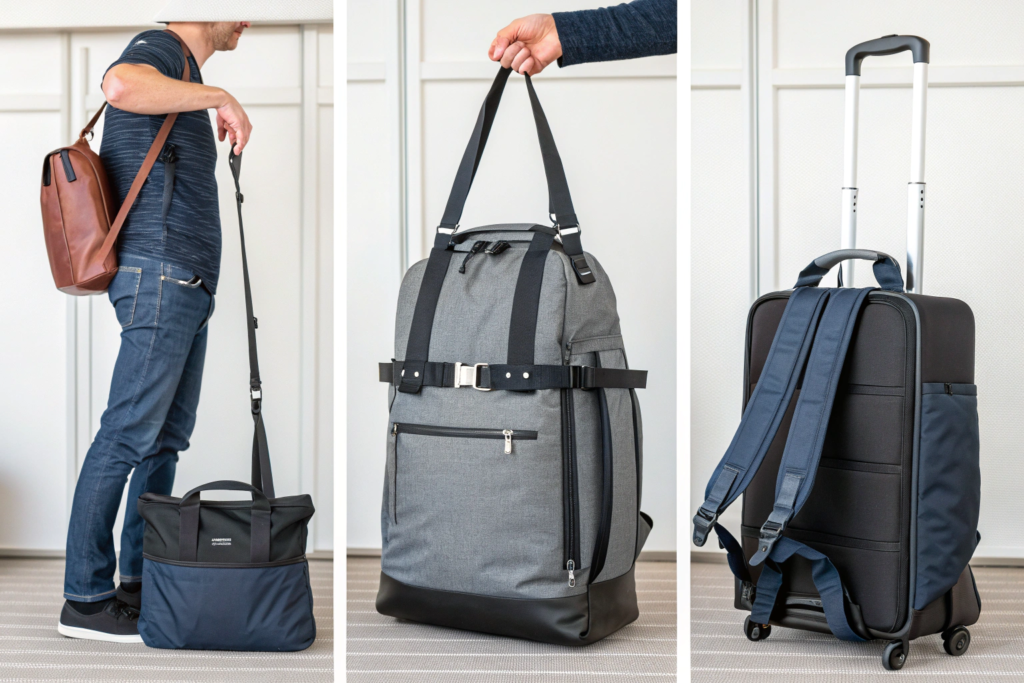
How do bags that convert from backpack to tote work?
These bags are engineering marvels. The most common design features straps that can be hidden or reconfigured. For example, a bag might have comfortable, padded backpack straps that tuck away into a hidden zippered compartment on the back. When they are tucked away, the top handles become the primary carry method, turning the bag into a stylish tote or shoulder bag . The trick is making the transition smooth and the result comfortable in both modes. The straps need to be substantial enough for backpack comfort but flexible enough to hide away without creating bulk. This requires precise design and high-quality hardware. We have seen huge demand for these from our clients, as they appeal to everyone from business travelers who need a day bag for meetings to tourists exploring a new city.
Why are "stackable" and modular accessories gaining traction?
Beyond convertible bags, the trend toward modularity is huge. This means accessories that are designed to work together as a system. Think of a small pouch that can be worn as a crossbody bag on its own, but also clips securely inside a larger tote or backpack . When you reach your destination, you can unclip the pouch and use it as your evening bag or your day pack, leaving the main bag in the hotel. This "nesting" concept saves space and adds incredible flexibility. We are also seeing "stackable" packing cubes and organizers that are designed to fit perfectly together inside a specific suitcase or bag, maximizing every inch of space. This kind of thoughtful, system-based design is what today's organized traveler is looking for.
What are the benefits of ultra-lightweight and packable materials?
Space is the ultimate luxury when you are traveling. Every cubic inch of suitcase space is precious. This has driven a revolution in materials. Travelers want accessories that take up almost no room until they are needed.

What are "packable" accessories and how do they save space?
"Packable" or "stuffable" accessories are items designed to fold down into their own integrated pouch, becoming incredibly small and flat . The most common example is the packable tote or daypack. It is made of super-lightweight nylon or polyester, often with a ripstop weave for durability. When not in use, it can be folded into a small attached pouch, sometimes no bigger than a fist. This allows a traveler to carry a spare bag "just in case" without sacrificing precious luggage space. They are perfect for shopping trips, beach days, or as a backup if your main bag breaks. The key is finding the balance between being ultralight and being strong enough to actually carry groceries or souvenirs. We use high-denier ripstop fabrics to ensure our packable bags are both light and durable.
Which materials are best for lightweight yet durable travel gear?
The go-to material for lightweight travel gear is nylon, specifically ripstop nylon . This fabric has a special reinforcing grid pattern that prevents tears from spreading. It is incredibly strong for its weight. For a more premium feel, recycled nylon made from materials like discarded fishing nets (Econyl®) is becoming very popular, combining performance with sustainability . Silnylon, which is nylon coated with silicone, is another favorite. It is waterproof, extremely lightweight, and packs down very small. For items that need a bit more structure, like a lightweight backpack, we might use a combination of nylon and mesh. The choice of zippers and hardware is also critical. We use lightweight plastic zippers and minimalist hardware to keep the overall weight down without sacrificing functionality.
Conclusion
The world of travel accessories is changing fast, driven by the needs of the modern, savvy traveler. We have explored how anti-theft features are becoming stylish and invisible. We have seen how RFID-blocking technology is now a standard expectation, not a premium extra. We have looked at the clever engineering behind convertible and modular bag systems that do the work of three. And we have marveled at the space-saving magic of ultra-lightweight and packable materials.
For a professional buyer like Ron, these trends point to a clear consumer desire: efficiency without sacrifice. Travelers want to be safe, organized, and prepared, but they do not want to be weighed down. They want products that are smart, beautiful, and functional.
At our factory in Zhejiang, we have embraced this challenge. Our design team is constantly innovating, finding new ways to integrate security, technology, and versatility into sleek, modern designs. Our experienced project managers understand the needs of the global travel market and are ready to help you create a collection that travelers will love. If you are ready to develop a line of multi-functional travel accessories that meets the demands of today's explorer, we are here to help.
To discuss your next travel collection, please contact our Business Director, Elaine, at elaine@fumaoclothing.com. Let's create the future of travel together.