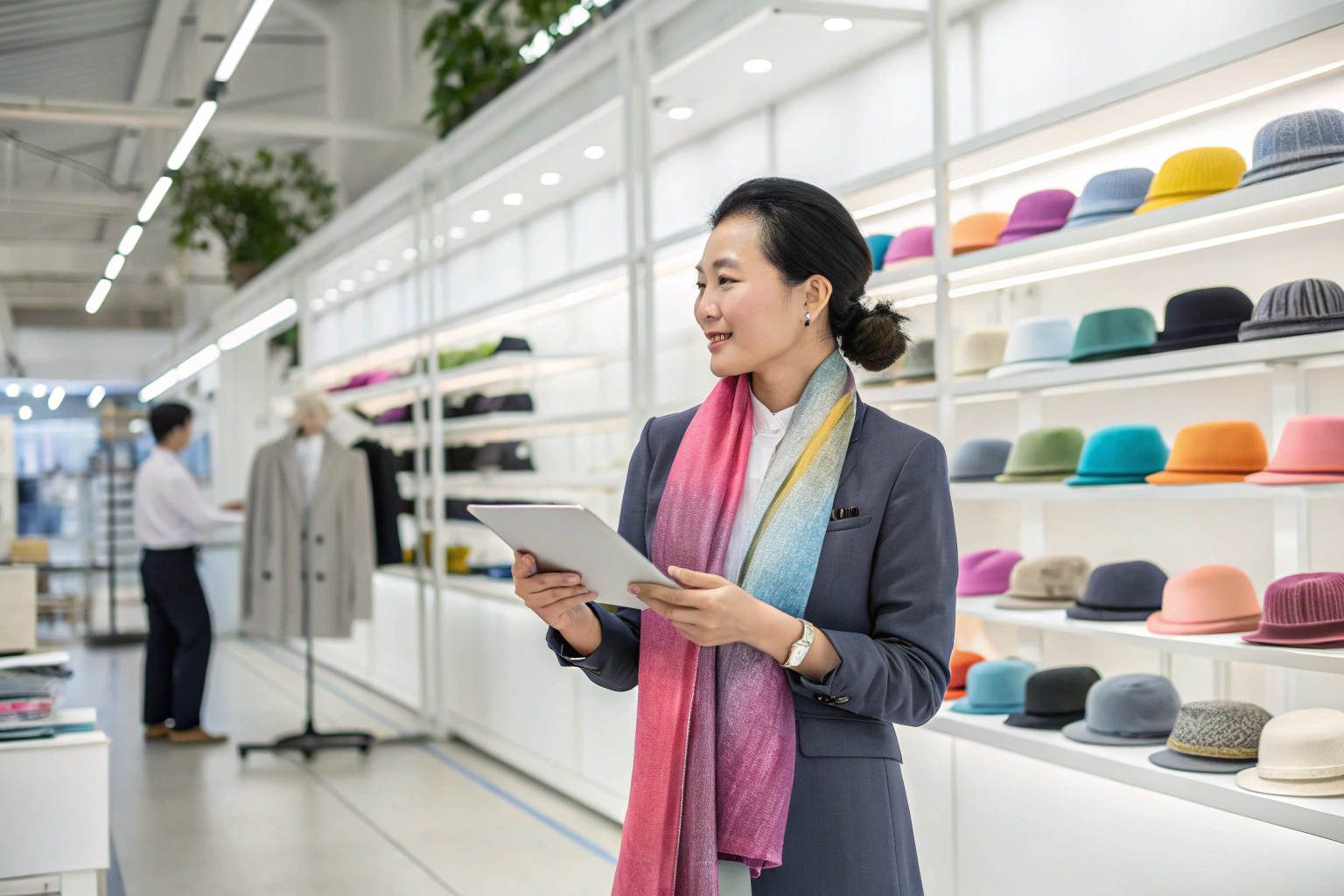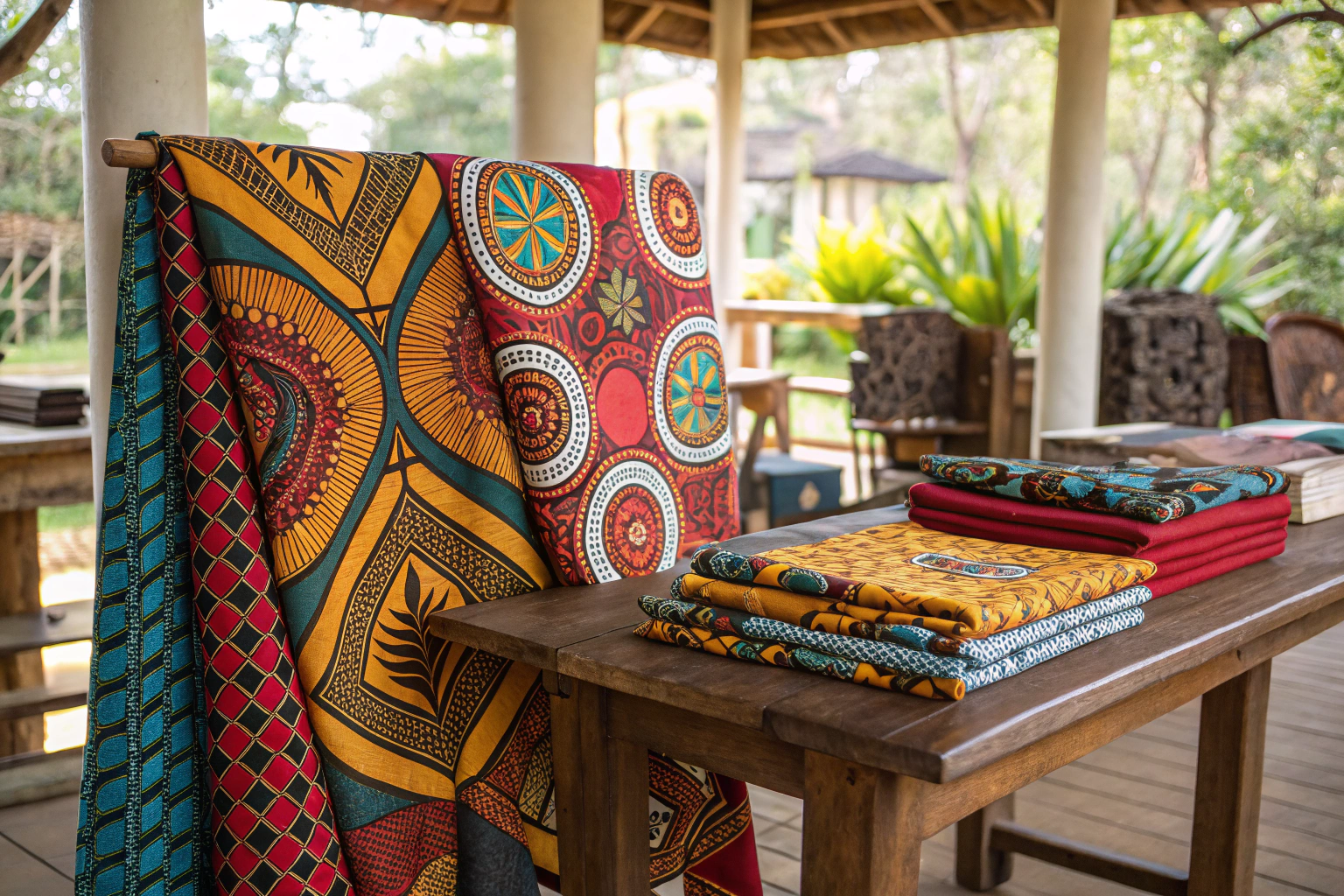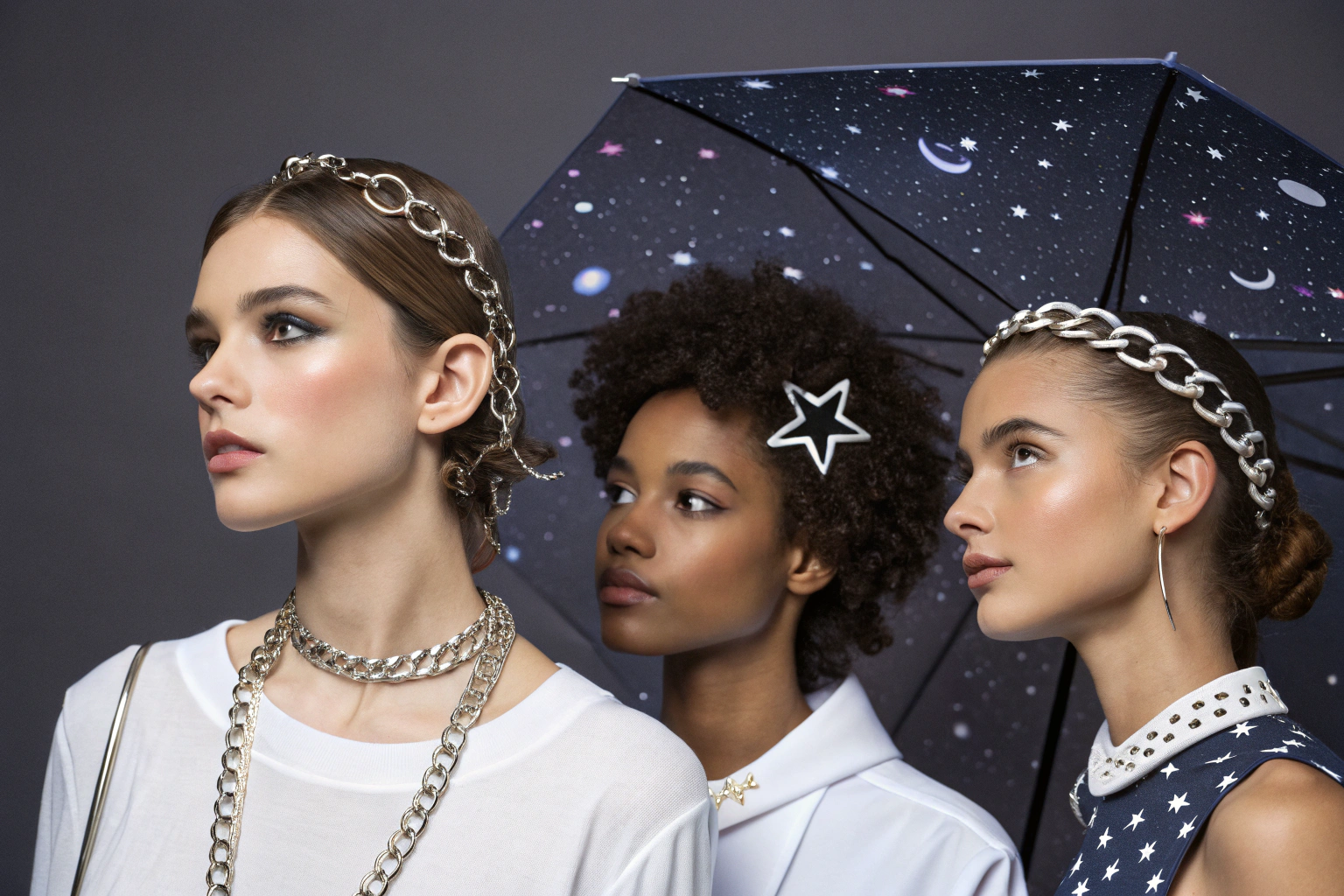
I was at a trade show in New York last year when a buyer from a major department store walked up to our booth. She looked at our collection of hair accessories, scarves, and belts, and then she asked me a question that stopped me cold. "What do you have that's cosmic?" she said. "My customers are obsessed with anything related to space right now."
At first, I thought she meant novelty items, maybe some star-shaped hair clips for kids. But as we talked, I realized she was describing something much bigger. A real trend was emerging. Adults, fashion-forward consumers, were actively looking for accessories that referenced the cosmos, the stars, and the mystery of space. From subtle celestial motifs to bold galaxy prints, space was becoming a major theme in fashion.
That conversation sent me back to our design studio in Zhejiang province with a new mission. We started researching, sketching, and developing. We looked at what was showing up on runways, what influencers were wearing, and what was selling in key markets like the US and Europe. What we found was fascinating. Space and astronomy inspiration was everywhere, but it was showing up in ways that were more sophisticated and varied than I ever expected.
At Shanghai Fumao Clothing, we've always believed that staying ahead of trends is how we serve our clients best. Whether you're sourcing for a major supermarket chain, a fashion brand, or an online store, knowing what's coming next helps you make smarter buying decisions. Let me share what we've learned about the latest space-inspired accessory trends and how you can bring them to your customers.
What Celestial Motifs Are Dominating Accessory Designs?
When we started tracking this trend, I noticed something interesting. It wasn't just about putting a picture of a rocket ship on a t-shirt. The motifs that were really connecting with consumers were more timeless, more symbolic. They referenced the universe in ways that felt both ancient and completely modern at the same time.
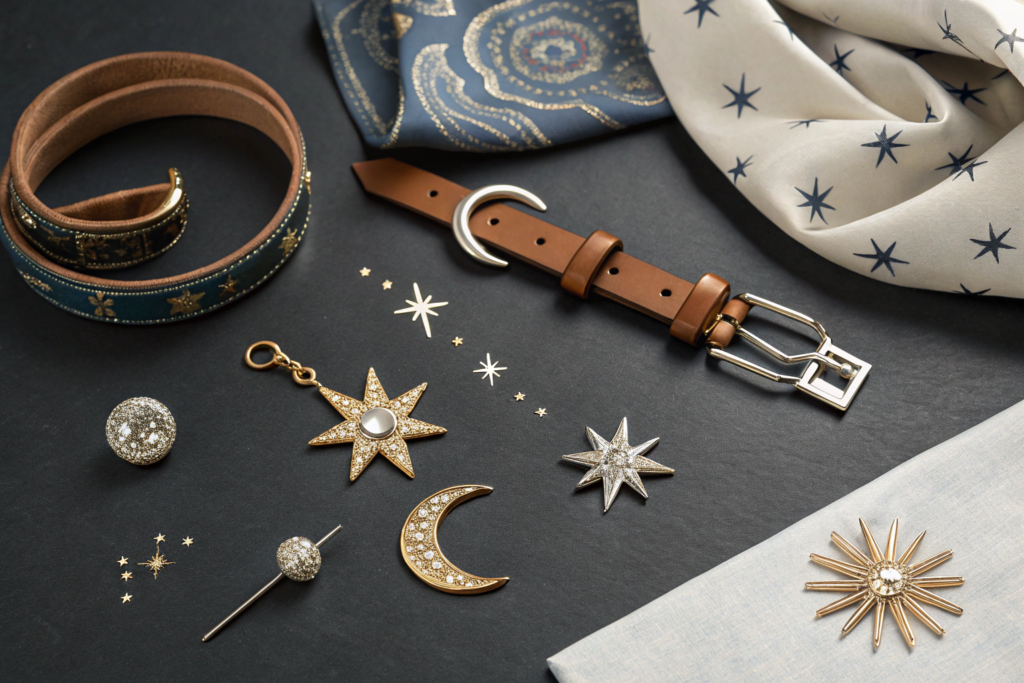
The most popular motifs fall into a few clear categories. The sun and moon appear constantly, but not in a cartoonish way. Think elegant silhouettes, mixed metals, and artistic interpretations. Stars are everywhere, from simple five-point shapes to more complex astrological symbols. Constellations, especially popular ones like Orion or the Big Dipper, are showing up on scarves and hair accessories. And planetary motifs, particularly the distinctive rings of Saturn, have become a favorite for jewelry and belt buckles.
What's driving this, I think, is a desire for meaning. People want accessories that tell a story or connect them to something bigger than themselves. Celestial symbols have that power. They're recognizable but also personal.
Why are zodiac signs so popular in accessory design?
Zodiac signs have exploded in popularity, and I don't see this slowing down anytime soon. There's something deeply personal about wearing your astrological sign. It's a way of expressing identity without saying a word.
For accessory designers, zodiac signs offer incredible versatility. You can make them subtle, like a small engraved charm on a necklace, or bold, like an embroidered patch on a beanie hat. They work across price points too. A simple zodiac hair clip can retail affordably, while a hand-embroidered zodiac scarf can command luxury prices.
We've also noticed that zodiac collections sell well as sets. Buyers love offering all twelve signs, knowing that customers will seek out their own. This creates repeat business and encourages multiple purchases. For retailers, that's a powerful dynamic. The Astrological Association offers resources on zodiac symbolism that can inspire design directions.
How are constellations being incorporated into accessories?
Constellations require a more delicate touch than single stars or moons. The challenge is representing a pattern of stars in a way that's recognizable but still aesthetically pleasing.
We're seeing constellations used in several creative ways. On scarves and shawls, they appear as subtle all-over prints, where the stars are slightly raised or metallic against a dark background. On hair clips and barrettes, constellations are created with tiny crystals or beads arranged in the correct pattern. Some designers are even using negative space, cutting out the constellation shape from solid materials.
The most sophisticated applications connect constellations to their mythological stories. A scarf might show the outline of Cassiopeia along with subtle imagery related to the queen from Greek mythology. This adds layers of meaning that appeal to consumers looking for more than just decoration. For accurate constellation maps and mythology, resources like International Astronomical Union provide authoritative reference material.
What Materials and Finishes Define the Space Aesthetic?
The motifs are only half the story. The materials and finishes used to create space-inspired accessories are just as important. I've learned that the right material choices can transform a simple star pendant into something that feels truly cosmic.
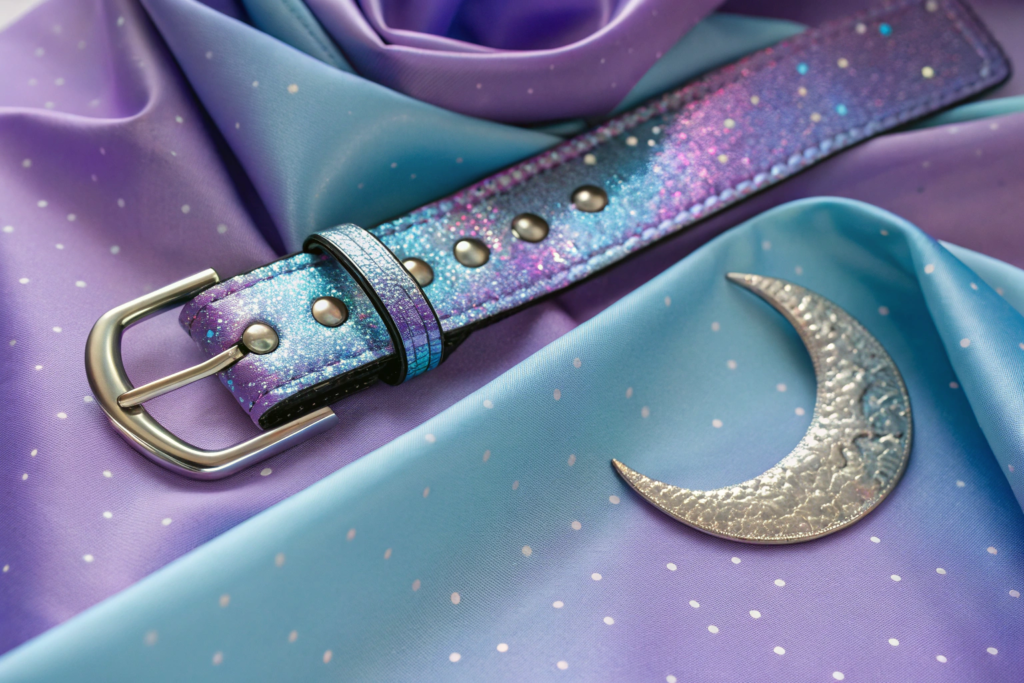
The space aesthetic calls for materials that evoke the mystery and wonder of the cosmos. This means playing with light, texture, and color in specific ways. Metallic finishes are essential, but they're not the shiny, polished metals of traditional jewelry. Instead, we're seeing brushed metals, oxidized silvers, and even textured surfaces that mimic the cratered surface of the moon.
What role do metallic and iridescent finishes play?
Metallic finishes do something fundamental to how we perceive an accessory. They catch the eye. They reflect light. They feel special. In space-inspired designs, metallics serve a dual purpose. They represent the actual metals found in stars and planets, and they create a sense of preciousness.
Gold and silver are the classics, but we're seeing strong interest in rose gold for celestial pieces, as well as more unusual metals like copper and bronze. The key is in the finish. High-polish metals feel modern and sleek. Brushed or matte metals feel more organic and textured, almost like raw meteorite.
Iridescent finishes are a newer development, made possible by advances in coating technology. These finishes create a rainbow effect that changes with movement and light. They're perfect for representing the colorful gas clouds of nebulae or the shimmer of distant galaxies. When applied to hair clips or belt buckles, they create pieces that feel alive and dynamic. Companies like Rhodia are at the forefront of developing these specialty coating materials.
How are dark colors and galaxy prints being used?
The color palette for space-inspired accessories has shifted dramatically. Early space-themed products relied on basic black with white stars. Today's palette is much richer and more sophisticated.
Deep navy blues, midnight purples, and rich burgundies form the foundation. These colors evoke the night sky but feel luxurious rather than gimmicky. Against these dark bases, designers place brighter accents, silver stars, gold moons, or even pops of neon for a more modern feel.
Galaxy prints have evolved too. They're no longer just random splatters of color. Today's galaxy prints show real sophistication, with carefully blended colors that suggest depth and distance. Some incorporate actual astronomical imagery, like the famous Pillars of Creation or the Whirlpool Galaxy. These prints appear on scarves, umbrellas, and even fabric hair accessories. For accurate astronomical imagery that can inspire designs, NASA's Image Gallery is an incredible resource.
What Accessory Categories Are Embracing the Space Trend?
One of the most interesting things we've observed is how broadly the space trend has spread across accessory categories. It's not just one type of product. From head to toe, consumers are finding ways to incorporate celestial elements into their style.
This breadth is good news for buyers. It means you can build entire collections around a space theme, offering coordinated products that encourage multiple purchases. A customer might come in for a zodiac necklace and leave with matching hair clips, a scarf, and even an umbrella.
How are hair accessories featuring space themes?
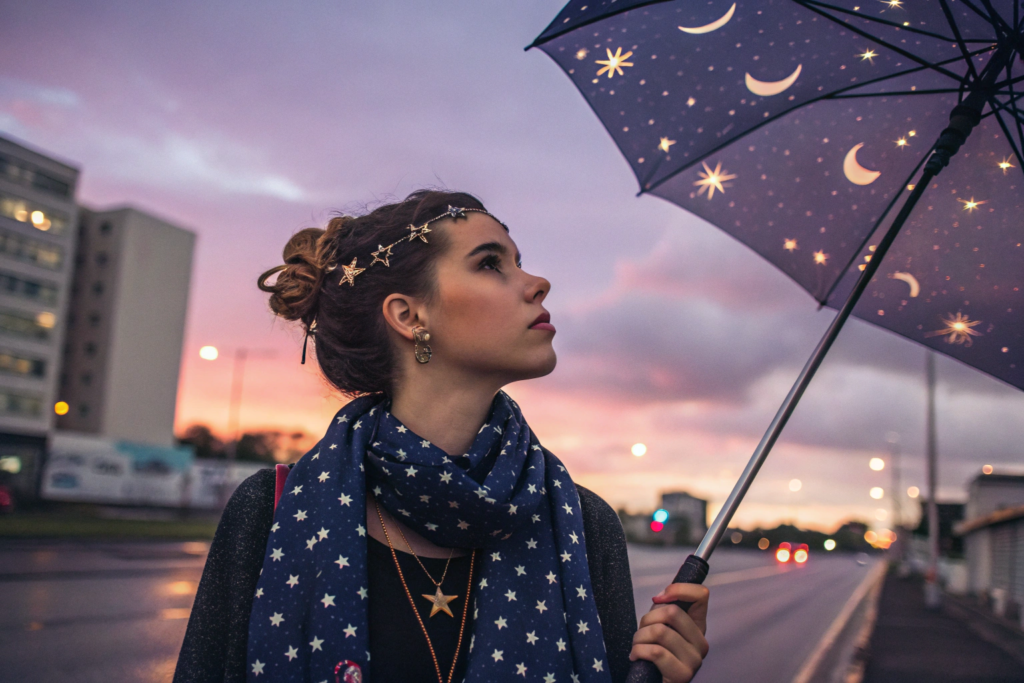
Hair accessories are perhaps the most accessible entry point for the space trend. They're affordable, easy to style, and appeal to a wide age range.
For younger consumers, we're seeing playful star-shaped hair clips in metallic finishes, often sold in sets of multiple sizes. These can be worn alone for a subtle touch or clustered for a more dramatic effect. For teens and young adults, holographic hair ties and scrunchies in galaxy prints are extremely popular.
For more mature consumers, the approach is subtler. Think elegant barrettes with a single constellation picked out in small crystals, or simple headbands in deep space blues with a metallic accent. Hair pins shaped like crescent moons or tiny stars offer a way to participate in the trend without committing to a bold statement piece.
The beauty of hair accessories is their versatility. They can be designed for mass market appeal or positioned as luxury items with precious materials. For trends in hair accessory design, Cosmopolitan's Fashion Section regularly features emerging styles.
What space-inspired scarf and wrap designs are trending?
Scarves and wraps offer a larger canvas for space-inspired designs, which allows for more detailed and artistic expressions. This category has seen some of the most creative work in the space trend.
Galaxy-print scarves remain consistently popular. The best ones use high-quality printing that captures the depth and complexity of actual space photography. Colors blend smoothly, and the print holds up well to wear and washing. These scarves work as statement pieces that elevate a simple outfit.
For a more subtle approach, we're seeing scarves with all-over constellation patterns. The stars might be woven into the fabric using metallic threads, creating a subtle shimmer that catches light without being obvious. These pieces work for professional settings where a full galaxy print might feel too casual.
Another growing category is wraps and shawls in solid space colors, deep navy or burgundy, with embroidered celestial accents. A single embroidered moon near the corner, or a scattering of tiny stars along the edge, adds interest while maintaining elegance. For inspiration, Vogue Runway frequently features designer collections with celestial influences.
How Is Technology Influencing Space-Inspired Accessories?
Technology is changing how we design and produce accessories, and space-inspired products are at the forefront of these changes. From 3D printing to smart materials, new technologies are enabling designs that would have been impossible just a few years ago.
At Shanghai Fumao Clothing, we've invested in understanding these technologies because they offer real advantages for our clients. They allow us to create more complex designs, test ideas faster, and produce smaller batches for testing new concepts. For space-inspired accessories, where innovation and novelty are highly valued, this technological capability is a competitive advantage.
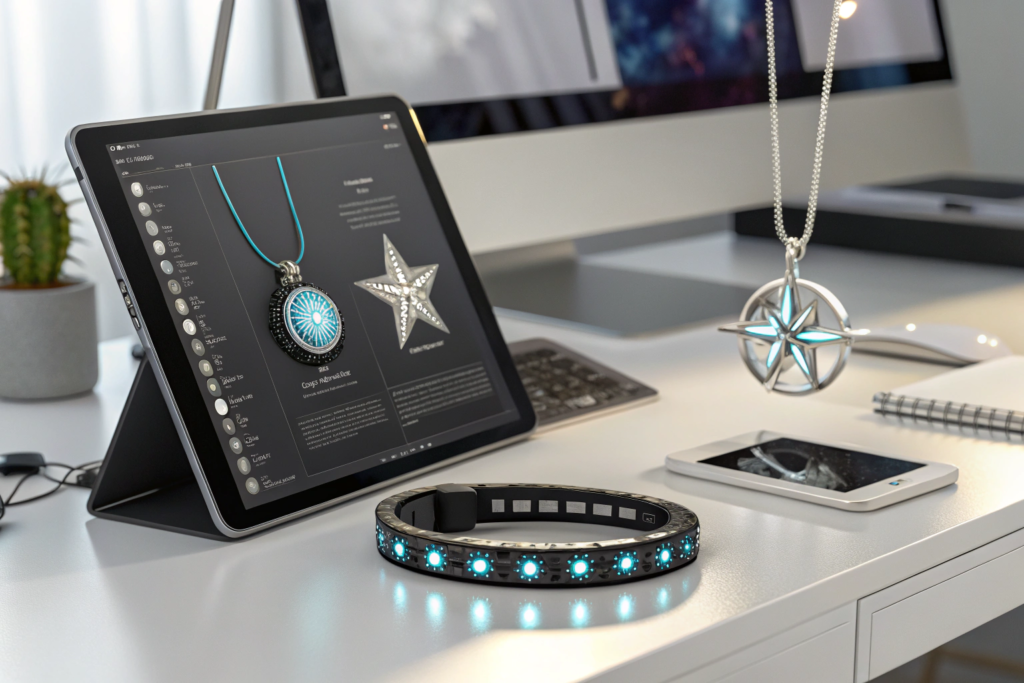
The most exciting developments are in materials that interact with light and environment in new ways. Glow-in-the-dark materials have been around for a while, but today's versions are brighter, longer-lasting, and available in more colors.
What innovative materials are emerging for space themes?
The material innovations I'm most excited about are those that create genuine interactivity. Glow-in-the-dark accessories, when done well, feel magical. The key is using high-quality phosphorescent materials that charge quickly and glow for hours. We're using these in hair clips, pendant necklaces, and even as accents on umbrella handles.
Photochromic materials that change color in sunlight are another exciting development. Imagine a scarf that's a deep purple indoors but reveals a constellation pattern when you step outside. These materials create surprise and delight, which drives social media sharing and word-of-mouth marketing.
Reflective materials, traditionally used for safety gear, are being reimagined for fashion. A belt or bag with reflective star patterns creates a subtle daytime look that transforms into something dramatic when light hits it at night. This duality appeals to consumers who want versatility from their purchases. For the latest in smart textiles, publications like Textile Future track emerging technologies.
How is 3D printing changing celestial accessory design?
3D printing has opened up possibilities that traditional manufacturing couldn't achieve. For space-inspired accessories, this means more complex geometries, more intricate details, and faster iteration.
With 3D printing, we can create jewelry with internal structures that would be impossible to cast. Think of a pendant that contains a three-dimensional representation of a constellation, with stars floating at different depths within a transparent material. Traditional manufacturing would require assembling multiple pieces. 3D printing creates it as a single object.
We're also using 3D printing for prototyping. When a client wants to test a new celestial design, we can produce samples in days rather than weeks. This speed allows for more experimentation and refinement before committing to large-scale production. For smaller brands or limited edition collections, 3D printing even makes direct production viable. Formlabs is one company at the forefront of accessible 3D printing technology for jewelry and accessories.
What Market Segments Are Driving Demand for Space Accessories?
Understanding who is buying space-inspired accessories is just as important as understanding the designs themselves. Different market segments have different preferences, different price sensitivities, and different reasons for buying. I've learned that successful collections speak to specific segments rather than trying to appeal to everyone.
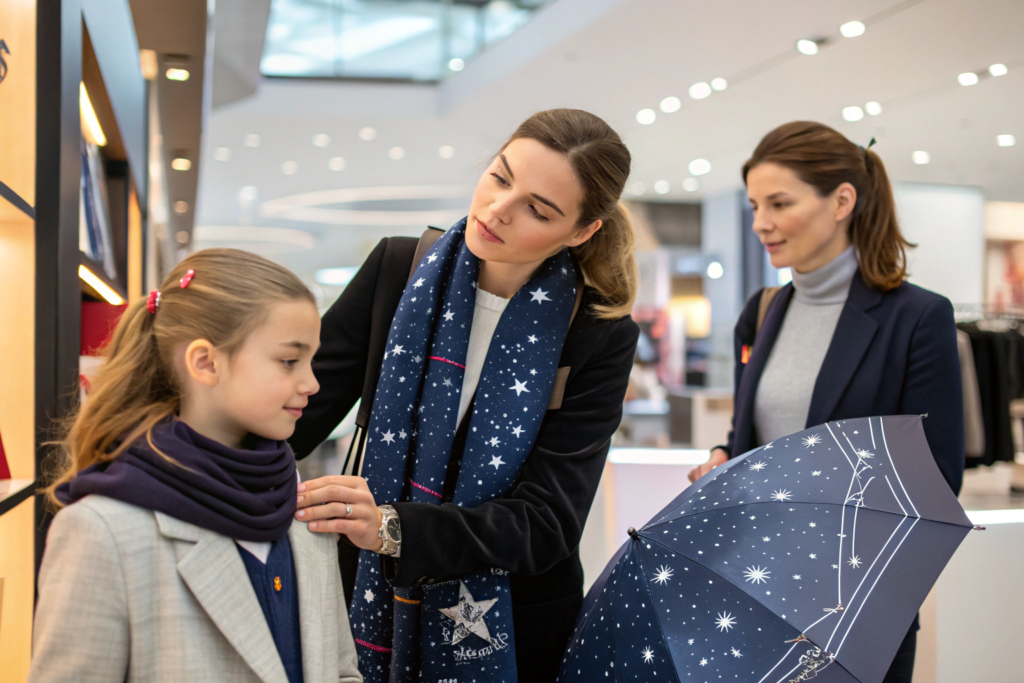
The space trend crosses age boundaries in interesting ways. Young children love the whimsy of stars and moons. Teenagers and young adults embrace the astrological and personal identity aspects. Mature consumers appreciate the timeless elegance of celestial motifs and the connection to something larger than themselves.
How are different age groups responding to space themes?
Young children, roughly ages 4 to 10, respond to the playful, colorful side of space. They want bright galaxy prints, friendly star characters, and accessories that feel like costume pieces. For this group, durability matters less than visual appeal, and price points need to be accessible for gift purchases.
Teenagers and young adults, ages 13 to 30, are the core demographic for the astrological angle. They want zodiac-specific pieces that feel personal and authentic. Quality matters more to this group than to children, but they're still price-sensitive. They're also heavily influenced by social media, so designs that photograph well have an advantage.
Mature consumers, ages 35 and up, respond to the elegance and timelessness of celestial motifs. They want well-made pieces in quality materials that will last. Subtlety is important to this group. They might choose a scarf with an embroidered constellation rather than a bold galaxy print. They're willing to pay more for craftsmanship and durability. For demographic research, Pew Research Center offers detailed analysis of consumer segments and their preferences.
What's driving space accessory demand in different regions?
Regional differences matter in how space themes are received. In the United States, we see strong demand for NASA-branded and space exploration-themed accessories. The American space program has cultural significance, and products referencing it tap into feelings of pride and nostalgia.
In Europe, the trend leans more toward the mystical and astrological. Zodiac signs, moon phases, and ancient celestial symbolism resonate strongly. European consumers often prefer more subtle, artistic interpretations of space themes rather than literal space imagery.
In Asia, particularly in markets like Japan and South Korea, space accessories often blend with other popular aesthetics. Kawaii culture influences cute interpretations of stars and planets. Minimalist Japanese design influences clean, simple celestial pieces. And K-pop fashion drives bold, statement-making space accessories for younger consumers.
Understanding these regional differences helps buyers tailor their selections. What works for a US supermarket chain might not work for a European boutique. At Shanghai Fumao Clothing, we help our clients navigate these nuances to select products that will perform in their specific markets. For global trend analysis, WGSN provides comprehensive regional forecasting.
Conclusion
The space and astronomy trend in accessories is more than a passing fad. It taps into something fundamental about how people connect to the universe around them. Whether through personal zodiac signs, the timeless beauty of celestial motifs, or the wonder of galaxy prints, consumers are finding meaning and joy in space-inspired designs.
What excites me most about this trend is its versatility. It works across every accessory category we produce, from hair clips to scarves to umbrellas. It appeals to every age group and demographic. It can be executed at every price point, from affordable fashion to luxury goods. And it continues to evolve, with new materials and technologies opening up possibilities we haven't even imagined yet.
At Shanghai Fumao Clothing, we've embraced this trend wholeheartedly. Our design team is constantly developing new celestial collections, our quality team ensures that specialty finishes meet our high standards, and our project managers help clients select the right products for their specific markets. We've seen firsthand how space-inspired accessories can energize a product line and connect with consumers in meaningful ways.
If you're considering adding space-inspired accessories to your collection, or if you have questions about how to execute this trend for your specific market, I'd love to help. Please reach out to our Business Director, Elaine, at elaine@fumaoclothing.com. Let's explore the cosmos together and create something your customers will love.