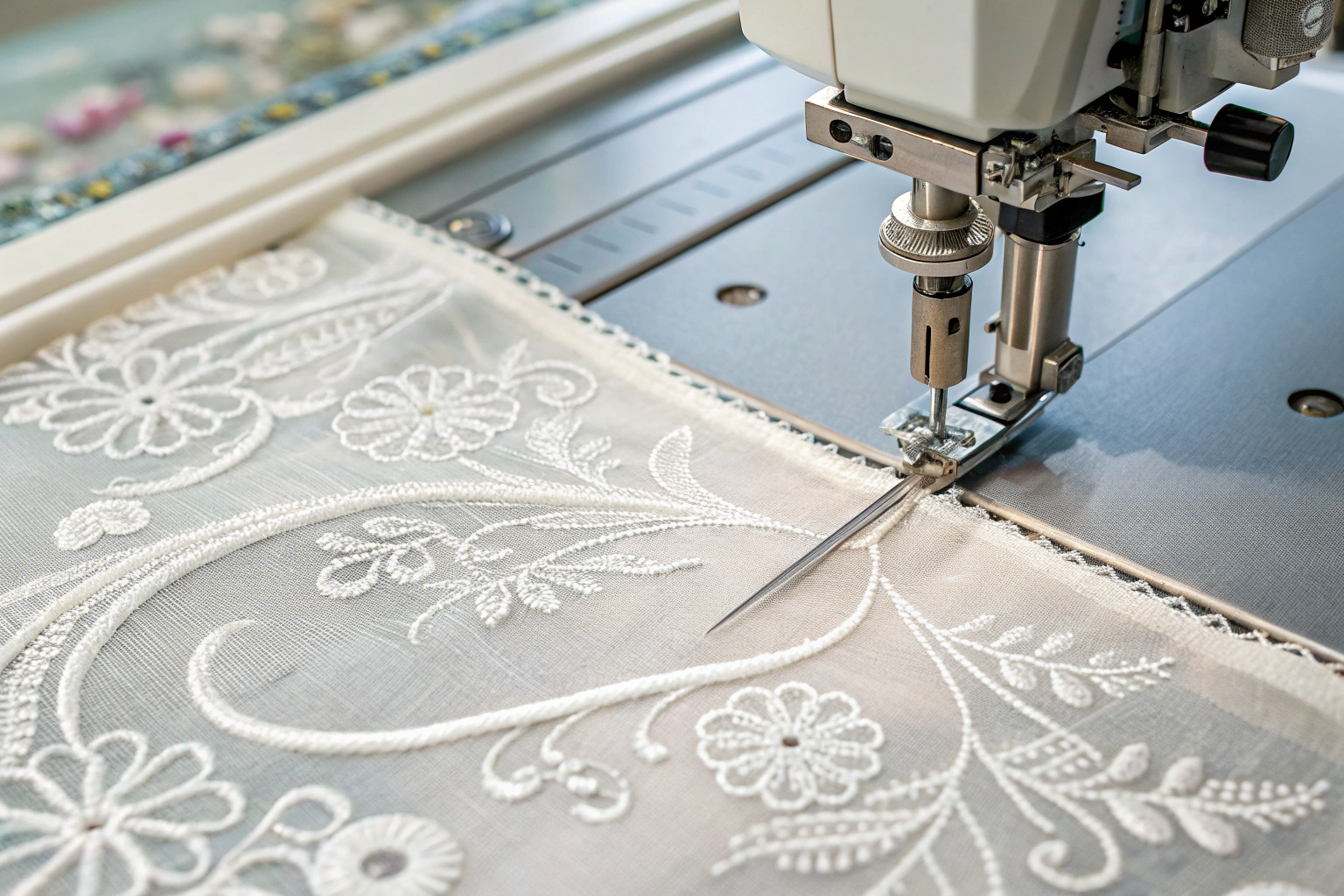
I've been in this business for decades, and I can tell you that embroidering on delicate fabrics is one of the most challenging tasks in textile decoration. A beautiful, intricate design can be ruined in an instant if the fabric puckers, tears, or gets pulled by the needle. Silk, organza, chiffon, fine lace—these materials require a completely different approach than sturdy cotton or denim.
But the demand for embroidered designs on delicate fabrics is higher than ever. Consumers love the look of a delicate floral embroidery on a sheer scarf, or a subtle logo on a luxury silk blouse. And thanks to advances in digital embroidery technology, it's now possible to achieve results that were unimaginable just a few years ago.
Buyers like Ron, who are sourcing high-end, embroidered accessories, need to understand these techniques. They need to know what's possible and what to look for in a manufacturing partner. At Shanghai Fumao Clothing, we have invested heavily in the latest digital embroidery technology and have trained our team in the specialized techniques required for delicate fabrics. In this post, I'll share the latest techniques for digital embroidery on delicate fabrics.
Why Is Embroidering On Delicate Fabrics So Challenging?
Before we discuss the solutions, it's important to understand the unique challenges posed by delicate fabrics. These materials are lightweight, often loosely woven, and can be easily damaged. The very process of embroidery—piercing the fabric with a needle thousands of times—can be destructive if not done with extreme care.
The key challenges are:
- Puckering: The fabric can gather and pucker around the embroidery, ruining the smooth, flat appearance.
- Tearing: The needle can tear the delicate fibers, creating holes or runs in the fabric.
- Strike-Through: The backing or stabilizer can show through the fabric, especially on sheer materials.
- Fabric Distortion: The tension of the embroidery threads can pull and distort the weave of the fabric.
- Hopping Damage: The presser foot of the machine can leave marks or damage the fabric.
Overcoming these challenges requires a combination of specialized equipment, advanced software, and skilled operators. For more on the technical aspects of embroidery, resources like the Embroidery Trade Association are excellent.
What types of delicate fabrics are most commonly embroidered?
- Silk: A natural protein fiber with a beautiful luster. It is strong but can be easily marked and is prone to puckering.
- Chiffon: An extremely lightweight, sheer, plain-woven fabric, often made from silk or polyester. It is very delicate and can be easily torn.
- Organza: A thin, plain-weave, sheer fabric, similar to chiffon but crisper and stiffer. It holds its shape well but is prone to fraying and tearing.
- Georgette: A sheer, lightweight, crinkled fabric, similar to chiffon but with a more textured surface.
- Lace: An openwork fabric, often delicate and intricate. The open structure makes it very challenging to embroider without damaging the existing pattern.
- Fine Cotton Voile and Lawn: Lightweight, semi-sheer cotton fabrics that are soft and comfortable but can be prone to puckering.
- Velvet: A luxurious fabric with a soft, raised pile. Embroidery on velvet is challenging because the pile can be crushed by the machine's presser foot.
Each of these fabrics requires a slightly different approach and specialized techniques.
What Are The Key Technological Advances In Digital Embroidery?
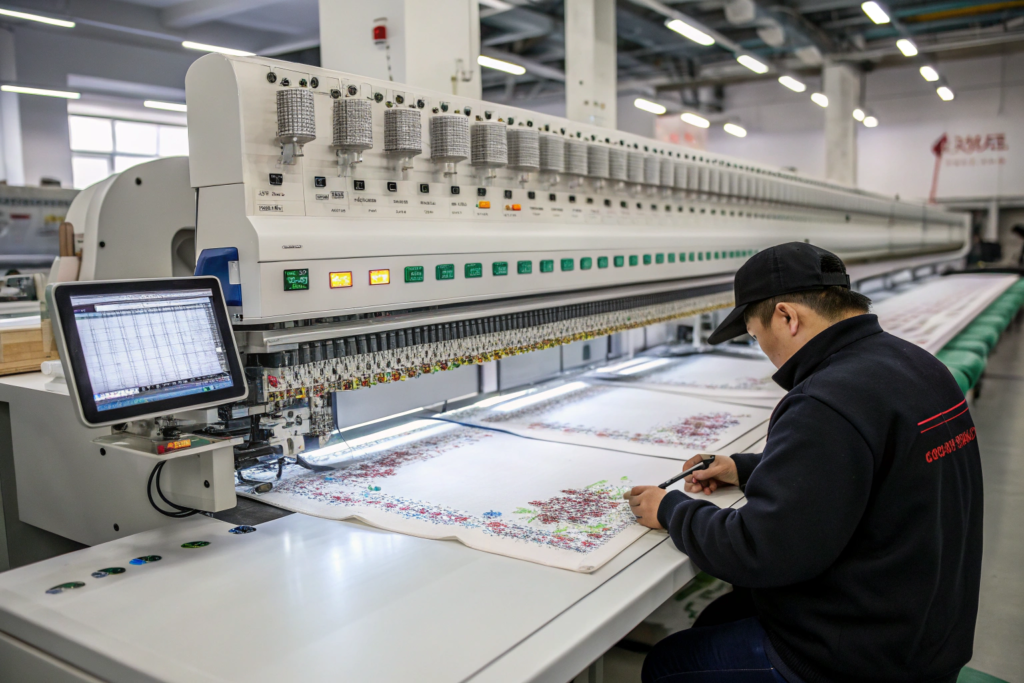
The latest digital embroidery machines are a far cry from the mechanical machines of the past. They are sophisticated, computer-controlled systems that offer unprecedented precision and control. These technological advances are what make embroidering on delicate fabrics possible.
At our factory, we use state-of-the-art machines from leading manufacturers like Tajima, Barudan, and Happy. These machines give us the control we need to handle the most challenging materials.
What is the role of specialized needles and threads?
The choice of needle and thread is critical for delicate fabrics.
- Needles: Standard embroidery needles can be too large and cause excessive damage. For delicate fabrics, we use:
- Sharp Needles: These have a very fine, sharp point that pierces the fabric cleanly, minimizing damage. They are often used for tightly woven fabrics like silk.
- Ball Point Needles: These have a slightly rounded point that pushes between fibers rather than cutting them. They are ideal for knit fabrics and some delicate wovens, as they are less likely to cause runs or tears.
- Very Fine Needle Sizes: We use the smallest needle size appropriate for the thread and fabric, often sizes 60/8 or 65/9.
- Thread: The thread must also be chosen carefully.
- Fine Count Threads: Using a finer thread (like 60-weight or 75-weight) reduces the bulk of the embroidery and puts less stress on the fabric.
- High-Quality Threads: Using high-quality, smooth threads (like rayon or polyester) reduces friction and the risk of the thread breaking or damaging the fabric.
The right needle and thread combination is the first line of defense against fabric damage.
How does software optimization improve results on delicate fabrics?
Modern digital embroidery is driven by sophisticated software. This software is not just for creating designs; it's also for optimizing how those designs are stitched. This is where the magic happens for delicate fabrics.
- Stitch Density Control: The software allows us to precisely control the density of the stitches. For delicate fabrics, we often need to reduce stitch density to prevent the fabric from becoming too stiff or from puckering.
- Underlay Stitches: Underlay is a series of stitches that are placed down before the main design. They stabilize the fabric and provide a foundation for the top stitches. The software allows us to choose the right type and density of underlay for the specific fabric.
- Pull Compensation: Embroidery stitches can pull the fabric slightly. The software can compensate for this by adjusting the stitch path, ensuring the final design has the correct shape and size.
- Stitch Sequencing: The order in which stitches are sewn can affect the fabric. The software can optimize the stitch sequence to minimize distortion and puckering.
- Digitizing for Delicate Fabrics: A skilled digitizer can create designs specifically for delicate fabrics, avoiding long stitches that can pull, sharp angles that can tear, and areas of high density that can cause stiffness.
Software optimization is perhaps the most important tool in our arsenal for delicate fabric embroidery.
What Are The Specialized Techniques For Stabilizing Delicate Fabrics?
Stabilization is the key to preventing puckering and distortion. For sturdy fabrics, a simple cut-away or tear-away stabilizer might suffice. But for delicate fabrics, we need more specialized techniques. The goal is to support the fabric during embroidery without damaging it or leaving a visible trace afterward.
At our factory, we use a variety of stabilization techniques depending on the fabric and the design. The choice of stabilizer is a critical decision.
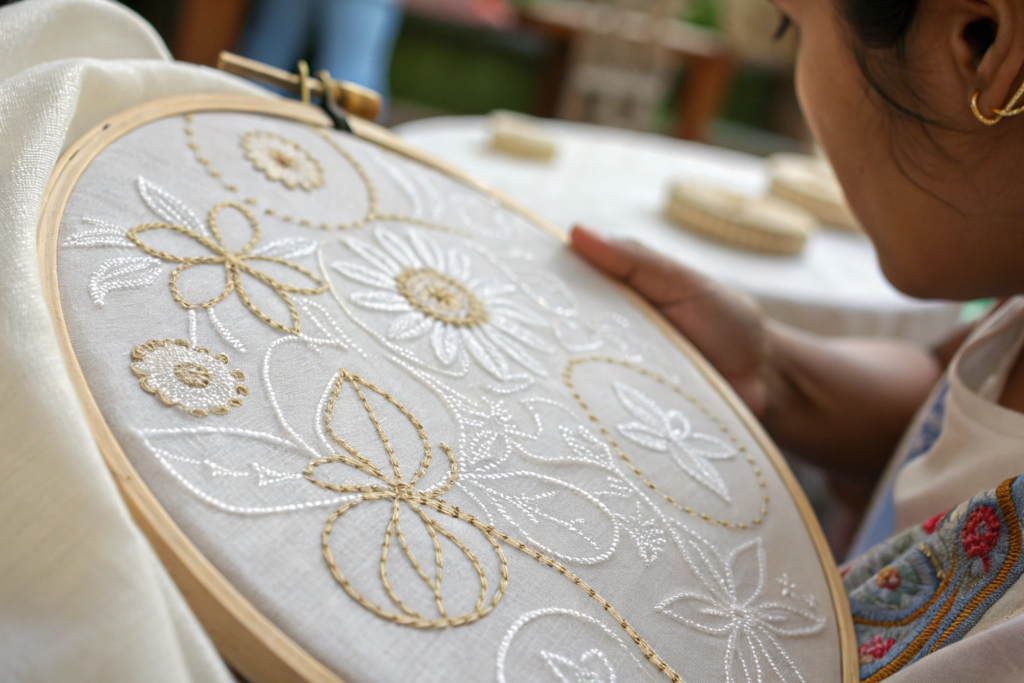
What are the different types of stabilizers for delicate fabrics?
- Water-Soluble Stabilizer (Wash-Away): This is a game-changer for delicate and sheer fabrics. It is a film or fabric that dissolves completely in water. The fabric is "hooped" together with the water-soluble stabilizer, which provides all the necessary support during embroidery. After embroidering, the item is washed, and the stabilizer dissolves, leaving only the embroidered design on the delicate fabric, with no trace of the stabilizer. This is the go-to technique for organza, chiffon, and other sheers.
- Heat-Away Stabilizer: This stabilizer disintegrates when heat is applied (with an iron or heat press). It's a good option for fabrics that cannot be washed. However, the heat can sometimes affect the fabric or the embroidery threads.
- Tear-Away Stabilizer: A light-weight tear-away can sometimes be used for more stable delicate fabrics. It is torn away after embroidery, leaving the back of the fabric clean. However, the tearing action can sometimes distort delicate fabrics, so it must be used with care.
- Cut-Away Stabilizer: This is generally too heavy for most delicate fabrics, as it leaves a permanent backing that can be visible and change the drape of the fabric. It is rarely used.
For most delicate fabrics, a high-quality water-soluble stabilizer is the best choice.
What is the "floating" technique and when is it used?
The "floating" technique is used when you cannot or do not want to hoop the delicate fabric itself. This is often the case with very slippery or easily marked fabrics, or when the design is in a difficult-to-hoop area.
In this technique, only the stabilizer is hooped. The delicate fabric is then placed on top of the hooped stabilizer and adhered to it, usually with a temporary adhesive spray or by basting it in place. The machine then embroiders through both the fabric and the stabilizer. The stabilizer provides all the support, and the fabric itself is never clamped in the hoop, preventing hoop burn and distortion.
After embroidery, the stabilizer is removed (torn away, washed away, or heated away), leaving the embroidered fabric untouched by the hoop. This is a very effective technique for the most delicate and challenging materials.
What Are The Best Practices For Design And Execution?
Even with the best technology and techniques, success ultimately depends on skilled planning and execution. From the initial design to the final quality check, every step must be handled with care and expertise. This is where experience makes all the difference.
At our factory, we have a team of experienced digitizers and embroidery operators who specialize in delicate fabrics. They understand the nuances and know how to get the best results.
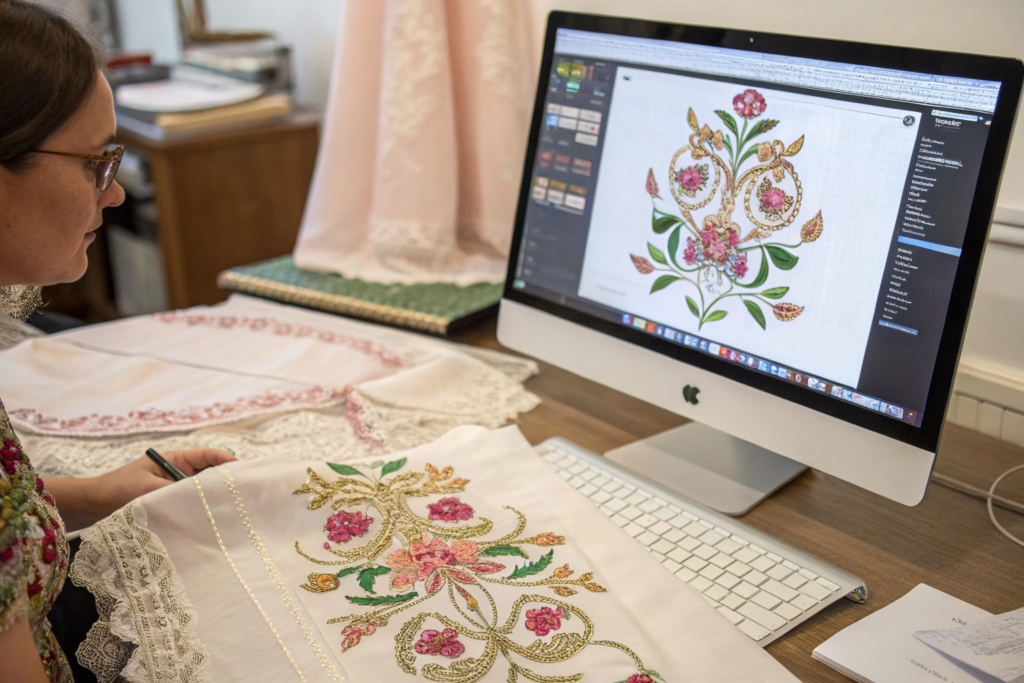
What design considerations are important for delicate fabrics?
- Simplicity: Intricate, ultra-dense designs are often not suitable for very delicate fabrics. Simpler designs with less stitch density are more likely to be successful.
- Stitch Length: Long stitches can pull and distort delicate fabrics. Shorter, more compact stitches are generally better.
- Avoid Sharp Angles: Very sharp angles can concentrate stress and lead to tearing. Smoother, more rounded shapes are preferable.
- Test, Test, Test: Before committing to a full production run, it is essential to create a test sample on the actual fabric. This allows you to see how the fabric reacts and to make any necessary adjustments to the design or the stitching parameters.
- Consider the Fabric's Drape: A heavy, dense embroidery will change the drape of a delicate fabric. The design should be planned with this in mind.
A thoughtful design, created with the fabric's limitations in mind, is the foundation of a successful project.
How do you ensure quality control for delicate fabric embroidery?
Quality control is even more critical for delicate fabrics. We use a multi-step process:
- Pre-Production Sample: A sample is stitched on the actual fabric and inspected by both our team and the client. This is the most important quality control step.
- In-Process Monitoring: During production, the embroidery machines are constantly monitored by skilled operators who can spot any issues (like thread breaks, fabric shifting, or tension problems) immediately.
- Post-Embroidery Inspection: After embroidery, each piece is carefully inspected. We look for:
- Puckering or distortion of the fabric.
- Any pulled or broken threads.
- Any damage to the fabric itself (holes, tears, marks).
- The quality and consistency of the stitching.
- Proper removal of any stabilizer.
- Wash Testing (if applicable): For items that will be washed, we perform wash tests to ensure the embroidery and the fabric hold up.
This rigorous process ensures that every piece that leaves our factory meets the highest standards of quality.
Conclusion
Embroidering on delicate fabrics is one of the most challenging tasks in textile decoration, but the latest advances in digital embroidery technology have made it possible to achieve stunning results. By using specialized needles and threads, optimizing designs with sophisticated software, employing advanced stabilization techniques like water-soluble stabilizers and floating, and adhering to rigorous design and quality control practices, we can create beautiful, intricate embroidery on even the most fragile materials. It's a blend of art, science, and craftsmanship.
At Shanghai Fumao Clothing, we have mastered these techniques. Our factory in Zhejiang is equipped with the latest multi-head digital embroidery machines. Our team includes expert digitizers who specialize in creating designs for delicate fabrics. Our skilled operators are trained in all the specialized techniques, from using water-soluble stabilizers to floating the most challenging materials. We can help you bring your most delicate and intricate embroidery visions to life.
If you're ready to explore the possibilities of digital embroidery on delicate fabrics for your accessory collection, let's talk. Please contact our Business Director, Elaine, at elaine@fumaoclothing.com. We'll help you create pieces of exquisite beauty.