Have you ever wondered how a brand-new leather belt can look and feel like a cherished vintage piece? That perfectly worn-in look doesn't happen by accident. It's a craft. As a manufacturer, I often talk with buyers like Ron from the US, who are looking for authentic, high-quality finishes for their products. A poorly distressed belt looks cheap and fake, which is a major pain point for brands that value quality and authenticity.
The latest techniques for creating a distressed look on leather belts focus on artisanal, multi-step processes that combine mechanical abrasion with specialized dyeing and finishing methods, such as stone-washing, hand-sanding, and wax-resist dyeing. These methods aim to replicate the natural aging process in a controlled, consistent way, creating a product with genuine character and depth.
For over two decades, my factory has been perfecting the art of leather finishing. Creating an authentic distressed look is one of the most requested—and most challenging—finishes. It requires a blend of artistry and technical precision. In this article, I'll take you inside our workshop and reveal the modern techniques we use to create beautifully distressed leather belts that look and feel authentically aged from day one.
Why is Authentic Distressing So Important?
Why not just print a distressed pattern on the leather? The problem is that consumers are savvy. They can spot a fake from a mile away. A printed-on pattern lacks depth and character, and it often wears away unevenly, revealing the artifice. This can damage a brand's reputation for quality.
Authentic distressing is crucial because it imparts a sense of history and character to a new product. An authentically distressed belt has genuine variations in color and texture; it feels softer and more flexible, as if it has already been broken in. This creates an emotional connection with the consumer, suggesting a story and a level of craftsmanship that a mass-produced, uniform product cannot match.
At my factory, Shanghai Fumao Clothing, we believe that distressing is an art form. It's about accelerating the natural aging process, not faking it. A well-distressed belt doesn't just look old; it looks better with age. Let's explore why this authenticity matters so much in today's market.
What's the difference between "distressed" and "damaged"?
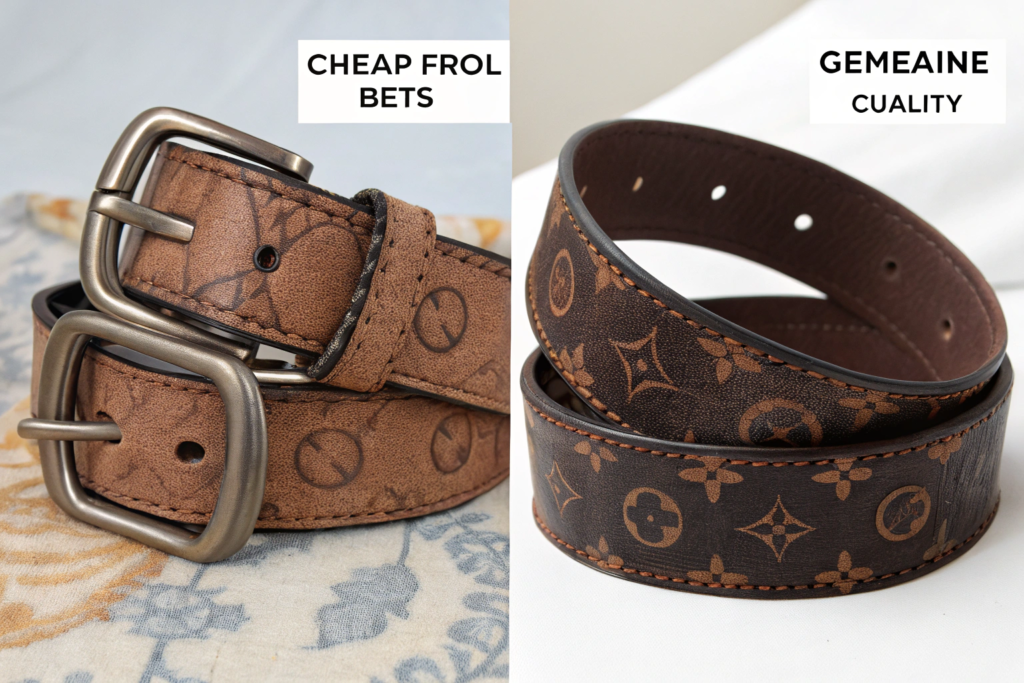
This is a critical distinction. "Damaged" implies that the structural integrity of the leather has been compromised. A damaged belt might have deep cuts, cracks, or weakened spots that will cause it to fail prematurely. "Distressed," on the other hand, refers to cosmetic aging. The goal is to alter the surface appearance of the leather—its color and texture—without harming its strength and durability.
Our techniques are designed to scuff the surface, soften the fibers, and create subtle color variations, all while preserving the core strength of the leather. It's a delicate balance. A properly distressed belt should be just as strong and long-lasting as its non-distressed counterpart. This commitment to quality is why learning about leather from expert sources like the Leather Dictionary is so important for our artisans.
Why is this look so popular with consumers?
The appeal of a distressed look is rooted in a desire for authenticity and individuality. In a world of fast fashion and mass production, a distressed leather belt feels unique and personal. It has a rugged, timeless quality that pairs well with casual styles like jeans and boots. It suggests a laid-back, confident attitude.
Moreover, a pre-distressed belt offers instant gratification. The consumer gets that comfortable, broken-in feel right out of the store, without the years of wear it would normally take to achieve. It’s a blend of vintage aesthetics with modern convenience. As seen in men's fashion magazines like GQ, this aesthetic is a perennial favorite because it's effortlessly cool and masculine.
What Are The Key Mechanical Distressing Techniques?
How do you physically create that worn-in texture? This is where the mechanical part of the process comes in. These techniques are designed to physically abrade and soften the leather, mimicking the effects of years of friction and flexing.
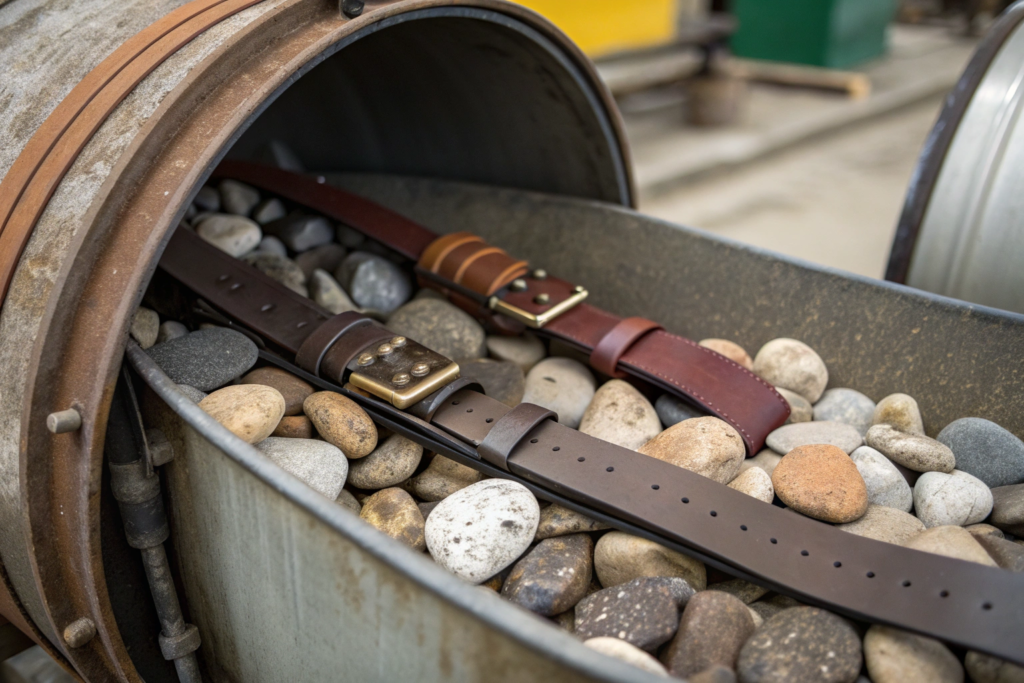
The most effective modern mechanical techniques are stone-washing and hand-sanding. Stone-washing involves tumbling the leather belts with pumice stones in a large drum to soften the entire belt and create an all-over-worn texture. Hand-sanding is a more precise method used to target specific areas, like the edges, to replicate natural wear patterns.
In our workshop, we use a combination of these methods. The choice of technique depends on the type of leather and the specific look we want to achieve. It's a hands-on process that requires a great deal of skill and control. Let's break down how each of these techniques works.
How does stone-washing for leather work?
Stone-washing leather is similar to stone-washing denim. The cut leather belt straps (before the buckle is attached) are placed into a large industrial washing drum along with water and smooth, porous stones like pumice. As the drum tumbles, the stones rub against the leather, gently abrading the surface, softening the fibers, and creating subtle variations in color and texture.
The duration of the tumbling, the size and type of stones, and the amount of water are all carefully controlled variables that affect the final look. This technique is excellent for achieving a consistent, overall softness and a slightly faded, matte appearance. It's a method we at Shanghai Fumao Clothing have refined over many years to get consistent, high-quality results.
What is the role of hand-sanding and buffing?
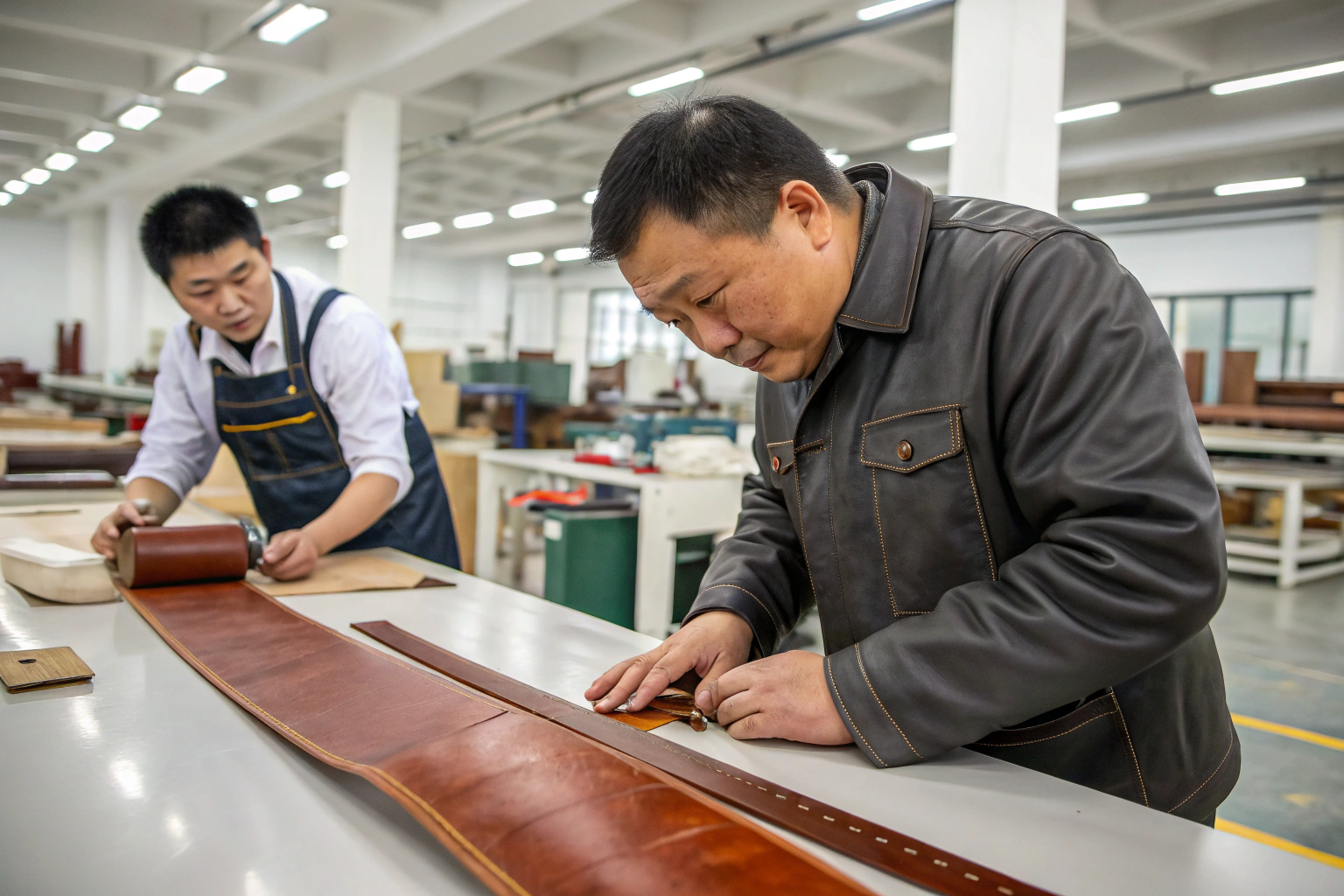
While stone-washing gives an all-over effect, hand-sanding allows for more artistic control. Our artisans use fine-grit sandpaper or buffing wheels to selectively distress certain parts of the belt. They focus on the areas that would naturally show wear first: the edges, the area around the buckle holes, and the tip of the belt.
This targeted abrasion creates more realistic wear patterns and highlights. It can be used to gently scuff the surface, revealing a lighter shade of the leather underneath, or to smooth the edges for a soft, rounded feel. This manual process is labor-intensive, but it's essential for creating a truly authentic, high-end distressed look. The level of detail achieved through hand-finishing is something that machines cannot replicate, a principle well-understood by bespoke leather crafters like those you might find on Etsy.
How Are Color and Finish Used to Create an Aged Look?
Mechanical distressing creates the texture, but the real magic happens with the color and finish. A new piece of leather has a uniform color. An old, cherished belt has a rich patina—a complex tapestry of light and dark areas created by years of exposure to sun, oils from the skin, and friction.
The latest techniques for replicating this involve specialized dyeing and waxing methods. Techniques like wax-resist dyeing, burnishing, and applying tinted waxes are used after the mechanical distressing to create depth, color variation, and that beautiful, subtle sheen known as a patina. These finishing steps are what truly bring the "vintage" character to life.
This is the most artistic stage of the process. Our finishing department is filled with skilled artisans who have a deep understanding of how different dyes and waxes interact with leather. They work like painters, layering colors and finishes to achieve the perfect aged effect. Let's look at a few of the key techniques.
What is wax-resist or "crackled" finish?
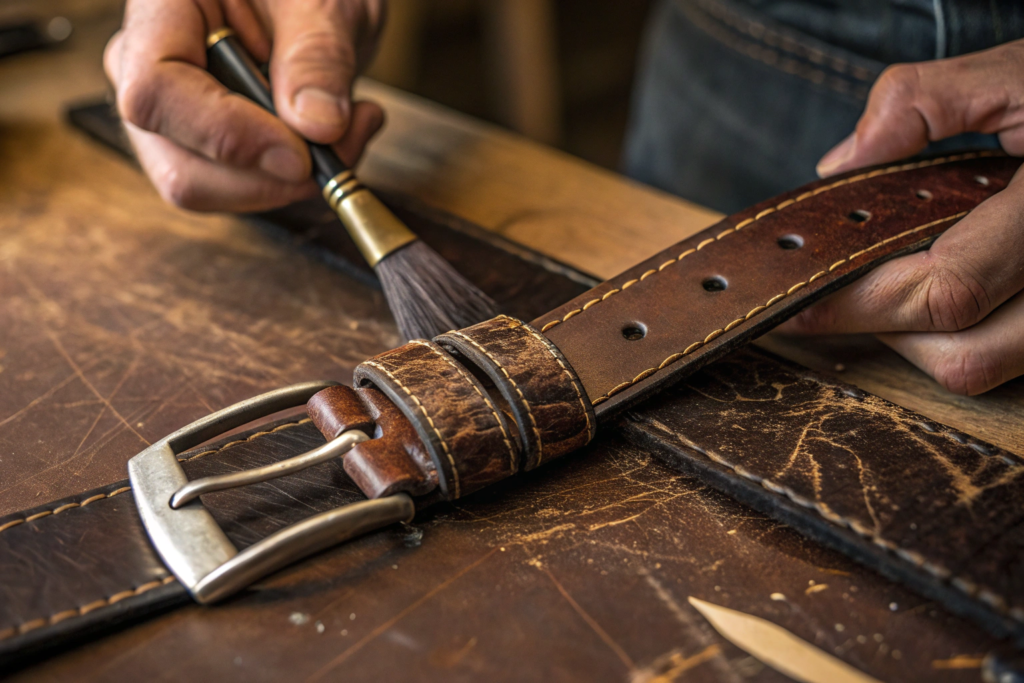
This is a fascinating technique used to create a "crackled" or veined appearance. After an initial base dye, a layer of brittle wax is applied to the surface of the leather. The leather is then bent or rolled, which causes the wax to crack in a random pattern. A darker dye is then applied over the top. This top dye seeps into the cracks in the wax but is resisted by the intact wax on the rest of the surface.
When the wax is removed, it reveals a beautiful, web-like pattern of darker lines, mimicking the fine creases that develop in old leather. This technique adds a huge amount of visual texture and is a hallmark of a high-end distressed product. It's a complex, multi-step process that requires great precision.
How is burnishing used for an aged effect?
Burnishing is the process of using friction to heat and polish the leather. In the context of distressing, we use a burnishing wheel (a canvas or wooden wheel spinning at high speed) to darken and seal the edges of the belt. This friction generates heat, which brings the natural oils in the leather to the surface and reacts with the tannins to create a darker, smoother, and slightly glossy edge.
A well-burnished edge not only looks beautifully finished but also helps to protect the belt from fraying. This technique replicates the dark, polished look that the edges of a belt naturally acquire over years of rubbing against clothing. It's a subtle but essential detail that separates a quality belt from a cheap one, a skill celebrated in leatherworking communities like the forums on Leatherworker.net.
How Do We Ensure Consistency in a Handmade Process?
This is the million-dollar question for any buyer like Ron. If these techniques are so artisanal and "handmade," how can you guarantee that the 1,000th belt will look like the first one? This is a major pain point for importers who worry about inconsistent quality in bulk orders.
Ensuring consistency in a creative, manual process is one of the biggest challenges in manufacturing. The solution lies in a rigorous system of creating master samples, documenting every step of the process, and implementing strict quality control checkpoints. While every belt will have its own unique character, it must fall within a tightly controlled range of the approved design.
This is where our experience as a professional factory comes in. We have built our reputation on delivering consistent quality, even for the most artisanal finishes. It's a system of "controlled creativity." Let's detail how we manage this process.
What is the role of a "master sample"?
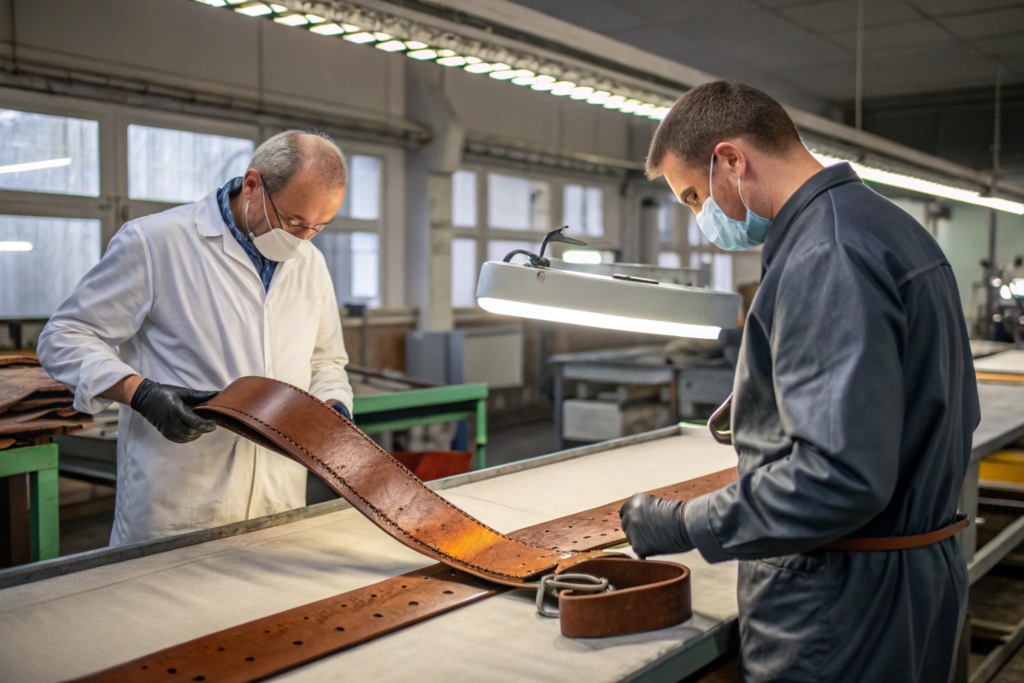
Before we begin production on any order, we work with the client to create a "master sample" or "control sample." This is the one perfect belt that is approved by the client and becomes the gold standard for the entire production run. This sample is kept in a controlled environment in our QC department.
Every single belt that comes off the production line is visually compared to this master sample. Our QC inspectors check for the overall color, the degree of distressing, the placement of wear marks, and the quality of the finish. If a belt deviates too far from the master sample, it is rejected. This is the single most important tool for ensuring consistency.
How do you document a creative process?
While the process is artistic, it's not random. Every step is documented in a detailed production file. This file specifies the exact type and grit of sandpaper to be used, the speed and duration for tumbling in the stone-washer, the precise formulation of the dyes, and the type of wax for the final finish. We even document the techniques, for example, "sand the edges in a cross-hatch motion" or "apply wax in a circular motion."
This documentation, combined with extensive training for our artisans, ensures that the process is repeatable. New artisans are trained by our most experienced masters, who pass down the specific techniques required to replicate the look of the master sample. This system, a key part of quality management systems like ISO 9001, allows us to scale a handmade process without sacrificing consistency. This is the professional difference we offer at Shanghai Fumao Clothing.
Conclusion
Creating an authentically distressed leather belt is a sophisticated art form that blends modern technology with old-world craftsmanship. It's a multi-step journey that begins with mechanical techniques like stone-washing and hand-sanding to build texture and softness. It then moves to the artist's bench, where specialized dyeing and waxing methods create a rich, complex patina that tells a story. Most importantly, this artisanal process is underpinned by a rigorous system of quality control, master samples, and detailed documentation to ensure that every belt delivers the same vintage character and unwavering quality. The result is not just a new belt that looks old, but a new belt with a soul.
If your brand is looking for a manufacturing partner who understands the art of leather finishing and can deliver authentic, high-quality distressed accessories with consistency you can rely on, we are here to help. Our team at Shanghai Fumao Clothing has the experience and passion to bring your vision to life. Please contact our Business Director, Elaine, at her email: elaine@fumaoclothing.com to discuss your next project.