You've experienced it: a hair band that looks perfect but slides up, slips back, or needs constant readjustment throughout the day. For accessory brands and buyers, this isn't just a minor annoyance—it's the primary reason for product returns and negative reviews. In a crowded market, a hair band that actually stays in place becomes a standout bestseller. But what separates a basic band from a reliably secure one? The answer lies in advanced grip technology.
The latest innovations in no-slip grip for hair bands focus on two key areas: advanced material engineering using high-traction silicones and thermoplastic elastomers (TPEs), and structural design innovations like internal gripper tracks and adaptive tension systems that distribute pressure intelligently. These developments move beyond simple rubberized coatings to create hair bands that feel comfortable but hold securely, even on fine, silky, or thick hair. At Shanghai Fumao Clothing, our R&D team actively integrates these technologies to solve this fundamental pain point for our clients' products.
Let’s explore the cutting-edge materials and smart designs that are finally making slippery hair a problem of the past.
What Advanced Materials Are Revolutionizing Hair Band Grip?
The quest for the perfect grip starts at the molecular level. Traditional materials like basic elastic, satin, or thin plastic lack the necessary surface friction and flexibility to hold securely without causing traction alopecia (hair breakage from excessive pulling). The new generation of materials is engineered to be "sticky" in the best way—providing hold through physics, not force.
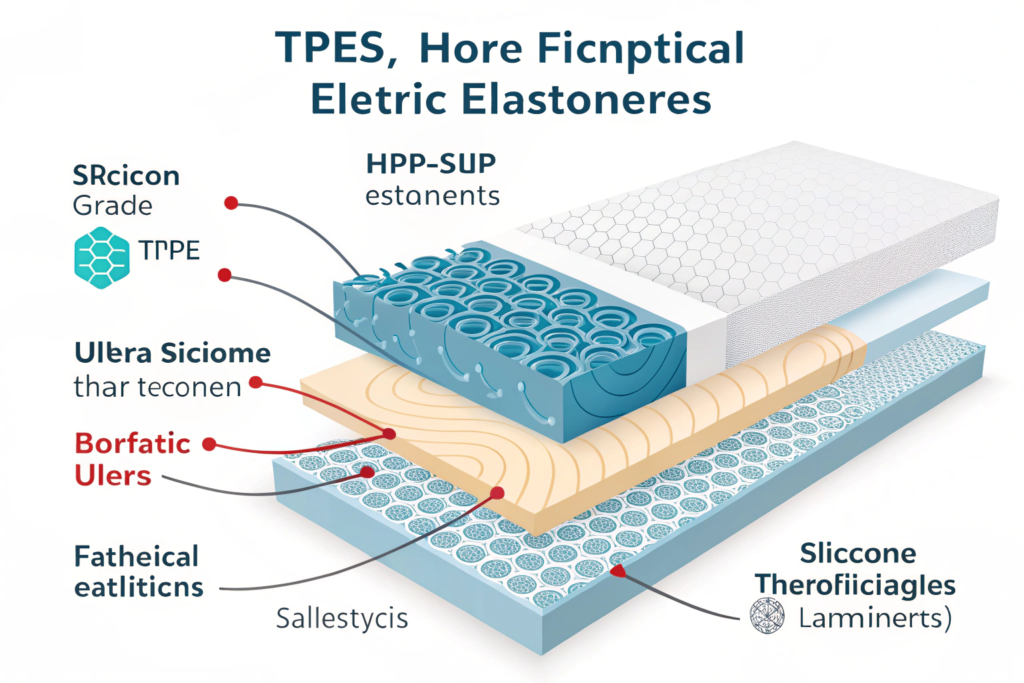
The revolution is being led by specialized, skin-safe silicones and thermoplastic elastomers (TPEs) formulated with ultra-high coefficients of friction, along with hybrid fabric-silicone laminates that combine aesthetics with function. These aren't the cheap, tacky silicones of old. Modern medical-grade silicone is engineered to be non-slip yet gentle on hair cuticles, reducing breakage. Similarly, advanced TPE compounds can be formulated to be softer and more flexible than traditional rubber, with a matte, high-friction finish that grips hair without snagging. We work with material scientists to source and test these polymers, ensuring they meet both performance and safety standards, such as being free from phthalates and latex.
Why Are Dual-Shore Silicones a Game Changer?
A major breakthrough is the use of dual-shore or multi-durometer silicones. "Shore" hardness measures a material's resistance to indentation. A single-shore silicone band might be too hard (causing discomfort) or too soft (losing grip). Dual-shore technology combines two different hardness levels in one band:
- A softer, lower Shore A outer layer for comfortable wear against the scalp and hair.
- A firmer, higher Shore A inner layer or integrated gripper strip that provides the primary holding power.
This engineering creates a band that is gentle where it touches the skin and hair but aggressively grips the hair shafts themselves. It’s a sophisticated application of polymer science that directly addresses the comfort-versus-hold dilemma. Manufacturers using this tech often cite adherence to ISO 10993 biocompatibility standards to assure safety for prolonged skin contact.
How Do Micro-Suction Textures Work?
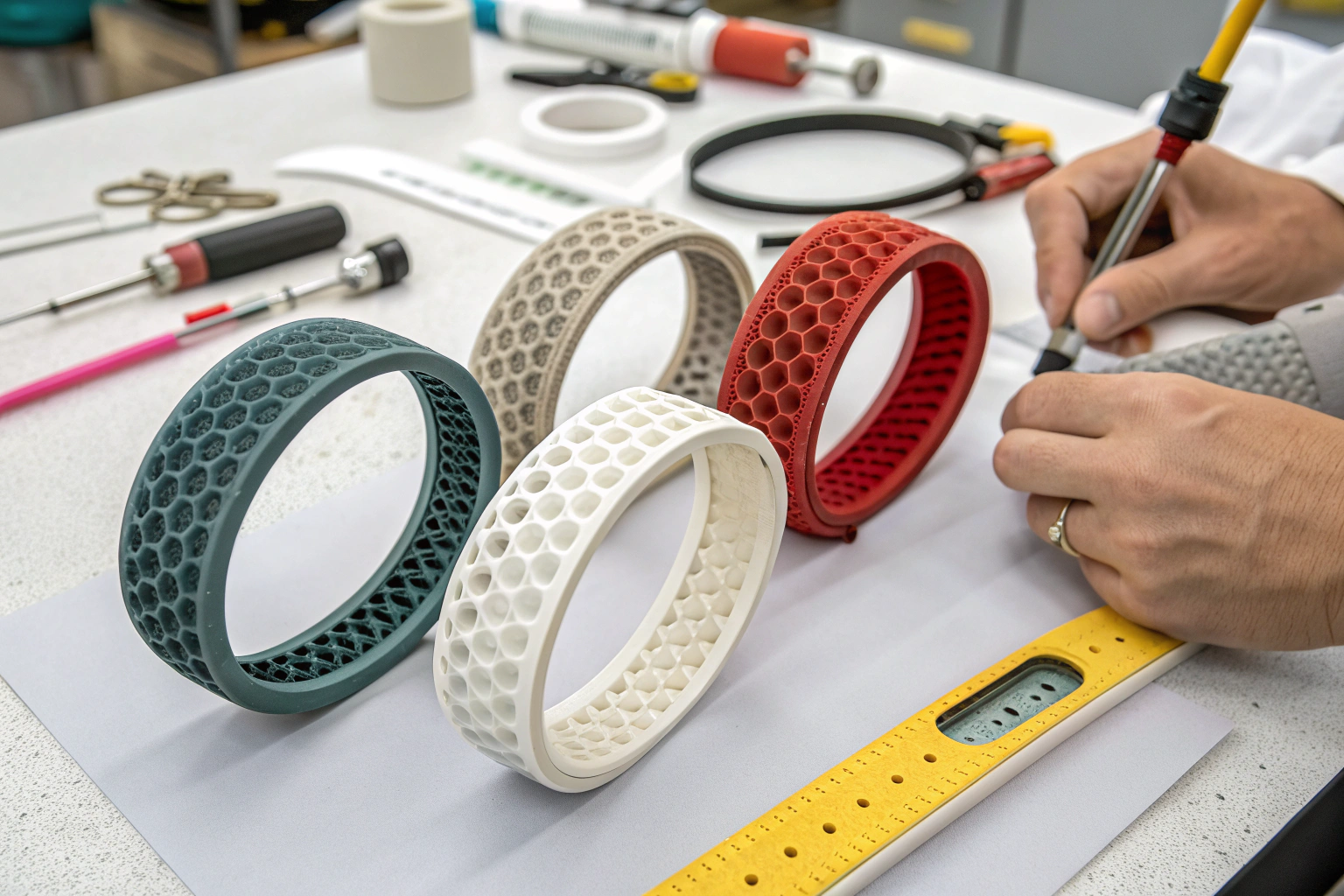
Inspired by gecko feet and suction technology, micro-suction textures are precision-molded patterns on the inner surface of a hair band. These are not random bumps; they are engineered patterns—like micro-honeycombs, hexagons, or wave structures—that increase the surface area in contact with the hair. When slight pressure is applied (from the band's tension), these micro-structures create a vacuum-like effect, dramatically increasing friction without requiring more tension. This technology is often seen in high-performance sports hair bands designed to stay put during intense activity. The precision required for these molds means partnering with a manufacturer skilled in high-tolerance injection molding, a capability we've developed specifically for technical accessories.
How is Smart Design Enhancing Grip Without Tension?
More tension is not the answer to slipping; it's the cause of headaches and hair damage. The latest design philosophy uses geometry and physics to create "intelligent" bands that hold through smart structure, not sheer tightness. These designs often work in concert with advanced materials to lock hair in place comfortably.
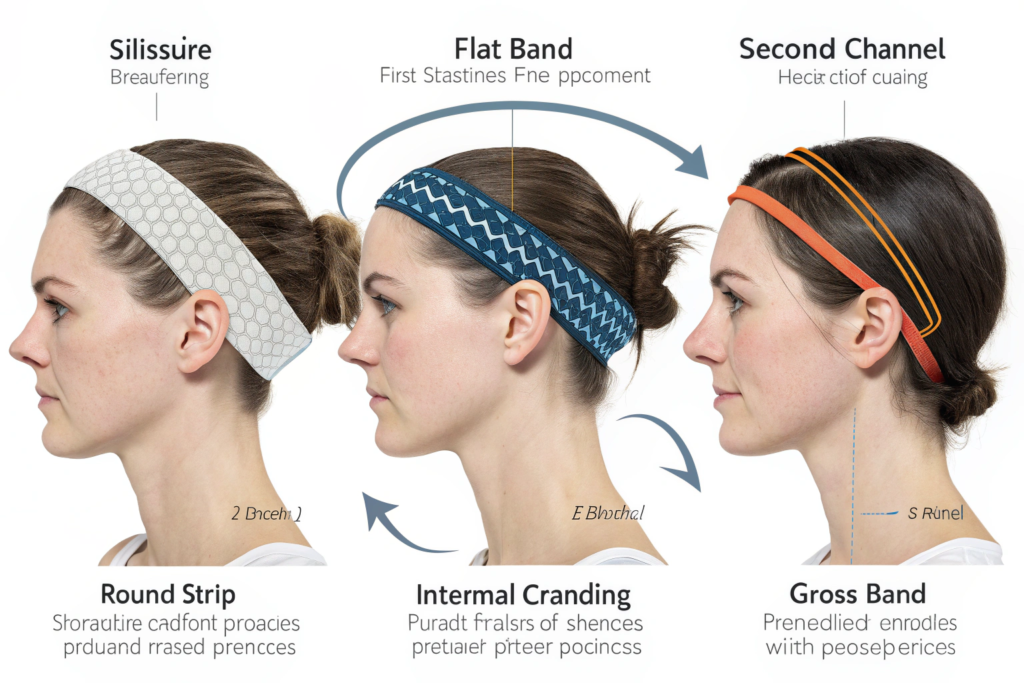
Smart design enhances grip through structural innovations like internal gripper channels, tension-distributing wave shapes, and wide, flat profiles that increase surface contact area, thereby reducing pressure points. For example, a band designed with a wide, flat cross-section (8-10mm) distributes force over a broader area of hair than a thin, round elastic, preventing the "dent" and slippage caused by concentrated pressure. Another innovation is the internal "track" design, where the band has a central channel lined with grippy material that cradles a section of hair, while the smoother outer edges prevent tangling with the rest of the hair.
What is the Principle Behind Tension-Distributing Shapes?
Traditional hair bands are simple loops. Innovative shapes break this mold to manage force. The coiled "telephone cord" or wave-shaped band is a prime example. Its spring-like structure allows it to stretch longitudinally but also compress laterally. When stretched over hair, the coils tighten around the hair bundle from all sides, creating a 360-degree grip that adjusts to movement. Another shape is the figure-eight or infinity-style band. By twisting into this shape before use, it creates multiple contact points and leverages friction at the crossover point, providing exceptional hold for high buns and ponytails with less perceived tension. These shapes utilize principles of mechanical engineering to outperform simple elastics.
Can "Velvet" or "Suede" Linings Provide Real Grip?
Absolutely. While not a new material per se, the use of ultra-soft velvet, velour, or micro-suede linings has been refined into a high-performance feature. The key is the nap—the direction of the tiny fibers. When integrated so the nap runs against the direction of potential slip, these fibers act like thousands of microscopic hooks, gently catching the hair's cuticle scales. This provides a soft, comfortable grip that is particularly effective on finer hair types that slide out of smoother bands. The innovation lies in the durable bonding of these fabrics to the elastic core, ensuring the lining doesn't peel or fray after repeated use and washing—a common failure point in cheaper versions.
What Role Do Hybrid and "Invisible" Grips Play?
For many consumers, aesthetics are as important as function. A highly technical grip that looks bulky or medical can be a hard sell. The latest trend addresses this by hiding advanced grip technology within beautiful designs or creating bands that are virtually undetectable while worn.
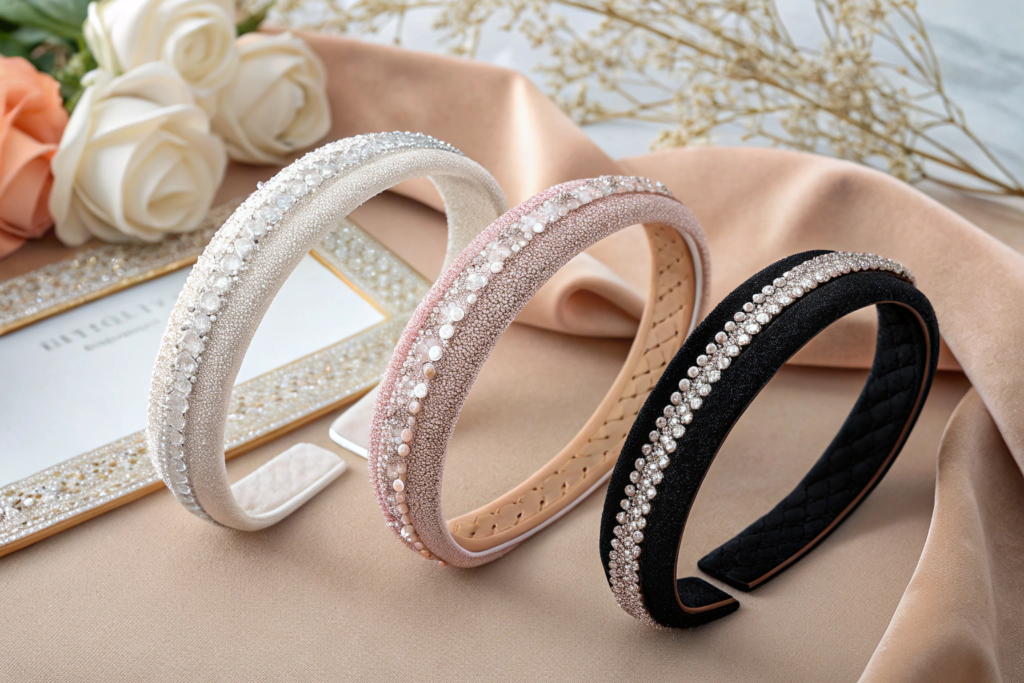
Hybrid and "invisible" grips integrate high-traction materials discreetly into fashionable bands or use ultra-fine, skin-toned silicone to create a hold that is both effective and aesthetically minimal. This includes lace-over-silicone bands, where a delicate lace exterior covers a thin, grippy silicone inner core. It also includes the development of clear, medical-grade silicone bands in "nude" tones that blend with the scalp, popular for up-dos and bridal styles. These innovations require precise co-molding or laminating processes to bond dissimilar materials seamlessly without compromising the grip function.
How is Grip Technology Integrated into Decorative Bands?
The challenge is adding function without sacrificing form. Advanced manufacturing techniques make this possible:
- Co-Injection Molding: A decorative plastic or acetate outer shell is molded simultaneously with a soft TPE or silicone inner grip layer, creating a single, inseparable unit.
- Precision Lamination: A grippy fabric (like velvet) or a thin silicone strip is precisely laser-cut and heat-bonded to the inside of a woven or knitted band.
- Embedded Gripper Beads: Small, transparent silicone dots or strips are embedded into the weave of a fabric headband, providing intermittent points of high friction that are nearly invisible.
These processes allow brands to offer the full range of trends—from minimalist scrunchies to ornate fabric headbands—with the added premium feature of a no-slip guarantee. It elevates a basic accessory to a performance product.
Are "Touch-Fastener" or Adjustable Grip Systems Viable?
Looking to the future, some prototypes explore micro-hook and loop systems (like ultra-soft Velcro®) integrated into the ends of bands, allowing for infinite adjustability and a completely customizable fit. Another concept is the magnetic closure hair band with an adjustable silicone sleeve that slides to tighten. While these are more complex and currently seen in niche or high-end products, they point to a direction of fully customizable tension and grip. The viability depends on reducing manufacturing complexity and cost, but they represent the ultimate in user-centric design, moving towards what some term "wearable tech" for hair.
How Should Buyers Evaluate and Specify Grip Technology?
With all these options, how do you, as a buyer, make an informed decision? Specifying "non-slip" is too vague and will yield inconsistent results. You need a objective way to evaluate and communicate your grip requirements to your manufacturer.
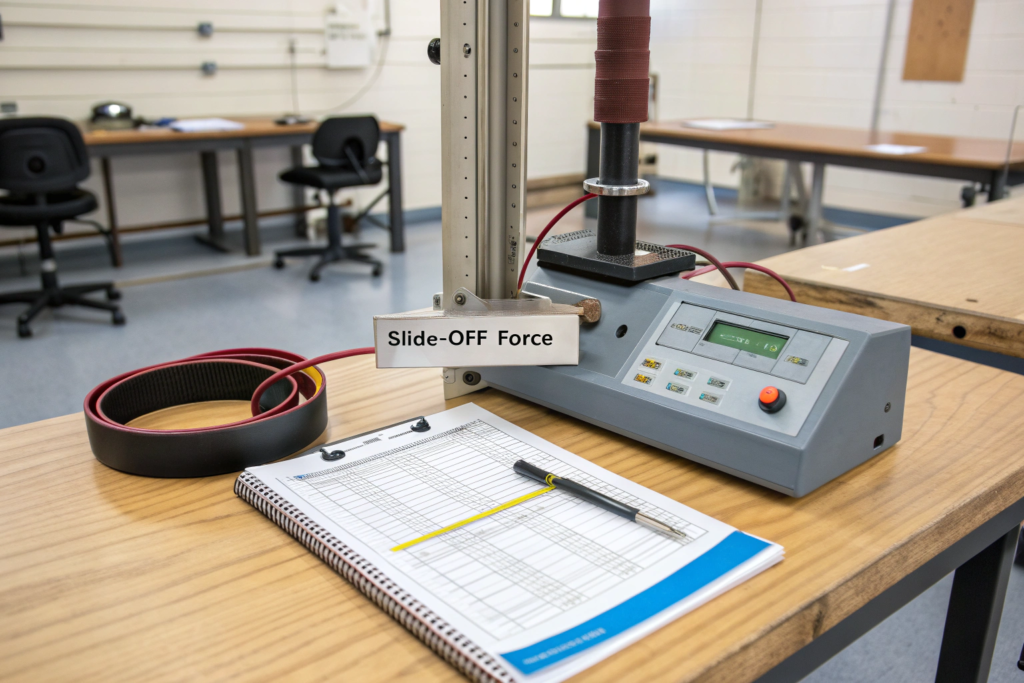
Buyers should evaluate grip technology by requesting and conducting physical performance tests on samples, specifying exact material compositions (e.g., "70-Shore A Silicone"), and defining the target use case (e.g., "for fine, straight hair" or "for high-impact sports"). Don't just feel a sample; test it. At our facility, we encourage clients to participate in defining the Grip Performance Protocol, which can include a "slide test" (measuring the force required to pull the band off a weighted hair switch) and a "tension retention test" after multiple stretches. Providing clear, technical specs ensures you get what you pay for.
What Are Key Performance Tests for Grip?
Work with your manufacturer to establish these tests:
- Static Friction Test: Measures the force needed to initiate movement of the band on a standardized hair sample.
- Cyclic Slip Test: The band is placed on a mechanical form that simulates head movement (like a motorized mannequin head) for hundreds of cycles to see if it migrates.
- Tension Loss Test: The band is stretched to a specified percentage (e.g., 150%) for a set number of cycles to see if it loses its elasticity and, consequently, its grip.
- Hair Breakage Test: Uses a controlled apparatus to measure how many hairs are snapped during the removal of the band, assessing gentleness.
Reliable manufacturers will have the equipment to conduct these tests or partner with labs that do, providing you with quantitative data to back up marketing claims.
How to Communicate Grip Needs in a Tech Pack?
Your technical pack must go beyond dimensions and colors. Include a dedicated section for "Grip Specifications":
- Material: "Inner layer: Medical-grade silicone, Shore A 50±5."
- Grip Feature: "Integrated, continuous internal gripper track, width 3mm."
- Performance Standard: "Must pass a static slip test with a force > 2.5 Newtons on standard fine-hair switch."
- Comfort Requirement: "Must not leave a pressure mark after 4 hours of wear on test panel."
This level of detail eliminates guesswork for the factory and aligns expectations, ensuring the final bulk order performs exactly like the approved sample. It’s how professional brands leverage manufacturing expertise at Shanghai Fumao Clothing.
Conclusion
The innovation in no-slip hair band grip is transforming a basic commodity into a sophisticated, performance-driven accessory. Through advanced material science like dual-shore silicones and micro-suction textures, and through intelligent structural design that distributes force, the industry is finally solving the age-old problem of slipping hair bands. For brands, this represents a powerful opportunity to differentiate products, command higher price points, and build fierce customer loyalty by delivering on a fundamental promise: comfort and hold, without compromise.
Successfully bringing these innovations to market requires a manufacturing partner with expertise in material sourcing, precision molding, and rigorous testing. By understanding and specifying these technologies, you can ensure your hair bands don't just follow trends—they set a new standard for functionality.
Ready to develop a line of hair bands that truly stay in place? Contact our Business Director, Elaine, at elaine@fumaoclothing.com to discuss integrating these latest grip innovations into your next collection. Let Shanghai Fumao Clothing help you create accessories that hold up to your customers' expectations—and their hair.