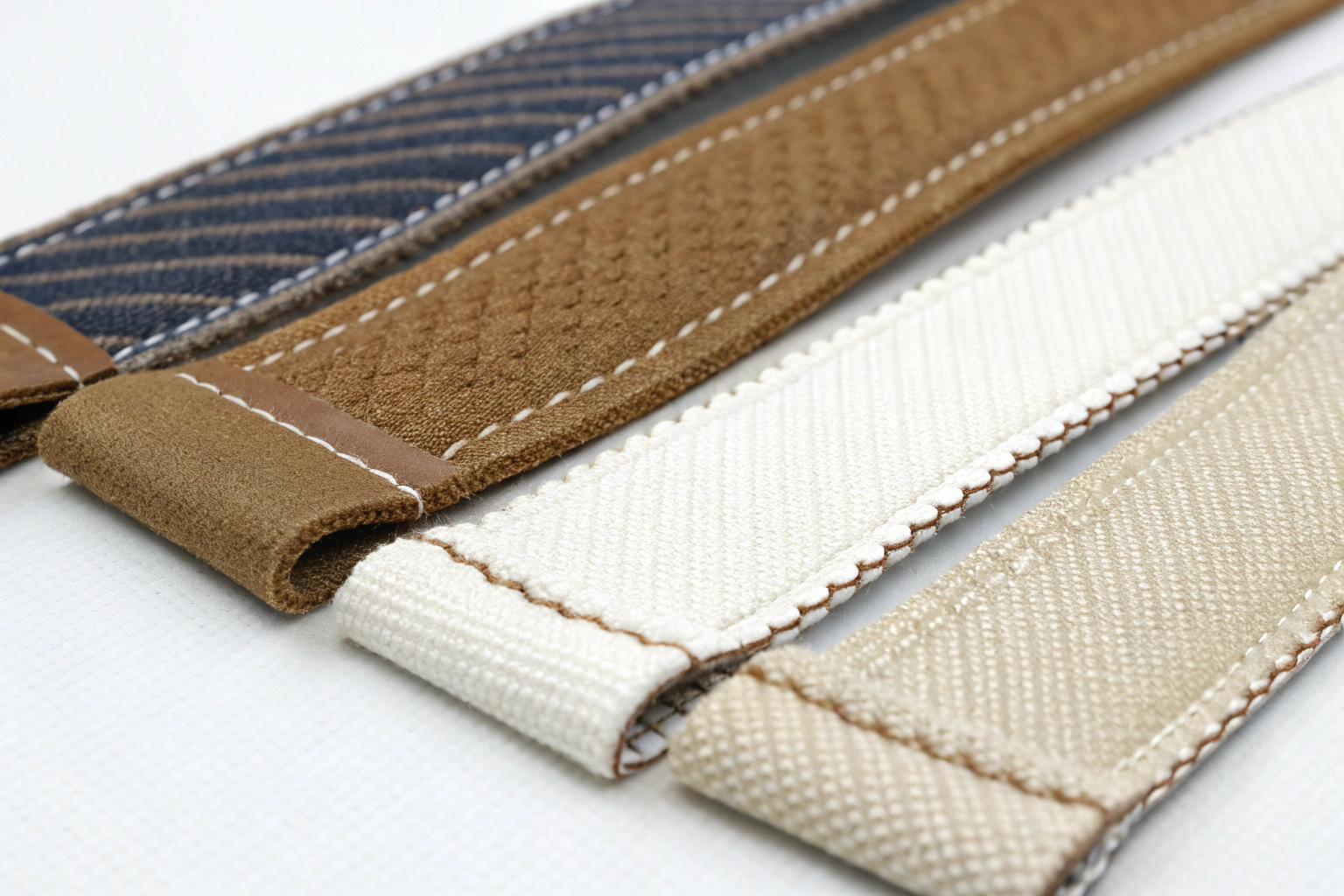
A client sent me an urgent email a few months ago. He was launching a new line of premium woven belts for men. The design was sharp. The buckle was solid brass. The fabric was a beautiful, textured cotton jacquard. But when he received the first production samples, he was devastated. The edges of the belt were fraying. Loose threads were sticking out. The belt looked like it was already falling apart before it was even worn. He said, "The belt looks like a cheap craft project. I can't sell this." The problem was not the fabric or the sewing. It was the edge finishing. He had specified a standard cut edge, but the fabric weave was too loose. It needed a more advanced finishing technique to lock the fibers in place and give the belt a premium, durable feel.
The latest edge-finishing techniques for fabric belts focus on preventing fraying while enhancing the aesthetic and tactile quality of the product. Beyond traditional folded hems and overlock stitching, modern factories are utilizing ultrasonic cutting and sealing for synthetic blends, precision laser cutting for intricate edge patterns, and specialized binding tapes made from microsuede or reflective materials. The choice of technique depends on the fabric composition (natural vs. synthetic), the desired look (clean, sporty, or rugged), and the cost target of the belt.
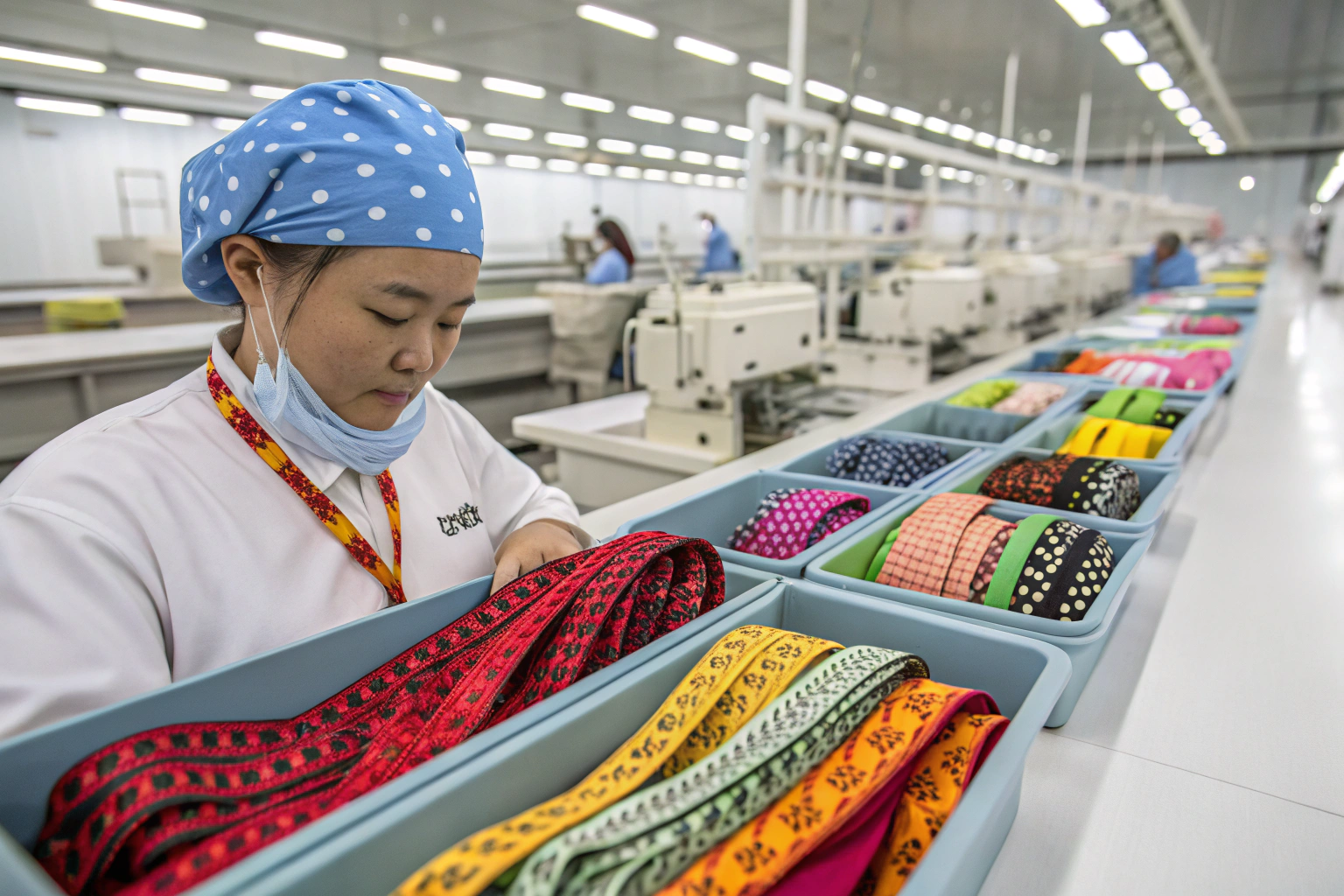
At Shanghai Fumao, we produce thousands of fabric belts every month for fashion and utility brands. We have seen how the right edge finish can elevate a $5 belt to look like a $25 belt. I want to share the most effective techniques we use today and how to choose the right one for your specific fabric belt project.
How Does Ultrasonic Cutting Create A Clean Synthetic Edge?
For belts made from 100% synthetic materials—like polyester webbing, nylon, or polypropylene—the gold standard in modern manufacturing is Ultrasonic Cutting. This technology has revolutionized how we finish the ends of utility belts, tactical straps, and even fashion belts made from synthetic blends.
Ultrasonic cutting uses high-frequency sound waves to generate heat through vibration directly at the fabric's cut point. This localized heat melts the synthetic fibers instantly, fusing them together into a clean, sealed edge. Unlike a hot knife, which can leave a hard, discolored rim, ultrasonic cutting produces a soft, flexible, and incredibly precise edge that will never fray. It is an entirely dry process, requiring no adhesives or additional stitching for edge security, making it both efficient and clean.
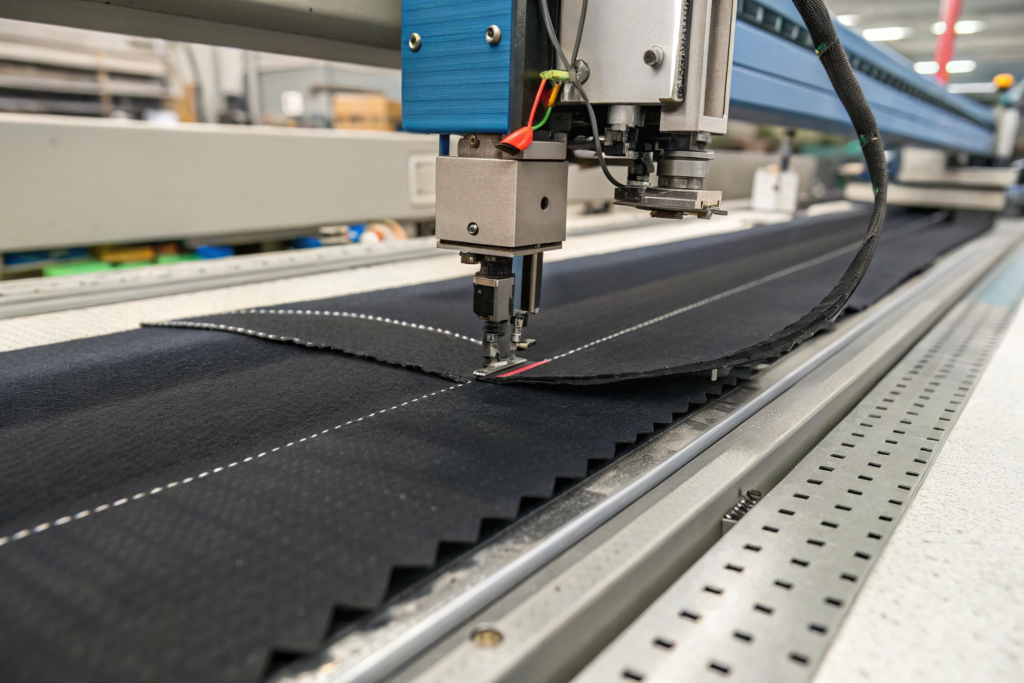
Why Is Ultrasonic Cutting Superior To Traditional Hot Knife Cutting?
Many factories still use a Hot Knife for cutting synthetic webbing. A hot knife is an electrically heated blade. It cuts by melting the fabric.
The problem with hot knives is temperature control and residue. The blade temperature can fluctuate. If it is too cool, the edge does not seal properly and frays. If it is too hot, it burns the fabric, leaving a hard, discolored brown or black edge. It can also leave melted plastic residue on the blade, which transfers to the next piece, creating a rough, dirty finish.
Ultrasonic cutting, by contrast, is incredibly precise. The vibration is localized. The heat is generated from within the fabric fibers, not applied from an external hot blade. This results in:
- No Discoloration: The edge remains the same color as the fabric.
- Soft Hand Feel: The sealed edge is flexible and soft, not hard and scratchy.
- Perfect Consistency: The seal is identical from the first cut to the ten-thousandth cut.
For a brand selling premium dog leashes, tactical belts, or even high-end fashion belts with synthetic webbing, the difference in edge quality is immediately apparent. An ultrasonic edge signals quality and durability. We use this technique extensively on our line of heavy-duty webbing belts .
How Does Ultrasonic Welding Work For Belt Loops And End Tips?
The technology is not just for cutting the main strap. We also use ultrasonic welding to create belt loops and to finish the folded tip where the buckle is attached.
Instead of stitching a belt loop closed (which creates bulk and can unravel), we use an ultrasonic welder to bond two layers of webbing together. The machine applies pressure and vibration to fuse the synthetic fibers. The bond is incredibly strong—often stronger than the surrounding fabric.
For the buckle fold, we can ultrasonically tack the folded layers together before stitching. This holds the fold perfectly flat and prevents the layers from shifting during the bartack stitching process.
This combination of ultrasonic cutting and welding creates a belt that is clean, strong, and free of loose threads. It is the benchmark for modern synthetic fabric belt manufacturing.
What Are The Best Stitched Edge Finishes For Woven Cotton Belts?
Ultrasonic technology works wonders on synthetics, but it does not work on natural fibers like 100% cotton, linen, or viscose. These fibers do not melt. They burn. For a classic cotton twill belt or a linen summer belt, the edge must be finished mechanically. This is where stitching techniques come into play.
The best stitched edge finishes for woven cotton belts are folded hems and bound edges. A double-fold hem, where the raw edge is folded under twice and topstitched, creates a clean, classic look but adds bulk. For a more refined, premium finish, a separate bias binding tape is wrapped around the raw edge and stitched down. This "bound edge" technique allows for creative color contrast and adds exceptional durability, preventing the woven fabric from unraveling even under heavy use.
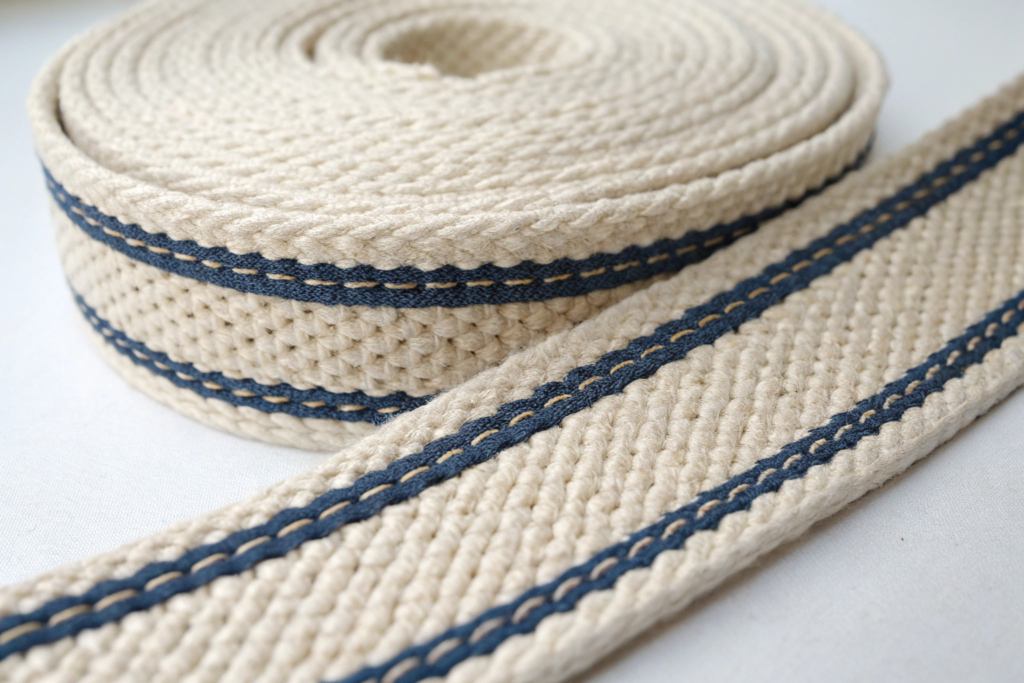
How To Execute A Clean Double-Fold Hem On Thick Fabric?
This is the most traditional method. The edge of the fabric is folded over once (about 1/4 inch), and then folded over again. The folded layers are then secured with a row of edge stitching or topstitching.
The challenge with belts is the thickness. A double-fold on a heavy 10oz cotton canvas creates four layers of fabric at the edge. This can make the edge of the belt stiff and bulky. It can also be difficult to sew cleanly without a special folder attachment on the sewing machine.
We use a hemming folder—a metal guide that mounts on the sewing machine bed. The fabric is fed through the folder, which automatically turns the edge under twice in a continuous motion. The needle stitches it down immediately. This ensures a perfectly consistent hem width along the entire length of the belt.
For a cleaner, lower-profile edge on thicker fabrics, we often recommend the Bound Edge instead.
What Is A Bound Edge And Why Does It Look Premium?
A bound edge uses a separate strip of fabric—the binding—to encase the raw edge. This is how a high-quality quilt or a fine wool coat is finished. It is a mark of quality garment construction.
For a belt, the binding is typically a thin, tightly woven cotton or poly-cotton tape. It is folded in half over the raw edge of the belt and stitched through all layers.
This technique offers several advantages:
- Fray Prevention: The raw edge is completely encapsulated. It cannot fray.
- Design Accent: The binding can be a contrasting color, adding a subtle, stylish detail to the belt. A navy belt with a red bound edge looks incredibly sharp.
- Durability: The edge of the belt is reinforced by the tightly woven binding tape. It resists wear and abrasion.
We use specialized binder attachments on our industrial sewing machines to apply binding tape accurately and efficiently. This allows us to produce a high-end, tailored look at a competitive cost. It is an excellent option for brands looking to elevate their fashion belt collections .
How Is Laser Cutting Used For Decorative And Functional Belt Edges?
Sometimes the edge of the belt is not just a functional seam. It is a design feature. For brands looking to add a unique, feminine, or technical touch to their belts, Laser Cutting offers possibilities that scissors and blades cannot achieve.
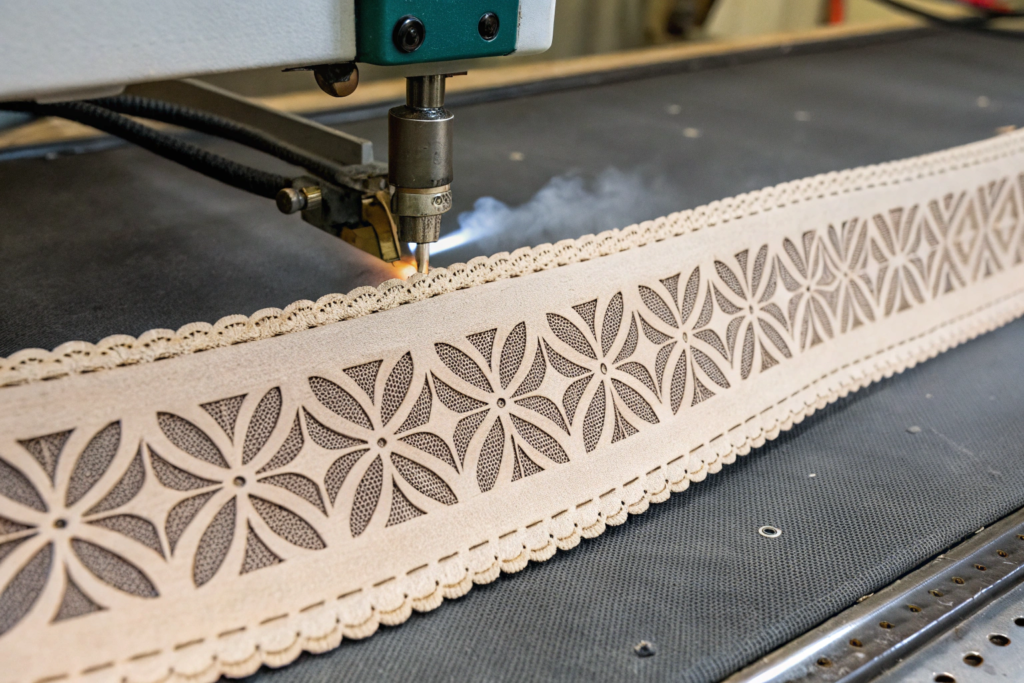
Laser cutting is used to create both decorative scalloped or patterned edges and to precisely cut intricate shapes from synthetic fabrics. The laser beam vaporizes the fabric along the cut line, simultaneously sealing the edge to prevent fraying. This technique is ideal for creating unique, high-fashion belt ends or for adding a perforated pattern along the length of the belt. It works best on synthetic materials like polyester felt, microfiber, or polyurethane (PU) leather, as natural fibers tend to char rather than seal cleanly.
What Types Of Decorative Edges Are Possible With Laser?
The only limit is the digital design file. Our laser cutter can execute virtually any vector pattern along the edge of the belt.
Popular options include:
- Scalloped Edge: A series of repeating semi-circles. This gives a soft, feminine, vintage-inspired look.
- Zig-Zag or Geometric Edge: Sharp, angular cuts for a modern, edgy aesthetic.
- Perforated Detailing: Instead of cutting the edge, the laser can burn small holes or slits along the length of the belt, creating a breathable, textured pattern.
This is a value-added service that allows a brand to create a truly unique accessory. Because it is a digital process, there are no expensive cutting dies to create. We can program the laser for a specific pattern in minutes. This makes small-batch, custom laser-cut belts economically feasible.
How Does Laser Cutting Seal The Edge Of Felt And Fleece?
Materials like polyester felt and polar fleece do not have a woven grain. They are non-woven or knit. They do not fray in the traditional sense, but they can pill or stretch out of shape if the edge is left raw.
A laser-cut edge on these materials is perfectly smooth and slightly beveled. The heat of the laser melts the surface fibers just enough to create a "skin" that prevents pilling and distortion. The result is a clean, crisp edge that looks intentional and finished.
This is especially popular for children's belts or novelty belts made from soft, colorful felt. The laser can cut the entire belt shape—buckle holes, end tip shape, and all—in a single pass. The edge is sealed. The process is incredibly efficient. We can produce intricate, playful belt designs without any sewing at all.
Conclusion
The edge of a fabric belt is where quality is either proven or lost. A frayed, bulky, or uneven edge signals a cheap, disposable product. A clean, well-finished edge signals durability, craftsmanship, and value. The techniques we use to finish that edge have evolved far beyond simple scissors and a line of stitching.
From the molecular fusion of ultrasonic sealing for synthetic webbing, to the tailored precision of bound edges for natural cotton, to the creative freedom of laser-cut patterns, modern manufacturing offers a solution for every fabric and every aesthetic. The key is matching the right technique to the right material and the right brand position.
At Shanghai Fumao, we are equipped with the full range of these edge-finishing technologies. We do not just sew belts. We engineer their edges for performance and beauty. We work with our clients to understand their design vision and recommend the finishing technique that will deliver the quality their customers expect.
If you are developing a new fabric belt collection and want to ensure the edges are as impeccable as the design, we invite you to discuss your project with us. We can provide samples of different finishing techniques and guide you to the best choice for your specific fabric and budget. For a consultation on fabric belt edge finishing and to see samples of our work, please contact our Business Director Elaine directly at elaine@fumaoclothing.com. Let us put the perfect finishing touch on your belts.