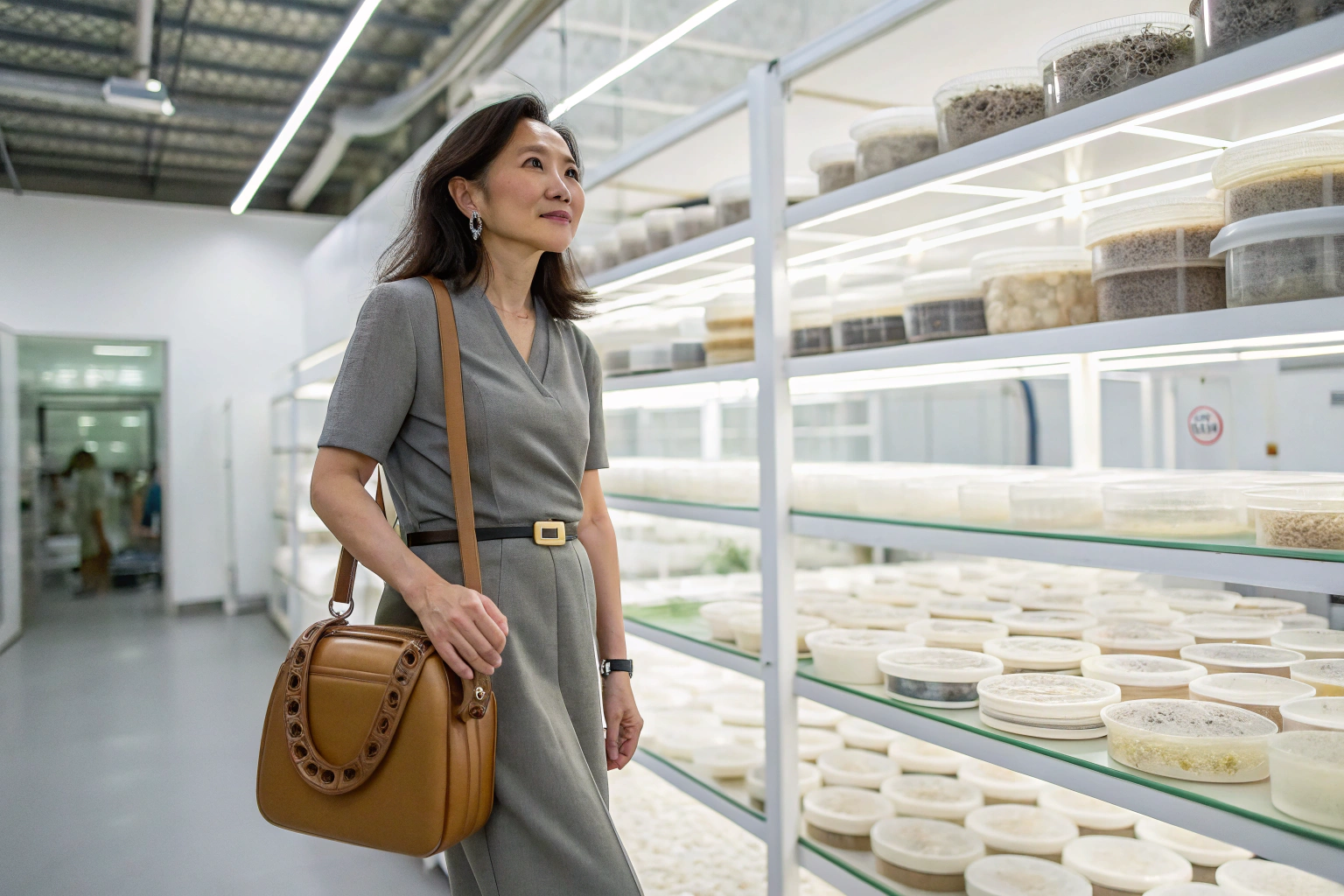
I have been in this industry long enough to see many "next big things" come and go. I have seen fabrics that claimed to be eco-friendly but were not. I have seen materials that looked good in a lab but could not survive a production line. So when I first heard about mushroom leather, I was skeptical. Mushrooms? For belts and bags? It sounded like a science project, not a commercial product. But about five years ago, a client sent me a sample. I held it in my hands. I bent it. I scratched it. I could not believe it. It felt like leather. It smelled like leather. But it was grown from fungi. That moment changed my perspective forever.
The latest developments in fungal mycelium leather are transforming it from a niche, lab-grown curiosity into a scalable, high-performance material ready for mainstream fashion. Innovations are focused on three key areas: improving the consistency and speed of growth, enhancing the material's strength and durability for use in structured items like belts and bags, and developing finishing techniques that replicate the look and feel of traditional leathers, from smooth and polished to rugged and grained. Companies are now able to grow sheets of mycelium in custom sizes and thicknesses, and then tan and finish them using more sustainable, plant-based processes. The result is a material that is not only vegan and biodegradable but also meets the demanding performance requirements of accessory manufacturing.
At Shanghai Fumao Clothing, we are always watching material innovations closely. Our clients, especially the European brands we work with, are under immense pressure to find sustainable alternatives to traditional leather. Mycelium leather is one of the most promising solutions we have seen. We have been working with suppliers of this new material to understand its properties, test its performance in our products, and develop manufacturing techniques that do it justice. Let me share what we have learned about this fascinating and rapidly evolving material.
How Does Mycelium Leather Compare To Traditional Animal Leather?
For a belt or a bag, the material needs to perform. It needs to be strong, flexible, durable, and beautiful. How does this lab-grown material stack up against the real thing? The answer, based on our testing, is surprisingly well, with some distinct advantages and a few current limitations.
In terms of aesthetics and hand feel, high-quality mycelium leather is remarkably similar to traditional leather. It has a natural, organic texture, a warm feel, and can be finished to achieve a wide range of appearances, from a smooth, polished surface to a rugged, grained look. In terms of performance, it is strong and durable, with good tensile strength and flexibility. For belts, which require high tensile strength to resist stretching, the best mycelium leathers are now performing at a level suitable for the application. For bags, the material has excellent durability and can hold its shape well. Its main advantages are sustainability (vegan, uses far less water and land, and has a lower carbon footprint) and consistency (no natural flaws like scars or insect bites). Current limitations can include cost, which is still higher than some commodity leathers, and the need for careful sourcing as the industry is still young.
Let's get into the specifics. For a belt, the most critical property is tensile strength. The material must be able to withstand the constant tension of being worn and the stress of being pulled through belt loops. We have tested samples from leading mycelium producers and found that they can achieve tensile strengths comparable to medium-weight cowhide. The material also needs to be resistant to cracking when bent repeatedly. Good mycelium leather performs well in this flex test. For a bag, the material needs to resist abrasion (from being set down on rough surfaces) and have good stitch tear resistance (so the seams do not pull out). Again, high-quality mycelium leather meets these requirements. The finish is also important. Bags often need a surface that can be cleaned and that resists staining. With the right protective topcoats, mycelium leather can achieve this. It is a high-performance material that is ready for prime time.
Is Mycelium Leather As Strong And Durable As Cowhide?
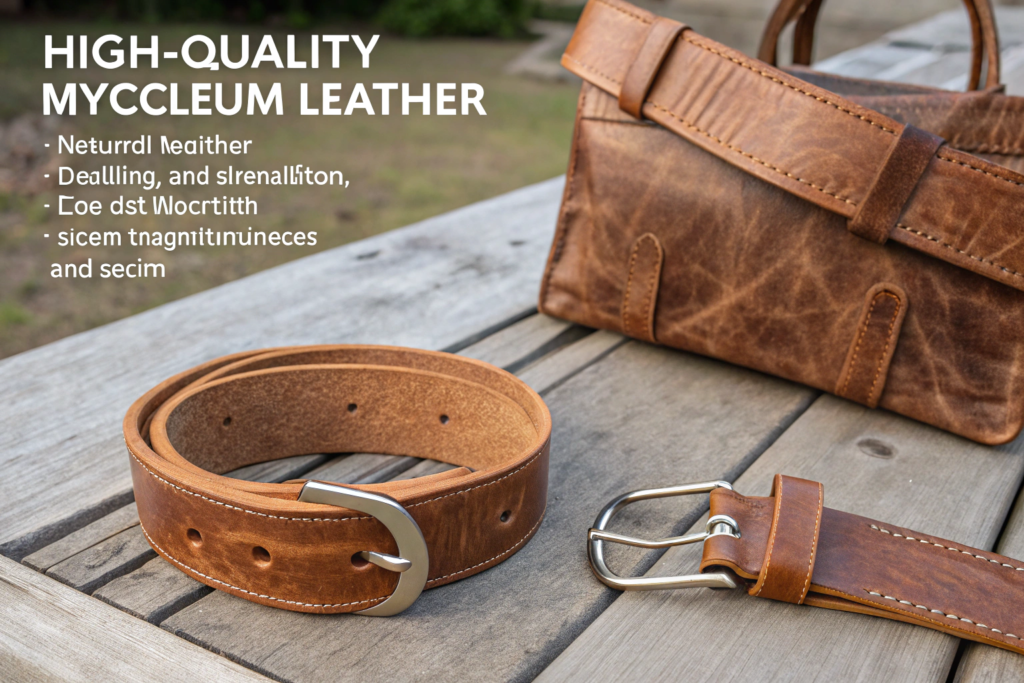
This depends on the specific product and the specific mycelium leather. High-quality, commercially available mycelium leather (like Mylo or Reishi) is engineered to have excellent strength and durability. In many tests, it performs on par with traditional leathers used for accessories. However, it is a different material, not a direct replica. It may have slightly different properties. For example, its tear strength might be slightly different, requiring adjustments in pattern design (e.g., ensuring seams are placed away from high-stress areas). Its abrasion resistance is generally very good. The key is to work with a manufacturer who understands the material's specific characteristics and can design products that play to its strengths. For most belt and bag applications, the durability of quality mycelium leather is more than sufficient.
What Are The Sustainability Advantages Of Mycelium Leather?
The sustainability story is one of the main drivers of this material's development. Compared to traditional cattle leather, the advantages are significant:
- No Animal Agriculture: It is vegan and eliminates the ethical and environmental issues associated with raising livestock.
- Lower Land and Water Use: Growing mycelium in vertical farms uses a tiny fraction of the land and water required for cattle ranching.
- Reduced Carbon Footprint: Cattle are a major source of methane. Mycelium cultivation has a much lower carbon footprint.
- Upcycles Waste: The substrate is often agricultural waste, giving a second life to materials that might otherwise be discarded.
- Biodegradability: Depending on the specific tanning and finishing agents used, the material can be biodegradable at the end of its life, unlike synthetic leathers made from plastic.
It is not a perfect, zero-impact material. Energy is used in the controlled growing facilities. The processing chemicals, even if bio-based, have an impact. But on virtually every metric, it is a far more sustainable choice than conventional leather.
What Are The Latest Developments In Texture And Finish?
Early mycelium leathers sometimes had a distinctive, "suede-like" or "cork-like" texture. They were beautiful in their own way, but they did not look like traditional smooth leather. The latest developments have focused on changing that, giving designers a much wider palette of aesthetic options.
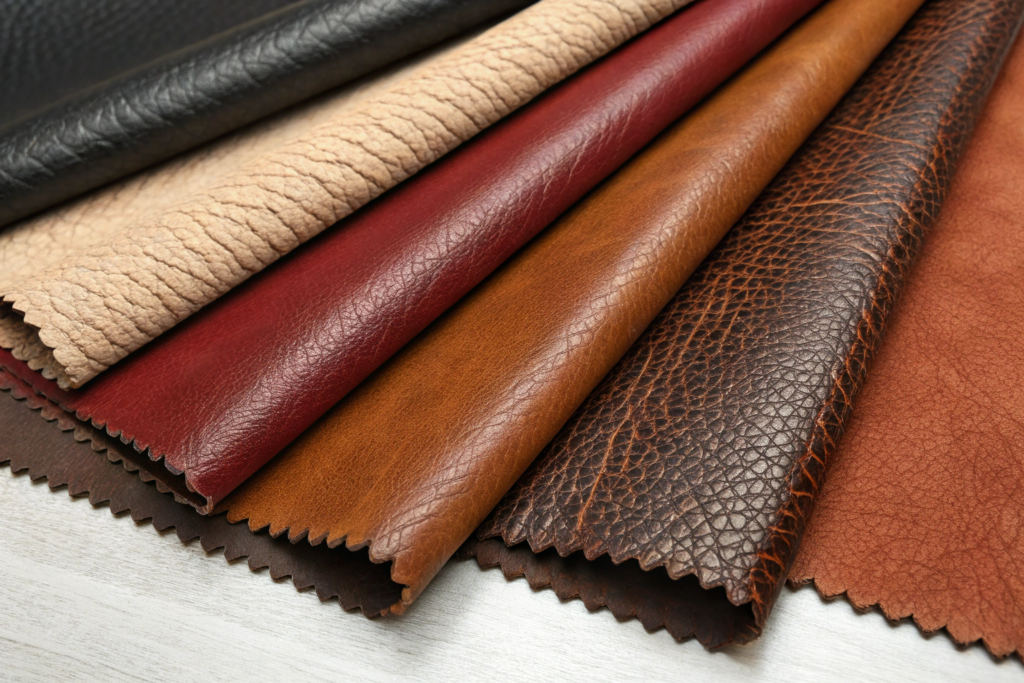
The latest developments in texture and finish are focused on achieving the full range of traditional leather aesthetics. Advanced processing techniques now allow mycelium leather to be embossed with any texture imaginable, from a fine, smooth calfskin grain to a rugged, pebbled texture. Finishing technologies have evolved to create high-gloss, semi-gloss, and matte surfaces that rival traditional leathers. Dyes can be applied deeply and evenly, achieving rich, saturated colors. Some producers are even developing techniques to create two-tone and "pull-up" effects, where the color lightens when the material is stretched, a highly desirable characteristic in some leathers. This aesthetic versatility is opening the door for mycelium to be used in a much wider range of high-fashion and luxury accessories.
Let me give you a concrete example. A client of ours wanted to create a luxury handbag in a deep burgundy color with a smooth, slightly polished finish. Five years ago, we might have struggled to find a mycelium leather that could achieve that look. Today, we can. The mycelium sheet is first embossed using a heated roller with a very fine grain pattern. Then it is dyed with a deep, aniline-type dye that penetrates the material. Finally, a clear, plant-based protective topcoat is applied and buffed to a soft sheen. The result is indistinguishable from a high-quality calfskin. For belts, we are seeing demand for textured finishes like crocodile or ostrich embossing, which can be achieved with the same embossing techniques. This advancement in finishing is what makes mycelium a viable material for the entire fashion spectrum.
Can Mycelium Leather Be Embossed With Patterns Like Crocodile Or Ostrich?
Yes, absolutely. This is one of the great advantages of a manufactured material. Because the mycelium sheet is uniform and consistent, it takes embossing beautifully. A heated metal roller or plate with the desired pattern (crocodile scales, ostrich bumps, a geometric design) is pressed onto the surface of the finished mycelium leather under high pressure. The material, which has some thermoplastic properties from the bio-polymers used in tanning, molds to the pattern and holds it permanently. This allows designers to achieve exotic looks without the ethical concerns of using exotic animal skins. The embossing can be very deep and detailed, creating a highly realistic effect. This capability for embossing is a major selling point.
How Is Color Applied To Mycelium Leather?
Color is applied using methods similar to traditional leather dyeing and finishing. The most common methods are:
- Drum Dyeing: The mycelium sheets are placed in a large rotating drum with a water-based dye solution. The tumbling action allows the dye to penetrate the material evenly. This is good for achieving deep, consistent color throughout the material.
- Spray Dyeing: A colored finish is sprayed onto the surface of the material. This is often used for top coating and for achieving special effects.
- Printing: Digital or screen printing can be used to apply patterns, logos, or multi-color designs to the surface.
The dyes used are typically plant-based or low-impact synthetic dyes to maintain the material's eco-friendly credentials. The goal is to achieve rich, lightfast colors that will not fade or bleed during use. This color application technology is well-established and translates readily to mycelium.
How Is Mycelium Leather Being Used In Belts And Bags Today?
The technology has moved beyond the lab and into the hands of designers and consumers. Major brands are now experimenting with and, in some cases, launching commercial products made from mycelium leather. This is the real proof of its viability.
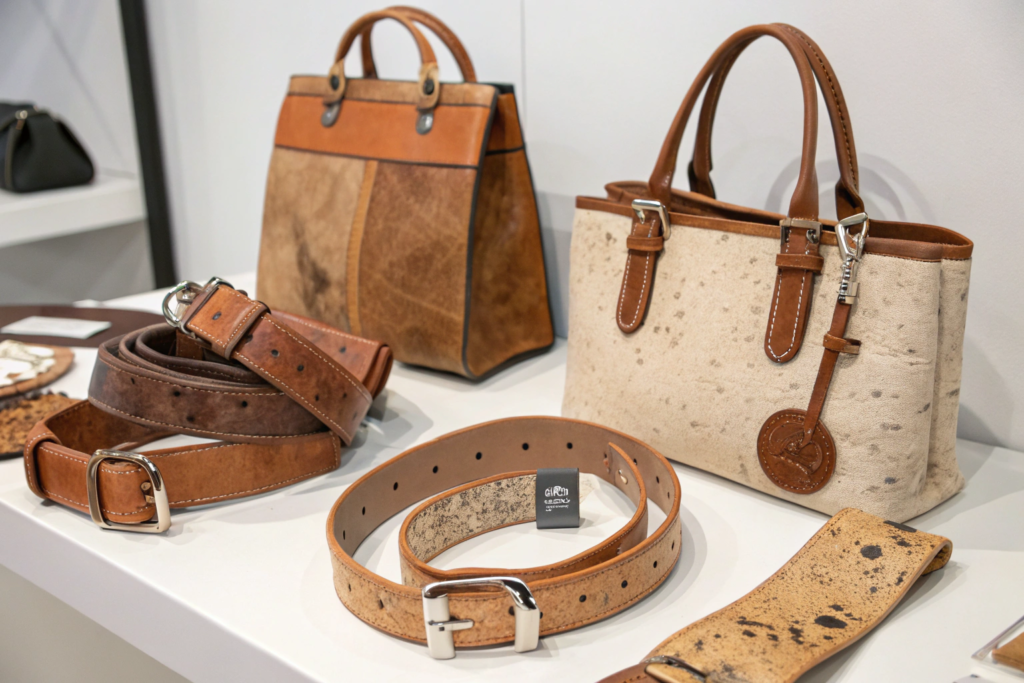
Mycelium leather is already being used by a range of innovative brands for belts and bags. High-end fashion houses like Hermès have collaborated with companies like MycoWorks to create prototypes and limited-edition pieces. Luxury handbag brands are launching collections featuring mycelium leather, often highlighting its sustainability story alongside its aesthetic appeal. Smaller, direct-to-consumer brands focused on vegan and sustainable products are also early adopters. For belts, we are seeing both casual and dressier styles being produced. The material is being used for the strap itself, as well as for details like keepers and patches. The key to these early applications is that the material is not being positioned as a "vegan alternative," but as a desirable, high-quality material in its own right. It is being celebrated for its unique story and its beautiful, natural texture.
I can share some observations from our own work. We have had several inquiries from clients looking to develop capsule collections using mycelium leather. One client, a European accessories brand, is developing a line of belts for the coming year. They are using a medium-weight mycelium leather for the straps, paired with a traditional metal buckle. They chose the material because it aligns with their brand's strong sustainability message and because, in their words, "it feels incredible." Another client, a US-based handbag designer, is creating a small run of totes. She is using a thicker, more structured mycelium leather that holds its shape beautifully. She is also using a laser etcher to add her logo to the material, which creates a very clean, professional look. These are not test products. These are commercial products designed for sale.
What Brands Are Currently Using Mycelium Leather?
While the industry is still young, some notable names have emerged:
- Hermès: Collaborated with MycoWorks to create a version of their iconic Victoria bag in mycelium leather, called Sylvania. This was a major validation of the material's luxury potential.
- Stella McCartney: A long-time pioneer in vegan fashion, Stella McCartney has used Mylo (from Bolt Threads) in several collections, including bags and garments.
- Lululemon: Has explored using Mylo for accessories like yoga mats and bags.
- Ganni: The Danish fashion brand has also experimented with mycelium leather in its collections.
- Numerous smaller, direct-to-consumer brands: Companies like "MycoWorks" and "Bolt Threads" also sell their materials to smaller designers and brands through various platforms.
This list is growing rapidly as production scales up and more brands become aware of the material's potential.
What Are The Cost Implications Of Using Mycelium Leather For Production?
Currently, high-quality mycelium leather is more expensive than commodity-grade cowhide, but it is competitive with high-end, sustainably sourced leathers. The cost is driven by several factors:
- Scale: Production is still relatively small compared to the global leather industry. As scale increases, costs are expected to come down.
- Technology: The process is technologically sophisticated, requiring specialized facilities and expertise.
- R&D: Companies are recouping significant investments in research and development.
For a brand, the cost needs to be weighed against the value of the sustainability story and the material's unique qualities. For a high-end, limited-edition product, the cost is justifiable. For a mass-market, price-sensitive item, it may still be prohibitive. We advise our clients to consider their target market and positioning. For some, the premium cost is an investment in brand differentiation and future-proofing. As production scales, we expect the price to become more competitive.
How Do We Test And Work With This New Material?
Working with a new material always requires a learning curve. You cannot treat mycelium leather exactly like cowhide. It has its own personality, its own quirks, and its own optimal techniques. At our factory, we have been doing the work to understand this material so we can advise our clients.
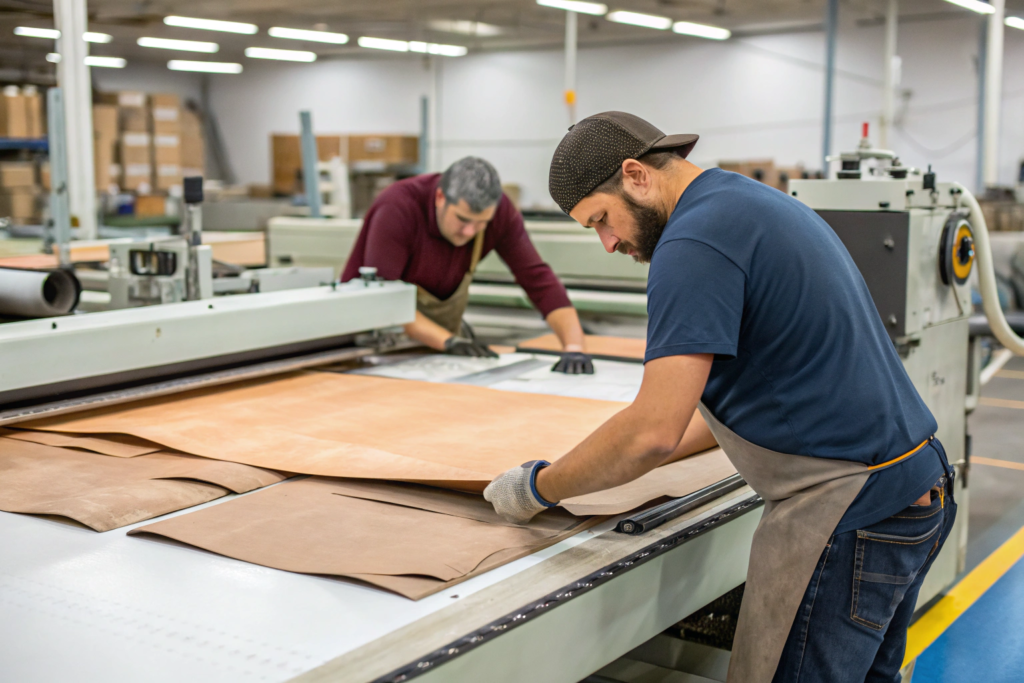
Working with mycelium leather requires some adjustments to standard manufacturing processes. While it can be cut with standard die-cutting equipment, the blade sharpness and pressure may need adjustment. Sewing requires the right needle type and size, as the material can be more delicate than some leathers. Adhesive selection is critical; we use water-based, flexible glues that bond well with the material without damaging it. Edge finishing, a key aesthetic detail for belts and bags, can be done with special paints and burnishing techniques. We test every batch for tensile strength, stitch tear resistance, and flex endurance to ensure it meets the product's requirements. Our team of sample makers and production managers has become adept at working with this innovative material.
Let me share some specific lessons we have learned. Cutting: Mycelium leather can be cut with the same die presses we use for other materials, but we use sharper blades and ensure they are perfectly aligned to prevent tearing. Sewing: We use smaller needles (size 14 or 16) with a sharp point, rather than a leather point, to create clean holes without tearing the material. We also use a Teflon foot to ensure smooth feeding, as the material can be slightly tacky. Adhesives: We have tested several and found that a water-based, polyurethane adhesive works best. It provides a strong, flexible bond and remains eco-friendly. Edge Finishing: We use a special edge paint that is flexible and formulated for use on mycelium. We apply it in thin layers, sanding between coats, and then burnish to a smooth finish. This attention to detail ensures that the final product looks and performs beautifully.
Does Mycelium Leather Require Special Care In Manufacturing?
Yes, it requires a thoughtful approach. The key is to treat it as a unique material, not as a substitute. The main considerations are:
- Moisture Sensitivity: Mycelium leather can be sensitive to excessive moisture during manufacturing. We control humidity in our work areas.
- Heat Sensitivity: High heat can damage the material. We use lower heat settings on irons or edge painting tools.
- Stretch: It has less stretch than some leathers, so patterns must be designed accordingly.
- Adhesive Compatibility: Not all glues work. We have tested and approved a specific range of adhesives.
By understanding these characteristics, we can avoid problems and produce high-quality products. It is not more difficult, just different. This material-specific knowledge is part of the value we bring to our clients.
How Do You Test The Tensile Strength Of Mycelium For Belts?
For belts, tensile strength is paramount. We use a standardized test method, often based on ASTM D2209 (Standard Test Method for Tensile Strength of Leather). We cut a dumbbell-shaped sample from the mycelium sheet. This sample is placed in a tensiometer, a machine that grips the sample at both ends and pulls it apart at a constant speed. The machine measures the force required to break the sample. We record the maximum force in pounds per square inch (PSI) or Newtons. We compare this data to the requirements for the specific belt design. For a standard dress belt, we look for a tensile strength that is comparable to a medium-weight cowhide. We also test the stitch tear resistance (ASTM D4705), which measures the force required to pull a stitch through the material. This is critical for areas like buckle attachment. All this data is shared with the client to give them confidence in the material's performance.
Conclusion
For a forward-thinking buyer like Ron, or any brand looking to lead in sustainability, mycelium leather represents an extraordinary opportunity. It is a material born from innovation, with a compelling story, a beautiful aesthetic, and a performance profile that is now ready for real-world products like belts and bags. It is not a futuristic fantasy. It is here, it is available, and it is being used by some of the most prestigious names in fashion.
At Shanghai Fumao Clothing, we are excited to be at the forefront of this material revolution. We have done the research, we have tested the materials, and we have developed the manufacturing expertise to work with mycelium leather effectively. We are ready to help our clients navigate this new landscape and create beautiful, sustainable, and high-quality accessories that tell a powerful story.
If you are curious about how mycelium leather could fit into your next collection, I would love to hear from you. Let's discuss the possibilities and how we can bring this incredible material to life in your products. Please contact our Business Director, Elaine, at elaine@fumaoclothing.com to start the conversation.