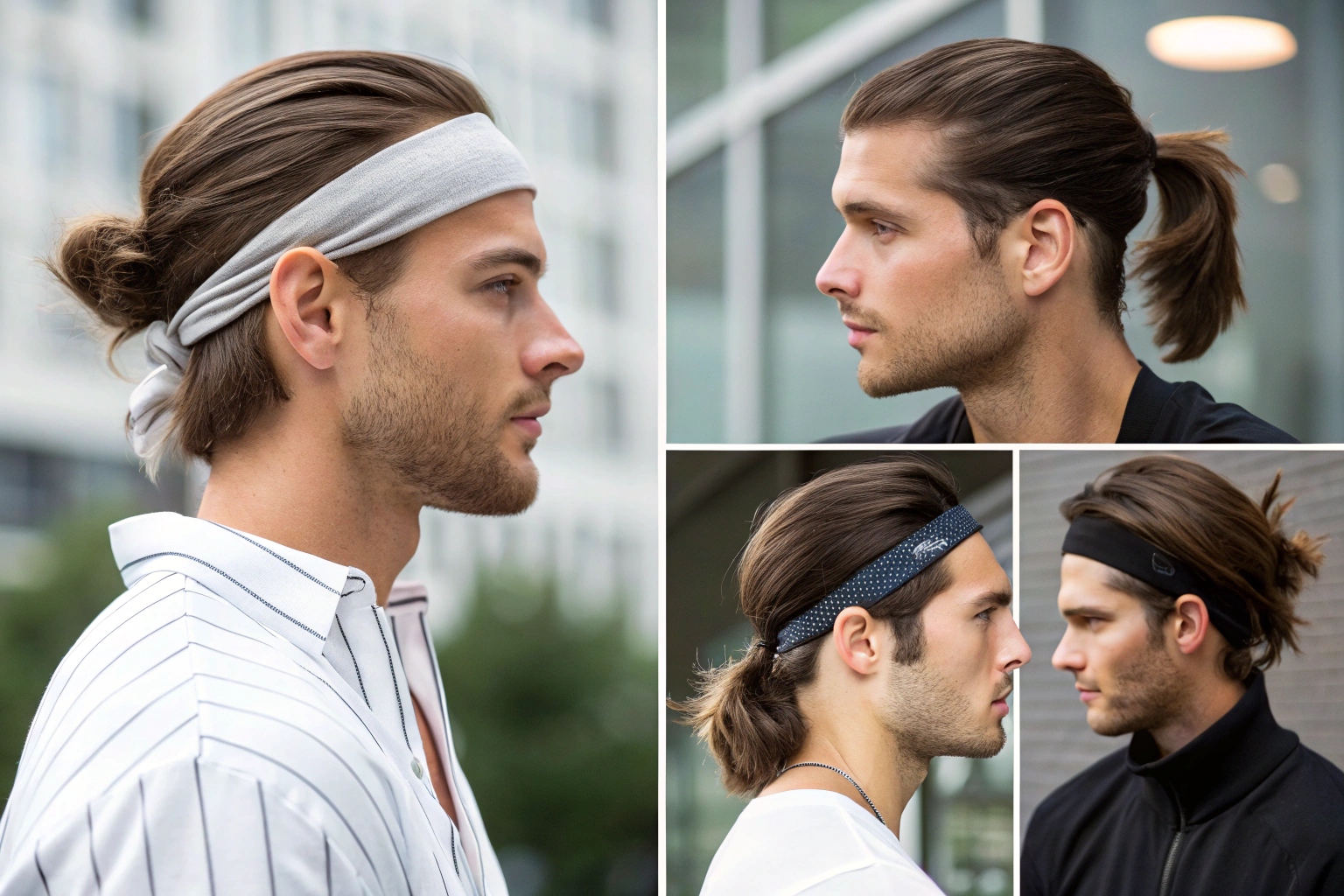
As a manufacturer, I've learned that sometimes the smallest products require the most attention to detail. Take the humble hair tie. It seems so simple, right? But I've had countless conversations with brand owners and importers, like Ron from the US, who have been burned by a seemingly "good deal" on bulk hair ties. They tell me horror stories of ties that snap on the first use, lose their shape instantly, or have metal clasps that snag and break hair. It's a fast way to get angry customer reviews and destroy brand loyalty.
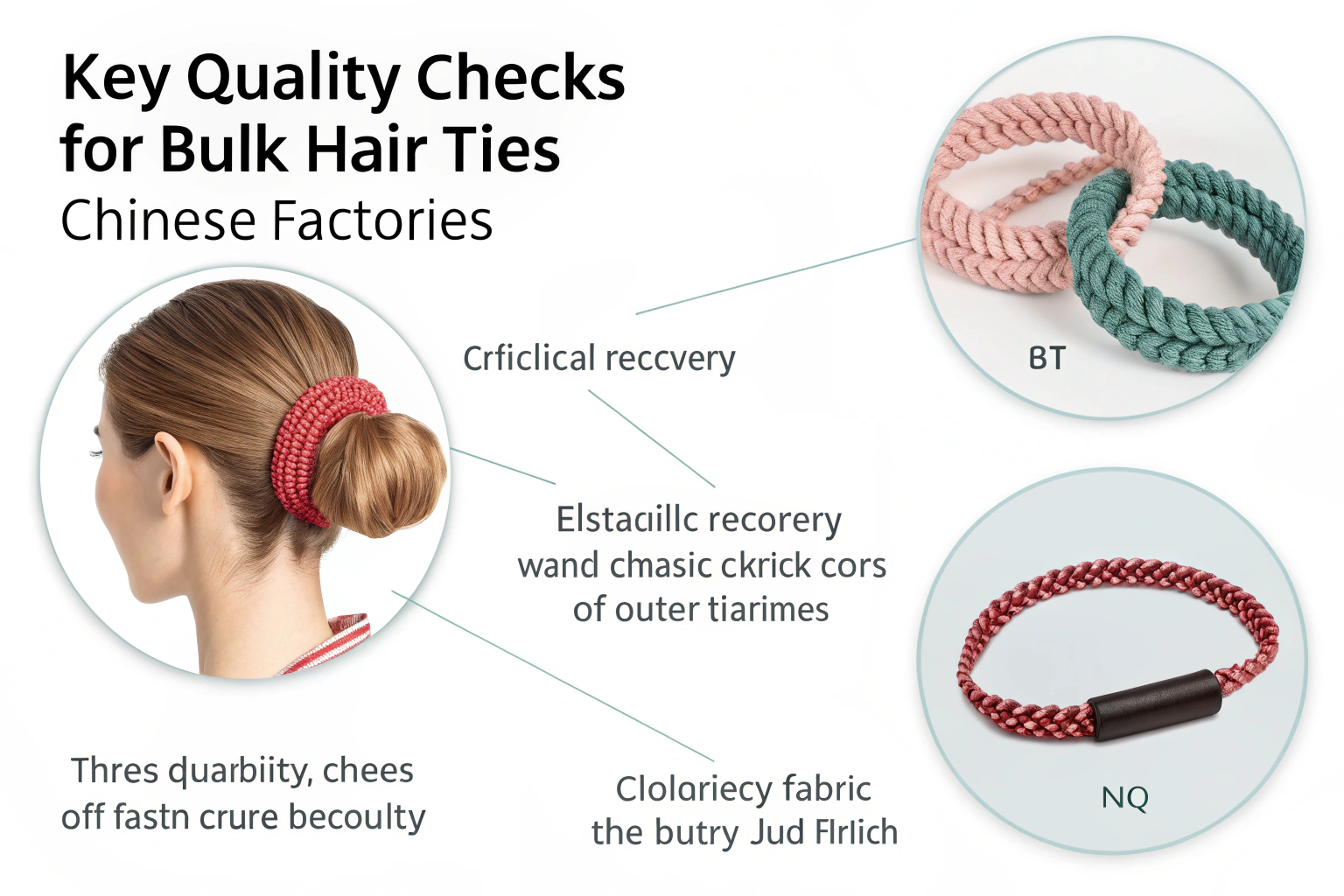
The key quality checks for bulk hair ties from Chinese factories focus on three critical areas: the elasticity and recovery of the elastic core, the durability and colorfastness of the outer fabric, and the security and finish of the join (whether it's seamless, glued, or clamped). A good hair tie isn't just one that looks nice in the package; it's one that performs reliably day after day. At my company, Shanghai Fumao Clothing, we have a multi-point inspection process for every batch of hair ties, because we know that your customer's satisfaction depends on it.
I get it. When you're ordering tens of thousands of units, the pressure to find the lowest price is immense. But with hair ties, a few cents saved per piece can cost you thousands in returns and reputational damage. Let me pull back the curtain and show you the specific quality checks we perform. This is the essential checklist you need to ensure you're sourcing a product that is strong, durable, and safe for your customers' hair.
How do you test the elastic core?
You've received a sample batch of hair ties. They feel fine, but how do you know if they'll still be fine after a week of use? The biggest complaint from consumers is a hair tie that becomes a sad, stretched-out loop after just a few wears. You need to know how to test the most important component: the elastic core.
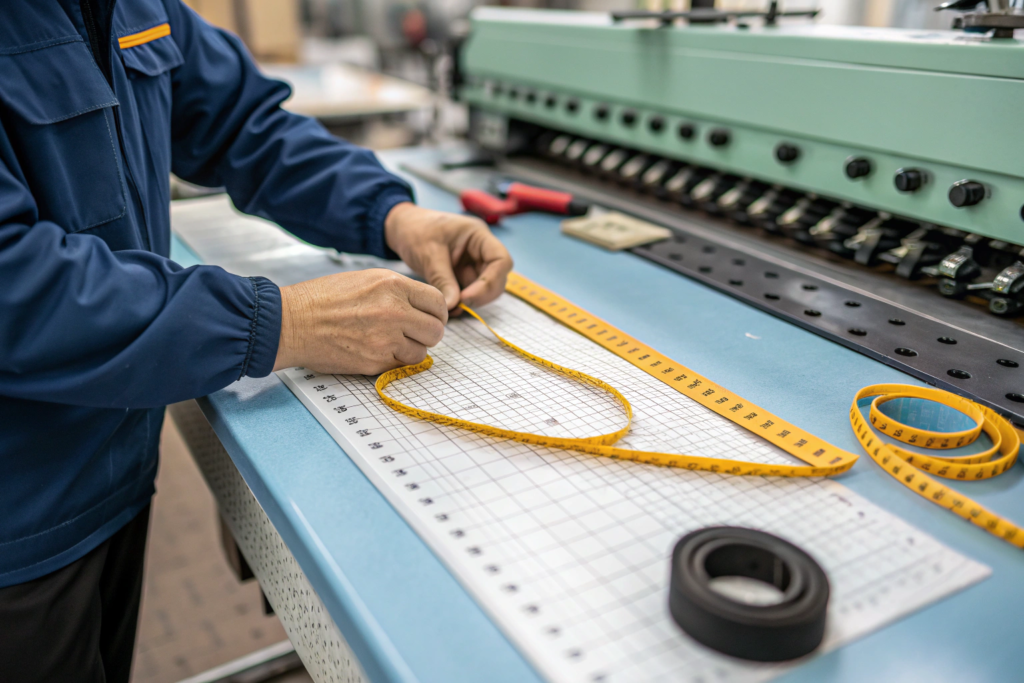
The quality of the elastic core is tested through a "stretch and recovery" test. A high-quality hair tie should be able to stretch to at least 2.5 to 3 times its original diameter without snapping and, crucially, return to within 10-15% of its original size immediately after being released. This test measures both the strength and the memory of the elastic, which are the two most important performance indicators.
This is the first and most critical test we perform. If the elastic core is weak or has poor memory, nothing else matters. We use both manual checks and specialized machines that stretch and relax the ties hundreds of times to simulate long-term use. A good factory will not be afraid to show you their testing standards for this. This core performance is the foundation, and it's more important than any other factor, including the outer fabric quality.
What is the "Stretch Test"?
This is a simple but effective manual test. Take the hair tie and stretch it as far as it will go.
- Pass: It feels strong and resilient, offering consistent resistance. It doesn't make any snapping or cracking sounds.
- Fail: It feels weak or "mushy." You hear popping sounds, which indicate that the individual elastic strands inside are breaking. Or, it simply snaps under tension. A good elastic core is typically made from multiple strands of high-quality rubber or lycra, not a single, thick band.
What is the "Recovery Test"?
This test is just as important as the stretch test. After stretching the hair tie to its maximum, let it go and see how quickly and completely it returns to its original shape.
- Pass: It snaps back quickly and looks almost identical to an unstretched tie from the same batch. This indicates good "elastic memory."
- Fail: It returns slowly and remains visibly larger and looser than its original size. This tie will not hold a ponytail securely and will quickly become useless. This is a common failure in hair ties that use cheap, low-grade rubber cores.
What to look for in the outer fabric?
The elastic is strong, but the fabric covering it is the problem. It's fading, pilling, or worse, it's so abrasive that it's snagging and damaging hair. The outer fabric is what the customer sees and feels, and its quality directly impacts their experience.
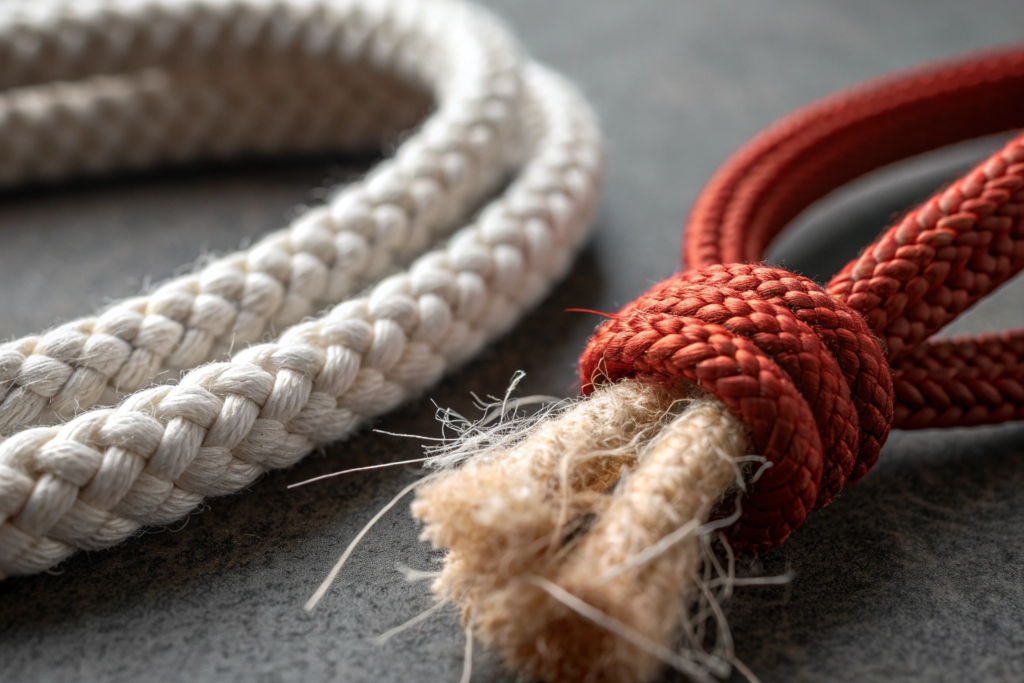
A quality check of the outer fabric should focus on three things: the material itself (nylon is superior to cotton for durability), the tightness of the weave or braid, and the colorfastness. The fabric should be smooth to the touch to prevent snagging, tightly woven to prevent the elastic from poking through, and able to withstand washing without bleeding color.
The fabric's job is twofold: to protect the hair from the raw elastic and to protect the elastic from the elements. At our factory, we source high-density, snag-resistant nylon and polyester for our premium hair ties. It costs a little more than basic cotton, but it makes a world of difference in the product's longevity and performance. This outer layer is the first thing a customer interacts with, making it a crucial part of the overall join quality and finish.
Why is nylon better than cotton for hair ties?
While cotton is a natural fiber, it's not ideal for this application. Cotton absorbs moisture, can be abrasive when woven coarsely, and is prone to pilling and looking worn out quickly. Nylon, on the other hand, is a synthetic fiber that is incredibly strong, smooth, and resistant to abrasion. It doesn't absorb water, so it dries quickly, and it holds color exceptionally well. For a product that is constantly being stretched and exposed to hair products and moisture, nylon is the superior technical choice. You can learn about the properties of these fibers on textile information sites like The Fabric of Our Lives for cotton and various polymer science resources for nylon.
How do you test for colorfastness?
A simple "wet rub" test is a good indicator. Take a hair tie, dampen it with water, and rub it vigorously on a piece of white fabric or paper towel.
- Pass: Little to no color transfers to the white fabric. This means the dye is properly fixed.
- Fail: The color bleeds noticeably onto the white fabric. This is a major quality failure. A bleeding hair tie can stain clothing, towels, and even light-colored hair when wet. A reputable factory will use high-quality dyes and proper fixing processes to prevent this, a standard practice in textile quality assurance as outlined by organizations like the AATCC.
Why is the join so important?
The elastic is strong, the fabric is great, but the hair tie breaks right where it's joined together. Or, the metal clamp used to join it gets caught in your customer's hair, creating a painful, tangled mess. The join is the weakest point of a hair tie, and its quality can make or break the entire product.
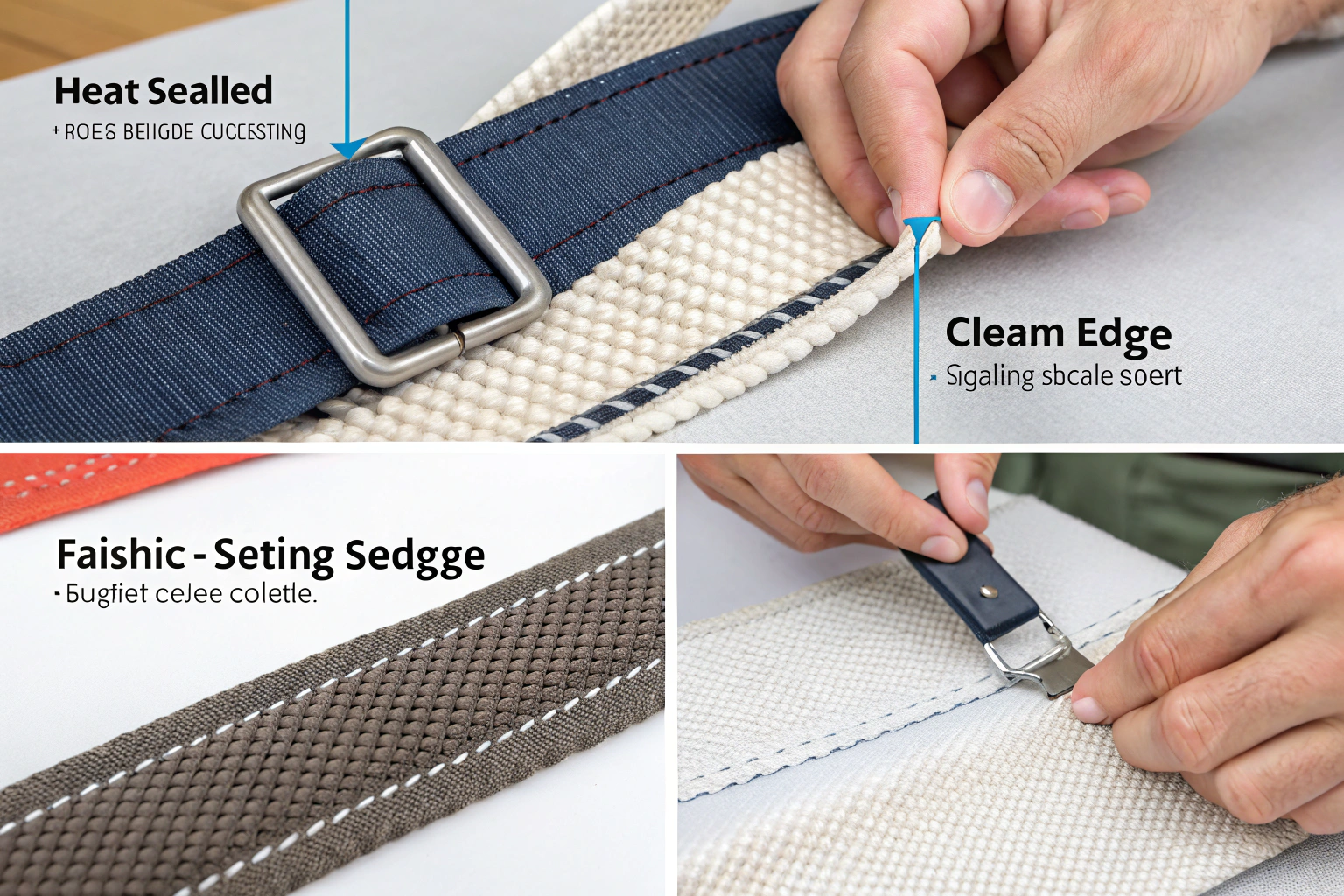
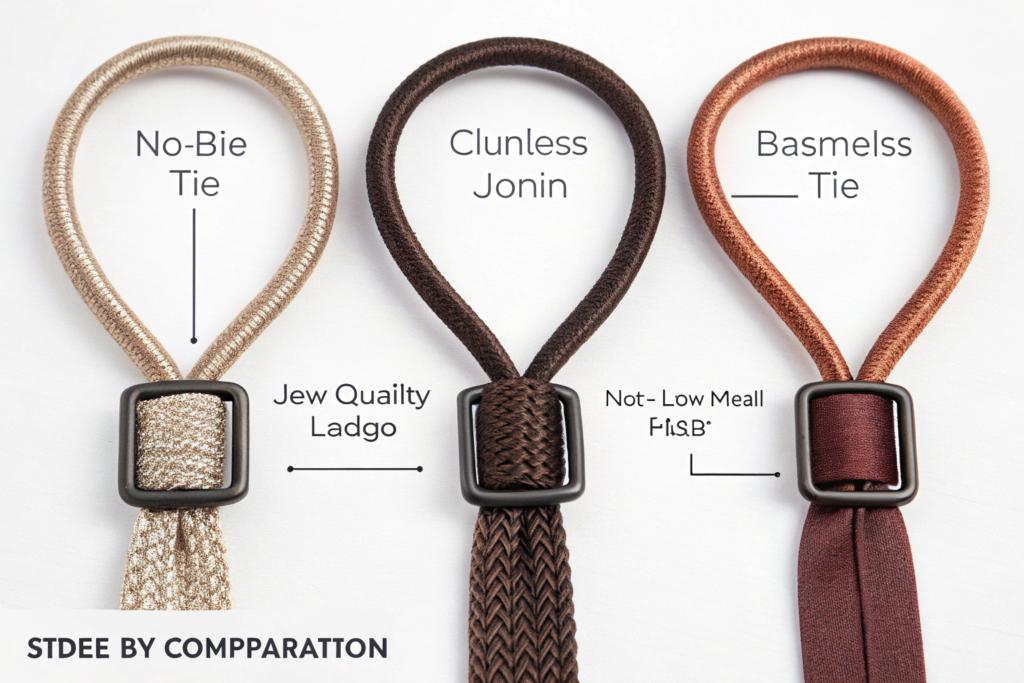
The join is the most common point of failure, and it must be inspected for both strength and smoothness. There are three main types: seamless (the highest quality), glued, and metal clamp (the lowest quality). A quality check involves pulling forcefully on the join to test its strength and running your finger and a strand of hair over it to check for any snag points.
At Shanghai Fumao Clothing, we have moved almost all of our production to seamless and high-strength glued joins. We strongly advise our clients against using metal clamps. While they are cheap, the customer service nightmare they create from snagging and breaking hair is not worth the minimal cost savings. A smooth, strong join is the signature of a premium hair tie.
What are the pros and cons of each join type?
- Seamless: This is the gold standard. The hair tie is woven in a continuous loop, so there is no join and therefore no weak point. They are strong, durable, and 100% snag-free. They are the most expensive to produce but offer the best customer experience.
- Glued: This is a very common and effective method if done correctly. The two ends of the tie are fused together with a strong, flexible adhesive. A good glued join should be flat, smooth, and nearly impossible to pull apart. A bad one will be bulky, stiff, or use weak glue that separates easily.
- Metal Clamp: This is the old-school method and the one to be most wary of. A small piece of metal is crimped around the two ends. These are notorious for snagging, pulling, and breaking hair. The metal can also rust or have sharp edges. We consider this a major quality red flag for any modern hair tie.
How do you test the join's strength?
This is another simple manual test. Grip the hair tie on either side of the join and pull. Pull hard. A good join, whether seamless or glued, should not show any signs of separating. The elastic should stretch to its limit without the join itself being the point of failure. If the join starts to peel apart, the entire batch is suspect.
What about dimensions and consistency?
You've approved a sample that was the perfect size and thickness. But the bulk order arrives, and the hair ties are all slightly different. Some are thicker, some are thinner, and the diameters are inconsistent. This lack of uniformity looks unprofessional and can affect performance.
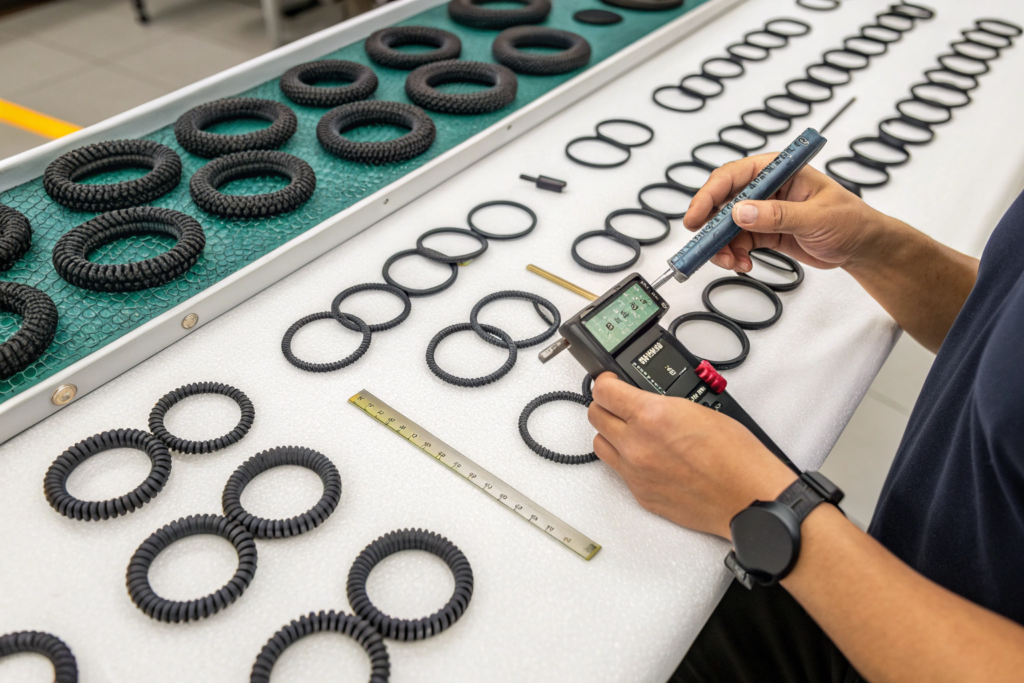
A final key quality check is for dimensional consistency across the entire bulk order. A sample of ties from different boxes should be measured for diameter, thickness (or "chunkiness"), and weight. They should all fall within a tight, pre-agreed tolerance (e.g., +/- 2mm for diameter). This ensures that every product your customer buys is identical.
This step separates the professional factories from the amateur workshops. Consistency is a sign of a well-controlled manufacturing process, from raw material sourcing to the final product. We use digital calipers and scales to perform these checks, and the results are logged for every production run. It ensures that the product you approved is the product you receive, 10,000 times over.
What are typical tolerances?
For a standard hair tie with a 5cm diameter, a typical quality tolerance would be +/- 2mm. This means every tie should measure between 4.8cm and 5.2cm. For thickness, the tolerance might be +/- 0.5mm. Anything outside of this range can indicate a problem with the machinery or raw materials and should be investigated.
Why does consistency matter?
Consistency is key to brand trust. If a customer buys a pack of your hair ties, they expect them all to perform the same way. If one is perfect and another is loose, it makes your brand feel unreliable. Consistency in size and thickness also affects how the product is packaged. If there are large variations, it can make your retail packaging look messy or ill-fitting.
Conclusion
A hair tie is not just a hair tie; it's a technical product that your customers rely on every single day. To ensure you are sourcing a high-quality product, you must implement a rigorous quality control checklist. Test the elastic for its stretch and recovery. Inspect the outer fabric for its material, weave, and colorfastness. Scrutinize the join for strength and smoothness, and always favor seamless or well-glued options over metal clamps. Finally, demand dimensional consistency across your entire order. By holding your supplier to these standards, you can confidently build a reputation for quality and reliability.
My team and I live by these quality checks. We know that our success is built on the trust that our clients—and their customers—place in our products. If you're tired of the quality gamble and want to partner with a manufacturer who treats a simple hair tie with the seriousness it deserves, then let's talk. Please reach out to our Business Director, Elaine, at her email: elaine@fumaoclothing.com. We're ready to help you deliver quality, every time.