I remember a conversation with a designer from a prestigious New York fashion house. She was launching her first scarf collection and was determined to use only the finest silk. She had samples from dozens of suppliers, but she was overwhelmed. "They all look similar in the photos," she told me. "But when I hold them, some feel like heaven, and others feel like... nothing. I can't tell the difference with my eyes, only with my hands. How do I know what I'm actually getting?" Her question was the right one. In the world of silk, what you see is not always what you get.
Sourcing high-quality silk for scarves depends on understanding four key factors: the grade of the raw silk (specifically the filament length and consistency), the momme weight (the fabric's density and substance), the type of weave and finish, and the reliability and transparency of the supply chain. The finest scarves are made from Grade 6A mulberry silk, with a momme weight of at least 12-16mm for a substantial drape, and are finished with care, often including hand-rolled hems. At Shanghai Fumao Clothing, we have deep, long-standing relationships with the best silk mills in China's Zhejiang province, allowing us to source this exceptional material for our clients.
That designer's confusion was understandable. Silk is a natural fiber, and like all natural things, it exists on a vast spectrum of quality. The difference between a good scarf and a truly exceptional one is invisible to the untrained eye but immediately obvious to the touch. It is a difference that determines whether a scarf becomes a beloved staple or a disappointing purchase. Let me walk you through the four essential factors you need to know to source silk with confidence.
What Is Silk "Grade" and Why Does Grade 6A Matter?
The journey of a silk scarf starts long before it is woven. It starts with the silkworm and the single, continuous filament it spins to create its cocoon. This filament can be up to a mile long. The quality of this raw filament is the absolute foundation of everything that follows. It is graded, and this grade is the single most important indicator of the silk's ultimate quality. The highest grade is 6A, and it is the only grade that should be used for a true luxury scarf.
Silk is graded on a scale from A to 6A, with 6A being the highest quality. This grade is determined by the length, uniformity, and cleanliness of the filament. 6A silk is made from the longest, most consistent, and flaw-free filaments. When these long, perfect filaments are spun together, they create a yarn that is incredibly smooth, strong, and lustrous. Lower-grade silks (A, B, or C) use shorter, broken filaments, or filaments with imperfections. These are often spun together, creating a yarn that is weaker, less uniform, and has a duller appearance. The resulting fabric will never have the same luxurious feel or durability. This is the fundamental difference between a scarf that feels like liquid and one that feels like... fabric.
The grading system is a direct result of the sericulture process. To get 6A silk, you need healthy silkworms, perfect growing conditions, and expert reeling. The cocoons are carefully sorted. Only the best, most uniform cocoons are used for 6A silk. The filament from each cocoon is then carefully unreeled and combined with others to create a single, continuous, perfectly uniform thread. This thread is the building block for the finest fabrics. For a scarf, this means the fabric will have a deep, almost three-dimensional luster. It will be incredibly smooth to the touch, with no slubs or unevenness. It will also be stronger and more durable. A scarf made from lower-grade silk might look acceptable at first, but it will not have the same "life" or longevity. It is more prone to snagging, and its luster will fade more quickly. This is a core concept in textile raw material evaluation. At Shanghai Fumao Clothing, we source only from mills that can certify their silk as Grade 6A, and we verify this through our own inspections.
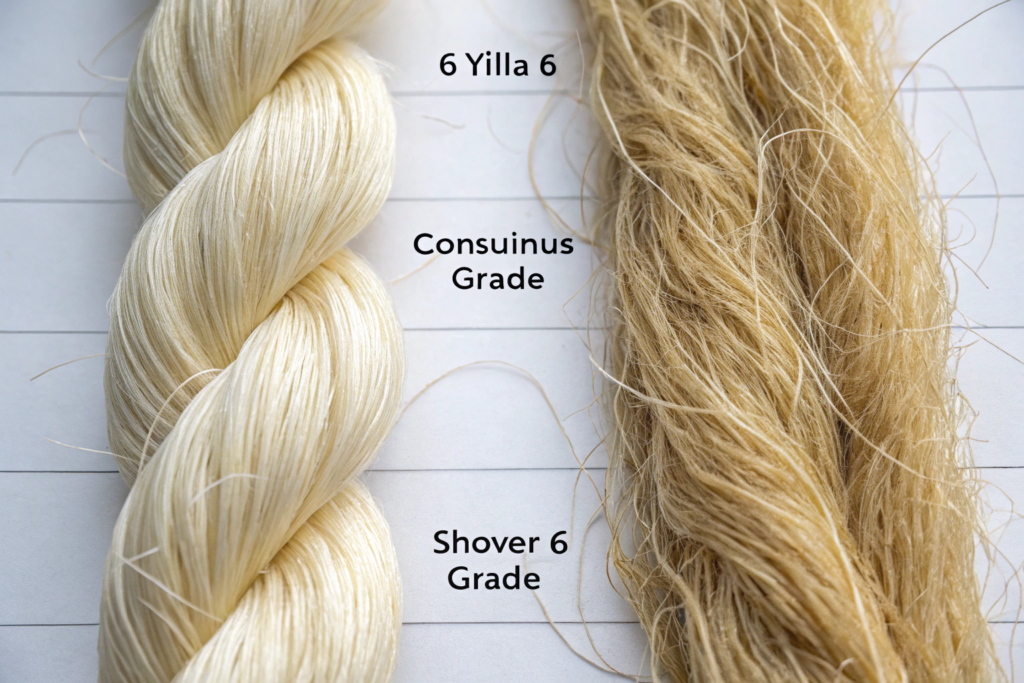
Can I tell the difference between 6A and lower-grade silk just by looking?
It can be difficult for an untrained eye, especially in a photograph. The differences become much more apparent when you touch the fabric and, over time, as you wear it. 6A silk has a deeper, more radiant luster that seems to come from within the fabric. Lower-grade silk can look flat or papery in comparison. The hand-feel is the most telling test: 6A silk is incredibly smooth and almost fluid.
Is all silk from China Grade 6A?
Absolutely not. China produces a vast range of silk qualities. While China is the world's largest silk producer, much of that silk is of lower grades used for industrial purposes or lower-end fashion. The finest 6A mulberry silk is a premium, specialty product. It requires expert knowledge and strong relationships with top-tier mills to source consistently. This is where our expertise comes in.
What Is "Momme Weight" and How Does It Affect the Scarf's Feel?
Once you have secured Grade 6A silk yarn, the next critical decision is how densely it is woven. This density is measured by momme weight (abbreviated as "mm"). Momme is a unit of weight, not thickness, but it directly correlates to the fabric's substance, durability, and drape. It is one of the most misunderstood and important specifications for a silk scarf. Choosing the right momme weight defines the scarf's entire personality.
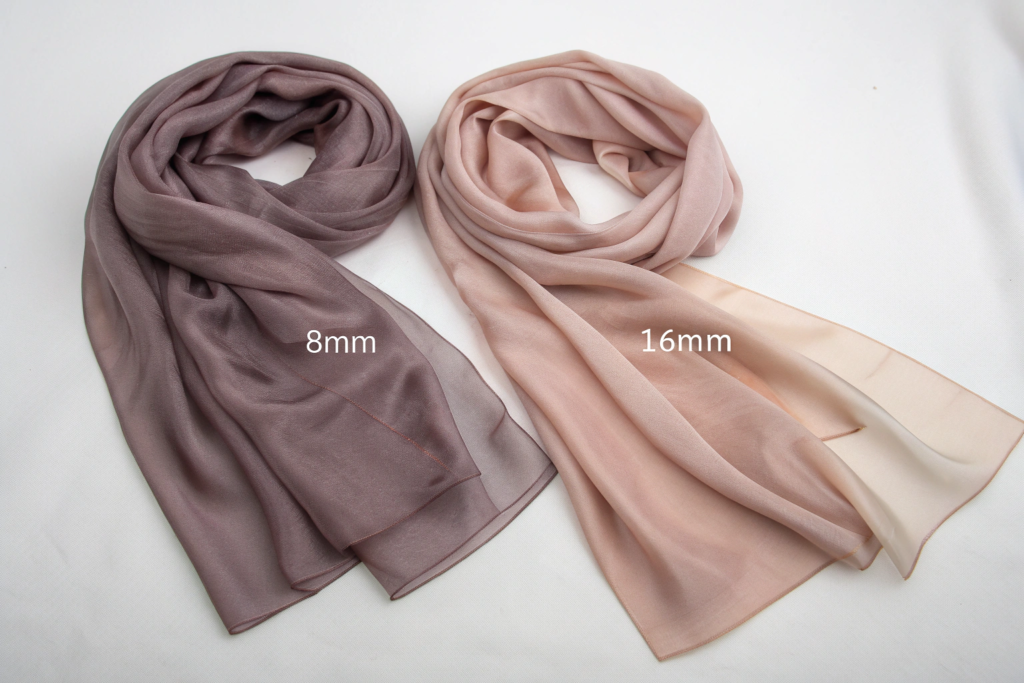
Momme weight is the weight of a piece of silk fabric that is 45 inches wide and 100 yards long. A higher momme number means a heavier, denser, and more substantial fabric. For scarves, the range is typically from 8mm to 22mm. A lightweight, airy scarf for summer might be 8-10mm. It is delicate and translucent. A classic, mid-weight scarf with a beautiful drape and excellent durability is typically 12-16mm. This is the sweet spot for most luxury scarves. A heavier, more structured scarf, almost like a shawl, might be 19mm or higher. The momme weight profoundly affects how the scarf feels, how it ties, and how it wears over time.
Let's be more specific. An 8-10mm scarf is very lightweight and often has a slightly crinkly texture. It is perfect for a small neckerchief or a delicate accent, but it is more delicate and can snag more easily. A 12mm scarf is a good entry-level weight for a standard scarf. It has a nice drape and is reasonably durable. A 14-16mm scarf is where true luxury begins. This fabric has a wonderful "hand" – it feels substantial and rich. It drapes beautifully, holds a knot well, and has a satisfying weight that signals quality. It is also much more durable. A 19-22mm scarf is a heavy, almost shawl-like fabric. It is incredibly luxurious and warm, perfect for a winter accessory, but it is less fluid and more structured. For most of our clients designing a core scarf collection, we recommend a 14mm or 16mm momme weight in Grade 6A silk. This combination offers the perfect balance of luxurious feel, beautiful drape, and lasting durability. You can find more information about momme weight in silk from various industry resources. At Shanghai Fumao Clothing, we help our clients select the perfect momme weight for their specific design and target market.
Is a higher momme weight always better?
Not necessarily. "Better" depends on the intended use. A 22mm silk is not "better" for a small, delicate neckerchief than a 10mm silk; it would be too heavy and stiff. The "best" momme weight is the one that is appropriate for the scarf's design and the desired aesthetic. For an everyday, go-to scarf, 14-16mm is the ideal range. For a very lightweight summer accessory, 8-10mm is perfect. It's about choosing the right tool for the job.
Does momme weight affect the price?
Yes, significantly. Higher momme weight fabrics use more silk yarn and a denser weave, which increases the cost of materials and production. A 16mm silk scarf will be more expensive than an 8mm scarf of the same size. This is one of the reasons why understanding momme weight is so important for pricing your product correctly.
How Do Weave and Finish Transform Silk into a Scarf?
You have the finest Grade 6A yarn and the perfect momme weight. The next step is choosing how to weave it. The weave structure determines the fabric's texture, drape, and overall character. Will it be glossy and liquid? Crisp and structured? Airy and ethereal? This is where the silk becomes a specific type of scarf, and the choices are as varied as the designers who make them.
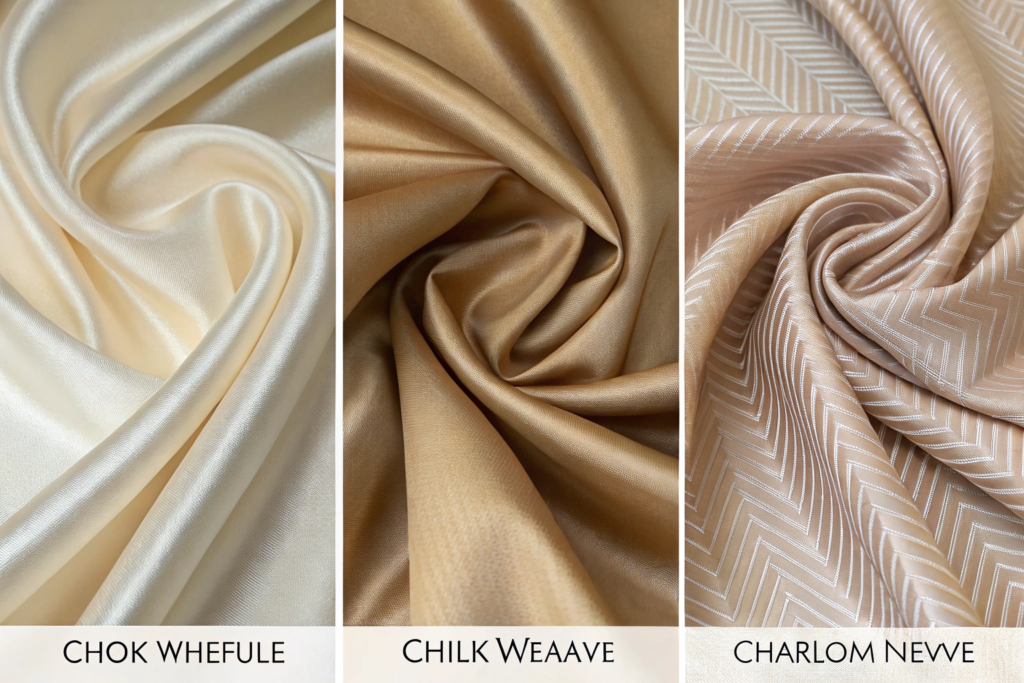
The most common and luxurious weave for scarves is charmeuse, a satin-weave construction. It is known for its incredibly glossy, smooth surface on one side and a matte back. It drapes beautifully and has that signature "liquid" silk feel. Twill is another popular choice, with a distinct diagonal rib. It is slightly more textured, very durable, and has a beautiful, subtle luster. Chiffon is a plain-weave, sheer, and lightweight fabric with a slightly crisp feel, perfect for ethereal, floaty scarves. The finish, especially the hem, is also crucial. A hand-rolled hem is the hallmark of a luxury scarf, requiring immense skill to create a soft, nearly invisible edge.
Let's explore these weaves in more detail. Silk charmeuse is the ultimate expression of silk's luxurious nature. Its high-luster surface is created by floating the warp threads over multiple weft threads. It is smooth, sensuous, and drapes like a dream. It is the classic choice for an elegant, sophisticated scarf. Silk twill is the workhorse of the scarf world, famously used by heritage brands like Hermès. It is strong, durable, and holds its shape beautifully. The slight texture of the twill weave gives printed designs a wonderful crispness and depth. It is perfect for scarves that will be tied and worn frequently. Silk chiffon is ethereal and romantic. Its sheer, lightweight nature makes it perfect for large, floaty scarves and shawls. It requires delicate handling but creates a look of effortless grace. Beyond the weave, the finishing is paramount. A machine-stitched hem is functional but can be stiff. A hand-rolled hem is a mark of true craftsmanship. Each edge is meticulously rolled and stitched by hand, creating a soft, flexible edge that drapes beautifully and feels incredibly luxurious. This attention to weave and finish is what elevates a piece of fabric into a work of art. This is the essence of textile artistry. At Shanghai Fumao Clothing, we have skilled artisans who specialize in these techniques, from weaving to hand-finishing.
Which weave is best for a printed scarf?
Both charmeuse and twill are excellent for printing, but they give different results. On charmeuse, the colors have a high-shine, almost wet-look vibrancy. On twill, the colors are more matte and crisp, with the weave adding a subtle texture to the design. The choice depends on the desired aesthetic. For a very high-shine, glamorous look, choose charmeuse. For a more classic, durable, and crisp look, choose twill.
Is a hand-rolled hem always necessary?
For a true luxury scarf, yes. It is the ultimate sign of quality and craftsmanship. However, for a more casual or budget-friendly scarf, a high-quality machine-stitched hem can be perfectly acceptable. The key is that the stitching must be even and the hem must lie flat, not curl. We offer both options and advise our clients based on their brand positioning and price point.
Why Is a Transparent and Reliable Supply Chain Essential?
You can specify Grade 6A silk, a 16mm momme weight, and a charmeuse weave with hand-rolled hems. But if your factory cannot reliably source that exact silk, or if they switch to a lower-grade material without telling you, your specifications are meaningless. The final, and perhaps most important, factor in sourcing high-quality silk is the integrity and transparency of your supply chain. You need a partner, not just a vendor.
A reliable silk supply chain is built on long-term relationships with top-tier mills. At Shanghai Fumao Clothing, we have cultivated these relationships over decades. We know exactly where our silk comes from, how it is graded, and how it is processed. We can trace it back to the region and even the specific mill. This transparency allows us to guarantee the quality we promise to our clients. It also allows us to offer consistency. When you order a silk scarf from us, you can be certain that the next batch will be made from the same, high-quality material. We also conduct our own quality control checks on every batch of incoming silk, verifying its grade, weight, and finish before it ever goes into production.
The consequences of a non-transparent supply chain can be devastating. A factory might promise you 6A silk but use a lower grade to increase their profit margin. The difference might not be immediately obvious, but it will become apparent to your customers. They will feel that the scarf doesn't have the same "magic." They might not be able to articulate why, but they will know something is off. Your brand's reputation, built on a promise of quality, will be eroded. This is why we are so obsessive about traceability. We can provide our clients with documentation on the silk's origin and grade. We can show them the test results. We build trust through transparency. This is a fundamental principle of ethical and quality sourcing. When you work with us, you are not just buying silk; you are buying the peace of mind that comes from a supply chain you can trust.
How can I verify that a supplier is being honest about their silk quality?
Ask questions. Ask for certifications. Ask to see the mill's quality control reports. Ask about their sourcing region. A reputable supplier will be able to answer these questions clearly and provide documentation. Be wary of suppliers who are vague or evasive. You can also ask for a sample of the specific silk you will be using for your production, not just a generic "silk sample." The best way to build trust is to work with a partner who has a long-standing reputation and is willing to be completely transparent.
Is it better to source silk directly from a mill or through a manufacturer like you?
Both have their advantages. Sourcing directly from a mill can give you more control, but it also requires you to manage the logistics, quality control, and potential language and cultural barriers. Working with an experienced manufacturer like us simplifies the process. We have already vetted the mills, established the relationships, and set up the quality control systems. You get the benefit of our expertise and a single point of contact for the entire project, from material sourcing to finished product.
Conclusion
Sourcing high-quality silk for scarves is a journey into a world of nuance and expertise. It is about understanding the language of the material: the significance of a Grade 6A filament, the substance of a 16mm momme weight, the character of a charmeuse or twill weave, and the artistry of a hand-rolled hem. But most of all, it is about finding a partner whose supply chain is as transparent and reliable as the silk they provide.
At Shanghai Fumao Clothing, we have spent decades building that expertise and those relationships. Our silk comes from the best mills in Zhejiang, China. We inspect it, we test it, and we treat it with the respect it deserves. We are not just suppliers; we are custodians of a tradition of luxury, and we are committed to helping our clients create scarves of true, lasting beauty.
Are you ready to create silk scarves that feel as luxurious as they look? Let's start a conversation about the perfect silk for your next collection. Contact our Business Director, Elaine, at elaine@fumaoclothing.com to begin.