I had a call last week with a marketing director for a mid-sized US tech company. She was frustrated. She had ordered 5,000 custom logo baseball caps for a trade show giveaway from an online promotional products platform. The price was low. The mockup looked great. Then the box arrived. The caps were flimsy. The embroidery was crooked. The color of the cap was not even close to the navy blue she approved. The trade show was in ten days. She had 5,000 pieces of junk that she could not hand out to potential clients. She told me, "I would have rather handed out nothing than hand out this garbage. Now everyone associates our brand with cheap and unreliable." That is the hidden cost of sourcing promotional items poorly. You do not just waste money. You damage your brand equity.
The key considerations for sourcing promotional giveaway items center on balancing perceived value with unit cost while ensuring brand safety through compliance testing and quality control. Unlike retail inventory, promotional items must be inexpensive enough to give away freely yet durable enough to reflect positively on the brand for months or years of use. The most successful promotional sourcing strategies focus on selecting items with high daily utility, ensuring consistent logo application, and partnering with a factory that understands the unique timeline and compliance pressures of corporate marketing campaigns.
At Shanghai Fumao, we produce millions of accessories every year. Many of them end up as promotional giveaways for banks, tech companies, universities, and retail chains. I understand the unique pressure of this category. You have a fixed event date. You have a strict budget per unit. And you have a logo that must look perfect. I want to share the framework we use with our clients to ensure their promotional orders are a brand win rather than a landfill disaster.
How Do I Balance Low Cost With High Perceived Value?
This is the central tension of promotional sourcing. The finance department wants the cheapest possible item. The marketing department wants the item to feel expensive and premium. If you choose poorly, you satisfy the finance team but you embarrass the marketing team and the CEO at the event. The trick is not to find the absolute cheapest item. The trick is to find the item where a small increase in cost creates a massive increase in perceived value.
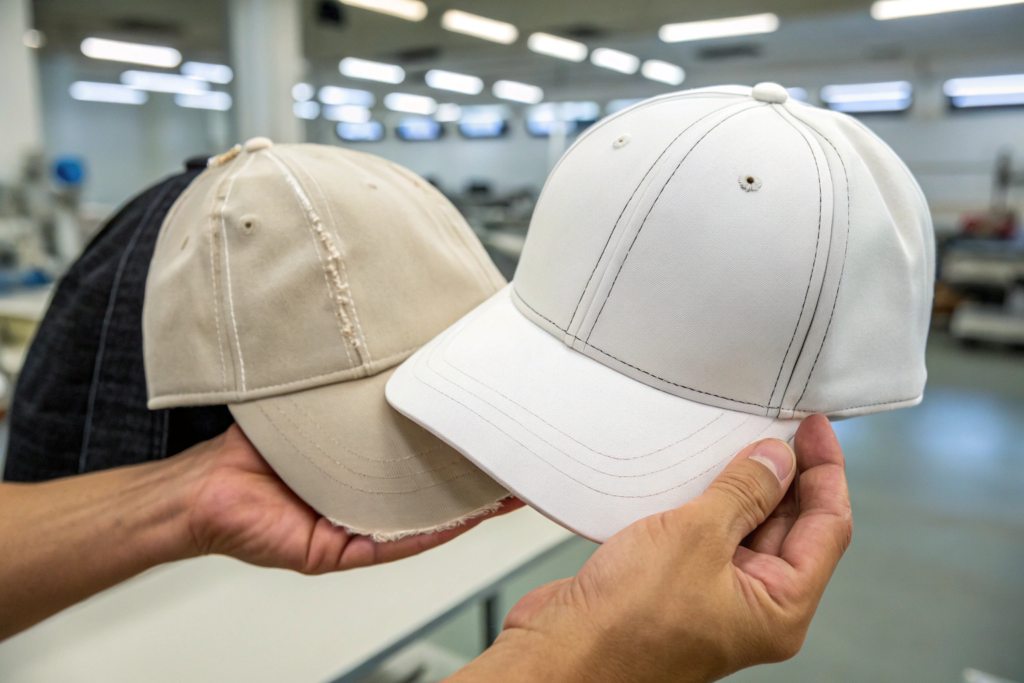
Balancing low cost with high perceived value in promotional accessories requires focusing on material upgrades and finishing details that are visually and tactilely apparent but have minimal impact on production cost. A structured baseball cap with a firm front panel feels significantly more valuable than a flimsy unstructured cap, yet the cost difference may be only thirty to fifty cents. Similarly, a soft-touch matte finish on a metal keychain looks more premium than a shiny plastic coating for nearly the same price. Smart sourcing identifies these high-impact leverage points.
What Product Categories Offer The Best Cost-To-Value Ratio?
Not all accessories are created equal for promotional use. You want items that people will actually keep and use. An item that sits in a desk drawer for two years with your logo on it is free advertising. An item that goes straight into the trash at the airport is a total loss.
Based on our production data and client feedback, here are the categories that consistently deliver the best cost-to-value ratio for promotional giveaways:
| Product Category | Approximate Landed Cost (USD) | Perceived Value | Daily Utility Factor |
|---|---|---|---|
| Structured Baseball Caps | $2.50 - $4.00 | High ($20+ retail feel) | Very High (Worn outdoors, visible to others) |
| Canvas Tote Bags | $1.80 - $3.50 | Medium-High | High (Reusable shopping bag) |
| Soft Knit Beanies | $2.00 - $3.50 | Medium-High | Seasonal but High in winter |
| Metal Keychains | $0.80 - $1.50 | Medium | Medium (Used daily but low visibility) |
| Silicone Wristbands | $0.15 - $0.30 | Low | Medium (Often discarded after event) |
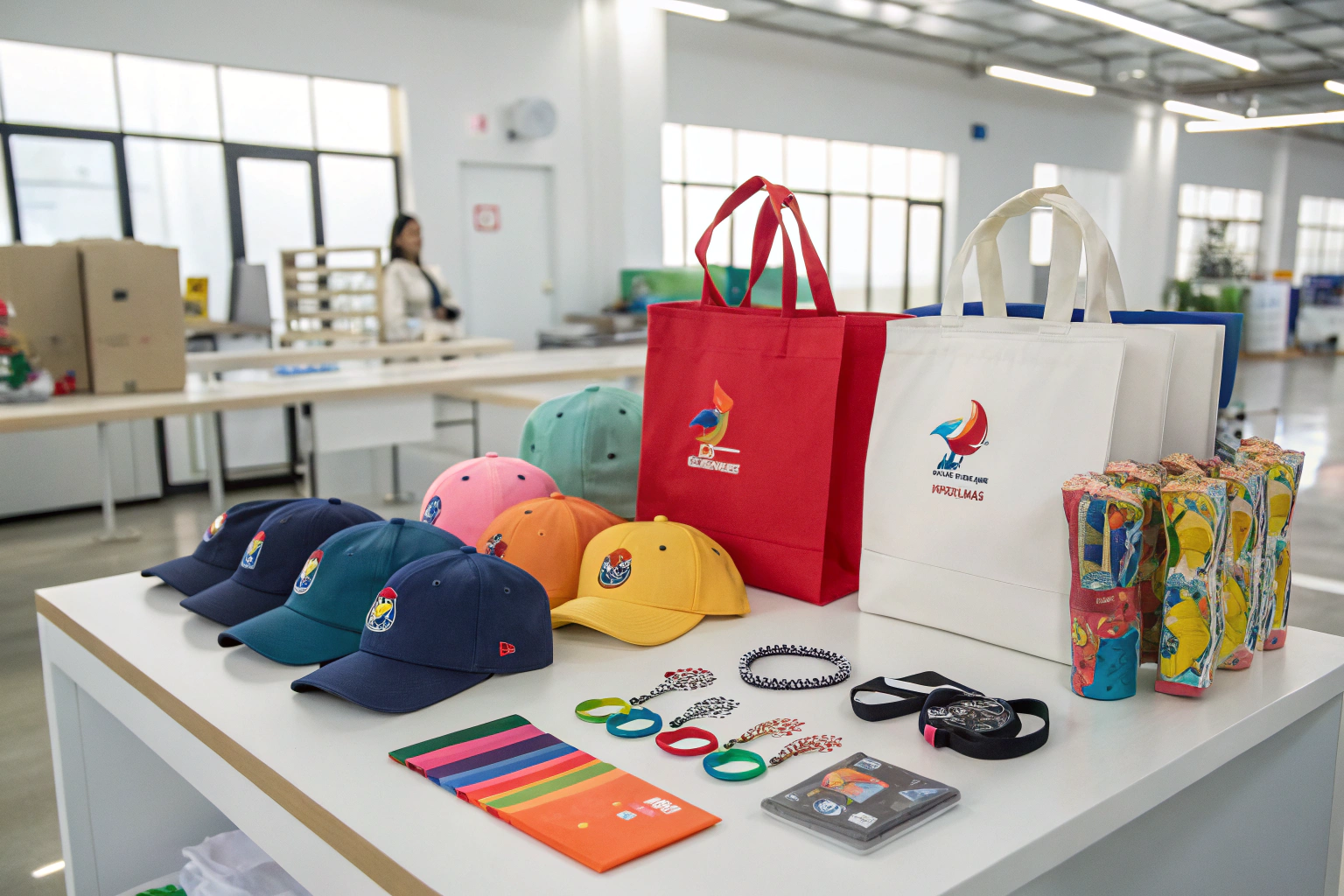
The structured cap and the canvas tote are the champions here. A well-made cap has a large printable area for your logo and it sits on someone's head, advertising your brand to everyone they pass. A canvas tote bag replaces single-use plastic bags and carries your logo through grocery stores and farmers markets. These items have a long tail of impressions.
When sourcing these items, avoid the cheapest base material. For caps, choose a brushed cotton twill instead of a thin poly-cotton blend. The hand feel is completely different. For totes, choose a heavier 10-ounce canvas instead of a flimsy 6-ounce fabric. The bag stands up on its own and feels substantial. The cost difference per unit is often less than $0.30. Over 5,000 units, that is $1,500. Is it worth $1,500 to have 5,000 people associate your brand with quality instead of cheapness? The answer is always yes.
How Does Logo Application Affect Cost And Quality Perception?
This is where many promotional orders go wrong. You find a great cap at a great price. Then you slap a cheap, glossy, thick plastic transfer print on the front. It looks like a sticker. It feels like sandpaper. It cracks after three washes. The cap is ruined. The brand impression is ruined.
The decoration method matters as much as the base product. Here is how we guide clients on logo application for promotional items:
-
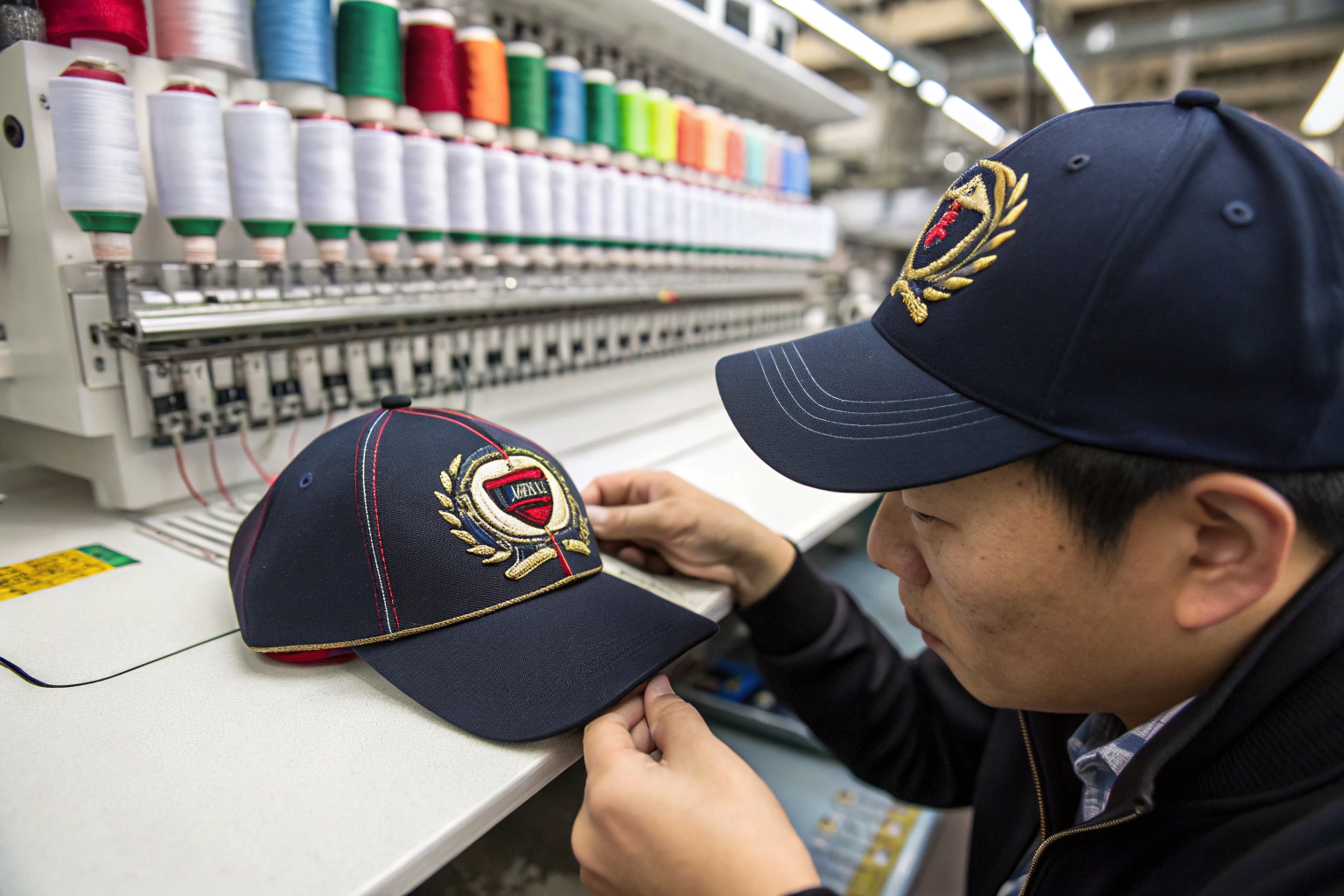
Embroidery (Recommended for Caps and Beanies): This is the gold standard for promotional headwear. Embroidery uses thread to sew the logo directly into the fabric. It is permanent. It has texture and dimension. It looks professional. The cost is based on stitch count. A simple text logo might be 3,000 stitches and cost $0.60. A complex logo might be 8,000 stitches and cost $1.20. For promotional orders, we often recommend flat embroidery for small text to keep stitch count and cost low while maintaining a clean look.
-
Screen Printing (Recommended for Tote Bags): This is ideal for canvas and cotton bags. Ink is pressed through a mesh screen onto the fabric. It is cost-effective for large, bold designs. The setup cost for screens is spread over the quantity, so the per-unit cost drops significantly for larger orders.
-
Debossing (Recommended for Leather or PU Items): A heated metal die presses the logo into the material, creating a recessed impression. This is a premium, subtle look often used on corporate gifts rather than mass giveaways.
You want to avoid PVC patches or thick rubber labels unless they are integral to your brand aesthetic. They can feel cheap and they add weight. You also want to avoid 4-color process printing on caps. It is expensive and the result often looks faded and blurry compared to a sharp embroidered logo.
A good factory will advise you on the best decoration method for your specific logo and budget. They will look at the size of the text and the detail in the artwork and recommend the technique that yields the best result for the lowest cost. This is the value of working with a manufacturer who understands both production and branding.
What Compliance Issues Matter For Promotional Products?
Promotional items are often given away freely. This leads some buyers to believe that compliance rules do not apply. "It's just a freebie," they think. This is a dangerous and expensive misconception. In the eyes of US law, a free promotional item is still a consumer product. It is subject to the exact same safety regulations as an item sold on a store shelf. If your promotional giveaway harms someone, your company is liable.
Compliance for promotional items is non-negotiable and focuses primarily on lead content, small parts hazards for children, and proper country-of-origin labeling. A professional factory will proactively manage CPSIA testing and certification for any promotional item that could foreseeably end up in the hands of a child under 12. They will also ensure that the product and its packaging meet the labeling requirements enforced by US Customs and Border Protection.

Are Promotional Items Subject To CPSIA Testing?
Yes. Absolutely. The Consumer Product Safety Improvement Act (CPSIA) does not have an exemption for "promotional" or "giveaway" items. The law applies based on the product category, not the commercial transaction.
This is especially critical for promotional items that appeal to children or are likely to be given to families. Examples include:
- Plush keychains or backpack clips.
- Silicone bracelets with charms.
- Stress balls shaped like animals or cartoon characters.
- Children's baseball caps.
If your promotional item falls into the category of a children's product (designed for use by a child 12 or younger), you are required by federal law to have a Children's Product Certificate (CPC) . This certificate must be based on third-party testing from a CPSC-accepted laboratory.
Our QC team at AceAccessory manages this process for our promotional clients. We test for:
- Total Lead in Surface Coating: The paint on a metal keychain or the ink on a stress ball must be below 90 ppm.
- Total Lead in Substrate: The metal alloy of the keychain ring itself must be below 100 ppm.
- Phthalates: Certain plasticizers are banned in children's products.
We have seen cases where a corporate client ordered 10,000 plush keychains for a convention. They did not ask about testing. The factory they used did not offer it. The keychains arrived with high lead paint on the metal clasp. That is a recall waiting to happen. A recall of promotional items is a public relations nightmare. It erases any goodwill the giveaway was intended to create.
What Labeling Is Required For US Import Of Promotional Goods?
Even if your item is not a children's product, it still needs to clear US Customs. Customs and Border Protection (CBP) requires specific markings on every imported product and its packaging.
For promotional accessories like caps and bags, the requirements are:
- Country of Origin: The item must be marked "Made in China" (or Vietnam, etc.) in a conspicuous, legible, and permanent manner. For a cap, this is usually a woven label sewn into the sweatband. For a bag, it is a label sewn into a side seam.
- Fiber Content: If the item is a textile cap or bag, it must have a label stating the fiber content (e.g., "100% Cotton" or "65% Polyester / 35% Cotton").
A professional factory handles this labeling as a standard service. We have stock labels for "Made in China" and common fiber blends. We can also print custom labels with your brand name alongside the required legal information.
If the labeling is missing or incorrect, CBP can detain your shipment at the port. You will then have to pay a customs broker to apply corrective stickers or labels. This adds cost and delay. For a time-sensitive promotional event, a port hold of even three days can mean missing the trade show entirely. This is why you need a factory that knows the import rules as well as they know the sewing rules.
How Does Production Timing Differ For Promotional Orders?
Promotional orders are not like retail inventory orders. If a retail order is one week late, you miss some sales. If a promotional order is one week late, you miss the event. The event date is a hard, immovable deadline. The trade show will not wait for your container. The corporate anniversary party will not reschedule for your tote bags.
Production timing for promotional orders must be managed backward from the in-hands date of the event. Unlike regular wholesale orders that allow for some schedule flexibility, promotional sourcing requires a buffer for customs clearance, domestic trucking, and internal distribution at the client's office. A reliable factory partner will provide a transparent production schedule with specific milestone dates and will prioritize communication about any potential delays that could impact the event deadline.

What Is A Realistic Lead Time For Custom Logo Accessories?
You need to plan further ahead than you think. The common mistake is to assume that because the item is simple, it can be made quickly. While production speed is part of it, the logistics and decoration setup are the real time consumers.
Here is a realistic timeline for a promotional order of 3,000 custom embroidered baseball caps:
| Phase | Activity | Estimated Working Days |
|---|---|---|
| Pre-Production | Logo digitizing for embroidery, sample approval | 5 - 7 Days |
| Material Sourcing | Ordering specific fabric color if not in stock | 5 - 10 Days |
| Production | Cutting, sewing, embroidering 3,000 caps | 12 - 15 Days |
| Quality Control | Inspection and packing | 2 Days |
| Ocean Freight | Port to Port (Shanghai to Los Angeles) | 18 - 22 Days |
| Customs & Trucking | Clearance and delivery to your door | 5 - 7 Days |
Total Estimated Lead Time: 47 to 63 Days (Approximately 7 to 9 Weeks)
If you need the caps faster, you can use Air Freight. This cuts the shipping time from 3 weeks to about 5 days. However, air freight for 3,000 caps can cost $800 to $1,200, adding $0.25 to $0.40 per unit. For a tight deadline, this is often a necessary expense to save the event.
The critical path is often the logo digitizing. This is the process of converting your JPG or PNG logo file into a stitch file that the embroidery machine can read. This takes a day or two. Then we sew a sample and send you a photo or video for approval. This back-and-forth can eat up a week if communication is slow. You can accelerate this by providing a high-quality vector file (like .AI or .EPS) of your logo and by responding quickly to approval requests.
How Can I Mitigate The Risk Of Late Delivery?
The pain of a late promotional shipment is acute. You have an empty booth at the trade show. You have staff standing around with nothing to hand out. You have a CEO asking where the branded merchandise is. Mitigating this risk requires a proactive approach.
Here are the strategies we recommend to our promotional clients:
- Build a 14-Day Buffer: Whatever the factory tells you the delivery date is, add two weeks for customs delays, weather, or trucking issues. Tell the factory you need the goods in your warehouse two weeks before the event. This gives you breathing room.
- Use a Split Shipment: For large orders (over 5,000 units), consider shipping a portion by air and the balance by sea. You get 500-1,000 pieces in hand early for pre-event marketing or VIP gifts. The rest arrive by boat for the main event. This hedges your risk.
- Verify the Factory's Holiday Calendar: This is a big one. If your order is scheduled to ship in late January, you must account for Chinese New Year. Factories shut down for two to three weeks. Workers travel home. Production stops completely. You must have your goods finished and on the water before the holiday begins, or you will wait an extra month. A good project manager will warn you about this. A bad one will forget to mention it until it is too late.
- Use a Factory with In-House Decoration: Some factories outsource the embroidery or printing to a third-party workshop. This adds an extra layer of logistics and potential delay. We do all our embroidery and printing in-house. This gives us complete control over the schedule.
The most important factor is communication. You want a supplier who understands the concept of an "event deadline." They should be asking you "What is the event date?" on the very first call. That question tells you they get it.
Can Promotional Items Be Sustainable And Budget-Friendly?
Sustainability is no longer a niche concern. It is a mainstream expectation. Even for free giveaways, consumers notice the materials. A plastic-heavy, non-recyclable promotional item can actually generate negative brand sentiment. People post on social media about wasteful conference swag. You do not want your brand to be the example in that post.
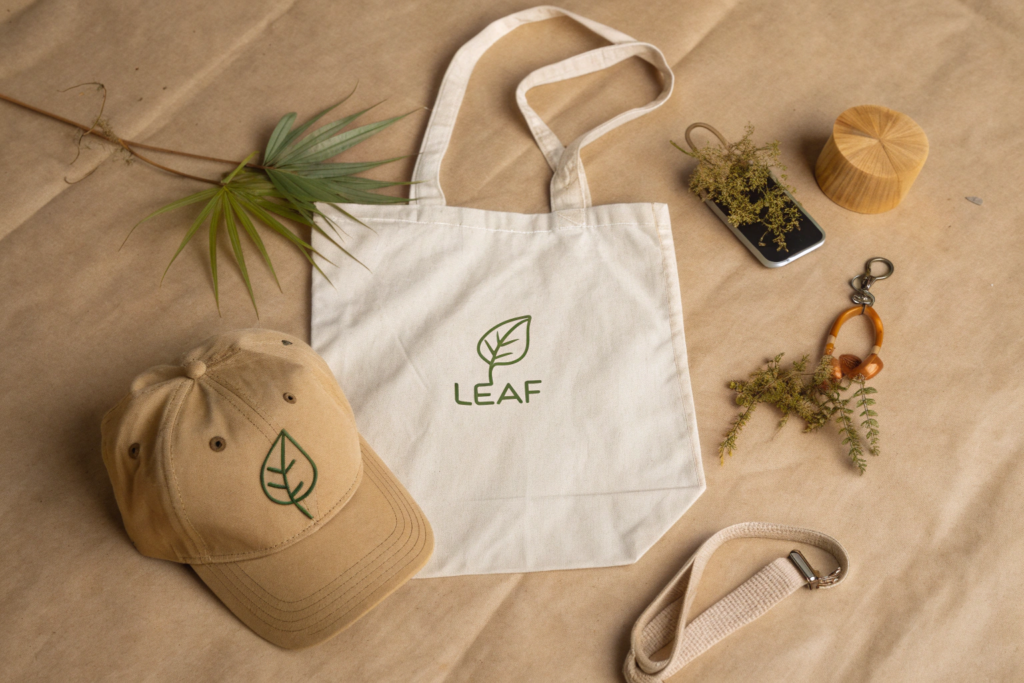
Sustainable promotional items are achievable within tight budget constraints by focusing on material substitutions that carry a minimal cost premium. Switching from virgin polyester to recycled polyester for a baseball cap, or from bleached cotton to natural unbleached canvas for a tote bag, adds only a marginal cost increase while providing a powerful, authentic marketing story. The key is to avoid expensive "green" certifications and instead focus on the tangible, visible attributes of the sustainable material.
What Affordable Sustainable Materials Work For Giveaways?
You do not need to source organic, fair-trade, GOTS-certified cotton for a free tote bag. That level of certification is expensive and often unnecessary for the promotional market. What you need is a material that looks and feels sustainable and has a verifiable basic claim.
Here are the materials we recommend for budget-conscious sustainable giveaways:
- Recycled Polyester (rPET) for Caps: This fabric is made from recycled plastic bottles. It looks and feels nearly identical to virgin polyester. It is durable and holds color well. A cap made from rPET might cost $0.15 more than a standard poly cap. The marketing value of saying "This cap was made from recycled water bottles" is immense. You can source rPET fabric certified by the Global Recycled Standard for verification.
- Natural Unbleached Canvas for Totes: Bleaching cotton requires chemicals and energy. Natural canvas has a warm, off-white, slightly speckled appearance. It is beautiful in its simplicity. It often costs less than bleached white canvas because it skips a processing step. It gives an immediate "organic" and "artisanal" vibe. This is a win-win. Lower cost and better story.
- Bamboo Fiber for Small Items: Bamboo grows quickly and requires less water than cotton. Bamboo fiber can be used for small accessories like lanyards, wristbands, or keychain fobs. It has a unique soft texture.
- Minimal Packaging: This is the biggest cost saver. Instead of putting each cap in an individual polybag, we can pack them in bulk using recycled cardboard dividers. You save on the polybag cost and the labor to bag them. You also eliminate a piece of single-use plastic. You can include a small hang tag on the cap that explains the sustainable material choice and the reduced packaging.
The key is to communicate the choice. Do not just use the material silently. Put a small tag on the item that says "I used to be a plastic bottle" or "100% Natural Undyed Cotton." This turns the giveaway into a conversation starter at the trade show booth. It reflects positively on your company's values.
How To Avoid Greenwashing In Promotional Sourcing?
Greenwashing is when a company makes misleading claims about the environmental benefits of a product. This is a growing area of legal scrutiny and consumer skepticism. If you claim a cap is "eco-friendly" but it is made of 100% virgin polyester and shipped in a mountain of plastic wrap, you risk being called out.
To avoid greenwashing, stick to specific, verifiable claims rather than vague adjectives.
-
Bad Claim: "Eco-Friendly Cap!"
-
Good Claim: "Cap Crown Fabric Made from 65% Recycled Post-Consumer Plastic Bottles."
-
Bad Claim: "Sustainable Tote!"
-
Good Claim: "Unbleached Natural Cotton Canvas. Skip the Bag. Use This Tote."
Work with a factory that can provide Transaction Certificates for recycled materials. This is a document from the supply chain that traces the recycled material from the source to the finished product. At AceAccessory, we keep these certificates on file for our rPET and recycled cotton orders. We can provide copies to our clients so they have documentation to back up their marketing claims.
Also, be honest about the limitations. The brim of a baseball cap is still made of plastic (buckram) because that is what gives it shape. The sweatband might be a synthetic blend for durability. Acknowledge the parts that are not sustainable. Consumers appreciate transparency more than perfection. They know a promotional cap is not going to save the planet. But they appreciate the effort to make a better choice.
Conclusion
Sourcing promotional giveaway items is a unique discipline within the broader world of accessories manufacturing. It is not just about finding the lowest price. It is about finding the sweet spot where cost, quality, compliance, and timing all intersect to create a positive brand experience. A cheap, late, or unsafe promotional item does more harm than good. It wastes your budget and damages the reputation you have worked hard to build.
By focusing on high-utility categories like structured caps and canvas totes, investing a few extra cents in premium finishes and proper embroidery, and partnering with a factory that understands the hard deadlines and legal requirements of the US market, you can turn a simple giveaway into a powerful, long-lasting marketing asset.
At Shanghai Fumao, we have helped countless brands navigate the complexities of promotional sourcing. We understand the pressure of the event deadline. We understand the need for budget discipline. And we understand the importance of a logo that looks crisp and professional. We manage the details so you can focus on the event itself.
If you have an upcoming trade show, corporate event, or marketing campaign and you need a reliable partner for your promotional accessories, I encourage you to reach out. Let us discuss your vision, your budget, and your timeline. We will help you find the perfect items that make your brand shine. For a personalized consultation and a quote on your next promotional project, please contact our Business Director Elaine directly at elaine@fumaoclothing.com. We look forward to helping you create giveaways that people actually want to keep.