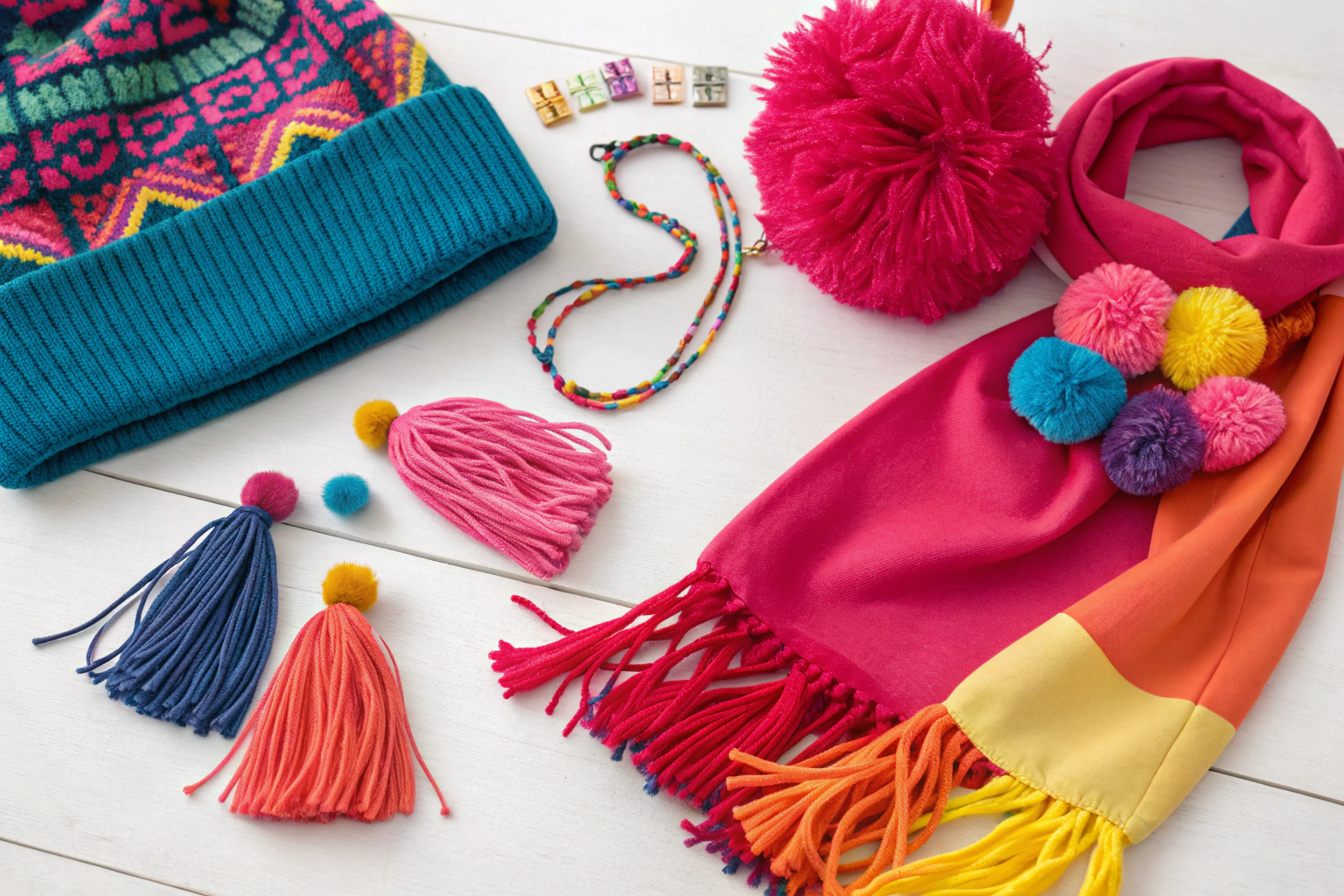
I've always had a soft spot for pompoms and tassels. They add a sense of playfulness, movement, and fun to any accessory. A simple beanie becomes a statement piece with a big, fluffy pompom on top. A plain scarf is transformed by a row of silky tassels at each end. But as a manufacturer, I also know that these seemingly simple decorative elements come with their own set of challenges. Buyers like Ron, who are sourcing for major retailers, need to understand these challenges to avoid costly mistakes.
The truth is, a pompom or a tassel that is poorly made can ruin an entire product. A pompom that sheds, goes flat, or falls off is a quality disaster. A tassel that frays, tangles, or gets its threads pulled out is a customer complaint waiting to happen. At Shanghai Fumao Clothing, we've made millions of pompom and tassel accessories. We've learned exactly what works and what doesn't. Our quality control team has developed specific tests for these features.
In this post, I'll walk you through the four most important considerations when sourcing accessories with pompoms and tassels. We'll cover materials, attachment methods, durability, and care instructions. If you're planning to add these fun, fashionable items to your collection, this guide is essential reading.
What Materials Are Best For Durable Pompoms?
The first decision you have to make is what your pompom is made of. This single choice determines everything else: how it looks, how it feels, how it wears over time, and how much it costs. There is no single "best" material. The right choice depends on the overall design of the accessory, your budget, and the expectations of your customer.
We work with three main categories of pompom materials. First, there are synthetic fibers like acrylic and polyester. These are affordable, widely available, and easy to care for. Modern acrylics can be incredibly soft and can mimic the look of fur or wool very convincingly. Second, there are natural fibers like wool and cotton. Wool pompoms have a classic, cozy look and feel, but they require more careful cleaning. Third, there are novelty materials like faux fur, leather strips, or even metallic threads. These are for high-fashion, statement pieces. Our design team can help you select the perfect material for your specific project. For more on textile fibers and their properties, the Textile Exchange website is a great resource.

What is the difference between acrylic and wool pompoms?
This is the most common question we get. Acrylic pompoms are the workhorse of the industry. They are machine washable, colorfast, and resistant to moths and mildew. They hold their shape well and are very affordable. The best acrylics are incredibly soft and can be made in any color imaginable. The downside is that they are synthetic and may not have the same natural warmth and breathability as wool.
Wool pompoms have a unique, luxurious feel. Wool is naturally warm, breathable, and has a beautiful, subtle luster. It also has natural crimp, which gives it a springy, voluminous texture. However, wool requires more care. It can shrink or felt if washed in hot water. It can also be itchy for some people, depending on the quality. A Merino wool pompom, however, is incredibly soft. The choice between acrylic and wool often comes down to the brand's image and the product's price point. A wool beanie with a matching wool pompom feels like a premium, heritage product.
How do you ensure a faux fur pompom looks luxurious and not cheap?
Faux fur is a fantastic material for pompoms, but quality varies wildly. Cheap faux fur looks obviously fake, with a plastic-y sheen and a stiff, unpleasant hand feel. High-quality faux fur, on the other hand, can be incredibly realistic and soft. The key is in the density and the length of the fibers.
When we source faux fur for pompoms, we look for a dense pile. This means there are many fibers packed closely together, which gives the fur a rich, full look. We also look for fibers with a natural, matte finish, not a high shine. The backing material also matters. A good-quality backing is flexible and durable, allowing the pompom to be attached securely. We always test our faux fur pompoms by brushing them and pulling on them to ensure they don't shed excessively. For more on synthetic materials, the Fashion for Good initiative has great resources on innovative textiles.
How Should Pompoms Be Attached To Hats And Scarves?
A beautiful pompom is useless if it falls off. The attachment method is absolutely critical. And it's not just about strength. You also have to think about removability. Some customers love a pompom on their beanie. Others find it gets in the way when they put their hood up. Offering a removable pompom can be a huge selling point. We've experimented with many different attachment methods over the years, and we've settled on a few that we know are reliable.
The method we choose depends on the product and the client's preferences. For a permanent, ultra-secure attachment, we sew the pompom directly into the construction of the hat. For a removable option, we use buttons, snaps, or ties. Each method has its pros and cons. Our job is to guide you to the right choice for your specific product and target market. For standards on attachment strength for children's products, the Consumer Product Safety Commission (CPSC) has clear guidelines.
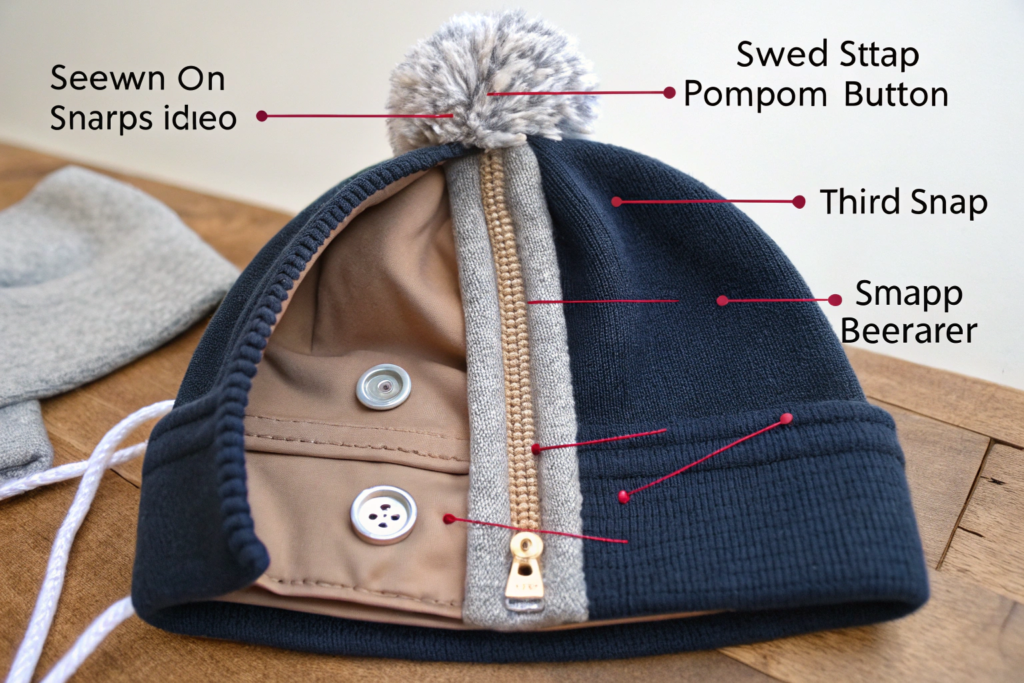
What are the pros and cons of sewn-on vs. button-attached pompoms?
A sewn-on pompom is the most secure option. The pompom is stitched directly into the top of the hat, often as part of the final assembly. It will never accidentally fall off. The downside is that it's permanent. The customer cannot remove it for washing or for a different look. If the pompom gets damaged, the whole hat is affected.
A button-attached pompom offers flexibility. A button is securely sewn onto the top of the hat. The pompom has a loop or a small buttonhole on its base that can be slipped over the button to attach it. This allows the customer to remove the pompom whenever they want. It's great for washing, for storing, or for changing the look of the hat. The challenge is ensuring the button is attached strongly enough to withstand repeated use. We reinforce the button from the inside of the hat to prevent it from pulling out. This is a very popular option for our clients.
How do you reinforce the attachment point to prevent tearing?
The top of a beanie is a stress point. When you pull a hat on and off, you are putting pressure on that area. If you have a heavy pompom attached, the stress is even greater. To prevent the attachment point from tearing, we use reinforcement techniques.
For sewn-on pompoms, we often add an extra layer of fabric or a piece of interfacing inside the hat at the very top. This provides a strong anchor for the stitching. For button-attached pompoms, we sew the button through the hat fabric and through a small reinforcement patch on the inside. This distributes the pull force over a wider area, making it much less likely to tear. We also test the pull strength of every new design to ensure it can withstand significant force. This attention to detail is what prevents returns and unhappy customers.
What Makes A High-Quality Tassel?
Tassels are another wonderful decorative element, but they have their own set of quality considerations. A great tassel is all about the details. The way the threads are cut, the way the top is wrapped, and the way the tassel is attached to the main product all matter. A poorly made tassel will quickly become a tangled, frayed mess. A well-made tassel will stay beautiful for years.
We've learned that the quality of the yarn or thread is the foundation. It needs to be tightly twisted so that the individual fibers don't easily separate. The way the tassel is constructed also matters. The threads must be securely anchored at the top so they don't pull out. And the cut ends must be finished to prevent fraying. At our factory, we have artisans who specialize in making tassels. It's a skilled craft. For inspiration on different tassel styles, fashion and craft blogs like The Spruce Crafts have excellent tutorials and guides.

How do you prevent tassels from fraying and tangling?
Fraying and tangling are the two biggest enemies of a tassel. Fraying happens when the individual fibers in the twisted yarn start to come loose. This is most common at the cut ends of the tassel. To prevent this, we use high-quality, tightly twisted yarns. The tighter the twist, the more resistant the fibers are to unraveling. For the ultimate in fray prevention, we can apply a tiny drop of a clear, flexible sealant to the very tip of each strand. This is a delicate process reserved for high-end products.
Tangling happens when the individual strands of the tassel get twisted and knotted together. This is often caused by static electricity or by the tassel being rubbed against other fabrics. To minimize tangling, we can treat the tassel with an anti-static spray during manufacturing. We also advise our clients on how to package the product to prevent tangling during shipping. Sometimes, simply tying a piece of paper around the tassel keeps it neat until it reaches the customer.
What is the best way to attach tassels to scarves and bags?
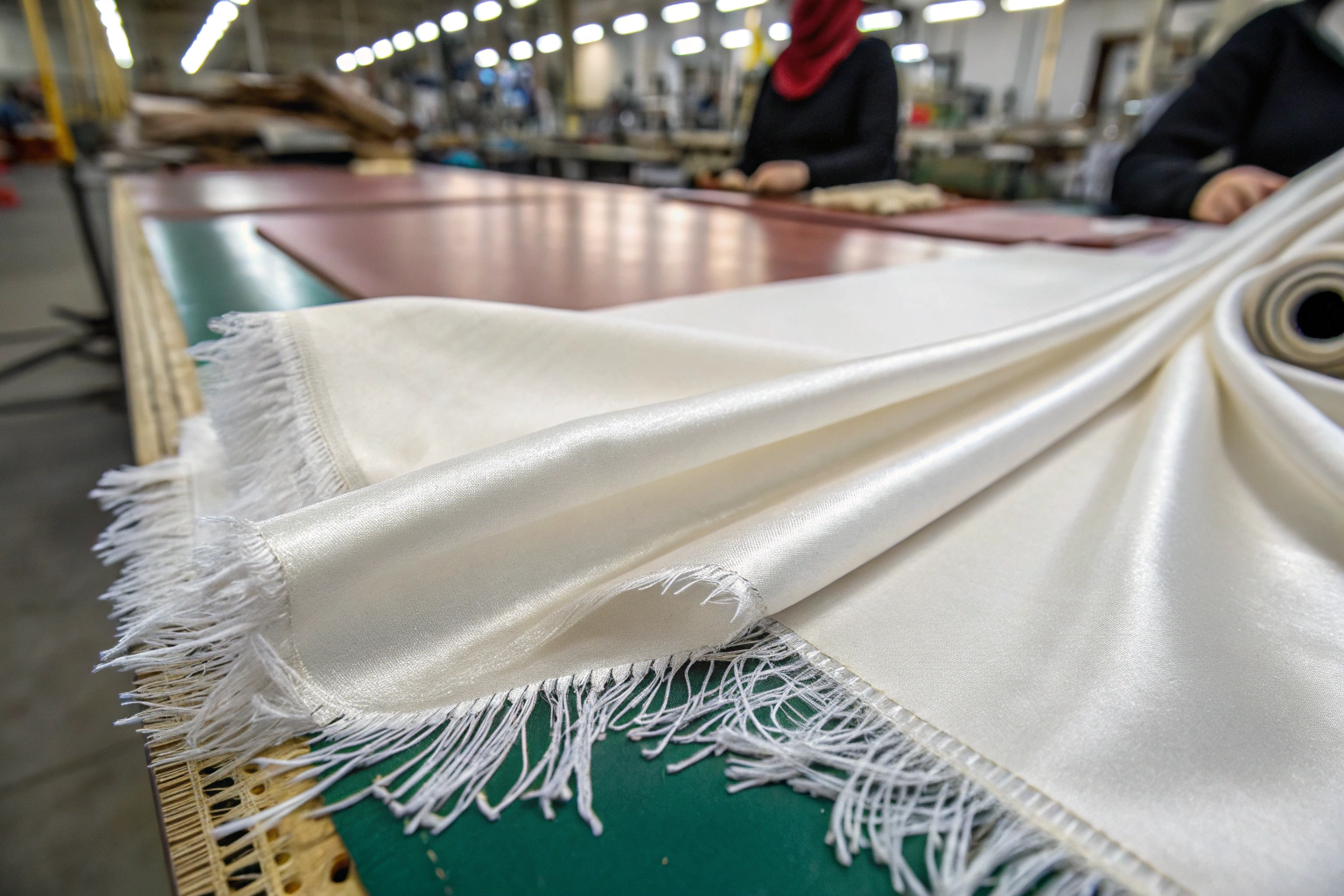
The attachment method for a tassel depends on where it's going and how much stress it will endure. For a scarf corner, the tassel is often an extension of the fringe. The threads of the tassel are actually part of the scarf's weave. This is the most secure method. For a bag, a tassel might be a decorative charm that hangs from a zipper pull or a handle. In this case, it's usually attached with a small, strong loop of cord or a metal finding.
We always reinforce the attachment point. If a tassel is sewn on, we use a bar-tack stitch, which is a very dense, strong stitch that can withstand a lot of pulling. If it's attached with a loop, we make sure the loop is securely anchored inside the tassel's head. The goal is to make the attachment point as strong as the tassel itself, so the tassel can't be pulled off without breaking the yarn.
What Are The Care And Testing Requirements?
Once you've chosen your materials and attachment methods, you have to think about the real world. How will these accessories hold up to wear and washing? Will the pompom shed in the washing machine? Will the tassel's colors run? Will the attachment point fail after a few months? These are the questions our quality control team exists to answer. We put every new design through a series of rigorous tests.
Testing is not an afterthought at our factory. It's an integral part of the development process. We test for colorfastness, for shedding, for attachment strength, and for durability. We simulate real-world use. We wash samples, we dry them, we brush them, we pull on them. We want to find any potential failure point before the product ever leaves our factory. For international testing standards, organizations like ASTM International and ISO provide the benchmarks we follow.

How do you test for pompom shedding and durability?
Shedding is a common problem with pompoms, especially those made from faux fur or long-fiber acrylics. To test for shedding, we have a simple but effective method. We brush the pompom vigorously with a stiff brush, usually for a set number of strokes. Then we examine how many fibers have come loose. If we see excessive shedding, we know we have a problem.
We also do a "wash test." We attach the pompom to a hat and put it through a standard washing machine cycle, using cold water and a gentle detergent. After the cycle, we inspect the pompom. Has it lost its shape? Has it matted down? Has it shed fibers into the machine? Has the color bled? The pompom must pass these tests before we approve it for production. If it fails, we go back to the drawing board and look for a better quality material.
What wash instructions should you provide for pompom accessories?
This is a crucial part of the customer experience. If you tell a customer to wash a wool pompom in hot water, you are guaranteeing a return. We always provide clear, accurate care instructions based on our testing. For most acrylic pompom hats, we recommend hand washing in cold water and laying flat to dry. This is the safest method and will prolong the life of the pompom.
For hats with removable pompoms, we have a great advantage. We can instruct the customer to remove the pompom before washing. They can then wash the hat according to its care instructions, and the pompom can be spot-cleaned separately if needed. This is a huge selling point. For faux fur pompoms, we often recommend gentle brushing to restore the fluffiness after washing. We can even provide a small, branded brush as part of the packaging for a premium product.
Conclusion
Sourcing accessories with pompoms and tassels is a wonderful way to add fun and fashion to your product line. But as we've seen, these playful elements require serious attention to detail. From choosing the right materials to ensuring a secure attachment, from preventing fraying to rigorous testing, every step matters. A well-made pompom or tassel can elevate a product and delight a customer. A poorly made one can lead to returns and damage your brand's reputation.
At Shanghai Fumao Clothing, we have years of experience in exactly this area. Our factory in Zhejiang produces thousands of pompom and tassel accessories every month. Our design team can help you select the perfect materials and styles. Our quality control team will test every detail to ensure durability. And our experienced project managers will guide you through the entire process, from initial sketch to final delivery.
If you're ready to add some playful pompoms or elegant tassels to your next collection, let's talk. Please contact our Business Director, Elaine, at elaine@fumaoclothing.com. We'll help you create accessories that are as durable as they are delightful.