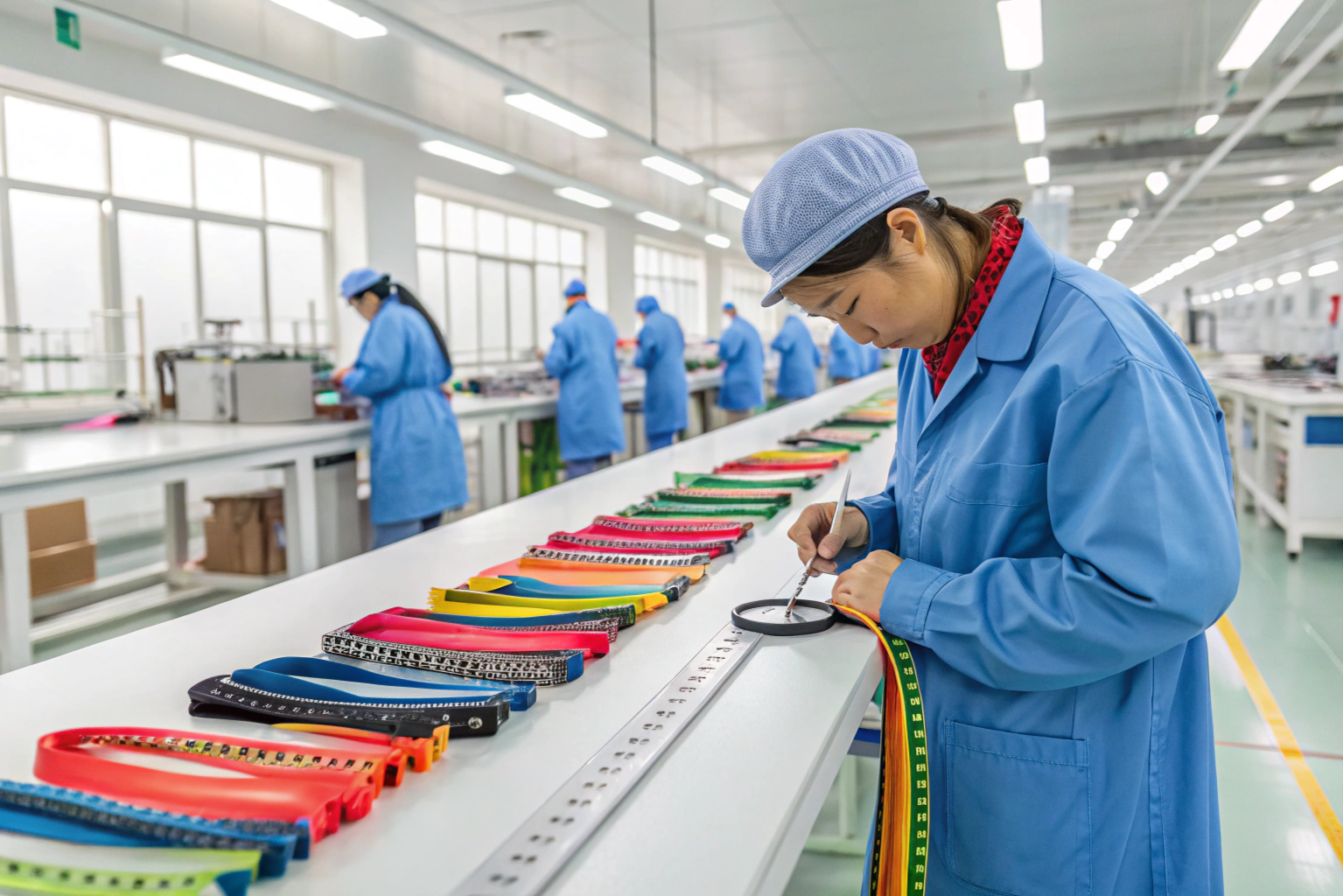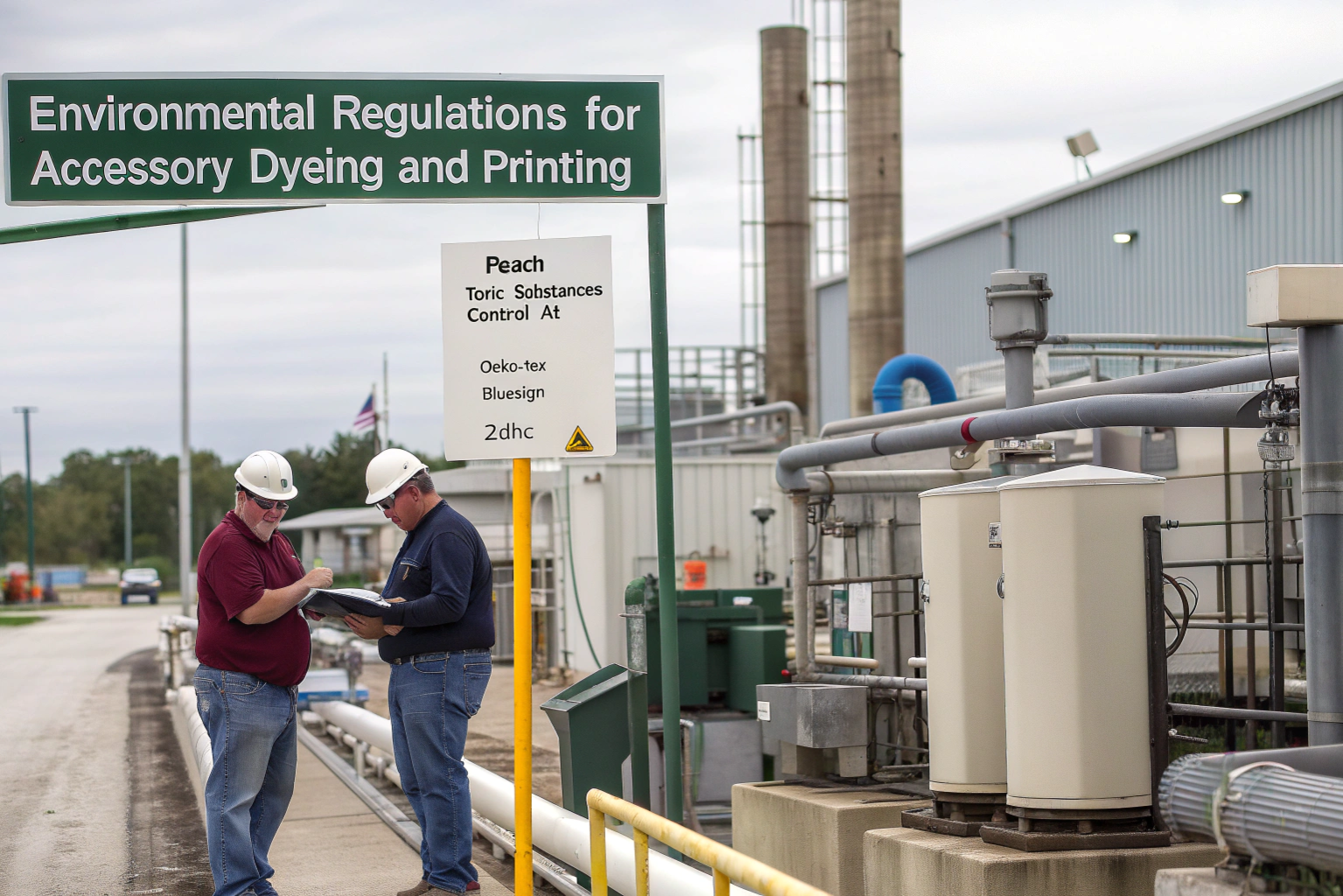
I remember the day a buyer from a major European department store sat across from me with a stack of documents. She placed them on the table and said, “I need you to explain how you handle your dyeing and printing. My last supplier could not provide the certifications I need. If you cannot either, I cannot work with you.” That conversation changed our business. Until that moment, I had thought of environmental regulations as something we complied with because we had to. That day, I realized they are something we embrace because they build trust with our clients.
Environmental regulations for accessory dyeing and printing encompass a complex framework of chemical restrictions, wastewater treatment requirements, air emission controls, and documentation standards. The key regulatory systems include REACH in Europe, the Toxic Substances Control Act in the United States, and various voluntary certifications like OEKO-TEX, bluesign, and ZDHC. Compliance requires factories to maintain strict control over the chemicals used in production, install and operate wastewater treatment facilities, and provide detailed documentation tracing materials from source to finished product.
Let me walk you through exactly how these regulations work and what they mean for brands sourcing accessories from China. Whether you are a European brand subject to REACH requirements or an American retailer concerned about chemical safety, understanding these regulations is essential for protecting your brand and your customers.
What Are the Key Chemical Regulations Affecting Accessory Dyeing?
Chemical regulations are the foundation of environmental compliance in accessory manufacturing. They determine what substances can be used in dyeing and printing, and they set limits on residual chemicals in finished products.
The key chemical regulations affecting accessory dyeing are REACH in the European Union, the Toxic Substances Control Act in the United States, and various restricted substances lists maintained by major retailers. These regulations prohibit or restrict hundreds of chemicals, including azo dyes that can release carcinogenic amines, heavy metals like lead and cadmium, phthalates used in printing pastes, and perfluorinated chemicals used for water resistance. Compliance requires regular testing of both incoming materials and finished products.
What Is REACH and How Does It Apply to Accessories?
REACH stands for Registration, Evaluation, Authorization, and Restriction of Chemicals. It is the European Union’s comprehensive chemical regulation framework. For accessory manufacturers, REACH determines what chemicals we can use in our processes and what residual limits apply to finished products.
Under REACH, certain substances are classified as Substances of Very High Concern, or SVHC. These include chemicals that are carcinogenic, mutagenic, toxic to reproduction, or persistent in the environment. When an accessory contains an SVHC above a certain concentration, there are notification requirements.
For our clients in Europe, we provide REACH compliance documentation for every order. This includes:
- A declaration that the products do not contain restricted substances above permitted limits
- Test reports from accredited laboratories when required
- Material safety data sheets for chemicals used in production
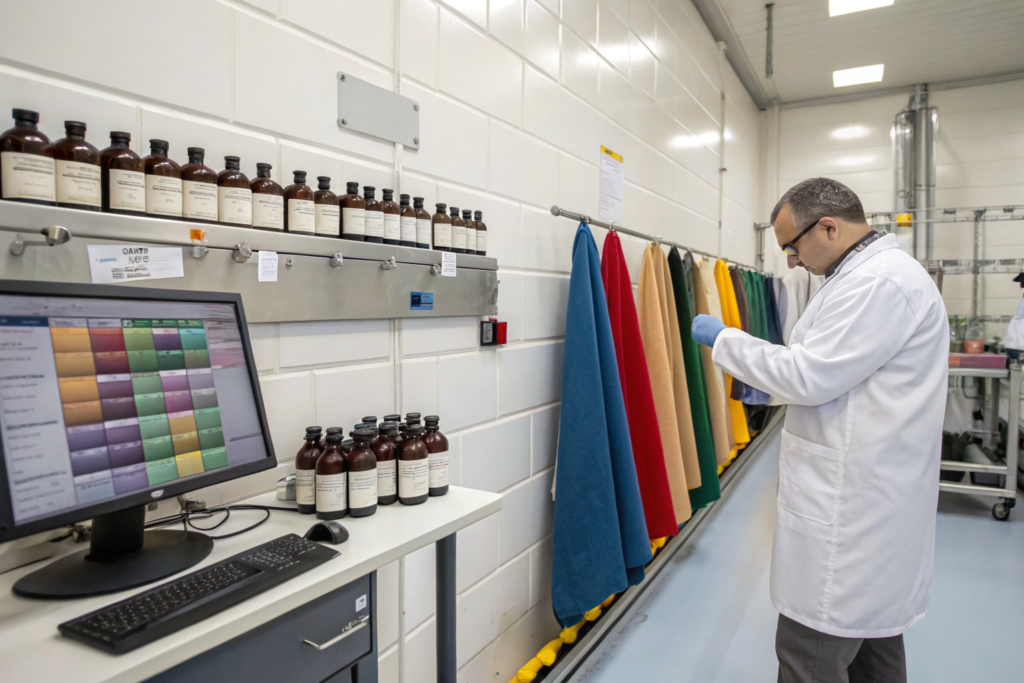
We maintain a restricted substances list that we update whenever REACH adds new chemicals to the SVHC list. Our chemical purchasing process includes screening against this list. We do not purchase or use chemicals that are not compliant.
One of our European supermarket clients requires us to submit a full chemical inventory for every production run. They use this information to maintain their own compliance records. It is a detailed process, but it gives them confidence that the products on their shelves are safe.
How Does the US Toxic Substances Control Act Compare?
The Toxic Substances Control Act, or TSCA, is the United States’ primary chemical regulation framework. While REACH is more comprehensive, TSCA imposes significant restrictions on certain chemicals, particularly those that persist in the environment.
For accessories sold in the US, the key restrictions under TSCA include:
- Limits on lead content in children’s products
- Prohibitions on certain phthalates in toys and childcare articles
- Restrictions on persistent organic pollutants
The US regulatory landscape is complex because individual states also have their own regulations. California’s Proposition 65, for example, requires warnings for products containing any of over 900 chemicals known to cause cancer or reproductive harm.
For our American clients, we provide Proposition 65 compliance documentation. This involves testing products for listed chemicals and either certifying that they are not present or providing the required warnings. Many of our clients prefer to avoid chemicals that require warnings, so we work with them to select materials and processes that are Proposition 65 compliant.
How Are Wastewater and Air Emissions Regulated in China?
When I first started in this business, wastewater from dyeing was a serious problem in China. Many factories discharged untreated water directly into rivers. Those days are over. The Chinese government has implemented strict environmental regulations, and factories that do not comply are shut down.
In China, wastewater and air emissions from accessory dyeing and printing are regulated under the Environmental Protection Law and industry-specific discharge standards. Dyeing facilities must install and operate wastewater treatment systems that meet national discharge standards before water can be released. Air emissions, including volatile organic compounds from printing and drying processes, must be captured and treated. Factories are subject to regular inspections, real-time monitoring, and severe penalties for non-compliance.
What Wastewater Treatment Is Required for Dyeing Operations?
Dyeing generates wastewater that contains dyes, chemicals, and cleaning agents. If discharged untreated, this water can harm aquatic life and contaminate drinking water sources.
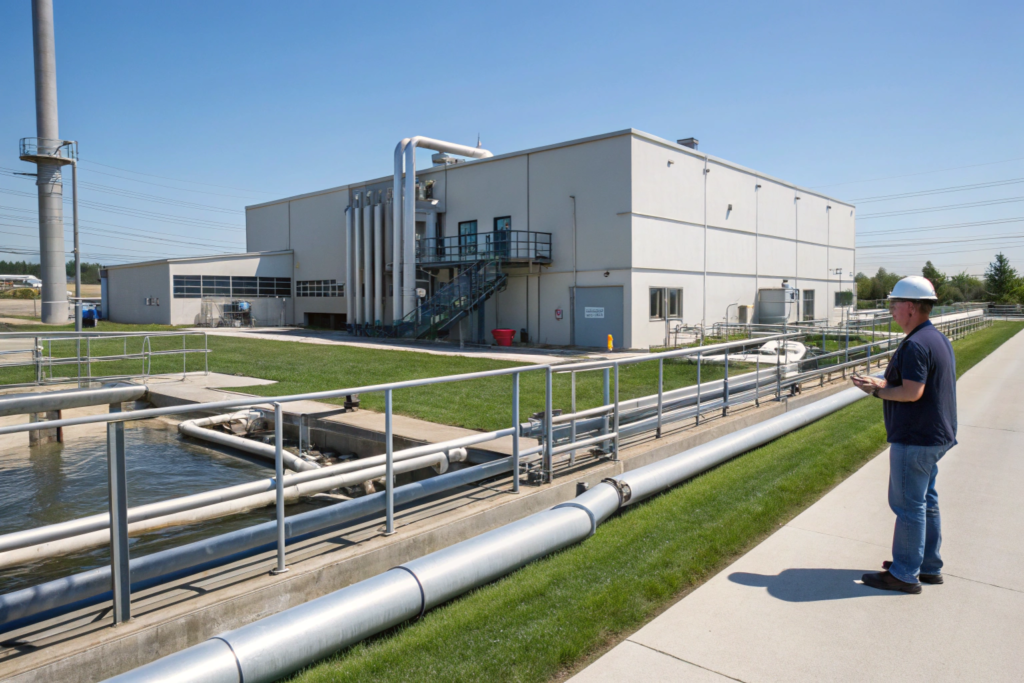
Our factory operates a multi-stage wastewater treatment system. The process includes:
- Primary treatment: Screening to remove solids and neutralization to balance pH
- Secondary treatment: Biological treatment where microorganisms break down organic compounds
- Tertiary treatment: Advanced filtration and chemical treatment to remove remaining contaminants
We monitor our treated water continuously. Sensors measure pH, chemical oxygen demand, biological oxygen demand, and other parameters. If any parameter exceeds permitted limits, the system automatically recirculates the water for additional treatment. Nothing is discharged until it meets standards.
We are also required to report our water usage and discharge volumes to local environmental authorities. Inspectors visit our facility regularly, and we welcome their visits. A clean environmental record is essential for maintaining our operating license and for building trust with our clients.
Many of our European and American clients request information about our wastewater treatment as part of their supplier audits. We provide them with treatment process documentation, discharge test results, and copies of our environmental permits. This transparency has helped us build strong relationships with clients who prioritize environmental responsibility.
How Are Air Emissions Controlled in Printing and Dyeing?
Printing and dyeing processes can release volatile organic compounds, or VOCs, into the air. These compounds contribute to air pollution and can have health effects for workers and nearby communities.
Our printing and dyeing facilities are equipped with exhaust capture systems. These systems pull air from the work areas and route it through treatment equipment. For printing, we use primarily water-based inks, which have significantly lower VOC content than solvent-based alternatives. When we do use solvent-based materials for specific applications, we operate additional capture and treatment systems.
We also maintain ventilation systems that ensure worker safety. Air quality is monitored regularly, and we provide appropriate personal protective equipment to workers in areas where exposure risks exist.
One of the benefits of operating a modern factory is that we can invest in this equipment. Older factories often struggle to meet air emission standards because retrofitting capture systems is expensive. Our facility was designed with these systems from the beginning.
What Voluntary Certifications Should Brands Look For?
Regulatory compliance is the minimum standard. Many of our clients go further and require voluntary certifications that demonstrate a higher level of environmental responsibility.
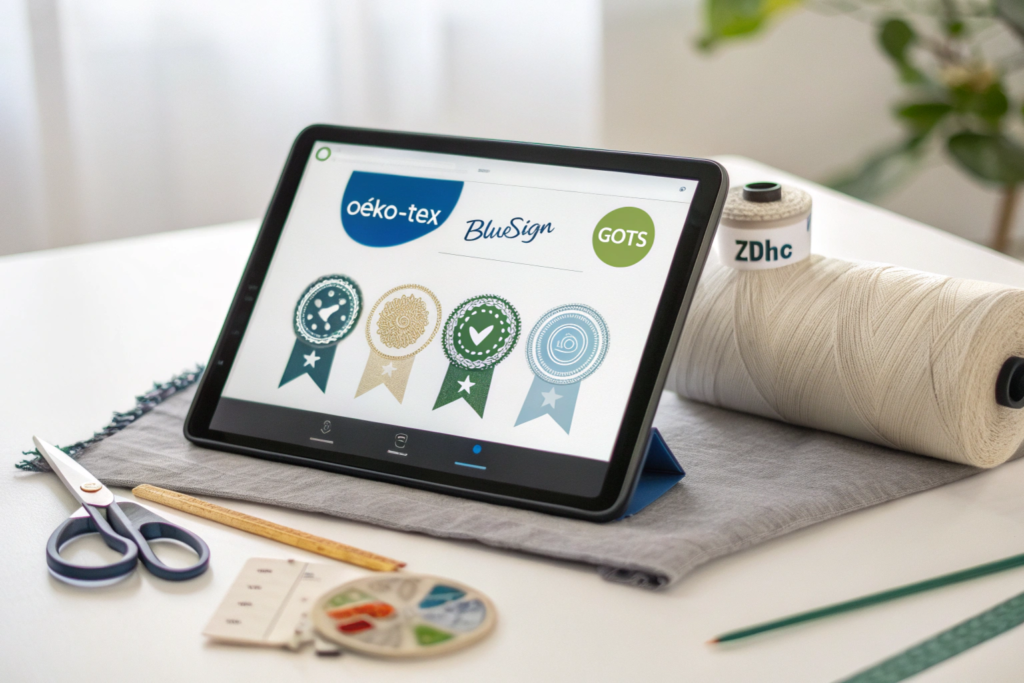
Key voluntary certifications for accessory dyeing and printing include OEKO-TEX Standard 100, which tests finished products for harmful substances; bluesign, which evaluates the entire production process for environmental and safety standards; the Global Organic Textile Standard for organic materials; and the Zero Discharge of Hazardous Chemicals program, which focuses on eliminating hazardous chemicals from the supply chain. Each certification has different requirements, and the right choice depends on your market position and sustainability goals.
What Does OEKO-TEX Standard 100 Cover?
OEKO-TEX Standard 100 is one of the most widely recognized certifications for textile products. It focuses on the finished product, testing for hundreds of harmful substances including:
- Formaldehyde
- Pesticides
- Heavy metals
- Phthalates
- Allergy-inducing dyes
- Extractable heavy metals
Products are tested and certified by independent laboratories. The certification is product-specific, meaning each style we produce for a client can be certified individually.
For our clients, we offer OEKO-TEX testing as a standard service. We maintain relationships with accredited testing laboratories, and we manage the testing process from sample submission to certification delivery. The certification provides documentation that retailers can use to satisfy their own compliance requirements.
Many of our European clients require OEKO-TEX certification for all accessories. Some American clients request it for children’s products or for products marketed as environmentally friendly.
How Is bluesign Different from OEKO-TEX?
bluesign is a more comprehensive certification. While OEKO-TEX tests the finished product, bluesign evaluates the entire manufacturing process. It covers:
- Chemical management
- Water and air emissions
- Worker safety
- Resource efficiency
- Supply chain transparency
Achieving bluesign certification requires a factory-wide commitment to environmental responsibility. Our facility has invested significantly in the systems and documentation required for bluesign. The certification gives our clients confidence that our operations are sustainable at every level.
The difference matters for brands. If a brand wants to make claims about sustainable manufacturing, bluesign provides stronger evidence than OEKO-TEX alone. Some of our European luxury brand clients require bluesign certification for their accessory suppliers.
How Do We Document and Verify Compliance?
Documentation is as important as the actual compliance measures. Without proper documentation, a brand cannot prove to retailers or regulators that their products meet requirements.
Documenting and verifying compliance requires a systematic approach that includes chemical inventory management, material traceability, testing documentation, and audit records. A compliant factory maintains detailed records of all chemicals used, tracks materials from supplier to finished product, retains test reports for each production batch, and undergoes regular third-party audits. This documentation must be accessible and organized to respond quickly to client requests.

How Do We Track Chemicals Used in Production?
Every chemical that enters our factory is logged into our chemical inventory system. The system tracks:
- Chemical name and composition
- Supplier information
- Quantity received and used
- Safety data sheets
- Compliance status against restricted substances lists
When a client requests information about chemical compliance, we can quickly identify which chemicals were used for their order and provide the relevant documentation.
We also restrict what chemicals can enter our factory. Our purchasing team screens all chemical orders against our restricted substances list. If a chemical contains a prohibited substance, we do not purchase it. This preventive approach is much more effective than trying to test for prohibited substances after production.
What Testing Do We Conduct for Compliance Verification?
We conduct regular testing at multiple points in the production process:
- Raw material testing: We test incoming fabrics, dyes, and printing pastes for restricted substances
- In-process testing: We test samples during production to verify that processes are not introducing contaminants
- Finished product testing: We test final products against client specifications and regulatory requirements
We work with accredited third-party laboratories for certification testing. We also maintain in-house testing capabilities for screening and process control.
For each production batch, we retain test reports and samples. This allows us to respond quickly if a client needs additional documentation after shipment. We have had clients who were audited by retailers years after receiving products. Because we retain our records, we could provide the documentation they needed.
Conclusion
Environmental regulations for accessory dyeing and printing have changed dramatically over the past decade. When I started in this business, compliance was optional for many factories. Today, it is essential. Factories that do not meet environmental standards cannot compete in the global market.
At Shanghai Fumao, we have embraced this shift. We have invested in wastewater treatment systems that go beyond regulatory requirements. We have built chemical management systems that allow us to track every substance that enters our factory. We have pursued voluntary certifications like OEKO-TEX and bluesign because they give our clients confidence in our products.
These investments cost money. They require ongoing effort and attention. But they are worth it. Our clients trust us because they know we are serious about environmental responsibility. That trust is the foundation of our business. If you are sourcing accessories and need a factory that takes environmental compliance seriously, I would be happy to show you how we work. We can provide the documentation, certifications, and transparency you need to protect your brand and your customers.
To discuss your next accessory order or to request compliance documentation, please contact our Business Director, Elaine, at elaine@fumaoclothing.com. She can arrange a virtual tour of our facilities and answer any questions about our environmental practices.