I have been manufacturing hair bands and headwear for over 15 years. In that time, I have learned that the elastic is the most important component. A beautiful fabric hair band is useless if the elastic is weak. A stylish headband is worthless if it loses its stretch. I remember a client who ordered 10,000 fabric hair bands. They looked great. But after a few weeks of use, the elastics stretched out. The hair bands fell off. Customers complained. The client lost money. That experience taught me that not all elastic is the same. The type of elastic, the quality, and the construction matter. Today, I want to share what I have learned about the different types of elastic used in hair bands and headwear.
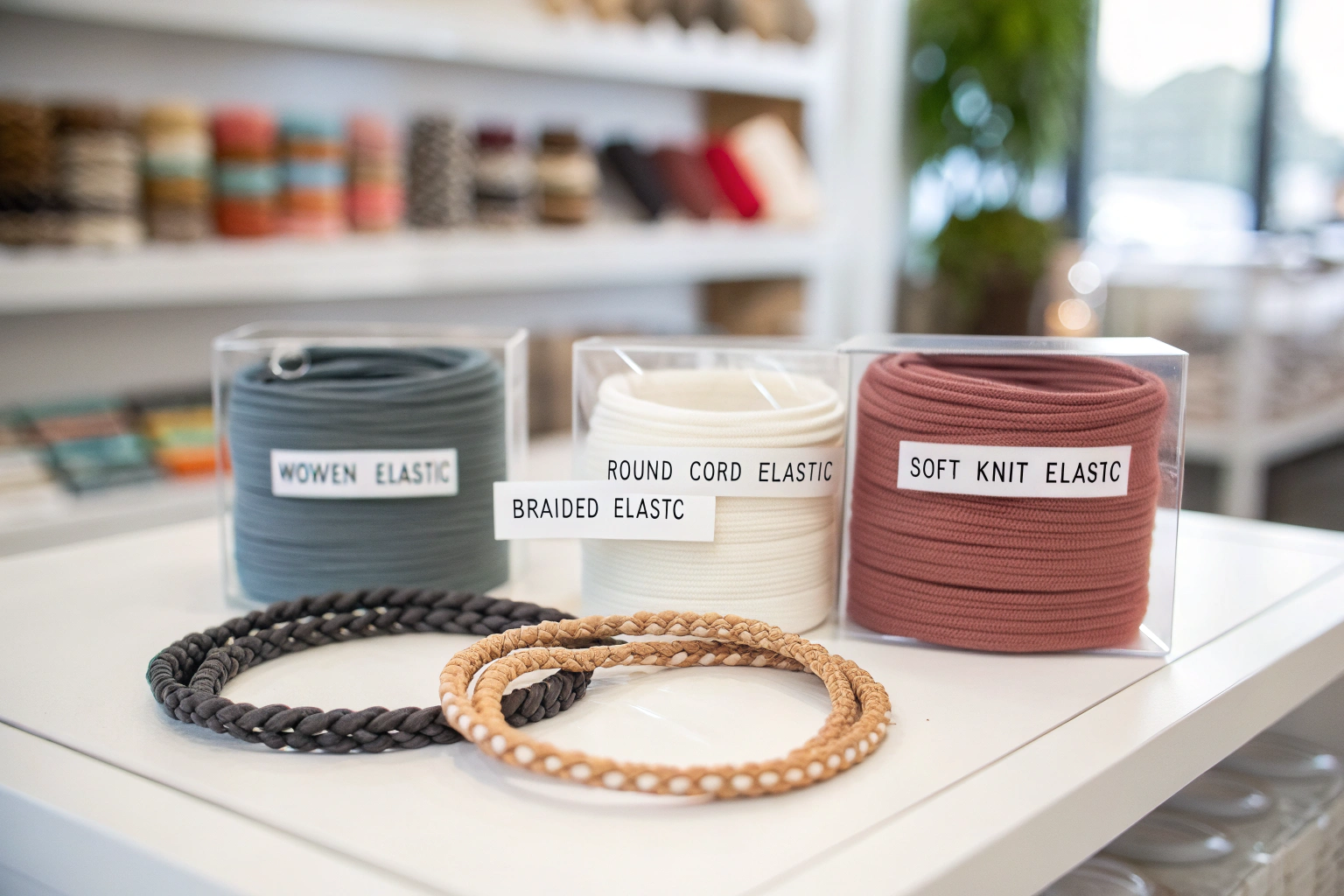
The different types of elastic used in hair bands and headwear include flat woven elastic, round cord elastic, soft knit elastic, clear elastic, and braided elastic. Flat woven elastic is the most common. It is strong, durable, and lies flat against the head. Round cord elastic is used for ponytail holders. It is soft and gentle on hair. Soft knit elastic is used for fabric-covered headbands. It is comfortable and does not dig into the scalp. Clear elastic is used for clear or invisible hair bands. It is made from polyurethane. Braided elastic has a textured, braided appearance. It is often used for decorative hair bands. Each type has specific properties of stretch, recovery, and comfort. Choosing the right elastic depends on the product design, the intended use, and the target customer.
You might be thinking, "Elastic is just elastic. How different can it be?" The answer is very different. I have seen clients choose the wrong elastic for their product. The result was returns, complaints, and lost sales. Choosing the right elastic is a technical decision. It requires understanding the properties of each type. At Shanghai Fumao, we have tested many elastics. We know what works for each product. Let me walk you through the different types.
What Is Flat Woven Elastic and When Should You Use It?
Flat woven elastic is the workhorse of the hair band industry. It is strong, durable, and reliable. I have used it for millions of hair bands. It is the standard for a reason. But it is not right for every product. Understanding its properties helps you decide.
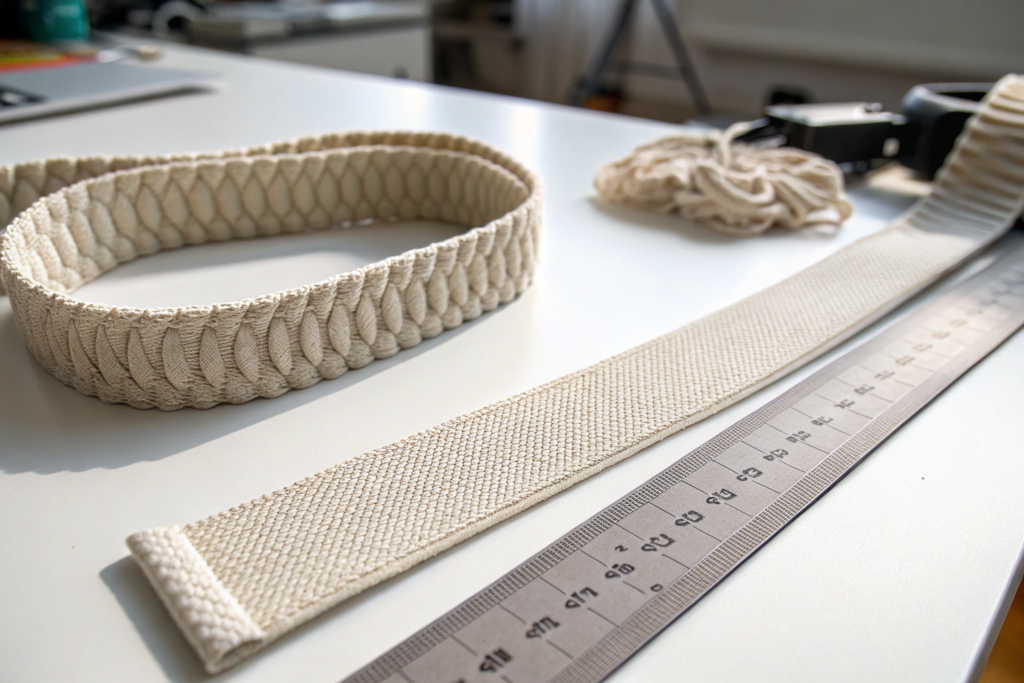
Flat woven elastic is made by weaving polyester or cotton fibers with rubber or spandex threads. The result is a flat, rectangular band with a woven texture. It is strong and durable. It has excellent recovery. It returns to its original length after stretching. Flat woven elastic lies flat against the head. This makes it comfortable for fabric-covered hair bands and headbands. It is available in various widths, from 6mm to 25mm or more. It is also available in different colors. The most common use is for fabric hair bands where the elastic is encased in fabric. It is also used for the strap of headbands. When you need strength and durability, flat woven elastic is the right choice.
I want to share a story about flat woven elastic. A client wanted a hair band for active wear. The band needed to hold tight during exercise. It needed to recover after stretching. We used flat woven elastic. The band performed well. The client reordered. This is the application where flat woven excels.
What Are the Key Properties of Flat Woven Elastic?
The key properties are strength, recovery, and durability. Strength means it can withstand repeated stretching without breaking. Recovery means it returns to its original length. A good flat woven elastic will have 95% or better recovery. Durability means it resists wear. The woven fibers are abrasion-resistant. Flat woven elastic also holds its width. It does not narrow when stretched. This is important for fabric-covered bands. The fabric casing stays even. Flat woven elastic also takes dye well. You can match it to fabric colors. We use flat woven elastic for most of our fabric hair bands.
When Should You Choose Flat Woven Over Other Types?
Choose flat woven when you need strength and durability. For active wear hair bands, flat woven is best. For headbands that will be worn all day, flat woven provides consistent tension. For fabric-covered bands, flat woven lies flat and stays in place. For products that will be washed repeatedly, flat woven withstands laundering. The trade-off is comfort. Flat woven is not as soft as knit elastic. It can feel firmer against the head. For most adults, this is fine. For children or sensitive scalps, a softer elastic may be better.
What Is Round Cord Elastic and Why Is It Used for Ponytail Holders?
Round cord elastic is the elastic of ponytail holders. You see it everywhere. It is the simple elastic band that holds a ponytail. But not all round cord elastic is the same. The quality varies. The thickness varies. The latex content varies. I have learned to distinguish good round cord from bad.
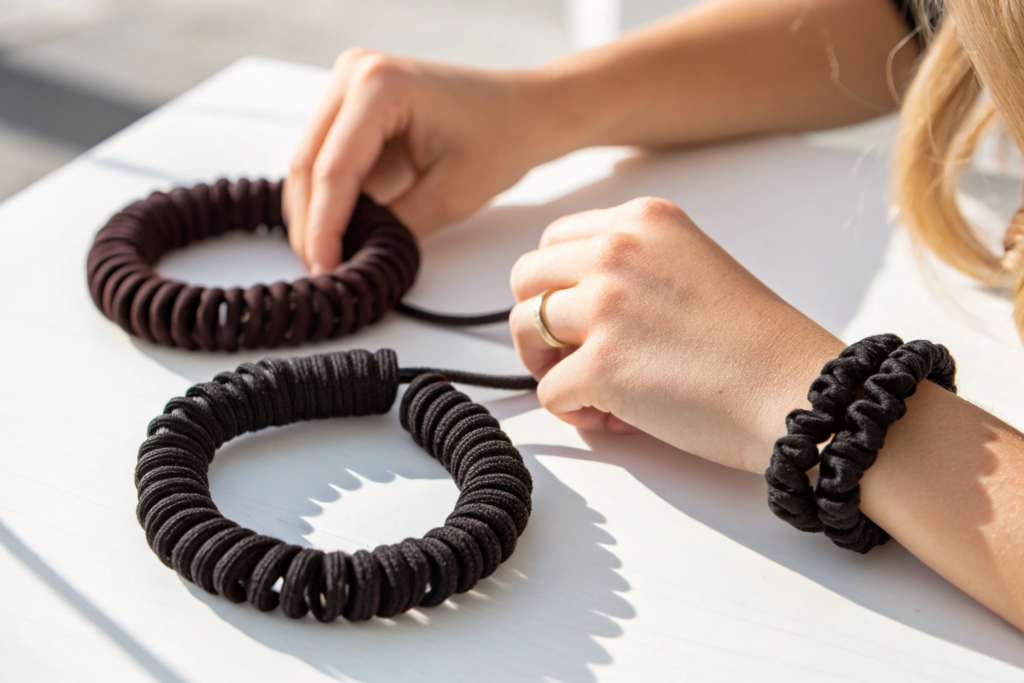
Round cord elastic is made from extruded latex or spandex covered with a braided polyester or cotton sheath. It is round in cross-section. It is soft and gentle on hair. The braided sheath reduces friction. This prevents hair from snagging or breaking. Round cord elastic is available in different thicknesses. Thinner cords are for fine hair. Thicker cords are for thick or heavy hair. The most common use is for ponytail holders and hair ties. It is also used for children's hair bands where comfort is critical. The key property is gentle hold. It holds hair in place without pulling or damaging.
I want to share a quality issue with round cord. We received a batch of round cord elastic that seemed fine. But when we made ponytail holders, the elastic broke after a few uses. The latex core was poor quality. It had low tensile strength. We switched to a higher-quality supplier. The new elastic lasted. This taught me to test every batch.
What Is the Difference Between Latex and Spandex Round Cord?
The core material matters. Latex round cord has a natural rubber core. It has excellent stretch and recovery. It is very elastic. But latex degrades over time. It can become brittle. It can cause allergic reactions in some people. Spandex round cord has a synthetic spandex core. It is more durable. It does not degrade as quickly. It is hypoallergenic. The stretch is slightly less than latex. For most applications, spandex is better. It lasts longer. It is safer. We use spandex round cord elastic for our ponytail holders.
How Do You Choose the Right Thickness for Ponytail Holders?
Thickness is measured in millimeters. A 1.5mm cord is thin. It is for fine hair or children. A 2.5mm cord is medium. It is for normal hair. A 3.5mm cord is thick. It is for thick or heavy hair. The right thickness provides enough hold without being too tight. Too thin, and the holder slips. Too thick, and it pulls hair. We offer a range of thicknesses. We help our clients select based on their target customer. For custom ponytail holders, we can match the elastic to the hair type.
What Is Soft Knit Elastic and Why Is It Comfortable for Headbands?
Soft knit elastic is the comfort choice. It is used for headbands that sit against the scalp. It is also used for children's hair bands. The soft texture does not irritate the skin. I have seen clients switch from flat woven to knit elastic for comfort products. The feedback was positive. Customers appreciated the softness.
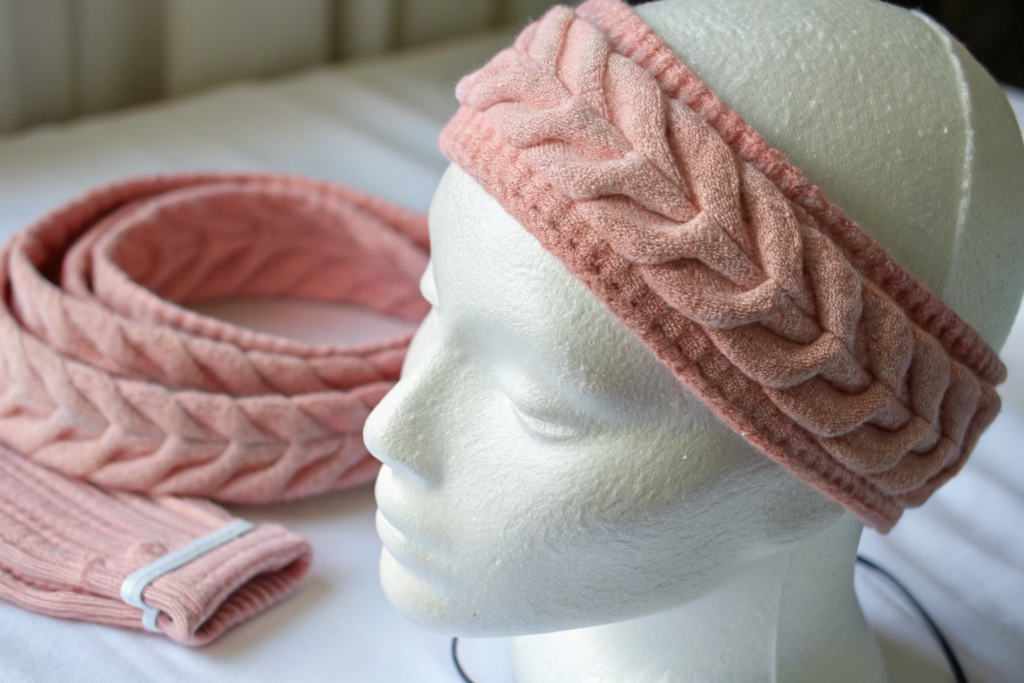
Soft knit elastic is made by knitting polyester or cotton fibers with spandex. The knit construction creates a soft, fabric-like texture. It has a gentle stretch. It does not dig into the scalp. It is breathable. Soft knit elastic is ideal for headbands that are worn all day. It is also ideal for children's hair bands. Children have sensitive skin. A rough elastic can cause irritation. Soft knit elastic is also used for medical headwear and sleep masks. The trade-off is durability. Knit elastic is less durable than woven. It can pill over time. It may lose stretch faster. But for comfort-focused products, it is the best choice.
I remember a client who wanted a headband for a spa product. The headband would be worn during facials. It needed to be comfortable for extended periods. We used soft knit elastic. The headband was soft against the skin. The client loved it. The spa customers loved it. This is the application for knit elastic.
How Does Knit Elastic Compare to Woven Elastic?
The differences are significant. Woven elastic is stronger. It has better recovery. It is more durable. Knit elastic is softer. It is more comfortable. It is more breathable. Woven elastic is better for high-stress applications. Think active wear. Knit elastic is better for comfort applications. Think headbands and sleep masks. Woven elastic holds its width. Knit elastic can narrow when stretched. This affects how it sits in a fabric casing. For fabric-covered bands, woven is often better. For exposed elastic bands, knit is often better. We help our clients choose based on the product design. We offer both woven and knit elastic options.
What Are the Best Applications for Soft Knit Elastic?
The best applications are products that contact the skin directly. Headbands are the top application. The elastic sits against the forehead and scalp. Comfort is critical. Children's hair bands are another application. Children have sensitive skin. Soft elastic prevents irritation. Sleep masks are another application. The elastic goes around the head. Comfort during sleep is essential. Medical headwear, like surgical caps, also uses knit elastic. Comfort during long procedures matters. For these products, the softness of knit elastic is worth the trade-off in durability.
What Are Clear Elastic and Braided Elastic Used For?
Clear elastic and braided elastic are specialized types. They are not as common as flat woven or round cord. But they have important niche applications. I have used both for specific client requests. Understanding when to use them is valuable.
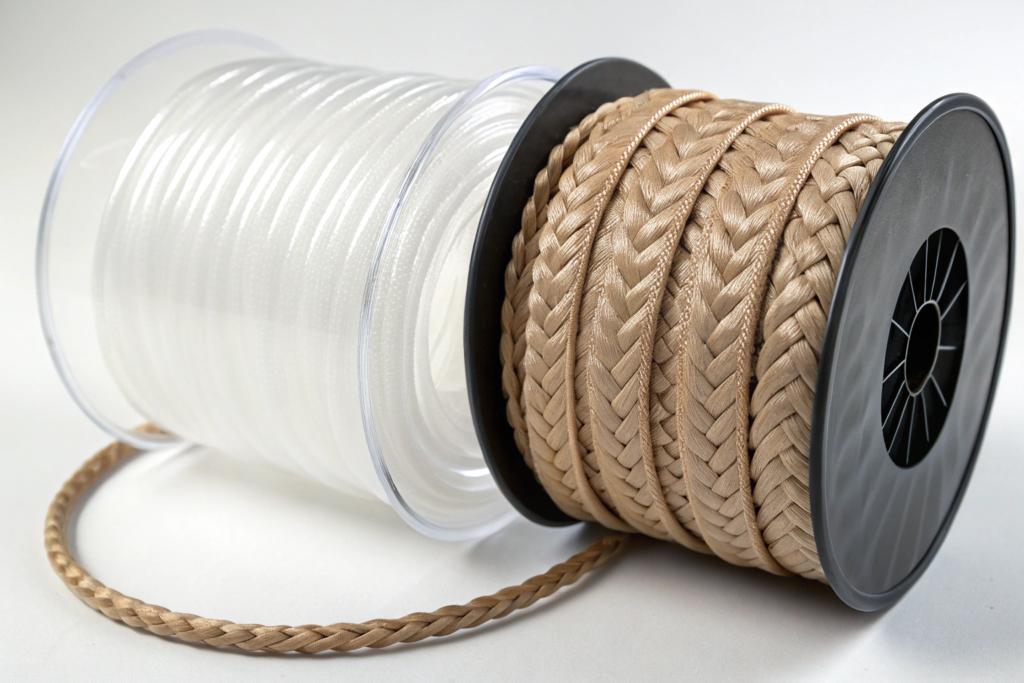
Clear elastic is made from polyurethane. It is transparent. It is used for clear or invisible hair bands. These bands are popular for certain hairstyles where the band should not be seen. Clear elastic is also used for beaded jewelry and crafts. The properties are different from fabric elastics. It has good stretch and recovery. But it can degrade over time with exposure to sunlight and oils. It is also less durable than fabric elastics. Braided elastic is made by braiding polyester or cotton threads with rubber. It has a distinctive herringbone or braided pattern on the surface. It is strong and durable. It has excellent recovery. The braided texture provides grip. It is used for decorative hair bands where the elastic is visible. It is also used for heavy-duty applications.
I want to share a story about clear elastic. A client wanted hair bands for a special event. The attendees had elaborate hairstyles. They did not want visible bands. We used clear elastic. The bands were nearly invisible. The client was thrilled. This is the niche for clear elastic.
When Should You Use Clear Elastic?
Use clear elastic when invisibility is the goal. For updos and formal hairstyles, clear bands are preferred. They do not distract from the hair. They are also used for beaded hair accessories. The clear material does not compete with the beads. The limitations are durability. Clear elastic degrades faster than fabric elastics. It should not be used for products that will be used repeatedly over a long period. It is best for occasional use or events. We offer clear elastic in various thicknesses.
What Makes Braided Elastic Unique?
Braided elastic is unique because of its texture. The braided surface has a visible pattern. It is attractive. It provides grip. The elastic does not slip against hair or fabric. Braided elastic is also very strong. The braided construction distributes stress. It resists breaking. The recovery is excellent. It returns to its original length reliably. Braided elastic is used for decorative hair bands where the elastic is part of the design. It is also used for heavy-duty applications like suspenders and waistbands. For hair bands, it offers a combination of strength and style. We offer braided elastic in multiple colors and patterns.
Conclusion
Elastic is the hidden hero of hair bands and headwear. It is not visible. But it is essential. The wrong elastic leads to product failure. The right elastic leads to customer satisfaction. The types are distinct. Flat woven is strong and durable. Round cord is gentle for ponytails. Soft knit is comfortable for headbands. Clear elastic is invisible. Braided elastic is decorative and strong.
Choosing the right elastic requires understanding your product, your customer, and your use case. It requires testing and quality control. At Shanghai Fumao, we have built our expertise over 15 years. We know elastic. We source from trusted suppliers. We test every batch. We ensure consistency. We help our clients make the right choice.
Your brand deserves hair bands and headwear that perform. Your customers deserve products that are comfortable and durable. Let us help you choose the right elastic for your products. Please contact our Business Director, Elaine, at elaine@fumaoclothing.com to discuss your hair band or headwear project. We can help you select the right elastic type for your product and ensure that your accessories perform as expected.