I remember a conversation with two different accessory brand founders. One ran a thriving online-only business. The other had a beautiful network of boutique retail partners. They were both successful, but they had completely different approaches to quality. The online founder told me, "My customers can't touch the product, so every image, every word of copy, has to scream quality. I have to over-deliver on expectations." The brick-and-mortar founder said, "My customers can touch, feel, and try. The quality has to be immediately evident in their hands. The in-store experience is everything." Their words highlighted a fundamental truth: quality expectations are shaped by the sales channel.
The differences in quality expectations for online-only versus brick-and-mortar brands stem from the fundamental difference in how the customer experiences the product. For online-only brands, expectations center on accurate representation, consistent quality, and flawless presentation. The customer relies on photos, videos, and descriptions. Any deviation from what was shown online is a major disappointment. For brick-and-mortar brands, expectations center on tactile experience, immediate satisfaction, and the overall brand environment. The customer can touch, feel, and try on the product, and their perception of quality is shaped by that physical interaction and the store's ambiance. At Shanghai Fumao Clothing, we help brands on both sides of this divide, ensuring their products meet the specific quality demands of their chosen sales channel.
Those two founders were describing the same goal—selling high-quality accessories—but the path to achieving customer satisfaction is completely different. For the online brand, the challenge is bridging the gap between the screen and reality. For the brick-and-mortar brand, the challenge is creating an experience that confirms quality the moment the customer picks up the product. Understanding these different expectations is crucial for any brand, whether you are selling in one channel or both. Let me walk you through the four key areas where these expectations diverge.
How Do Online-Only Brands Build Trust Through Visual and Descriptive Accuracy?
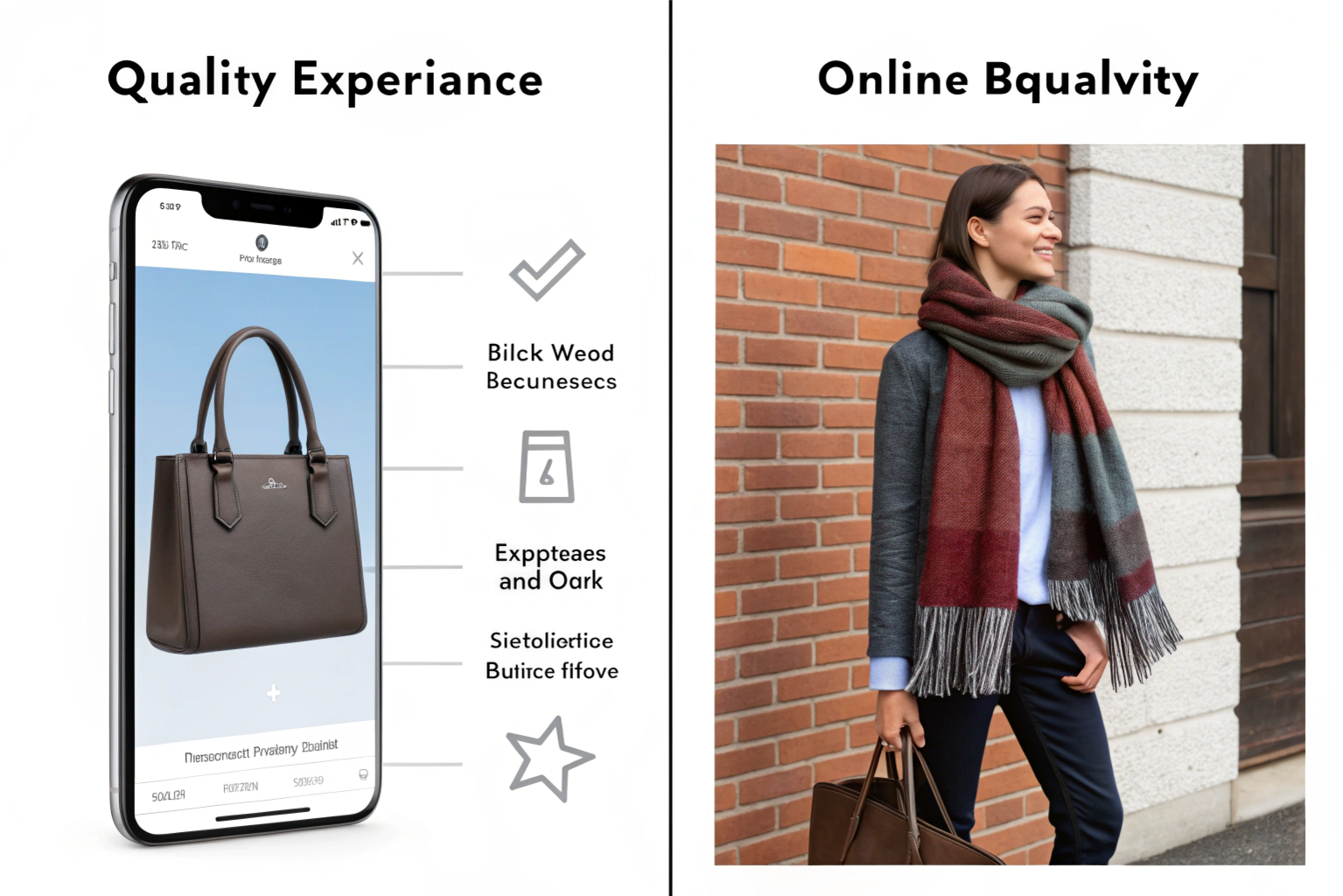
For an online-only brand, the customer's entire pre-purchase experience is mediated by a screen. They cannot touch the fabric, feel the weight of a buckle, or see how a scarf drapes in person. This places an enormous burden on the brand's visual and descriptive accuracy. The product photography, the video content, and the written descriptions must do the work of thousands of in-person interactions. They must build trust and accurately convey quality.
Online-only brands must invest heavily in exceptional product photography. This means multiple high-resolution images from every angle, close-ups of key details (stitching, hardware, texture), and lifestyle shots showing the accessory being worn. Video content is even more powerful, showing the drape of a scarf, the flexibility of a belt, or the shine of a metal clip. Detailed, accurate descriptions are equally vital, specifying materials (e.g., "full-grain leather," "grade-8A silk"), dimensions, and care instructions. The goal is to leave no question unanswered. The customer must feel they know the product as well as if they were holding it. Any inconsistency between the image and the reality is a major failure that will lead to returns and negative reviews.
The consequences of inaccurate representation are severe for online brands. A customer who receives a product that looks different from the photos will feel misled and disappointed. This leads to a return, which is costly for the brand (shipping, restocking), and often a negative review, which can deter countless future customers. Therefore, online-only brands must have rigorous quality control to ensure that every single unit matches the perfected sample. Consistency is paramount. You cannot have batch-to-batch variation. This is why we work so closely with our online-only clients to establish clear specifications and maintain impeccable quality control. For them, the margin for error is zero. This focus on e-commerce product presentation and quality consistency is the foundation of their success.

How many product photos are enough for an online-only brand?
A golden guideline to elevate product presentation is to curate a minimum of 4-5 high-quality images per item, each meticulously crafted to tell a compelling story. This ensemble should encompass a striking front view, capturing the product's primary allure and inviting first glance; a balanced back view, revealing hidden details and structural integrity that build trust. A close-up detail shot, where the camera lingers on the tactile texture of the material—whether the smooth grain of wood, the metallic sheen of polished steel, or the intricate weave of fabric—and highlights the craftsmanship of hardware, such as the gleam of a well-finished zipper or the precision of a screw head.
A scale-defining shot, which grounds the product in relatable context, perhaps placing it beside a familiar object like a standard coffee mug or a human hand, instantly conveying size and practicality. Complementing these with a vibrant lifestyle shot, where the product is seen in harmonious use within a real-world setting—a cozy kitchen countertop, a sunlit bedroom dresser, or a bustling outdoor picnic—invokes emotion and sparks imagination, allowing potential buyers to visualize it seamlessly integrated into their own lives. For complex items, with layered components or multifaceted designs, an even more comprehensive array of angles becomes essential, ensuring no nuance is overlooked and every aspect of the product's functionality and beauty is brought to vivid life.
Is video necessary for online sales?
While not strictly necessary for every product, video is incredibly powerful. A short video showing a scarf—its soft fibers cascading like liquid silk—as it drapes gently over a model’s shoulders, catching the light in a spectrum of warm hues, or a bag being opened with a satisfying snap, revealing the smooth texture of its lining and the careful stitching along its edges, or a belt being flexed, its leather supple and yielding, bending with ease to showcase its strength and comfort, gives the customer a much richer sense of the product than any photo can.
It transforms a static image into a dynamic experience, allowing viewers to see how the fabric flows, how the material feels under movement, and how the product interacts with the body. This vivid, sensory-rich portrayal significantly reduces the uncertainty that leads to returns, replacing vague doubts with tangible, immersive understanding that builds confidence and trust in the item’s quality and fit.
How Do Brick-and-Mortar Brands Leverage Tactile Experience and Immediate Satisfaction?
For a brick-and-mortar brand, the quality equation is flipped. The customer can touch, feel, and try on the product. Their perception of quality is formed in an instant, based on the tactile experience. The look and feel of the store itself, the behavior of the staff, and the overall ambiance all contribute to this perception. The product must deliver immediately, in the customer's hands.
Brick-and-mortar brands must prioritize the tactile experience. The feel of the fabric, the weight of the hardware, the smoothness of a finished edge—these are the qualities the customer will judge instantly. The product must feel as good as it looks. The store environment also plays a huge role. A well-designed, clean, and inviting space elevates the perceived quality of the products within it. Knowledgeable, helpful staff can answer questions, offer styling advice, and create a personal connection that builds trust and loyalty. The immediate satisfaction of taking the product home is another major advantage. There is no shipping wait, no box to open, no potential for shipping damage. The quality is confirmed on the spot.
The pressure on brick-and-mortar brands is to ensure that every product that reaches the store floor is flawless. A customer's negative in-store experience—a scratch they notice, a loose thread they find—is immediate and can be shared with a salesperson on the spot, leading to a lost sale. But it also means that a positive in-store experience—the joy of discovering a perfectly made item, the pleasure of a helpful interaction—is incredibly powerful and builds deep brand loyalty. The return process is also simpler and often cheaper for the brand, as the customer can return the item directly to the store. This allows for a more forgiving approach to minor issues, but it also means the in-store presentation must be impeccable. This is a key aspect of retail merchandising and customer experience management. At Shanghai Fumao Clothing, we work with our brick-and-mortar clients to ensure their products not only look perfect but also feel perfect in the hand.

How important is packaging for brick-and-mortar brands?
Packaging remains a vital element, albeit in a transformed capacity. The bag that cradles a customer's purchase as they exit the store is not merely a container; it is an extension of the brand experience, a silent ambassador that lingers long after the transaction concludes. A beautifully crafted, robust bag—lined with soft, crinkling tissue paper that whispers of care—elevates the perception of a special acquisition, transforming a simple purchase into a moment of anticipation and delight.
It is more than just a vessel; it is a tangible, portable fragment of the brand, a physical reminder of the encounter that carries the warmth, quality, and essence of the brand into the customer's home. As they carry it, the weight of the bag becomes a subtle testament to the value received, while the texture of the material and the gentle rustle of the tissue evoke a sense of thoughtfulness and exclusivity, deepening the emotional connection between the customer and the brand.
Do brick-and-mortar customers care about the same details as online customers?
They care about the same details, but they have a different way of evaluating them. An online customer relies on a description of "full-grain leather." A brick-and-mortar customer feels the full-grain leather and immediately understands its quality. The core quality markers are the same, but the method of assessment is completely different.
How Do Quality Control and Consistency Requirements Differ?
While both online-only and brick-and-mortar brands need high-quality products, their quality control and consistency requirements differ significantly due to the nature of the customer's interaction. The online brand's greatest fear is batch-to-batch variation that leads to returns and negative reviews. The brick-and-mortar brand's greatest fear is a single flawed item on the sales floor that a customer will discover and reject.
For online-only brands, quality control must focus on consistency across the entire production run. The first item sold and the thousandth item sold must be identical. The customer's only reference is the product they saw online. Any deviation is a problem. Therefore, online brands need rigorous, multi-stage QC processes, including in-line inspections and final random inspections based on statistical sampling (AQL). For brick-and-mortar brands, quality control is a two-stage process. First, the factory must deliver good quality. Second, the store staff must perform a final visual inspection as they receive and merchandise the products. They are the last line of defense, ensuring that any minor flaw (like a loose thread that escaped the factory) is caught before it reaches the customer. They also control the presentation, steaming items and displaying them perfectly.
The tolerance for minor imperfections can also differ. An online customer who receives a product with a tiny, barely noticeable flaw might be more likely to return it, as they have no other way to judge the product's quality. They can't compare it to other items on a shelf. A brick-and-mortar customer, however, might see the same minor flaw but, having already fallen in love with the product in person, might be more willing to overlook it, especially if offered a small discount by a helpful salesperson. The physical store allows for this kind of nuanced, human interaction. This is a key difference in retail vs. e-commerce operations and customer service. At Shanghai Fumao Clothing, we understand these nuances and tailor our quality control and communication to the specific needs of each client's sales channel.

Do online brands need a higher level of perfection than brick-and-mortar brands?
In terms of consistency, yes. The tolerance for variation is much lower for online brands because the customer has no other reference point—no tactile feel of fabric, no scent of a product, no visual reassurance of craftsmanship beyond the screen. A single misaligned button or a slightly off-color shade in an online photograph can shatter trust, as there's no physical store to return to for comparison. However, brick-and-mortar brands need their products to be immediately appealing and flawless on the sales floor, where customers can touch, smell, and inspect every detail up close. The polished glass display cases, the soft glow of overhead lights highlighting textures, the subtle rustle of premium materials as a sales associate lifts them—these elements create an immersive experience that demands perfection.
Both need high quality, but the definition of 'quality' and the systems to ensure it are shaped by the channel. For online brands, quality often translates to precise color matching, durable packaging that withstands shipping, and detailed product descriptions that evoke sensory experiences. For brick-and-mortar, quality is about the sheen of a well-finished surface, the weight of a solidly constructed item, and the seamless flow of products that invite customers to linger and engage. Each channel weaves its own narrative of excellence, tailored to the unique expectations and interactions of its audience.
How do return policies affect quality expectations?
Online brands often have more generous return policies to compensate for the customer's inability to try before they buy, their screens offering only flat, lifeless images that can never fully capture the soft drape of a fabric, the weight of a garment on one's frame, or the subtle sheen of a material in shifting light. This places an even greater emphasis on accurate representation and consistent quality, as returns are costly—each package returned is a tangible loss, a drain on resources, and a potential blow to customer trust.
Brick-and-mortar brands may have stricter return policies, but the in-person try-on experience reduces the likelihood of a return in the first place. Here, customers can feel the texture of a sweater against their skin, see how a dress flows with movement, and catch the way sunlight filters through a blouse, making their purchasing decisions rooted in sensory certainty rather than digital approximation.
How Does Price Perception and Value Proposition Differ Between Channels?
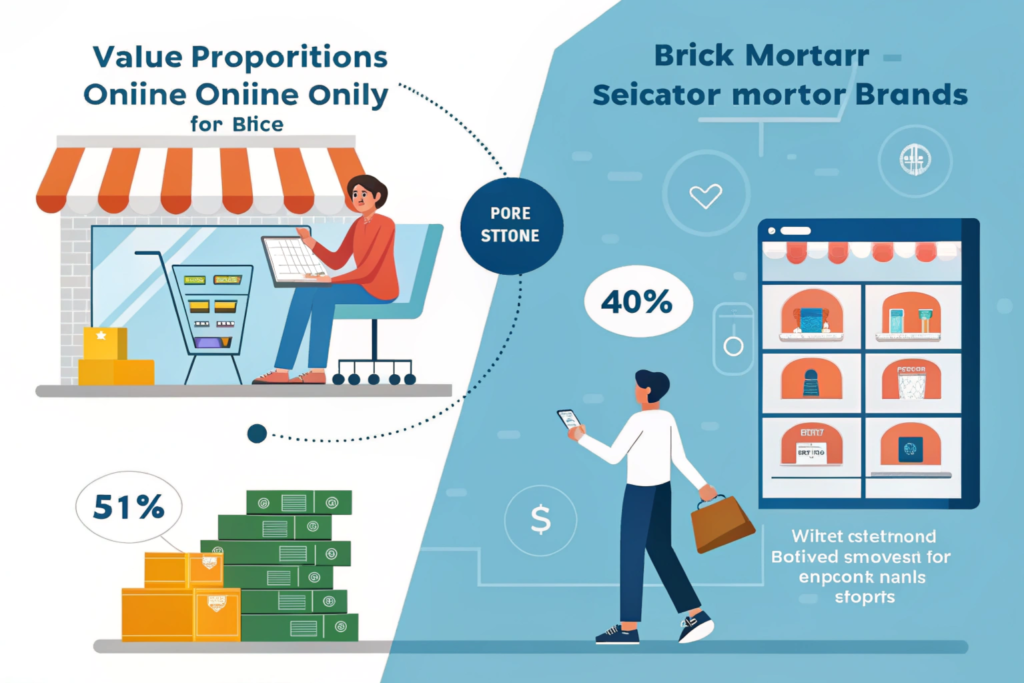
The price a customer is willing to pay and their perception of value are also shaped by the sales channel. An online customer is often comparing prices across multiple tabs, factoring in shipping costs, and relying on reviews. A brick-and-mortar customer is paying for the immediate experience, the ability to touch and try, and the ambiance of the store. These different contexts create different value propositions.
For online-only brands, the value proposition often centers on convenience, selection, and competitive pricing. Customers expect to find what they want, compare prices easily, and have it delivered to their door. The price must be competitive, and the total cost (including shipping) must be clear. Free shipping and easy returns are often part of the expected value. For brick-and-mortar brands, the value proposition includes the experience. The customer is paying for the ability to see, touch, and try the product immediately. They are paying for the knowledgeable staff, the beautiful store environment, and the instant gratification of taking the purchase home. This allows for potentially higher price points, as the experience adds value. The product itself must justify this, feeling even more luxurious in person.
This difference in value proposition has a direct impact on product design and material choice. An online brand might focus on creating products that photograph beautifully and can be described with compelling copy. A brick-and-mortar brand might invest more in materials that feel incredibly luxurious to the touch, as that tactile experience is a key part of the sale. Both need high-quality products, but the aspects of quality that are most emphasized can differ. For online, it's often about visual perfection and descriptive accuracy. For brick-and-mortar, it's about tactile luxury and immediate sensory appeal. This is a crucial consideration in product development and pricing strategy. At Shanghai Fumao Clothing, we work with our clients to understand their channel's unique value proposition and to design products that deliver on that promise, whether it's through stunning visuals or irresistible tactility.
Can a brand succeed by selling at the same price online and in-store?
Yes, absolutely. Many successful brands have a 'omnichannel' approach with consistent pricing, weaving a seamless tapestry of customer engagement that spans every touchpoint. In this case, the value proposition is simply different: online offers the quiet convenience of browsing from the comfort of a sunlit living room, where a click can deliver a product to your doorstep by dawn, while in-store invites the vibrant experience of feeling the texture of fabric between eager fingers, inhaling the fresh scent of new merchandise, and engaging in warm, face-to-face conversations with knowledgeable staff. The customer, like a skilled navigator, chooses the channel that best suits their needs—whether it's the efficiency of digital or the richness of physical interaction.
How does free shipping affect online price perception?
Free shipping has evolved into an indispensable beacon for online shoppers, a silent promise that transforms the digital shopping experience from a mere transaction into an enticing adventure. When a website dares to impose a shipping charge, the total cost looms larger, a tangible weight that can easily dissuade even the most eager buyer, making the once-vibrant product seem less appealing.
In response, many online brands have ingeniously woven the cost of shipping seamlessly into their product prices, offering the alluring siren song of 'free shipping'—a marketing tool so potent it can turn casual browsers into loyal customers.
Conclusion
The expectations for quality are fundamentally shaped by the sales channel. Online-only brands must build trust through impeccable visual representation and unwavering consistency, leaving no room for error between the image and the reality. Brick-and-mortar brands must create an immediate, tactile sense of quality, leveraging the in-store experience to confirm value and build loyalty. Understanding these differences is not just an academic exercise; it is essential for any brand that wants to succeed in today's complex retail landscape.
At Shanghai Fumao Clothing, we have deep experience serving brands on both sides of this divide. We understand the need for the flawless consistency required by online retailers and the luxurious tactility demanded by brick-and-mortar boutiques. We are your partners in creating products that meet and exceed the quality expectations of your specific customers, no matter how they choose to shop.
Are you ready to create accessories that meet the unique quality demands of your sales channel? Let's talk about how we can help you succeed, whether you're online, in-store, or both. Contact our Business Director, Elaine, at elaine@fumaoclothing.com to start the conversation.