The global demand for accessories produced with organic certification has increased significantly in recent years. However, businesses across Europe and the United States continue to encounter barriers when attempting to source these products. Supply limitations, certification requirements, cost structures, and logistical factors often complicate procurement, delaying product launches and increasing financial risks.
The principal difficulties in sourcing organic-certified accessories lie in restricted raw material availability, rigorous certification processes, elevated production costs, and complex logistics. Buyers must navigate these constraints in order to meet both regulatory expectations and consumer demand.
As a manufacturer based in Zhejiang, China, I have collaborated with many leading international brands and witnessed these challenges directly. Our experience allows us to provide clarity on the difficulties and offer solutions to buyers who are committed to sustainable development in the fashion and accessories industry.
Why Is Organic Material Supply So Limited?
The availability of certified organic raw materials remains highly restricted. Compared with conventional farming, organic cultivation yields lower volumes and requires stricter processes. Limited land use, seasonal variation, and certification demands reduce output, creating volatility in supply. This presents difficulties for manufacturers who require consistent production schedules.
Organic cotton, hemp, and other certified fibers are in short supply due to small-scale farming, reduced yields, and high compliance requirements. Consequently, global buyers compete for limited quantities, which drives costs upward and increases supply instability.
Why Do Global Buyers Struggle to Secure Organic Cotton?
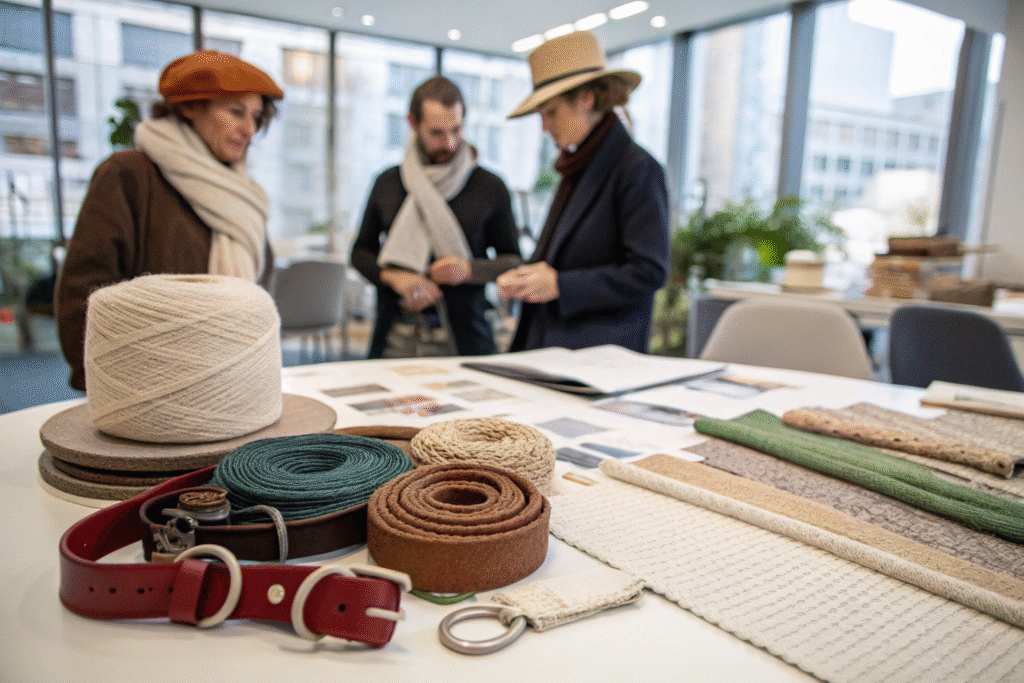
Organic cotton has become a highly sought-after raw material for sustainable accessories. Yet, less than 1% of total global cotton production qualifies as organic. According to Textile Exchange, the scarcity creates competition among brands for limited stocks. Environmental factors such as droughts, reported by Fashion for Good, add further risk to supply reliability. This combination of restricted volume and natural uncertainty explains why many importers find it difficult to maintain long-term sourcing contracts.
Are Alternative Fibers a Reliable Solution?
Hemp, bamboo, and recycled fibers are often viewed as alternatives. However, not all qualify for organic certification. Bamboo, for example, is frequently processed chemically, disqualifying it from organic labeling. OEKO-TEX highlights that only fibers produced under strict environmental regulations are suitable for certification. Brands must carefully evaluate alternative fibers and ensure full traceability to maintain organic status.
How Complicated Are Certification Processes?
Certification involves extensive documentation and independent verification across the entire supply chain. Standards such as GOTS (Global Organic Textile Standard) and USDA Organic require every stage, from farming to finishing, to comply with strict environmental and social criteria. A single deviation can lead to rejection, making certification a demanding process for both suppliers and buyers.
The certification process is demanding because it requires transparency and compliance across multiple stages of production. Audits and documentation extend timelines and raise costs, increasing the complexity of procurement.

Why Do Audits Cause Delays in Production?
Independent auditors, such as those from Control Union, are required to inspect each certified entity annually. These inspections involve travel, paperwork, and review of operational practices, all of which can extend production lead times. For buyers managing international shipments, these requirements often delay product release schedules and increase uncertainty in planning.
What Happens If a Supplier Loses Certification?
The loss of certification is disruptive for both manufacturers and buyers. Suspension or revocation, as reported in the GOTS Database, results in immediate ineligibility to label goods as organic. This forces buyers to either wait until corrective measures are approved or search for new certified partners. Both scenarios result in delays and potential revenue losses.
Is Pricing a Major Barrier for Organic Accessories?
Cost remains one of the most pressing challenges in sourcing organic-certified accessories. Organic raw materials generally command a price premium of 20–40% over conventional alternatives. Combined with certification fees, audits, and compliance processes, the overall cost structure becomes substantially higher. Buyers must assess whether consumers will accept higher retail prices.
Pricing is a major barrier because certified organic products involve higher input costs. Buyers must determine whether the market is willing to pay a premium and whether the sustainability value justifies the expense.

Do Consumers Pay More for Sustainable Fashion?
According to McKinsey, younger consumer groups such as Gen Z demonstrate a willingness to pay a premium for sustainable products. However, this tolerance is limited. If the price gap between organic and conventional accessories becomes too wide, purchasing interest declines. Retailers must therefore find an equilibrium that allows them to meet sustainability goals without alienating price-sensitive customers.
How Can Factories Help Buyers Reduce Costs?
Factories with scale and expertise can help mitigate costs. In Zhejiang, we consolidate orders from multiple buyers, enabling better negotiation with suppliers of raw materials. Operational efficiency also reduces waste and lowers costs. Sourcing Journal emphasizes that suppliers integrating sustainability into operations can provide more competitive prices. By working with experienced manufacturers, buyers reduce risks associated with re-certification, delays, and inefficiencies.
What Are the Logistics and Tariff Issues?
Even when supply and certification are secured, logistics create additional complexity. Organic-certified products often require specific labeling, additional customs documentation, and extended clearance times. Tariff regulations and international trade tensions further increase the risks for buyers sourcing from China and exporting to Western markets.
Logistical and tariff challenges persist because certified goods demand stricter documentation and face more frequent regulatory changes. Importers must account for these factors to prevent costly delays.
Why Do Customs Inspections Take Longer for Organic Products?
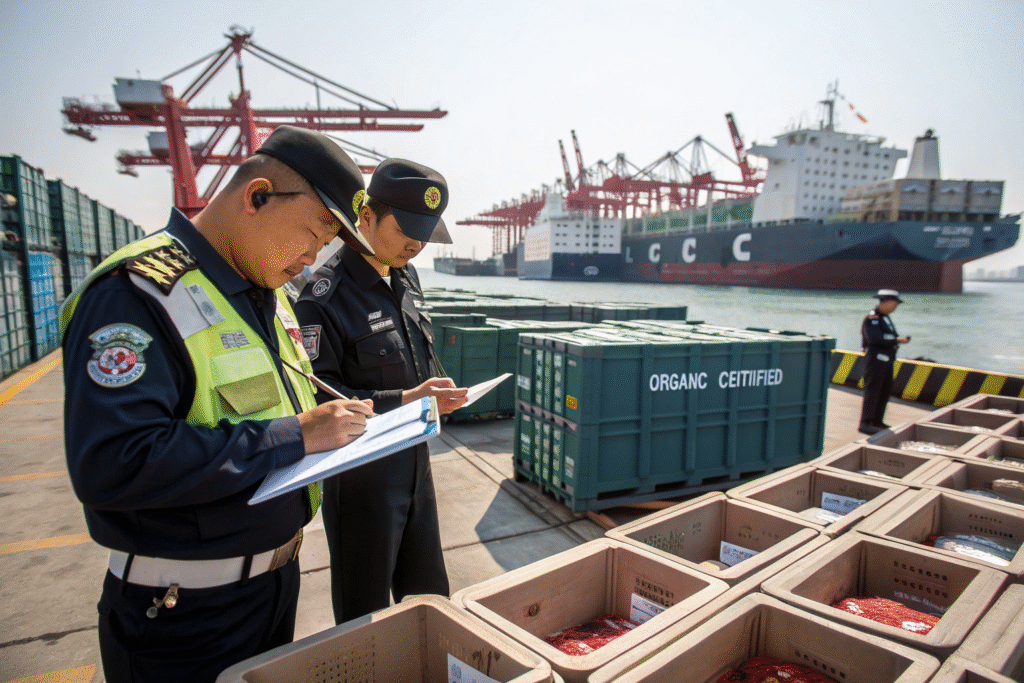
Customs officials frequently request detailed documentation to validate organic claims. US Customs and Border Protection notes that eco-labeled goods are more likely to undergo additional inspection. As a result, shipments of scarves, hats, or belts labeled as organic often spend more time in clearance, creating uncertainty in delivery schedules.
How Do Tariffs Affect Importers from China?
Tariffs remain a critical concern for buyers sourcing from China. While some goods may qualify for tariff relief under frameworks such as the Generalized System of Preferences (GSP), broader trade tensions complicate predictions. Importers must rely on logistics providers experienced in certified goods to minimize delays and maintain compliance with evolving regulations.
Conclusion
Sourcing organic-certified accessories is a complex process shaped by supply constraints, certification requirements, pricing challenges, and logistical barriers. For buyers, these factors represent significant hurdles that require careful planning and trusted partnerships. The increasing demand for sustainable products, however, ensures that investment in overcoming these challenges will be rewarded with stronger consumer trust and brand value.
At AceAccessory, our factory in Zhejiang is equipped to manage these complexities. We combine modern production facilities, dedicated quality control teams, and extensive project management experience to provide reliable solutions. If you wish to explore the production of organic-certified accessories, please contact our Business Director, Elaine, at elaine@fumaoclothing.com for further discussion.