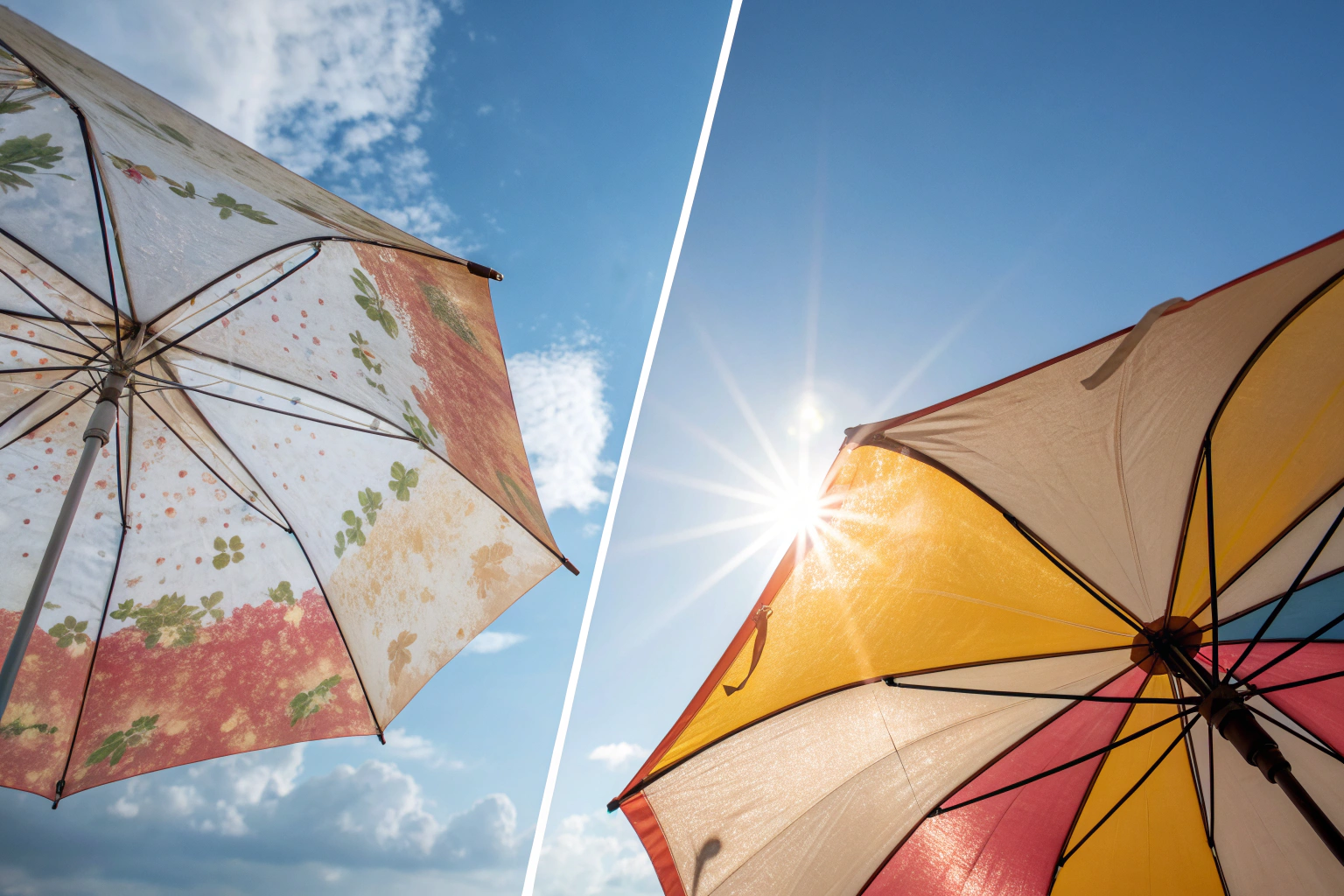
I've been manufacturing umbrellas and other outdoor accessories for decades, and I can tell you that one of the biggest frustrations for customers is when the beautiful colors on their new umbrella fade after just one season in the sun. They buy a vibrant, eye-catching design, and within a few months, it looks dull and tired. This is a direct result of using low-quality inks that are not designed to withstand UV radiation.
The sun's ultraviolet rays are incredibly damaging. They break down the chemical bonds in many inks, causing them to fade, change color, or become brittle. For any accessory that will spend time outdoors—umbrellas, beach bags, sun hats, outdoor cushions—using UV-resistant ink is not an option; it's a necessity. It's the difference between a product that looks good for one season and a product that looks good for years.
At Shanghai Fumao Clothing, we take this very seriously. We work with leading ink manufacturers to source the best UV-resistant inks for our outdoor products. We test every new ink formulation under simulated sunlight to ensure it meets our standards for colorfastness. In this post, I'll share what you need to know about UV-resistant inks for outdoor accessories.
Why Is UV Resistance Critical For Outdoor Accessories?
Before we discuss the "best" inks, it's important to understand the problem they solve. UV radiation from the sun is a form of high-energy light. When it hits the pigments in ink, it can break the chemical bonds that give the pigment its color. This leads to fading, where the color gradually loses its intensity. It can also cause "color shift," where the color actually changes hue (e.g., a bright red fading to a dull pink or orange).
This is not just a cosmetic issue. Faded colors make a product look old, cheap, and uncared for. It directly impacts customer satisfaction and the perceived value of your brand. For more on the science of lightfastness, organizations like ASTM International have detailed standards (e.g., ASTM D4303).
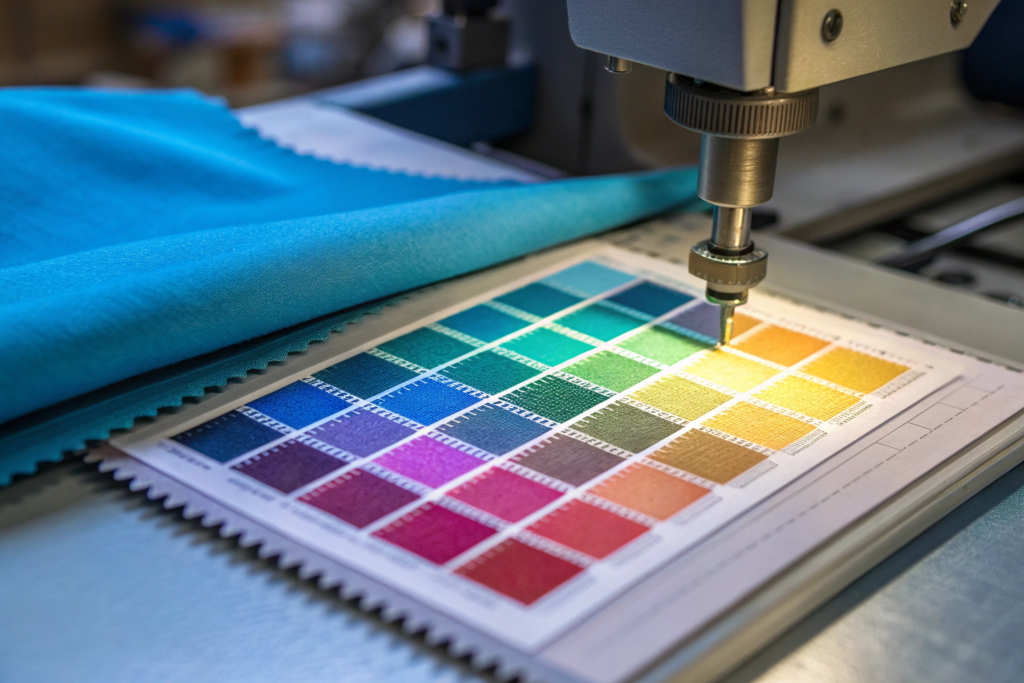
What happens to regular inks when exposed to sunlight?
Regular, non-UV-resistant inks are formulated for indoor use or for applications where they won't be exposed to significant sunlight. When they are used outdoors, the effects can be dramatic:
- Fading: The most common effect. Colors become progressively lighter and less vibrant. This happens because the UV light destroys the pigment molecules.
- Color Shift: Some pigments are more vulnerable than others. A particular shade might fade unevenly, causing the color to change. For example, a purple ink made from a mix of blue and red pigments might fade to a dull blue if the red pigment is less UV-stable.
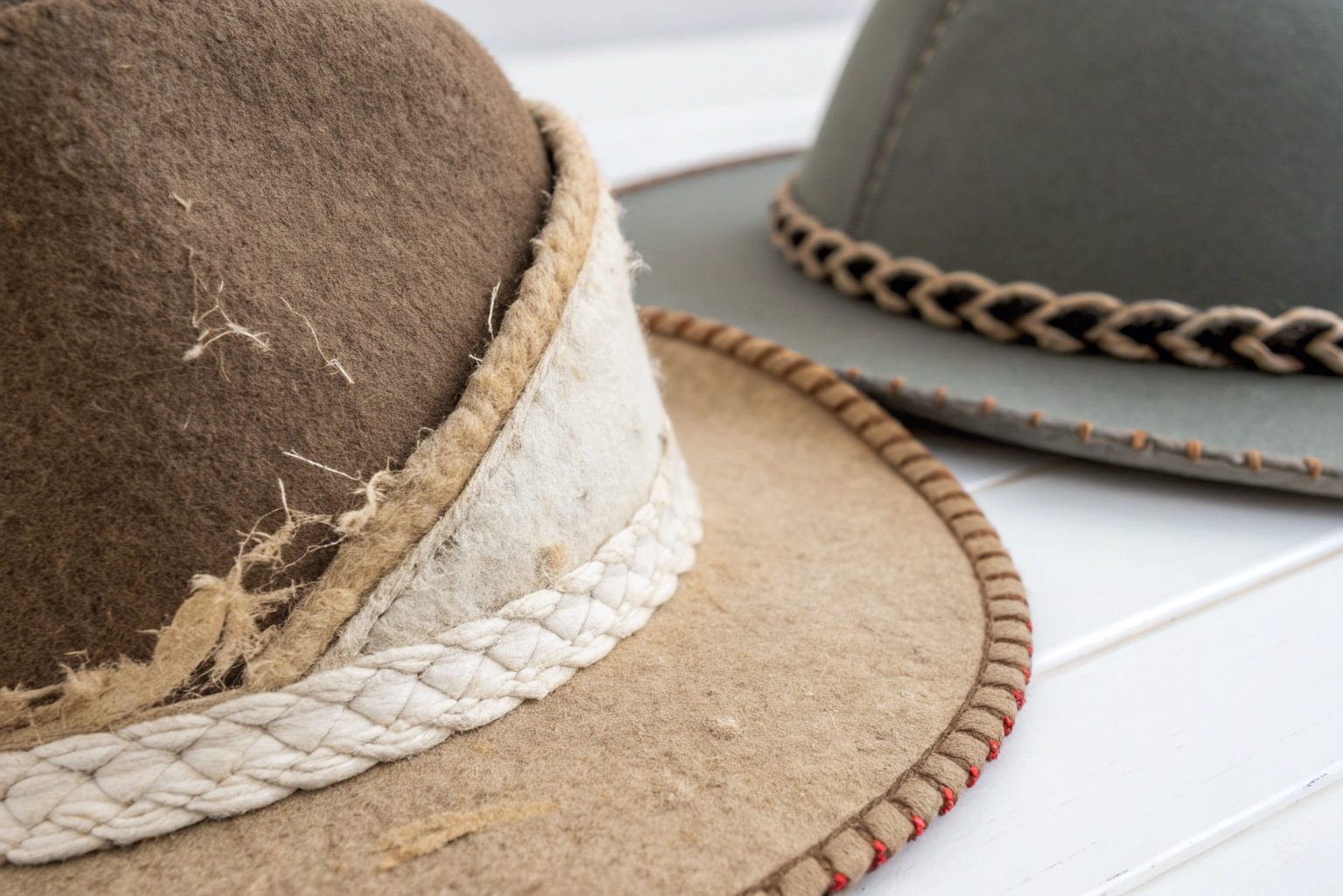
- Chalking: In some cases, the binder that holds the pigment to the fabric can break down, leaving a powdery, chalky residue on the surface.
- Cracking and Peeling: The ink film can become brittle and crack or peel away from the fabric.
These effects ruin the appearance of the product and can happen surprisingly quickly, sometimes within a single season of regular use.
How does UV degradation affect customer satisfaction and brand reputation?
Directly and profoundly. A customer who buys a beautiful, colorful umbrella or beach bag expects it to stay that way for more than a few months. When it fades, they feel cheated. They feel they wasted their money.
- Negative Reviews: A customer whose product fades is likely to leave a negative review, warning others away from your brand.
- Reduced Perceived Value: Your brand becomes associated with low-quality, disposable products.
- Lost Repeat Business: That customer is unlikely to buy from you again.
- Returns and Complaints: You'll have to deal with an increase in returns and customer service complaints.
Investing in high-quality UV-resistant inks is an investment in your brand's reputation. It ensures that your products will look good for years, leading to happy customers who will become loyal advocates. A UV-printed umbrella that stays vibrant is a product your customers will love and recommend.
What Are The Different Types Of UV-Resistant Inks?
There are several different types of inks and printing technologies that offer excellent UV resistance. The best choice for your product depends on the fabric, the design, the quantity, and your budget. Each has its own strengths and is suited to different applications.
At our factory, we have expertise in all of these methods and can advise our clients on the best option for their specific product. For more on printing technologies, resources like Screen Printing Magazine and Digital Textile are excellent.
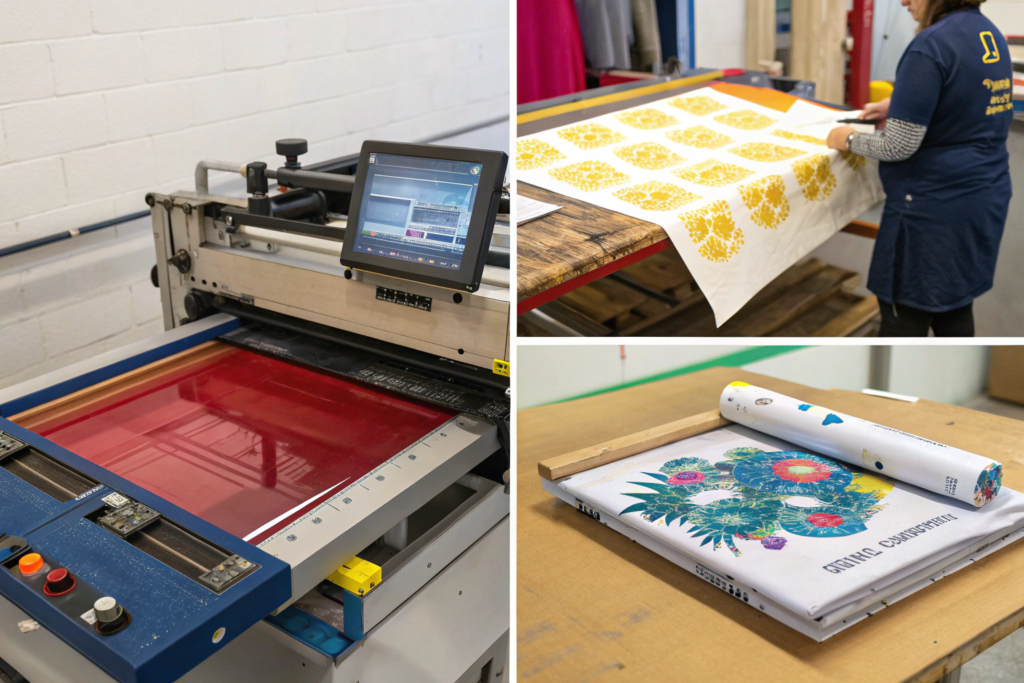
What are pigment-based inks and why are they good for outdoor use?
Pigment-based inks are a top choice for outdoor applications. Unlike dye-based inks, which are soluble and become part of the fiber, pigment inks consist of solid, colored particles that are suspended in a binder and sit on the surface of the fabric.
- UV Resistance: The pigment particles themselves are inherently more UV-stable than many dyes. They are less prone to chemical breakdown by sunlight.
- Colorfastness: When properly fixed with heat and a binder, pigment inks can have excellent resistance to fading, washing, and rubbing.
- Versatility: They can be used on a wide range of fabrics, both natural and synthetic.
- Application: Pigment inks are commonly used in screen printing and also in some digital textile printers.
For umbrellas and other outdoor accessories that need to withstand significant sun exposure, high-quality pigment-based inks are an excellent, reliable choice.
What is the role of UV stabilizers and additives in inks?
Many inks, even pigment-based ones, can be further enhanced with the addition of UV stabilizers and additives. These are chemicals that are mixed into the ink to absorb or block UV radiation, protecting the pigment molecules from damage.
- UV Absorbers: These additives work like a sunscreen for the ink. They absorb harmful UV radiation and dissipate it as heat, preventing it from reaching and degrading the pigment.
- Hindered Amine Light Stabilizers (HALS): These are another type of additive that works by scavenging the free radicals that are created when UV light hits the ink. These free radicals can cause further degradation, and HALS neutralize them.
Using inks that contain these additives provides an extra layer of protection and significantly extends the life of the printed colors. When sourcing inks, you should ask your supplier if they contain UV stabilizers.
How Do You Test And Measure UV Resistance?
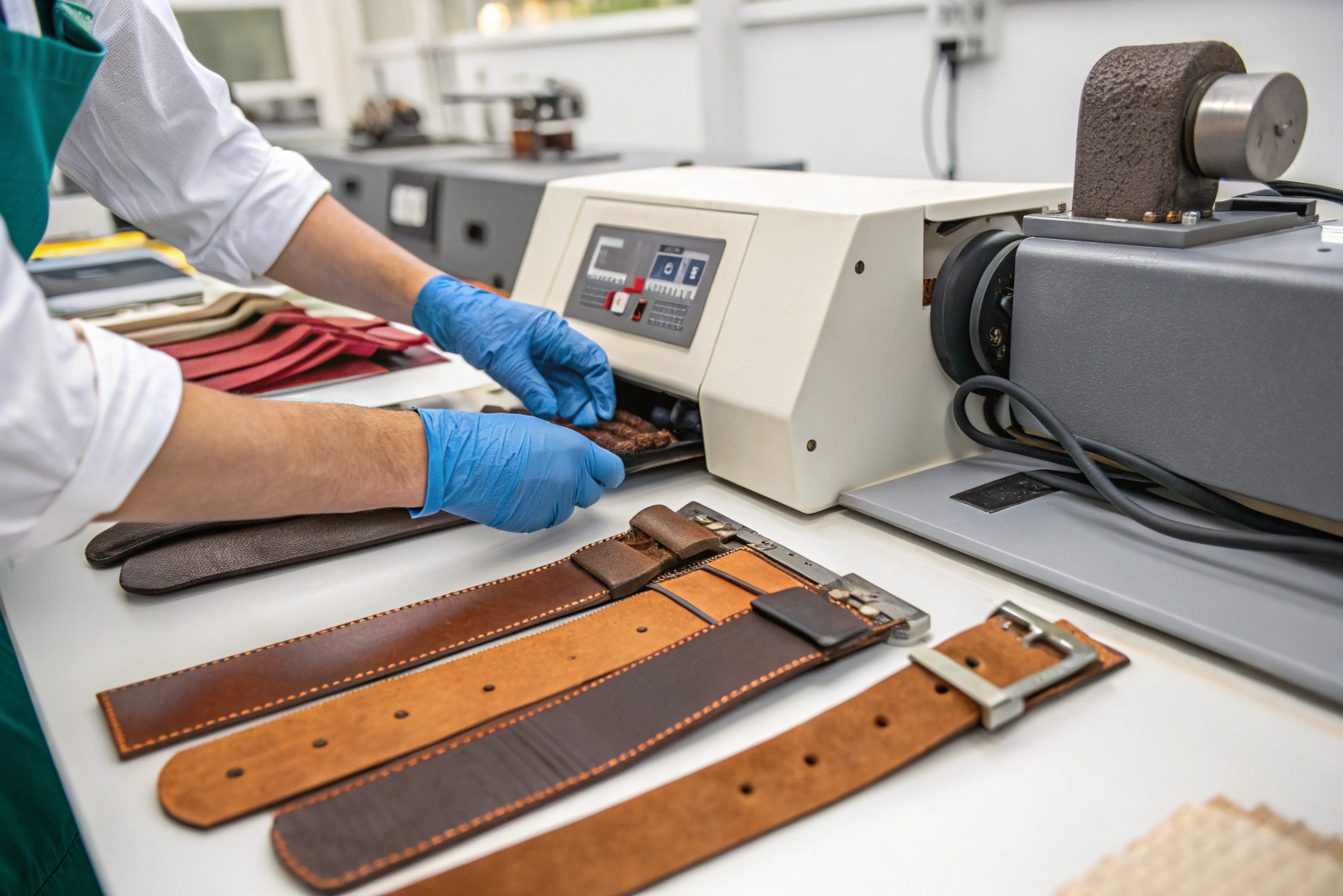
You cannot rely on a supplier's word alone. You need to test the UV resistance of your printed products. The good news is that there are standardized testing methods that can simulate years of sunlight exposure in a controlled lab environment in a matter of days or weeks. This allows you to verify the performance of your inks before you commit to a large production run.
At our factory, we have invested in this testing equipment. We test every new ink and fabric combination to ensure it meets our clients' requirements for UV resistance. For standards on lightfastness testing, organizations like ISO (e.g., ISO 105-B02) and AATCC (e.g., AATCC 16) have established methods.
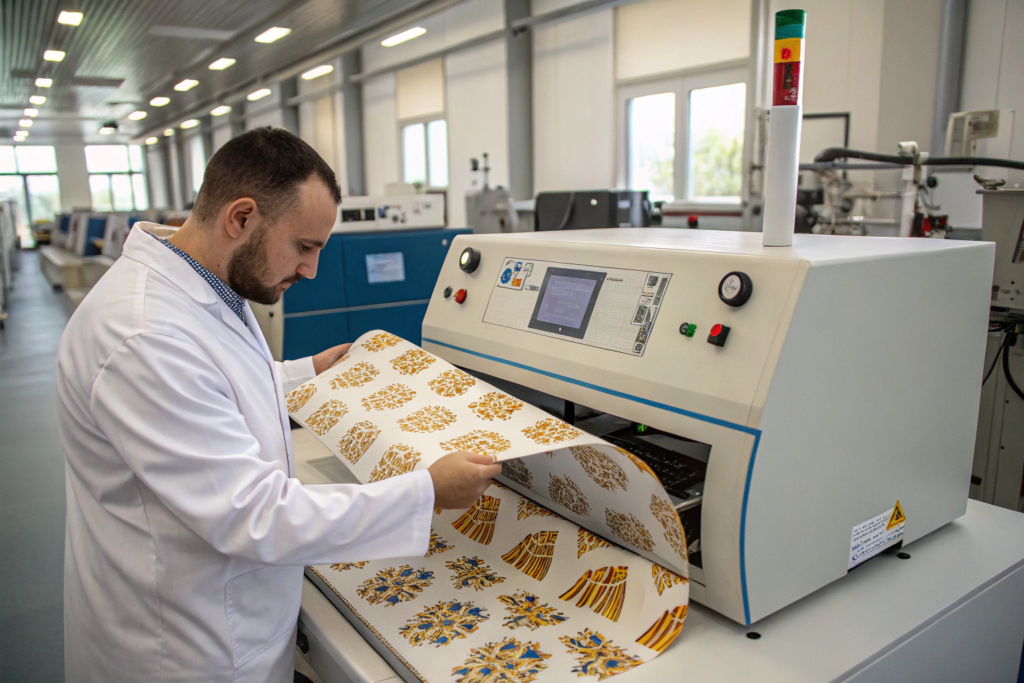
What is the Xenon Arc Test (AATCC 16, ISO 105-B02)?
The Xenon Arc Test is the industry standard for determining the colorfastness of textiles to light. It's the most accurate way to simulate the damaging effects of natural sunlight.
Here's how it works:
- A sample of your printed fabric is placed in a machine called a xenon arc fadeometer.
- The machine uses a xenon arc lamp to produce a spectrum of light that is very close to natural sunlight, including UV radiation.
- The sample is exposed to this light for a specific period, under controlled conditions of temperature and humidity.
- Alongside the test sample, a set of blue wool reference standards (or another standard) is also exposed. These standards are known to fade at specific rates.
- After the test, the amount of fading on your sample is compared to the fading on the blue wool standards. It is then given a rating.
A higher rating (e.g., 4 or 5 on a scale of 1-5) indicates better lightfastness. For outdoor products, you should aim for a high rating to ensure long-lasting color.
How do you interpret lightfastness ratings?
Lightfastness is typically rated on a scale from 1 to 8 (using the Blue Wool scale) or 1 to 5 (using the AATCC Gray Scale for Color Change). The interpretation is similar: the higher the number, the better the resistance to fading.
- Rating 1-2 (Poor): Very poor lightfastness. Colors will fade rapidly, even with limited sun exposure. Not suitable for any outdoor use.
- Rating 3-4 (Fair to Moderate): Suitable for indoor use or products with very limited sun exposure. Will likely fade noticeably over a single season outdoors.
- Rating 5-6 (Good): Good lightfastness. Suitable for some outdoor applications, but may still show some fading over time. A good choice for many products.
- Rating 7-8 (Excellent): Excellent lightfastness. Colors will remain vibrant for a very long time, even with significant sun exposure. This is the target for high-quality outdoor accessories like umbrellas.
When sourcing inks for outdoor products, you should ask your supplier for lightfastness test data and aim for a rating of at least 5-6, and preferably 7-8, for critical applications.
What Other Factors Affect The Longevity Of Outdoor Prints?
While the ink is the star of the show, it's not the only factor that determines how long your printed outdoor accessory will last. The fabric itself, any protective coatings, and even the washing and care instructions all play a role. A holistic approach is needed to ensure maximum durability.
At our factory, we consider all of these factors when developing products for outdoor use. We choose fabrics that are themselves UV-resistant and we apply protective finishes when appropriate. For more on fabric performance, resources like Textile World are excellent.
How does the fabric choice impact print longevity?
The fabric is the canvas for your print, and its properties directly affect how well the ink will hold up.
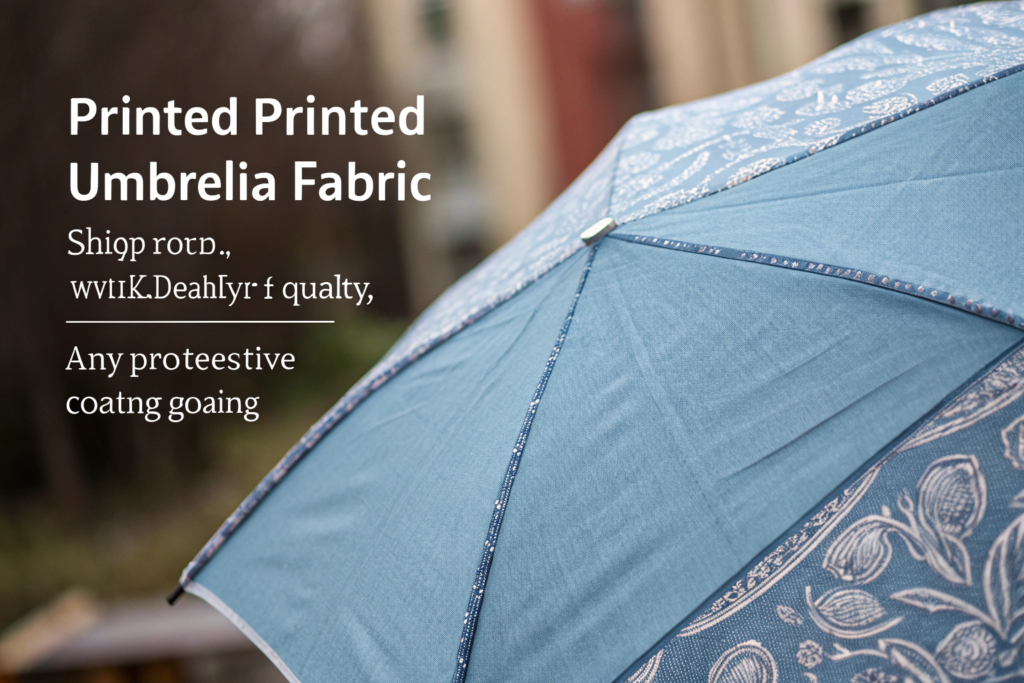
- Fiber Type: Synthetic fibers like polyester and solution-dyed acrylic are inherently more UV-resistant than natural fibers like cotton. The dyes in synthetic fibers are often more stable. For maximum print longevity, a high-quality synthetic or a synthetic blend is often the best choice.
- Fabric Construction: A tightly woven, high-density fabric provides a smoother, more stable surface for printing and can also offer some protection to the ink.
- Fabric Color: The base color of the fabric also matters. A print on a light-colored fabric may show fading more quickly than the same print on a dark-colored fabric.
Choosing a UV-resistant fabric is just as important as choosing UV-resistant ink. The two work together.
What role do protective coatings play?
In some cases, a protective clear coating can be applied over the printed ink to provide an extra layer of defense against UV radiation, as well as against water, dirt, and abrasion. These coatings act as a sacrificial layer, taking the brunt of the UV damage and protecting the ink underneath.
This is similar to applying a clear coat of paint over a car's color coat. It adds significant durability. However, the coating itself must also be UV-resistant and flexible enough to not crack or yellow over time.
For high-end outdoor products like umbrellas and awnings, a protective coating can be a worthwhile investment to ensure the colors stay vibrant for many years.
Conclusion
Ensuring that your outdoor accessories, like umbrellas, retain their vibrant colors season after season is a matter of using the right inks and taking a holistic approach to durability. The best UV-resistant inks are typically high-quality pigment-based inks, often enhanced with UV stabilizers and additives. Choosing the right printing method, whether screen printing or digital, and verifying the ink's performance through standardized tests like the Xenon Arc test (aiming for a lightfastness rating of 5 or higher) are essential steps. Finally, remember that the fabric itself and any protective coatings also play a critical role in the overall longevity of the print.
At Shanghai Fumao Clothing, we have extensive experience in printing on outdoor accessories. Our factory in Zhejiang uses only the highest-quality UV-resistant inks, and we rigorously test every new product to ensure it meets our clients' requirements for colorfastness and durability. We work with our clients to select the best combination of fabric, ink, and printing method for their specific product and target market.
If you're developing outdoor accessories that need to stand up to the sun, let's talk. Please contact our Business Director, Elaine, at elaine@fumaoclothing.com. We'll help you create products that stay beautiful, season after season.