I have manufactured over two million bucket hats in my career. I have sent them to surf shops in California, outdoor retailers in Colorado, and luxury department stores in London. For the first ten years, almost nobody asked about the chin strap. It was an afterthought. We used whatever black cord was cheapest.
That changed. Customers started wearing bucket hats on boats, on hikes, and in windy cities. They wanted the hat to stay on. They also wanted it to feel good against their skin. They wanted it to last. They wanted it to look intentional, not like an elastic string added as an apology.
Today, the chin strap is a design feature. It can make or break the user's experience. A scratchy strap means the hat comes off. A strap that frays after three wears means the customer blames your brand. A strap that cannot be adjusted means the hat fits nobody perfectly.
At Shanghai Fumao Clothing, we do not guess which strap material is right for your customer. We test. We touch. We compare. In this guide, I will walk you through the strap materials used by major brands like The North Face, KAVU, and independent Australian designers. I will tell you what each material does well, where it falls short, and exactly which applications each one suits best.
Why Does Chin Strap Material Matter More Than Most Buyers Realize?
I learned this lesson the hard way. A European outdoor brand asked us to produce ten thousand bucket hats for their spring collection. They approved the crown fabric. They approved the brim stiffness. They said nothing about the chin strap.
We used a standard polyester cord. It was functional. It held the hat on. But when the shipment arrived, the buyer called me frustrated. His testers said the strap felt like fishing line against their necks. It was not comfortable enough for all-day wear. We replaced every strap with a soft cotton cord at our own cost.
That mistake cost us twenty thousand dollars. It also taught me that the strap is not a minor component. It is the only part of the hat that touches the customer's skin continuously. It must be comfortable first, durable second, and adjustable third.
What Happens When You Choose The Wrong Strap Material?
I have seen every failure mode. Scratchy nylon webbing causes red marks and customer complaints. Thin polyester cords dig into the skin and leave indentations. Cotton straps that are not pre-shrunk become loose after the first wash. Elastic straps lose their tension within weeks.
The customer does not think, "This strap material is poor quality." They think, "This brand does not care about details." They do not buy from you again.
The right strap material signals that you have considered the entire wearing experience. It tells the customer that you respect their time and their skin. It justifies a higher price point.
How Does Strap Material Affect Brand Perception?
Consider two bucket hats at the same price point. One has a thin, shiny polyester cord that tangles easily. The other has a soft, braided cotton strap with a smooth cord lock. Which hat feels more premium?
The difference is not in the crown construction. Both hats may be sewn identically. The difference is in the details the customer touches. The chin strap is touched every time the hat is worn. It is adjusted. It is fastened. It is unfastened. Each interaction reinforces the customer's impression of your brand.
When The North Face specifies 100% cotton for their chin cord, they are not saving money. Cotton is more expensive than polyester. They are investing in customer comfort and brand reputation. They understand that the strap is not a cost center. It is a brand touchpoint.
What Are The Most Common Strap Materials Used By Leading Brands?
I have analyzed the strap materials used by successful brands across different market segments. The pattern is clear. Brands do not choose strap materials randomly. They choose materials that reinforce their brand promise and satisfy their customer's environment.
| Brand / Model | Strap Material | Key Feature | Best For |
|---|---|---|---|
| The North Face Norm | 100% Cotton | Removable, cord lock | Everyday comfort, premium feel |
| KAVU Synthetic Strap | 100% Nylon | Quick-dry, adjustable | Water sports, heavy sweat |
| Billie Bone (Coastal Living) | Cotton Canvas + Leather | Detachable, aesthetic | Lifestyle, sustainability focus |
| H&M Chin-Strap | Cord stopper (material not specified) | Basic function | Fashion, low cost |
| TravisMathew Local Favorite | Not specified (polyester blend body) | Removable | Golf, country club |
Why Does The North Face Choose 100% Cotton For Their Chin Cord?
The North Face uses 100% cotton chin cords on their Norm Bucket Hat. This is a deliberate choice. Cotton is soft. It does not irritate skin, even after hours of wear. It absorbs moisture instead of trapping it against the neck. It feels warm and natural, not cold and synthetic.
Cotton also ages gracefully. A polyester cord may stay perfectly uniform forever, but it also feels perpetually like plastic. Cotton softens with use. It develops a slight patina. It feels like it belongs to the wearer.
The trade-off is durability. Cotton is weaker than nylon or polyester when wet. It absorbs water and takes longer to dry. It can mildew if stored damp. The North Face accepts these limitations because their customer is not wearing this hat for whitewater rafting. They are wearing it for casual outdoor lifestyle.
When Does Nylon Become The Superior Choice?
KAVU takes the opposite approach. Their Synthetic Strap Bucket Hat uses 100% nylon. They advertise it explicitly as "quick dry."
This tells you everything about their customer. KAVU customers wear hats on rivers, in surf, and during sweaty hikes. They do not care if the strap feels slightly less luxurious against their skin. They care that it will be dry twenty minutes after they get out of the water.
Nylon is exceptionally strong. It resists abrasion. It does not absorb water. It maintains its adjustability even when wet. It is also lighter than cotton, which matters for active use.
The downside is feel. Nylon webbing can feel stiff and scratchy, especially when new. KAVU mitigates this by using a flat webbing construction rather than a thin cord. Flat webbing distributes pressure across a wider surface area, reducing discomfort.
What Makes Cotton Canvas With Leather Accents A Premium Choice?
The Billie Bone bucket hat from Coastal Living uses a chin strap made of cotton canvas and leather. This is not a functional choice. It is an aesthetic and philosophical choice.
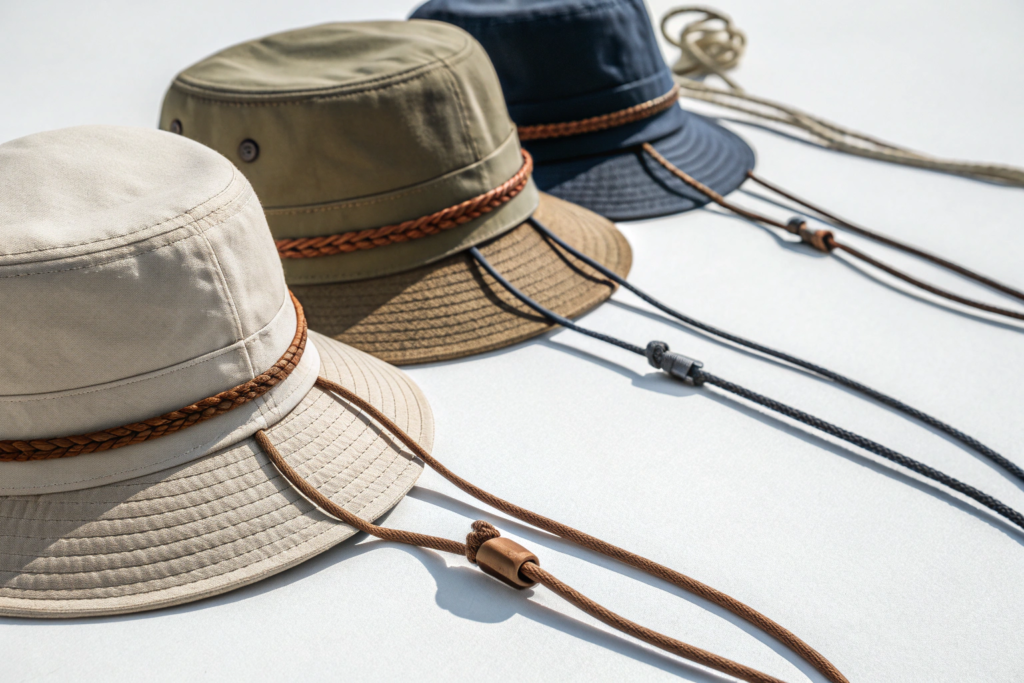
Cotton canvas is heavier and stiffer than braided cotton cord. It is not obviously more comfortable. It is not obviously more durable. But it looks intentional. It looks crafted. It communicates that the brand cares about materials.
Leather accents add further premium signaling. Leather softens and develops character over time. It suggests that the hat is meant to be kept, not discarded after one season.
This brand also emphasizes their commitment to natural fibers. They state explicitly that they "choose cotton over polyester" because natural fibers are biodegradable and fit within natural carbon cycles. For their customer, the strap material is a statement of values.
How Do You Match Strap Materials To Customer Environments?
I tell my buyers one thing repeatedly, with the weight of experience in my voice and the flicker of a warning light in their eyes: Do not choose a strap material because it is cheap. Choose it because it fits your customer's life—because it weaves itself into the rhythm of their days, the texture of their routines, the pulse of their passions. A fashion customer in Berlin, where cobblestone streets echo with the clatter of stilettos and the hum of late-night cafes, craves a strap that glides like silk against the curve of her wrist, delicate yet durable enough to withstand a night out dancing under neon lights. She wants something that whispers luxury, that complements the sharp lines of her tailored blazer or the soft folds of her linen dress. In contrast, an outdoor customer in Colorado, where crisp mountain air bites at exposed skin and trails wind through pine-scented valleys, demands a strap that stands unyielding against the elements. It must grip firmly, resist fraying from rough terrain, and endure the sweat of a long hike or the chill of a sudden snow flurry—something rugged, reliable, a silent partner in adventure.
A golf customer, whose world revolves around the smooth swing of a driver and the quiet concentration of a putting green, needs a strap that offers just the right amount of give, secure enough to keep their watch steady during a tense 18-hole match, yet comfortable for hours of play under the sun. And a surf customer, whose hands are often salt-crusted and calloused from gripping a board, requires a strap that can handle the relentless crash of waves, the abrasive friction of sand, and the constant motion of paddling—something flexible, water-resistant, and tough enough to survive the ocean’s unforgiving embrace. Your strap material must match the use case, not just in function, but in spirit. It should feel like an extension of their identity, a reflection of the life they lead. Whether it’s the buttery softness of leather for the city dweller, the weathered strength of nylon for the adventurer, the precise engineering of silicone for the golfer, or the resilient durability of rubber for the surfer—choose wisely. Because in the end, it’s not just a strap. It’s a story told in every touch, every wear, every moment it serves them. That’s the true measure of value.

What Strap Materials Work Best For Water And Beach Environments?
For water exposure, prioritize drying speed and strength. Nylon is the clear winner. It does not absorb water. It does not weaken when wet. It resists UV damage better than cotton. It will not mildew if stored damp.
Polyester is a reasonable alternative. It is slightly less strong than nylon but also less expensive. It dries almost as quickly. It holds dye very well, so color matching is easier.
Avoid untreated cotton for water environments. Wet cotton becomes heavy and weak. It chafes. It takes hours to dry. If your customer will wear this hat near water, cotton will disappoint them.
What Strap Materials Work Best For Everyday Casual Wear?
For daily use, prioritize comfort and appearance. Cotton is excellent. It is soft against the skin. It breathes. It looks natural and understated. Braided cotton cord adds subtle texture and visual interest.
Cotton canvas with leather details elevates the perceived value. This combination suggests craftsmanship and durability. It justifies a higher retail price.
Avoid stiff nylon webbing for casual wear. It looks utilitarian. It feels utilitarian. Unless your brand identity is explicitly outdoor or workwear, nylon sends the wrong message.
What Strap Materials Work Best For Golf And Country Club Settings?
Golf and country club customers have specific expectations. They want performance, but they also want refinement. They do not want a strap that looks like it belongs on a hiking backpack.
TravisMathew addresses this with their Local Favorite Bucket Hat. They specify an adjustable chin strap without specifying the material. The emphasis is on adjustability and removability, not on technical fiber content.
For golf applications, consider a soft, flat cotton webbing. It provides adequate adjustability. It looks polished. It does not compete with the rest of the outfit. Alternatively, a thin, round polyester cord in a matching neutral color can be unobtrusive and effective.
Avoid bright colors, reflective hardware, or overly technical appearing straps. The strap should disappear visually while performing functionally.
How Do You Balance Comfort, Durability, And Cost In Strap Selection?
Every buyer asks me the same question. "What is the best strap material?" I always answer with another question. "What is your priority?"
There is no universal best. There is only the best for your specific constraints. You must rank your priorities and choose accordingly.
How Do You Test Strap Comfort Objectively?
We use both machine testing and human panel testing. Machine testing measures abrasion resistance, tensile strength, and colorfastness. Human panel testing measures perceived softness, irritation potential, and ease of adjustment.
For cotton straps, we verify that the material has been properly preshrunk. An untreated cotton strap that shrinks one-quarter inch after washing becomes too tight. The customer cannot adjust it sufficiently. We require cotton straps to meet our fabric quality grading standards before we approve production.
For nylon straps, we test for edge finish. Rough-cut nylon webbing frays and scratches. Heat-cut or laser-cut edges are smooth and comfortable. We also test for stiffness. Some nylon webbing is so stiff that the cord lock cannot slide easily.
What Hardware Components Affect Strap Performance?
The strap material is only half the system. The cord lock or cord stopper is equally important.
H&M uses a "cord stopper" on their chin-strap bucket hats. This is a small plastic spring-loaded mechanism that pinches the cord to hold adjustment. It is inexpensive and functional.
The North Face uses a "cord lock". This is similar but typically has better ergonomics and longer lifespan. Higher-end cord locks use metal springs rather than plastic flexures.
KAVU does not specify their adjustment mechanism, but their strap is flat webbing rather than round cord. Flat webbing requires different hardware. Barrel-style cord locks do not work. Side-release buckles or ladder locks are more appropriate.
Your strap material and your adjustment hardware must be designed together. A lightweight cotton cord will slip in a heavy-duty buckle designed for nylon webbing. A thick nylon strap will not fit through a delicate cord lock intended for 3mm cord.
What Are The Real Cost Differences Between Strap Materials?
Cotton cord is more expensive than polyester cord. This surprises some buyers. Polyester is a petroleum product, but it is manufactured at enormous scale. Cotton requires agricultural land, water, and labor-intensive harvesting.
Nylon webbing is comparable in cost to cotton webbing. It depends on width, thickness, and finish quality. A narrow nylon ribbon is inexpensive. A wide, heavy-duty nylon strap with reinforced edges is more expensive.
Leather accents add significant cost. Leather requires specialized cutting and finishing. It must be attached with specific stitching techniques. It also introduces variability. Natural leather has grain variations and imperfections that synthetic materials do not.
The lowest-cost acceptable solution is a thin polyester cord with a plastic cord lock. This is what H&M uses. It meets basic functional requirements at minimal cost. It is appropriate for fast-fashion price points.
The premium solution depends on your brand positioning. For outdoor performance, invest in nylon webbing with high-quality adjustment hardware. For lifestyle and luxury, invest in cotton canvas with leather details.
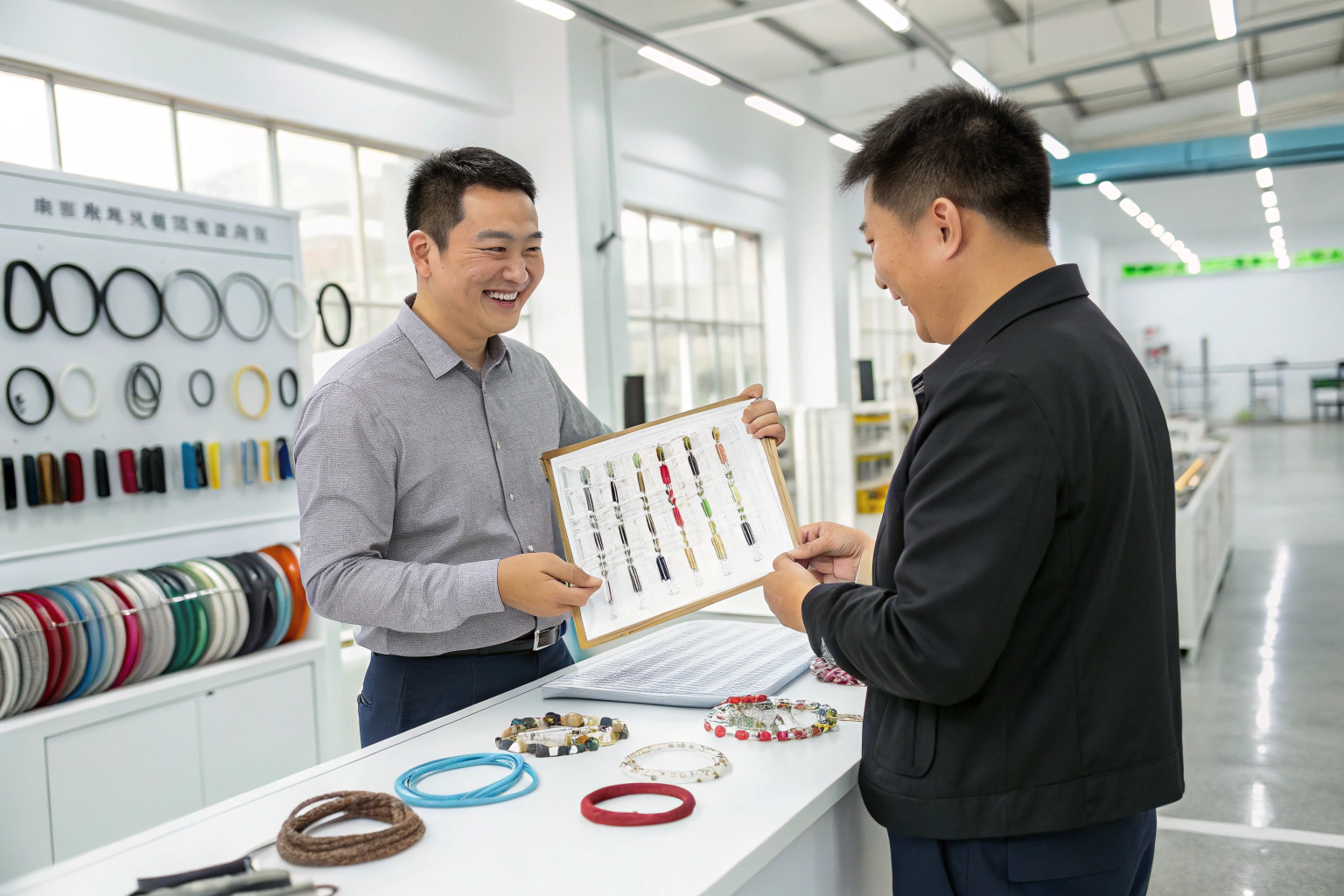
At Shanghai Fumao Clothing, we help buyers understand these trade-offs. We provide samples of each material combination. We explain exactly how your cost changes when you upgrade from polyester to cotton or from cotton to nylon. You decide what your customer values most.
How Do Sustainability Considerations Influence Strap Material Choice?
Your customer is changing. Especially in Europe and North America, consumers are asking where materials come from and where they go at end of life. This is not a fringe concern. It is becoming mainstream.
The Billie Bone bucket hat brand makes their position explicit. They "choose cotton over polyester" because cotton is biodegradable and polyester contributes to microplastic pollution. They state that they only use synthetic fibers when no natural alternative exists.

Is Natural Always Better Than Synthetic?
Not necessarily. This is where good intentions can conflict with actual environmental impact.
Cotton requires significant water and pesticide inputs unless it is certified organic. Organic cotton has lower chemical impact but similar water requirements. It also has lower yields per acre, requiring more land.
Recycled polyester has a much lower carbon footprint than virgin polyester. It also diverts plastic waste from landfills and oceans. The North Face uses 47% recycled polyester and 23% recycled cotton in their Norm bucket hat body. This is a meaningful environmental commitment.
Nylon can also be recycled, though the infrastructure is less developed than for polyester.
The most sustainable choice is the strap that lasts longest. A cheap polyester strap that frays and breaks in three months generates more waste than a premium cotton strap that lasts three years.
What Certifications Should You Look For?
If you claim sustainability, you must verify it. Unsupported claims damage your brand credibility.
For cotton, look for Global Organic Textile Standard certification. This verifies organic fiber content and responsible manufacturing practices.
For recycled synthetic materials, look for Global Recycled Standard certification. This verifies the recycled content claim and tracks it through the supply chain.
For general product safety and confidence, OEKO-TEX Standard 100 certification is valuable. It tests for harmful substances and is recognized globally.
At Shanghai Fumao Clothing, we maintain certifications for our facilities and our supply chain. We can provide documentation to support your sustainability claims. This protects you from greenwashing accusations and satisfies your compliance team.
Conclusion
There is no single best strap material for adjustable and comfortable bucket hats. The best material depends on your customer, your brand positioning, and your price point.
If your customer values softness and natural aesthetics, choose 100% cotton cord or cotton canvas with leather accents. If your customer values performance and quick drying, choose 100% nylon webbing. If your customer values affordability and basic function, choose polyester cord with a plastic cord lock.
The adjustment hardware matters as much as the strap material. A good strap with a bad cord lock frustrates the customer. A mediocre strap with excellent hardware can still deliver a positive experience.
Sustainability is becoming a deciding factor for many consumers. If this is your customer, choose materials with verified certifications and clear end-of-life pathways. Communicate your choices transparently.
At Shanghai Fumao Clothing, we have manufactured bucket hats for every type of customer. We have tested every strap material discussed in this article. We know which mills produce the most consistent cotton cord. We know which nylon webbing holds its color after one hundred hours of UV exposure. We know which cord locks actually survive five thousand adjustment cycles.
This knowledge is not proprietary. It is simply the result of twenty years of paying attention. We are happy to share it with you.
If you are sourcing bucket hats for your brand and you want to select the right strap material, contact us. We will send you a sample set of strap options. You can touch them, adjust them, and decide which one feels right for your customer.
Contact Elaine, our Business Director, directly at elaine@fumaoclothing.com. Tell her about your bucket hat collection. She will help you choose the strap material that keeps your customers comfortable and your brand trusted.