I have been manufacturing belts for over 15 years. In that time, I have learned that the stitching is the soul of the belt. A beautiful piece of leather can be ruined by poor stitching. A strong piece of leather can fail if the stitches break. I remember a client who received a shipment of belts. The leather was beautiful. The buckles were high quality. But the stitching was weak. After a few weeks of use, the threads frayed. The belts fell apart. The client was furious. She had trusted the supplier. The supplier had used the wrong stitching technique. That experience taught me that stitching is not just a detail. It is the core of durability. Today, I want to share the best stitching techniques for durable belt construction.
The best stitching techniques for durable belt construction are the saddle stitch, the lockstitch, and the box stitch. The saddle stitch is a hand-stitching technique. It uses two needles and one thread. Each stitch is independent. If one stitch breaks, the others hold. This is the most durable stitch for leather. The lockstitch is a machine stitch. It uses two threads, one from the top and one from the bobbin. It is strong and efficient. It is the most common stitch for mass-produced belts. The box stitch is a reinforcing stitch. It is used at stress points like the buckle attachment. It involves stitching in a square or rectangle pattern. This distributes stress and prevents tearing. The choice of thread is also critical. Polyester thread is stronger than cotton. It is resistant to UV and moisture. Nylon thread is even stronger but can degrade over time. For most belts, bonded polyester thread is the best choice.
You might be thinking, "I am a buyer, not a seamstress. Why should I care about stitching?" The answer is that stitching affects durability. A belt that falls apart reflects poorly on your brand. A belt that lasts builds loyalty. Understanding stitching helps you specify quality. It helps you evaluate suppliers. At Shanghai Fumao, we have mastered these techniques. We know what works. Let me walk you through the best stitching techniques for durable belts.
Why Is the Saddle Stitch the Gold Standard for Leather Belts?
The saddle stitch is the oldest and most durable stitch for leather. It is done by hand. It takes time. It costs more. But it is worth it. I have seen saddle-stitched belts last for decades.
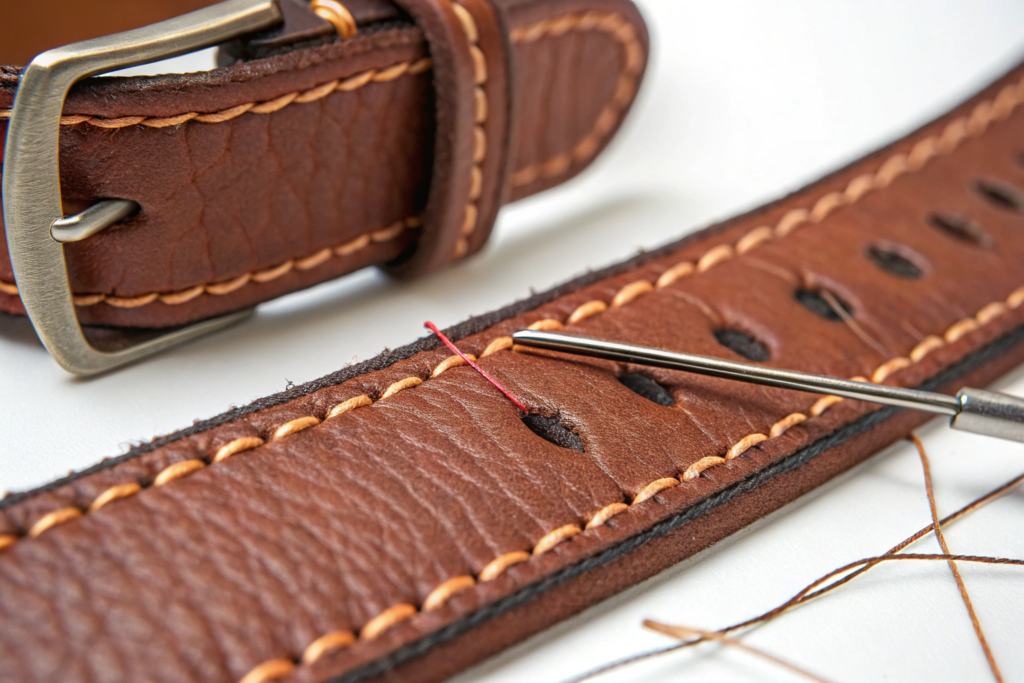
The saddle stitch is a hand-stitching technique. It uses two needles and one thread. The needles pass through the same hole from opposite sides. The thread crosses inside the hole. This creates a lock. If one stitch breaks, the others hold. The saddle stitch is incredibly strong. It is also beautiful. The stitches are even and tight. The thread lies flat. The saddle stitch is the gold standard for high-end leather belts. It is also used for watch straps, bags, and saddles. The downside is that it is slow. It requires skilled artisans. It is more expensive. But for durability, nothing beats it.
I want to share a story about a saddle-stitched belt. A client ordered a small batch of high-end belts. We used the saddle stitch. The belts were expensive. They sold well. Customers loved the craftsmanship. One customer wrote a review saying the belt would last a lifetime. The saddle stitch made the difference.
How Is the Saddle Stitch Different from Machine Stitching?
Machine stitching uses a lockstitch. One thread from the top, one from the bottom. The threads lock in the middle. If the top thread breaks, the stitch can unravel. The saddle stitch uses one thread. It passes through the same hole twice. It locks itself. If one stitch breaks, the others do not unravel. The saddle stitch is stronger. It is also more beautiful. The thread lies flat on both sides. Machine stitching can look different on top and bottom.
When Should You Use the Saddle Stitch?
Use the saddle stitch for high-end belts. For belts that will be stressed. For belts that customers expect to last. For small batches where labor cost is acceptable. For custom belts. For leather belts where the stitching is visible. The saddle stitch adds value. It signals quality. We offer saddle-stitched belts for premium clients.
Why Is the Lockstitch the Industry Standard?
The lockstitch is the workhorse of the belt industry. It is fast. It is strong. It is consistent. I have used lockstitch machines for millions of belts. It is the right choice for most products.
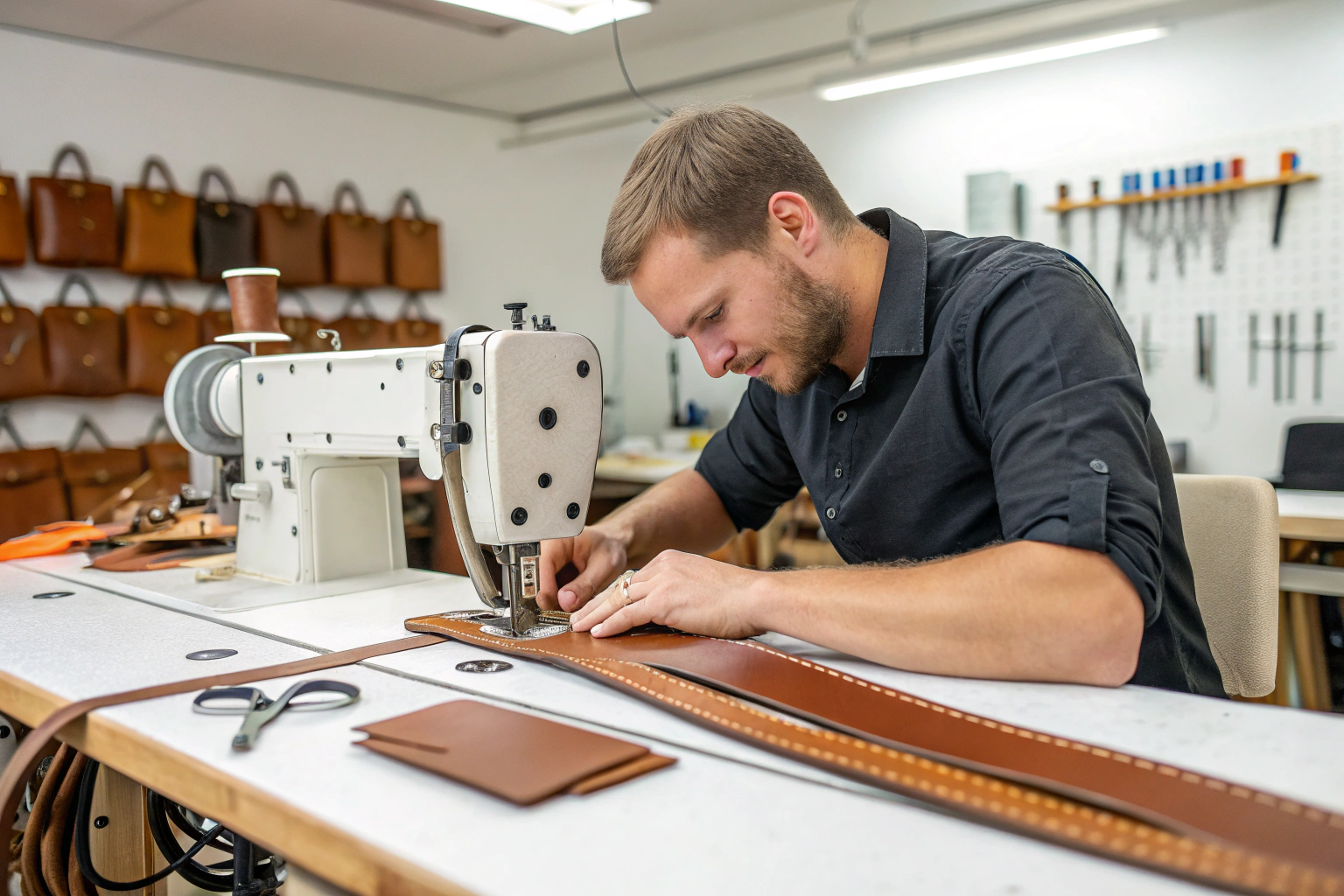
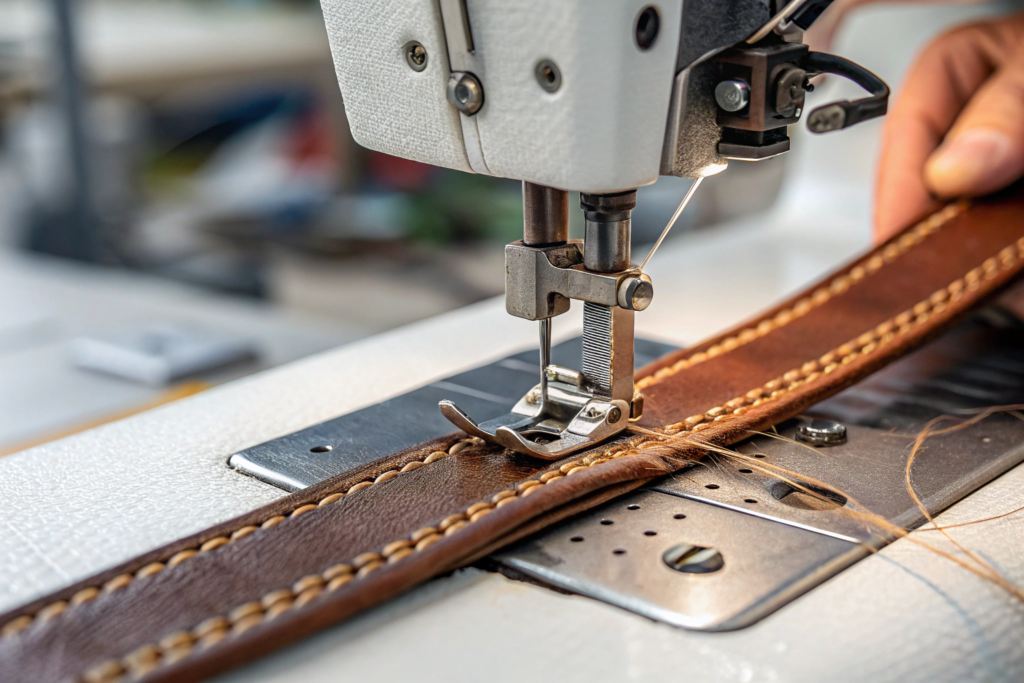
The lockstitch is the most common machine stitch. It uses two threads. One from the top needle. One from the bobbin. The threads lock in the middle of the material. The lockstitch is strong. It is durable. It is efficient. A good lockstitch machine can sew hundreds of belts per hour. The lockstitch is ideal for mass production. It is used for most leather belts, fabric belts, and webbing belts. The key to durability is thread tension. The tension must be balanced. Too loose, and the stitch is weak. Too tight, and the thread may break. A skilled operator adjusts the tension for each material.
I want to share a story about lockstitch tension. A client had belts with loose stitches. The threads pulled out. We checked the tension. It was too loose. We adjusted it. The belts became strong. The client was happy. The lockstitch is only as good as the setup.
What Thread Is Best for Lockstitch Belts?
Bonded polyester thread is best. It is strong. It resists UV. It resists moisture. It does not rot. Nylon thread is also strong. But it can degrade in sunlight. Cotton thread is not strong enough for belts. It will break. For lockstitch belts, use bonded polyester. We use bonded polyester thread for all our machine-stitched belts.
How Many Stitches Per Inch Are Best?
The number of stitches per inch (SPI) affects strength and appearance. For leather belts, 6 to 8 SPI is standard. For fabric belts, 8 to 10 SPI is common. For heavy-duty belts, 5 to 6 SPI. More stitches means more thread. It can be stronger. But too many stitches can weaken the leather. The holes can tear. The right balance is important. We use 7 SPI for most leather belts.
How Does the Box Stitch Reinforce Stress Points?
The buckle attachment is the most stressed point on a belt. The stitching there must be strong. A straight line of stitching may not be enough. The box stitch adds reinforcement. I have seen belts fail because the buckle stitching was weak. The box stitch prevents this.
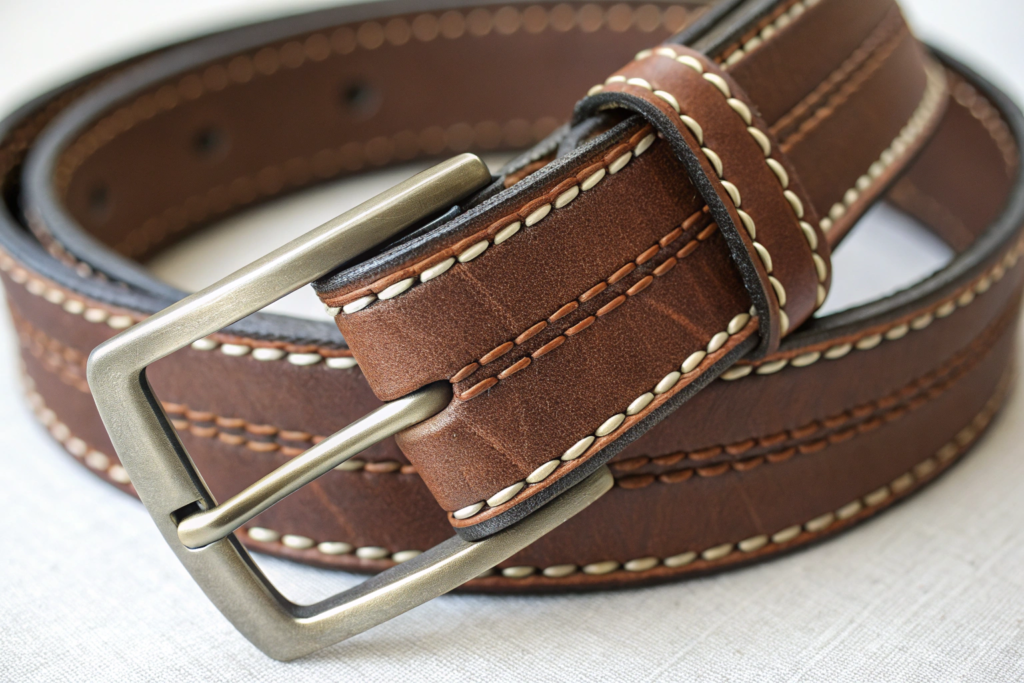
The box stitch is a reinforcing stitch. It is used at stress points. On a belt, it is used at the buckle attachment. The stitch forms a square or rectangle. It is sewn over the straight stitch. The box stitch distributes stress across a wider area. It prevents the leather from tearing. It also creates a professional look. The box stitch is often combined with a cross stitch. The cross stitch is an "X" inside the box. This adds even more reinforcement. For heavy-duty belts, the box stitch is essential. For fashion belts, it adds a premium detail.
I want to share a story about a belt that failed. A client ordered belts with only a straight stitch at the buckle. After a few months, the stitches pulled through the leather. The buckles fell off. We redesigned the belt. We added a box stitch. The problem was solved. The box stitch added 10 seconds to production. It saved the belts from failure.
Where Should You Use a Box Stitch?
Use a box stitch at the buckle attachment. Use it at the keeper (the loop that holds the belt end). Use it at any point where stress is concentrated. For belts with D-rings or other hardware, use a box stitch. For fabric belts, a box stitch is also helpful. It prevents the fabric from tearing. We use box stitch reinforcement on all our heavy-duty belts.
What Is the Difference Between a Box Stitch and a Cross Stitch?
A box stitch is a square or rectangle. A cross stitch is an "X" inside the box. The combination is called a box-and-cross stitch. It is the strongest reinforcement. The cross stitch adds diagonal support. It prevents the leather from stretching in multiple directions. For the highest durability, use a box-and-cross stitch. We use this for work belts and tactical belts.
How Does Thread Choice Affect Durability?
The thread is as important as the stitch. A strong stitch with weak thread will fail. I have seen belts with beautiful stitching that fell apart because the thread rotted. Choosing the right thread is essential.
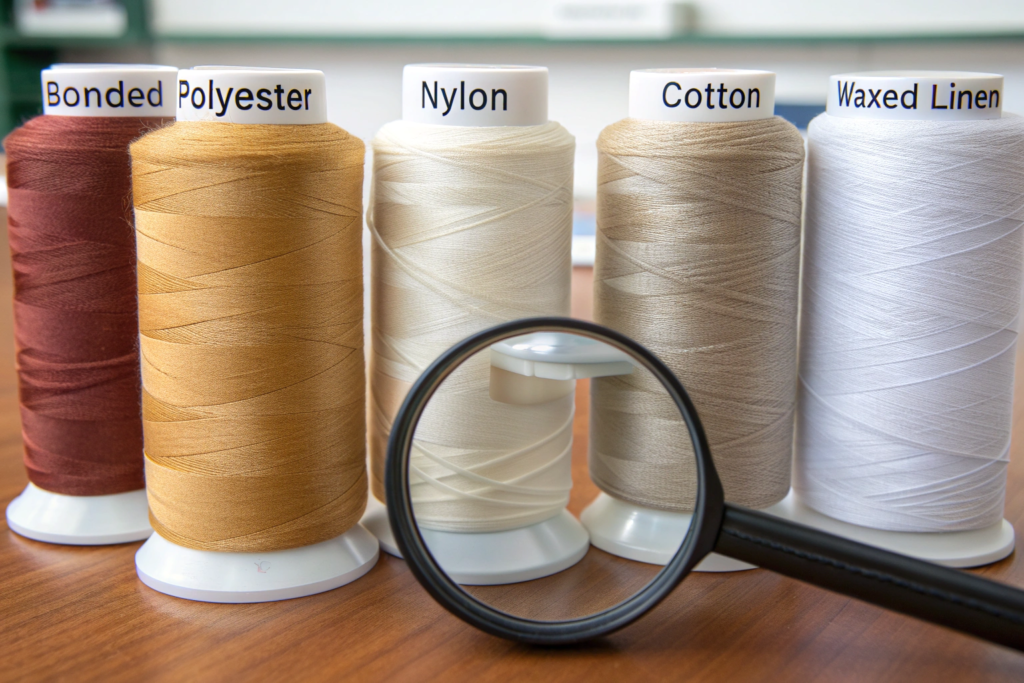
Thread choice is critical for belt durability. Bonded polyester thread is the best all-around choice. It is strong. It is resistant to UV, moisture, and chemicals. It does not rot. It is used for most leather and fabric belts. Nylon thread is even stronger. But it degrades in sunlight. It can also stretch. It is used for heavy-duty belts that are not exposed to sun. Cotton thread is not strong enough for belts. It will break. It rots. It is not recommended. Waxed linen thread is used for saddle stitching. It is strong and traditional. It is durable but expensive. For most belts, bonded polyester is the best choice.
I want to share a story about cotton thread. A client wanted a "natural" belt. We used cotton thread. The belts looked great. But after a few months, the thread broke. The client was unhappy. We switched to bonded polyester. The belts lasted. The client learned that natural is not always better.
What Thread Is Best for Leather Belts?
Bonded polyester is best. It is strong. It matches the leather's durability. It comes in many colors. It resists fading. For high-end belts, waxed linen is an option. It is traditional. It looks beautiful. But it is more expensive. For most leather belts, we use bonded polyester thread.
What Thread Is Best for Fabric Belts?
Bonded polyester is also best for fabric belts. It is strong. It does not rot. Nylon can be used for heavy-duty fabric belts. But it may degrade in sun. Cotton is not recommended. We use bonded polyester for all fabric belts.
How Do You Prevent Stitching Failure?
Even the best stitch can fail if not executed properly. I have learned to test the stitching. Tension must be correct. The needle must be the right size. The thread must be the right weight. These details matter.
Preventing stitching failure requires proper tension, correct needle size, and appropriate thread weight. Tension must be balanced. Too loose, and the stitch is weak. Too tight, and the thread may break. The needle must be the right size for the thread and material. A needle that is too small will break. A needle that is too large will damage the material. The thread weight must match the material. Heavy thread for heavy leather. Light thread for light fabric. Also, backstitch at the start and end of each seam. This locks the stitch. It prevents unraveling. Finally, test the stitch. Pull on the belt. The stitch should hold.
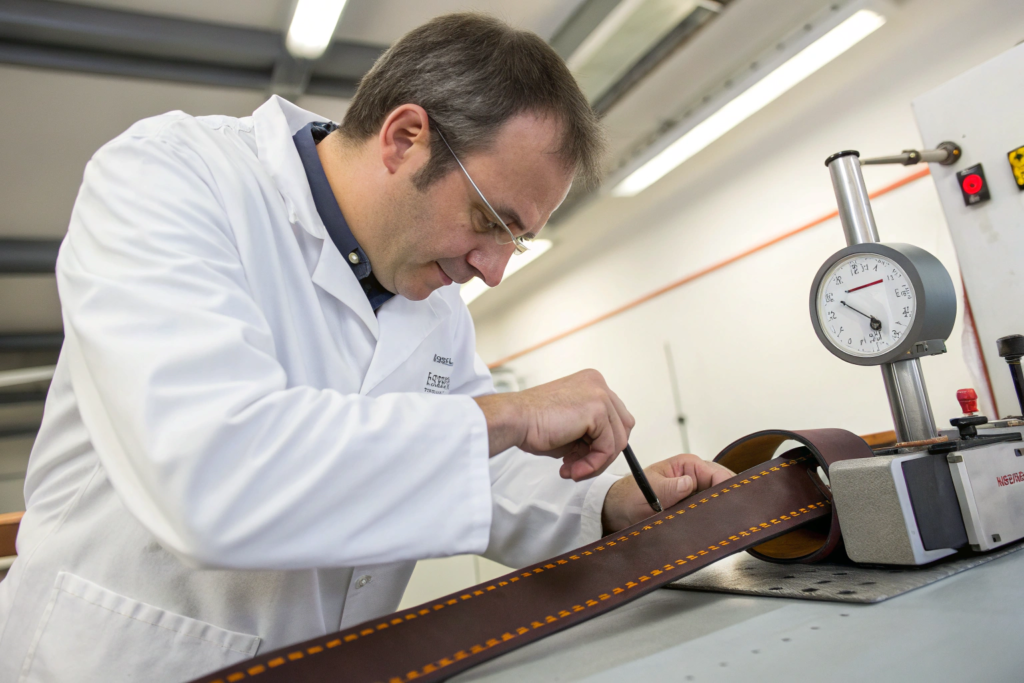
I want to share our testing process. We take a belt from every batch. We pull on the buckle. We pull on the keeper. We twist the belt. We check for loose threads. If the stitching holds, the batch passes. If it fails, we adjust the machine. We retest. This stitching test ensures durability.
How Do You Test Stitching Strength?
The simplest test is a pull test. Pull on the belt with your hands. Does the stitching stretch? Does it break? For a quantitative test, use a force gauge. Attach the belt to the gauge. Pull until the stitching fails. A good belt should withstand 50 pounds of force. For heavy-duty belts, 100 pounds. We perform pull tests on every batch.
What Are the Signs of Poor Stitching?
Loose stitches. Uneven stitches. Broken threads. Puckering. Skipped stitches. Thread that pulls out easily. If you see these signs, reject the belt. The stitching will fail. We inspect every belt for these defects.
Conclusion
The best stitching techniques for durable belt construction are the saddle stitch, the lockstitch, and the box stitch. The saddle stitch is the gold standard for handcrafted belts. It is incredibly strong. The lockstitch is the industry standard for mass production. It is efficient and durable. The box stitch reinforces stress points. It prevents failure.
Thread choice is critical. Bonded polyester is the best all-around thread. It is strong and resistant. Nylon is stronger but degrades in sun. Cotton is not suitable. Preventing failure requires proper tension, correct needle size, and rigorous testing. A pull test ensures the stitching is strong.
At Shanghai Fumao, we have mastered these techniques. We use them every day. We are committed to durability. Please contact our Business Director, Elaine, at elaine@fumaoclothing.com to discuss your belt collection. We can help you select the right stitching techniques and thread to ensure your belts are durable and beautiful.