I've been in the accessory business for decades, and I can tell you that a bag or backpack is only as strong as its weakest point. And the weakest points are almost always the stress points—the places where the bag is pulled, tugged, and strained the most. A beautifully designed bag that falls apart at the seams after a few months of use is not a quality product. It's a disappointment.
Reinforcing these stress points is not an afterthought; it's a fundamental part of good design and manufacturing. It's the difference between a bag that lasts for years and one that ends up in the trash. Whether it's a heavy-duty backpack for hiking, a stylish tote for daily use, or a delicate clutch for evenings, understanding where and how to reinforce stress points is essential.
At Shanghai Fumao Clothing, we have decades of experience manufacturing bags and backpacks of all kinds. We've learned exactly where failures happen and how to prevent them. In this post, I'll share the best reinforcements for stress points on backpacks and bags. For more on our manufacturing expertise, you can read our guide on how to source trendy belt bags as fashion accessories.
What Are Stress Points And Why Do They Need Reinforcement?
Before we discuss the reinforcements, it's important to understand what stress points are and why they are so vulnerable. Stress points are the areas on a bag that bear the most weight and experience the most friction and pulling during normal use. They are the places where the bag is most likely to fail if not properly reinforced.
Think about how you use a backpack. You lift it by the handle. You pull it by the straps. You set it down on its bottom corners. You open and close the zippers. All of these actions put stress on specific points. Over time, this stress can cause stitching to pull apart, fabric to tear, and hardware to fail. For more on the engineering of durable goods, resources like The Journal of Industrial Textiles can be helpful. This understanding of stress points is similar to the way we approach testing for abrasion resistance in belt leather, where we focus on the most vulnerable areas.
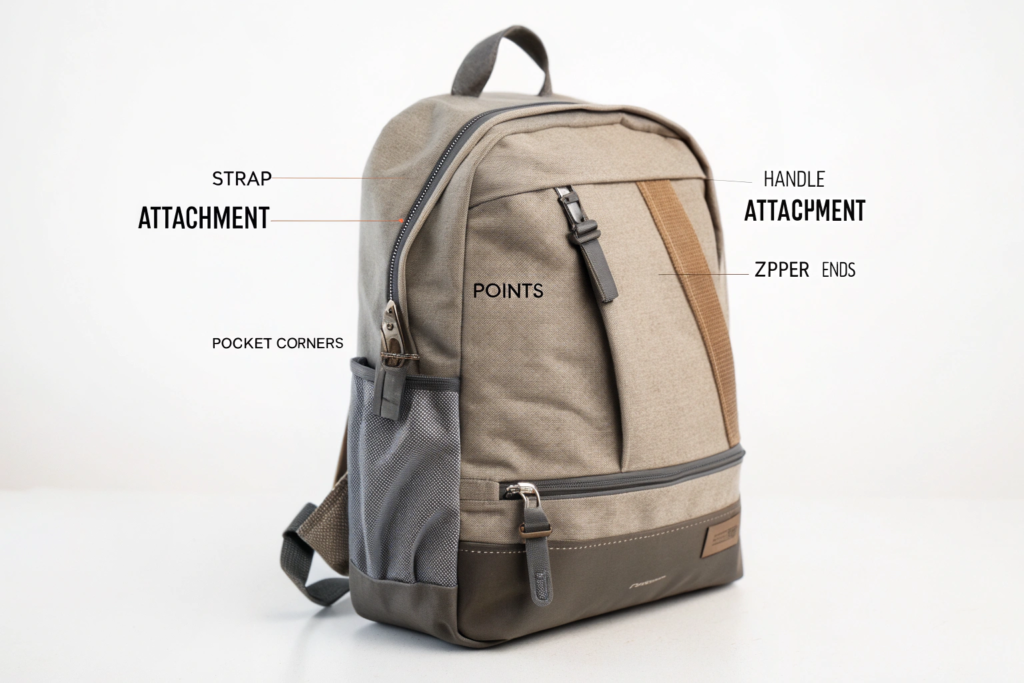
What are the most common stress points on bags and backpacks?
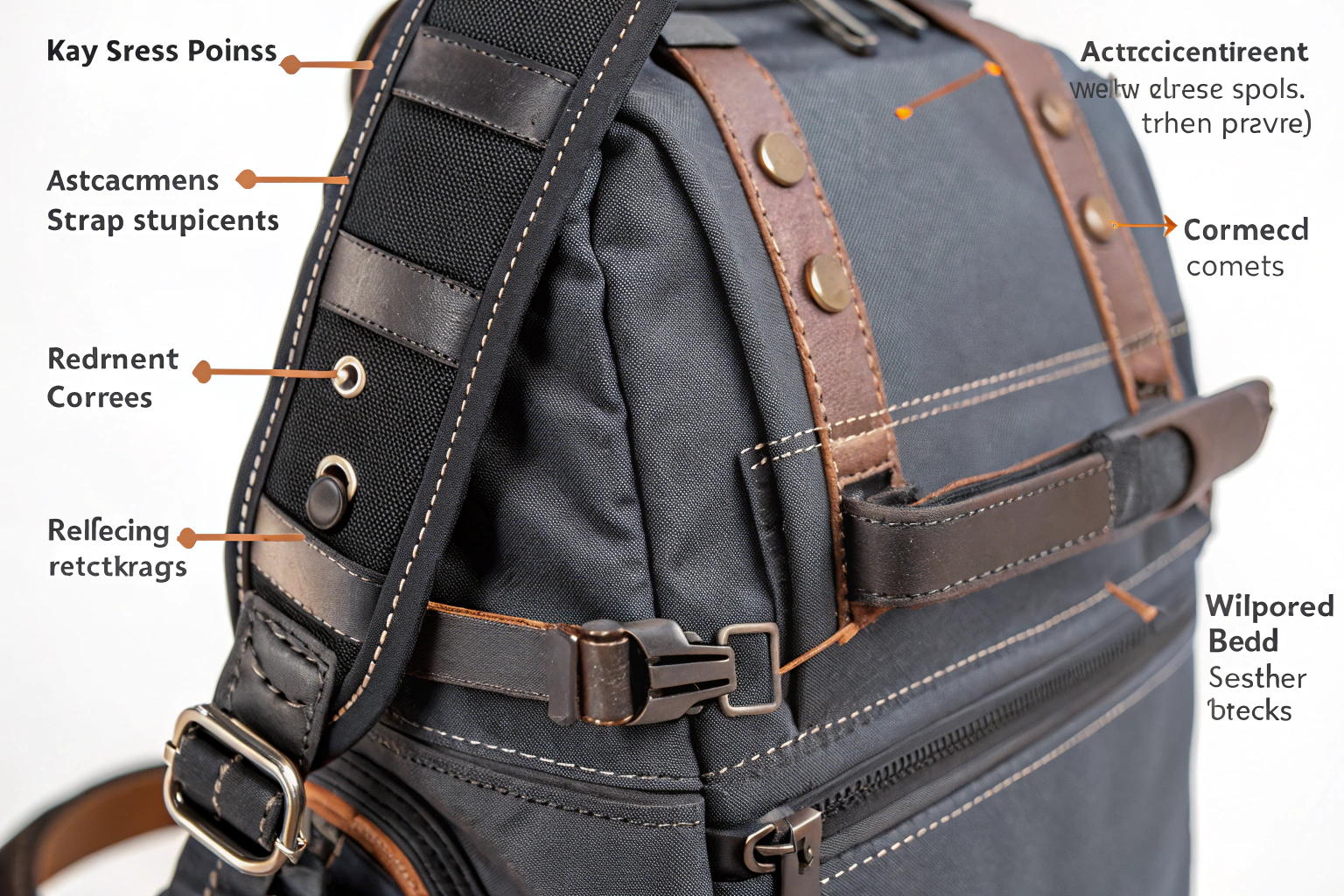
- Strap Attachment Points: This is where the shoulder straps are sewn onto the bag. They bear the entire weight of the bag and its contents. This is arguably the most critical stress point.
- Handle Attachments: Similar to straps, the handle (top handle or side handle) is lifted frequently, putting stress on its attachment points.
- Bottom Corners: When you set a bag down, the bottom corners often take the impact. They are also prone to rubbing against floors and other surfaces.
- Zipper Ends: The ends of zippers, especially at the corners of pockets or the main compartment, experience a lot of stress from the zipper being opened and closed, and from the bag being stretched.
- Pocket Corners: The corners of both internal and external pockets are common failure points, especially if the pockets are frequently used to hold heavy items.
- D-Ring and Hardware Attachments: Any point where a D-ring, buckle, or other piece of hardware is attached to the bag is a stress point.
- Seams at High-Wear Areas: Any seam that is subject to frequent bending, pulling, or abrasion needs reinforcement.
Identifying these points is the first step in designing a durable bag. This attention to detail is also crucial when sourcing waterproof zippers for bags and cases, where the zipper's performance is critical.
What happens if stress points are not properly reinforced?
- Stitching Failure: The most common failure. Stitches can break or pull through the fabric, causing seams to separate.
- Fabric Tearing: The fabric itself can tear at the point of stress, especially if it's a lightweight material.
- Hardware Detachment: D-rings, buckles, and other hardware can pull away from the bag if not securely attached.
- Zipper Failure: Zippers can pull away from the fabric at the ends.
- Deformation: The bag can become misshapen and lose its structure over time.
All of these failures lead to a frustrated customer and a damaged brand reputation. This is why we emphasize rigorous quality control in all our manufacturing processes, ensuring every stress point is properly reinforced.
What Are The Best Reinforcement Techniques For Strap And Handle Attachments?
The strap and handle attachments stand as the most critical stress points, where the weight of the load, the force of movement, and the rigors of daily use converge into concentrated pressure. Here, the fabric frays, the stitching strains, and the connection between components risks giving way—making these areas the very heart of a product's structural integrity. They demand the strongest reinforcement, a fortress against wear and tear, ensuring that even under the heaviest burdens or the harshest conditions, the item remains steadfast and reliable.
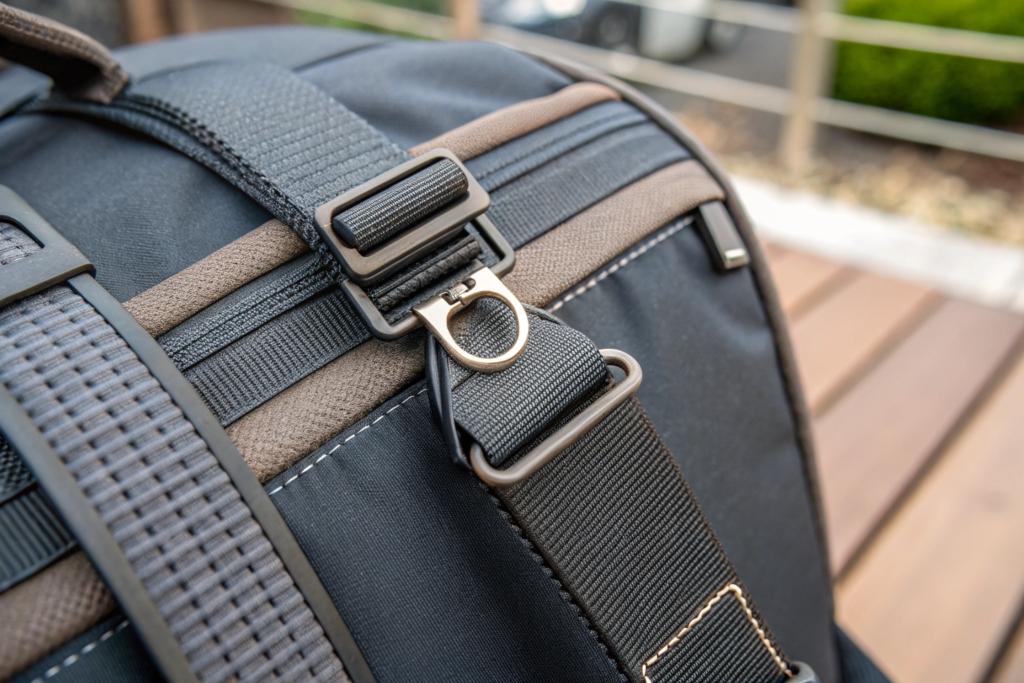
What is bar-tack stitching and why is it essential?
Bar-tack stitching is a dense, close zig-zag stitch that is sewn back and forth multiple times to create a very strong, reinforced area. It's the workhorse of bag reinforcement. You'll see it at strap attachments, handle ends, belt loops, and anywhere else that needs extra strength.
- How it works: The machine sews a very tight, wide stitch (often in a rectangular or oval shape) over a short distance, creating a solid mass of thread that is incredibly strong and resistant to pulling.
- Where it's used: Bar-tacks are used to secure strap ends, attach webbing, reinforce pocket corners, and at the ends of zippers.
- Why it's essential: It distributes the stress over a larger area and creates a bond that is much stronger than a standard straight stitch.
A bag without bar-tack stitching at key stress points is a bag that will likely fail. This technique is as essential as the best bonding methods for attaching leather patches, where a strong, reliable bond is critical.
When should you use rivets for reinforcement?
Rivets are metal fasteners that are crushed or pressed to hold two or more layers of material together. They provide a very strong, permanent, mechanical bond.
- Secondary Reinforcement: Rivets are often used in conjunction with bar-tack stitching for maximum strength. They provide an extra layer of security, ensuring that even if the stitching were to fail, the strap would still be held in place by the rivet.
- Hardware Attachment: Rivets are excellent for attaching D-rings, buckles, and other hardware securely.
- Decorative Element: Rivets can also be a design feature, especially on more rugged or workwear-inspired bags. This is similar to the way studs and hardware are used in denim embellishment.
For a truly heavy-duty bag, a combination of bar-tack stitching and rivets at the strap attachments is the gold standard. A backpack with reinforced strap attachments is built to last.
What Are The Best Reinforcements For Bottom Corners And High-Wear Areas?
The bottom corners of a bag take a relentless beating, their once-smooth surfaces now marred by the unforgiving world. They are scraped against rough, gritty floors, scuffed along uneven sidewalks where pebbles and debris lie in wait, and rubbed raw against the textured, often sticky surfaces of car seats. Each step, each jostle, each careless placement sends a silent plea for resilience.
They also bear the weight of the bag's contents—books that press with the heft of knowledge, groceries that shift and shift, their own bulk adding to the strain. Reinforcing these vulnerable areas is essential for long-term durability, transforming them from fragile points of potential failure into steadfast guardians that stand firm against the daily grind, ensuring the bag remains a reliable companion through countless adventures and mundane errands alike.
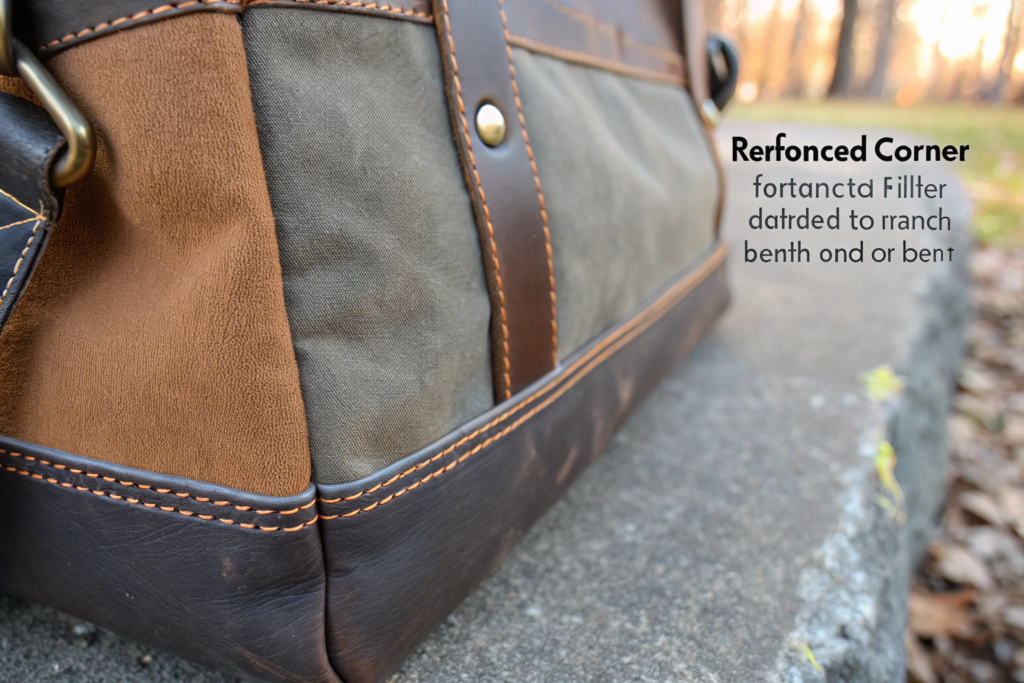
What are corner patches and how do they work?
Corner patches (or kick patches) are separate pieces of durable material, often leather, PU leather, or a thicker, abrasion-resistant fabric, that are sewn onto the bottom corners of a bag.
- Abrasion Protection: The patch takes the brunt of the wear and tear, protecting the main fabric of the bag from abrasion. This is similar to the way we use anti-snag treatments for knit gloves to protect vulnerable areas.
- Reinforcement: The patch adds an extra layer of material to the corner, making it much stronger and more resistant to tearing.
- Style Element: Corner patches can also be a stylish design detail, adding a touch of contrast or a rugged, workwear aesthetic.
Leather corner patches are a classic and effective reinforcement, often seen on high-quality totes and messenger bags.
What is the role of double-layered fabric at the base?
Another common reinforcement is simply to make the bottom of the bag from two layers of fabric, or from a thicker, more durable material than the rest of the bag.
- Increased Durability: The double layer provides extra strength and resistance to wear.
- Shape Retention: A reinforced base also helps the bag hold its shape and prevents it from sagging.
- Material Choice: Many bags feature a bottom made from a different, more durable material, such as leather, canvas, or a thick, abrasion-resistant nylon, while the upper part of the bag is made from a lighter, more decorative fabric. This is reminiscent of the way contrasting edges are used on scarves to add visual interest and durability.
This is a very effective and visually appealing way to reinforce the entire bottom of the bag, not just the corners.
What Are The Best Reinforcements For Zippers, Pockets, And Hardware?
Even smaller details like zippers and pockets need reinforcement. These are often the first places to fail on a poorly made bag, their flimsy teeth grinding against each other with every clumsy zip, leaving behind frayed edges and a sense of impending collapse. A pocket, stitched with thread that feels as thin as spider silk, may gape open at the slightest tug, spilling its contents like a careless magician’s trick, while the zipper, once smooth and silent, becomes a source of frustration, catching and jamming, its metal components clinking loudly in protest.
In a well-crafted bag, however, these elements sing in harmony: zippers glide effortlessly, their teeth interlocking with a satisfying shush, and pockets stand firm, their reinforced seams and sturdy fabric offering a reliable sanctuary for small treasures, ensuring that even the tiniest items remain secure and undisturbed, no matter how rough the journey. It is in these unassuming details that the true quality of a bag reveals itself, turning potential weak points into steadfast allies in the battle against wear and tear.
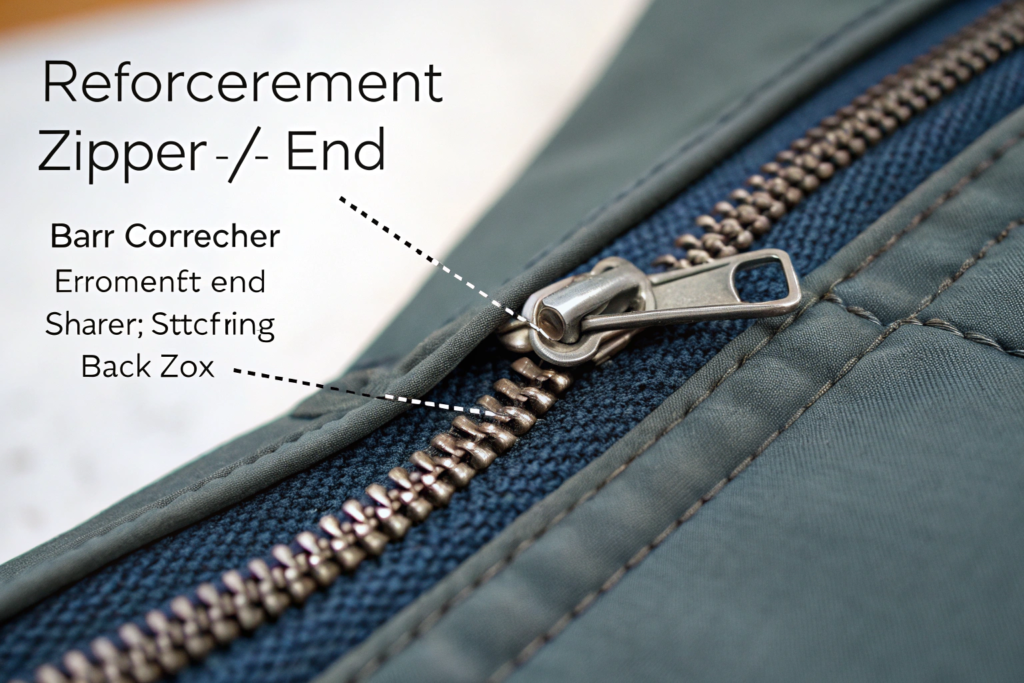
How do you reinforce zipper ends?
The ends of zippers are subject to stress every time the zipper is opened and closed. Without reinforcement, the zipper tape can pull away from the fabric.
- Bar-Tack at Zipper Ends: A bar-tack stitch is sewn at each end of the zipper, securing the zipper tape firmly to the bag's fabric. This is the most common and essential reinforcement.
- Leather or Fabric Zipper Guards: A small tab of leather or fabric can be sewn at the zipper ends, covering the end of the zipper and providing an extra layer of reinforcement. This is also a nice design detail.
A bag with bar-tacked zipper ends is a sign of good construction, much like the attention to detail we pay when sourcing high-quality cotton twill caps with reinforced stitching.
How do you reinforce pocket corners?
Pocket corners, especially on pockets that will hold heavy items (like a phone or keys), are another common failure point.
- Bar-Tack at Pocket Corners: Just like with zippers, a bar-tack stitch at the corners of a pocket opening is essential. It reinforces the point where the pocket is sewn to the bag.
- Box-Stitched Reinforcement: For larger pockets, a "box stitch" (a rectangular stitch with an "X" through the middle) can be used at the corners for even more strength.
- Rivets at Pocket Corners: For heavy-duty bags, a small rivet at each corner of a pocket can provide extra reinforcement, especially for pockets made of thicker materials.
These small details make a big difference in the longevity of a bag. This principle of reinforcing high-stress areas is similar to the way we approach testing for abrasion resistance in belt leather, where we focus on the most vulnerable points.
Conclusion
The durability of a backpack or bag is determined by how well its stress points are reinforced. From the critical strap and handle attachments, which require a combination of bar-tack stitching, extended webbing, and sometimes rivets, to the bottom corners, which benefit from leather patches and double-layered bases, every detail matters. Even smaller points like zipper ends and pocket corners need attention, typically in the form of bar-tack stitching. By understanding and applying these reinforcement techniques, you can create bags that are not only beautiful and stylish but also incredibly durable and long-lasting.
At Shanghai Fumao Clothing, we have mastered the art of durable bag construction. Our factory in Zhejiang uses all of these reinforcement techniques—bar-tack stitching, rivets, reinforced webbing, corner patches, and more—to create bags and backpacks that stand the test of time. We work with our clients to understand their design and performance requirements, and we apply the right reinforcements to ensure every product meets our high standards for durability.
If you're ready to create a line of bags and backpacks that are as durable as they are stylish, let's talk. Please contact our Business Director, Elaine, at elaine@fumaoclothing.com. We'll help you create products that your customers will rely on for years to come.