I have been in this business long enough to remember when faux pearls had a bad reputation. They looked cheap, the coating peeled off, and they felt light and plasticky. But those days are long gone. Today, the technology has advanced so much that it takes a trained eye to tell the difference between a high-quality faux pearl and the real thing. My clients across America and Europe, from fashion jewelry brands to large supermarket chains, are constantly asking for them. They offer the beauty of pearls without the ethical concerns or the astronomical price tag.
The best practices for sourcing and manufacturing faux pearl accessories involve selecting the right base material for your quality and budget, mastering the coating and luster application process, implementing rigorous quality control for peeling and color consistency, and designing for durability with proper setting techniques. Getting these steps right is the difference between a product that looks cheap and one that looks luxurious.
I have overseen the production of millions of faux pearl items in our Zhejiang factory. I have seen what works and what fails. A beautiful faux pearl starts long before it reaches the setting table. It starts with the right raw materials and a deep understanding of the chemistry and craftsmanship involved. For a buyer like Ron, who needs to balance quality with cost, understanding these best practices is essential for making smart sourcing decisions. At Shanghai Fumao Clothing, we have refined our processes over decades to ensure every faux pearl accessory that leaves our factory meets the highest standards. Let me share the insider knowledge that will help you source and manufacture faux pearl accessories that your customers will love and treasure.
What are the different types of faux pearl bases and which is best?
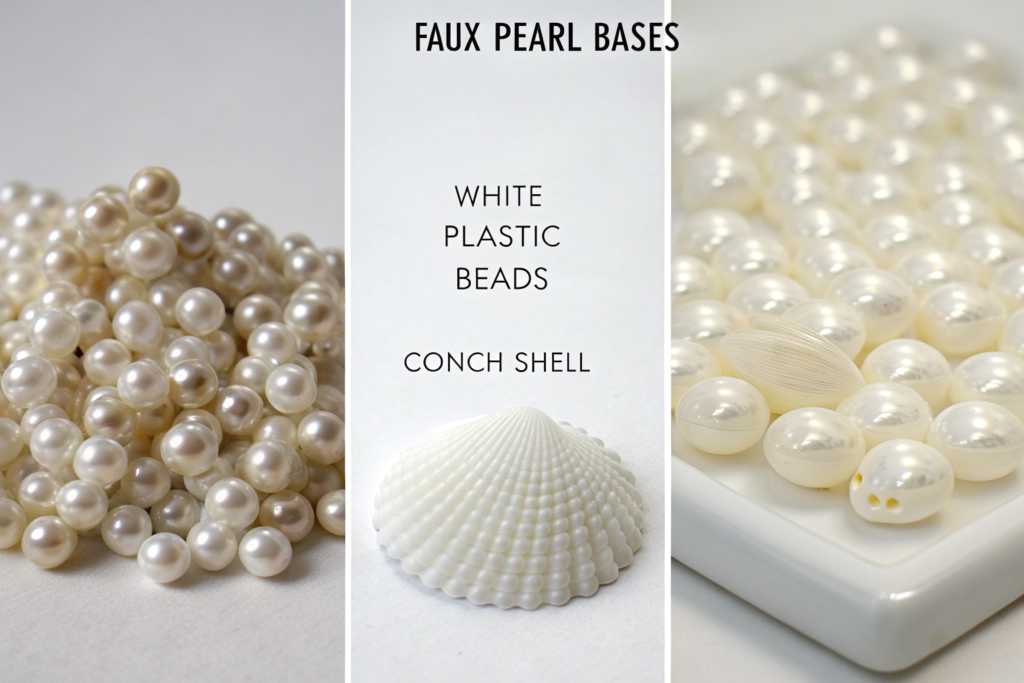
The journey of a faux pearl begins with its core. This base material determines the weight, the durability, and the overall feel of the final product. Choosing the right base is the first critical decision. There is no single "best" option; it depends entirely on your target market and price point.
Why are glass beads considered the premium choice for faux pearls?
Glass beads are the top tier of faux pearl manufacturing. They are solid glass, which gives them a satisfying weight that mimics real pearls . When you hold a high-quality glass-based faux pearl, it feels substantial. It does not have the hollow, lightweight feel of plastic. This weight is a key signal of quality to the end consumer. The smooth, hard surface of glass also provides an excellent foundation for the pearlescent coating. It allows for a deep, reflective luster that can look remarkably authentic. The main drawback is cost and weight. Glass beads are more expensive to produce and ship, and they are heavier, which can increase shipping costs. But for a premium jewelry line where the "hand feel" is crucial, glass is the undisputed champion.
What are the advantages of plastic and shell-based faux pearls?
Plastic beads are the workhorses of the faux pearl industry. They are lightweight, inexpensive, and can be molded into perfectly uniform shapes . This makes them ideal for high-volume, cost-sensitive products like children's jewelry, fast-fashion accessories, or items where weight is a concern, such as large statement earrings. The quality of plastic beads has improved dramatically. High-density plastics take a coating much better than the cheap plastics of the past. Shell-based beads, made from ground conch or mussel shell mixed with a binder, offer a middle ground . They have a natural, slightly irregular look that appeals to consumers looking for an organic, "real" feel, and they take dye and luster coatings beautifully. They are more expensive than plastic but less than glass, and they offer a unique selling point. The choice depends entirely on your customer's expectations and your budget.
How is the perfect pearlescent luster achieved on faux pearls?
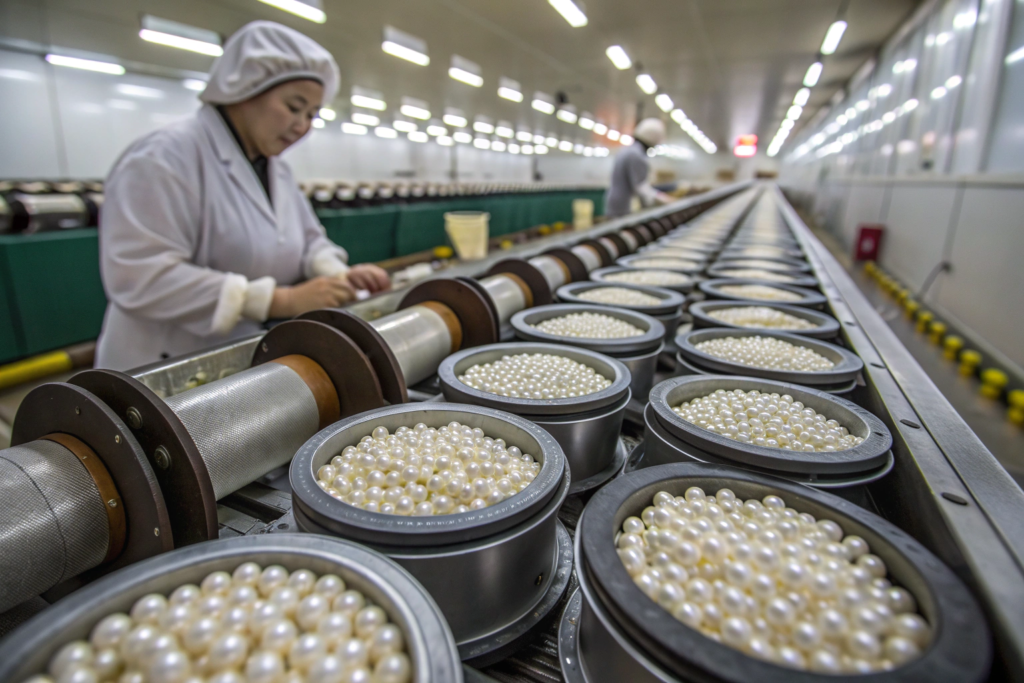
The core is just the beginning. The magic happens in the coating. This is where a simple glass or plastic bead is transformed into something that looks like it came from the ocean. The process is part chemistry, part art, and it requires precision and experience to get right.
What is "essence d'orient" and why is it used in high-end faux pearls?
"Essence d'orient" is the secret ingredient in the finest faux pearls. It is a natural substance made from the ground-up scales of certain fish, like the herring . This creates a crystalline paste that, when applied to a bead, produces a luster and iridescence that is incredibly close to that of a natural pearl. It has a depth and complexity that synthetic coatings struggle to replicate. Using essence d'orient is a mark of a high-quality faux pearl. It is more expensive than synthetic alternatives, but the result is a product that catches the light in a way that looks truly alive. This is the type of material we use for clients who are positioning their accessories in the premium market. For a buyer like Ron, specifying "essence d'orient" coating in his product specifications is a way to guarantee a superior final product.
How many coating layers are needed for a durable, realistic pearl?
This is a question of quality and durability. A single, thin coat of pearlescent paint will look cheap and will wear off quickly. A high-quality faux pearl requires multiple layers. The process typically starts with an opaque base coat to create a solid color foundation. Then, multiple layers of the pearlescent coating, whether natural or synthetic, are applied. Each layer builds depth and luster. Finally, a protective top coat is added to seal everything in and provide resistance to scratching and peeling . For our highest-quality products, this can mean 5, 7, or even more separate coating layers, each one carefully applied and cured. This is a time-consuming process, which is why high-end faux pearls cost more. But the result is a pearl that can withstand daily wear and maintain its beauty for years.
What quality control tests are essential for faux pearl accessories?
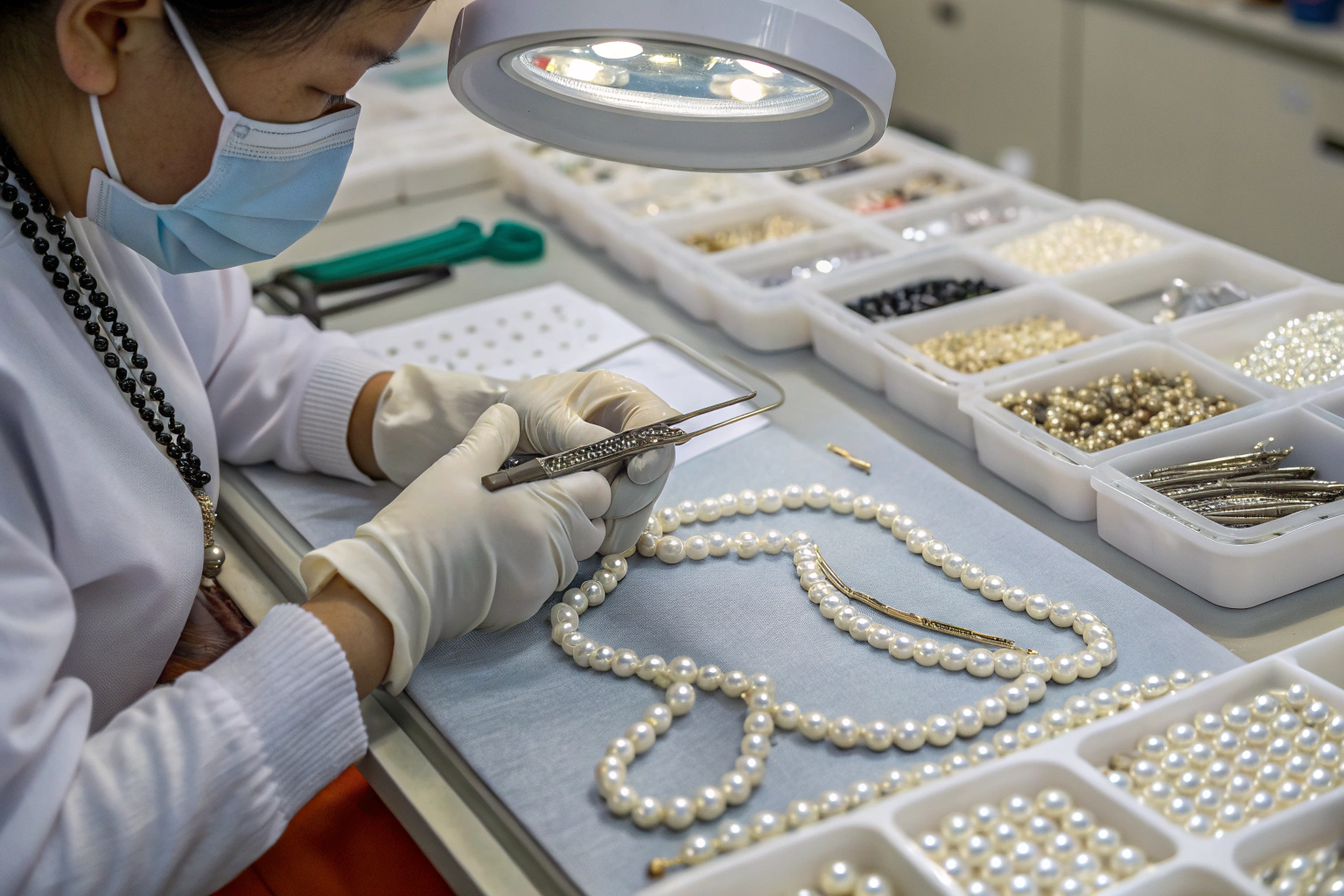
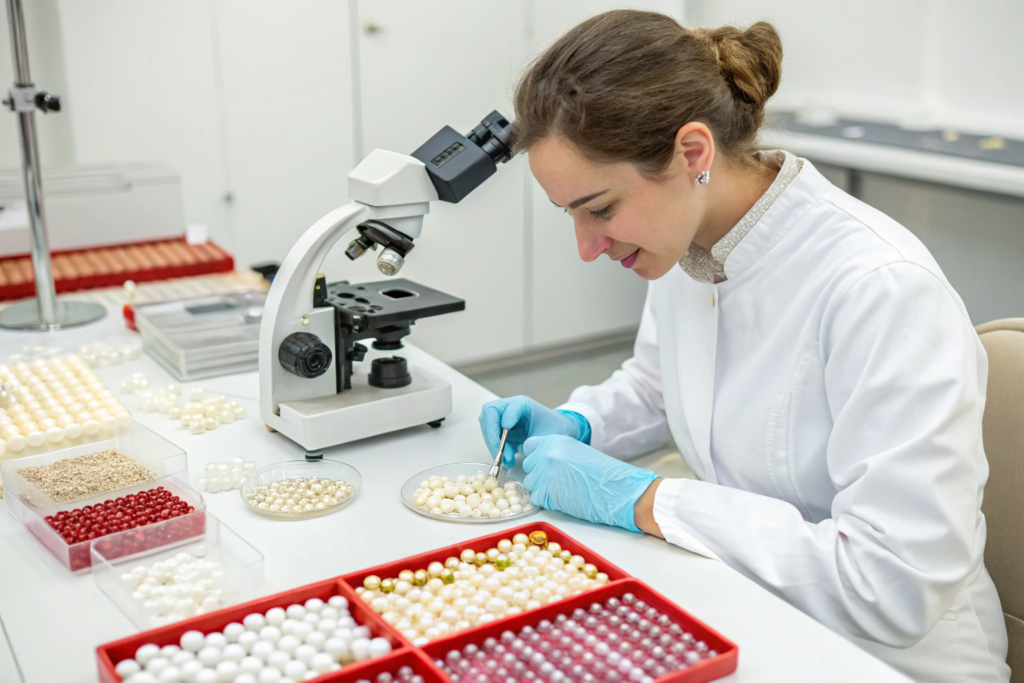
Quality control for faux pearls is not the same as for other accessories. Because they are coated, they have unique failure points. A rigorous QC process is essential to ensure that your products arrive looking perfect and stay that way in your customer's hands. We have a dedicated team focused solely on this.
Why is the "tooth test" still a reliable method for checking quality?
You might think that in a high-tech factory, we would rely only on machines. But one of the simplest and most effective tests is still the "tooth test." Gently rub a faux pearl against the edge of your tooth. A high-quality pearl with a smooth, well-applied coating will feel slightly gritty, just like a real pearl. This is because the multiple layers of coating create a microscopic texture . A cheap, low-quality faux pearl will feel perfectly smooth and glassy. It is a quick, intuitive check that our QC team uses regularly. It is also a test that consumers sometimes do themselves, so we want to make sure your product passes it. This attention to the sensory details is part of building trust.
How do you test for peeling and colorfastness in faux pearls?
Peeling is the number one enemy of faux pearls. To test for this, we perform an abrasion test. We rub the pearls vigorously with a cloth or even gently scratch them with a tool to see if the coating flakes off. We also do a tape test, where we apply and remove strong adhesive tape to see if any coating comes with it. For colorfastness, we expose the pearls to simulated sunlight to check for fading. We also test them against common substances like perfume, lotion, and sweat. A faux pearl that loses its color when it touches a customer's skin is unacceptable. These tests simulate real-world wear and tear, ensuring that your product will hold up. Standards from organizations like ASTM International provide benchmarks for these kinds of tests.
How should faux pearls be set and designed for maximum durability?
A beautiful pearl is useless if it falls out of its setting the first time it is worn. The way a faux pearl is attached to a hair clip, a pair of earrings, or a necklace is critical to its longevity. Different designs require different approaches, and each has its own best practices.
When should you use prong settings versus glue for faux pearls?
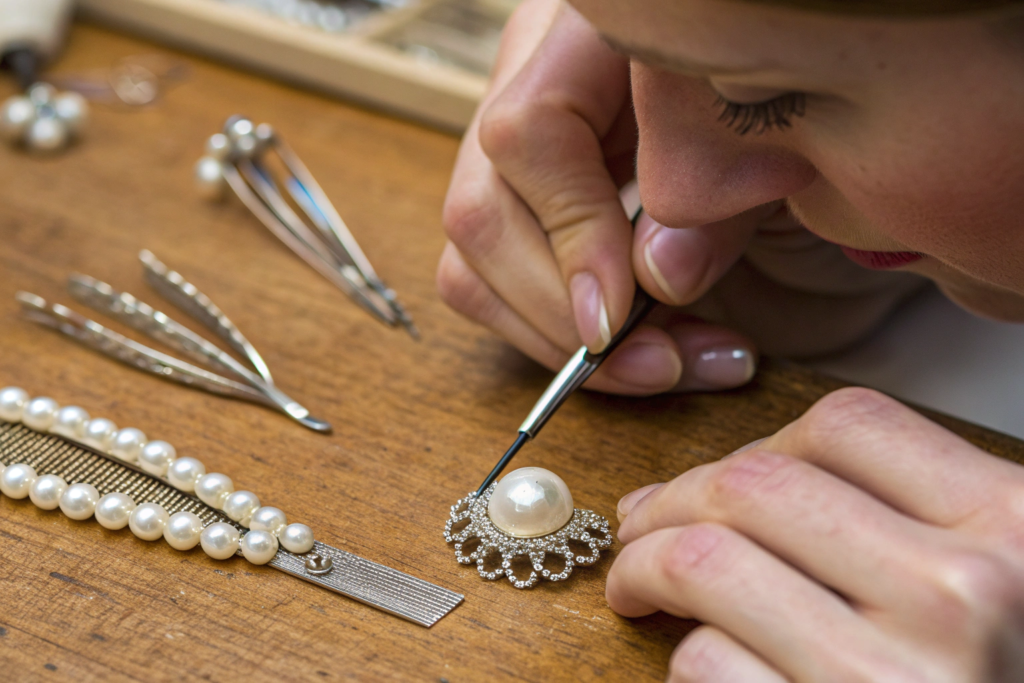
Prong settings are the most secure and traditional method for setting pearls, especially in rings, earrings, and pendants . Small metal claws (prongs) are bent over the pearl to hold it firmly in place. This is a mechanical grip that does not rely on adhesives. It is ideal for pieces that will experience a lot of movement or potential impact. However, it requires the pearl to be perfectly shaped and the setting to be precise. Glue settings are common for items like hair clips, brooches, or for attaching pearls to fabric or complex surfaces. The key here is using the right adhesive. We use high-quality, jewelry-grade epoxies that are strong but flexible, and we allow adequate curing time. The surface of the pearl and the setting must also be clean and sometimes slightly roughened to give the glue a good bond. A poorly glued pearl is a returns disaster waiting to happen.
What design considerations prevent pearls from falling out or breaking?
Thoughtful design can prevent many failures. First, consider the size and weight of the pearl relative to its setting. A huge, heavy pearl glued to a tiny, flimsy base is destined to fail. The base must provide adequate support. Second, consider the metal's thickness and strength. Thin, soft metal prongs can bend and release the pearl. Third, consider the end use. A hair clip that will be pulled through thick hair needs a much more secure setting than a pair of earrings. We often advise clients to add a small metal cup or "bell cap" that surrounds the bottom of the pearl, providing both a secure gluing surface and an attractive finished look. This kind of design foresight is where our design team adds immense value, helping you create products that are not just beautiful but built to last.
Conclusion
Sourcing and manufacturing faux pearl accessories is a journey that combines material science with traditional craftsmanship. We have explored the critical choice of the base material, from premium glass to cost-effective plastic and unique shell-based options. We have delved into the art of creating the perfect luster with multiple coating layers and the secret of essence d'orient. We have discussed the rigorous quality control tests that separate a durable product from a disposable one, and the design principles that ensure your pearls stay where they belong.
For a professional buyer like Ron, this knowledge is power. It allows you to ask the right questions, specify the right materials, and partner with a manufacturer who understands the nuances. You can confidently choose the right quality level for your market, knowing exactly what you are paying for and why.
At our factory in Zhejiang, we have spent decades perfecting these processes. Our clean, modern facilities and experienced project managers are dedicated to producing faux pearl accessories that you will be proud to sell. We understand that a pearl, even a faux one, should symbolize quality and beauty. If you are ready to create a line of faux pearl accessories that will delight your customers and stand the test of time, we are here to help. To discuss your next faux pearl project, please contact our Business Director, Elaine, at elaine@fumaoclothing.com. Let's create something beautiful together.