I have a confession to make. For many years, I did not think much about glitter. It was just a decoration. A way to add sparkle and fun to our hair clips and accessories. We bought it, we applied it, and we shipped it. It never occurred to me that those tiny, beautiful particles could be a problem. But about five years ago, a client from Europe sent us a long questionnaire about our materials. One section was all about glitter. They asked about its composition, its biodegradability, and its potential to become microplastic pollution. I had to admit, I did not know the answers. That moment started me on a journey to understand glitter, not just as a decoration, but as a material with an environmental impact.
The best practices for sourcing and applying glitter responsibly center on choosing biodegradable alternatives and using application methods that minimize waste and environmental release. This means sourcing glitter made from plant-based, compostable materials like cellulose or modified regenerated cellulose (MRC) instead of traditional plastic-based glitter (PET or PVC). It means selecting glitter that is certified biodegradable or compostable by recognized standards. In application, best practices involve using controlled methods like electrostatic application to ensure the glitter adheres precisely, capturing overspray, and recycling or properly disposing of waste. The goal is to achieve the same beautiful sparkle while drastically reducing the contribution to microplastic pollution. It is a shift from a linear "use and dispose" model to a more circular, responsible one.
At Shanghai Fumao Clothing, we took that client's questions seriously. We researched, we tested, and we changed our practices. We now offer our clients a range of responsibly sourced glitter options and have implemented application techniques that are cleaner and more efficient. We believe that beauty should not come at the expense of the planet. Let me share what we have learned so you can make informed, responsible choices for your own products.
What Is The Environmental Problem With Traditional Glitter?
To understand why we need new practices, we must first understand the problem with the old ones. Traditional glitter is, in essence, a microplastic. And its impact on the environment is far more significant than its tiny size might suggest.
Traditional glitter is made from plastic, most commonly from PET (polyethylene terephthalate) or PVC (polyvinyl chloride) sheets, which are then coated with a metallic or iridescent finish. These tiny plastic particles are a form of microplastic pollution. When glitter is washed off during cleaning, or when it sheds from a product, it enters the water system. These particles are too small to be fully captured by wastewater treatment plants, so they end up in rivers, lakes, and oceans. There, they persist for hundreds of years, can be ingested by marine life, and can enter the food chain. The environmental persistence and potential for ecological harm are the core problems with conventional glitter. It creates a long-lasting pollution problem for a fleeting moment of sparkle.
Let me give you a more detailed picture. The production of traditional glitter starts with large sheets of plastic film. These sheets are coated with vaporized aluminum to give them their shine and then covered with a protective layer. They are then cut into tiny hexagons, squares, or other shapes. The result is millions of tiny, sharp-edged plastic particles. These particles are lightweight and easily spread. They can be washed down drains from our hands, our faces, and our clothes. They can blow away from crafting tables. Once in the environment, they do not biodegrade. They break down into even smaller particles over time, but they remain plastic. Studies have shown that glitter can be particularly harmful to aquatic ecosystems, as its shape and shine can make it attractive to organisms that then ingest it. This is the hidden cost of conventional sparkle.
How Does Traditional Glitter Contribute To Microplastic Pollution?
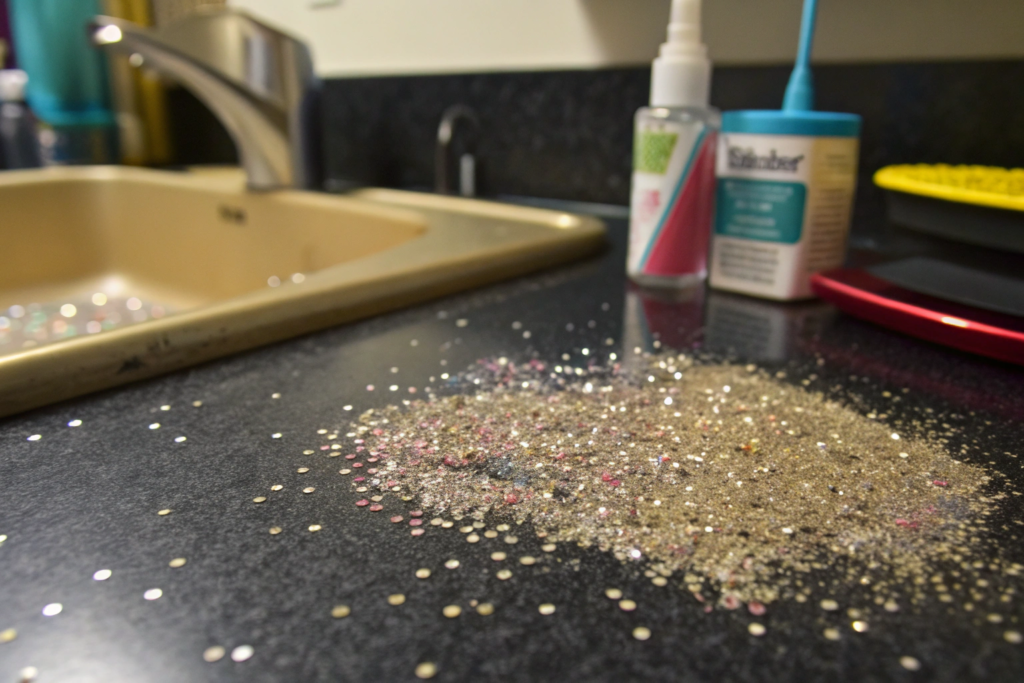
Microplastics are defined as plastic particles smaller than 5mm. Traditional glitter is, by design, a microplastic. Its contribution to the problem is direct and significant. Every time a product with glitter is washed, the friction can loosen and release glitter particles. When we wash our hands after applying glitter makeup, those particles go down the drain. When a glittery accessory is laundered, glitter sheds into the wash water. Crafting with loose glitter inevitably leads to spills and waste that can be swept or washed away. Unlike larger plastic items that might be recycled or captured in landfills, these tiny particles are easily dispersed and are nearly impossible to retrieve once released. They are a persistent and pervasive pollutant.
What Is The Difference Between Biodegradable And Non-Biodegradable Glitter?
This is the fundamental distinction.
- Non-Biodegradable Glitter: Made from fossil-fuel-based plastics like PET or PVC. It is designed to be durable and will persist in the environment for hundreds of years, breaking down into smaller and smaller plastic fragments but never truly disappearing. It contributes to long-term microplastic pollution.
- Biodegradable Glitter: Made from plant-based materials, most commonly from cellulose, which is derived from eucalyptus or other trees. This type of glitter is designed to biodegrade in natural environments, such as soil, freshwater, or marine environments, with the help of microorganisms. It breaks down into natural components like water, carbon dioxide, and biomass. The rate of biodegradation depends on the specific material and the environmental conditions, but the key is that it does not persist as plastic pollution.
It is important to look for certifications. A claim of "biodegradable" should be backed by a standard, such as OK Biodegradable (TÜV Austria) or similar, which confirms that the material will biodegrade within a specific timeframe in a specific environment. This distinction is critical for responsible sourcing.
What Are The Best Eco-Friendly Glitter Alternatives?
The good news is that the problem has been recognized, and innovation has followed. There are now excellent alternatives to traditional plastic glitter that offer the same visual appeal without the long-term environmental harm. Knowing what to look for is key.
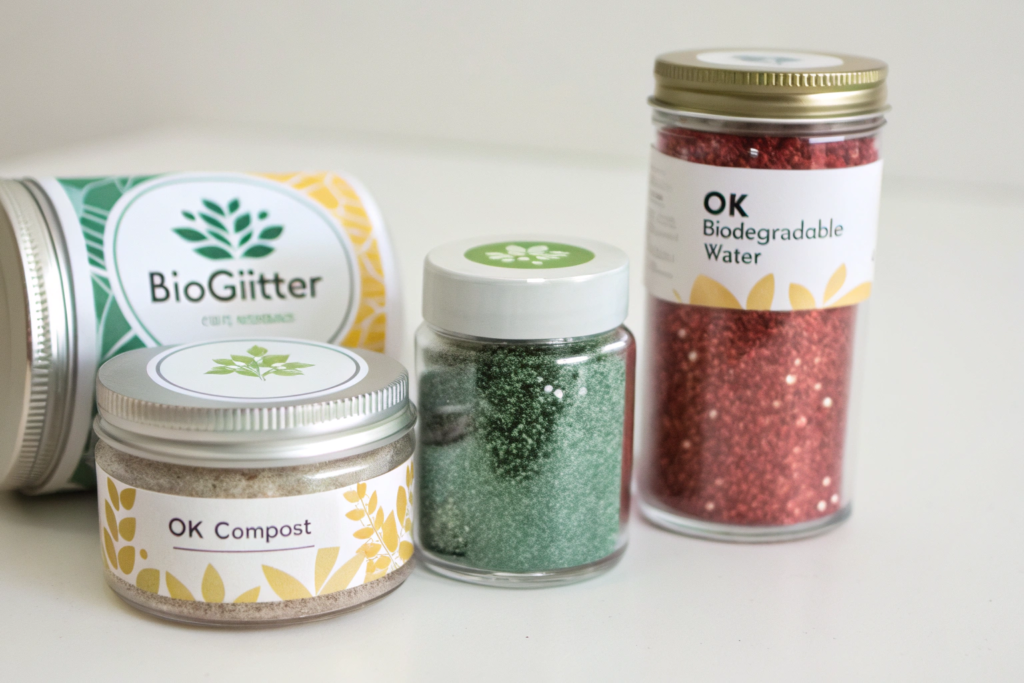
The best eco-friendly glitter alternatives are those made from plant-based, biodegradable materials. The most common and well-developed option is cellulose-based glitter, often sold under brand names like Bioglitter®. This glitter is made from wood pulp sourced from sustainably managed forests. It is certified to biodegrade in natural environments (freshwater) within a short timeframe. Other options include mica-based mineral glitter, which is natural and non-plastic, though its mining can have its own environmental and social considerations. There are also innovative glitters made from algae or other plant sources. When sourcing, look for certifications like OK Biodegradable WATER (for freshwater biodegradability) or OK Compost (for industrial composting) to verify the claims. These alternatives allow you to create beautiful, sparkling products that align with a commitment to sustainability.
Let's look at these options in more detail. Cellulose-based glitter is the most direct replacement for traditional plastic glitter. It is manufactured in a similar way, by coating a thin film, but the base film is made from cellulose, not plastic. The coating can also be made from more sustainable materials, and the entire particle is designed to be broken down by microorganisms. The look and feel are very similar to traditional glitter. Mica-based glitter is a different beast. It is made from a natural mineral that is ground into flakes. It has a beautiful, shimmering, often more subtle effect than plastic glitter. It is naturally biodegradable as it is a mineral. However, the mining of mica has been linked to issues like child labor in some regions, so it is essential to source mica that is certified conflict-free and ethically mined. This is a complex landscape of alternatives.
What Is Cellulose Glitter And How Does It Biodegrade?
Cellulose glitter is made from cellulose, a natural polymer that is the main component of plant cell walls. It is typically sourced from wood pulp, often from eucalyptus trees, which are a fast-growing, renewable resource. The cellulose is processed into a thin film, coated to give it its color and shine, and then cut into glitter particles. The biodegradation process works like this: when the glitter enters a natural environment like a river or lake, naturally occurring microorganisms (bacteria and fungi) recognize the cellulose as a food source. They secrete enzymes that break the cellulose polymer down into its basic components. Over time, the particle is completely consumed and converted into water, carbon dioxide, and biomass. The coating must also be designed to be biodegradable or to be thin enough that it does not prevent this process. Certified cellulose glitter, like Bioglitter®, has been tested to show that it biodegrades in freshwater environments.
Are There Certifications For Eco-Friendly Glitter?
Yes, there are. Relying on a supplier's word is not enough. You need third-party verification. The most important certifications to look for are:
- OK Biodegradable WATER (TÜV Austria): This certification confirms that the material will biodegrade completely in a natural freshwater environment without leaving harmful residues. This is the most relevant certification for glitter that might end up in rivers or oceans.
- OK Compost (TÜV Austria): This certifies that the material is compostable in an industrial composting facility. It will break down under specific conditions of heat, humidity, and microorganisms. This is a good certification for glitter that might end up in a commercial compost pile.
- FSC (Forest Stewardship Council): For cellulose-based glitter, an FSC certification on the source wood pulp ensures it comes from responsibly managed forests.
- Responsible Mica Initiative (RMI): For mica-based glitter, look for suppliers who are members of or adhere to the standards of the RMI, which works to eliminate child labor and improve working conditions in the mica supply chain.
These certifications provide the proof that your glitter is truly eco-friendly.
How Can You Apply Glitter In A More Responsible Way?
Sourcing responsible glitter is only half the battle. How you apply it is equally important. Traditional application methods can be wasteful and can release glitter into the environment at the factory level. Improving your application processes is a key part of responsible manufacturing.
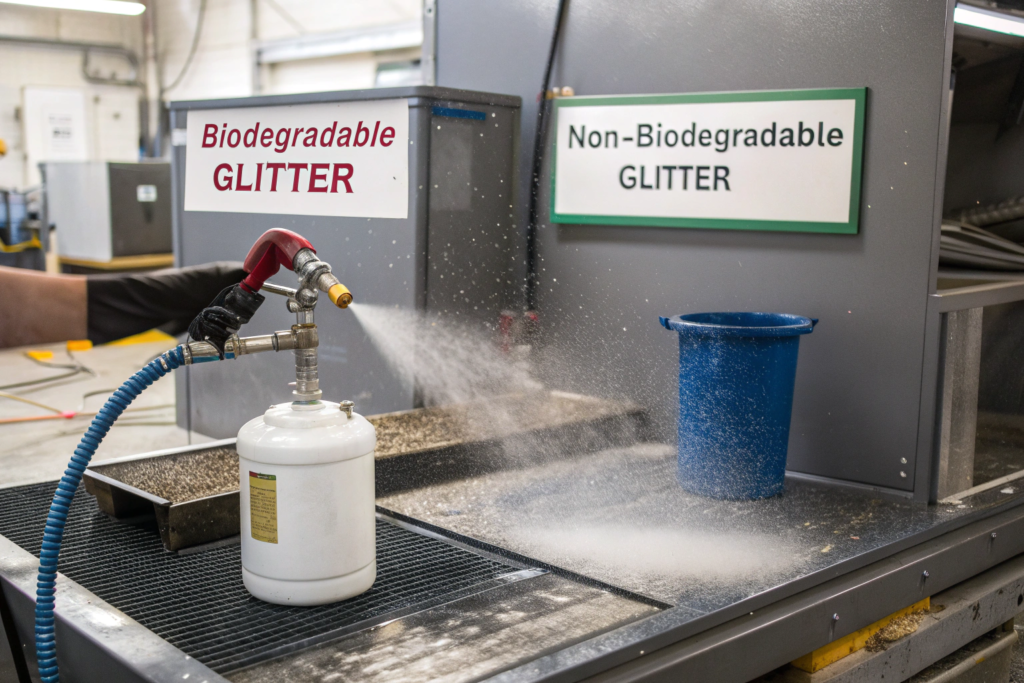
Responsible application of glitter focuses on minimizing waste and preventing release into the environment. The best practice is to use electrostatic application. This method uses an electrostatic charge to attract the glitter particles precisely to the areas where adhesive has been applied. It is highly efficient, with very little overspray or waste. Excess glitter is captured and can be reused. For methods that do create overspray or waste, it is essential to have capture systems in place. This can include using spray booths with filters, and having dust collection systems on cutting and trimming equipment. All collected glitter waste should be disposed of responsibly. If it is biodegradable glitter, it can potentially be composted. If it is non-biodegradable, it must be treated as plastic waste and sent to appropriate facilities. The goal is a closed-loop system where no glitter escapes into the wider environment.
Let me explain the electrostatic process in more detail. First, the adhesive is applied to the accessory only in the areas where you want glitter. This can be done by screen printing, pad printing, or a stencil. Then, the accessory is passed through an electrostatic field. The glitter particles are given a charge. This charge causes them to be strongly attracted to the grounded adhesive areas. They stand on end and embed themselves in the adhesive, creating a very dense, uniform, and brilliant coverage. Any glitter that does not land on the adhesive is not charged or is repelled and falls into a collection tray below. This glitter is clean and can be reused immediately. This method not only prevents waste but also produces a superior finish compared to traditional "dump and shake" methods.
What Is Electrostatic Application And Why Is It Better?
Electrostatic application is a method that uses static electricity to precisely place glitter onto an adhesive-coated surface. It is better for several reasons:
- Reduced Waste: It is incredibly efficient. Traditional methods can waste 30-50% of the glitter, which becomes dust or ends up on the floor. Electrostatic methods achieve near 100% utilization of the glitter that is used, with the small amount of overspray being captured and reused.
- Superior Coverage: The electrostatic charge causes the glitter particles to stand on end and pack tightly together, creating a much denser, more uniform, and more brilliant sparkle than can be achieved by simply shaking or sprinkling.
- Cleaner Workspace: Because the glitter is precisely controlled, there is far less airborne dust and stray particles. This creates a safer, cleaner working environment for our employees and prevents glitter from escaping the factory.
- Reusability: Unused glitter is collected and reused, not discarded.
For all these reasons, we have converted most of our glitter application to electrostatic methods. It is an investment in equipment, but it pays off in material savings and environmental responsibility.
How Can You Recycle Or Dispose Of Glitter Waste Responsibly?
This depends on the type of glitter.
- Biodegradable Glitter: Waste from biodegradable glitter can, in theory, be composted. However, it needs to be done in a facility that can handle it. It should not be simply thrown into a backyard compost pile. The best practice is to collect all waste (from application, from cutting, from cleaning) and send it to an industrial composting facility if one is available. The glitter's certification (e.g., OK Compost) will tell you if it is suitable for this.
- Non-Biodegradable Glitter: Waste from traditional plastic glitter is plastic waste. It should be treated as such. It should be collected and sent to a waste-to-energy facility if available, or to a landfill designed to contain waste. It should never be washed down drains or allowed to become airborne. Many factories now use specialized vacuum systems with HEPA filters to capture glitter dust, ensuring it is contained and disposed of properly.
Regardless of the type, the first goal is to minimize waste through efficient application. The second is to capture and contain all waste. The third is to dispose of it through the most responsible channel available. This is a continuous improvement process.
How Can You Communicate Your Responsible Glitter Choices To Customers?
Making responsible choices is important. But it is equally important to communicate those choices to your customers. In today's market, consumers want to know the story behind their products. They want to support brands that share their values. Your responsible glitter sourcing and application is a powerful story to tell.
Communicating your responsible glitter choices is about transparency and storytelling. It is not just about putting a "sustainable" label on your product. It is about explaining the "why" and the "how." You can tell your customers about the problem of microplastic pollution and how you have chosen to address it by switching to biodegradable, cellulose-based glitter. You can share the certifications you rely on (like OK Biodegradable WATER) to give them confidence in your claims. You can talk about your application methods that minimize waste. This information can be shared on product tags, on your website, in social media posts, and in marketing materials. Customers appreciate knowing that the sparkle they love is not harming the planet. It builds trust and loyalty.
We have seen this firsthand with our own clients. When we started offering biodegradable glitter options, many of them were eager to feature this in their marketing. They created social media posts showing the difference between traditional and biodegradable glitter. They added a small, elegant tag to their products that said, "The sparkle on this accessory is biodegradable, made from plant-based materials." Their customers responded positively. They felt good about their purchase. They shared the information with their friends. It became a point of differentiation. It is not just about avoiding a negative (plastic pollution); it is about embracing a positive (a beautiful, responsible product). This authentic communication is a powerful marketing tool.
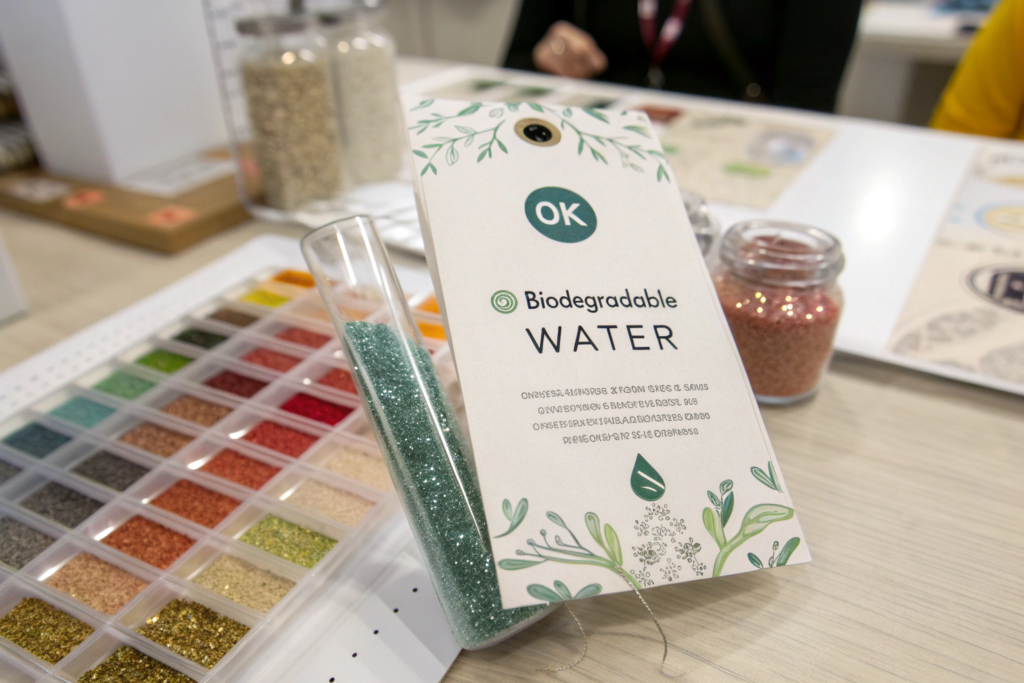
What Information Should You Include On A Product Tag?
A product tag is a great place to share key information concisely. For a glittery accessory, you could include:
- A clear, simple statement: "Made with biodegradable glitter." or "Our sparkle comes from plant-based materials."
- A brief explanation of why it matters: "This glitter is designed to biodegrade in freshwater environments, helping to reduce microplastic pollution."
- The certification logo: A small logo from TÜV Austria (OK Biodegradable WATER) or another recognized body adds instant credibility.
- A QR code: This can link to a webpage on your site with more detailed information about your sustainability practices, including your sourcing and application methods.
The tag should be visually appealing and match your brand's aesthetic. It should feel like a natural part of the product's story, not an afterthought. This on-product communication is very effective.
How Do You Avoid "Greenwashing" When Marketing Glitter?
Greenwashing is making misleading or unsubstantiated claims about a product's environmental benefits. To avoid it, you must be accurate and transparent.
- Use Precise Language: Do not just say "eco-friendly." Say "made from plant-based cellulose" or "certified biodegradable in freshwater." Be specific.
- Provide Evidence: If you make a claim, back it up. Mention the certification (e.g., "Certified OK Biodegradable WATER by TÜV Austria"). This shows you are not just making it up.
- Be Honest About Limitations: Biodegradable glitter is a great step, but it is not a perfect solution. It requires specific conditions to biodegrade. Be honest about this. You can say, "This glitter is designed to biodegrade in natural freshwater environments," without implying it will disappear instantly in any condition.
- Tell The Whole Story: If you are using biodegradable glitter but your packaging is still plastic, be transparent about that too. You can say you are on a journey and highlight this specific improvement. Customers appreciate honesty about both progress and challenges.
By following these guidelines, you can build trust and communicate your efforts credibly.
Conclusion
For a buyer like Ron, or any brand that uses glitter, the shift to responsible sourcing and application is no longer a niche choice. It is becoming an expectation. Consumers are more aware than ever of the impact of microplastics. They want products that are beautiful without compromising the health of the planet. By choosing biodegradable glitter, by using efficient application methods, and by communicating your efforts transparently, you can meet this demand and build a stronger, more trusted brand.
At Shanghai Fumao Clothing, we have made this shift a priority. We have invested in understanding the science, sourcing certified materials, and implementing cleaner production methods. We are proud to offer our clients glittery accessories that sparkle responsibly. We believe that beauty and responsibility can, and must, go hand in hand.
If you are looking for a partner who can help you navigate the world of sustainable glitter and create beautiful, responsible products, I would love to hear from you. Let's discuss your needs and how we can bring responsible sparkle to your next collection. Please contact our Business Director, Elaine, at elaine@fumaoclothing.com to start the conversation.