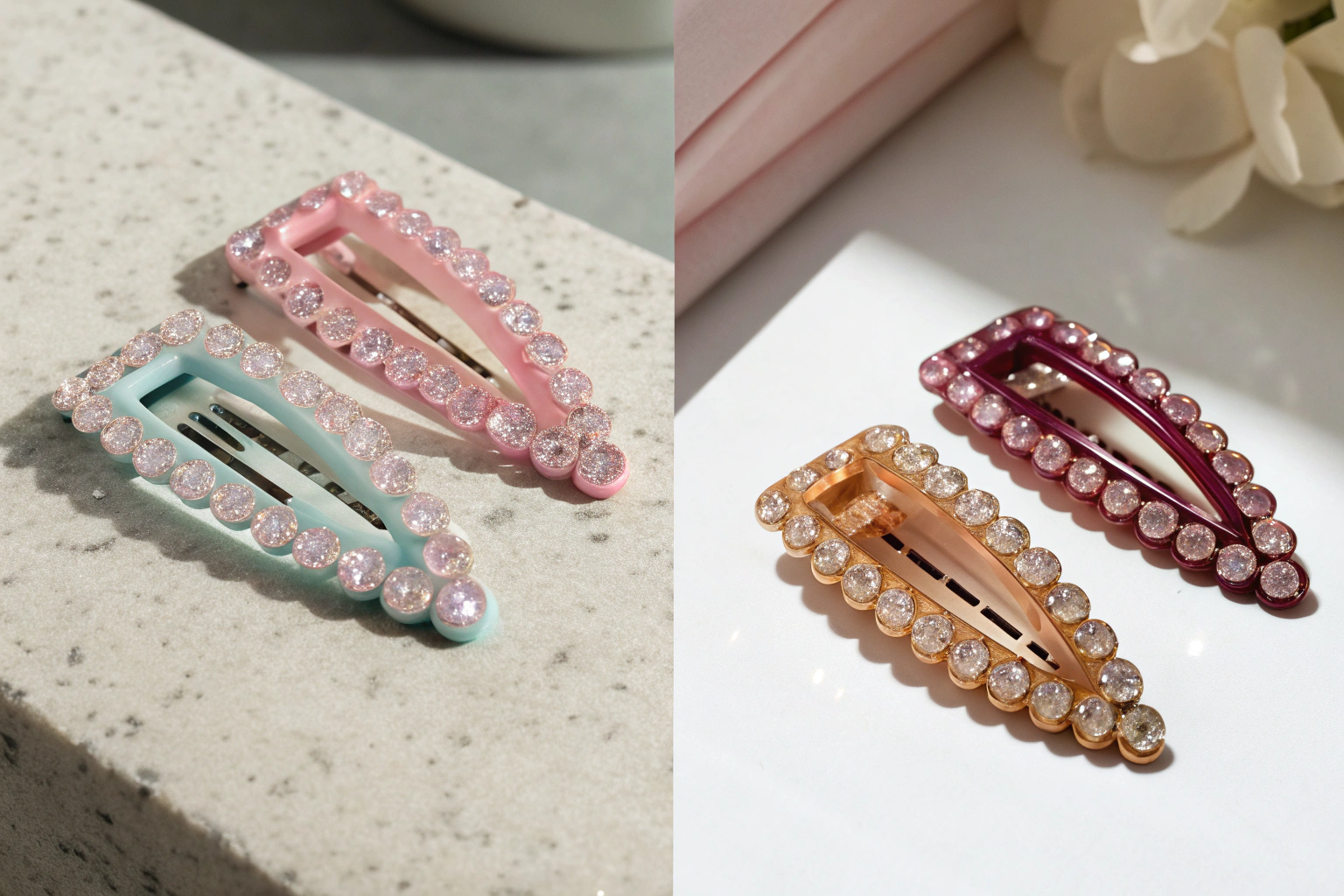
I remember a call from a distressed buyer at a major US retail chain a few years ago. She had ordered a beautiful collection of decorative hair pins and metal barrettes for the holiday season. The products themselves were perfect. But when the containers arrived at her distribution center, the warehouse staff opened them to find a nightmare. The sharp pins had pierced through their thin plastic bags during transit. They were scattered everywhere, mixed together, and some were even poking out of the main shipping boxes, creating a safety hazard. The entire shipment was rejected. Thousands of dollars of beautiful product, lost because of bad packaging.
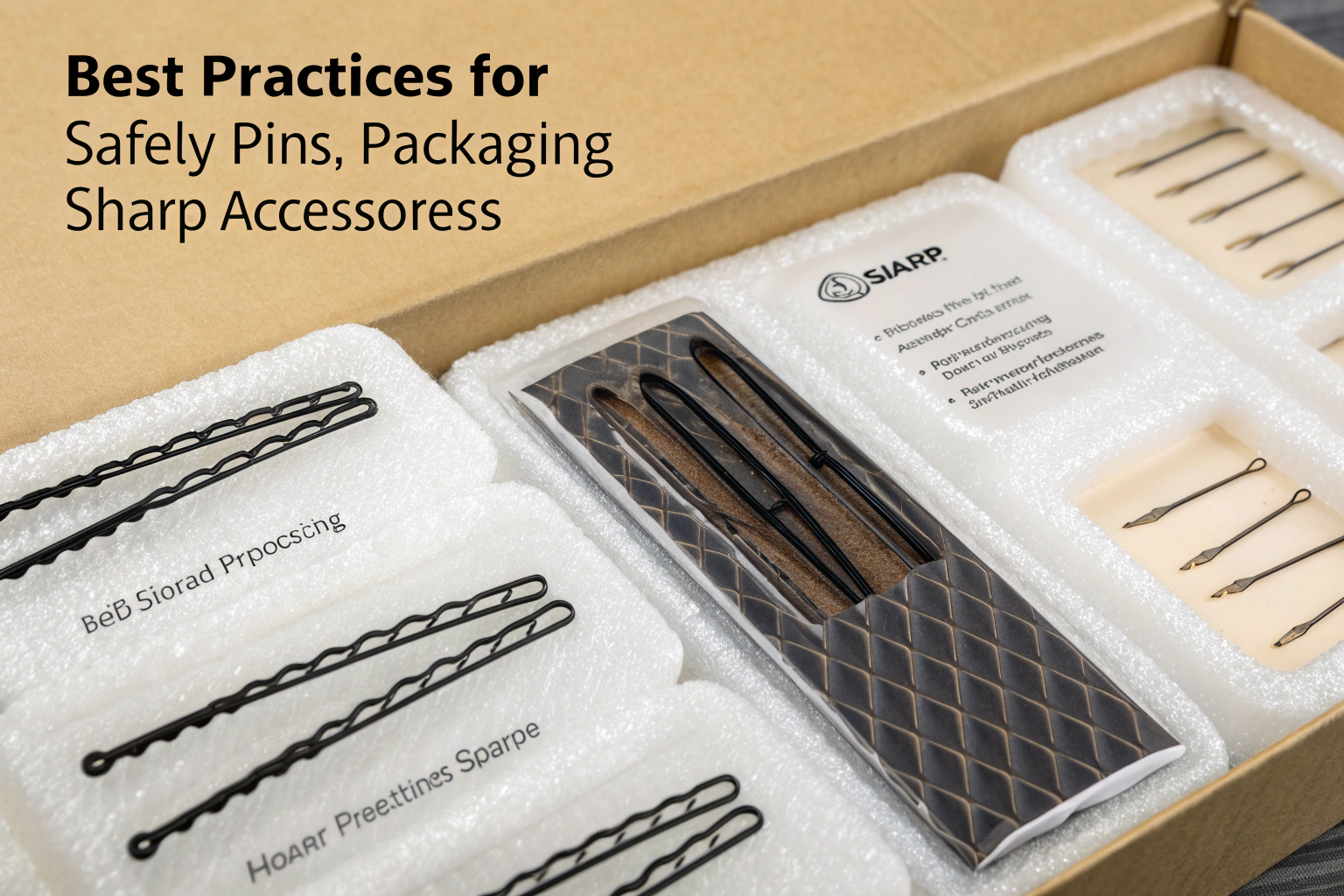
The best practices for safely packaging hair pins and sharp accessories involve a multi-layered approach focused on individual protection, secure spacing, and robust outer packaging. First, each sharp item must be secured individually, ideally by inserting pins into dedicated card strips or foam, or wrapping them securely. Second, these individual units must be packed in a way that prevents them from shifting and contacting each other. Finally, the outer shipping box must be strong enough and correctly sized to prevent crushing. At Shanghai Fumao Clothing, we have developed rigorous packaging protocols to ensure every sharp accessory arrives at its destination safe, secure, and ready for sale.
That buyer's story is a painful but common one. She learned the hard way that packaging is not an afterthought. For sharp items like hair pins, bobby pins, metal barrettes, and decorative combs, it is a critical part of the product's journey. Bad packaging can lead to damaged goods, injured handlers, returned shipments, and a severely damaged brand reputation. Let me walk you through the four essential practices we use to protect your products and your customers every step of the way.
Why Is Individual Securing the First Line of Defense?
The most common and disastrous mistake is to throw a bunch of sharp items into a polybag together. It is fast, it is cheap, and it is a guarantee of failure. As soon as that bag moves in transit, the pins will shift, their sharp ends will poke into each other, and they will become a tangled, potentially dangerous mess. The first and most fundamental rule of packaging sharp accessories is simple: every single item must be secured individually. They must be prevented from touching each other.
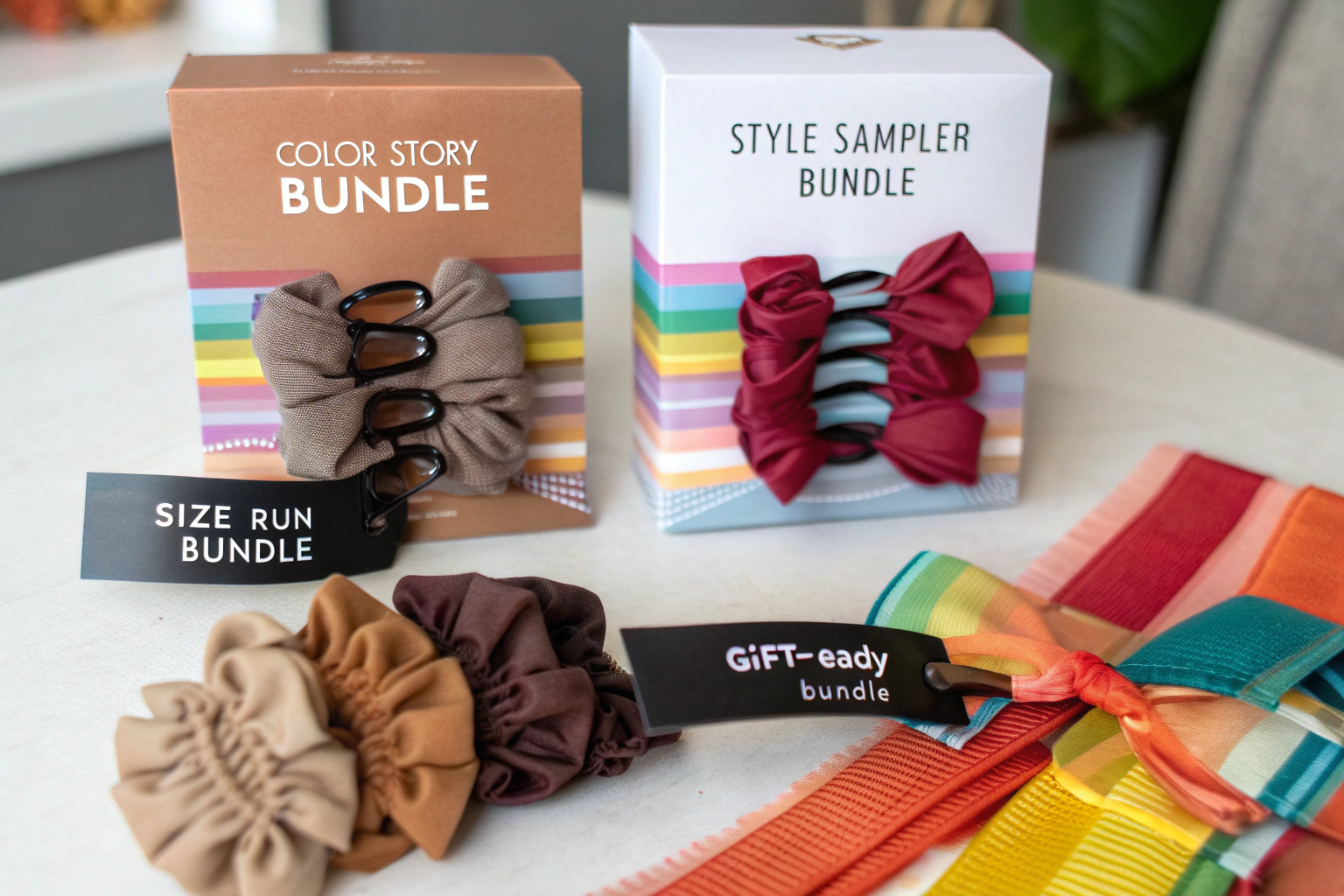
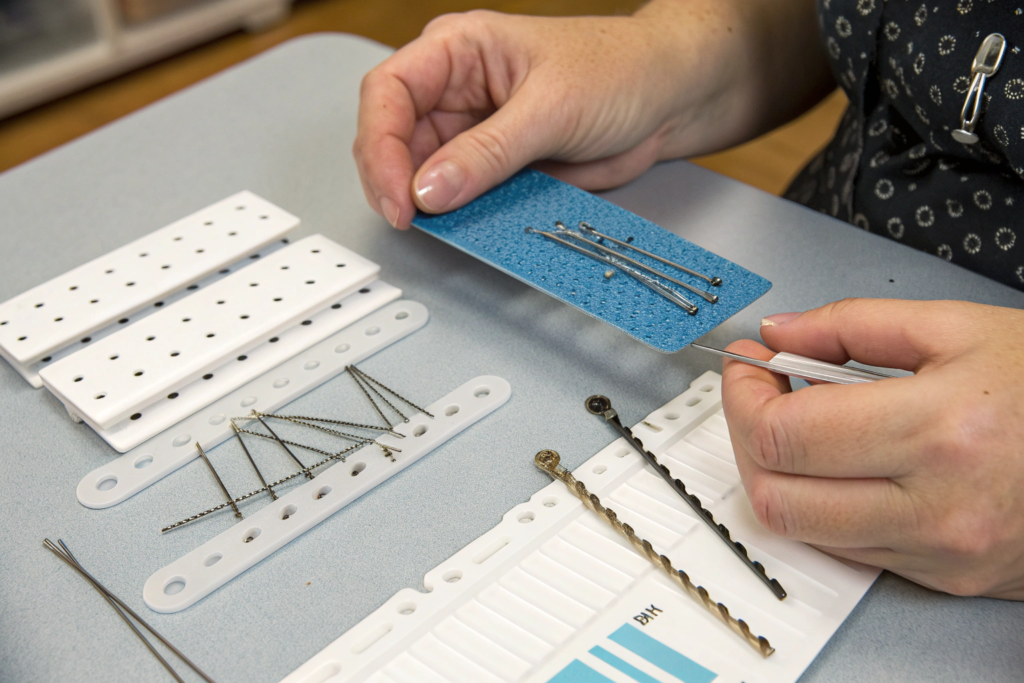
Individual securing means creating a physical barrier between each sharp item. For hair pins, the most effective method is to insert them into a dedicated card strip. This is a piece of cardstock with pre-punched holes or slits. The pins are inserted so their heads are on one side and their points are safely embedded in the card. For larger items like metal barrettes, we might use a small foam block or a molded pulp insert to hold them securely in place. For very small items like bobby pins, they can be placed in small, individual paper bags or glassine envelopes before being grouped together. The goal is to ensure that no two sharp edges can make contact.
The choice of individual securing method depends on the product and its presentation. For a high-end retail product, a beautifully designed card strip is not just functional; it is part of the brand experience. It displays the pins attractively and keeps them organized for the end customer. For bulk or value products, a simpler solution like a small paper bag is sufficient. The key principle is the same: separation. We also consider the material of the pin itself. Very sharp, pointed pins require a thicker, more resistant card or foam to ensure the point does not poke through. We test different materials to find the perfect match for each product. This attention to detail is a core part of our packaging engineering process. At Shanghai Fumao Clothing, we work with our clients to design custom card strips and inserts that are both protective and visually appealing.
Can I use a single card strip for multiple pins?
Yes, absolutely. This is the standard practice. A single card strip can hold anywhere from 3 to 12 pins, depending on their size. This keeps a set of pins together as a unit, which is perfect for retail display. The key is that the card is sturdy enough and the spacing is sufficient to prevent the pins from touching or rubbing against each other.
What about very long hair sticks or chopsticks?
Long items like hair sticks require a different approach. They are often packaged in individual cardboard tubes or sleeves. This protects the entire length of the item and prevents it from bending or breaking. They can then be grouped together in a box. The same principle of individual protection applies, just scaled up.
How Do You Prevent Items from Shifting Inside the Main Box?
You have done the hard work of securing each individual pin on a card strip. Excellent. But if you then just throw a dozen of those card strips loosely into a large box, you have undone all your good work. As the box is tossed and turned during shipping, those cards will bang into each other. The pins could be jolted loose, or the cards themselves could bend, causing damage. The second line of defense is stabilizing the load inside the master carton.
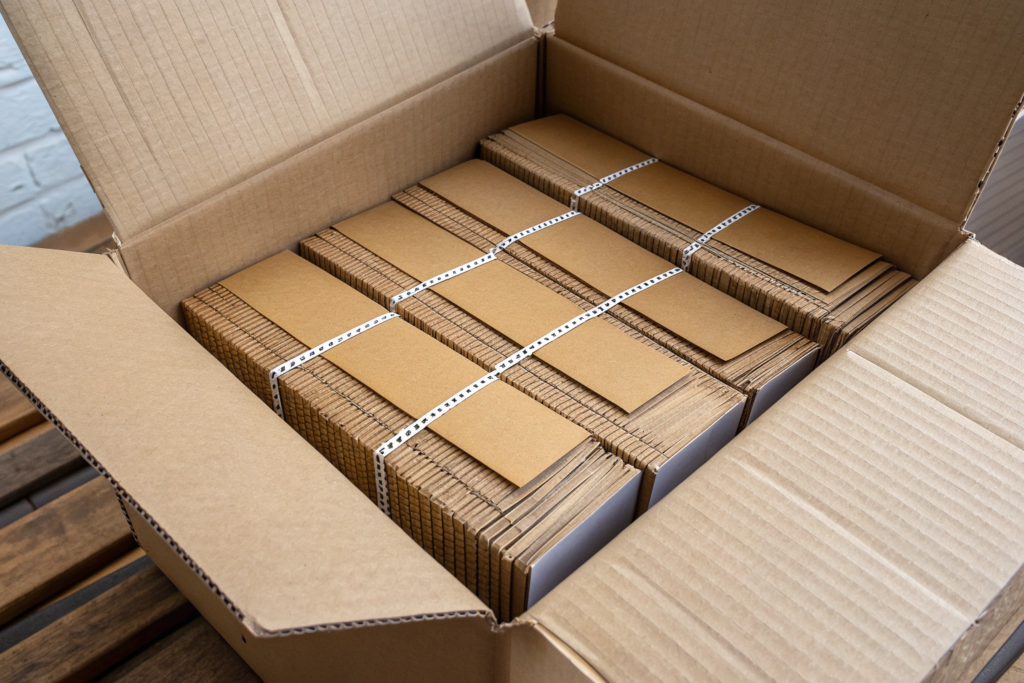
Preventing shifting is about filling the void. The goal is to create a single, solid block of product and protective material inside the box, with no room for anything to move. This is achieved by using box dividers made of corrugated cardboard to create separate compartments for stacks of product. Any remaining space must be filled with void fill materials like kraft paper, air pillows, or bubble wrap. The box itself should be the right size for the contents. A box that is too large invites movement and damage.
Think of the shipping box as a room. If you put a few pieces of furniture in the middle of a huge, empty room and then shake the building, they will crash into the walls and each other. But if you pack the room tightly with furniture, nothing can move. The same principle applies to packaging. We use corrugated dividers to create a grid, and each cell in the grid is perfectly sized for a stack of our carded products. This locks them in place vertically and horizontally. For the remaining space, we use kraft paper. It is eco-friendly, inexpensive, and when crumpled, it creates a springy, resilient fill that absorbs shock and prevents items from shifting. We never leave empty space. This is a fundamental principle of transport packaging, and we follow it rigorously for every shipment of sharp accessories. At Shanghai Fumao Clothing, we train our packing team to treat every box as if it will be thrown across a warehouse, because sometimes it will be.
What is the best void fill material for sharp items?
For items that are already individually secured, kraft paper is an excellent, sustainable choice. It is compressible and provides good cushioning. Air pillows are also effective and lightweight. We generally avoid loose-fill polystyrene peanuts, as they are messy, not eco-friendly, and can get into small spaces. The key is to choose a material that will not shift or settle during transit, leaving voids behind.
How do I choose the right box size?
This is critical. The ideal box is only slightly larger than the stack of products and dividers. We measure the exact dimensions of the packed products and then choose a box that will fit them snugly, with just enough room for a layer of void fill on top. Custom-sized boxes are the best option, but if using standard box sizes, we always err on the side of slightly smaller and use dividers and fill to make up the difference. A box that is too large is a recipe for disaster.
What Outer Packaging Protects Against Crushing and Punctures?
You have secured the items individually and packed them tightly inside the box. But what if the box itself is weak? What if a heavy carton is stacked on top of your shipment during transit? The crushing force can be immense. A flimsy, single-wall cardboard box will collapse, and all your careful internal packing will be for nothing. The outer box is the last line of defense, and it must be strong enough to withstand the journey.
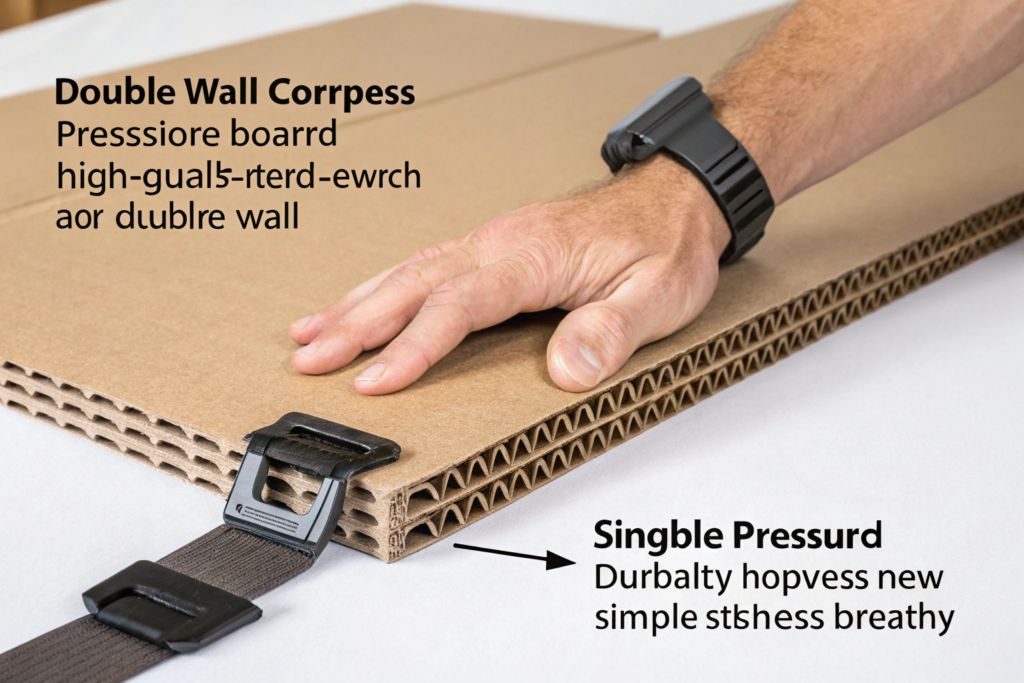
For shipping sharp and potentially fragile accessories, we always recommend using high-quality, double-wall corrugated cardboard for the master cartons. Double-wall cardboard has three layers of flat linerboard and two layers of fluted corrugated medium in between. This construction is significantly stronger and more resistant to crushing than standard single-wall board. It provides a rigid shell that protects the contents from the weight of other packages. The box should also be sealed with heavy-duty packing tape, not just a single strip, but with all seams reinforced.
The strength of corrugated cardboard is measured by its Edge Crush Test (ECT) rating. A higher ECT number means the box can withstand more stacking pressure. For shipments of heavy or dense items like metal hair accessories, we specify boxes with a high ECT rating. We also consider the box's dimensions. A very large box with thin walls is inherently weaker than a smaller box made from the same material. For long, thin items like hair sticks, we might use triangular or square tubes, which have excellent structural rigidity. Finally, we always apply clear handling instructions. "FRAGILE" and "THIS SIDE UP" labels are not just suggestions; they are instructions to the carriers. While we cannot guarantee they will be followed, clear labeling is an important part of the communication chain. You can learn more about corrugated box standards from industry associations. At Shanghai Fumao Clothing, we source our boxes from certified suppliers who can provide the strength ratings we require.
Is double-wall cardboard always necessary?
Not for every single shipment, but it is the safest choice for international shipping or any shipment that will be handled by multiple carriers. For small, lightweight domestic shipments, a high-quality single-wall box with a good ECT rating might suffice. However, when in doubt, we always recommend upgrading to double-wall for the added peace of mind. The cost difference is minimal compared to the cost of a damaged shipment.
Should I use plastic boxes or crates instead of cardboard?
For very high-value items or for reusable packaging systems, plastic totes or crates are an option. They are extremely durable and offer excellent protection. However, for most commercial shipments, high-quality corrugated cardboard is the standard. It is cost-effective, lightweight, recyclable, and when chosen correctly, provides more than enough protection. The key is to choose the right grade of cardboard for the job.
How Do You Communicate Safety and Handling Instructions?
Your product has survived its long journey. It arrives at the customer's home in perfect condition. They open the box, eager to see their new purchase. But if they reach in carelessly and grab a sharp pin by the point, they could injure themselves. Your responsibility for safety does not end when the product is packed. You must also communicate with the end user. Clear safety and handling instructions are a crucial, and often overlooked, part of the packaging process.
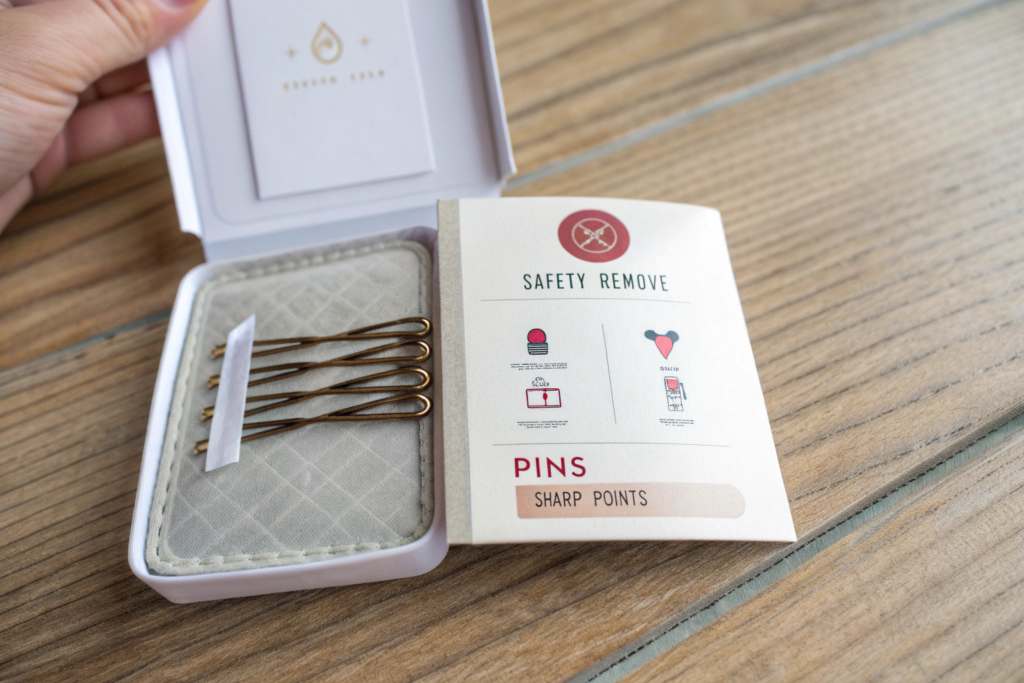
Communicating safety starts with clear, visual instructions on how to safely remove the product from its packaging. For a carded pin, this might be a simple diagram showing the customer to hold the card and pull the pin by its head. It can also include a warning label: "CAUTION: Sharp Point." This is not just a nice gesture; it is a liability consideration. For wholesale clients, we also include handling instructions for their warehouse staff, clearly marked on the master cartons, such as "Use Gloves When Opening" or "Sharp Contents."
We take a layered approach to safety communication. On the primary packaging (the card or bag that holds the product), we include warnings and safe removal instructions. This is for the end consumer. On the secondary packaging (the inner box that holds multiple carded units), we might include handling notes for retail staff who will be unpacking and displaying the items. On the tertiary packaging (the master shipping carton), we include warnings for warehouse and logistics personnel. This ensures that everyone who handles the product, from our factory floor to the customer's home, is aware of its sharp nature and knows how to handle it safely. This is a key aspect of product safety and compliance. At Shanghai Fumao Clothing, we work with our clients to develop clear, effective safety communications that protect their customers and their brand.
What is the best way to warn customers about sharp points?
A combination of text and a simple, universal icon is most effective. The text "CAUTION: Sharp Point" is clear. An icon of a hand with a jagged line or an exclamation point is easily understood across languages. Placing this warning near the product itself, not just on the outer box, is essential.
Do I need to include safety warnings for wholesale clients?
Yes, absolutely. Your wholesale clients' warehouse staff need to know they are handling sharp items. A simple label on the master carton, such as "CAUTION: Contains Sharp Items. Handle with Care," can prevent workplace injuries. It is a simple step that protects the people handling your products and demonstrates that you are a responsible supplier.
Conclusion
Packaging sharp accessories like hair pins and metal barrettes is a serious responsibility. It is a multi-layered process that requires thought, care, and the right materials. From individually securing each item on a card strip, to preventing shifting with snug packing and void fill, to choosing a strong outer box, and finally to communicating clearly with everyone who handles the product—each step is essential. Skipping any one of them invites damage, returns, and potential safety issues.
At Shanghai Fumao Clothing, we treat packaging with the same importance as the product itself. Our experienced team designs and tests packaging solutions for every sharp accessory we make. We understand the rigors of international shipping and the importance of a positive customer unboxing experience. We don't just deliver beautiful products; we deliver them safely.
Are you ready to ensure your sharp accessories arrive at their destination in perfect, safe condition? Let's talk about how our packaging expertise can protect your products and your brand. Contact our Business Director, Elaine, at elaine@fumaoclothing.com to start the conversation.