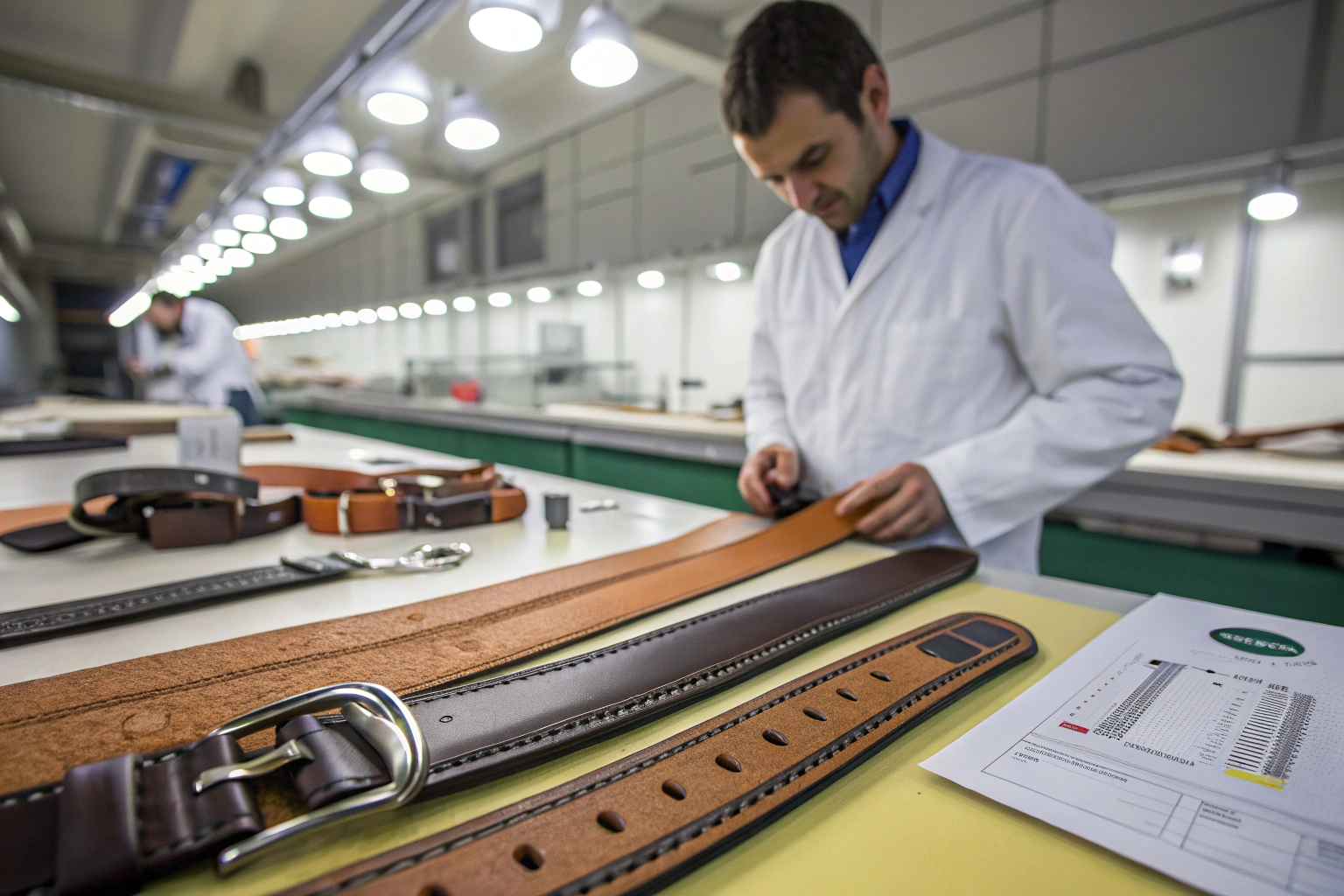
I have been in the fashion accessory manufacturing business for over twenty years, and I have seen that belts are one of those products that seem simple but have many potential failure points. For a buyer like Ron, who supplies to major retailers and online stores, a defective belt is not just a quality issue; it is a safety issue and a brand reputation issue. A belt that breaks, a buckle that fails, or leather that cracks can lead to returns, negative reviews, and lost customers. A thorough quality inspection process is essential to ensure that every belt meets your standards.
The best practices for quality inspection of imported belts involve a systematic approach covering four key areas: material inspection (leather quality, stitching thread, buckle materials), construction inspection (stitching integrity, edge finishing, buckle attachment), functional testing (buckle operation, strap strength, hole durability), and safety checks (sharp edges, toxic materials, small parts). Inspection should occur at multiple stages: incoming materials, during production, and final pre-shipment inspection using AQL sampling.
At Shanghai Fumao Clothing, we have developed comprehensive quality control procedures for belts. We understand that a belt is a functional item that undergoes stress every time it is worn. Our inspection process is designed to catch defects before they reach you. I want to share the best practices we have learned so you can ensure the belts you import meet the highest standards of quality and safety.
What Should I Check During Material Inspection?
Material inspection is the first line of defense against quality issues. Defective materials will lead to defective products, no matter how skilled the workers are. Inspecting materials before they go into production catches problems early, saving time and money.
For leather belts, the leather itself is the most critical material. Inspect for surface defects: scars, scratches, insect bites, or grain inconsistencies. These natural marks may be acceptable for some rustic styles but should be noted. Check the thickness consistency. The belt should have uniform thickness throughout. Thin spots will weaken over time. Check the flexibility. Good quality leather should bend easily without cracking. For synthetic leather (PU or PVC), check for peeling, bubbling, or delamination. The surface should be smooth and consistent. For fabric belts, check for weaving defects, stains, or color inconsistencies.
For buckles and hardware, inspect the metal quality. For plated finishes, check for even coverage, no bubbles or peeling, and no visible base metal. For solid metal, check for casting defects like pits or rough edges. Check the spring mechanism for snap buckles or belt clips. It should open and close smoothly with consistent tension. For stitching thread, check the strength and color consistency. The thread should be strong enough to withstand tension without breaking. For adhesives used in bonded belts, check the expiration date and storage conditions.
How do I identify high-quality leather versus poor-quality leather?
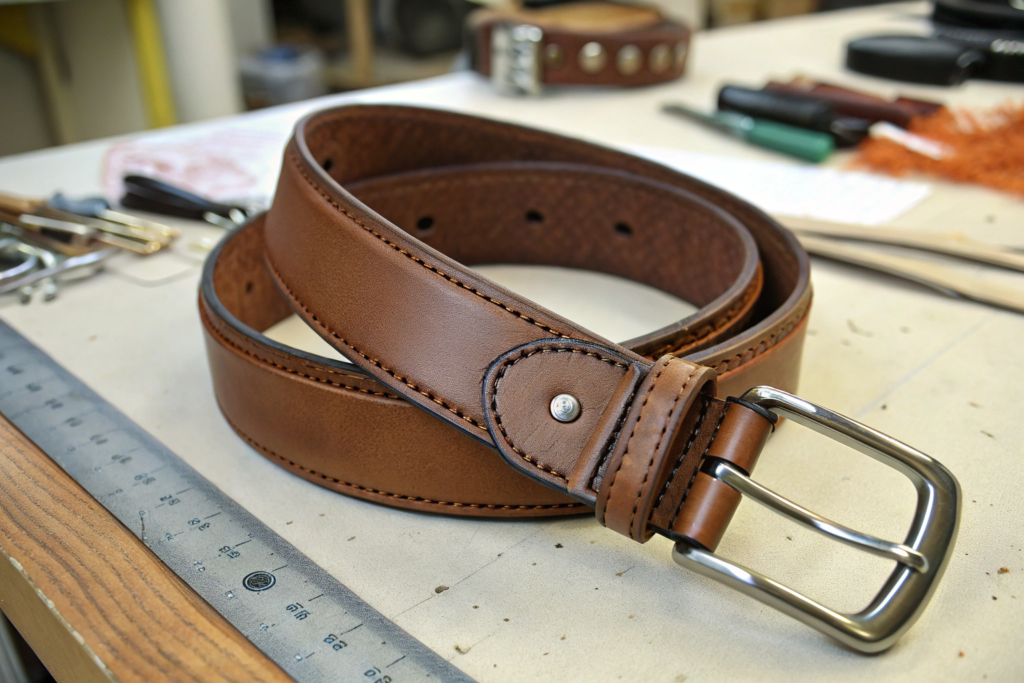
Identifying high-quality leather is essential for belts that need to be durable. Start with the surface. Full-grain leather, the highest quality, shows the natural grain with visible pores and slight imperfections. Top-grain leather has been sanded to remove imperfections, resulting in a smoother surface. Corrected-grain leather has an artificial grain embossed. Bonded leather is made from leather scraps and fibers; it is the lowest quality and should be avoided for belts. Next, check the feel. High-quality leather is supple and flexible. It should not feel stiff or cardboard-like. Bend the leather. It should not crack or show stress marks. Next, check the edge. Good leather has a clean, finished edge. Poor leather may have rough, unfinished edges or visible layers. Next, check the smell. Genuine leather has a distinct, pleasant smell. Synthetic leather smells like plastic or chemicals. Finally, ask about the source. Leather from reputable tanneries with certifications like the Leather Working Group indicates responsible and quality production.
What are the common defects in belt buckles and hardware?
Belt buckles and hardware have several common defects that inspection must catch. The first is poor plating. Plating should be even, smooth, and free from bubbles, peeling, or discoloration. If the base metal is visible, the plating is insufficient. The second is rough edges. Any sharp edge can scratch the wearer or damage the belt. Run a finger along all edges to check. The third is weak springs. For snap buckles or clips, the spring should have consistent tension. A weak spring will not hold securely. A stiff spring is difficult to use. The fourth is casting defects. For metal buckles, look for pits, bubbles, or rough surfaces. These indicate poor quality casting. The fifth is loose components. The buckle should be securely attached to the belt. There should be no wobble or movement at the attachment point. The sixth is corrosion. Check for any signs of rust or corrosion, especially on plated hardware. For more information on metal quality standards, resources from the American Society for Testing and Materials (ASTM) provide detailed specifications for metal components.
What Construction Details Should I Inspect?
Construction defects are the most visible quality issues. They affect the belt's appearance, durability, and safety. Inspecting construction at multiple stages ensures that defects are caught and corrected before the belt is finished.
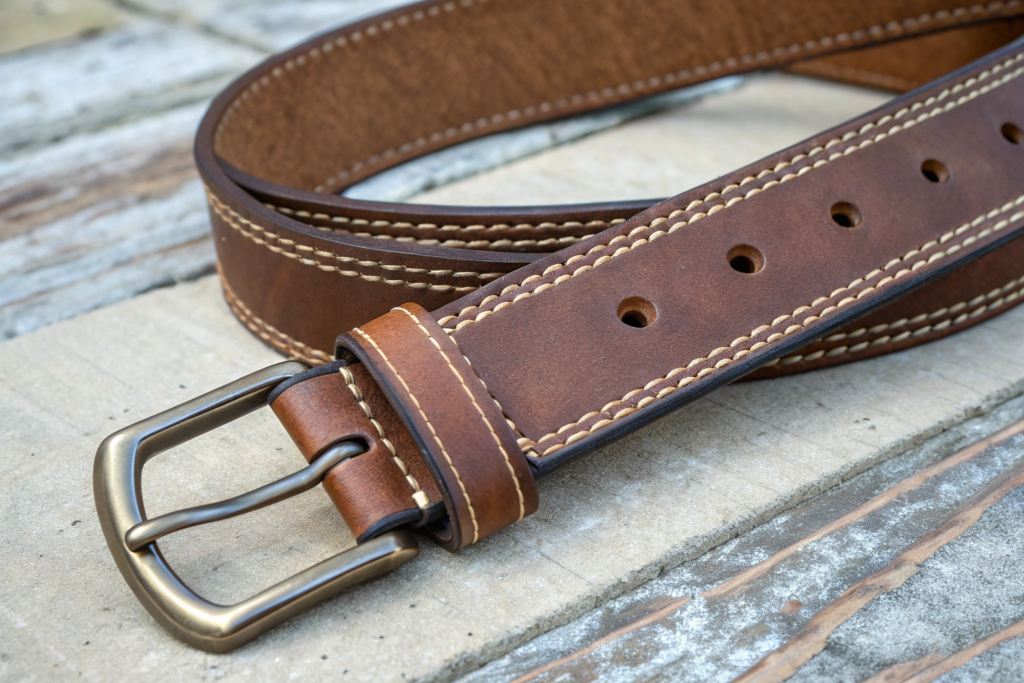
Start with stitching. The stitching should be even, straight, and consistent. There should be no skipped stitches, loose threads, or tension issues. The thread color should match the specification. Check the stitch density. For leather belts, a typical stitch density is 4 to 6 stitches per inch. For fabric belts, it may be higher. Check the back side of the stitching. The thread should be evenly tensioned with no loops or puckering. Next, check the edge finishing. The edges of the belt should be smooth and finished. For leather, edges may be painted, waxed, or burnished. The finish should be even and free from cracks or peeling. For fabric, edges should be folded and stitched or finished with binding.
Check the buckle attachment. For belts with a buckle attached by stitching or rivets, the attachment should be secure. There should be no movement or looseness. For belts with a screw or snap attachment, the components should be tight. Check the hole punching. The holes should be evenly spaced, round, and clean. There should be no fraying or tearing around the holes. For belts with multiple holes, the spacing should be consistent. Finally, check the overall alignment. The belt should lie flat with no twisting or warping. The buckle should be centered.
How do I check stitching quality and thread tension?
Checking stitching quality and thread tension requires a careful visual inspection and sometimes a tactile test. Start with a visual inspection. Look at the stitching line. It should be straight and even. There should be no deviation from the intended line. Look at the individual stitches. They should be uniform in length and spacing. There should be no skipped stitches or gaps. Look at the thread tension. The top thread and bobbin thread should lock in the center of the material. If the top thread is pulling to the top, the tension is too tight. If the bobbin thread is pulling to the bottom, the tension is too loose. Look at the back side. The stitching should be as clean as the front. There should be no loops or bird's nests. Next, do a pull test. Gently pull on a section of stitching. It should not stretch or separate. The thread should not break. For high-stress areas like the buckle attachment, the stitching should be reinforced. For more information on stitching standards, the American Apparel & Footwear Association (AAFA) provides industry guidelines.
What are the signs of poor edge finishing on leather belts?
Edge finishing is a key indicator of belt quality. Poor edge finishing not only looks unprofessional but can also lead to delamination or cracking over time. The first sign of poor edge finishing is roughness. Run your finger along the edge. It should be smooth. Any roughness indicates incomplete finishing. The second sign is cracking. For painted or coated edges, look for cracks or peeling. This indicates that the coating was applied too thickly or that the leather was not properly prepared. The third sign is uneven color. The edge finish should be consistent in color. Light and dark spots indicate poor application. The fourth sign is visible layers. On bonded or laminated leather, the layers should be invisible. If you can see distinct layers, the edge finishing is insufficient. The fifth sign is waviness. The edge should be straight and even. Wavy edges indicate poor cutting or finishing. High-quality leather belts often have edges that are burnished (rubbed with a tool to create a smooth, polished finish) or painted with multiple coats for durability.
What Functional Tests Should I Perform?
Functional testing ensures that the belt will perform as expected during normal use. A belt that looks beautiful but fails when worn is a failed product. Functional tests simulate the stresses that the belt will experience.
The first test is the buckle operation test. Open and close the buckle 10 to 20 times. For prong buckles, the prong should move freely and seat securely in the hole. For snap buckles, the snap should click into place and release with consistent force. For belt clips, the spring should have enough tension to hold securely. The second test is the strap strength test. Pull on the belt strap with moderate force. The leather or fabric should not stretch excessively. The stitching should not break. For a more rigorous test, use a tension gauge to measure the force required to break the strap or the stitching. For leather belts, a typical requirement is to withstand 50 to 100 pounds of tension.
The third test is the hole durability test. Insert the prong into each hole several times. The holes should not stretch or tear. The edges of the holes should remain clean. For belts with multiple holes, this is especially important. The fourth test is the buckle attachment test. Apply tension to the strap while holding the buckle. The attachment should not loosen or fail. For riveted attachments, the rivets should not pull out. For stitched attachments, the stitching should not break. The fifth test is the flexibility test. Bend the belt back and forth several times. The leather should not crack. The finish should not peel.
How do I test the strength of a belt strap and buckle attachment?
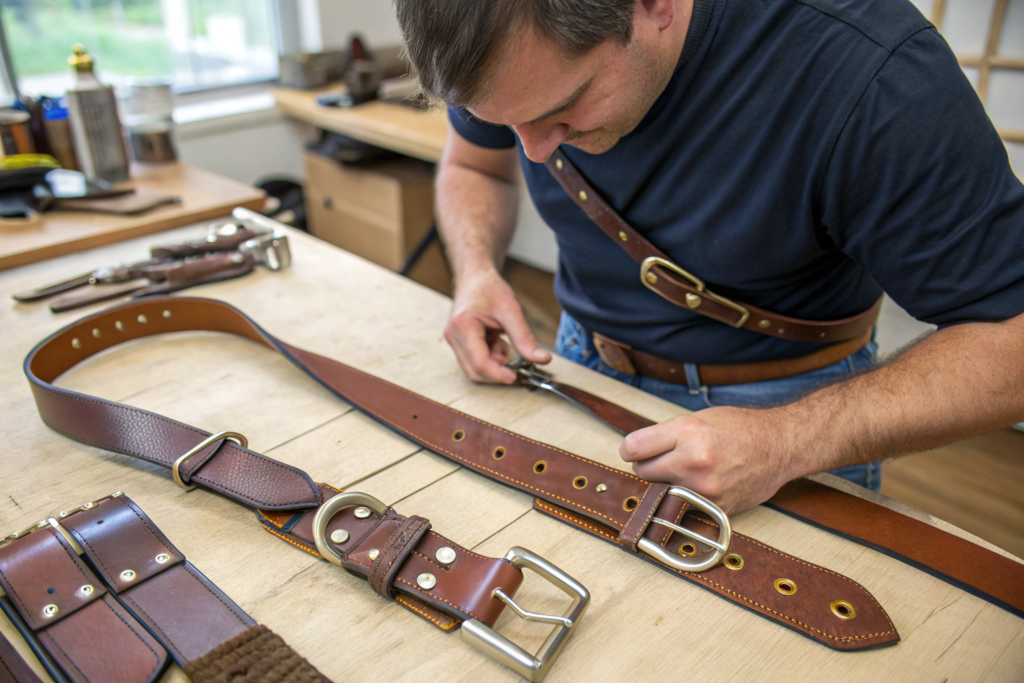
Testing the strength of the belt strap and buckle attachment is essential for safety and durability. Start with a manual test. Pull on the belt with moderate force. Does it feel strong? Does the buckle attachment hold? For a more quantitative test, use a tension gauge. Attach one end of the belt to a fixed point. Attach the tension gauge to the other end. Pull until you reach the required force, typically 50 to 100 pounds for a standard leather belt. The belt should not break. The stitching should not pull out. The buckle should not deform. For the buckle attachment, focus the tension on the attachment point. For riveted attachments, check that the rivets do not pull out or loosen. For stitched attachments, check that the stitching does not break. For belts with a buckle that screws or snaps onto the strap, check that the screw or snap does not loosen under tension. For children's belts, the required strength may be lower, but the same principles apply. For safety standards related to belt strength, you can refer to guidelines from the Consumer Product Safety Commission (CPSC).
What is the correct way to test buckle operation?
Testing buckle operation ensures that the buckle is easy to use and will function reliably over time. Start with the buckle closed. For a prong buckle, the prong should be centered in the hole. There should be no binding or resistance when moving the prong. Open the buckle. The prong should move freely. Close the buckle again. It should seat securely. Repeat this 10 to 20 times. The buckle should function consistently each time. For a snap buckle, press the snap closed. It should click into place with a positive feel. Pull on the strap to ensure the snap holds. Release the snap. It should release with consistent pressure. For a belt clip, open the clip and place it over a belt loop or fabric. It should grip securely. Release the clip. The spring should return to its original position. For any buckle, check for any rough edges or burrs that could catch on clothing or scratch the wearer. Also, check that the buckle does not pinch the wearer when closed. For more information on buckle testing, the American Society for Testing and Materials (ASTM) has specific standards for hardware used in wearing apparel.
What Safety Checks Are Essential For Belts?
Safety checks are critical, especially for belts that will be used by children or in sensitive environments. A belt that fails safety standards can cause injury. Safety inspection should be a non-negotiable part of your quality control process.
The first safety check is for sharp edges. Run your finger along all edges of the buckle, the strap, and any hardware. Any sharp edge that can cut the wearer or snag clothing is unacceptable. Pay special attention to the prong of a prong buckle and the edges of metal plates. The second safety check is for toxic materials. For children's belts, test for lead and phthalates. For all belts, check for nickel in metal components, which can cause allergic reactions. The third safety check is for small parts. For children's belts, any embellishment or component that can detach and fit into a small parts cylinder is a choking hazard. Test by applying force to the component. If it detaches, test whether it fits into the cylinder.
The fourth safety check is for flammability. For fabric belts, ensure the material meets flammability standards for wearing apparel. The fifth safety check is for labeling. Children's belts require tracking labels with manufacturer information and production dates. All belts should have care instructions.
How do I test for sharp edges on belt components?
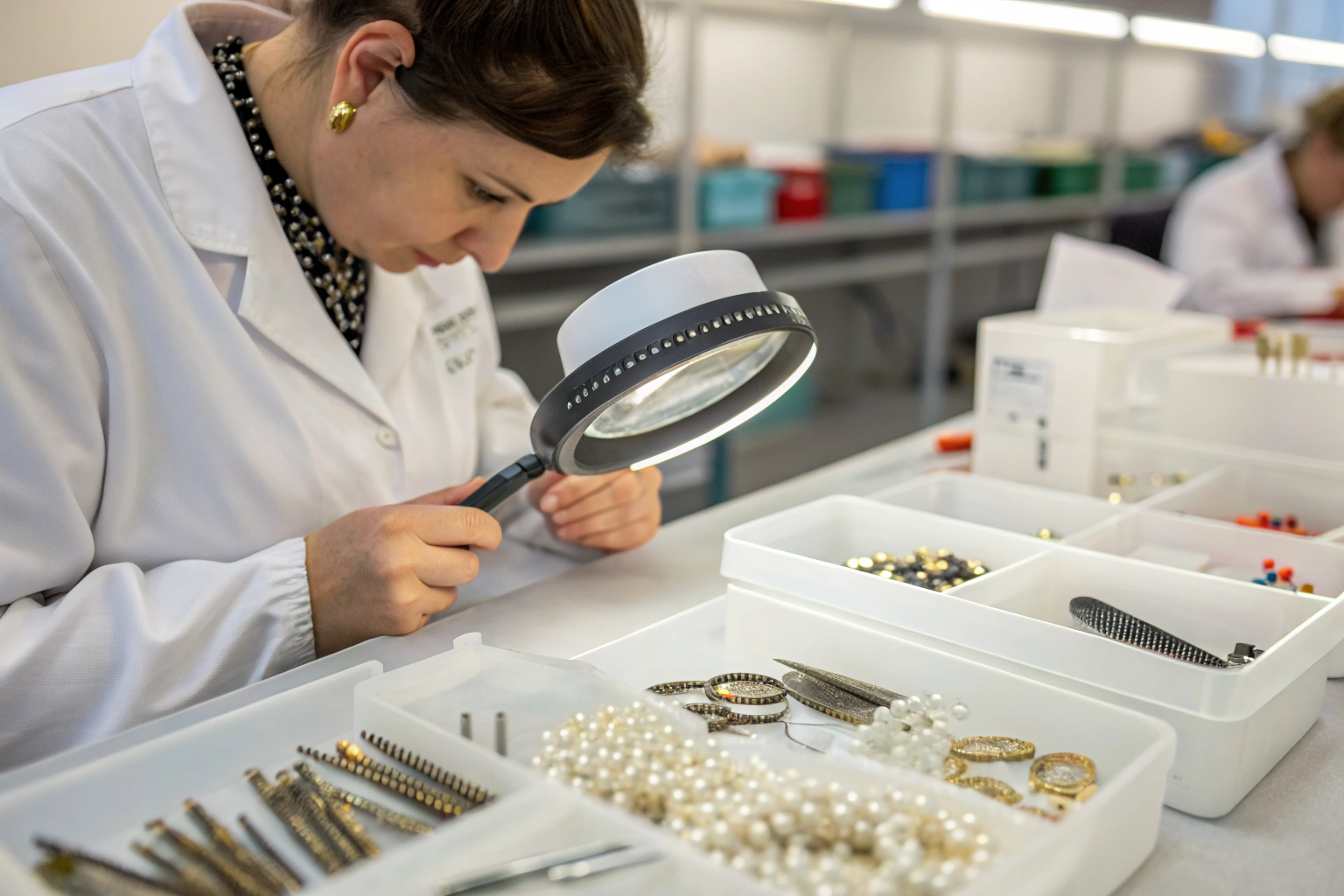
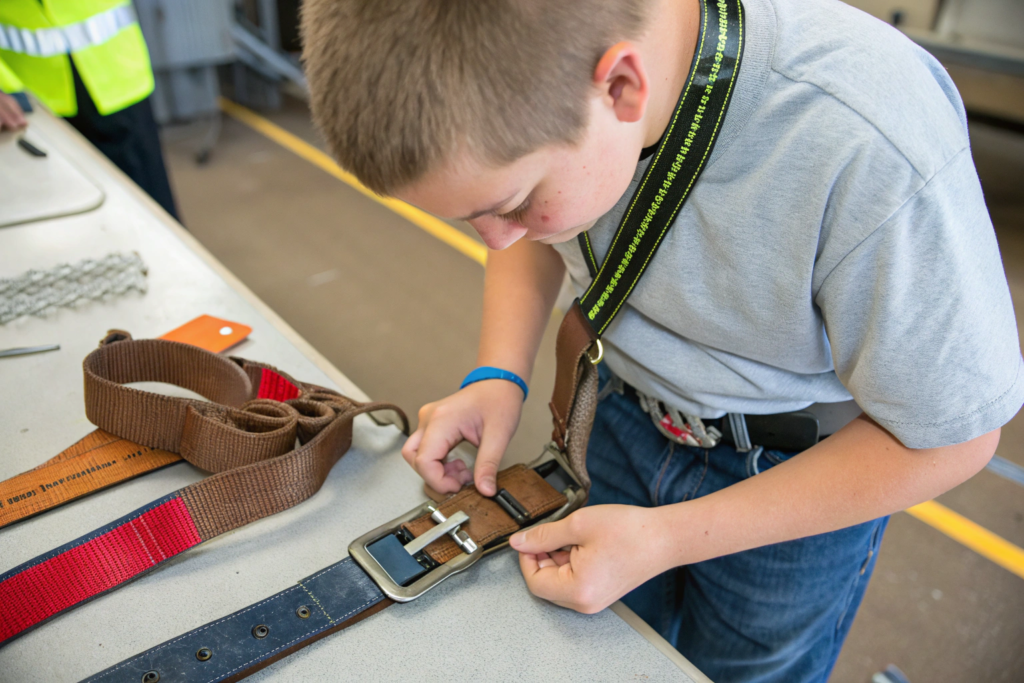
Testing for sharp edges requires a systematic approach. Start with a visual inspection. Look for any visible burrs, rough spots, or uneven edges. Use a magnifying glass to examine the edges of the buckle, the prong, and any metal plates. Next, perform a tactile inspection. Run your finger along all edges. Your finger will detect sharpness that may not be visible. Pay special attention to the prong tip, the edges of the buckle frame, and the edges of any decorative hardware. Next, perform the pantyhose test. Run a pair of pantyhose or a thin fabric along the edges. If the fabric snags, there is a sharp edge. For children's belts, any sharp edge is unacceptable. For adult belts, the edges should be smooth enough that they do not cut skin or snag clothing. If you find a sharp edge, the component should be rejected or reworked. The factory should have processes in place to deburr metal components and smooth plastic edges.
What are the lead and phthalate regulations for belts?
Lead and phthalate regulations are critical for children's products sold in the US and Europe. Under the CPSIA (Consumer Product Safety Improvement Act), children's products in the US cannot contain more than 100 parts per million (ppm) of lead in accessible substrate materials. For belts, this applies to leather, fabric, metal components, and any coatings. Phthalates are restricted to 0.1% each for eight specified phthalates in plastic components. For the European market, REACH regulations set limits for lead and other heavy metals, and phthalates are also restricted. To ensure compliance, your factory should provide test reports from a CPSC-accepted lab (for US) or a notified body (for Europe). The test reports should cover all components of the belt: the leather or fabric, the buckle, any metal hardware, and any plastic components. For children's belts, you should also require a Children's Product Certificate (CPC) for US products or a declaration of conformity for European products. For more information on these regulations, the CPSC website and the European Chemicals Agency (ECHA) provide detailed guidance.
How Do I Set Up A Final Inspection Using AQL?
Final inspection is the last opportunity to catch defects before the belts are shipped to you. Using AQL (Acceptable Quality Limit) sampling provides a statistically valid method for determining whether a batch meets quality standards. AQL is widely accepted in the industry and provides a clear pass/fail criteria.
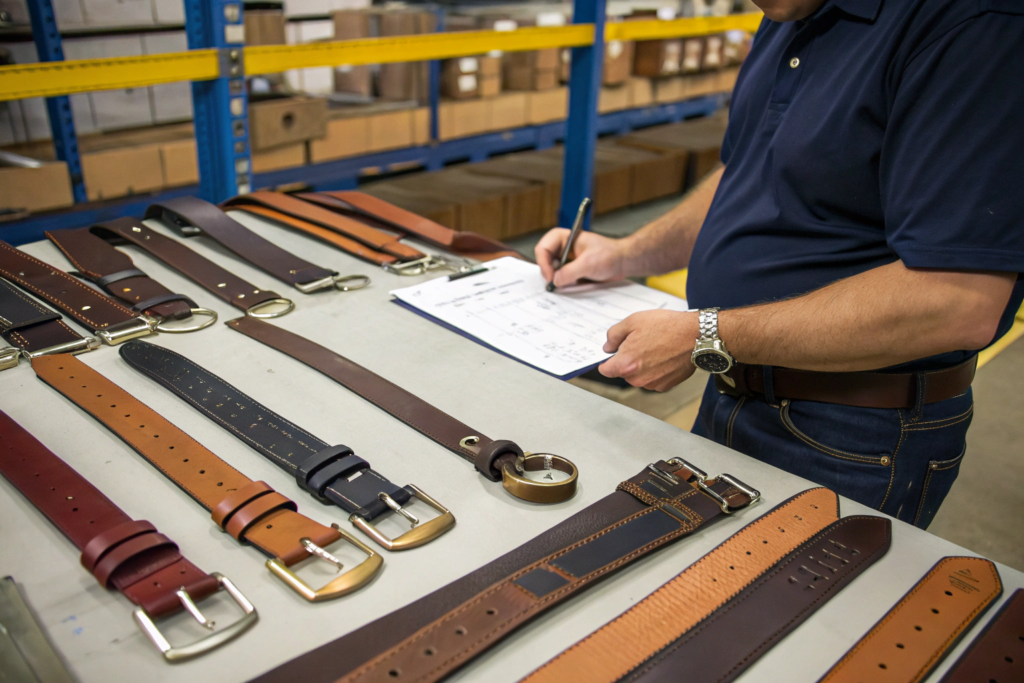
Start by determining the batch size. This is the total number of belts in the shipment. Next, select the AQL level. For belts, common AQL levels are 2.5 for major defects and 4.0 for minor defects. Major defects are those that affect safety or function, such as a broken buckle, a strap that breaks, a sharp edge, or a detached embellishment. Minor defects are those that affect appearance but not function, such as a small scratch, a slightly misaligned buckle, or a minor color variation. Next, use an AQL table to determine the sample size. For a batch of 1,000 belts, the sample size might be 80 belts. Randomly select 80 belts from the batch. Inspect each belt against your checklist.
Count the number of major defects and minor defects. If the number of major defects is less than the AQL limit (e.g., 5 out of 80), the batch passes. If it exceeds the limit, the batch is rejected. If the batch is rejected, the factory must sort the defective belts out or rework them. After sorting, a second inspection is conducted. For more information on AQL standards, you can refer to the ANSI/ASQ Z1.4 standard, which is the industry standard for sampling procedures.
How do I select the right AQL level for belts?
Selecting the right AQL level depends on the product and your quality requirements. For belts, a common standard is major defects at 2.5 and minor defects at 4.0. Major defects are those that make the belt unsafe or unusable. A broken buckle, a strap that tears, a sharp edge that can cut, or a detached embellishment that could be a choking hazard are major defects. For these, you want a very low tolerance. The 2.5 level means that in the sample, up to 2.5% of the items can have major defects and still pass. For a sample of 80, this means up to 5 major defects. Minor defects are those that affect appearance but not function. A small scratch, a slightly uneven stitch, a minor color variation, or a small bubble in the plating are minor defects. The 4.0 level allows up to 4% of the sample to have minor defects. For a sample of 80, this means up to 7 minor defects. If your product is being sold at a premium price point, you may want stricter AQL levels, such as 1.5 for major defects and 2.5 for minor defects. If it is a promotional item, you may accept looser levels. At Shanghai Fumao Clothing, we use AQL 2.5/4.0 as our standard and can adjust based on client requirements.
What documentation should I require from the factory?
Documentation is essential for quality assurance and for compliance. You should require the factory to provide a quality inspection report for each shipment. The report should include the AQL level used, the sample size, the number of defects found, and the pass/fail decision. It should also list the specific defects found. You should also require test reports for materials. For leather belts, request test reports for lead, phthalates, and nickel. For metal components, request reports for plating thickness and corrosion resistance. For fabric belts, request reports for colorfastness and flammability. For children's belts, request a Children's Product Certificate (CPC) or a declaration of conformity. Finally, require a packing list and a certificate of origin. These documents are needed for customs clearance. All documentation should be provided before shipment. At Shanghai Fumao Clothing, we provide comprehensive inspection reports and test documentation with every shipment.
Conclusion
The best practices for quality inspection of imported belts involve a systematic approach covering material inspection, construction inspection, functional testing, and safety checks. Material inspection ensures that leather, hardware, and thread meet quality standards. Construction inspection catches stitching defects, edge finishing issues, and alignment problems. Functional testing verifies that the belt will perform under stress, including buckle operation and strap strength. Safety checks identify sharp edges, toxic materials, and small parts hazards. Final inspection using AQL sampling provides a statistically valid method for accepting or rejecting batches.
At Shanghai Fumao Clothing, we have developed comprehensive quality control procedures for belts. We inspect incoming materials, monitor during production, and conduct final AQL inspections before shipment. We provide detailed inspection reports and test documentation. We understand that a belt is a functional accessory that must perform reliably. Our goal is to deliver belts that meet your quality standards and exceed your customers' expectations.
If you are sourcing belts and want a manufacturing partner who takes quality seriously, let's talk. Please contact our Business Director, Elaine, directly at elaine@fumaoclothing.com to discuss your project and how we can help you deliver products you can trust.