I learned about glove quality control the hard way. Early in my career, we shipped a large order of leather gloves to a European client. They looked perfect in our inspection. But when they arrived, the client discovered that the lining was pulling away from the leather after just a few wears. We hadn't tested the bond strength. We hadn't simulated real use. That mistake cost us the client and taught me that glove quality requires specific attention that other accessories don't.
The best practices for quality control of imported gloves include material verification, dimensional accuracy checks, stitching inspection, strength testing, fit evaluation on multiple hand sizes, and performance testing for specific features like touchscreen compatibility or water resistance.
I'm the owner of Shanghai Fumao Clothing, and we run AceAccessory. We've inspected millions of gloves over the years. Let me share what we've learned about getting it right.
What materials require special attention in glove QC?
Gloves can be made from many materials. Leather, fabric, knit, synthetic. Each has its own quality considerations. Leather needs to be checked for grain consistency, thickness, and defects. Fabric needs to be checked for weave density and strength. Knit gloves need to be checked for stitch consistency and elasticity.
Material verification is the first step. Is it really the leather you ordered? Is the fabric weight correct? We test samples before production and verify every batch during production. We don't trust supplier certificates alone. We test ourselves. This thorough approach is what Shanghai Fumao Clothing is known for.
How do you verify leather quality in gloves?
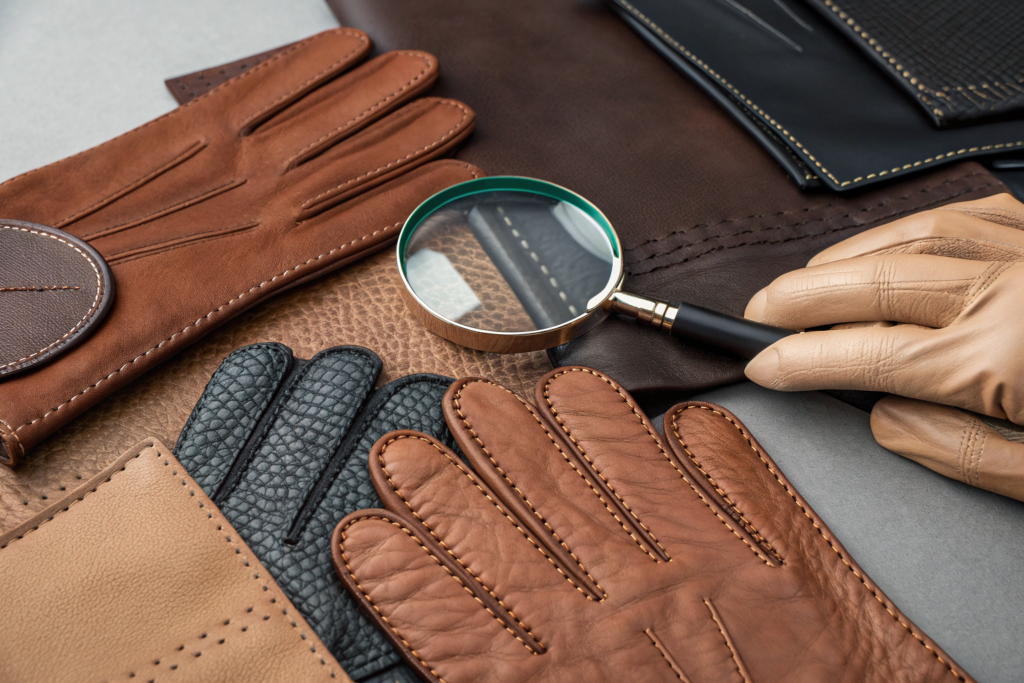
Leather quality is about thickness, grain consistency, and finish. We measure thickness at multiple points. We check for scars, holes, or other defects. We verify that the finish is even and won't crack. We also test for colorfastness. Leather that bleeds color onto hands is a common complaint. We use standard leather testing methods to verify quality.
What defects are common in fabric and knit gloves?
Fabric gloves can have weave inconsistencies, thin spots, or loose threads. Knit gloves can have dropped stitches, uneven tension, or sizing inconsistencies. The most common defect is poor seam construction. Seams that pop under stress. We inspect every glove for these issues. We also test fabric strength to ensure durability.
How do you ensure correct sizing across production runs?
Sizing is critical for gloves. A glove that's too small is uncomfortable and may tear. A glove that's too large doesn't provide dexterity. And sizing can vary between production runs if not carefully controlled.
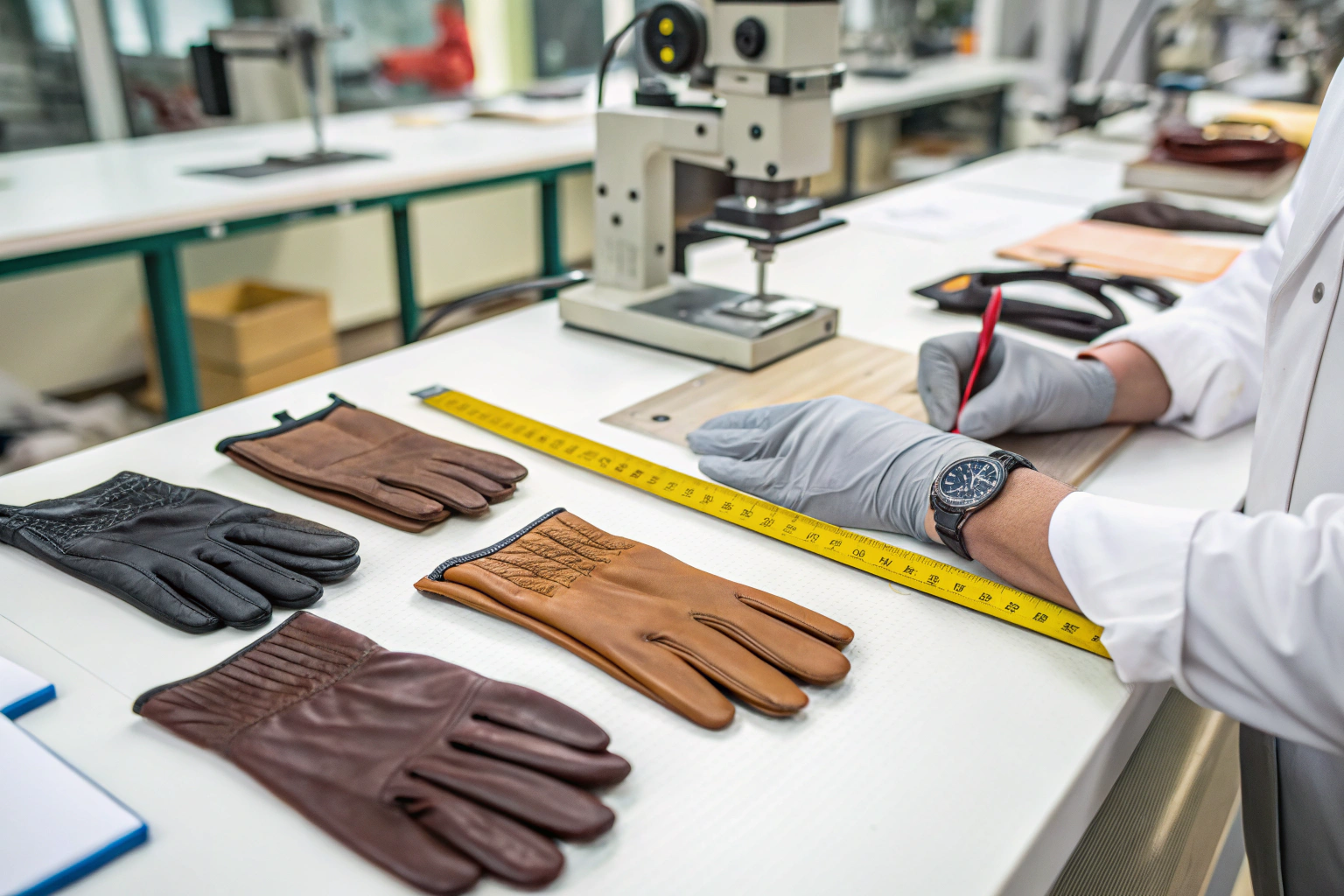
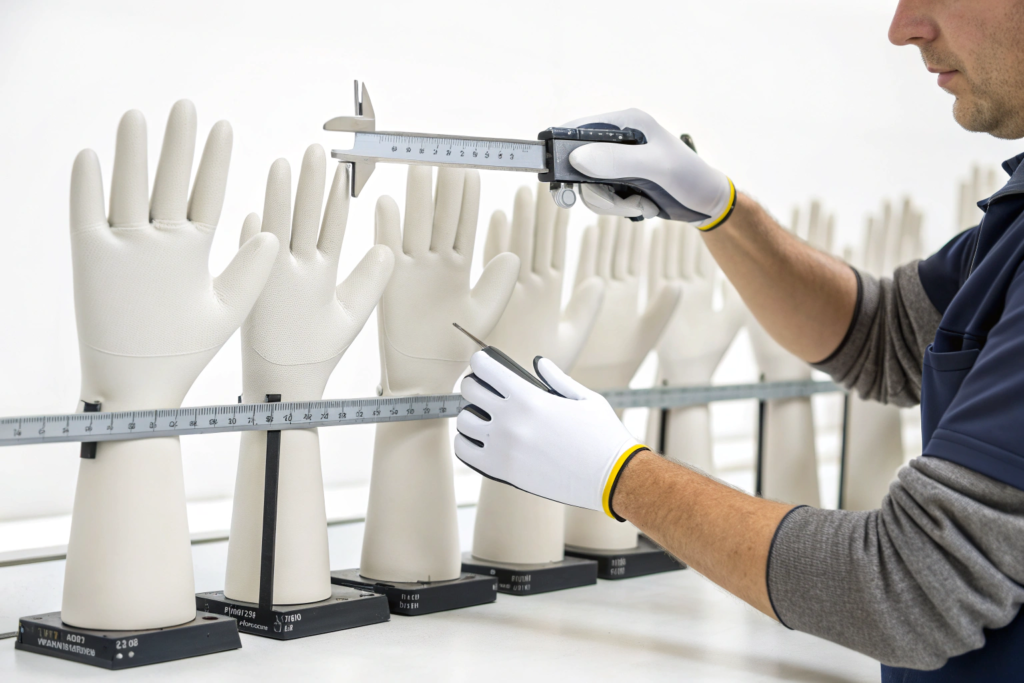
We use standardized hand forms for every production run. We measure length, width, and finger dimensions. We track these measurements throughout production. If we see variation, we stop and adjust. Consistency is the goal.
What measurements are critical for glove sizing?
Palm width is the most important. It determines the basic fit. Middle finger length matters for dexterity. Overall length from wrist to fingertip affects coverage. Thumb position is critical for comfort. For touchscreen gloves, the conductive material placement must be precise. We provide detailed measurement specs for every style.
How do you test fit across different hand shapes?
We use multiple hand forms representing different hand shapes. Narrow hands. Broad hands. Long fingers. Short fingers. A glove that fits one shape perfectly might not fit another. We test on at least three different hand forms for each size. We also have real people try on samples. This real-world testing catches issues that forms might miss.
What stitching and construction details matter most?
Stitching is where gloves often fail. A glove can have perfect leather but if the stitching fails, the glove is useless. Stitch density, thread tension, and seam type all matter.
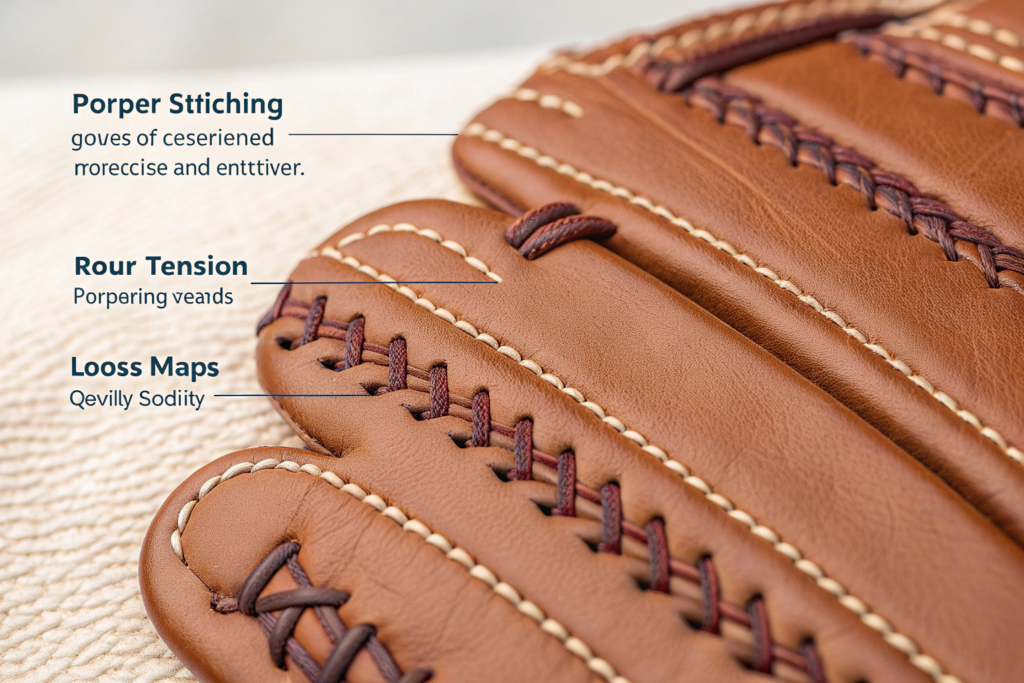
We inspect stitching throughout production. Stitches should be even and consistent. Thread tension should be perfect, with no puckering or loose loops. The seam type should match the specification. Some seams are stronger than others. The right seam for the application matters.
What stitch density indicates quality?
For most gloves, 8-10 stitches per inch is standard for quality. Higher density can be stronger but may be slower to produce. Lower density indicates cheap construction. We measure stitch density on every production run. The stitching on stress points, like between fingers, should be reinforced. This stitch density standard ensures durability.
How do you test seam strength?
We use a tensile tester to pull seams until they fail. This tells us how much stress the seam can handle. For work gloves, seams need to be very strong. For fashion gloves, less strength may be acceptable. We test to the requirements of each client. Seams that fail early are unacceptable. We test every batch to ensure consistency.
What performance testing is essential for gloves?
Beyond materials and construction, gloves need to perform. They need to withstand wear. They need to provide the functions they claim. This requires specific performance testing.
Abrasion resistance matters for work gloves and everyday wear. Flexibility testing ensures the glove moves with the hand. Touchscreen compatibility testing ensures the conductive material actually works. Water resistance testing for outdoor gloves. Each feature needs verification.
How do you test touchscreen compatibility?
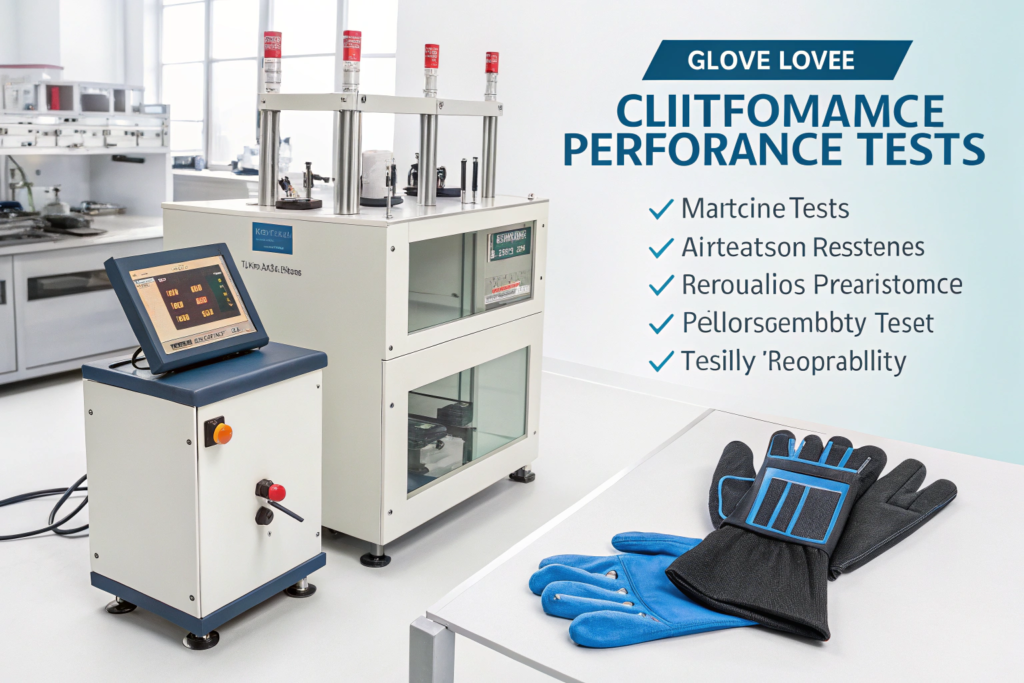
We test on actual devices. The glove must reliably register touch on a smartphone or tablet. We test with different screen types and different pressures. We also test durability. Does the conductive material wear off after repeated use? We simulate extensive use to ensure long-term performance. This touchscreen testing is essential for modern gloves.
What abrasion tests are standard for gloves?
The Martindale test is common for fabric gloves. It rubs the material in a figure-eight pattern until it fails. For leather gloves, the Taber test is often used. It measures resistance to rotary abrasion. Results are compared to standards. A glove that fails abrasion testing won't last long in real use. We conduct these tests on every new style.
How do you verify special features like waterproofing?
Some gloves claim special features. Waterproof. Windproof. Breathable. Insulated. These claims need verification. A glove that claims to be waterproof but leaks is a failed product.
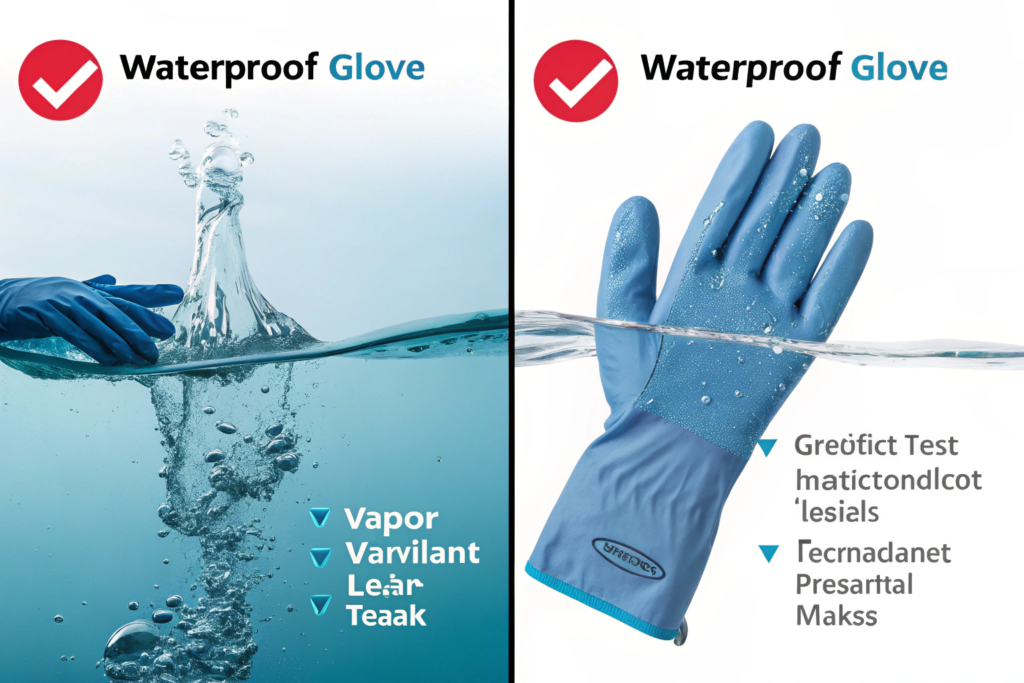
We test waterproof gloves by filling them with water or submerging them and checking for leaks. We test breathability by measuring vapor transmission. We test insulation by measuring temperature retention. Each feature has specific test methods.
How do you test for waterproof claims?
The simplest test is to fill the glove with water and check for leaks. More sophisticated testing uses pressure to simulate real conditions. We test seams particularly carefully, as they're common leak points. The glove should remain dry inside after testing. We provide test reports to verify claims.
What testing confirms insulation claims?
Insulation is tested by measuring thermal resistance. The glove is placed between a hot plate and a cold environment. Sensors measure how much heat transfers through. Results are compared to standards. A glove claiming to be good to -20°C should actually keep hands warm at that temperature. We verify these claims before production.
Conclusion
Quality control for imported gloves requires attention to many details. Materials must be verified. Sizing must be consistent. Stitching must be strong. Performance features must work. Documentation must be thorough. Each step matters. Skip any step, and you risk receiving gloves that don't meet your standards.
At Shanghai Fumao, we've developed comprehensive quality control processes specifically for gloves. We know what to look for. We test thoroughly. We document everything. If you're looking for a reliable partner for glove production, let's talk. Reach out to our Business Director, Elaine, at elaine@fumaoclothing.com. She'll connect you with a project manager who understands glove quality inside and out.