I remember a call from a buyer at a major European department store a few years ago. He was furious. He had ordered a large shipment of beautiful, high-end umbrellas for the rainy season. They looked perfect in the box. But when customers opened them, some of the metal parts were already showing tiny specks of rust. After just a few uses, the runners were sticking, and the frames were becoming weak. His brand's reputation for quality was being destroyed by a problem he thought he had solved: rust. He asked me, "How do I make sure this never happens again?"
The best metal alloys for rust-resistant umbrella components are stainless steel and anodized aluminum. Stainless steel, particularly grades 304 and 316, offers exceptional strength and superior corrosion resistance, making it ideal for the central shaft and highly stressed parts. Anodized aluminum is lightweight, strong, and, when properly anodized, creates a hard, corrosion-resistant surface, perfect for the ribs and frame. For budget-friendly options, electroplated steel with a high-quality finish can offer adequate protection, but it is not as durable as stainless steel or anodized aluminum. At Shanghai Fumao Clothing, we help our clients select the perfect alloy and finish for their umbrellas, ensuring they stand up to the rainiest days.
That buyer's anger was justified. He had trusted his supplier, and they had failed him. They had used cheap, low-grade metals that looked fine for a few weeks but were never designed to withstand real-world conditions. An umbrella's job is to battle the elements. If its very frame succumbs to those elements, it is a complete failure. Choosing the right metal is not a detail; it is the entire point. Let me walk you through the science and the art of selecting rust-resistant metals for umbrellas.
Why Is Stainless Steel the Premium Choice for Durability and Rust Resistance?
When you think of a metal that simply does not rust, stainless steel is likely the first material that comes to mind. And for good reason. Stainless steel is an alloy of iron that contains a significant amount of chromium. This chromium is the secret ingredient. It reacts with oxygen to form an invisible, ultra-thin layer on the surface called a passive layer. This layer self-repairs and prevents further oxygen from reaching the iron, blocking rust before it can start. It is the ultimate defense.
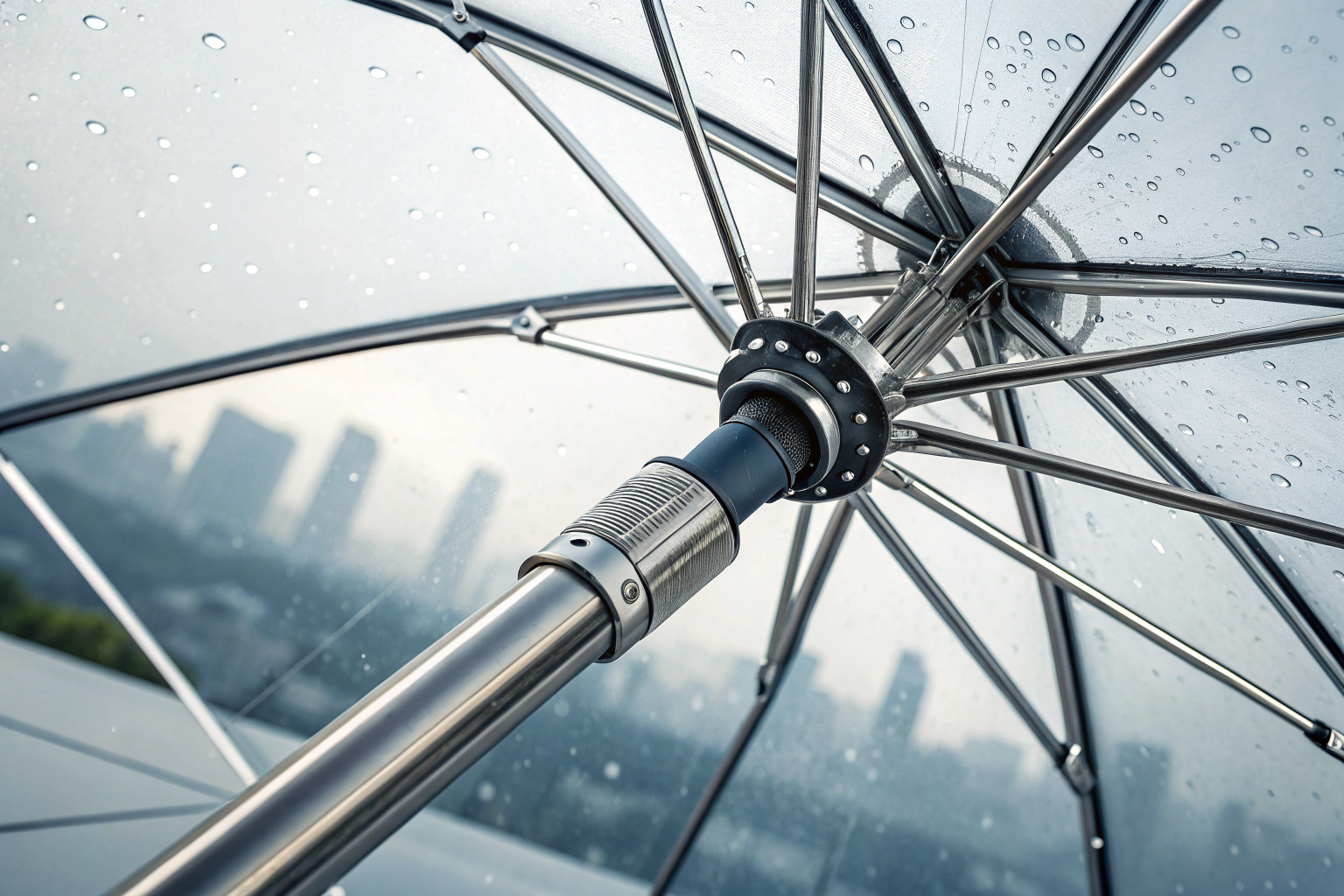
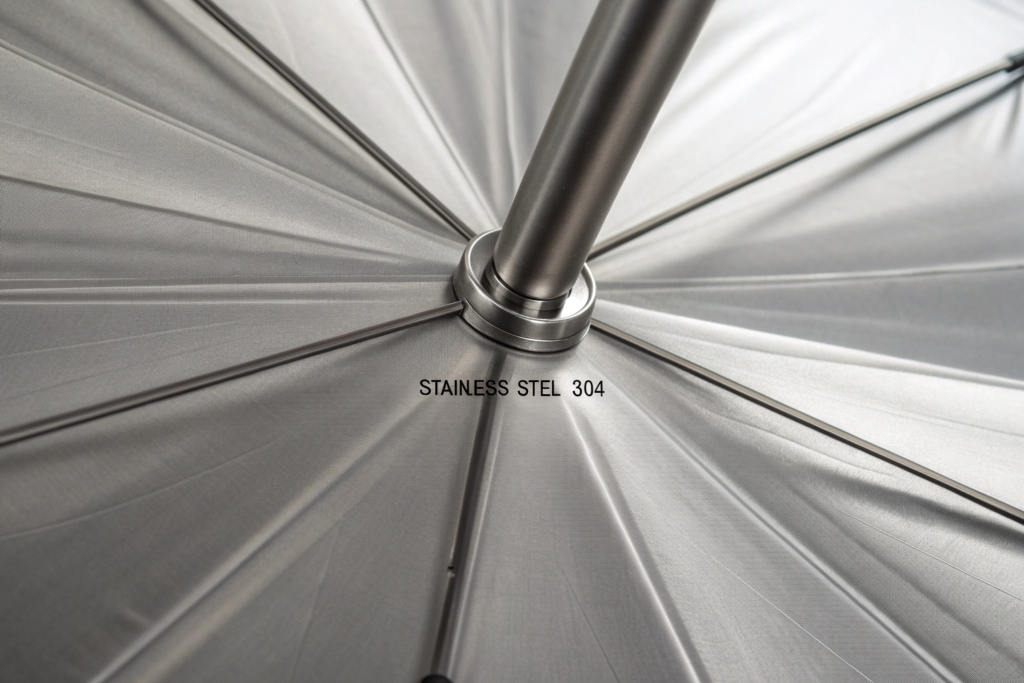
For umbrella components, stainless steel grades 304 and 316 are the gold standard. Grade 304 is the most common, offering excellent corrosion resistance, strength, and formability. It is perfect for the central shaft, the ribs, and the runner. Grade 316 contains molybdenum, which gives it even greater resistance to corrosion, especially in saltwater or highly corrosive environments. This makes it the ideal choice for umbrellas intended for coastal cities or extreme conditions. Both grades provide the strength needed for a durable, long-lasting umbrella frame.
The choice between 304 and 316 often comes down to the umbrella's intended market and price point. For a premium, everyday umbrella for a city like London or New York, 304 stainless steel is an excellent, durable, and cost-effective choice. It will resist rain, humidity, and normal use for years. For a high-end, "lifetime" umbrella, or one specifically designed for coastal areas where salt spray is a constant threat, the extra investment in 316 stainless steel is absolutely justified. Salt is incredibly corrosive, and 316's molybdenum content provides the necessary shield. It is also worth noting that the finish of the stainless steel matters. A brushed or polished finish can add to its aesthetic appeal and also helps to shed water, further protecting the surface. This is a key consideration in material selection for product durability. At Shanghai Fumao Clothing, we source our stainless steel from certified mills and can provide our clients with full material traceability.
Is stainless steel heavy for an umbrella?
Stainless steel is denser than aluminum, so it is heavier. However, for a premium umbrella, this weight can actually contribute to a feeling of quality and sturdiness. It feels substantial in the hand. For those seeking a lighter weight, aluminum is the better choice. The choice is a trade-off between the feeling of solid weight and the desire for ultra-light portability.
Can stainless steel ever rust?
The term "stainless" is a bit of a misnomer. It is "stain-less," not "stain-proof." Under extreme conditions, such as prolonged exposure to salt water or a lack of oxygen (which prevents the passive layer from forming), even stainless steel can corrode. However, with proper care and the right grade (like 316 for marine environments), it is by far the most rust-resistant metal available for umbrellas.
How Does Anodized Aluminum Offer a Lightweight and Rust-Resistant Alternative?
For many umbrella users, weight is a critical factor. They want an umbrella that is easy to carry, that won't weigh down their bag. Stainless steel, while strong, can be heavy. This is where aluminum shines. Aluminum is naturally lightweight, but on its own, it can be susceptible to corrosion. The solution is anodizing, an electrochemical process that transforms the surface of the aluminum into a durable, corrosion-resistant layer.
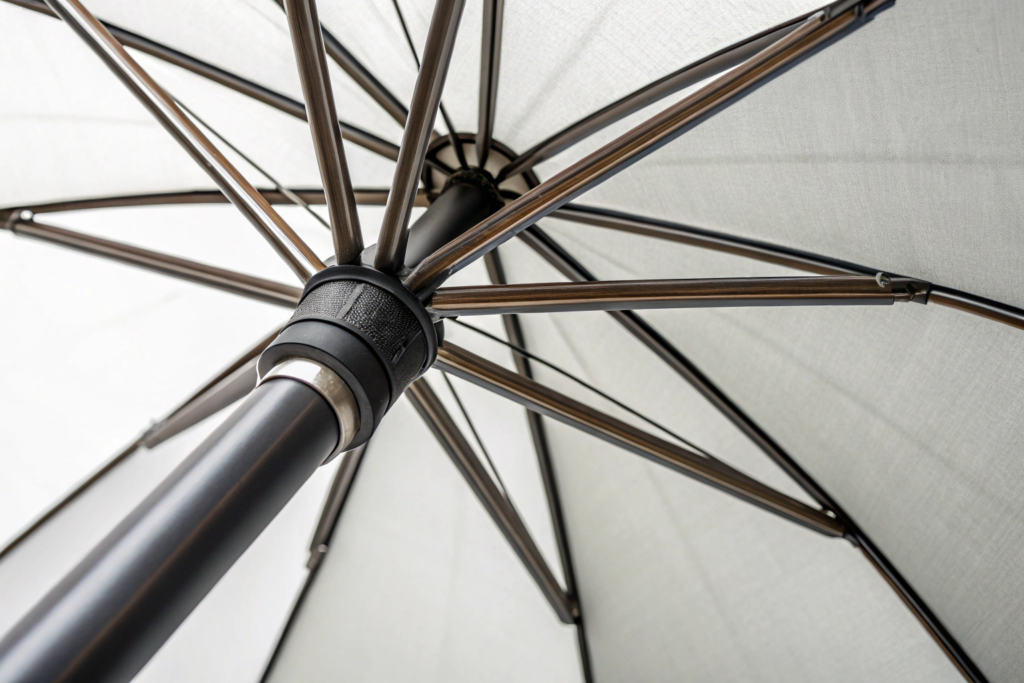
Anodized aluminum is the perfect choice for lightweight, rust-resistant umbrellas. The anodizing process creates a thick, hard, and inert oxide layer on the surface of the aluminum. This layer is not a coating that can peel off; it is an integral part of the metal. It provides excellent protection against corrosion, including from rain and humidity. It also allows for the addition of color, as the anodized layer can be dyed in a range of shades, from classic silver and black to more fashionable colors. The ribs and frame of many high-quality, lightweight travel umbrellas are made from anodized aluminum.
The quality of anodizing is critical. A thin, poor-quality anodized layer can be easily scratched or worn away, exposing the underlying aluminum to corrosion. A high-quality, hard anodized layer (often called Type III anodizing) is much thicker and more durable, suitable for the constant friction and movement of an umbrella's folding mechanism. The alloy of aluminum itself also matters. 6000-series aluminum alloys (like 6061) are commonly used for their good strength and corrosion resistance, and they take anodizing very well. For the highest-end lightweight umbrellas, you might even find 7075 aluminum, an aerospace-grade alloy that is incredibly strong for its weight, though it can be more challenging to anodize. The combination of the right alloy and a high-quality anodizing process results in a frame that is both feather-light and built to last. You can learn more about anodizing standards from industry associations. At Shanghai Fumao Clothing, we work with anodizing partners who meet the strictest quality specifications, ensuring the finish on our aluminum umbrella frames is both beautiful and protective.
Is anodized aluminum as strong as stainless steel?
No, stainless steel is generally stronger and more rigid. However, for the application of umbrella ribs, a well-chosen aluminum alloy like 6061 or 7075 is more than strong enough. The key is that the frame is designed correctly for the material's properties. The strength-to-weight ratio of aluminum is its superpower. It is not about being the strongest, but about being the strongest for its weight.
Can the color on anodized aluminum fade or wear off?
The color in anodized aluminum is achieved by dyeing the porous anodic layer before it is sealed. This means the color is integrated into the surface, not just painted on top. It is therefore very durable and resistant to fading from UV light, much more so than paint. However, it can be scratched by sharp objects. With normal use, the color will last for the life of the umbrella.
What About Electroplated Steel for More Budget-Friendly Options?
Stainless steel and anodized aluminum are the premium choices. But for umbrellas at lower price points, these materials can be too expensive. The industry needed a more economical solution, and that solution is electroplated steel. However, it is crucial to understand that this is a compromise. It can work well for a season or two, but it lacks the long-term durability of the premium options. The key is in the quality of the plating.
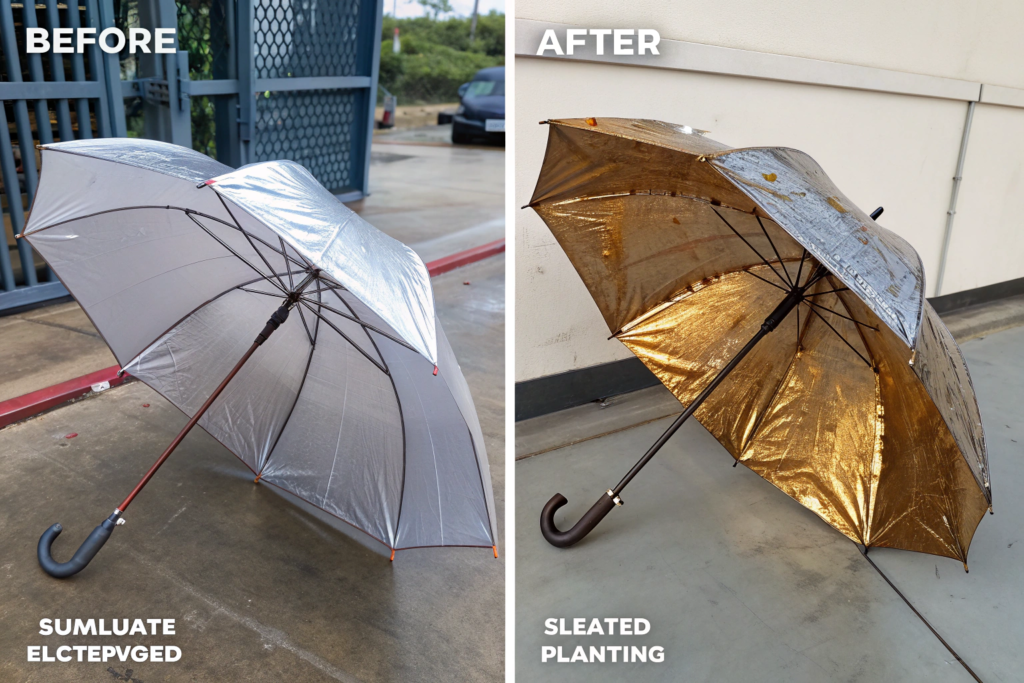
Electroplated steel uses a base of carbon steel, which is strong and inexpensive but highly susceptible to rust. To protect it, a thin layer of another metal, such as nickel, chrome, or zinc, is applied through electroplating. This layer acts as a barrier, preventing moisture from reaching the steel. The quality of an electroplated component depends entirely on the thickness and uniformity of the plating and the quality of the base metal. A cheap, thin plating will quickly wear away at friction points (like the hinges and runner), exposing the steel to rust. A higher-quality, thicker plating can provide adequate protection for a budget-friendly umbrella.
For an umbrella manufacturer, using electroplated steel is a calculated risk. It allows you to hit a lower price point. But you must be rigorous with your suppliers. You need to specify a minimum plating thickness (e.g., a certain number of microns of nickel and chrome). You need to ensure the plating is even, especially on complex shapes and inside hinges. You need to test the components for corrosion resistance, using tests like a salt spray test, which simulates years of exposure in a matter of days. A component that fails a 24-hour salt spray test will likely rust in its first rainy season. A well-plated component might pass a 72-hour test. This is a critical part of quality assurance for metal components. At Shanghai Fumao Clothing, if a client chooses an electroplated option for a budget line, we are extremely vigilant. We conduct our own salt spray tests on random samples from every batch to ensure the plating meets our minimum standards. We are honest with our clients about the expected lifespan of these components compared to premium materials.
How long will an umbrella with electroplated steel components last?
With very high-quality plating and careful use, it could last a few years. However, compared to a stainless steel or anodized aluminum umbrella that could last a decade or more, it is a shorter-term product. The friction points are the most vulnerable. The constant opening and closing will inevitably wear away the plating, and rust will begin there.
Is there a way to make electroplated steel more durable?
The best way is to specify a thicker plating and to use a multi-layer system (e.g., copper, then nickel, then chrome). This is more expensive but significantly more durable. Also, designing the umbrella to minimize friction on plated surfaces can help. For example, using nylon or plastic washers at hinge points can prevent metal-on-metal contact that wears away the plating.
How Do You Test and Verify the Rust Resistance of Metal Components?
You can specify the best materials in the world, but if your supplier cuts corners, you will never know until your customers start complaining. The only way to be certain that your umbrella components will resist rust is to test them. Rigorous, standardized testing is not an optional extra; it is the only way to verify that what you ordered is what you received. It is your insurance policy against the kind of disaster that buyer faced.
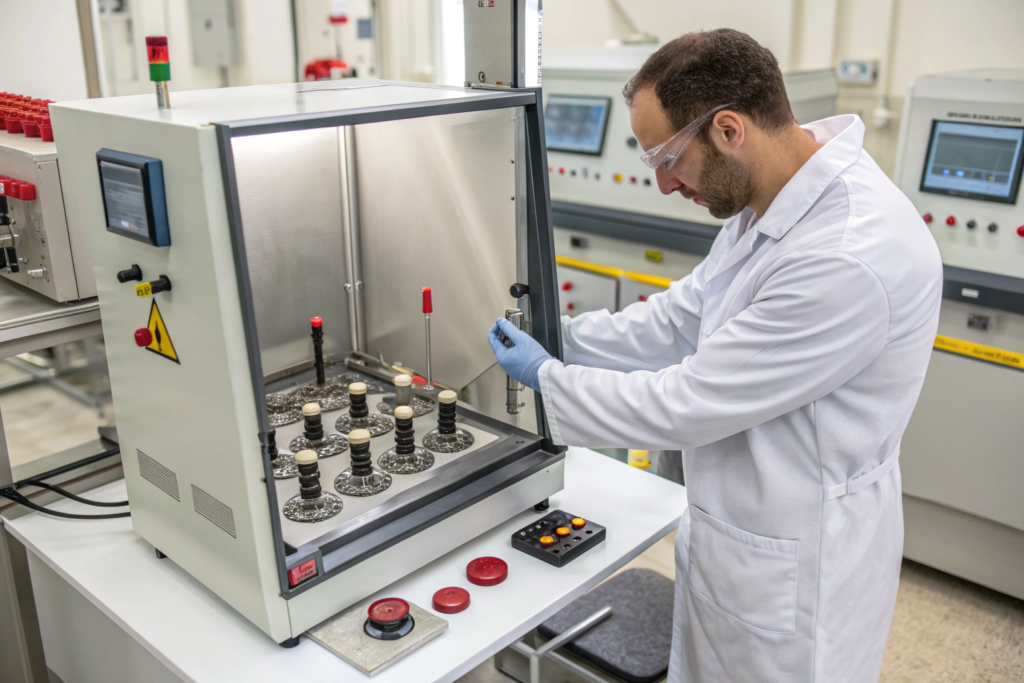
The gold standard for testing corrosion resistance is the ASTM B117 Salt Spray (Fog) Test. In this test, components are placed in a sealed chamber and exposed to a continuous, fine mist of salt water at a controlled temperature. This accelerates the corrosion process, allowing us to simulate years of exposure in a matter of days or weeks. We can see exactly when and where rust first appears. For umbrella components, we can test individual parts (springs, rivets) and also test assembled sections of the frame. We also conduct humidity tests to simulate long-term exposure to a damp environment.
Our testing protocol is multi-stage. First, we test samples of raw materials from our suppliers, like a coil of stainless steel wire or a batch of aluminum tubing. This verifies that the base metal meets our specifications. Second, we test finished components, like a plated steel spring or an anodized rib. This verifies that the finishing process (plating, anodizing) was done correctly. Third, we test random samples from every production batch. This ensures that quality remains consistent, not just good for the first sample. We also conduct cycle testing on the umbrella's folding mechanism, opening and closing it thousands of times to ensure the metal and its finish can withstand mechanical wear. This combination of corrosion and mechanical testing gives us complete confidence. A component that passes a 48-hour salt spray test and 5,000 open-close cycles is a component we trust. This commitment to rigorous quality control is what protects our clients' brands. At Shanghai Fumao Clothing, our in-house lab is equipped to perform these tests, and we provide our clients with detailed test reports.
How long should a component last in a salt spray test to be considered good for an umbrella?
There is no single industry standard, as it depends on the umbrella's intended quality and price point. For a budget umbrella, a goal of 24-48 hours without significant rust might be acceptable. For a premium umbrella, we aim for 72-100+ hours. We discuss these targets with our clients based on their brand promise and the expected lifespan of the product. The test provides a comparative benchmark, not an absolute predictor of real-world life, but it is the best tool we have.
Can I request these tests for my own umbrella production?
Absolutely. We encourage it. For any new umbrella design, we will perform salt spray and cycle tests on the first samples and provide you with the results. For ongoing production, we can perform random batch testing. This transparency is part of our commitment to our clients. You don't have to trust us; you can see the data for yourself.
Conclusion
The metal components of an umbrella are its skeleton. They must be strong, flexible, and above all, resistant to the very element they are designed to fight: water. Choosing the right alloy—whether it's the premium, long-lasting strength of stainless steel, the lightweight versatility of anodized aluminum, or the budget-conscious compromise of electroplated steel—is a foundational decision that defines the quality and lifespan of your product.
At Shanghai Fumao Clothing, we have deep expertise in the metallurgy of umbrellas. We know the difference between 304 and 316 stainless steel. We understand the nuances of anodizing quality. And we have the rigorous testing protocols to verify that every component, no matter the material, meets the highest standards of rust resistance. We help our clients make informed choices and then deliver on those choices with precision and consistency.
Are you ready to create umbrellas that stand up to the storm and stay beautiful for years? Let's build a frame that will never let you or your customers down. Contact our Business Director, Elaine, at elaine@fumaoclothing.com to start the conversation.