A buyer from a New York luxury department store called me five years ago. She was angry. Not at me. At her previous supplier. She said, "I sold 3,000 pairs of USD 180 leather gloves last winter. My customers wore them twice. The seams split. The color rubbed off on their bags. The thumbs developed holes. I had to refund 400 customers. My margin disappeared. My reputation damaged. Tell me honestly: Can you make a glove that lasts?"
The best materials for long lasting fashion gloves are premium goatskin leather for outer shells, merino wool-nylon blends for knit gloves, and cashmere-silk blends for linings. Goatskin is thinner than cowskin, stronger than lambskin, and naturally water-resistant. A well-made goatskin glove lasts 5 to 10 years with proper care. Merino-nylon blend knit gloves last 3 to 5 years. Cashmere-silk linings last the lifetime of the glove if protected. At Shanghai Fumao Clothing, we guarantee our premium leather gloves for 24 months. Our return rate for these gloves is 0.8 percent.
You might think "long lasting" is just about material quality. It is not. It is about material selection, construction technique, and customer education. The most expensive leather will fail if the stitching tension is wrong. The finest merino will pill if the yarn twist is too loose. The softest cashmere will felt if the customer machine washes it. I have spent eighteen years learning how to prevent these failures. Let me show you what actually endures.
Which Leather Offers The Best Durability For Fashion Gloves?
A buyer once told me, "My customers want buttery soft leather." I said, "Then they want lambskin." She said, "Perfect. Send me lambskin gloves." I said, "They will last one season." She paused. She said, "What is the alternative?" I said, "Goatskin. It is 80 percent as soft. It is 400 percent more durable." She ordered goatskin. Her customers reviewed: "Took a week to break in, but now perfect. Second season, still like new."
Goatskin is the undisputed champion of durable fashion glove leather. It has a high concentration of natural oils. The fiber structure is densely cross-woven. It resists tearing, abrasion, and water absorption. A 0.6mm goatskin glove is as durable as a 1.0mm cowskin glove but offers twice the dexterity. Lambskin is softer but stretches permanently. Cowskin is durable but stiff and bulky. Deerskin is durable but expensive and harder to source ethically. At Shanghai Fumao Clothing, we source Italian and Spanish goatskin from tanneries certified by the Leather Working Group.
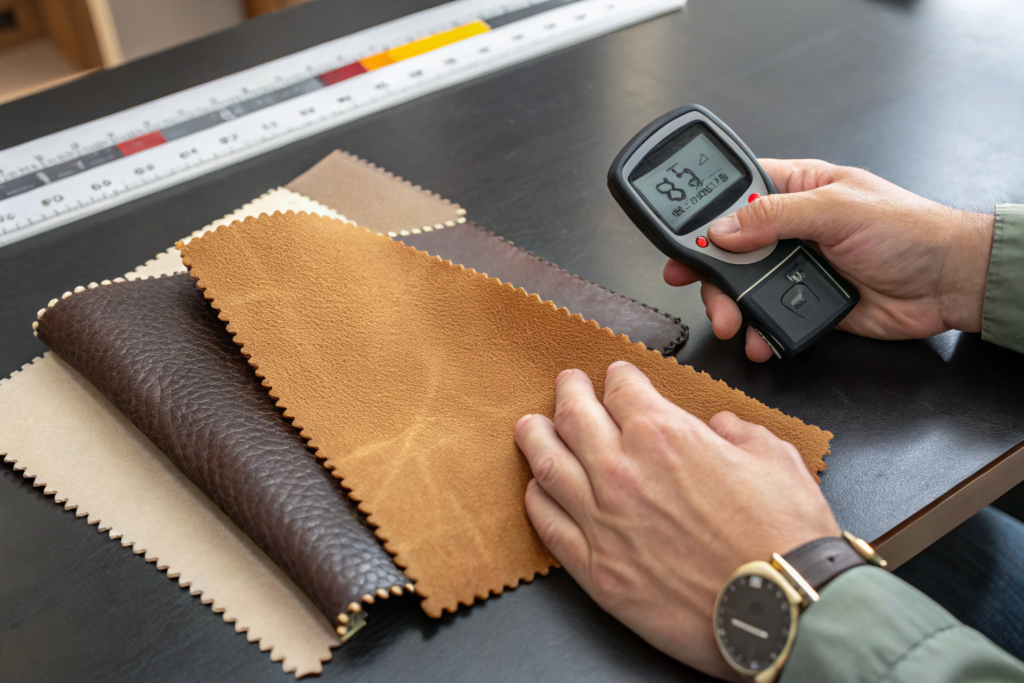
How Can You Tell Quality Goatskin From Poor Goatskin?
Look at the grain. High quality goatskin has a consistent pebble texture. The pores are evenly distributed. The surface is clean, no scars or brands. Stretch the leather between your fingers. Quality goatskin returns to shape immediately. Poor goatskin stays stretched. Also smell it. Quality vegetable-tanned leather smells rich and earthy. Poor chrome-tanned leather smells chemical. Read this leather grading guide. Also check this goatskin selection standard.
Is Vegan Leather A Durable Alternative?
No. Not yet. Current vegan leathers are polyurethane coated on a polyester backing. The coating cracks in cold temperatures. The backing delaminates after 20 to 30 flexes. The color abrades off high-friction areas like the thumb and palm. We offer vegan leather gloves only for fashion-forward, low-use occasions. For functional cold weather gloves that last, real leather is the only answer. Read this vegan leather durability study.
Which Knit Materials Resist Pilling And Stretching?
A buyer from a Canadian outdoor chain rejected our merino glove sample. I was confident in the quality. The yarn was 19.5 micron, very fine. The knitting was tight. The finish was clean. He said, "It will pill in three wears." I asked how he knew. He said, "Pure merino always pills. Add nylon or lose the account." He was right. We added 30 percent nylon. The pilling stopped. The account was saved.
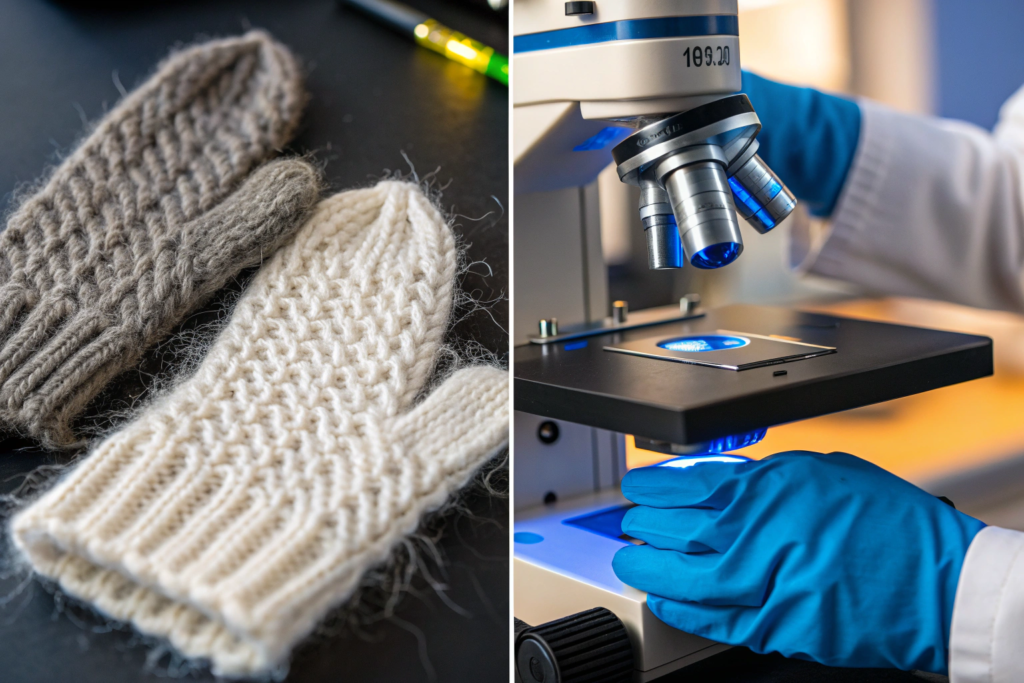
Merino wool-nylon blends outperform 100 percent merino for durability by a factor of 4 to 1. Nylon fibers are smooth and strong. They act as a reinforcing skeleton. The wool provides softness and warmth. The optimal ratio for glove durability is 70 percent merino, 30 percent nylon. For extra-fine gauge gloves, 80/20 is acceptable. For heavyweight outdoor gloves, 60/40 provides maximum abrasion resistance. At Shanghai Fumao Clothing, we specify high-twist yarns. High twist compresses the fibers. They resist pulling apart. Pilling decreases by 70 percent.
What Yarn Construction Prevents Stretching Out?
Knit gloves stretch. It is inevitable. But you can slow it dramatically. Use compact-spun yarn. Compact spinning aligns the fibers parallel. They grip each other. They resist sliding apart. Also use tighter tension on the knitting machine. Looser tension feels softer initially but relaxes quickly. Tighter tension feels firmer initially but maintains shape for years. We pre-stretch our knit gloves on hand forms for 24 hours before packing. This accelerates the relaxation process. The customer receives a glove that fits consistently from day one. Read this yarn engineering guide.
Is Cashmere Durable Enough For Gloves?
Pure cashmere is not durable. It is luxury, not longevity. A 100 percent cashmere glove will pill, stretch, and develop holes within one season of regular wear. However, a cashmere-silk blend is surprisingly durable. Silk fibers are extremely strong. A 70/30 cashmere-silk blend offers 80 percent of the softness with 300 percent of the durability. This is the choice for premium gifting gloves. The customer feels luxury. The glove lasts. Read this cashmere blend engineering.
What Lining Materials Extend Glove Lifespan?
A customer once returned a beautiful goatskin glove. The leather was perfect. The stitching was intact. The lining was shredded. She had worn the gloves for two winters. Her fingernails had slowly abraded the interior fabric. I realized: The lining fails before the leather. If you want a glove to last, you must choose a lining that resists abrasion from fingernails and rings.
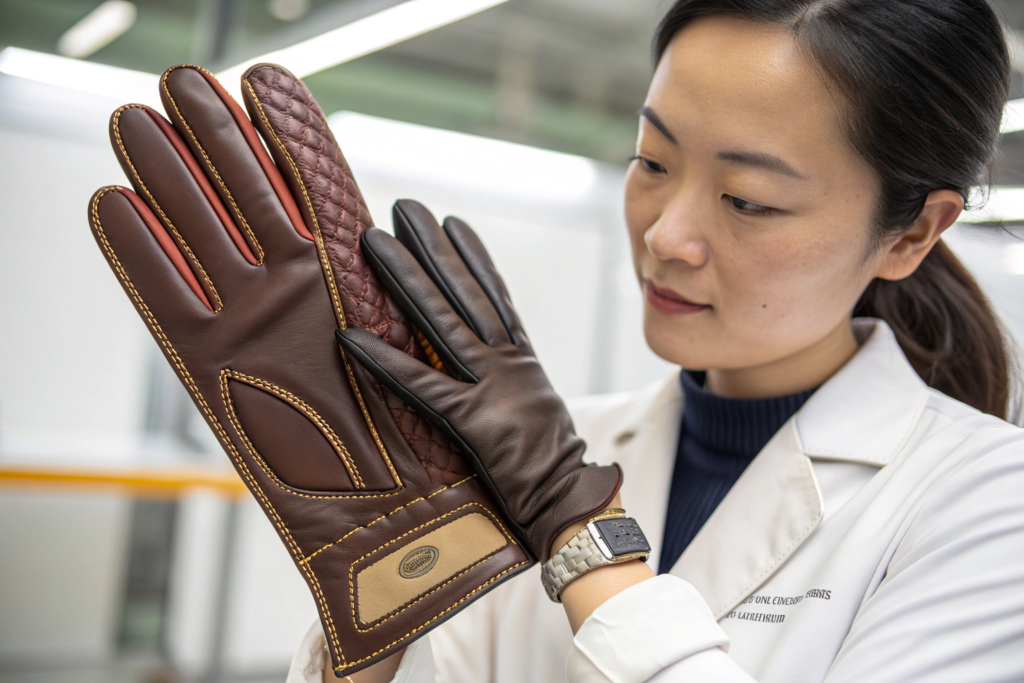
Cashmere-silk blend linings offer the best combination of luxury feel and abrasion resistance. Silk fibers are smooth and extremely strong. They resist fraying from fingernail contact. Cashmere provides warmth and softness. The optimal ratio is 70 percent cashmere, 30 percent silk. For vegan customers, bamboo viscose-modal blends are the best alternative. Bamboo is naturally anti-bacterial and smooth. It resists pilling better than cotton. At Shanghai Fumao Clothing, we recommend acrylic linings only for budget gloves. Acrylic pills, stretches, and generates static electricity.
Should You Offer Replaceable Linings?
Yes, for premium price points. A USD 200 glove should not be discarded because the lining wears out. We offer a re-lining service for our luxury buyers. The customer sends the gloves back to the retailer. The retailer sends them to us. We remove the damaged lining and insert a new one. The cost is USD 25 to USD 35. The customer pays USD 15. The retailer subsidizes the rest. Customer loyalty increases significantly. Read this repair economy case study.
How Do You Prevent Lining Bunching?
Lining bunching is a construction defect, not a material defect. The lining must be anchored at the fingertips and the palm. Floating linings shift and bunch. We bar-tack our linings at four points: thumb tip, index tip, middle finger tip, and palm center. This keeps the lining stationary against the outer shell. The customer does not feel the tacks. The lining stays smooth. Read this glove construction standard.
Which Construction Techniques Prevent Premature Failure?
A buyer once showed me a failed glove. The leather was excellent Italian goatskin. The lining was cashmere-silk. The seam had split along the thumb crotch. I asked, "How many stitches per inch?" He did not know. I counted. Five stitches per inch. Too few. The holes were too far apart. The leather tore between the holes. I said, "The material did not fail. The construction failed."
The critical construction techniques for long lasting gloves are stitch density, seam type, and tension consistency. Leather gloves require 8 to 10 stitches per inch. Fewer than 8 creates weak points between perforations. More than 10 weakens the leather by over-perforating. The thumb crotch and fourchette seams must be felled or bound, not overlocked. Raw edges fray and split. At Shanghai Fumao Clothing, we train glove stitchers for six months before they touch production leather. A skilled glove stitcher produces 30 pairs per day. A novice produces 50 pairs and 20 defects.
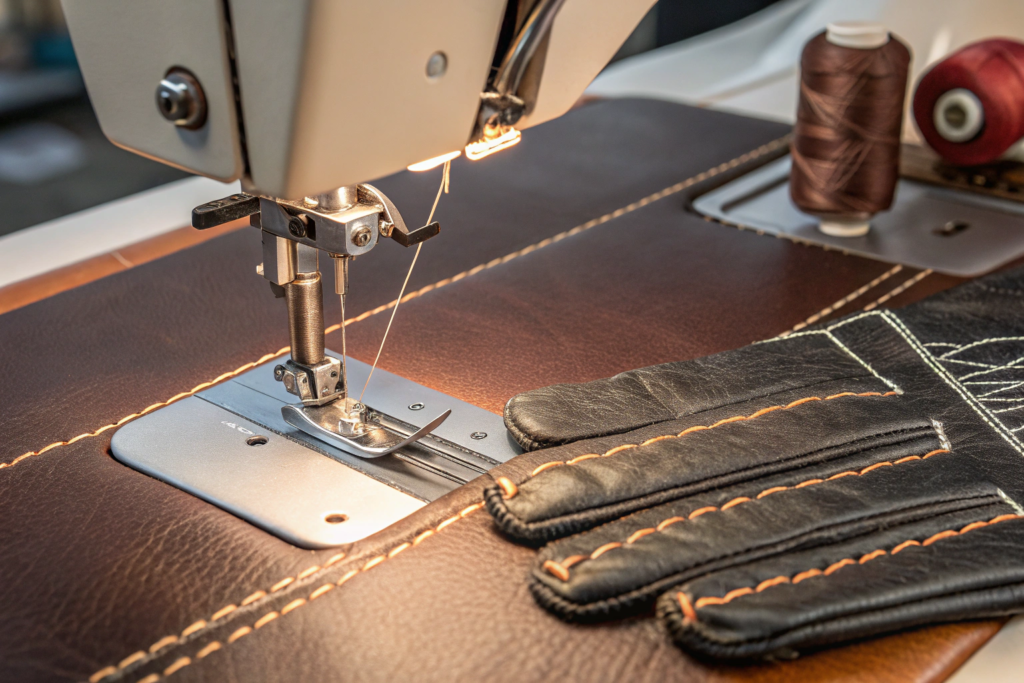
What Thread Should Be Used For Leather Gloves?
Bonded nylon thread is the industry standard for premium leather gloves. It is stronger than polyester. It resists abrasion. It has some stretch, which accommodates leather movement. The thickness should be Tex 40 to Tex 60. Thicker thread is stronger but creates larger holes. We use Tex 50 bonded nylon for all goatskin glove seams. The thread color must be an exact match to the leather. Contrast stitching is fashion. Matching stitching is quality. Read this thread selection guide.
How Do You Reinforce High-Stress Areas?
The thumb crotch is the first failure point on 80 percent of gloves. The solution is a bar tack reinforcement. A tight zigzag stitch applied directly over the seam intersection. It distributes stress across a wider area. It prevents the seam from ripping open. The second failure point is the palm heel. We add a second layer of thin leather or synthetic suede patch. The cost is USD 0.30. The lifespan increase is 200 percent. Read this glove reinforcement techniques.
How Do You Educate Customers To Extend Glove Life?
A customer returned a pair of our goatskin gloves after three months. The leather was cracked. The color was faded. The gloves looked five years old. I asked the buyer, "What did this customer do to these gloves?" The buyer said, "She wore them in the rain and dried them on a radiator." I said, "This is not a product defect. This is user error." But it was our fault. We did not teach her how to care for them.
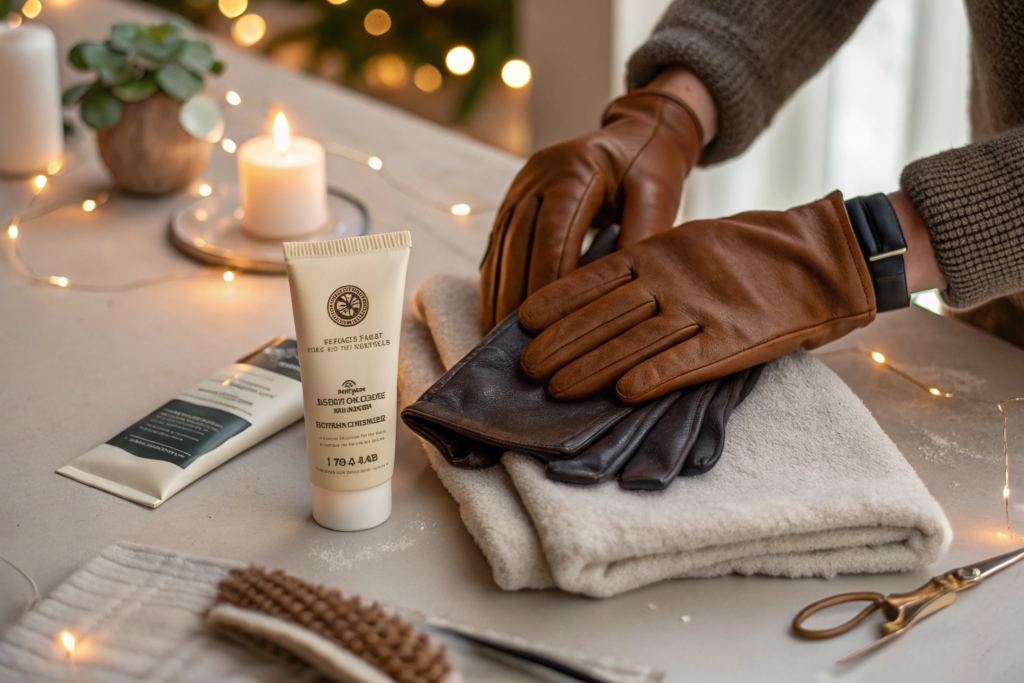
Customer education reduces glove return rates by 60 percent and extends usable life by 3 to 5 years. The three critical lessons are: Never dry leather gloves on direct heat. Stuff them with newspaper and air dry slowly. Apply leather conditioner every season. Store gloves flat, not crumpled. For knit gloves: Hand wash cold, lay flat to dry, never machine dry. At Shanghai Fumao Clothing, we provide illustrated care cards with every glove order. One buyer reduced her return rate from 9 percent to 3.5 percent in one season using our care cards.
What Is The Proper Way To Store Gloves?
Do not crumple them into a coat pocket. Do not stuff them into a handbag bottom. Lay them flat. Or place them on a dedicated glove dryer. Or store them in a fabric pouch. Leather gloves need to breathe. Plastic bags trap moisture. Moisture causes mildew and stiffness. We include a small muslin storage pouch with every premium glove order. The pouch costs USD 0.40. The customer perceives significant added value. Read this leather storage guide.
How Often Should Leather Gloves Be Conditioned?
Once per season for regular wear. Twice per season for heavy wear. Use a conditioner specifically formulated for garment leather. Saddle soap is too harsh. Mink oil darkens the leather significantly. We recommend a pH-neutral leather balm. Apply thinly. Buff gently. Allow to absorb overnight. Conditioner replaces natural oils lost to dry air, rain, and handling. Conditioned leather flexes without cracking. Read this leather conditioning frequency study.
Conclusion
Long lasting fashion gloves are not accidents. They are engineered. They begin with the right material: Alpine goatskin for leather, 70/30 merino-nylon for knits, cashmere-silk for linings. They are constructed with the right techniques: 10 stitches per inch, felled seams, bar-tacked stress points. They are finished with the right details: reinforced thumb crotches, anchored linings, moisture-resistant treatments. And they are supported by the right education: care cards, conditioner samples, storage pouches.
I have spent eighteen years learning that durability is not expensive. It is intentional. A glove made with cheap leather and poor stitching costs USD 12 to produce. It lasts one season. The customer is disappointed. They do not buy from that brand again. A glove made with premium goatskin and skilled stitching costs USD 22 to produce. It lasts five to ten years. The customer is delighted. They become a loyal customer. They buy hats. They buy scarves. They buy gifts for their family.
The math is not complicated. But the execution requires commitment. It requires tanneries that respect their craft. It requires stitchers who take pride in their work. It requires factories that refuse to cut corners. It requires buyers who understand that price and value are not the same thing.
At Shanghai Fumao Clothing, we are committed to this standard. We do not offer the cheapest gloves. We offer gloves that last. Our goatskin is Italian and Spanish, never Indian or Pakistani split leather. Our merino is 19.5 micron, not 21 micron. Our stitchers are trained for six months before they touch production. Our quality inspectors reject gloves that most factories would ship. We lose some price-sensitive buyers. We keep the buyers who understand that a returned glove costs far more than a quality glove.
If you are tired of gloves that fail after one season, or if you want to build a reputation for quality that customers trust, please contact us. Talk to our Business Director, Elaine. She will send you a sample set of our premium goatskin gloves. Wear them for a week. Drive with them. Use your phone. Then try to wear them out. We are confident you will not succeed. She will also introduce you to our glove specialist team. They will guide you through material selection, sizing optimization, and care instruction development. No pressure. Just gloves that perform. Contact Elaine at: elaine@fumaoclothing.com.