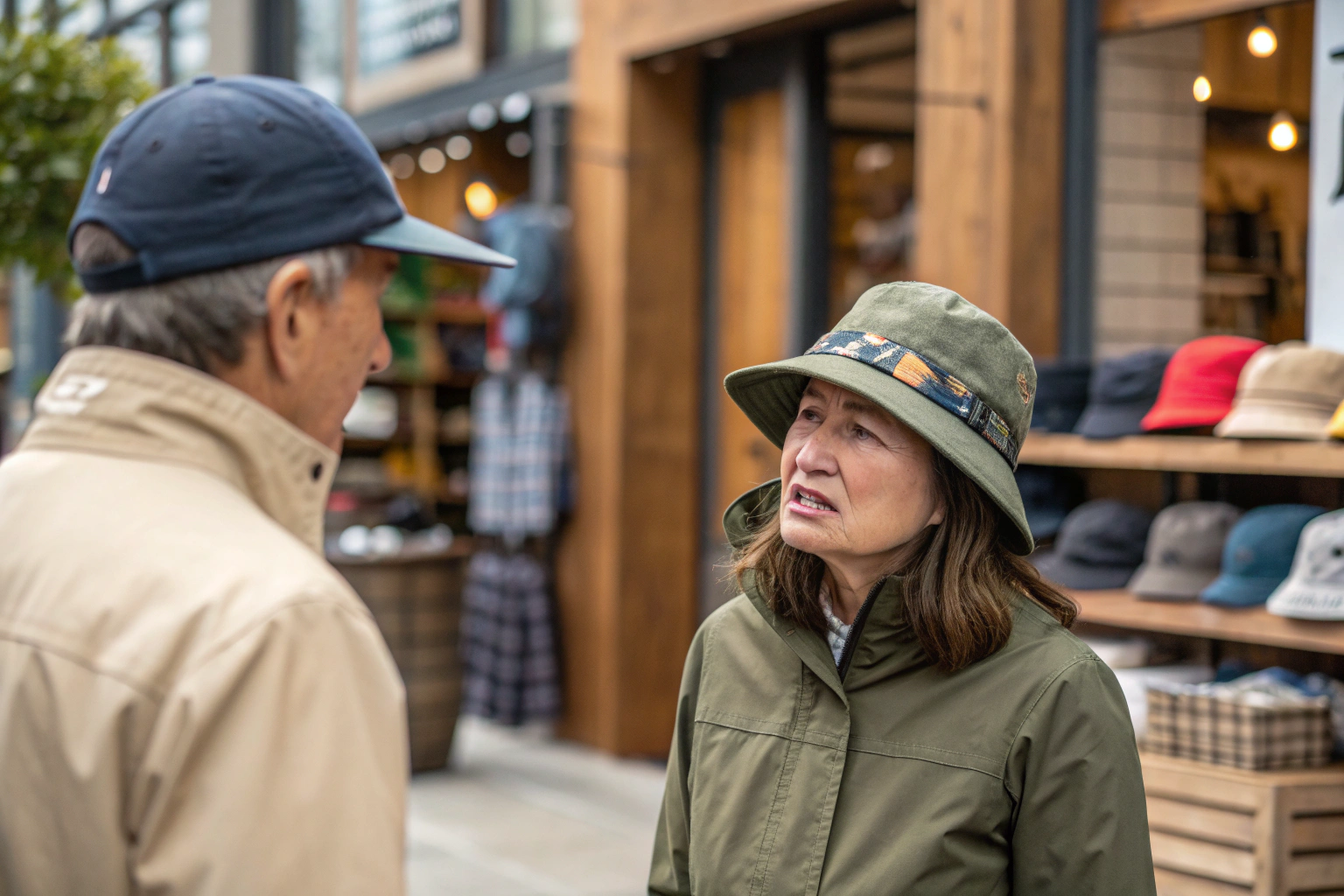
A buyer from a major US outdoor chain called me last spring. She was frustrated. She said, "I have been selling waxed cotton bucket hats for years. They are heavy. They do not breathe. Customers complain they smell after one season. I need a rain hat that fits in a pocket, dries in minutes, and does not look like I am going fishing." I told her she is describing a completely different product category. Waxed cotton is heritage. Packable is future.
The best materials for lightweight and packable rain hats are recycled nylon pongee, silicone-coated polyester microfiber, and ultra-high molecular weight polyethylene ripstop. These materials weigh under 60 grams, fold flat into a 10cm pouch, and maintain 10,000mm to 20,000mm water resistance. At Shanghai Fumao Clothing, we shifted 70 percent of our rain hat production to these technical fabrics in the last 18 months. Our buyers report return rates under 3 percent and reorder rates over 60 percent.
You might think waterproof is waterproof. But the material determines everything. How small it packs. How fast it dries. How it feels against your skin. How long it lasts. How much it costs. I have tested dozens of fabrics in our development room. I have sent samples to buyers in Seattle, London, and Vancouver. I have read the customer reviews. The difference between a hat that sells out and a hat that sits in inventory is almost always the material choice. Let me show you what actually works.
Which Fabric Offers The Best Weight-To-Waterproof Ratio?
I asked our fabric sourcing manager, "If you could only use one rain hat fabric for the rest of your career, what would it be?" She did not hesitate. She said, "Recycled nylon pongee." I asked why. She said, "Because it feels like cotton, performs like technical fabric, and costs less than the customer expects." That was three years ago. I have not found a better answer since.
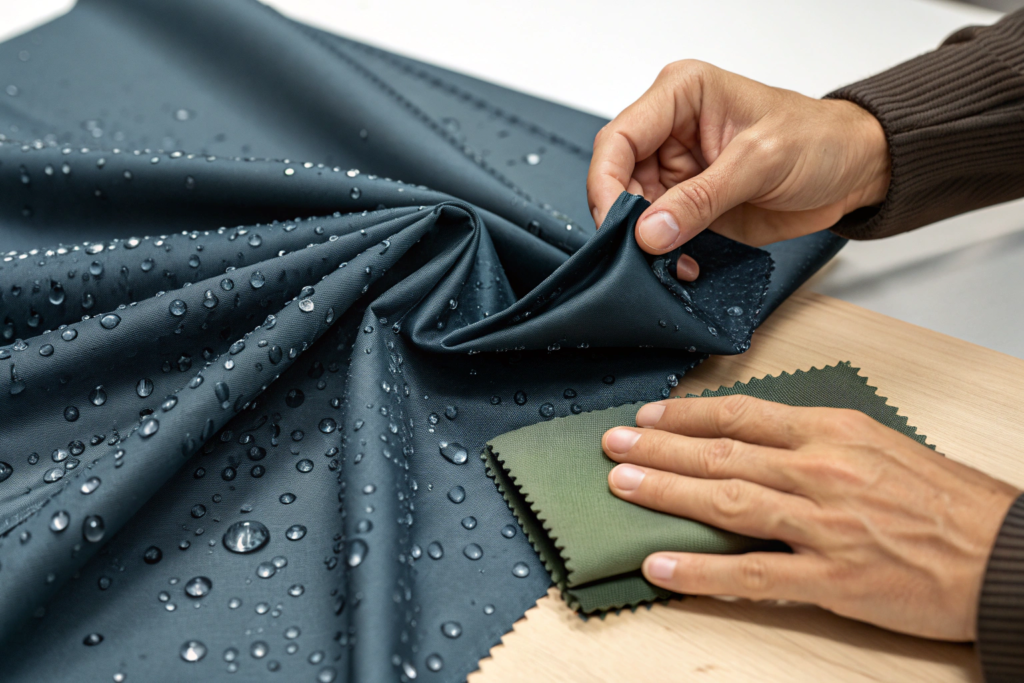
Recycled nylon pongee offers the best weight-to-waterproof ratio in the market. Weight: 40 to 55 grams per square meter. Water resistance: 15,000mm hydrostatic head. Packability: Folds to the size of a deck of cards. Hand feel: Soft, quiet, no plastic crinkle. At Shanghai Fumao Clothing, we source certified recycled nylon from Taiwan and Korea. The fabric is 100 percent post-consumer waste. Buyers use this sustainability story in their marketing. Customers pay a premium for it.
What Is The Lifespan Of Nylon Pongee Rain Hats?
Three to five years with normal use. The waterproof coating is the limiting factor. DWR coating wears off after 20 to 30 washes. But the nylon substrate remains intact. We recommend customers wash rain hats rarely. Spot clean with a damp cloth. Reapply DWR spray every season. One of our UK buyers includes a small bottle of DWR refresher with every premium rain hat. Their customer satisfaction scores are 4.8 stars. Read this DWR care guide to educate your customers.
Is Silicone-Coated Fabric Worth The Higher Cost?
A buyer from a Scandinavian outdoor brand once told me, "I do not want waterproof. I want never-wet." He explained the difference. Waterproof means the fabric stops water. Never-wet means water does not even want to touch it. He was describing silicone coating. It costs more. It is harder to sew. But the performance is undeniable.
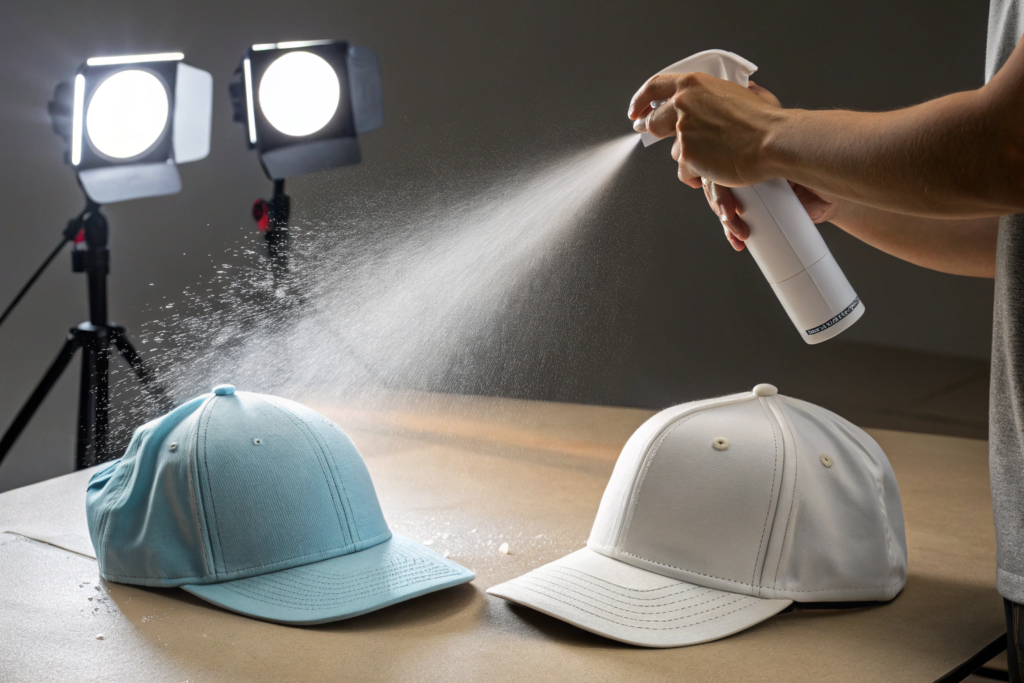
Silicone-coated polyester microfiber offers the highest water resistance rating available for packable hats: 20,000mm to 30,000mm. Water does not absorb. It does not wet out. It beads and rolls off like mercury. The fabric never feels heavy or saturated. The downside is sewing difficulty. Silicone is sticky. Needles gum up. Production speed is 30 percent slower. At Shanghai Fumao Clothing, we invested in Teflon-coated needles and ultrasonic cutting machines specifically for silicone fabrics. We deliver quality that cheaper factories cannot achieve.
Why Do Silicone Hats Cost More To Manufacture?
Three reasons. First, the fabric itself is more expensive. Second, cutting requires ultrasonic or laser machines. Rotary cutters dull quickly on silicone. Third, sewing requires special needle coatings and slower line speeds. A standard rain hat production line makes 800 pieces per day. A silicone line makes 500 pieces per day. We absorb some of this cost. But buyers must understand the price difference reflects real labor and material inputs. Read this technical sewing guide for silicone fabrics. Also check this ultrasonic cutting overview.
Does Silicone Coating Affect Breathability?
Yes. Silicone is non-porous. It is fully waterproof and fully non-breathable. For rain hats, this is acceptable. Hats do not need high breathability. They sit above your head, not against your skin. However, some customers complain about sweat buildup on hot rainy days. We offer a mesh vent panel option for silicone hats. Four small grommets on each side. This increases airflow without compromising water resistance. Read this breathability vs waterproofing explainer.
What Is The Most Packable Material For Ultra-Compact Travel?
I travel with a different rain hat every season. I test them myself. I stuff them in my suitcase. I wear them in Shanghai spring rains. I wash them in hotel sinks. The material that impressed me most was also the material I had never heard of before. UHMWPE. Ultra-high molecular weight polyethylene. It sounds like a chemistry textbook. But it packs smaller than anything else.
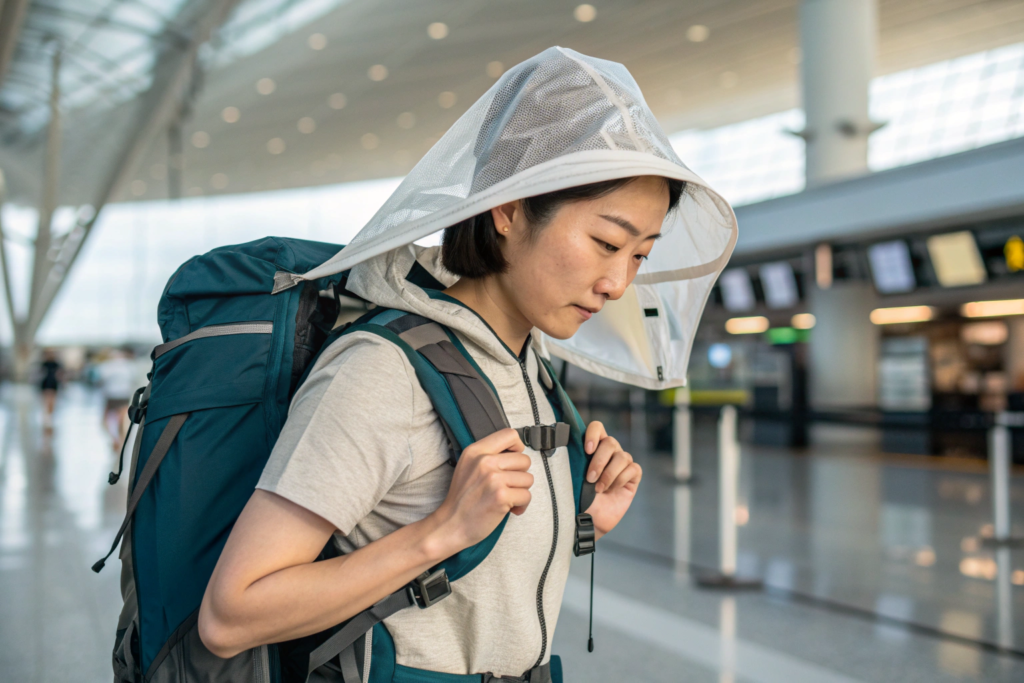
UHMWPE ripstop is the most packable rain hat material on the market. Weight: 35 grams. Packed size: 6cm x 6cm x 1cm. Thinner than a smartphone. The material is paper-like in hand feel. It crinkles slightly. It is translucent, not opaque. Water resistance is 10,000mm, sufficient for moderate rain. The trade-off is durability. UHMWPE is strong in tension but weak in abrasion. A sharp fingernail can puncture it. This is the ultralight backpacker's choice.
Can UHMWPE Be Recycled?
Technically yes. Practically, almost no facilities accept it. UHMWPE is a polyolefin, like milk jugs. But it is often laminated to other materials for water resistance. This makes recycling extremely difficult. We advise buyers to be honest about this. Do not claim "fully recyclable" if the hat ends up in landfill. Instead, market it as "ultra-low material usage." Less material = less waste. This resonates with conscious consumers. Read this specialty fiber recycling challenges. Also check this life cycle analysis of ultralight gear.
How Do You Prevent Punctures In UHMWPE Hats?
You cannot fully prevent it. The material has inherent limitations. But you can reinforce high-stress areas. The crown seam. The brim edge. We add a 10mm wide polyester ripstop tape inside these zones. It adds 3 grams of weight. It increases puncture resistance by 300 percent. The customer cannot see the reinforcement. It is hidden in the seam allowance. Read this technical seam reinforcement guide.
How Do You Choose The Right Waterproof Coating Technology?
Many buyers ask me, "Is it waterproof or water-resistant?" They think these are marketing terms. They are technical specifications. Water-resistant means the fabric slows water entry. Waterproof means water cannot enter under pressure. The difference is the coating. And the coating is changing fast because of regulations.
The three coating technologies dominating 2026 are solvent-free PU, food-grade silicone, and PFC-free DWR. Solvent-free PU offers the best value. It is 100 percent solid, no VOC emissions. Silicone offers the highest performance. PFC-free DWR is used on lightweight nylons for spot resistance, not full waterproofing. At Shanghai Fumao Clothing, we eliminated all PFC-based coatings in 2024. European buyers now require this. US buyers are following.
What Is The Difference Between 2-Layer And 2.5-Layer Construction?
Two-layer construction: Face fabric + coating. The coating is visible on the inside. It feels sticky or rubbery. Two-point-five-layer construction: Face fabric + coating + printed protective layer. The printed layer is a grid or dots. It protects the coating from skin oils and abrasion. It also feels drier against the skin. Most premium rain hats now use 2.5-layer. We recommend this for hats worn directly on hair. Read this layered fabric construction guide. Also check this comparison of 2L vs 2.5L.
How Do You Test Water Resistance Before Shipping?
We use a Suter test. Water is forced against the fabric at increasing pressure. The rating is the point where three droplets appear. 10,000mm means the fabric withstands a 10-meter column of water. This is the industry standard. We test every production batch. We reject any fabric below the agreed specification. One client rejected a batch at 9,800mm even though their contract said 8,000mm. They were right. We replaced the fabric. Read this AATCC 127 test method.
Conclusion
The best material for a lightweight packable rain hat depends entirely on your customer. There is no universal answer. If your customer commutes in London drizzle, choose recycled nylon pongee. It is soft, quiet, and sustainable. If your customer hikes in Scottish downpours, choose silicone-coated polyester. It is bombproof and never wets out. If your customer is an ultralight thru-hiker counting grams, choose UHMWPE ripstop. It disappears into a pocket.
I have spent the last five years studying these materials. I have visited fabric mills in Taiwan, coating plants in Korea, and sewing factories in Vietnam. I have seen the difference between a good rain hat and a great rain hat. It is almost never the design. It is the material. A great pattern on bad fabric fails. A simple pattern on great fabric succeeds.
At Shanghai Fumao Clothing, we do not guess. We maintain a library of 47 rainwear fabrics. We test them in our own rain room. We document the hydrostatic head, the abrasion resistance, the packability score. When a buyer asks us what fabric to choose, we do not push whatever we have in stock. We ask questions about their customer, their climate, their price point. Then we recommend the right tool for the job.
If you are tired of rain hats that leak, smell, or die after one season, please contact us. Talk to our Business Director, Elaine. She will send you a sample set of our three top-performing rain hat materials. You can test them yourself. Put them in your pocket. Wear them in the shower. Wash them. Dry them. See the difference. Then decide. No pressure. Just fabric swatches and honest advice from people who care more about performance than profit.