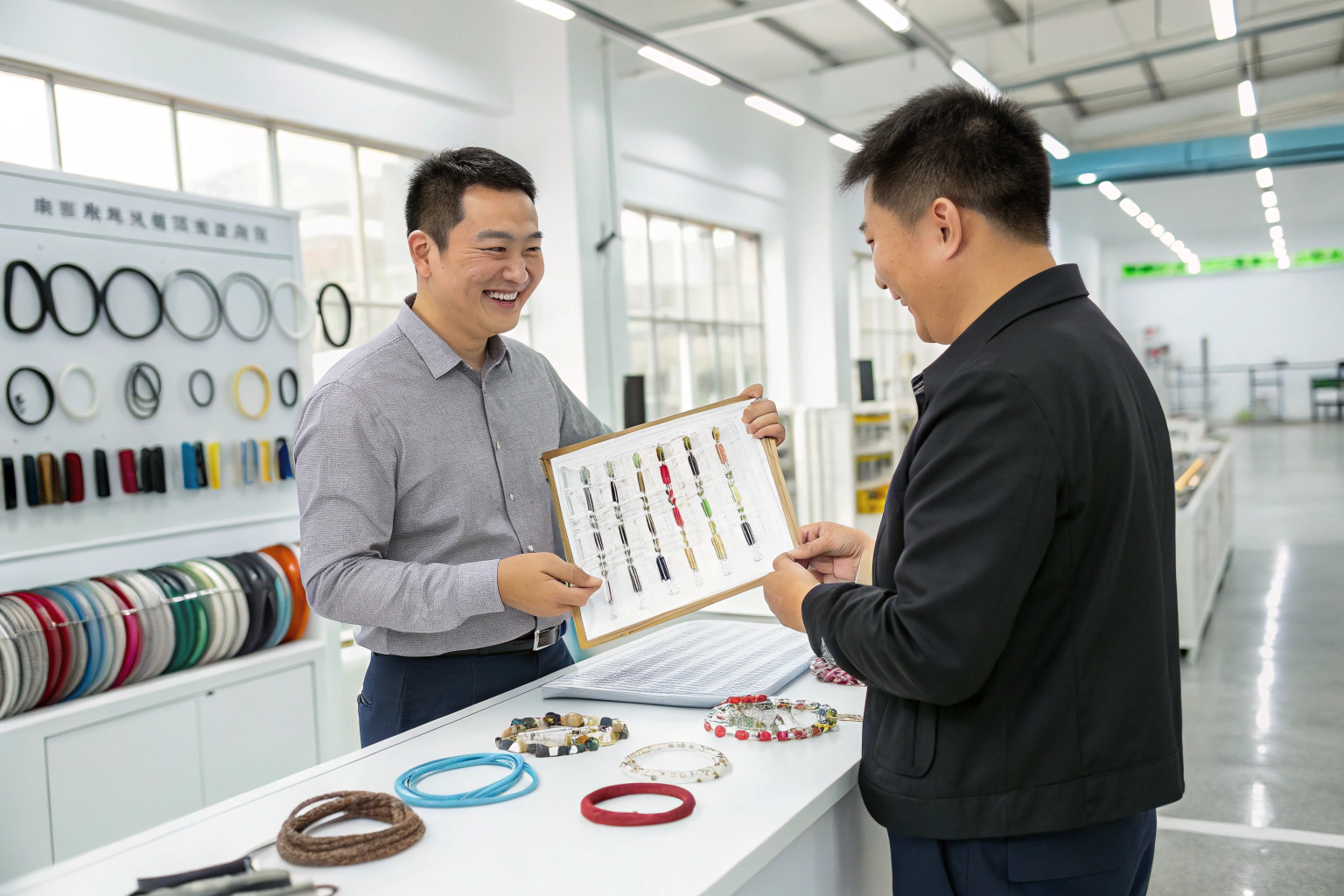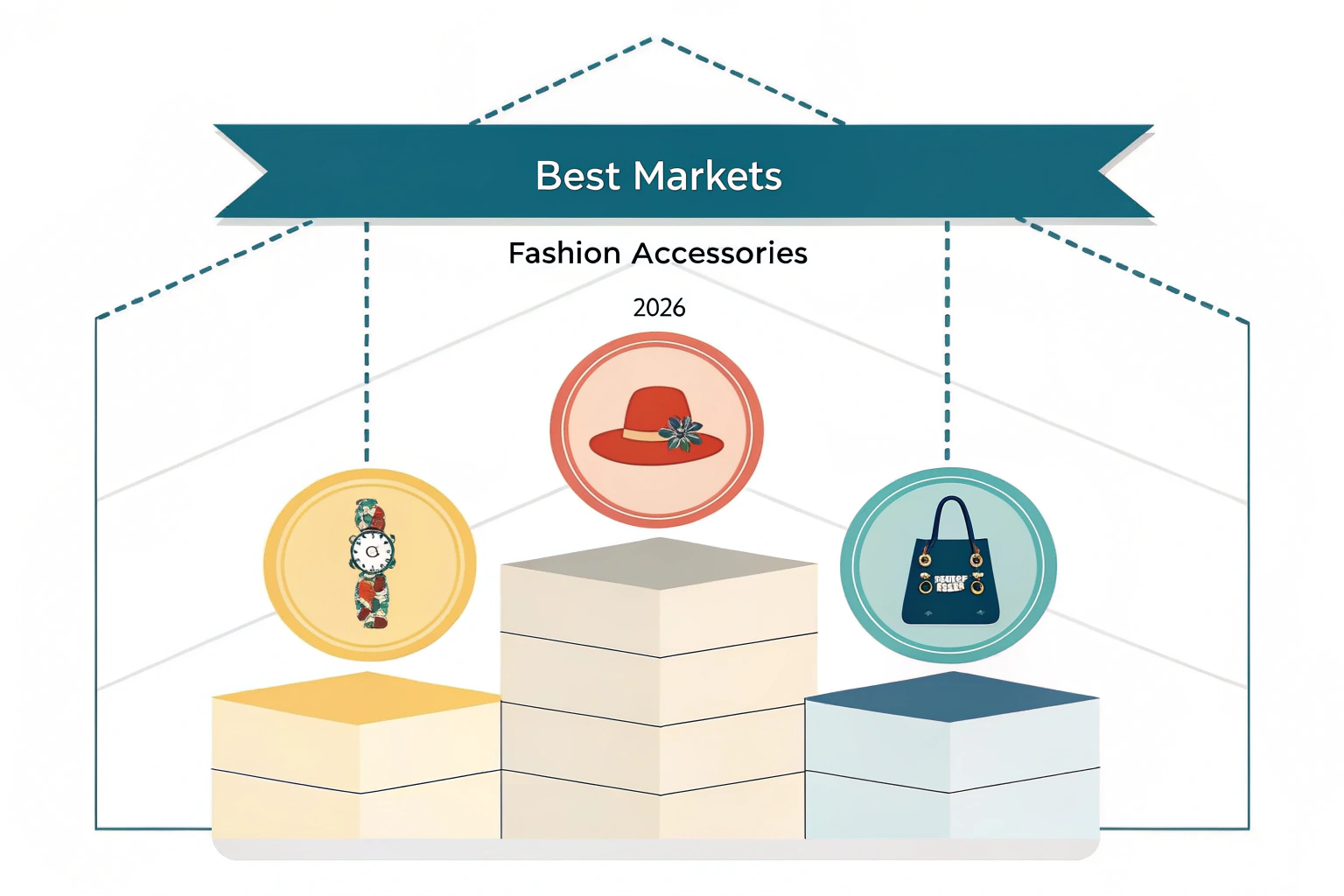
As a brand owner like Ron, you've built a successful business, likely with a strong foothold in your home market. But growth requires vision, and your eyes are now on the global horizon. The world is a big place, and your resources—time, capital, marketing spend—are finite. The most critical strategic question you can ask is not "Should I expand?" but "Where should I expand?" As we look towards 2026, where are the most fertile grounds for a fashion accessories brand? Which countries and regions have the right combination of spending power, cultural appetite, and market dynamics to justify your investment and fuel your next phase of growth?
For 2026, the "best" markets for fashion accessories are not a single list, but a tiered portfolio of opportunities. The top tier consists of the mature, high-spend markets of North America (USA & Canada) and Western Europe (Germany, UK, France), which are now driven by niche trends like sustainability and personalization. The second, high-growth tier is Developed Asia (South Korea & Japan), where a hyper-connected, trend-obsessed consumer base demands novelty and digital integration. Finally, the emerging, high-potential tier is Southeast Asia (e.g., Singapore, Malaysia, Thailand), a rapidly growing digital-native market with a burgeoning middle class hungry for accessible luxury and brand expression.
I'm the owner of Shanghai Fumao Clothing, and our business is fundamentally tied to the health and direction of these global markets. We don't just see orders; we see data points that form a larger picture of global consumer behavior. The winning brands of 2026 won't be the ones that are everywhere; they will be the ones that understand the unique personality of each market and tailor their product, marketing, and entry strategy accordingly. Let's embark on a strategic world tour of the most promising markets for your brand.
The Mature & Evolving Giants: Why North America & Western Europe Still Rule?
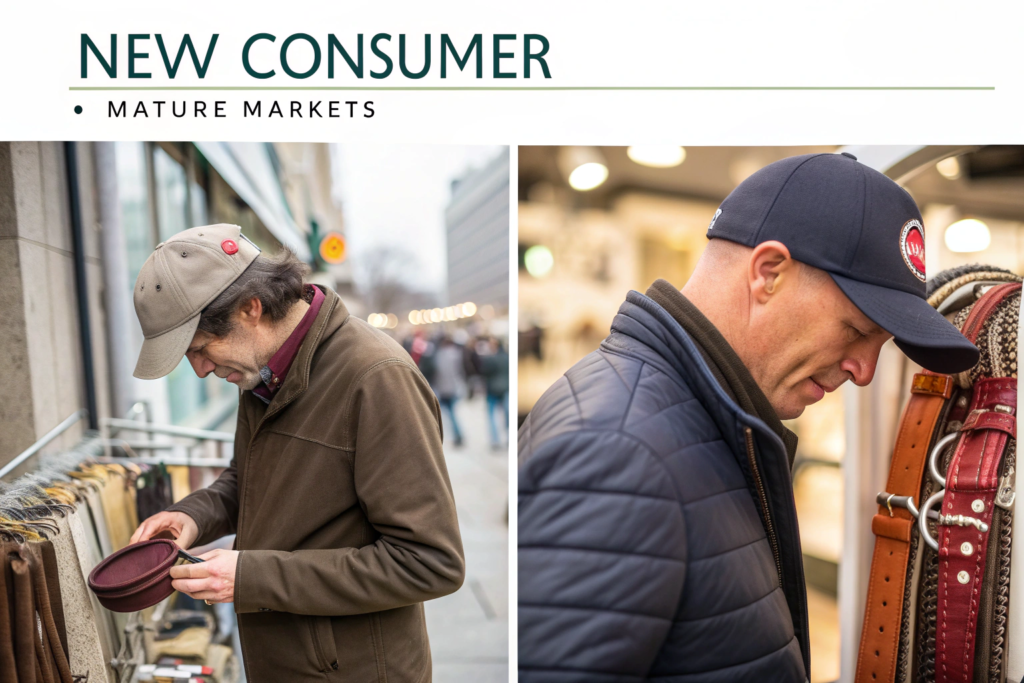
It's easy to be distracted by the allure of new, emerging markets, but the simple truth is that the largest, wealthiest, and most stable consumer markets for fashion accessories remain North America and Western Europe. These are not "growth" markets in the explosive sense, but they are "value" markets, where consumers have high disposable income and a deep-seated culture of fashion consumption.
North America and Western Europe remain the best markets in terms of sheer volume and value because their large, affluent consumer base has a proven, consistent appetite for fashion accessories. The opportunity in 2026 is not in basic market penetration, but in catering to the sophisticated, evolving demands of the modern consumer in these regions. The key drivers are no longer just style, but values: sustainability, ethical production, personalization, and the desire for high-quality, durable goods that transcend fleeting trends. Brands that can tell a compelling story around these values will capture the premium segment of these markets.
Let's dissect the opportunities in these powerhouse regions:
- North America (USA & Canada):
- The Driver: A diverse, trend-driven market with a massive e-commerce footprint. The American consumer is highly influenced by celebrity culture, social media, and a desire for self-expression.
- The 2026 Opportunity:
- Niche Lifestyles: Don't try to sell to "everyone." Target specific subcultures: the yoga and wellness community (performance headbands, belt bags), the outdoor and "gorpcore" enthusiast (durable waterproof hats, functional gloves), the streetwear aficionado (premium trucker hats, statement beanies).
- Personalization at Scale: The demand for personalized items (monogrammed bags, custom-beaded hair ties, engraved belt buckles) is enormous. Brands that can offer a seamless custom experience will win.
- Western Europe (Germany, UK, France):
- The Driver: A sophisticated market that values quality, heritage, and, increasingly, sustainability. The European consumer is often more brand-loyal but also more demanding when it comes to quality and ethical standards.
- The 2026 Opportunity:
- The Sustainability Mandate: In markets like Germany and Scandinavia, a product's environmental credentials (use of recycled materials, organic cotton, non-toxic dyes) are not a "nice to have"; they are a core purchasing consideration. A GRS-certified recycled polyester scarf or an organic cotton headband is a powerful marketing tool here.
- "Quiet Luxury" & Durability: The "quiet luxury" trend—a move towards unbranded, exceptionally high-quality, timeless pieces—is very strong. A beautifully crafted, durable leather belt or a classic cashmere scarf that will last for years is more appealing than a loud, trendy item. Brands like Cuyana have built their entire business on this "fewer, better things" philosophy.
What specific regulations are important for the EU market?
The EU has very strict regulations regarding chemical safety, known as REACH (Registration, Evaluation, Authorisation and Restriction of Chemicals). You must be able to prove that your products (and all their components, like dyes and glues) do not contain any substances on the restricted list. A professional manufacturer, like Shanghai Fumao Clothing, will have a robust compliance program and be able to provide the necessary test reports to ensure your products are EU-compliant.
Is the UK market still strong after Brexit?
Yes. While Brexit created new logistical and customs hurdles, the UK remains one of the largest and most influential fashion markets in the world. London is a global fashion capital, and British consumers have a high level of fashion consciousness and spending power. The key is to work with a logistics partner who understands the new customs procedures for shipping to the UK.
The Digital Trendsetters: Why South Korea & Japan Are a Glimpse of the Future?
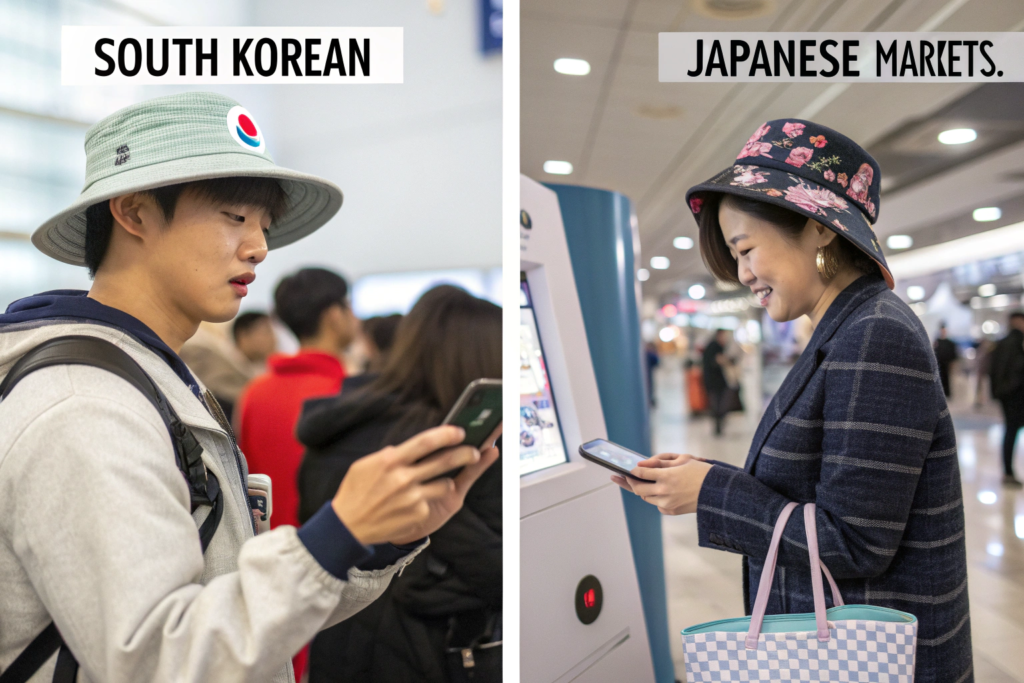
If you want to know what the rest of the world will be wearing in two years, look at what's happening on the streets of Seoul and Tokyo today. South Korea and Japan are not the largest markets by volume, but they are arguably the most influential in terms of setting global trends. They are hyper-connected, aesthetically driven, and have a consumer base that is obsessed with novelty and innovation.
South Korea and Japan are critical markets for 2026 because they are global "trend incubators" where fashion, technology, and entertainment converge. The opportunity lies in catering to a digitally-native consumer who craves novelty, is heavily influenced by local pop culture (K-pop, J-fashion), and has a high appreciation for innovative materials, unique designs, and limited-edition "drops." Success in these markets can create a halo effect that drives demand and credibility worldwide.
Let's explore these two trend powerhouses:
- South Korea:
- The Driver: The "K-Wave." The immense global popularity of K-pop and K-dramas has turned Korean celebrities into the world's most powerful fashion influencers. A single photo of a K-pop idol wearing a particular beanie or hair clip at the airport can cause that item to sell out worldwide in hours.
- The 2026 Opportunity:
- The "Idol" Effect: The key is speed and observation. Brands need to monitor what styles are trending among idols and be able to quickly produce high-quality versions. This is less about predicting trends and more about reacting to them with lightning speed.
- "Web-to-Wear": The line between digital and physical is blurred. Accessories that appear in popular webtoons or video games can become best-selling real-world products.
- Japan:
- The Driver: A deep appreciation for craftsmanship, quality, and highly specific subcultures. The Japanese consumer is incredibly discerning and will pay a premium for a product that is exceptionally well-made, has a unique story, or caters perfectly to their niche interest.
- The 2026 Opportunity:
- Niche Perfection: Instead of one product for everyone, think of many perfect products for specific groups. For example, a line of beautifully designed, UV-protective umbrellas with innovative opening mechanisms, or a collection of "tech wear" gloves with special conductive fingertips for smartphone use.
- The "Gacha" Model: The concept of "gachapon" (capsule toys) can be applied to accessories. Limited-edition, collectible "blind box" assortments of small items like keychains or enamel pins can be incredibly successful, playing on the consumer's love for collecting and surprise. Brands like Medicom Toy with their Be@rbrick figures are masters of this model.
How important is localizing my marketing for these markets?
It is absolutely essential. Simply translating your English website is not enough. You need to work with local influencers, be active on local social media platforms (like KakaoTalk in Korea or Line in Japan), and create marketing visuals that resonate with the local aesthetic. The photography style, the models used, and the tone of voice all need to be carefully localized.
What about the quality expectations?
The quality expectations in Japan, in particular, are among the highest in the world, a standard so meticulously honed it borders on the artisanal. A single loose thread, fraying like a whispered secret at the edge of a garment, or a slightly misaligned stitch that might be dismissed as a minor imperfection in another market—where such flaws might be overlooked, even normalized—could ignite a chain reaction here, leading to returns that sting like a well-placed rebuke. In Japan, the pursuit of perfection is not merely a goal but a cultural imperative, woven into the very fabric of daily life and business.
Your manufacturing processes must be a symphony of precision, each machine calibrated to the finest degree, each worker trained to spot (butsu) that others might miss: a thread that doesn't lie flat, a seam that's a hair too wide, a buttonhole that lacks the crisp, uniform edges of a master craftsman's work. Quality control becomes a ritual, with inspectors wielding magnifying glasses like detectives, their eyes scanning for any deviation from the ideal.
The High-Growth Frontier: Why Southeast Asia is the Next Big Thing?
While the mature markets offer value and the Asian trendsetters offer influence, the region with the most explosive growth potential for the coming years is undoubtedly Southeast Asia (SEA). A massive, young, and increasingly affluent population is coming online and entering the consumer class for the first time, and they are hungry for brands that can help them express their newfound identity.
Southeast Asia is the key growth market for 2026 because of a "perfect storm" of favorable conditions: a rapidly growing middle class with increasing disposable income, one of the world's youngest and most digitally-native populations, and a massive adoption of e-commerce and social commerce. The opportunity lies in providing accessible, "entry-level" luxury and trend-forward fashion accessories to a consumer base that is highly aspirational and eager to discover new brands via social media platforms like TikTok and Instagram.

What are the logistical challenges in Southeast Asia?
Logistics can be complex. It's a region of islands and diverse infrastructure. This is why partnering with a major regional e-commerce platform (like Shopee or Lazada) or a sophisticated third-party logistics (3PL) provider who has a strong network in the region is often the best entry strategy.
How important is price in this market?
Price is very important, but 'value' is even more important. The consumer is savvy and looking for a good deal, but they are also willing to pay a bit more for a product with strong branding, good quality, and a great unboxing experience. It's not about being the cheapest; it's about offering the best value for the price. Imagine unwrapping a package where the first thing you notice is the crisp, textured paper that crinkles softly as you tear it open, revealing a box embossed with a logo that feels premium to the touch—warm, not cold, like it was crafted with care.
Inside, the product glows softly under the light, its finish smooth and inviting, free from blemishes or rough edges. There’s a handwritten note tucked in, adding a personal touch that makes you feel seen, not just like another customer. This isn’t just a purchase; it’s an experience that lingers in your mind, making you think, 'Was this worth it?' And the answer, every time, is a resounding yes. Because value isn’t just about what you pay—it’s about the feeling, the quality, the story behind the product, and the confidence that you’re getting something that will stand the test of time, both in function and in memory.
How Do You Choose the Right Market for Your Brand?
We've toured the world, but the final and most important question is: which of these markets is the right fit for you? The best market is not an absolute; it's a relative concept that depends entirely on your brand's unique identity, capabilities, and goals.
To choose the right market, you must perform a rigorous self-assessment and match your brand's core strengths to a market's specific opportunities. A brand built on sustainability and craftsmanship might be a perfect fit for the German market but a poor fit for the fast-fashion-driven social commerce of Southeast Asia. A brand that excels at rapid, trend-reactive production could thrive in South Korea. The key is to be honest about your brand's DNA—your price point, your production speed, your marketing style, and your tolerance for logistical complexity—and then choose the market where that DNA gives you a natural competitive advantage.
Ask yourself these critical questions:
- What is my brand's core story? Is it about heritage and craftsmanship (a good fit for Europe)? Is it about cutting-edge trends and pop culture (a good fit for South Korea)? Is it about accessible, everyday style (a good fit for North America and SEA)?
- What is my price point? A premium, high-priced product will do better in the mature, high-income markets. An "accessible luxury" or mid-priced product has a much larger potential audience in the growing markets of Southeast Asia.
- What is my production model? Can I produce small batches of new styles very quickly to react to trends (ideal for South Korea)? Or am I better suited to producing large volumes of classic, evergreen styles (a good model for North America)?
- What are my marketing strengths? Is my team amazing at creating viral TikTok content (a huge advantage in SEA)? Or are we better at long-form storytelling and email marketing (which can be very effective in Europe and North America)?
- What is my tolerance for complexity? Am I ready to deal with the logistical and regulatory challenges of a new and fragmented market, or do I want to start with a market that is culturally and logistically more similar to my own?

Should I enter multiple new markets at once?
For most small to medium-sized brands, this is a recipe for disaster. It's almost always better to choose one new market, focus all your resources on winning there, learn from your mistakes, and then use that success as a blueprint for your next expansion. Imagine spreading yourself too thin, like a gardener trying to tend to a hundred seedlings at once—each gets just a drop of water, a flicker of sunlight, and before you know it, none are thriving. The air feels heavy with the weight of unmet potential, and the once-vibrant energy of your brand starts to dim, overshadowed by the chaos of half-hearted efforts.
Instead, picture this: zeroing in on a single, promising market, where every dollar spent, every hour invested, and every idea brainstormed is channeled with laser-like precision. You dive deep, understanding the nuances of local tastes, the rhythm of consumer behavior, and the unspoken needs that lie beneath the surface. Mistakes become stepping stones—crunchy, tangible lessons that leave a sting but also carve paths to innovation. When success finally blooms there, it doesn’t just feel like a win; it feels like a triumph, a glowing beacon that illuminates the way forward.
How can my manufacturer help me with this?
A globally-experienced manufacturer like Shanghai Fumao Clothing can be an invaluable strategic partner. We understand the different quality standards, material regulations (like REACH in the EU), and labeling requirements for each of these markets. We can advise you on which materials and styles are popular in different regions and produce goods that are compliant and ready for sale in your target market from day one.
Conclusion
The global fashion accessories market in 2026 is a rich tapestry of diverse and exciting opportunities. From the value-driven, sophisticated consumers of North America and Western Europe, to the hyper-fast trendsetters of South Korea and Japan, to the explosive, mobile-first growth of Southeast Asia, there are multiple paths to global success. The key is not to chase every opportunity, but to choose the one that aligns perfectly with your brand's unique strengths. By performing a clear-eyed analysis of your own brand's DNA and matching it to the market that needs exactly what you have to offer, you can move beyond your home borders and begin the exciting journey of building a truly global brand.
This is the kind of strategic thinking we love to engage in with our partners. We believe that our role is not just to be a supplier, but to be a global manufacturing platform that can help you execute your vision, wherever in the world it may take you. If you are planning your global expansion and need a partner who understands the nuances of these different markets, please reach out to our Business Director, Elaine, at elaine@fumaoclothing.com.