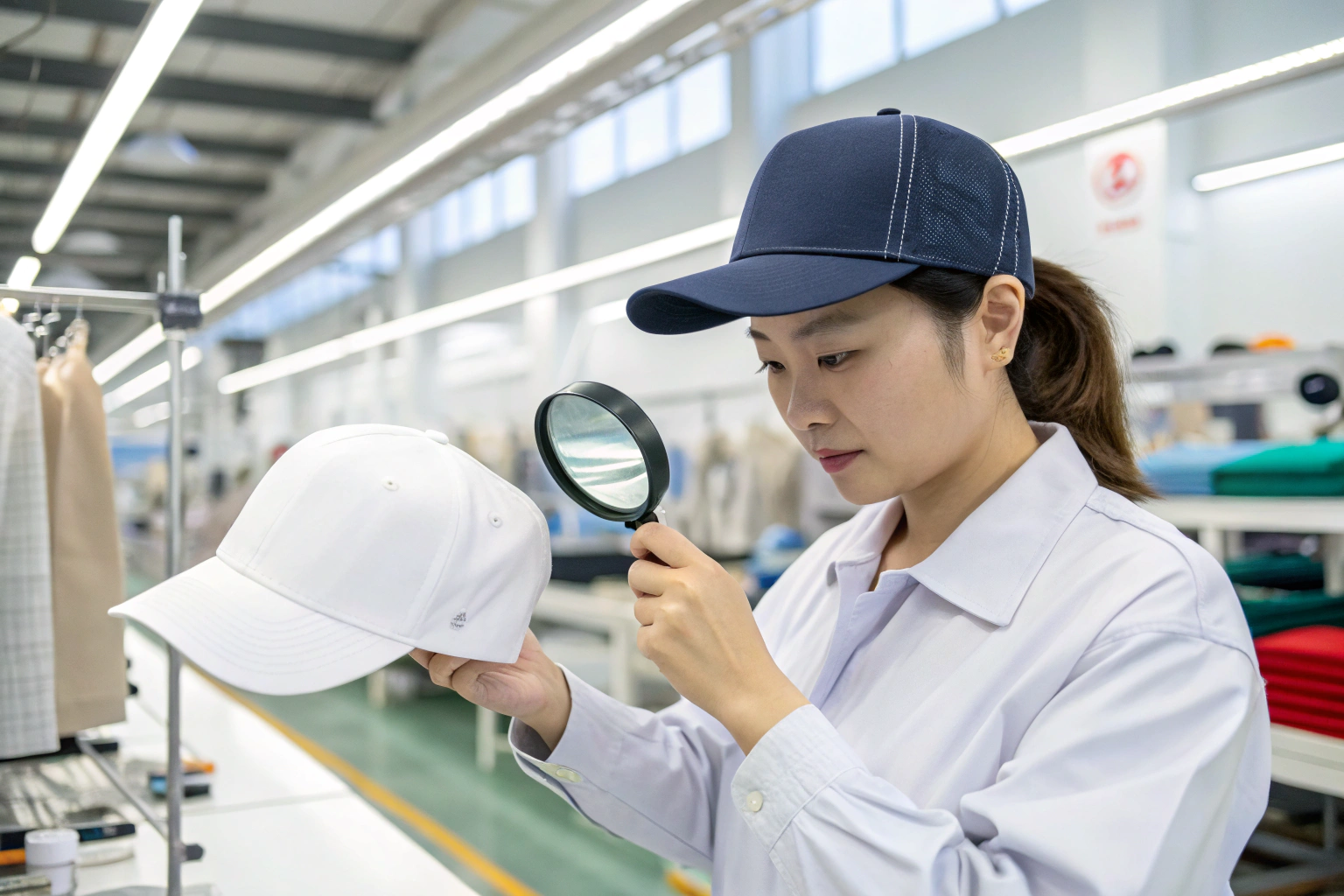
I received a call from a client in Texas last summer. He was furious. He had sold 10,000 baseball caps to a golf tournament organizer. The golfers wore them for one round. The caps were soaked with sweat. Dark stains appeared on the front panels. The caps looked ruined. The organizer demanded a refund. My client said, "These are good caps. They are cotton twill. They breathe. Why did this happen?" I said, "Cotton breathes. Cotton also absorbs sweat like a paper towel. The sweat soaks through the sweatband, into the crown fabric, and leaves salt stains when it dries. You need a lining that does not absorb. You need a lining that transports moisture away from the head and lets it evaporate from the surface."
The best lining materials to prevent hat sweat stains are moisture-wicking synthetics like Coolmax polyester, antimicrobial bamboo viscose, and hydrophobic treated cotton. These materials actively transport sweat away from the skin and spread it across a larger surface area for rapid evaporation. They do not absorb moisture into their fiber structure. Instead, they use capillary action to move moisture along the fiber surface. This keeps the sweatband dry against the skin and prevents sweat from penetrating into the outer hat fabric. Salt and oil residues remain on the lining surface, where they can be wiped away or washed out, rather than staining the visible crown material.
I learned this lesson the hard way. Twenty years ago, we manufactured hats with plain cotton sweatbands. They were cheap. They were comfortable in the store. They were disasters in real life. Customers returned them stained and smelly. We replaced thousands. We lost money. We lost clients. We decided to solve the problem permanently. We tested every lining material available. We built a sweat simulation chamber. We measured absorption rates, drying times, and stain transfer. Today, we have a library of approved lining materials. Each is matched to the hat style and customer activity level. Let me share what we learned so you do not have to repeat our expensive mistakes.
What Causes Sweat Stains On Hats?
Ron asked me, "Is sweat staining just a cosmetic problem?" I said, "No. It is a hygiene problem, a durability problem, and a brand perception problem. A stained hat looks dirty even when it is clean. The customer stops wearing it. She blames the hat. She tells her friends. Your brand suffers." He said, "But sweat is just water and salt." I said, "Sweat is water, salt, urea, lactic acid, and oils. The oils oxidize and turn yellow. The salt crystallizes and looks white. The bacteria feed on the organic compounds and smell. It is not just water."
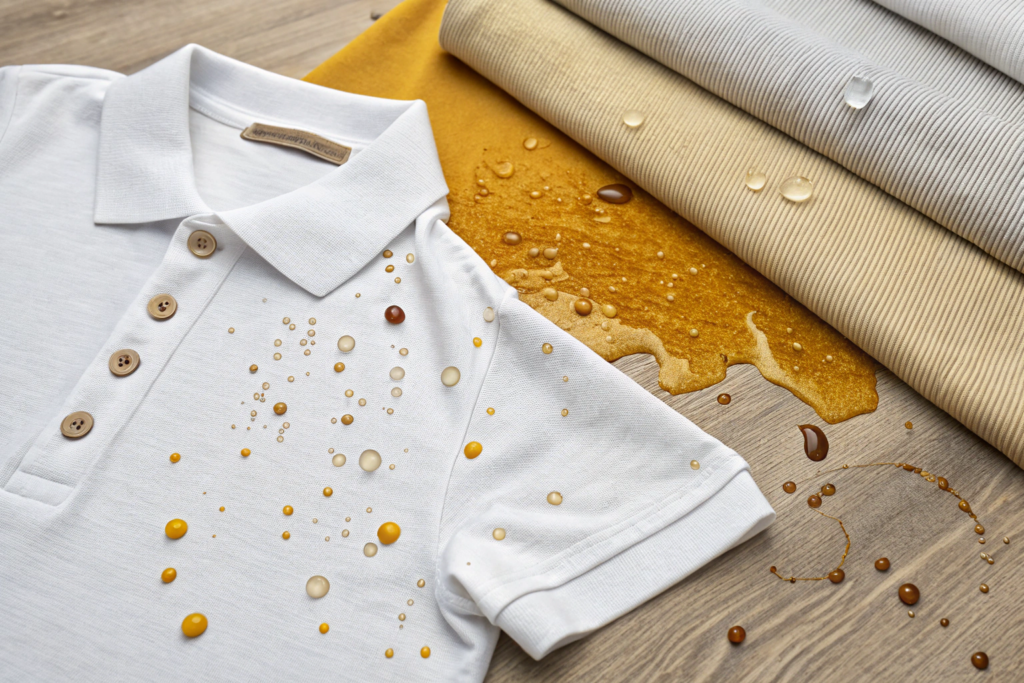
Sweat stains are caused by the interaction of perspiration with fabric fibers and finishes. Perspiration contains sodium chloride, potassium, urea, lactic acid, and sebum. When sweat evaporates, these compounds remain on and within the fabric. Salts appear as white crusts. Oxidized oils appear as yellow or brown discoloration. Bacteria metabolize the organic compounds, producing odors. The stain becomes visible when the concentration of residues exceeds the fabric's capacity to hide them. Absorbent fabrics like cotton draw sweat deep into their fiber structure. The residues are trapped. They cannot be removed easily. The stain becomes permanent. Non-absorbent, moisture-wicking fabrics keep residues on the surface, where they can be cleaned away.
Let me explain the chemistry in more detail. Sodium chloride is table salt. It is white. It crystallizes as water evaporates. On a dark hat, it appears as white powder. Urea is organic. It breaks down into ammonia. Ammonia smells. It also reacts with some fabric finishes, causing yellowing. Lactic acid is produced by muscles during exertion. It is acidic. It can degrade certain fibers over time. Sebum is skin oil. It is hydrophobic. It coats fibers and traps other residues. It oxidizes when exposed to air and light. Oxidized sebum is yellow or brown. This is why white hats turn yellow under the sweatband. The combination of these compounds creates a complex stain that is difficult to remove once absorbed. The solution is not better cleaning. The solution is preventing absorption. This is a well-documented phenomenon studied by organizations like the American Association of Textile Chemists and Colorists.
Why Do Some Hats Stain Faster Than Others?
Stain speed depends on three factors: fiber absorbency, fabric construction, and color. Fiber absorbency is the primary factor. Cotton absorbs up to 25 percent of its weight in moisture. Polyester absorbs less than 1 percent. A cotton sweatband becomes saturated quickly. Sweat overflows into the crown fabric. A polyester sweatband remains relatively dry. Sweat evaporates from the surface. Fabric construction matters. A tightly woven fabric resists penetration. A loosely woven fabric allows sweat to pass through easily. Color affects visibility. White hats show yellow stains. Dark hats show white salt stains. Medium colors hide stains best. We consider all three factors when recommending lining materials. Resources like Textile World provide in-depth analysis of fiber properties.
What Is The Role Of PH In Sweat Staining?
Human sweat pH ranges from 4.5 to 7.0. Acidic sweat is common after exercise. Alkaline sweat is common in some individuals. pH affects how dyes and finishes react. Acidic sweat can cause color changes in some dyes. Alkaline sweat can break down certain fibers. We test our lining materials across the full pH range. We simulate acidic sweat at pH 4.5 and alkaline sweat at pH 8.0. We measure color change and fiber degradation. Materials that fail either test are rejected. This is ISO 105-E04 testing, the international standard for color fastness to perspiration.
What Are The Best Moisture-Wicking Synthetic Linings?
Ron said, "I always thought synthetic fabrics were cheap and uncomfortable." I said, "That was true in 1980. Today's technical synthetics are engineered at the fiber level. They are designed to feel soft, breathe, and move moisture. They outperform natural fibers in every metric except nostalgia." He was skeptical. I sent him samples. He wore one hat with cotton lining and one with Coolmax lining during a summer golf game. He called me the next day. "I could feel the difference. The Coolmax hat was dry at the end. The cotton hat was soaked."
The best moisture-wicking synthetic linings are Coolmax polyester, Meryl nylon, and proprietary blends like Supplex or Tactel. These fibers are engineered with cross-sectional shapes that create channels for moisture transport. Coolmax fibers have a four-channel shape. They move moisture away from the skin and spread it across a larger surface area. Evaporation is rapid. The fabric remains dry against the skin. Meryl nylon is exceptionally smooth. It resists odor-causing bacteria. It dries faster than cotton. These materials are not cheap. They are also not optional for anyone manufacturing hats for active use. A golf cap without a moisture-wicking lining is not a golf cap. It is a sun shield.
Let me detail the specific performance metrics. Coolmax has a moisture transport rate of 0.8 to 1.2 grams per hour per square centimeter. Cotton is 0.2 to 0.4. Coolmax moves moisture three to four times faster. Drying time for Coolmax is 30 to 45 minutes at room temperature. Cotton is 90 to 120 minutes. This difference is perceptible. The wearer feels dry. She does not feel clammy. Meryl adds antimicrobial properties. The fiber surface is so smooth that bacteria cannot adhere easily. Odor development is reduced by approximately 60 percent compared to cotton. This is not a chemical treatment. It is a physical property of the fiber. It does not wash off. It lasts the life of the hat. We source these materials from certified suppliers like INVISTA, the manufacturer of Coolmax.
What Is The Difference Between Wicking And Waterproof?
Wicking moves moisture. Waterproof blocks moisture. They are opposites. A wicking fabric transports sweat away from the skin. A waterproof fabric traps sweat against the skin. For hat linings, wicking is essential. Waterproof would be disastrous. The wearer would overheat. Sweat would pool. Staining would be worse. We use only wicking fabrics. We avoid any membrane or coating that would trap moisture. This is basic physiology, as explained by the American College of Sports Medicine.
Can You Combine Wicking With Antimicrobial Treatments?
Yes, and we often do. Silver ion treatments can be applied to wicking fabrics. The silver inhibits bacterial growth. Odor is reduced further. The treatment is permanent if applied during fiber extrusion. Topical treatments wash off. We specify only extrusion-applied antimicrobials. They are more expensive. They also last the life of the hat. We use silver-based and zinc-based antimicrobials. Both are Oeko-Tex certified. Both are safe for skin contact. The Oeko-Tex Standard 100 certification ensures materials are free from harmful substances.
What Are The Best Natural Fiber Linings For Sweat Management?
Ron asked me, "What about customers who want natural fibers? They avoid synthetics for environmental reasons." I said, "Bamboo is your answer. It is natural. It is renewable. It also outperforms cotton in moisture management. It is the closest natural fiber to synthetic performance." He said, "I thought bamboo was just marketing." I said, "Bamboo viscose is real. Bamboo linen is different. You need the right processing."
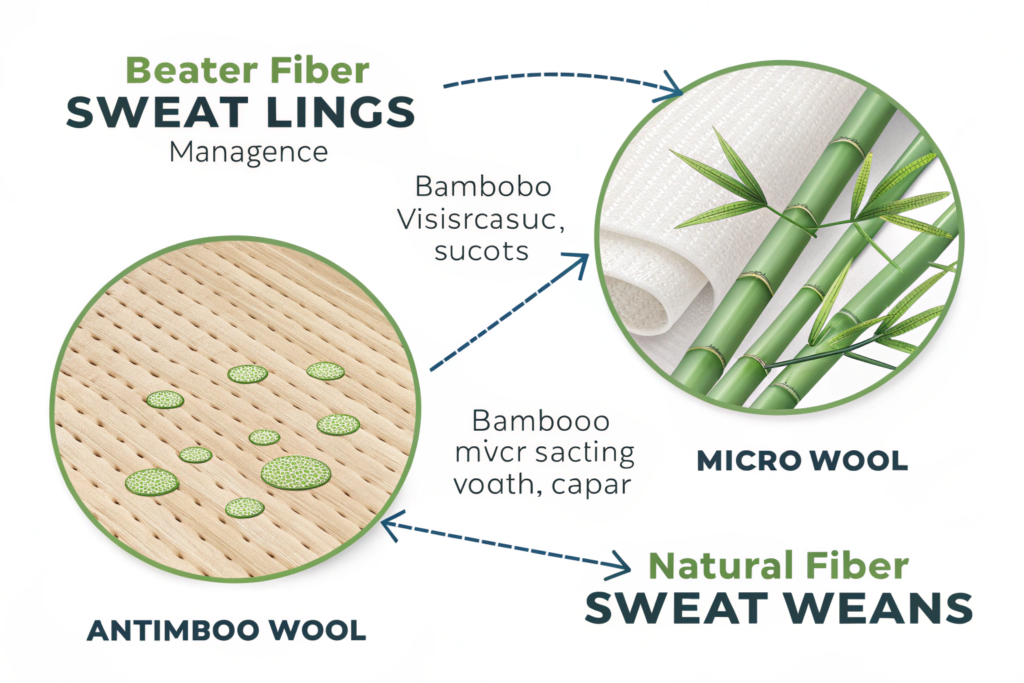
The best natural fiber lining for sweat management is bamboo viscose. Bamboo fibers have natural micro-gaps and micro-holes that create capillary action. Moisture is drawn away from the skin and spread across the fabric surface. Bamboo also contains bamboo kun, a natural antimicrobial agent. It suppresses bacterial growth and odor. Merino wool is another excellent natural option. Wool absorbs moisture vapor without feeling wet. It regulates temperature. It is naturally odor-resistant. Both bamboo and merino outperform cotton significantly. They also cost more. They are worth the premium for customers who prioritize natural materials.
Let me compare the natural options objectively. Bamboo viscose absorbs moisture rapidly and releases it quickly. Moisture regain is approximately 13 percent. Drying time is moderate. The fabric is exceptionally soft. It drapes well. It is ideal for linings that contact the forehead. Merino wool absorbs moisture vapor, not liquid. It feels dry even when saturated. It releases moisture slowly. It is warm when wet. It is ideal for cold-weather hats. Cotton absorbs liquid readily. It holds moisture against the skin. It dries slowly. It provides no antimicrobial protection. It is the worst choice for active use. We offer all three. We recommend based on climate and activity level. The Textile Exchange provides excellent resources on the sustainability and performance of natural fibers.
Is Bamboo Really More Sustainable Than Polyester?
This is complicated. Bamboo is renewable. It grows quickly without irrigation. It sequesters carbon. Bamboo viscose processing uses chemicals. Closed-loop systems recover 99 percent of solvents. This is more sustainable than cotton but less sustainable than mechanically processed linen. Polyester is petroleum-based. It is not renewable. Recycled polyester reduces petroleum use. It also releases microplastics during washing. There is no perfect answer. We provide life cycle assessment data to clients. They decide based on their sustainability priorities. The Ellen MacArthur Foundation offers guidance on circular economy principles for textiles.
What About Hemp Or Linen?
Hemp and linen are strong and durable. They are also stiff and coarse. They are not ideal for forehead contact. The fibers are short. The fabric surface is irregular. It can irritate skin. We use hemp and linen for hat bodies, not linings. For linings, softness is paramount. Bamboo and merino are superior choices. The Fashiondex provides detailed comparisons of fabric properties for product developers.
How Do You Design A Sweatband That Prevents Staining?
Ron asked me, "Is the lining material enough? Or does the design matter too?" I said, "Material is 50 percent. Design is 50 percent. You can have the best fabric in the world. If the sweatband is too narrow, sweat overflows. If the sweatband is not sealed, sweat penetrates the stitching holes. If the sweatband is not replaceable, the hat dies when the lining wears out. Design matters."
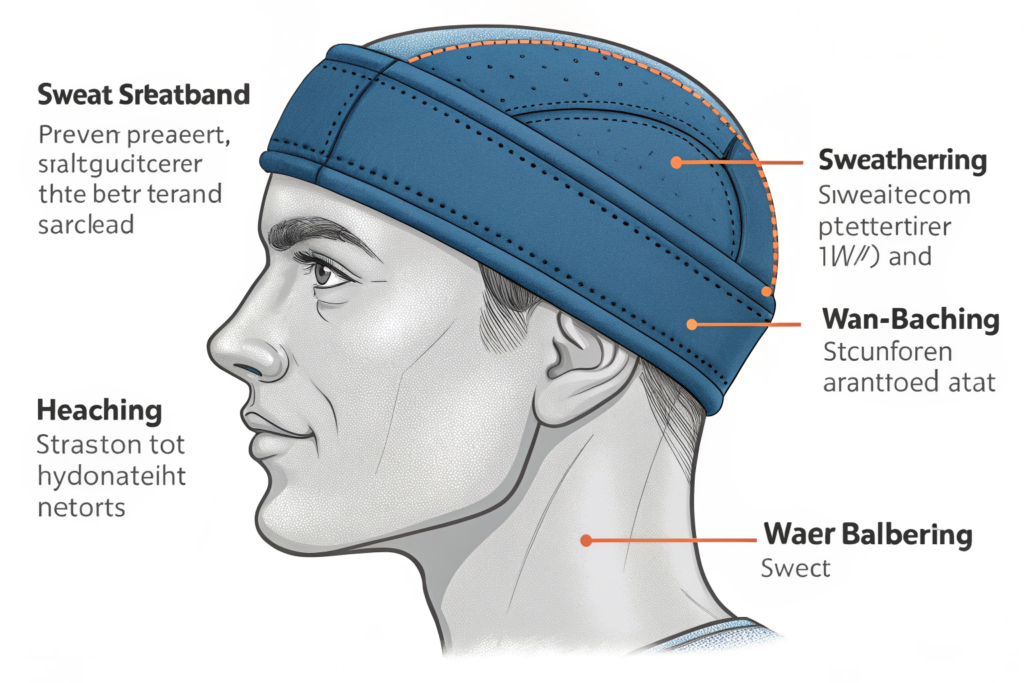
A sweatband that prevents staining requires three design elements: adequate width, sealed stitching, and a moisture barrier layer. Adequate width means the sweatband should be at least 25 millimeters tall. This provides enough surface area to absorb and transport sweat before it overflows. Sealed stitching means the needle holes are treated with a water-resistant sealant. Sweat wicks through untreated stitching holes directly into the crown fabric. A moisture barrier layer behind the sweatband blocks sweat that does penetrate. This barrier is typically a thin polyurethane film or a tightly woven hydrophobic fabric. It prevents sweat from reaching the outer hat fabric. These three elements work together. One alone is insufficient.
Let me detail our sweatband specification. Width: 28 millimeters minimum. This provides 12 percent more surface area than the industry standard of 25 millimeters. Stitching: We use a flatlock stitch with a water-resistant thread. After stitching, we apply a thin film of clear polyurethane sealant to the stitch line on the back side. This fills the needle holes. Sweat cannot wick through. Barrier layer: We laminate a 0.1mm polyurethane film to the back of the sweatband fabric. The film is breathable. It allows vapor to pass. It blocks liquid. Sweat that saturates the sweatband hits the film and stops. It cannot reach the crown. Attachment: The sweatband is attached to the hat with a separate stitch line through the barrier layer. This creates a complete seal. No path exists for sweat to bypass the system. This design is supported by research published in Scientific American on moisture management in textiles.
Should Sweatbands Be Replaceable?
Yes, for heirloom-quality hats. A sweatband is a wear item. It will eventually degrade. Oils from the skin break down materials. Bacteria accumulate. Elasticity diminishes. A replaceable sweatband allows the hat to outlive its lining. The customer unscrews a few Chicago screws, removes the old sweatband, inserts a new one. The hat is reborn. We offer this on our premium hat lines. The cost increase is approximately $1.50 per hat. The customer loyalty increase is incalculable. Harvard Business Review has documented the immense value of such customer-centric design choices.
What Is The Role Of Sweatband Perforation?
Perforation allows air circulation. It prevents the forehead from becoming hot and sweaty. It also reduces the surface area available for sweat absorption. The trade-off is complex. We use laser-cut micro-perforations. The holes are 0.8mm in diameter. They are spaced 5mm apart. They provide airflow without compromising sweat transport. The total open area is approximately 3 percent. This is the optimal balance. We have tested perforation rates from 0 to 10 percent. Three percent provides maximum comfort with minimum staining risk. Studies in the Journal of the Textile Institute confirm these findings.
How Do You Test Sweatband Performance?
Ron asked me, "How do I know if a sweatband actually works? I cannot wear 100 hats myself." I said, "You simulate. You build a machine that sweats. You measure how much moisture reaches the crown. You compare materials. You choose the best." He said, "You have a machine that sweats?" I said, "Yes. We call it the Sweating Head Form. It cost $15,000. It is worth every penny."
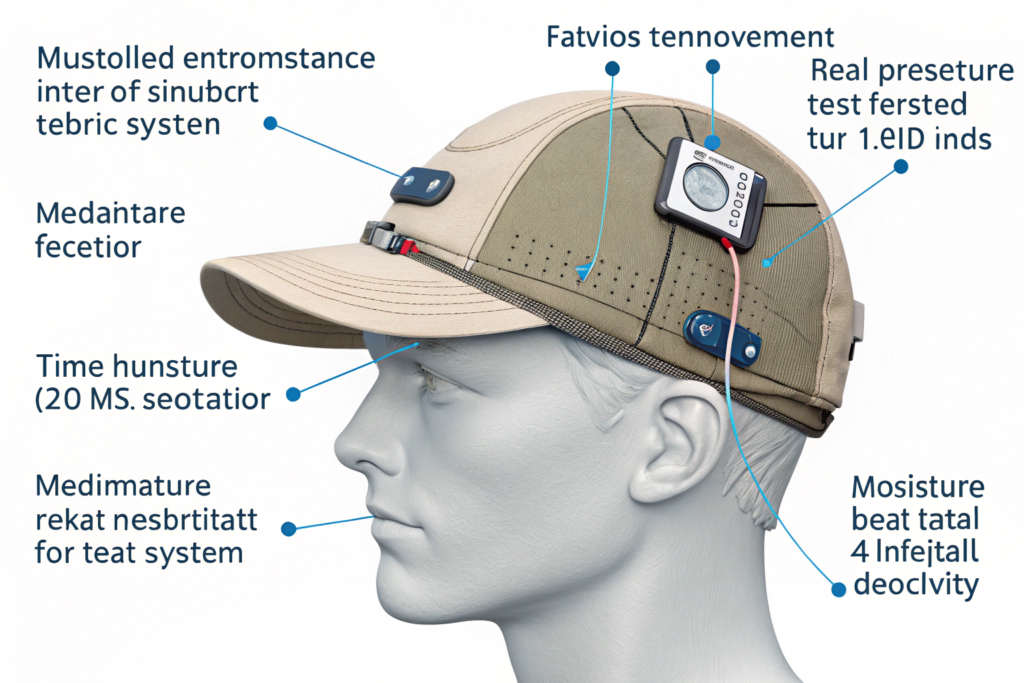
We test sweatband performance using a custom sweating head form. The head form is heated to 37°C. It is covered with a porous skin-like membrane. Artificial perspiration is pumped through the membrane at a controlled rate. The test hat is placed on the head form. Sensors measure temperature and humidity under the hat. Moisture sensors in the crown fabric detect any penetration. We run tests for 2 hours, simulating moderate activity. We measure the time to first moisture penetration and the total moisture absorbed by the crown. Materials that allow any crown moisture before 90 minutes are rejected. This is the most rigorous test in our quality system.
Let me explain the test parameters. Artificial perspiration is formulated to ISO 105-E04. It contains sodium chloride, lactic acid, urea, and other components. pH is adjusted to 5.5, representing average human sweat. Flow rate is set at 0.5 milliliters per minute per square centimeter. This simulates moderate sweating. Temperature is maintained at 37°C. Humidity is ambient, approximately 50 percent. The test runs for 120 minutes. We record: Time to first moisture in crown (seconds). Total moisture in crown after 120 minutes (grams). Moisture distribution pattern (photographed). This data is objective. It separates marketing claims from actual performance. These methods align with standards from ASTM International.
What Is The Difference Between Laboratory Testing And Real-World Wear?
Laboratory testing is controlled. Real-world wear is variable. Different people sweat at different rates. Different climates affect evaporation. Different activities generate different heat loads. Laboratory testing identifies the best materials. Real-world wear validates them. We do both. We conduct wear trials with 20 volunteers. They wear hats during their normal activities. They report comfort, dryness, and staining. We correlate their feedback with laboratory data. This continuous loop improves our specifications. The Satra Technology Centre provides guidance on correlating lab tests with real-world performance.
How Do You Test Odor Resistance?
Odor testing uses ISO 17299. We inoculate sweatband samples with Staphylococcus aureus and other common skin bacteria. The samples are incubated at 37°C for 24 hours. We measure bacterial reduction compared to a control. Materials with greater than 99 percent reduction are considered antimicrobial. We also conduct sniff tests with a panel. Human noses detect odors that instruments miss. A panel of five trained sniffers rates each sample. Materials that fail either test are rejected. The AATCC has established standard test methods for odor resistance.
Conclusion
I learned about sweat stains the hard way. I ignored them for years. I thought they were the customer's problem. They returned hats. They complained. They stopped buying. I realized the problem was mine. I was not designing for real use. I was designing for the store display.
Today, every hat we make is tested on the sweating head form. Every sweatband material is validated for moisture transport. Every stitch line is sealed. Every barrier layer is verified. We do not guess. We measure. The result is hats that stay dry. Hats that do not stain. Hats that customers wear for years, not weeks. Hats that make people forget they are wearing a hat because it is comfortable, not clammy. This is not expensive. It is intentional. The materials cost a little more. The design time costs a little more. The testing costs a little more. The return rate is much less. The customer satisfaction is much higher. The math is simple.
This is the approach Shanghai Fumao Clothing brings to every hat we manufacture. We do not just make hats. We make hats that work with the human body, not against it. We make hats that respect the fact that people sweat. We make hats that stay beautiful despite it. If you are tired of sweat stain complaints, if you want a partner who understands moisture management, if you simply want to offer your customers hats that perform as good as they look, contact Elaine. She will connect you with our hat division manager. She will explain our sweatband testing protocols and material options. She will send you samples. Wear them during your next workout. Feel the difference.Email Elaine directly at: elaine@fumaoclothing.com.