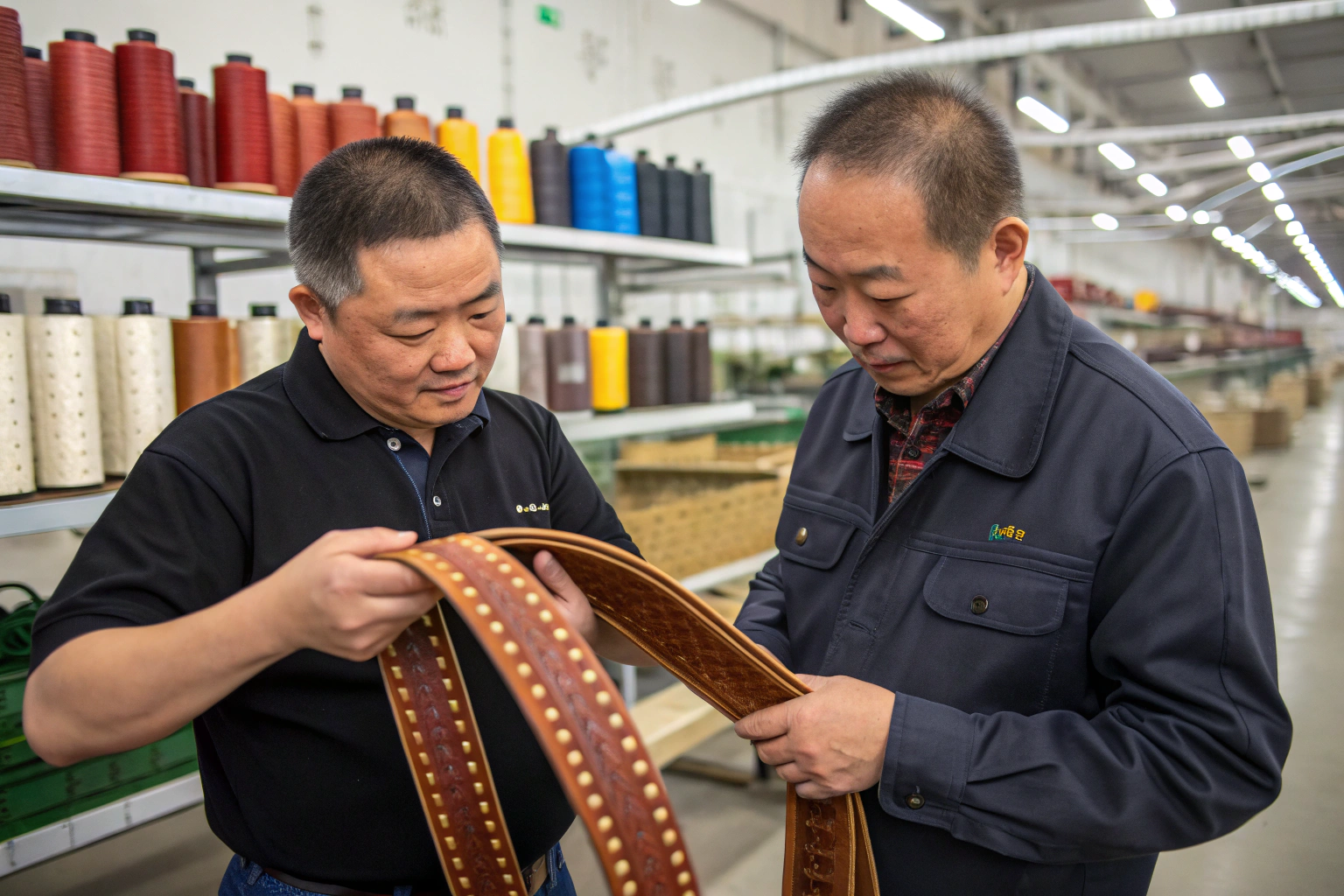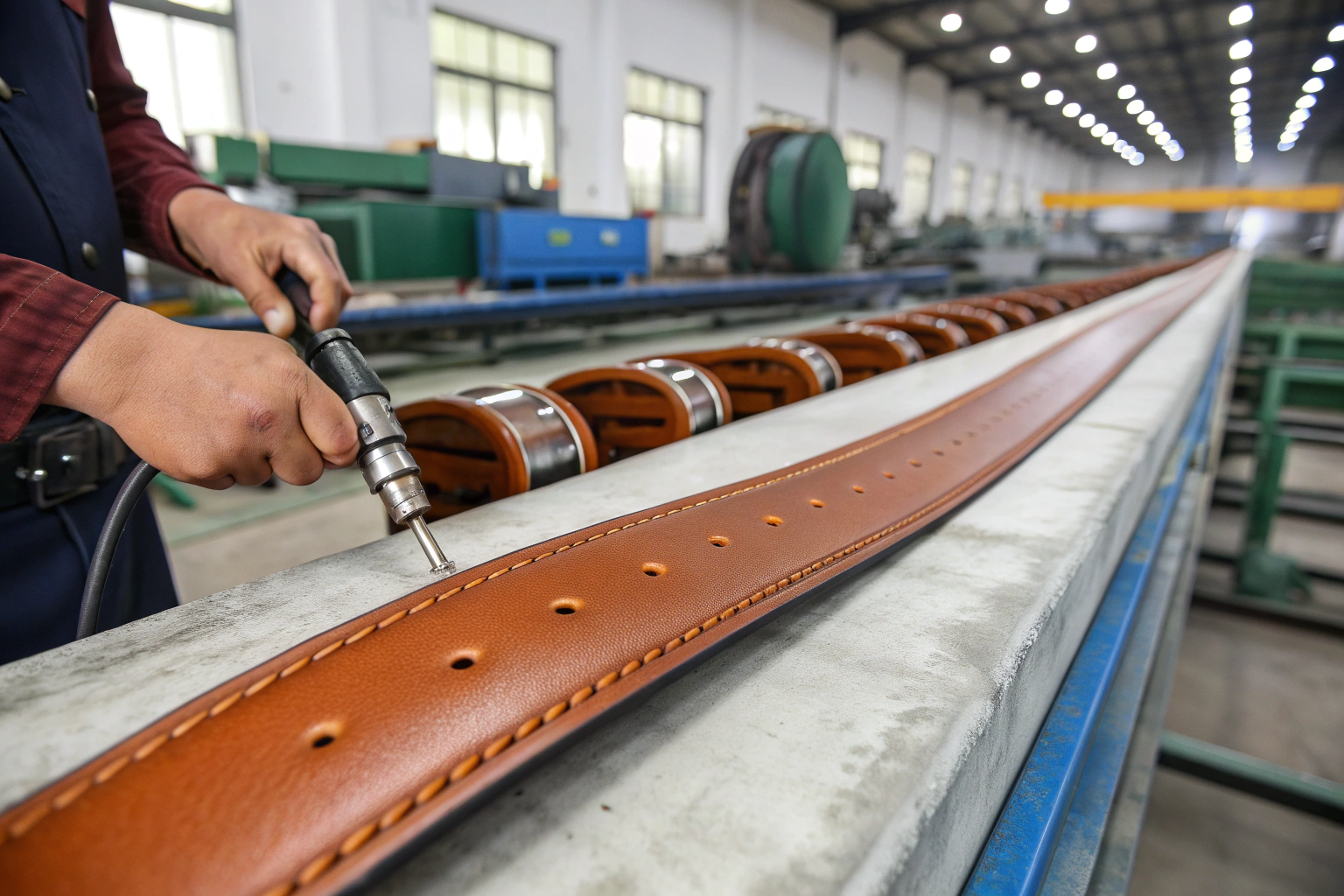
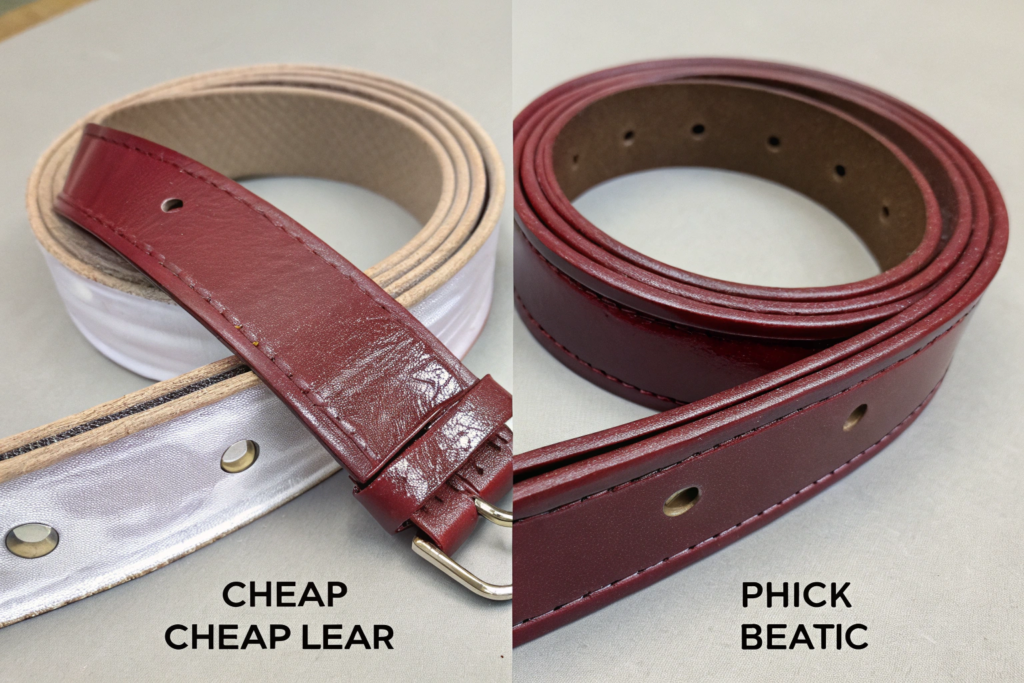
As a manufacturer of leather goods for over two decades, I can tell you exactly where to look to judge the quality of a belt in three seconds: look at the edge. I often have conversations with discerning buyers like Ron from the US. A major pain point for him is sourcing belts that look good from a distance but feel cheap up close. The most common culprit is a poorly finished edge—one that is flat, plasticky, cracked, or peeling. It's a dead giveaway of a low-quality product.
So, what are the techniques that separate a cheap, painted edge from a truly polished, luxurious one? The best edge-painting techniques are a multi-step artisanal process involving: 1) Meticulous Edge Sanding and Preparation, 2) The Application of Multiple Thin Coats of high-quality paint, 3) Heat Creasing to seal and define the edge, and 4) A Final Polishing or Waxing step. This isn't just "painting"; it's a methodical construction of a smooth, durable, and beautiful edge.
This process is time-consuming and requires immense skill, which is why so many mass-market factories skip it. At my factory, we believe it's a non-negotiable step for any premium leather accessory. In this article, I'll walk you through this process and show you why it's the true hallmark of quality.
Why is Edge Preparation the Most Critical Step?
Many people think the "secret" to a good edge is in the paint itself. They are wrong. The secret to a perfect painted edge is creating a perfect canvas before a single drop of paint is applied. A common failure I see in samples from other factories is paint applied directly to a raw, unprepared edge. This results in a lumpy, uneven finish that will quickly crack and peel.
The preparation stage is the most critical because it creates the smooth, uniform foundation necessary for the paint to adhere properly and build up into a rounded profile. This involves a meticulous process of sanding, beveling (rounding the corners), and sometimes applying a clear base coat to tame any loose fibers.This foundational work is tedious and requires a skilled hand, but it's what makes a professional finish possible. At Shanghai Fumao Clothing, we train our artisans to be obsessive about this stage.
What is the purpose of sanding the edge?
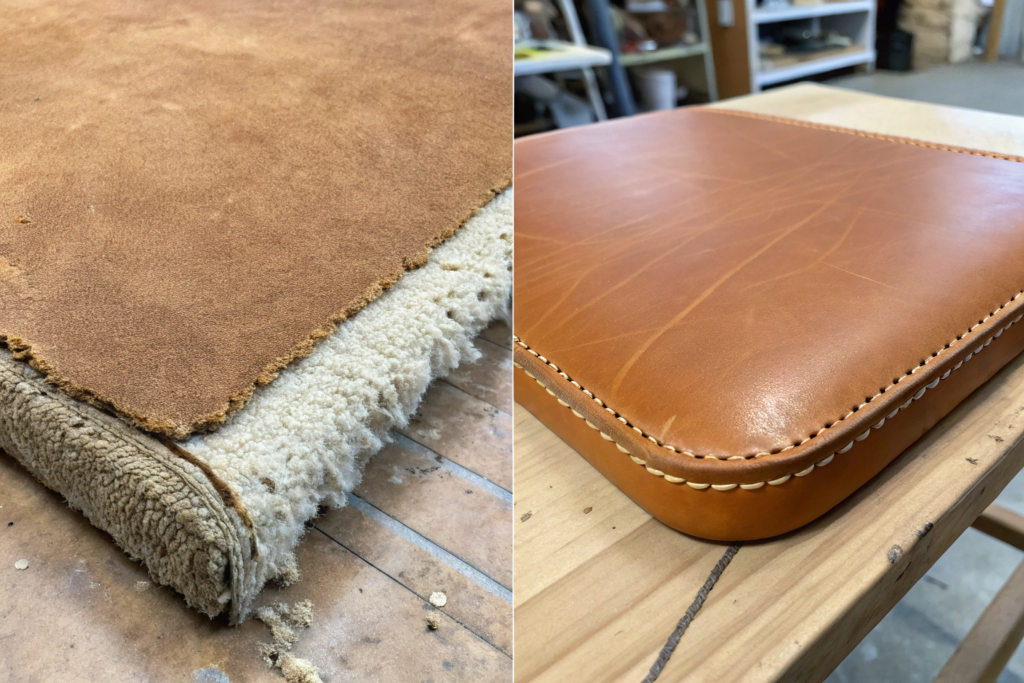
When two or more layers of leather are glued together to make a belt, the cut edge is never perfectly flush and is full of rough fibers. The first step is to sand this edge, usually with progressively finer grits of sandpaper, much like finishing a piece of high-end furniture. This process removes all the loose fibers and ensures the surface is perfectly smooth and level. Without proper sanding, the paint will just cling to these fibers, creating a fuzzy, lumpy texture. This process is a fundamental of leatherworking.
Why is beveling necessary?
A raw cut edge has sharp 90-degree corners. If you try to paint this, the paint will struggle to adhere to the sharp corner and will easily chip off. A beveller is a small hand tool used to trim off these sharp corners, creating a soft, rounded profile. This rounded shape allows the edge paint to flow over the edge and build up into a smooth, dome-like shape. It's a small detail that makes a huge difference in both the look and the durability of the edge.
Why Are Multiple Thin Coats Better Than One Thick Coat?
Once the edge is perfectly prepared, the painting begins. The amateur's mistake is to try to finish the job quickly by applying one thick, heavy coat of paint. This creates a host of problems: it takes forever to dry, it looks like cheap plastic, and it is inflexible, meaning it will crack the first time the belt is bent.
The professional technique is to build up the edge slowly with multiple, very thin coats of paint. Applying 3 to 5 thin layers, with light sanding or buffing between each coat, creates a finish that is far more flexible, durable, and has a much deeper, richer appearance. This is the most time-consuming part of the process, but it is absolutely essential for a high-quality result. It requires patience and precision.
How are the thin coats applied?
Each thin layer of a high-quality, water-based edge paint is carefully applied using a specialized tool, like a roller pen or a small awl. The goal is to apply just enough paint to cover the surface without any drips or pooling. After each layer is applied, it must be allowed to dry completely. Once dry, the edge is often lightly sanded with a very fine grit sandpaper (e.g., 800-1200 grit) to remove any tiny imperfections before the next coat is applied. This repetitive process builds up a perfectly smooth, laminated structure.
Why does this method improve flexibility and durability?
A single thick coat of paint creates a rigid, brittle shell. When the flexible leather belt bends, this inflexible shell has no choice but to crack. A finish built from multiple thin layers, however, behaves more like a laminated composite. Each thin layer can move slightly relative to the others, allowing the entire edge to flex with the leather without cracking. This principle of flexible layers is similar to why plywood is so strong. This is a key topic in advanced leather craft, often discussed on forums like Leatherworker.net.
What is Heat Creasing and Why is it a Luxury Detail?
After the layers of paint have been built up, you could stop there. Many mid-tier factories do. But to achieve a truly high-end, luxury finish, there is one more crucial step: heat creasing.
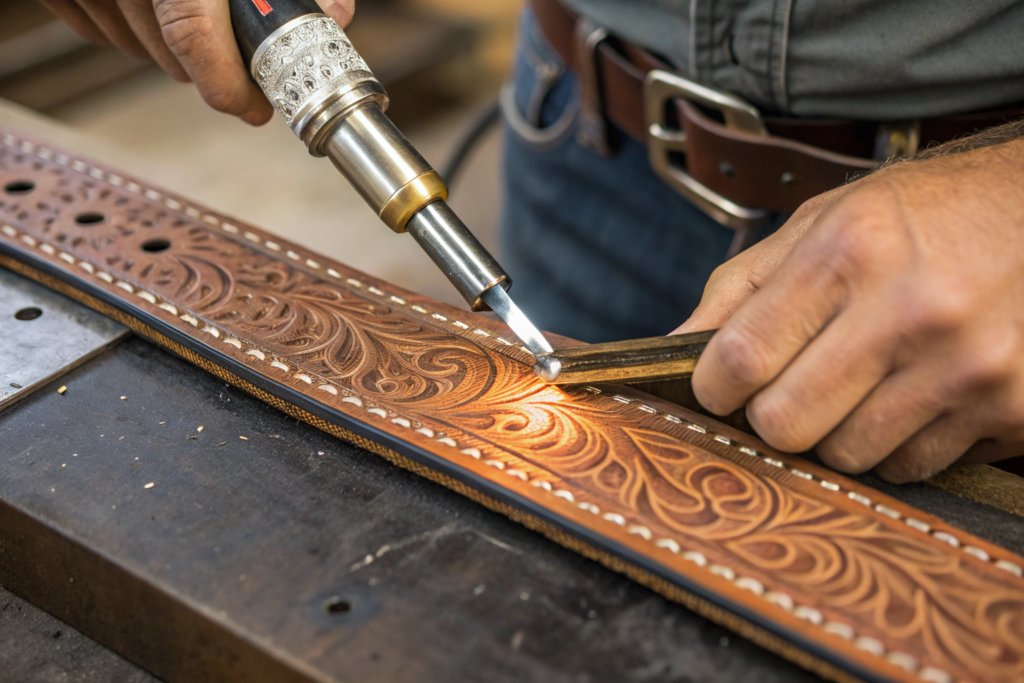
Heat creasing is a traditional leatherworking technique where a heated metal tool is used to press a decorative line into the leather. When used on a painted edge, it serves two purposes: 1) It creates a beautiful, sharp, and decorative line that frames the belt, and 2) The heat helps to seal and compact the edge paint, making it smoother and more durable. This is a signature detail found on high-end European leather goods. It's a subtle sign of expert craftsmanship that signals a truly premium product.
How is the heat creasing process performed?
A specialized tool, often called a fileteuse or electric creaser, with an interchangeable metal tip is heated to a precise temperature. The artisan then carefully runs this hot tip along the edge of the belt, right where the top grain of the leather meets the start of the painted edge. It requires a steady hand and a deep understanding of how heat affects both the leather and the specific edge paint being used. Too hot, and you will burn the leather; too cold, and it will have no effect.
What is the aesthetic and functional benefit?
Aesthetically, the crease line adds a sharp, defined border to the belt, making it look more "finished" and intentional. It's like putting a perfect frame on a painting. Functionally, the heat and pressure help to meld the layers of edge paint together and bond them more securely to the leather itself. It compacts the edge, making it feel harder, smoother, and more resistant to wear. This technique is a hallmark of luxury brands like Hermès and is a testament to their commitment to hand-craftsmanship.
What is the Purpose of the Final Polishing Stage?
The final step is to give the edge its final luster and an extra layer of protection. The painted edge, even after creasing, can have a slightly matte or satin finish. The final polish is what gives it that beautiful, deep glow.
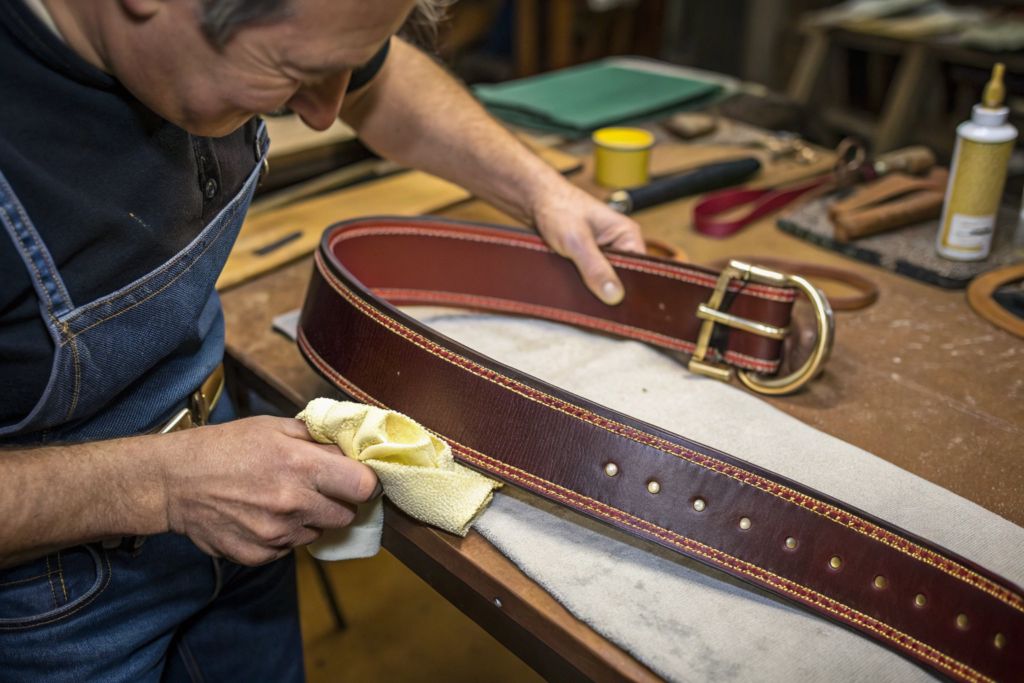
The final polishing stage involves buffing the finished edge with a soft cloth, sometimes with a small amount of wax, to create the desired level of sheen. This step smooths out any final micro-textures and provides a light protective barrier, resulting in a deep, semi-gloss luster that looks polished, not plastic. This last 5% of the process is what creates that "wow" factor when a customer picks up the belt for the first time. It's the difference between a good edge and a great one.
What materials are used for polishing?
Often, all that is needed is vigorous buffing with a simple, soft canvas or denim cloth. The friction and heat generated by the buffing are enough to polish the paint. For an even higher level of finish, a tiny amount of natural wax, like beeswax or carnauba wax, can be applied. The wax fills in any microscopic pores in the paint and buffs to a warm, beautiful shine that is much more appealing than the cold gloss of a thick, plastic-y finish.
Why is this better than a clear top coat?
Some factories try to achieve a glossy look by simply applying a clear, high-gloss top coat as the final layer. This can look shiny, but it often looks like a thick layer of plastic and is prone to scratching and cracking, just like a single thick coat of paint. The traditional method of polishing or waxing creates a luster that comes from the smoothness of the material itself. It's a more organic, durable, and ultimately more luxurious finish. This dedication to traditional finishing methods is a core value for us at Shanghai Fumao Clothing.
Conclusion
A beautifully finished belt edge is a testament to a manufacturer's commitment to quality. It is not the result of a single, simple trick, but rather the culmination of a patient, multi-step, artisanal process. It begins with creating a perfect, smooth foundation through meticulous sanding and beveling. It's built up through the careful application of multiple thin layers of paint. It is refined and sealed with the precision of a hot creasing iron. And it is brought to its final, lustrous state through careful polishing. This process cannot be rushed, and it cannot be faked. It is a true hallmark of craftsmanship that elevates a simple accessory into a durable and beautiful piece of leather art.
If you are a brand looking for a manufacturing partner who understands and executes these high-end finishing techniques, and who refuses to cut corners on the details that matter, my team is ready to help. We believe the edge is not the end; it's the beginning of quality. Please contact our Business Director, Elaine, at her email: elaine@fumaoclothing.com to discuss your next premium leather goods project.