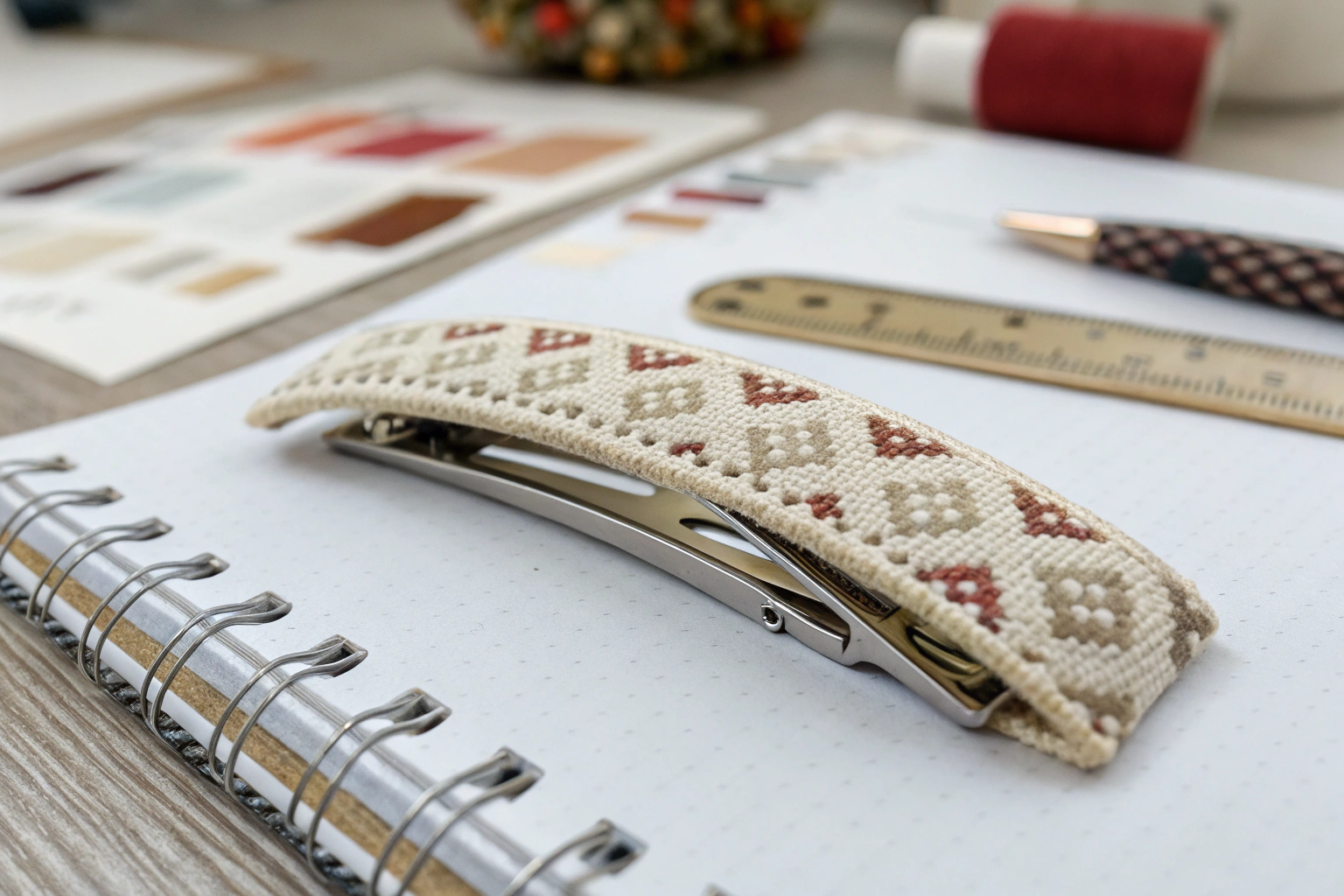
I've spent over two decades in this industry, and I can tell you that the devil is truly in the details. When a confident buyer like Ron comes to us with a beautiful design for a fabric-covered hair clip, the first thing I think about isn't the fabric pattern or the clip color. It's the bond. How are we going to attach these two very different materials in a way that survives the journey from our factory in Zhejiang to a store shelf in America, and then into a customer's hair? A hair clip that falls apart after three uses doesn't just damage that customer's trust; it damages your brand's reputation.
The truth is, there is no single "best" technique. The right method depends on the materials you're using, the volume of your order, and the performance you need. At Shanghai Fumao Clothing, we've tested and refined dozens of bonding methods across millions of hair accessories. We've seen what works for a delicate silk scarf attached to a thin metal barrette, and what's required for a heavy denim patch on a spring clip. Let me share with you the techniques that have proven themselves on our production floor.
The relationship between fabric and metal is a tricky one. Metal is rigid and smooth. Fabric is soft and textured. Getting them to stick together permanently requires a deep understanding of adhesives, mechanical fastening, and the manufacturing process itself. I'm going to walk you through the four most reliable techniques we use every day, explaining exactly when and why we choose each one. If you're sourcing fabric hair accessories and you care about quality, this knowledge is essential.
How Does Industrial Adhesive Bonding Work For Metal Barrettes?
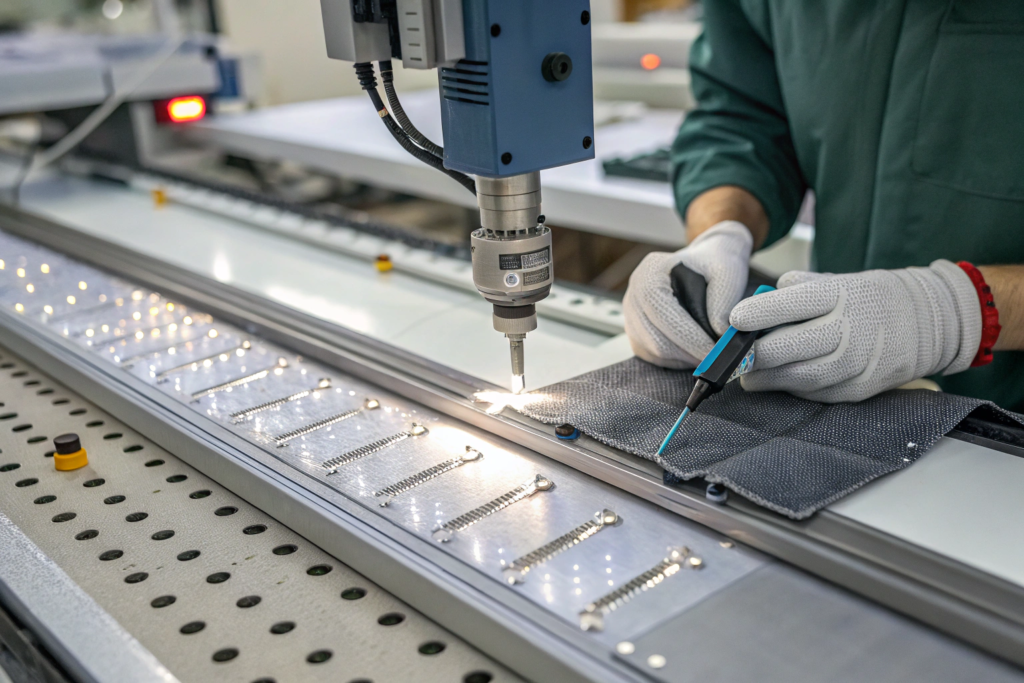
When most people think of gluing fabric to metal, they imagine a messy, unreliable process. But in a professional manufacturing environment like ours, adhesive bonding is a precise science. We don't just squeeze glue from a tube. We use industrial-grade adhesives formulated specifically for bonding textiles to metals. These aren't your hardware store glues. They are engineered to remain flexible after curing, resist heat and humidity, and maintain a strong bond even under the constant stress of opening and closing a hair clip.
The key to success with adhesives is surface preparation. You can't just put glue on a shiny piece of metal and expect it to hold. We use a multi-step process. First, we thoroughly clean the metal clip to remove any oils or residues from the stamping process. Then, depending on the metal, we might apply a chemical primer or even a mechanical treatment to create a slightly rougher surface for the glue to grip. This attention to detail is why our hair accessories stay together. For a deep dive into the chemistry behind industrial adhesives, resources like the Adhesive and Sealant Council offer excellent technical information.
What types of glue work best for different fabrics like silk or denim?
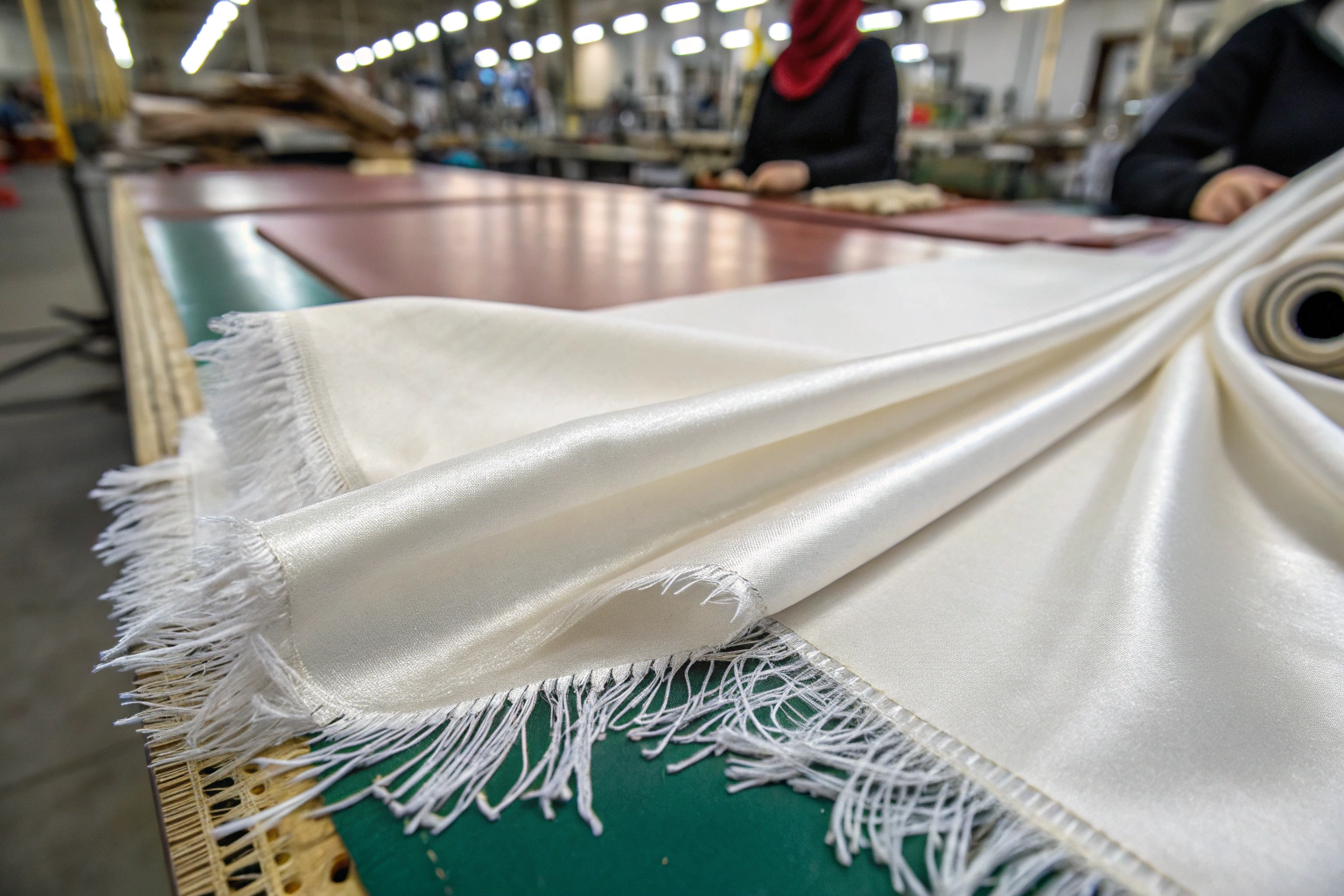
This is where our experience at AceAccessory really comes into play. You can't use the same glue for a delicate silk barrette that you use for a rugged denim-covered clip. For delicate, thin fabrics like silk or polyester satin, we use a very thin, flexible adhesive, often a polyurethane-based glue. It soaks into the fabric slightly without bleeding through to the visible side, creating a bond that moves with the fabric. If the glue is too thick or stiff, it can make the fabric feel hard and crack over time.
For heavier fabrics like denim, canvas, or wool felt, we need a stronger structural bond. Here, we often turn to epoxy-based or modified-silicone adhesives. These are thicker and can fill minor gaps in the texture of the fabric. They create a very strong, durable bond that can withstand significant force. We also have to consider the finish of the metal. A coated metal surface might require a different adhesive than a raw brass one. Our quality control team tests every batch of materials to ensure the chosen adhesive creates a perfect bond. The American Chemical Society is a great place to understand the basic properties of different polymer families used in these adhesives.
How do we ensure the glue doesn't damage the fabric color?
This is a concern every buyer like Ron has. No one wants a beautiful hair clip ruined by glue stains or color bleeding. We prevent this through rigorous pre-production testing. Before we start a production run, our team takes samples of your exact fabric and the selected adhesive. We apply the glue and let it cure under controlled temperature and humidity conditions. Then we inspect it closely for any signs of "strike-through" (glue seeping through the fabric) or discoloration.
We also control the application process very carefully. We use precision dispensing equipment that puts down exactly the right amount of glue in exactly the right place. Too little glue and the bond fails. Too much glue and you risk mess and stiffness. Our machine operators are highly trained, and we have inspection stations throughout the line. If a clip shows any sign of glue bleed, it's rejected immediately. This level of control is part of the professional service we offer. It's the difference between a product that looks handmade and one that looks hand-made by a professional. For standards on textile testing, including colorfastness, the American Association of Textile Chemists and Colorists (AATCC) is the global authority.
When Should You Use Mechanical Bonding Like Crimping For Hair Claws?
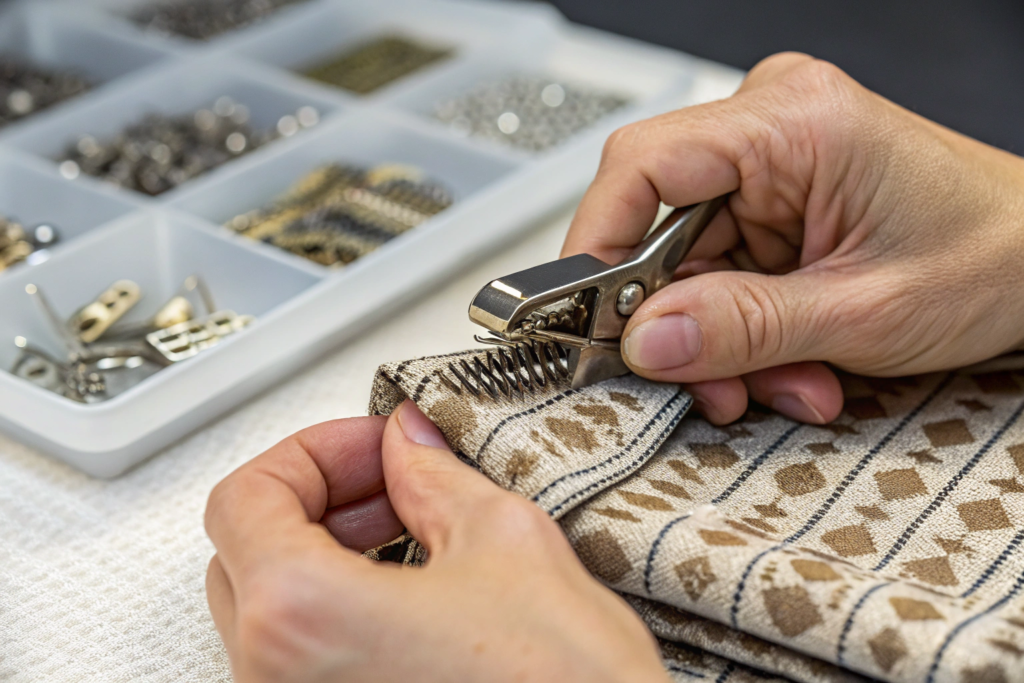
Sometimes, glue alone isn't enough. For products that will face a lot of stress, like a hair claw clip that opens and closes hundreds of times, or a heavy barrette, we often turn to mechanical bonding. This means using the metal itself to hold the fabric in place. The most common method is crimping. When we design a metal hair clip, we can build small tabs, teeth, or channels into the stamping die. Then, after the fabric is placed, we use a special tool or press to bend these metal features over the edge of the fabric, locking it in place forever.
Crimping creates a physical lock that doesn't rely on a chemical bond. It's incredibly durable. You can combine it with a small amount of adhesive for extra security, but the mechanical grip does the heavy lifting. This technique is perfect for high-volume items where consistency and strength are paramount. At our factory in Zhejiang, we have a range of pneumatic presses set up specifically for this task. They apply exactly the right amount of force to create a secure crimp without damaging the metal or the fabric. It's a beautiful marriage of design and manufacturing. To see how precise metal stamping works, industry sites like The Fabricator provide great insights into the technology.
Can you combine stitching with metal findings for a stronger hold?
Absolutely. This is a technique we use frequently for higher-end or more complex pieces. Think of a fabric flower attached to an alligator clip. The flower might be assembled with stitches, and then those stitches are used to attach it to a metal finding. Or we might create a small fabric wrap for a plain metal clip and secure the seam with a few hidden stitches before adding a decorative element like a bead or a rivet.
Combining stitching with metal is also a fantastic way to create a specific look. Exposed stitching can be a design feature. For example, a leather barrette with a thick, visible saddle stitch along the edge has a craft, artisanal feel that some brands love. We have a team of skilled sewers who can execute these designs perfectly. This approach gives you, the buyer, immense flexibility. You're not limited by what a single adhesive can do. You can mix materials and techniques to create something truly unique. The Textile World magazine often features articles on innovative fabric manipulation techniques that combine stitching with other materials.
How does the clip's hinge design affect the bonding method choice?
This is a critical engineering consideration that many people overlook. The hinge is the most stressed part of any hair clip. If your bonding method interferes with the hinge, your clip will fail. For example, if you're using a thick, stiff adhesive that flows into the hinge mechanism, it can glue the hinge shut or make it too stiff to open and close smoothly. Similarly, if you're crimping, you have to ensure the crimped tabs are positioned so they don't rub against the hinge spring or limit its range of motion.
Our design team and project managers work together on this. When you bring us a concept, we don't just look at the aesthetics. We analyze the mechanics. We'll ask questions like: "How much torque is on this hinge?" and "Where is the best place to apply our bonding agent so it doesn't migrate into the moving parts?" This proactive, problem-solving approach is what defines our service. We use our technical knowledge to make your design not just beautiful, but durable and functional. For general principles of mechanical design in small products, resources like Engineering360 can provide a wealth of technical specifications and standards.
What Are The Pros And Cons Of Using Heat-Seal Backing Films?
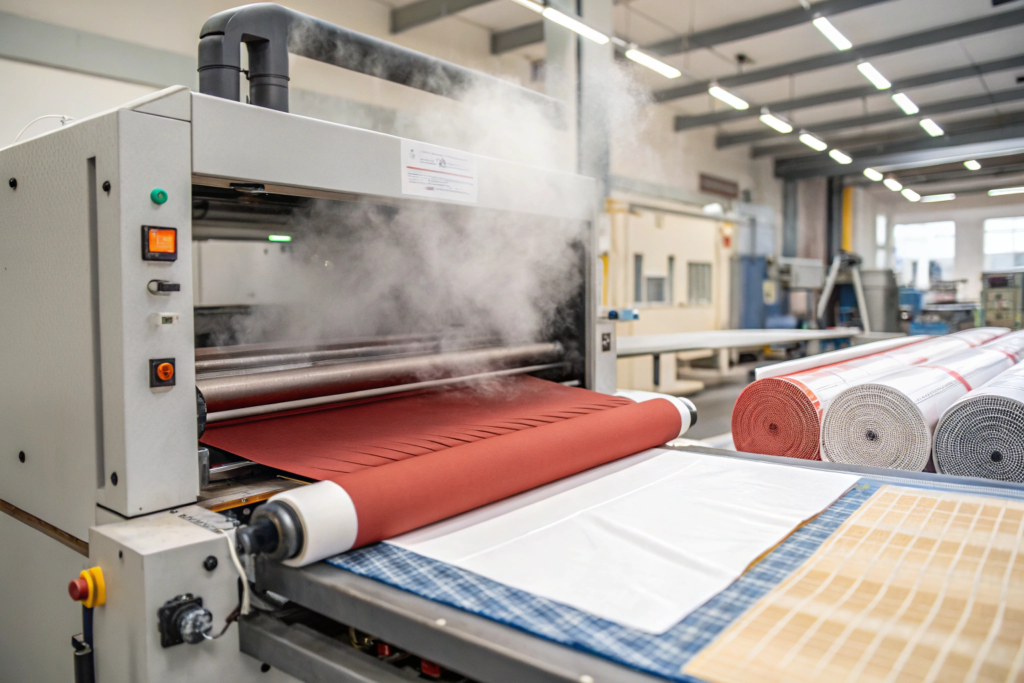
Heat-seal backing films are another fantastic option in our toolkit, especially for certain types of fabrics and production volumes. This method uses a thin, dry adhesive film that is activated by heat and pressure. The film is placed between the fabric and the metal, and then the whole assembly goes into a heat press. The heat melts the film, bonding everything together. When it cools, you have a clean, consistent, and very strong bond. It's incredibly efficient for flat surfaces like the top of a barrette or a snap clip.
The biggest advantage of heat-seal films is consistency and cleanliness. Because the adhesive is a solid film, there's no liquid glue to manage. There's no risk of squeeze-out, no mess, and very little waste. The heat press applies uniform pressure and temperature across the entire piece, ensuring every single clip is bonded exactly the same way. This is perfect for large orders where consistency is key. Our quality control team loves this method because it's so predictable. When we set the parameters on the press, we know that every piece coming out will meet our high standards. For a technical overview of heat-seal technologies, the Society of Manufacturing Engineers (SME) is an excellent resource.
Is heat bonding suitable for all types of metal hair accessories?
Heat bonding is excellent, but it's not a universal solution. It works best on flat or gently curved surfaces where the heat press can make full, even contact. For a highly curved surface, like a thin wire bobby pin, a liquid adhesive might be a better choice because it can be applied precisely to the contact points. The thickness and type of metal also matter. A very thin metal clip might heat up too quickly and transfer that heat to the fabric, potentially causing damage. A very thick, heavy metal piece might require a longer press time to get the adhesive film to its activation temperature all the way through.
Our team at Shanghai Fumao Clothing understands these nuances. We test different film thicknesses and press parameters for each new product. We consider the thermal conductivity of the metal and the heat sensitivity of the fabric. A synthetic fabric might melt under the same heat that's perfect for bonding cotton. We manage all these variables so you don't have to. This technical expertise is part of the value we bring to every project. For understanding material properties, databases like MatWeb provide detailed information on the thermal characteristics of various metals and polymers.
How does this method compare to liquid glue in terms of durability?
This is a question I get from buyers like Ron all the time, and the answer is nuanced. For sheer peel strength on a flat surface, a properly applied heat-seal film can often outperform liquid adhesives. The bond is uniform and complete across the entire surface. There are no weak spots. However, liquid adhesives can sometimes be better at filling gaps on uneven surfaces. If your fabric has a very thick texture, a liquid glue might be able to flow into those gaps and create a stronger mechanical lock than a film could.
Durability also depends on the environment. Both methods, when done correctly, are extremely durable. We test our bonded clips by subjecting them to heat, cold, and humidity cycles to simulate the conditions they'll face in a warehouse, a truck, and a bathroom. We also do mechanical testing, opening and closing the clips thousands of times to ensure the bond doesn't fatigue. The method we choose is the one that performs best in these tests for your specific materials. It's not about one being universally "better." It's about finding the perfect match for your product. The ASTM International standards for adhesion testing provide the benchmarks we use to validate our processes and ensure long-term quality.
How Do We Test Bond Strength For Children's Hair Accessories?
When we talk about bonding techniques, we have to talk about safety, especially for products that might be used by children. A small part, like a bead or a piece of fabric, that detaches from a hair clip can become a choking hazard. This is not something we take lightly. In our factory, testing isn't an afterthought. It's an integral part of our quality control process. We have a dedicated lab where we put our bonded accessories through a series of rigorous tests to ensure they meet international safety standards.
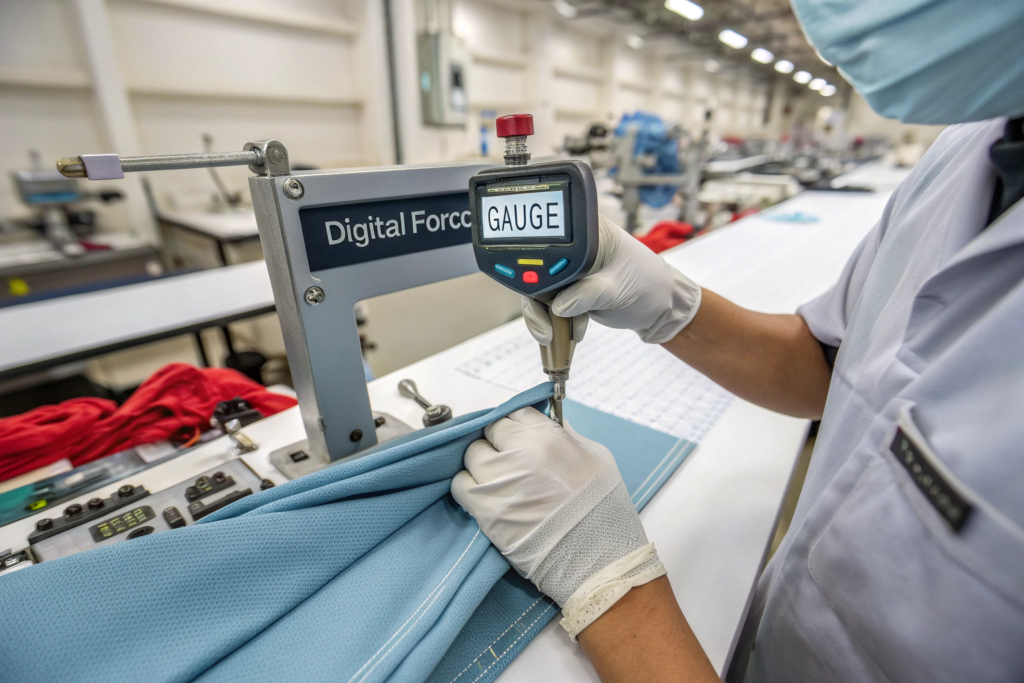
We simulate real-world use and abuse. For a children's hair clip, we might test for torque and tension. Can a child twist the fabric off? Can they pull it off with their teeth? We use calibrated force gauges to measure exactly how much pull a bonded surface can withstand. We also do wash testing. Some hair accessories get washed accidentally. Others might be exposed to sweat, hairspray, or sunscreen. We test our bonds against all these common chemicals to ensure they don't break down over time. This commitment to safety is a core part of our service. For the latest safety regulations on children's products, the Consumer Product Safety Commission (CPSC) is the definitive source for US market requirements.
What are the ASTM and EN71 standards for small parts on clips?
For anyone selling into the North American or European markets, understanding ASTM F963 and EN71 is non-negotiable. These are the safety standards for toys, and they apply to many fashion accessories that could be used by children. Both standards have strict rules about small parts. If a component of your hair clip can fit into a specially-designed small parts cylinder, it's considered a choking hazard and is not allowed for children under three. And even for older children, the parts must be securely attached.
Our testing simulates the "use and abuse" tests outlined in these standards. We perform impact tests, tension tests, and torque tests. For example, we might apply a specified amount of force to a decorative element on a clip to see if it detaches. If it does, and the detached piece is small enough to be a hazard, the design fails. We then work with you to fix it. Maybe we need a stronger bonding method, or maybe we need to redesign the decorative element so it's larger or more securely attached. This is the kind of proactive, safety-first approach we bring to every project. The ASTM International website allows you to purchase and review the full F963 standard.
How can we guarantee the bond won't fail after shipping to the US?
Shipping is a brutal process. A container crossing the Pacific Ocean can experience extreme temperature swings, high humidity, and constant vibration. A bond that seems strong in our factory in Zhejiang might fail under these conditions. That's why we simulate the shipping environment. We pack finished samples in the same cartons we'll use for the final shipment. Then we put them on a vibration table that mimics the motion of a truck or a ship.
We also do environmental conditioning. We place samples in a chamber and cycle the temperature from freezing to hot and back again, while also controlling humidity. After this conditioning, we perform our bond strength tests again. We want to see if the bond has weakened. This testing gives us confidence that the product you receive in your US warehouse will be just as perfect as the one we shipped. It's this commitment to quality that has earned us the trust of major supermarkets and brands across America and Europe. To understand the logistics side of this, organizations like the International Vibration Research Institute provide insights into the effects of vibration on packaged goods during transit.
Conclusion
Choosing the right bonding technique for your fabric-covered hair clips is a critical decision that impacts everything from the product's look and feel to its safety and durability. As I've shared, there's no one-size-fits-all answer. Industrial adhesives offer precision and flexibility for delicate fabrics. Mechanical crimping provides brute strength for high-stress items. Heat-seal films deliver unmatched consistency for flat surfaces and large volumes. And for every single product, rigorous testing against international safety standards is not optional—it's essential.
At Shanghai Fumao Clothing, we don't guess. We test. We analyze your specific materials and design, and then we apply the technique that will deliver the best possible result. Our experienced project managers and quality control team are here to guide you through every step, ensuring that the beautiful hair accessories you envision become a reality that your customers will love and trust. We handle the technical complexities so you can focus on your brand and your market.
If you have a new design for a hair clip, a headband, or any other accessory, and you want to be certain it's made to last, let's talk. Our team is ready to put our expertise to work for you. Please contact our Business Director, Elaine, at elaine@fumaoclothing.com to start the conversation. We'll help you create something amazing.