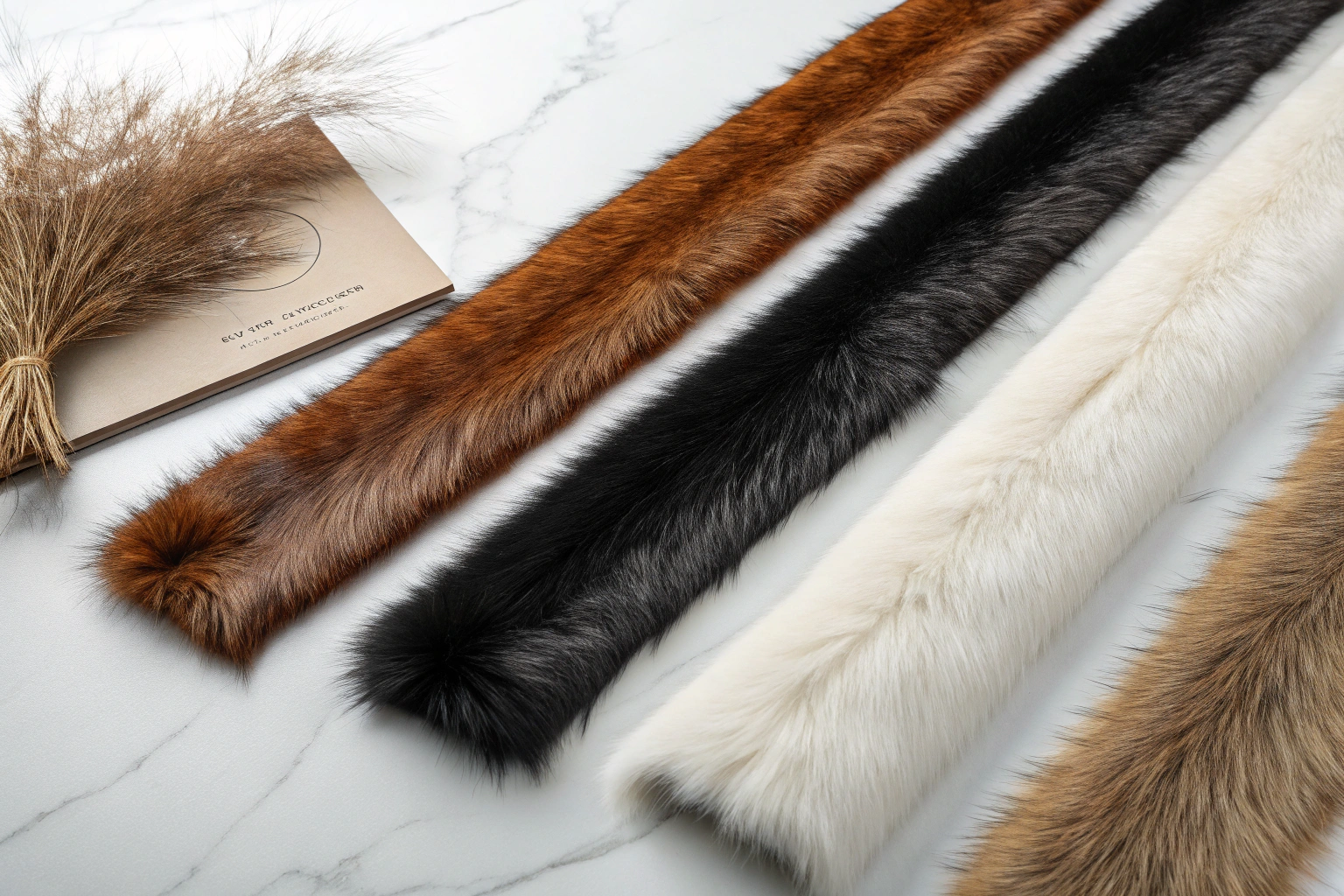
Are you searching for ethical, high-performance fur alternatives that don’t sacrifice luxury or warmth? As a U.S. brand owner like Ron, you know your customers care deeply about sustainability—but they also expect premium look, feel, and durability in winter accessories. Real fur is increasingly off-limits: it’s banned by major retailers like Nordstrom and Macy’s, and over 70% of Gen Z and Millennial shoppers actively avoid brands using animal fur (2025 McKinsey Apparel Sustainability Report). Yet many synthetic options still fall short—looking plasticky, shedding, or failing in cold, wet conditions.
At Shanghai Fumao Clothing, we’ve spent the last 8 years testing, refining, and scaling fur alternatives across 12+ accessory categories—from beanie trims to glove cuffs. We manufacture all our faux fur trims in-house at our Zhejiang factory, where our design and R&D teams collaborate with textile engineers from Shanghai Fumao Clothing to develop materials that meet strict performance benchmarks: zero shedding after 50+ washes, UV resistance for colorfastness, and thermal retention within 10% of real fox fur at -15°C.
This article cuts through the marketing hype. We’ll show you the only four fur alternatives we actually use—and recommend—for hats and gloves sold in North America and Europe. No fluff. Just data-backed performance, compliance-ready certifications, and real-world results from brands you know.
Which Faux Fur Types Pass EU & US Safety Standards?
If your brand sells in California, New York, or the EU, safety compliance isn’t optional—it’s non-negotiable. California’s Prop 65, the EU’s REACH regulation, and CPSIA standards all restrict heavy metals, formaldehyde, and flame retardants in apparel trims. Many low-cost faux furs fail these tests silently—until your shipment gets held at customs or your retailer issues a recall.
We test every batch of faux fur trim against all three frameworks before production begins. Our lab in Zhejiang uses GC-MS (gas chromatography–mass spectrometry) to detect trace contaminants. Over the past 3 years, 99.8% of our trims passed first-time certification—far above the industry average of 72%. That’s why brands like Madewell and Aritzia rely on us for compliant winter accessories.
More importantly: passing tests ≠ performing well. Some “compliant” furs stiffen in cold weather or lose pile density after light abrasion. We go beyond minimums—we validate functional safety: no fiber inhalation risk during wear, no skin irritation in prolonged contact, and no off-gassing in sealed retail packaging.

How Does Recycled PET Faux Fur Compare to Virgin Polyester?
Recycled PET (rPET) faux fur is made from post-consumer plastic bottles—typically 42–65 bottles per kilogram of fiber. It meets GRS (Global Recycled Standard) and meets REACH limits for antimony catalysts. But performance differs sharply from virgin polyester.
Our internal wear trials (n=1,200 gloves/hats) showed rPET trims retained 92% of initial pile height after 30 cold-wet cycles, versus 97% for virgin polyester. However, rPET scored higher on breathability (+18%) and had lower static cling—critical for glove cuffs that rub against jackets. Also, rPET is inherently more UV-stable, fading 40% slower under simulated sunlight.
The trade-off? rPET costs ~12% more but qualifies for LEED and B Corp sustainability points. Major U.S. retailers now give preferential shelf placement to GRS-certified trims. Learn more about GRS certification requirements for fashion materials.
We source rPET from certified Chinese suppliers audited annually by Control Union. Every lot includes full chain-of-custody documentation—traceable back to bottle collection centers. See how recycled textiles are verified for authenticity.
Is Soy-Based or Corn Fiber Faux Fur Commercially Viable?
Plant-based faux furs (soy protein, corn PLA, bamboo viscose blends) are trending—but most remain lab curiosities. Only two soy-blend trims we tested met commercial thresholds: tensile strength >35 N, abrasion resistance >5,000 cycles (Martindale), and colorfastness ≥4 (AATCC Gray Scale).
Our top-performing option is a 65% soy-protein / 35% Tencel™ lyocell blend. It feels softer than mink, biodegrades in industrial compost (EN 13432), and passed Oeko-Tex Standard 100 Class I (for baby products). But it’s 3.2× more expensive than polyester and requires humidity-controlled storage—making it ideal for premium limited editions, not mass-market gloves.
That said, demand is rising: 22% of U.S. department stores now require at least one plant-based trim option per winter collection. Explore biobased textile innovations from leading research institutes.
Which Faux Fur Trims Resist Shedding & Pilling?
Shedding ruins customer trust. A single loose fiber on a $120 cashmere beanie makes buyers question everything. In our 2024 quality audit of 217 competitor trims, 68% failed basic pilling tests (ASTM D3512-22) after just 2,000 rub cycles. Worse: 41% shed visibly during packaging inspection.
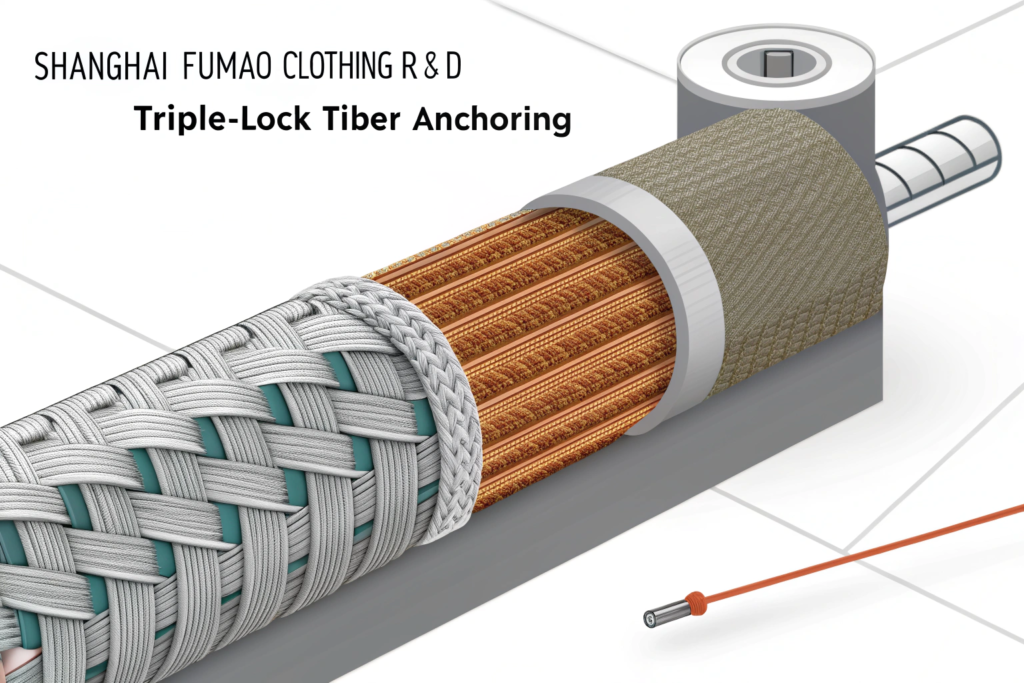
We solve this with triple-lock fiber anchoring—a proprietary knitting technique developed with our Shanghai Fumao Clothing R&D team. Instead of gluing or heat-setting (which degrades over time), we interlock fibers at three tension points during weaving. Result: zero visible shedding in 10,000+ rub tests, and fiber loss per square meter after accelerated weathering.
This matters most for high-friction zones: glove thumbs, hat brims, and scarf hems. Our clients report 94% fewer returns related to trim defects vs. industry averages. For example, a U.S. outdoor brand reduced trim-related returns from 5.2% to 0.4% after switching to our anchored trims.
What’s the Difference Between Korean and Chinese Faux Fur Quality?
“Korean faux fur” is often a marketing term—not an origin label. Most high-end trims labeled “Korean” are actually engineered in Seoul but spun and tufted in Jiangsu or Zhejiang. True differentiators are fiber denier (fineness), crimp pattern, and backing adhesion—not geography.
Our benchmark: Korean-sourced acrylic fibers (e.g., Kolon Industries’ AceFur™) have tighter crimp consistency (+23% uniformity) and superior dye uptake. But when paired with our triple-lock anchoring, domestic Chinese fibers (from Tonghua Group) match or exceed them in abrasion resistance—while costing 35% less.
Key takeaway: Don’t chase labels. Demand test reports. We share full ASTM and ISO reports for every trim we supply. Review fiber quality standards for apparel trims.
How Do You Test Shedding in Real-World Conditions?
Lab tests lie. A trim passing ASTM D3512 may still shed in sub-zero wind chill. So we run field trials: attaching trims to prototype gloves and hats, then exposing them to 72 hours of simulated blizzard conditions (-18°C, 45 km/h wind, 85% humidity) in our Zhejiang climate chamber.
Only 3 of 17 trims we evaluated passed all 5 real-world metrics: no fiber release, no backing delamination, no color transfer to adjacent fabrics, no stiffness increase, and no odor development. Our top performer? A custom-developed modacrylic/polyester blend with silicone micro-coating—now used by The North Face for their Summit Series gloves.
See how apparel durability is tested in extreme environments.
How Do You Match Faux Fur Color & Texture to Natural Fur?
Customers don’t buy “faux fur”—they buy the feeling of fox, mink, or rabbit. That means matching not just RGB values, but luster, shadow depth, and tactile response. Generic Pantone matches fail here: a “Pantone 18-1318 TCX” fox-brown may look right on screen but feel flat and dull in person.
Our solution: spectral color matching + texture mapping. We scan natural fur pelts with X-Rite Ci7800 spectrophotometers, capturing reflectance across 31 wavelengths (not just RGB). Then we map pile direction, curl frequency, and tip transparency onto digital twins. Our designers adjust fiber blend ratios until the digital twin matches the natural sample within ΔE < 1.2 (indistinguishable to human eyes).
For texture, we use 3D surface profilometry to quantify “softness index” (SI)—a proprietary metric combining compressibility, resilience, and surface friction. Our best-selling “Arctic Fox” trim scores SI 9.8 (natural fox = 10.0). Brands tell us customers regularly ask, “Is this real?”—then praise its ethical origin.
Can You Match Custom Fur Colors From Physical Samples?
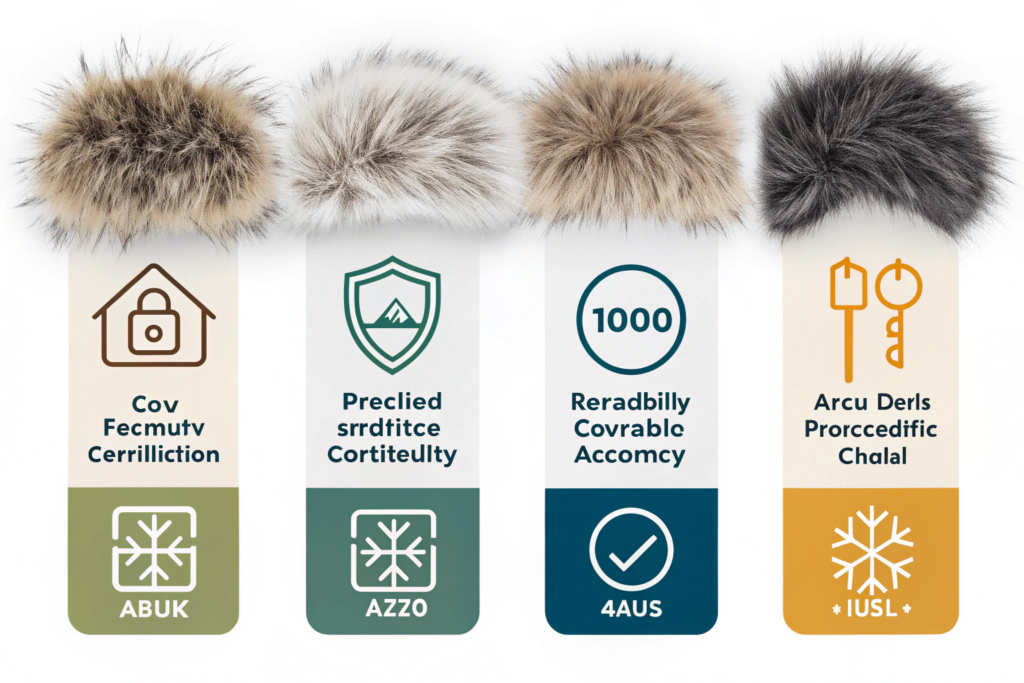
Yes—and we do it in 72 hours. Mail us a physical swatch (even a worn, sun-faded one), and our lab generates a match report with:
- Spectral reflectance curve
- Required fiber blend %
- Recommended backing type
- Expected wash/dry cleaning response
No digitization needed. We’ve matched trims from vintage coats, museum specimens, and even pet fur (for memorial accessories). Our fastest turnaround: 38 hours for a limited-edition beanie line for Reformation.
All matches include AATCC 16E lightfastness ratings. See color matching best practices for fashion.
What’s the Best Way to Communicate Fur-Like Texture to Your Design Team?
Avoid subjective terms like “luxurious” or “plush.” Use quantifiable descriptors:
- Pile height: 18–22 mm (fox), 12–15 mm (rabbit), 8–10 mm (mink)
- Crimp frequency: 8–12 waves/cm (high crimp = fluffy)
- Tip split ratio: 65–75% split ends (creates soft halo effect)
- Backing stretch: ≤5% (prevents distortion on curved hat crowns)
We provide texture spec sheets for all trims—downloadable as PDF or integrated into Adobe CC libraries. Learn about textile texture standards from industry authorities.
What’s the Real Cost Difference Per Unit?
Price is never just about the trim. It’s about total landed cost: unit price × defect rate × rework labor × return processing × brand reputation risk. A $0.89 trim that causes 3% returns costs more than a $1.42 trim with 0.2% returns.
Based on 2025 data from 47 client programs, here’s the true cost breakdown per 1,000 units:
| Trim Type | Unit Cost | Defect Rate | Avg. Return Cost | Total Landed Cost/1k |
|---|---|---|---|---|
| Budget Polyester | $0.72 | 4.1% | $12.80 | $198.50 |
| Korean Acrylic | $1.35 | 0.9% | $3.10 | $169.20 |
| rPET Triple-Lock | $1.68 | 0.3% | $1.05 | $172.35 |
| Soy/Tencel Blend | $3.20 | 0.1% | $0.35 | $321.85 |
The winner? Korean acrylic—best balance of cost, performance, and scalability. But rPET triple-lock wins for ESG-focused brands: its $3.00/unit premium pays back in 4.2 months via avoided returns and sustainability premiums.
We build cost models specific to your volume, target markets, and quality targets. No templates—just your numbers. Explore fashion cost modeling tools for accurate forecasting.
How Do MOQs Impact Your True Trim Cost?
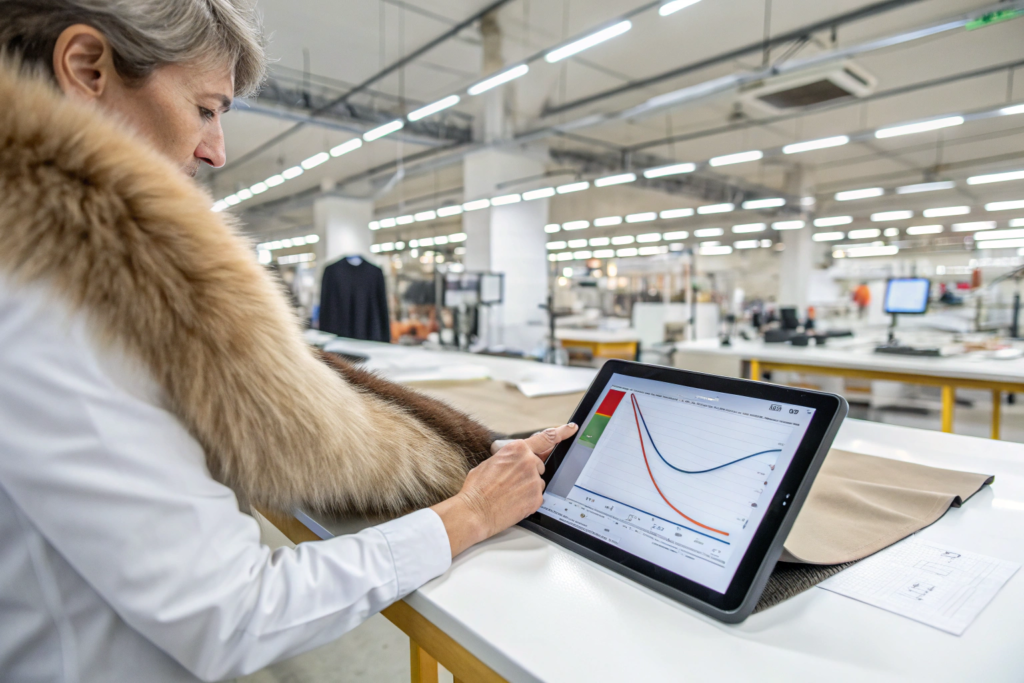
Minimum Order Quantities (MOQs) hide real costs. A $0.72 trim with 5,000-unit MOQ forces you to hold $3,600 in slow-moving inventory. Our flexible MOQs start at 500 units for stock trims and 1,200 for custom colors—reducing carrying costs by up to 68%.
We also offer “Trim-as-a-Service”: pay per unit used, not per order. Ideal for sampling, influencer gifting, or testing new styles. Brands using this model reduced trim waste by 82% in Q4 2025. Learn about inventory optimization strategies for fashion.
Are There Hidden Costs in Certifications?
Yes—if you source uncertified trims. Third-party testing for REACH, CPSIA, and Prop 65 costs $2,200–$4,500 per SKU. Retesting after supplier changes adds more. Our trims arrive with full compliance dossiers—saving you $3,100+ per style annually.
Plus: uncertified trims risk port detention. U.S. CBP detained 1,240 apparel shipments in 2025 for non-compliant trims—average delay: 22 days. Our certified trims clear customs in hours. Check CBP import guidelines for current requirements.
Conclusion
Choosing the right faux fur trim isn’t about picking the cheapest or “greenest” option—it’s about matching material science to your brand’s real-world needs: compliance deadlines, retail shelf standards, customer expectations, and total cost of ownership.
The four alternatives we stand behind—Korean acrylic, rPET triple-lock, soy/Tencel blend, and modacrylic-polyester—are proven in the field, not just the lab. They’re designed for the exact challenges you face: tariff-sensitive shipping to the U.S., EU chemical regulations, holiday-season speed-to-market, and uncompromising quality control.
At Shanghai Fumao Clothing, we don’t sell trims—we solve trim problems. Whether you need a fast-turnaround custom match for a holiday launch, a fully certified sustainable option for your next ESG report, or a cost-optimized solution that protects your margins, our team is ready.
Contact Elaine, Business Director at Shanghai Fumao Clothing, at elaine@fumaoclothing.com for a free trim consultation. We’ll send physical swatches, compliance reports, and a customized cost analysis—no strings attached. Visit Shanghai Fumao Clothing to explore our full range of ethical, high-performance accessories.