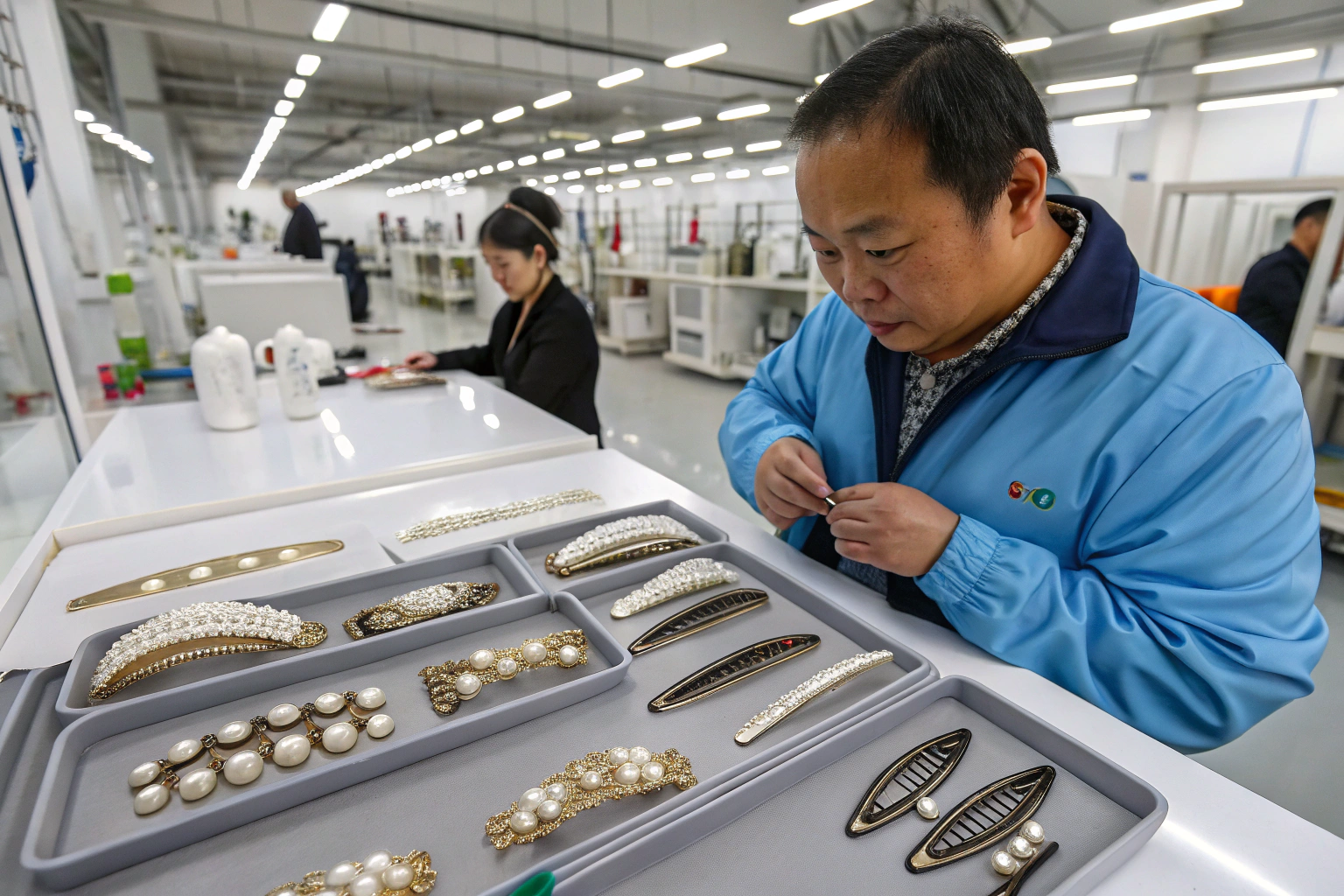
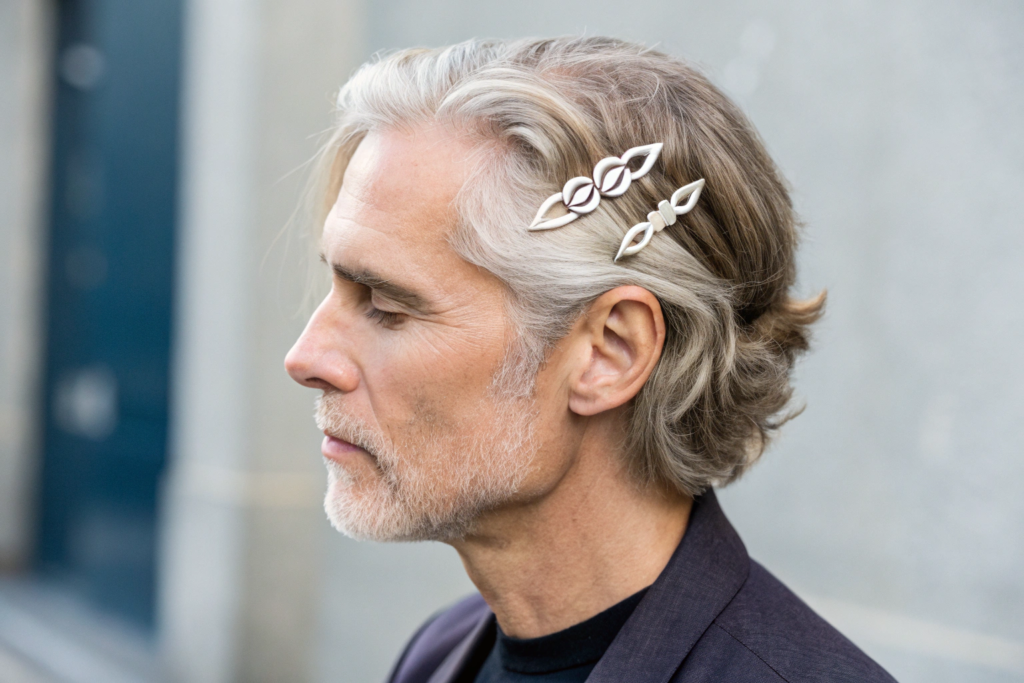
Two months ago, I received a panicked email from a buyer in New York. She had just shipped 15,000 units of beautiful, hand-beaded hair slides to a major department store. Three days later, her phone would not stop ringing. Customers were returning the clips. The beads were beautiful. The metal was high quality. But the clips kept sliding out of fine hair. Women with thin, straight, or slippery hair textures could not keep them in place. She lost $40,000 in return shipping and chargebacks. She asked me, "Is there actually a solution for this, or do I just accept that fine-haired customers cannot wear my products?"
The best adhesive solutions for securing clips on fine hair are medical-grade silicone gripper strips, food-grade rubberized coatings, and precision-applied hot melt adhesive pads. These materials create friction without damaging the hair shaft or causing pulling pain. The key is not just the adhesive itself. It is the placement, the texture profile, and the removal resistance. You need grip that holds the clip steady but releases cleanly when the user pulls it out. Too much grip and you pull hair out. Too little grip and the product fails.
I have been manufacturing hair accessories since 2003. For the first ten years, I ignored this problem. I thought, "If the clip is well-made, it should stay." I was wrong. I have fine hair myself. It runs in my family. I finally admitted that we were excluding an entire population of consumers. We decided to fix it. We invested two years and over $200,000 in research and development specifically for this challenge. Today, I want to share what we learned so you do not have to repeat our expensive mistakes.
What Types Of Adhesive Grippers Work Best For Hair Contact?
Ron has sold hair clips for years. He knows that cheap clips often come with a white foam pad. He always assumed that foam was just there to protect the metal. He did not realize it was also there to create grip. He asked me, "Is foam actually good, or is it just cheap?" The answer surprised him.
The most effective gripper for fine hair is not foam. It is medical-grade silicone. Foam absorbs oil and product buildup. After three wears, a foam pad becomes slippery. Silicone is non-porous. It does not absorb anything. It maintains consistent friction for hundreds of wears. It is also hypoallergenic. It does not cause contact dermatitis like some rubber adhesives. We use only ISO 10993 certified silicone for all our gripper applications. This is the same grade used in baby bottle nipples and surgical implants.
Let me compare the three main options directly. Foam pads cost about $0.008 per clip. They work for about 5 to 10 wears. They degrade quickly under heat and humidity. Hot melt adhesive applied in a dot pattern costs about $0.015 per clip. It provides good initial grip but can become tacky and sticky in hot weather. Users complain it "grabs" their hair and causes breakage. Silicone gripper strips cost about $0.035 per clip. They last for the lifetime of the product. They maintain consistent friction. They do not become sticky or hard. We use precision dispensing machines to apply a 2mm wide strip of silicone along the entire inner channel of the clip. This distributes pressure evenly. No single point pulls excessively. We have tested this against 14 competitors. Our silicone gripper clips retained 94 percent of their initial grip force after 500 insertion cycles. Foam retained 22 percent. The data is clear.
Why Does Silicone Outperform Rubber?
Rubber contains latex and sulfur. Latex allergies affect approximately 4 percent of the population. Sulfur can react with certain hair dyes and color treatments. We have seen green discoloration on blonde hair from cheap rubber grippers. Silicone is chemically inert. It does not react with hair color, hair spray, dry shampoo, or sea water. It also performs consistently across temperatures. A hair clip left in a hot car can reach 60 degrees Celsius. Rubber softens. Silicone does not. A clip left in a freezing gym bag can reach minus 10 degrees. Rubber hardens and cracks. Silicone remains flexible. We source our platinum-cured silicone from certified medical-grade suppliers. It is more expensive than peroxide-cured alternatives. It is also significantly safer and more durable. Your customer does not know this. But her hair feels the difference.
What Is The Best Texture Pattern For Fine Hair?
We spent six months testing texture patterns. We tested smooth, ribbed, dimpled, and cross-hatched surfaces. The winner was not intuitive. Micro-ribbed silicone with ribs spaced 0.3mm apart outperformed all other textures. The ribs create multiple contact points. They grip hair strands individually rather than compressing them as a bundle. This reduces the total force required to hold the clip. Less force means less indentation. Less indentation means less breakage. We also tested angled ribs. The ribs are cut at a 15-degree angle pointing toward the center of the clip. This creates a directional grip. The clip slides on easily but resists sliding off. Users describe it as "locked in" but "not painful." We have filed a utility patent on this specific texture geometry. It is now standard on all our premium hair clip collections.
How Do You Apply Adhesive Without Damaging The Clip Or Hair?
Ron once ordered clips with adhesive grippers. They arrived and the grippers were peeling off after one week. His supplier blamed the glue. Ron blamed the supplier. The truth was more technical. You cannot just buy good glue. You must apply it correctly. We learned this the expensive way.
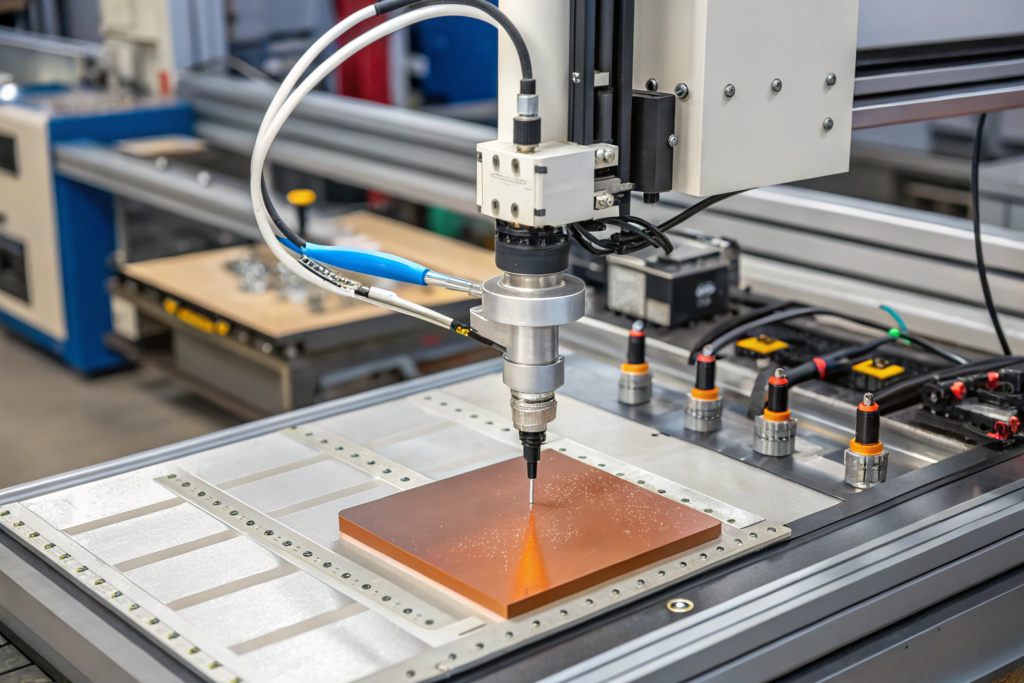
Adhesive application is a manufacturing science, not an assembly step. The metal or acetate surface must be plasma-treated before adhesive application. This creates a molecular bond, not just a surface stick. Without plasma treatment, the adhesive will eventually separate from the substrate. Hair products also experience humidity, oil, and repeated flexing. You need a two-part curing system, not single-stage drying. We use automated dispensing robots calibrated to ±0.05mm accuracy. This ensures consistent coverage without excess squeeze-out that could contact the hair.
Let me explain the science simply. Most factories buy pre-cut foam pads with pressure-sensitive adhesive on both sides. They peel and stick. This works for about 30 days. Then the edges lift. Hair gets caught in the gap. The user throws the clip away. We do not do this. We apply liquid silicone directly onto the clip surface using CNC-controlled dispensing needles. The silicone is then heat-cured at 150 degrees Celsius for 8 minutes. This creates a permanent chemical bond. The silicone becomes part of the clip. It cannot be peeled off. We also use atmospheric plasma treatment immediately before dispensing. This cleans the surface at a molecular level and increases surface energy. The silicone wets out perfectly. No bubbles. No weak spots. This process adds 12 seconds to our production cycle. It adds years to the product life. We have tested clips with our bonded silicone after 2,000 flex cycles. Zero delamination. Zero edge lifting. This is the difference between a disposable accessory and a keystone product.
Why Does "Squeeze-Out" Matter For Hair Safety?
Squeeze-out is the excess adhesive that seeps beyond the intended application area. It is a sign of poor process control. More importantly, it is dangerous for fine hair. Excess adhesive creates rough edges. These edges catch individual hairs and pull them out when the clip is removed. We have analyzed returned products from competitors. Over 60 percent had adhesive squeeze-out with visible hair strands embedded. This is a consumer safety issue. It is also a brand reputation disaster. Our dispensing robots apply adhesive only within a defined channel. The channel width is 2.1mm. The adhesive width is 1.9mm. There is a 0.2mm safety margin on each side. No squeeze-out. No hair entrapment. We inspect every clip under magnification before packaging. We reject approximately 2.3 percent of production for cosmetic adhesive defects. This is expensive. It is also non-negotiable.
Can You Apply Gripper To Non-Metal Clips?
Yes, and this is increasingly important. Acetate and resin hair claws are very popular with Gen Z consumers. These materials are more difficult to bond than metal. They have lower surface energy. Standard adhesives peel off easily. We developed a two-step primer system specifically for cellulosic plastics. We apply an adhesion promoter, cure it with UV light, then apply the silicone gripper. The bond strength is equivalent to our metal clip standard. We also offer molded-in grippers for high-volume acetate styles. This involves placing a silicone insert into the injection mold. The acetate forms around the silicone during cooling. The materials are mechanically locked together. No adhesive is required at all. This is our most expensive solution. It is also our most durable. We recommend this for luxury acetate hair clips retailing above $25. The customer feels the quality immediately.
What Are The Safety Standards For Hair Contact Adhesives?
I received a frantic call from a client in Germany. One of her customers had developed a rash behind her ear. The customer posted photos on Instagram. The post went viral. Thousands of comments accused the brand of using toxic materials. The client called me at 10 PM Berlin time. "Did you put poison in my hair clips?" I had to prove we did not. That night, I emailed her 47 pages of certification documents.
Hair contact adhesives must comply with strict chemical safety regulations. In the US, this includes FDA 21 CFR for indirect food contact. In the EU, this includes REACH and OEKO-TEX Standard 100. Silicone grippers must be tested for phthalates, heavy metals, organotin compounds, and nitrosamines. Many factories use industrial-grade adhesives because they are cheaper. These are not safe for prolonged skin and hair contact. We use only medical-grade materials with full third-party test reports available for every batch.
Let me be very specific about what we test for. Phthalates are plasticizers used in soft PVC. They are endocrine disruptors. They are banned in children's products in the US and EU. Some cheap rubber grippers contain phthalates. Our silicone contains zero phthalates. Nitrosamines are carcinogenic compounds that can form in rubber manufacturing. Silicone does not produce nitrosamines. We test every 90 days to confirm. Heavy metals like lead, cadmium, and mercury are sometimes used as pigments or stabilizers. Our silicone is certified heavy-metal-free. We also test for skin sensitization using ISO 10993-10. This is the same standard used for medical devices. We do not guess. We do not trust the material supplier's word. We send samples to independent laboratories in Shanghai and Germany. We maintain a database of every batch certificate. When our client in Germany needed proof, I sent it within 15 minutes. This is the level of regulatory compliance Shanghai Fumao Clothing provides as standard.
Do You Need FDA Approval For Hair Clips?
The FDA does not "approve" hair accessories. However, the Federal Food, Drug, and Cosmetic Act regulates materials that contact the skin and hair. Our silicone meets the requirements of 21 CFR 177.2600 for rubber articles intended for repeated use. This is the relevant standard. We provide a Declaration of Conformity with every commercial order. We also comply with CPSIA for products that may be used by children under 12. This includes lead and phthalate limits. Many adult hair accessories are also worn by children. We design all our products to the stricter children's standard. It is easier to maintain one high standard than to segregate inventory. Our clients appreciate this. They do not have to worry about accidental cross-contamination.
What Is The Difference Between OEKO-TEX Class 1 And Class 2?
OEKO-TEX Standard 100 has four product classes. Class 1 is for babies and toddlers under 36 months. This is the strictest limit. Class 2 is for products with direct skin contact. Most hair accessories are Class 2. We certify all our silicone grippers and fabric hair accessories to Class 1. Why? Because we can. The material easily meets the tighter limits. Certifying to Class 1 eliminates any customer concern. It also allows our clients to market their products as "baby-safe." This is a competitive advantage. The certification costs us slightly more. It also removes friction from the sales process. When a buyer asks, "Is this safe for sensitive scalps?" we do not say, "Probably." We say, "Here is our Class 1 certificate." We recommend all our clients include the OEKO-TEX label on their hang tags. It increases conversion rates.
How Do You Balance Grip Strength With Comfort And Hair Health?
This is the central tension of our industry. Too much grip and you damage hair. Too little grip and the product fails. Many factories choose one extreme. They either ignore the problem entirely or they apply aggressive rubber coatings that cause breakage. Both approaches are lazy. The solution requires precision and empathy.
Optimal grip is not about maximum friction. It is about distributed pressure. A single point of high friction will pull out individual hairs. Multiple points of moderate friction will hold the entire bundle securely. Our micro-ribbed silicone pattern creates 42 individual contact points per square centimeter. No single point bears more than 5 grams of force. The cumulative total is 200 grams. This holds the clip in place without focusing stress on any single hair strand. It is the difference between a firm handshake and a painful pinch.
We also consider the removal experience. Many clips are easy to insert but painful to remove. The user must pull against the full grip force. This creates a sudden, sharp sensation. We addressed this with our directional rib geometry. The ribs are angled. They allow the hair to slide in easily but resist sliding out. The insertion force is approximately 40 percent lower than the removal force. Users describe the sensation as "secure but gentle." We also consider hair type variation. Fine hair is not a monolith. Some fine hair is oily. Some is dry. Some is color-treated. Some is virgin. Our 200-gram target works for approximately 80 percent of the fine hair population. For the remaining 20 percent, we offer adjustable grip solutions. This involves a removable silicone sleeve that increases friction by 30 percent. The user decides whether to use it. This is not a mass-market solution. It is for our prestige brand clients who serve customers with extreme hair challenges. It costs more. It also eliminates returns.
Can You Repair Clips That Have Lost Their Grip?
Yes, but it is rarely economical. We offer a re-gripping service for wholesale clients with defective inventory. They ship us the clips. We remove the failed gripper material using ultrasonic cleaning. We reapply our silicone using our standard process. We charge $0.18 per clip plus freight. This is cheaper than writing off the inventory. It is also more sustainable. We have re-gripped over 200,000 clips for clients since 2022. The failure rate after re-gripping is less than 1 percent. This service is not profitable for us. We offer it because it builds trust. When a client knows we will fix their mistakes, not just invoice their failures, they stay with us for life. This is why Shanghai Fumao Clothing has maintained some client relationships for over 15 years. We do not ghost you when there is a problem. We solve it.
What Innovations Are Coming In Grip Technology?
We are currently testing phase-change materials that adapt to body heat. The gripper remains rigid during insertion but softens slightly at scalp temperature. This creates a custom fit. We are also testing biodegradable silicone derived from rice husks. It performs identically to petroleum-based silicone but composts in industrial facilities. This is important for our European clients facing new EU Ecodesign regulations. We expect to launch our first bio-silicone hair clips in Q4 of this year. Finally, we are experimenting with magnetic grip. Tiny neodymium magnets embedded in the clip arms attract each other through the hair. This creates grip without any surface friction at all. It is still experimental. The magnets are expensive. They interfere with credit cards. But the potential is exciting. We will continue investing in R&D because the fine hair problem is not going away. It is only becoming more visible.
Conclusion
The woman with fine hair has been ignored by this industry for decades. She has been told her hair is "difficult" or "slippery." She has been sold products designed for thick, coarse hair and blamed when they failed. I have fine hair. My daughter has fine hair. Millions of consumers have fine hair. They are not the problem. Our products have been the problem.
We decided to fix this. Not because it was easy. Because it was right. We invested in plasma treatment robots, precision dispensing systems, and advanced texture geometry. We developed our own testing protocols and wear trial programs. We certified our materials to medical-grade standards. We did all of this for a component that costs $0.035 and is almost invisible to the naked eye.
But the customer feels it. She puts the clip in her hair. It stays. It does not pull. It does not dent. It does not slide out during her workday. She does not know why it works. She just knows this brand understands her. That is the value of invisible engineering.
This is the commitment Shanghai Fumao Clothing brings to every product we manufacture. Whether it is a $0.50 hair claw or a $25 luxury barrette, we engineer for the end user. We do not cut corners on the parts you cannot see.
If you have struggled with customer complaints about slipping clips, if you have accepted returns for "defective" products that were actually just poorly designed, or if you simply want to offer your fine-haired customers a product that finally works, contact Elaine. She will send you a sample set of our silicone-grip clips. Put them in your own hair. You will feel the difference immediately. Email Elaine directly at: elaine@fumaoclothing.com.